
The Ultimate Guide to Vegan Buddha Bowls: Healthy Eating Made Easy & Delicious
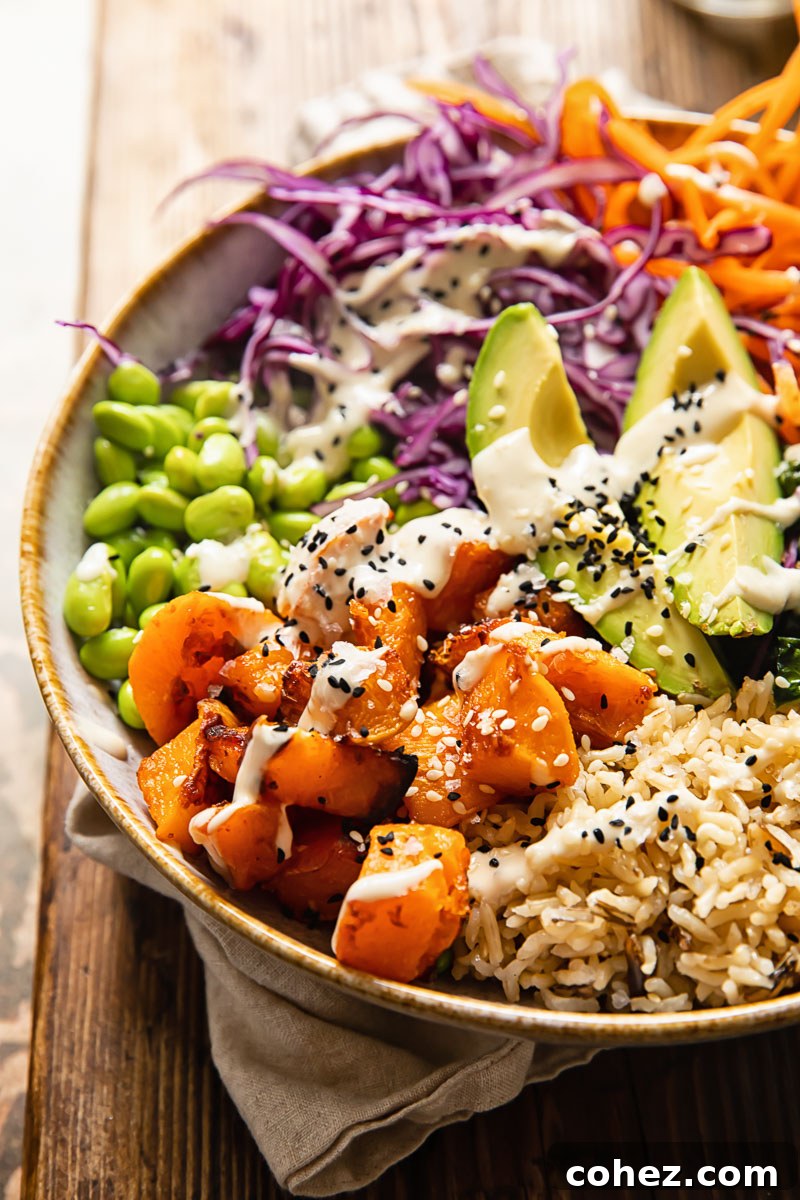
Discover a vibrant, wholesome, and incredibly satisfying way to nourish your body with the ultimate Vegan Buddha Bowl. Far from just a meal, it’s a culinary philosophy that embraces balance, variety, and beautiful presentation. This guide will walk you through crafting your own nutritious masterpieces, packed with fresh vegetables, hearty grains, plant-based proteins, and invigorating flavors. Prepare to transform your mealtimes into an experience that delights both your palate and your eyes.
At the heart of many exceptional Buddha bowls, including this one, lies a truly outstanding dressing. Our zesty Lemon Tahini Dressing is a versatile star, renowned for its creamy texture and bright, tangy notes. It effortlessly brings together a medley of ingredients, from sweet roasted butternut squash and crisp fresh veggies to rich, creamy avocado. If you’re looking for other ways to enjoy this incredible dressing, try it alongside gorgeous Roasted Carrots for a delightful twist!
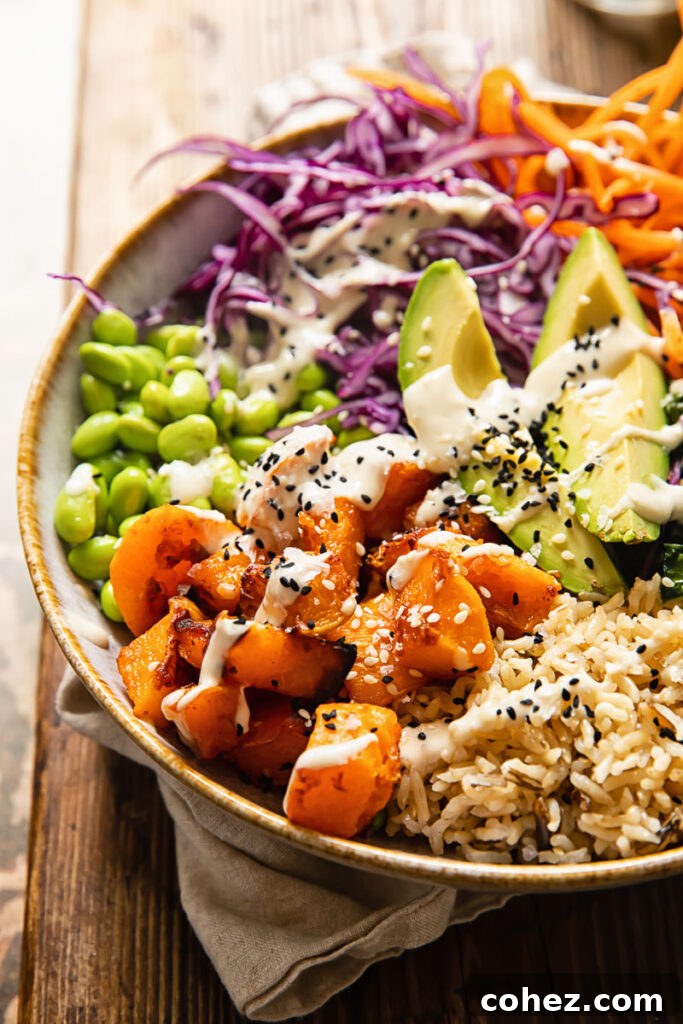
For too long, finding genuinely satisfying and healthy lunch options felt like an endless quest. Many healthy meals left me feeling hungry shortly after, leading to energy slumps and cravings. That’s why the discovery of Buddha bowls was an absolute game-changer! These remarkable bowls are not only incredibly tasty and packed with nutrients, but when thoughtfully composed, they are also genuinely filling. The secret lies in selecting a diverse mix of fresh, savory, and flavorful ingredients. With just a bit of mindful assembly, you can create a stunning and wholesome meal that keeps you energized throughout the day.
Beyond their incredible taste, Buddha bowls are famously photogenic. Their artful arrangement of vibrant ingredients makes them a feast for the eyes, perfect for sharing on your social media feeds. So, let’s get creative and craft a Buddha bowl that’s as worthy of your Instagram as it is of your appetite!
What Exactly is a Buddha Bowl?
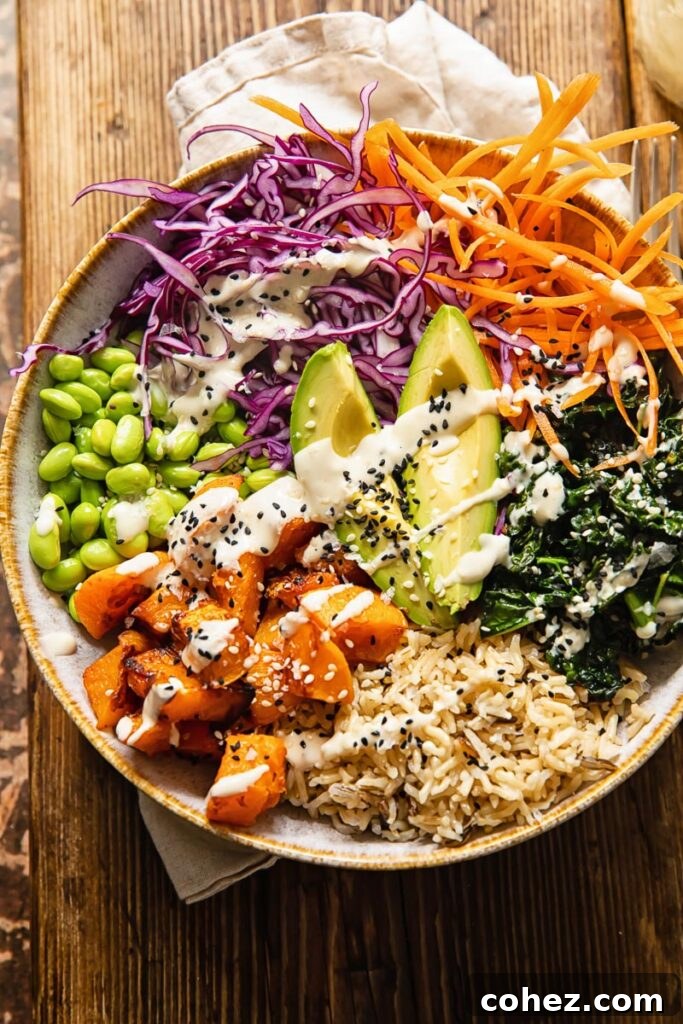
A Buddha bowl is essentially a vibrant, one-dish meal characterized by its balanced composition and artistic presentation. It’s often referred to as a “nourish bowl” or “power bowl” because it brings together a potpourri of fresh, wholesome, and filling ingredients into a single, aesthetically pleasing bowl. The beauty of a Buddha bowl lies in its incredible flexibility; there’s no strict rulebook on what to include, allowing for endless creativity and customization.
The standard expectation for a classic Buddha bowl is a harmonious blend of fresh vegetables, plant-based protein, and whole grains. However, this is more of a guideline than a rigid definition. The core philosophy is to use whatever you have on hand, focusing on diverse flavors, textures, and nutrients without letting any single ingredient dominate. This creates a symphony of tastes and sensations in every bite, making it a fun and engaging way to enjoy a diverse meal that also happens to be incredibly photogenic.
Why Choose a Buddha Bowl for Your Next Meal?
Beyond their visual appeal, Buddha bowls offer a wealth of benefits that make them an excellent choice for any meal:
- Nutritional Powerhouse: By combining various food groups in one bowl, you’re guaranteed a meal rich in vitamins, minerals, fiber, and essential macronutrients. They promote satiety and sustained energy.
- Ultimate Customization: Dietary restrictions, picky eaters, or just a desire for variety? Buddha bowls are endlessly adaptable. Swap ingredients, experiment with dressings, and make it uniquely yours every time.
- Perfect for Meal Prep: Most components can be prepared in advance and stored separately, making assembly quick and easy during busy weekdays.
- Reduces Food Waste: They’re fantastic for using up leftover ingredients, ensuring nothing goes to waste in your fridge.
- Promotes Mindful Eating: The beautiful presentation encourages slower, more mindful eating, allowing you to truly savor each flavor and texture.
Building Your Perfect Buddha Bowl: Essential Components
Since there’s no strict rule about what goes into a Buddha bowl, you have the freedom to be as creative as you wish, selecting ingredients that genuinely make you happy and cater to your personal taste and nutritional needs. However, the best Buddha bowls typically achieve a delightful balance of textures, colors, and nutrients. Here’s a breakdown of the key components to create a satisfying and flavorful bowl:
The Foundation: Wholesome Grains
Grains provide the satisfying base for your Buddha bowl, offering complex carbohydrates and fiber for sustained energy. Don’t underestimate their power to fill you up!
- Brown Rice & Basmati Rice: As used in this recipe, a combination offers a lovely texture and nutty flavor. For convenience, pre-cooked packets are a lifesaver.
- Quinoa: A complete protein, quinoa adds a fluffy texture and extra nutritional punch.
- Farro or Bulger: These ancient grains provide a chewy texture and earthy flavor.
- Couscous: Quick to prepare, offering a lighter base.
- Sweet Potatoes or Butternut Squash: For a grain-free alternative, roasted sweet potatoes or squash make an excellent, flavorful base. (Pro tip: Grains and roasted root vegetables are fantastic for filling out all sorts of salads!)
Power Up: Plant-Based Proteins
Protein is crucial for satiety and muscle health. Ensure your Buddha bowl has a generous source of plant-based protein.
- Edamame Beans: These vibrant green beans are packed with protein and add a lovely pop of color and freshness.
- Chickpeas: Roasted, spiced, or simply boiled, chickpeas are a versatile and affordable protein.
- Lentils: Green, brown, or red lentils bring an earthy flavor and substantial texture.
- Tofu or Tempeh: Marinated and baked, pan-fried, or crumbled, these soy-based options are excellent protein sources.
- Black Beans or Kidney Beans: Hearty and full of fiber, perfect for a Mexican-inspired bowl.
Vibrant Goodness: Fresh Vegetables (Raw & Cooked)
This is where your Buddha bowl truly shines, offering a rainbow of colors, flavors, and vital nutrients. Aim for a mix of raw and cooked vegetables to create interesting textures.
- Roasted Butternut Squash: The sweet, caramelized flavor and tender texture of roasted squash are a remarkable addition. While it takes some time, preparing a larger batch in advance for other meals, like Creamy Orzo Pasta with Roasted Butternut Squash, is a smart strategy.
- Sautéed Kale or Cavolo Nero: Quickly sautéed with garlic and chili flakes, these leafy greens add depth and a slight peppery kick.
- Shredded Red Cabbage: Provides a delightful crunch and beautiful purple hue. Fermented options like sauerkraut or kimchi would offer an added nutritional boost with probiotics.
- Carrot Ribbons: Shaved carrots add a sweet, fresh element and an elegant touch.
- Bell Peppers: Sliced raw for crunch or roasted for sweetness.
- Cucumber: Diced or sliced for a cool, refreshing bite.
- Broccoli or Cauliflower: Roasted or steamed for tender-crisp florets.
Healthy Fats and Flavor Boosters
Healthy fats add richness and aid in nutrient absorption, while flavor boosters tie everything together.
- Creamy Avocado: A must-have for its healthy fats and luxurious texture.
- Seeds and Nuts: A sprinkle of hemp seeds, pumpkin seeds, sunflower seeds, or chopped nuts (like almonds or cashews) adds crunch, healthy fats, and extra protein.
- Fresh Herbs: Cilantro, parsley, or mint can brighten up the entire bowl.
- Pickled Onions or Jalapeños: For a tangy, zesty kick that cuts through richness.
Bringing all these components together is the easy part, requiring just moments for assembly. The key to a quick Buddha bowl is preparing the ingredients in advance, a step that significantly reduces mealtime stress.
The Star of the Show: Zesty Lemon Tahini Dressing
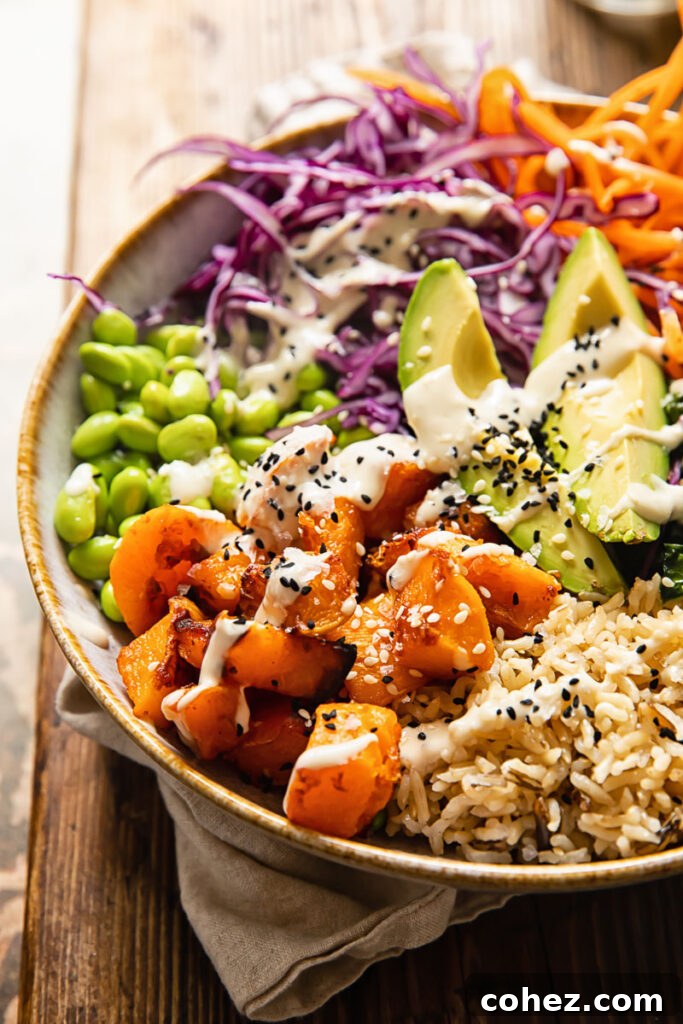
No Buddha bowl is complete without a sensational dressing to bind all the flavors. Our Lemon Tahini Dressing is a household favorite, similar to the one I’ve used with Israeli Salad. Tahini, a paste made from ground sesame seeds, contributes a distinctive, pleasant nuttiness and incredible creaminess to any dish it graces.
This dressing masterfully combines two tablespoons of tahini paste with two teaspoons of fresh lemon juice and a finely grated garlic clove. When these three powerful ingredients are initially mixed, the paste will be quite thick, almost clumpy. This is perfectly normal and expected.
To achieve the desired pourable consistency for drizzling generously over your Buddha bowl, you’ll gradually add water. The trick is to add it one tablespoon at a time, stirring thoroughly after each addition. This careful approach prevents the dressing from becoming too soupy too quickly. Continue this process until you reach a consistency that flows smoothly but still coats the back of a spoon.
Finally, season the dressing with salt. Add a pinch at a time, tasting as you go, until you achieve your preferred level of seasoning. The balance of salty, tangy, and nutty flavors is key to this dressing’s appeal.
While this recipe’s quantity is designed for two portions, making a larger batch is highly recommended. Tahini dressing keeps beautifully in the fridge for up to a week, allowing you to quickly assemble future bowls or use it as a flavorful sauce for other dishes, salads, or even as a dip.
Expert Tips for Buddha Bowl Success
- Mastering Roasted Butternut Squash: While assembling the salad itself is quick, roasting the butternut squash takes a bit of time. My best advice is to roast a whole squash in advance. Once cooked, it can be refrigerated for 3-5 days, ready to be added to your Buddha bowls, soups, or other meals whenever you desire.
- Embrace Your Inner Chef: This bowl is created using ingredients I personally love and have readily available. But remember, there are no hard and fast rules! Feel completely free to improvise, experiment, and swap ingredients to make the bowl perfect for your unique taste preferences and budget. Seasonal produce is always a great inspiration.
- Perfecting Dressing Consistency: For the best flavor distribution, ensure your dressing is pourable. If it’s too thick, add a small amount of water (a teaspoon at a time) and whisk until it reaches your desired, silky consistency. Be cautious not to thin it out too much.
- Spice It Up: I adore kale sautéed with garlic and chili flakes. The quantity of chili flakes isn’t specified because heat preference varies greatly. I typically use about a teaspoon for a noticeable kick, but adjust it to your liking – add more for fiery heat or less for a subtle warmth.
Serving & Storage
Enjoying Your Bowl
A beautifully crafted Buddha bowl is a meal unto itself. With its rich combination of grains, protein, vegetables, and a flavorful dressing, it requires nothing more to complete your dining experience. While I often suggest side dishes for other recipes, this particular dish is designed to be a comprehensive and satisfying meal, perfectly balanced in every way.
Smart Meal Prep & Leftovers
The essence of a Buddha bowl lies in its freshness, making it a dish best enjoyed right after it’s prepared and assembled. The vibrant textures and crispness of the raw vegetables, alongside the warm components, are at their peak when fresh. It’s truly a meal that won’t improve with age once all mixed together!
However, Buddha bowls are incredibly well-suited for meal preparation. If you find yourself with extra prepared ingredients, the key is to store each component separately in airtight containers in the refrigerator. This allows you to maintain their individual freshness and integrity until you’re ready to assemble a new bowl.
- Most cooked components, like roasted butternut squash or sautéed kale, will keep for 3-5 days.
- Hardy raw vegetables, such as shredded cabbage and carrot ribbons, can last up to a week. Softer greens and avocado are best added fresh on the day of serving.
- The lemon tahini dressing also stores beautifully for about a week in the fridge. In fact, the extra time allows the garlic to infuse the sauce even more deeply, intensifying its flavor. Just a note of caution: this enhanced garlic kick might be a bit strong for some palates!
By prepping your components ahead of time, you can enjoy a fresh, healthy, and delicious Buddha bowl whenever hunger strikes, with minimal effort.
More Plant-Based Inspiration
- Easy Kimchi Fried Rice
- Vegan Dan Dan Noodles
- Coconut Lentil Curry with Butternut Squash
- Vegetarian Thai Green Curry
Vegan Buddha Bowl
By Julia Frey of Vikalinka
Cook: 40 mins
Total: 50 mins
Servings: 2
A fresh and fun way to eat vegetables and all sorts of goodness.
Ingredients
- 40g / 1½oz rice, cooked (a mixture of brown and basmati recommended)
- 1 tbsp olive oil
- 50g / 1⅕ cups cavolo nero/kale
- 1 clove garlic, minced
- 90g / ½ cup edamame beans, shelled
- 1 avocado, sliced
- 1 carrot, cut into ribbons
- ½ tsp chilli flakes (adjust to taste)
- 90g / 1 cup shredded red cabbage (or white cabbage)
- 1 tbsp mixed seeds/nuts/hemp seeds, for topping
For the Lemon Tahini Dressing
- 2 tbsp tahini paste
- 2 tsp fresh lemon juice
- 1 clove garlic, grated
- Salt to taste
- Water (as needed, for consistency)
For the Roasted Butternut Squash
- 200g / 1⅓ cups butternut squash, peeled, deseeded, and cubed (about 2-inch cubes)
- 1 tbsp olive oil
- ½ tsp smoked paprika
- ½ tsp garlic powder
- Salt to taste
Instructions
- Prepare Roasted Butternut Squash: Preheat your oven to 200°C (400°F). Peel, deseed, and cube the butternut squash. Toss the cubed squash with olive oil, smoked paprika, garlic powder, and salt. Spread on a large, rimmed baking sheet and roast for 40-45 minutes, or until tender and golden brown.
- Sauté Greens: In a pan, heat 1 tablespoon of olive oil. Add the minced garlic and chili flakes, sauté for 30 seconds until fragrant. Add the cavolo nero or kale, along with a splash of water, cover, and sauté for 5 minutes until tender-crisp.
- Make Tahini Dressing: In a small bowl, combine tahini paste and lemon juice, stirring until it thickens. Stir in the grated garlic. Gradually add small amounts of water, one tablespoon at a time, whisking continuously until the dressing reaches a pourable consistency. Season with salt to taste.
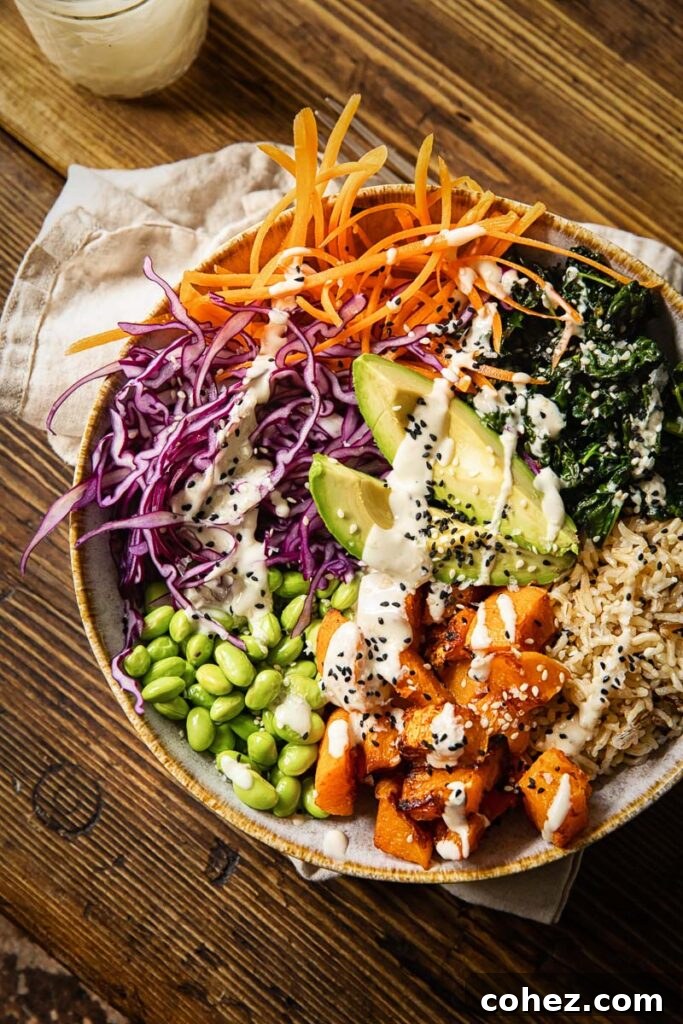
- Assemble the Bowl: To assemble your Buddha bowl, start with the cooked rice as the base. Artfully arrange the roasted butternut squash, sautéed kale, edamame beans, sliced avocado, carrot ribbons, and shredded red cabbage on top of the rice. Drizzle generously with the lemon tahini dressing and sprinkle with your choice of seeds or nuts. Serve immediately and enjoy!
Nutrition
Calories: 599kcal | Carbohydrates: 50g | Protein: 14g | Fat: 42g | Saturated Fat: 6g | Polyunsaturated Fat: 8g | Monounsaturated Fat: 24g | Trans Fat: 0.01g | Sodium: 2381mg | Potassium: 1324mg | Fiber: 14g | Sugar: 6g | Vitamin A: 18644IU | Vitamin C: 62mg | Calcium: 194mg | Iron: 4mg
Nutrition information is automatically calculated, so should only be used as an approximation.
Tried this recipe? Let us know how it was! We love to hear your feedback.