
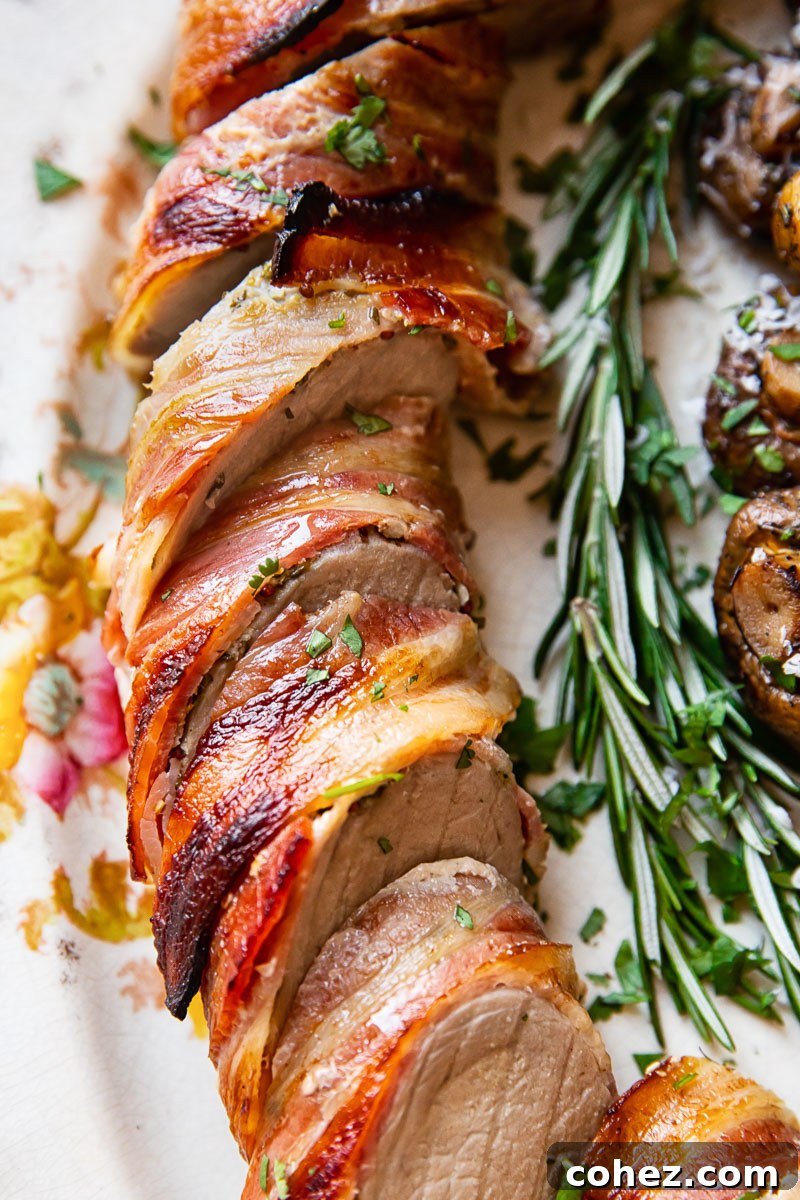
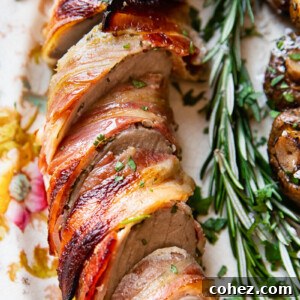
Imagine a delectable roast dinner, infused with aromatic rosemary and perfectly wrapped in a sweet and savory balsamic maple bacon, ready on your table in just 30 minutes. This isn’t a dream; it’s the incredible reality of our Speedy Bacon-Wrapped Pork Tenderloin recipe—quite possibly the fastest, most flavourful roast you’ll ever enjoy!
These succulent slices of tenderloin offer an elegant yet accessible meal, perfect for a busy weeknight or a special occasion. For an unforgettable pairing, serve them alongside our crispy Hasselback Potatoes with Gremolata, creating a harmonious symphony of textures and tastes.
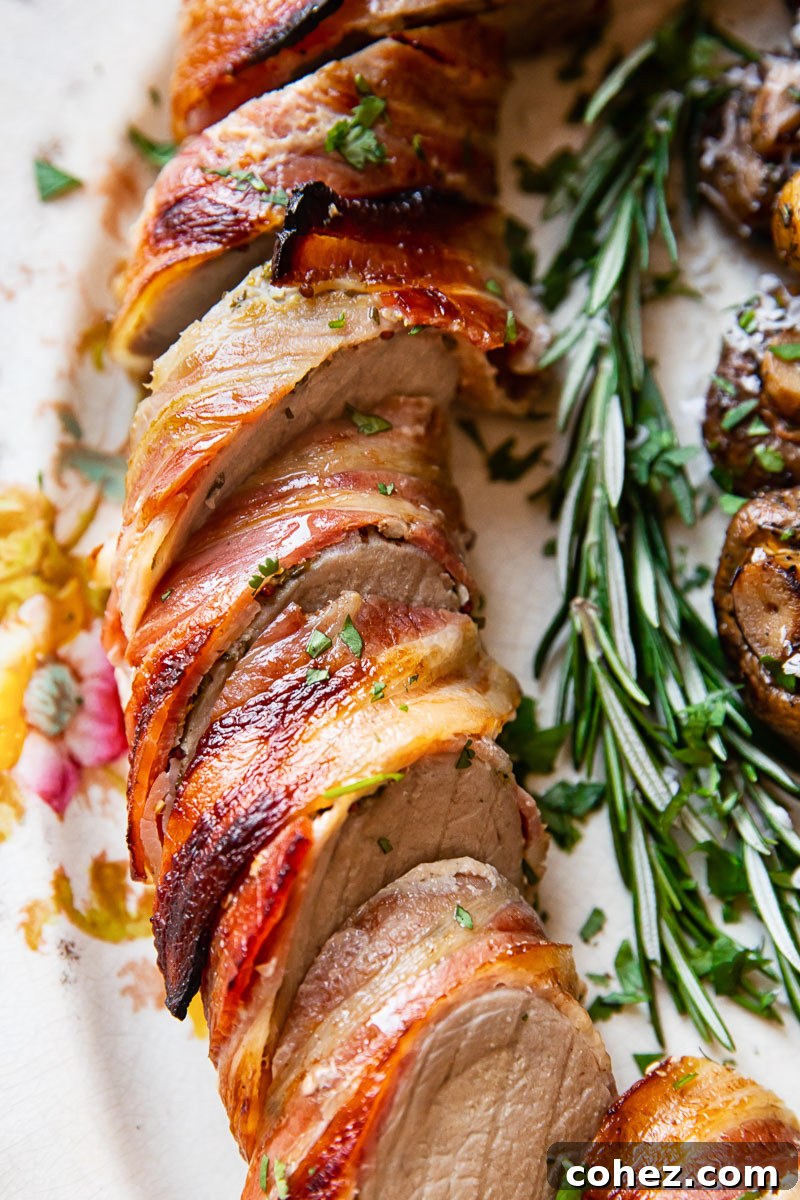
It’s a wonder this recipe hasn’t been shared sooner, considering it graces our dinner table several times a month. It’s a truly effortless way to bring a touch of luxury to your meal, requiring minimal effort and just half an hour from start to finish. This dish effortlessly elevates an ordinary evening into an extraordinary culinary experience.
When coupled with a couple of equally quick and easy side dishes, you’ll find yourself indulging in a proper, satisfying roast dinner, even in the middle of a hectic week. Forget long hours in the kitchen; this recipe redefines convenience without compromising on taste or presentation.
Understanding Pork Tenderloin: The Lean and Tender Cut
Pork tenderloin, often referred to as pork fillet, is the porcine equivalent of beef tenderloin. It’s renowned as the most tender cut from the animal, and notably, it’s also one of the leanest. If you’re a fan of succulent chicken breast, you’ll undoubtedly appreciate pork tenderloin for its similar lean profile and incredibly delicious flavor. Its inherent tenderness and delicate texture are why it commands respect in the culinary world and requires minimal cooking time – a definite bonus for busy home cooks.
Pork Tenderloin vs. Pork Loin: A Crucial Distinction
It’s essential to understand that pork tenderloin and pork loin are not interchangeable cuts, despite their similar names. While both are flavorful, they differ significantly in size, shape, and ideal cooking methods. Pork tenderloin is long, thin, and very lean, cooking quickly and best suited for high-heat, short-duration methods like roasting, grilling, or pan-searing. Pork loin, on the other hand, is much thicker, wider, and can have a fat cap, making it better for longer roasting times and often yielding a more robust, richer flavor profile. Using them interchangeably would likely result in an overcooked, dry tenderloin or an undercooked loin. For those interested in a classic pork loin preparation, my Pork Loin Roast with Gravy recipe offers a fantastic alternative.
Why Choose Pork Tenderloin for Your Next Meal?
Beyond its speed of preparation, pork tenderloin offers several compelling reasons to make it a regular feature in your kitchen. Its leanness makes it a healthier protein option, while its tenderness ensures a fork-tender experience with every bite, provided it’s cooked correctly. It’s also incredibly versatile, serving as a blank canvas for a wide array of flavors, from simple herb rubs to complex glazes. This cut easily adapts to various culinary traditions, making it a reliable choice for diverse palates. Whether you’re aiming for a sophisticated dinner or a quick family meal, pork tenderloin delivers both quality and convenience. For another delightful tenderloin idea, be sure to give my Mustard and Molasses Glazed Pork Tenderloin a try!
Mastering the Quick Roast: Expert Tips for Succulent Bacon-Wrapped Pork Tenderloin
Achieving Perfection: Essential Recipe Tips and Notes
- **Avoid Overcooking at All Costs:** This is the single most critical piece of advice for pork tenderloin. Due to its lean nature and thin diameter, it cooks very quickly. While 20-25 minutes in a 200°C/400°F oven might not seem like enough time for a roast, trust the process. An internal temperature of 65°C/150°F (which will rise to 68-70°C/155-160°F as it rests) is perfect for juicy, tender pork. Overcooking will render it tough and rubbery, diminishing its “tenderloin” reputation.
- **Trim the Silverskin:** Before applying any rub or wrapping, inspect your pork tenderloin for “silverskin.” This thin, silvery membrane runs along one side of the tenderloin and does not break down during cooking, resulting in a chewy texture. Use a sharp knife to carefully slide it under the silverskin and slice it away from the meat. This simple step ensures an even more tender final product.
- **Flavor Rub for Lean Meat:** Given pork tenderloin’s low fat content, it benefits immensely from a good flavor rub. In this recipe, we use a vibrant mix of finely chopped fresh rosemary, robust whole-grain mustard, and quality olive oil. This paste not only infuses the meat with incredible aroma but also helps to keep it moist and tender during the quick roasting process.
- **The Magic of Bacon Wrapping:** While not strictly necessary for cooking, wrapping the tenderloin in bacon adds several layers of flavor and texture. The bacon keeps the lean pork moist, infuses it with a delightful smoky essence, and crisps up beautifully in the oven. For a slightly lighter option that still offers a savory wrap, consider using Parma Ham (Prosciutto) instead of bacon, though the flavor profile will be less smoky.
- **The Balsamic Maple Glaze:** This glaze is a game-changer. A simple mixture of sweet maple syrup and tangy balsamic vinegar is brushed over the bacon-wrapped tenderloin before roasting. The natural sugars in the maple syrup promote incredible caramelization on the bacon, yielding a crispier texture and a rich, complex sweet-and-sour flavor that perfectly complements the savory pork and smoky bacon.
- **Resting is Non-Negotiable:** After removing the tenderloin from the oven, allow it to rest for at least 10 minutes before slicing. This crucial step allows the juices to redistribute throughout the meat, ensuring every slice is incredibly tender and moist. Skipping this step will result in juices running out, leaving you with drier pork.
The Star Ingredients: Crafting Exceptional Flavor in Every Bite
The beauty of this Bacon-Wrapped Pork Tenderloin lies not just in its speed, but in the thoughtful combination of ingredients that create a truly gourmet experience. Each component plays a vital role in building layers of irresistible flavor and texture.
Rosemary: Aromatic Freshness
Fresh rosemary is the cornerstone of the herb rub, imparting its distinctive piney, slightly peppery aroma and taste. This classic herb pairs exquisitely with pork, cutting through its richness and adding a sophisticated, earthy note. Using fresh rosemary is key here; its vibrant oils are released beautifully during roasting, infusing the entire dish with its fragrant essence.
Balsamic Maple Glaze: Sweet and Tangy Perfection
The glaze, a simple yet powerful blend of balsamic vinegar and maple syrup, is what elevates this dish from delicious to extraordinary. Balsamic vinegar adds a wonderful acidity and depth, providing a delightful counterpoint to the savory pork and smoky bacon. Maple syrup introduces a natural sweetness that not only balances the tang of the balsamic but also helps the bacon caramelize to a glorious crisp, creating a sticky, irresistible crust.
Crispy Bacon: The Ultimate Flavor Wrapper
Bacon isn’t just a wrap; it’s an integral part of the flavor profile. As it crisps up in the oven, it bastes the lean tenderloin with its rendered fat, preventing it from drying out and infusing it with a rich, smoky saltiness. The crisp texture of the bacon contrasts beautifully with the tender pork within, making every bite a delight. For those in the UK, streaky bacon is the ideal choice for this recipe.
Whole Grain Mustard: A Subtle Kick
Whole grain mustard is not just a binder for the rub; it adds a subtle, tangy warmth and a pleasing texture. Its mild piquancy enhances the overall savory notes of the pork and rosemary without overpowering them, contributing to the complex flavor profile that makes this dish so memorable.
Serving Suggestions: Completing Your Speedy Roast Dinner
One of the greatest advantages of this Bacon-Wrapped Pork Tenderloin is its versatility. It pairs beautifully with a wide range of side dishes, allowing you to tailor your meal to your time constraints and preferences. Whether you’re aiming for ultimate speed or a more elaborate spread, here are some perfect companions:
Perfect Potato Pairings
On a regular weekday, simplicity is key. My go-to is often boiled and buttered baby potatoes, which require minimal prep and cook quickly without needing to be peeled. However, if you have an extra 15 minutes, elevate your potato game with my Spiced Roasted Baby Potatoes—they promise a flavour explosion! For a truly show-stopping accompaniment, the aforementioned Hasselback Potatoes are a fantastic choice. And for a comforting, hearty option, a lovely Jacket Potato, perhaps with a dollop of sour cream and chives, makes a wonderful and easy side.
Delightful Vegetable Companions
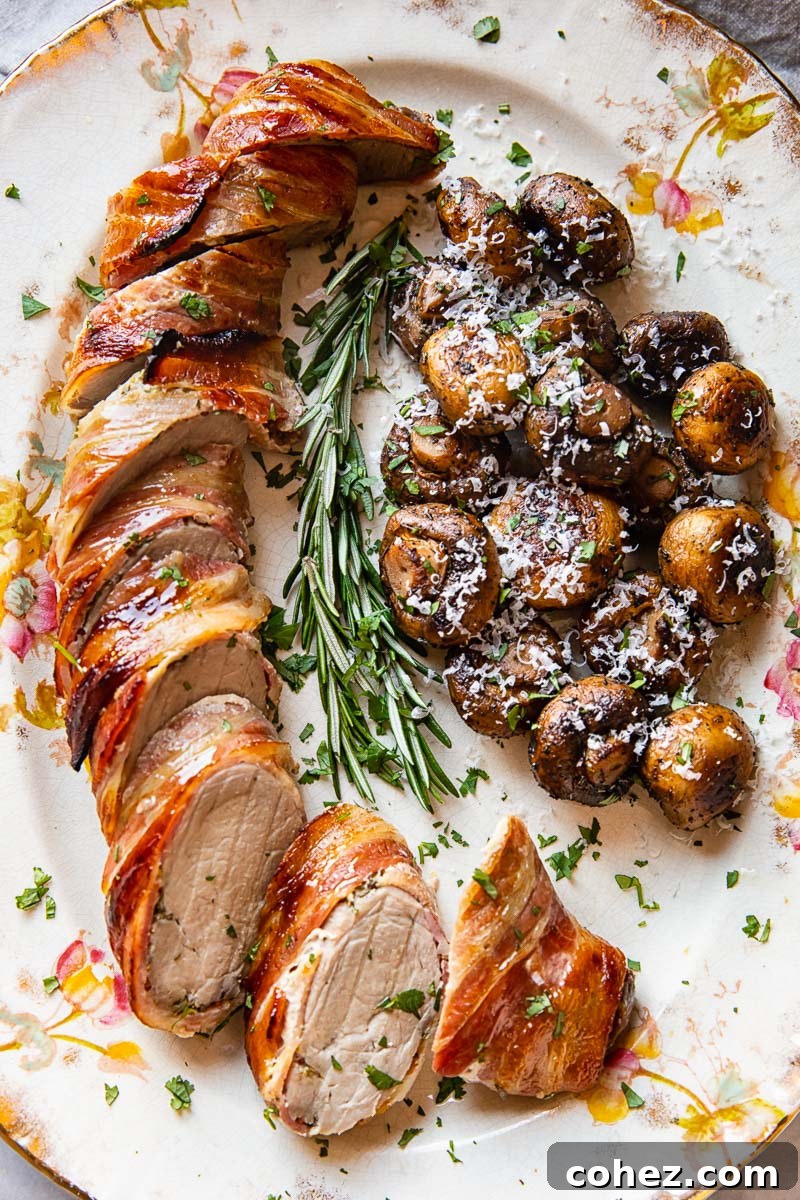
A quick side dish that complements the rosemary-infused pork beautifully is Pan-Fried Garlic Mushrooms with Parmesan. Both dishes share the earthy aroma of rosemary, creating a cohesive and absolutely delicious pairing. Steamed green beans tossed with a knob of butter and a pinch of salt, or roasted asparagus spears drizzled with olive oil, also make excellent, healthy, and fast vegetable sides that allow the tenderloin to shine.
Fresh and Vibrant Salads
For a lighter, refreshing contrast, a big and chunky salad is always a great choice. Think a simple mixed green salad with a light vinaigrette, or something more substantial like a couscous salad with roasted vegetables. A classic Caesar salad also offers a creamy, tangy complement to the rich flavors of the pork and bacon, providing a fresh element to balance the meal.
Frequently Asked Questions (FAQs)
What is the ideal internal temperature for pork tenderloin?
For the juiciest and safest pork tenderloin, aim for an internal temperature of 65°C (150°F). Remember that the temperature will rise slightly during resting (carryover cooking) to around 68-70°C (155-160°F), which is the recommended minimum safe temperature for pork. Always use a reliable meat thermometer inserted into the thickest part of the meat to ensure accuracy.
How do I prevent my pork tenderloin from drying out?
The key to preventing dry pork tenderloin is not to overcook it. Follow the recommended cooking times and internal temperatures strictly. The bacon wrap in this recipe also acts as a natural basting agent, providing moisture and fat to the lean meat. Additionally, ensuring a proper resting period after cooking is crucial for redistributing juices and keeping the pork moist.
Can I prepare bacon-wrapped pork tenderloin in advance?
You can certainly do some prep work ahead of time. You can trim the silverskin and apply the rosemary-mustard rub to the pork tenderloin up to 24 hours in advance. Wrap it tightly in plastic wrap and store it in the refrigerator. You can also wrap it in bacon ahead of time, but for the crispiest bacon, it’s best to glaze it and roast it just before serving.
How should I store and reheat leftovers?
Store any leftover pork tenderloin in an airtight container in the refrigerator for up to 3-4 days. To reheat, slice the tenderloin and gently warm it in a skillet over medium-low heat with a splash of broth or water to prevent drying. You can also reheat it in a preheated oven (around 160°C/325°F) wrapped in foil until just warmed through.
Can I use different herbs or glazes?
Absolutely! This recipe is incredibly adaptable. While rosemary pairs wonderfully, you could experiment with other herbs like thyme, sage, or a blend of Italian herbs. For glazes, try a spicy honey-sriracha, a tangy orange-ginger, or even a simple garlic-herb butter. Feel free to customize the flavors to suit your palate.
Creative Variations to Elevate Your Tenderloin
This Bacon-Wrapped Pork Tenderloin is fantastic as is, but don’t hesitate to experiment with variations to suit your taste or what you have on hand. For a different flavor profile, consider adding a pinch of smoked paprika or a dash of cayenne pepper to the rub for a subtle heat. You could also stuff the tenderloin before wrapping it—think a mixture of finely chopped apples and onions, spinach and feta, or even a mushroom duxelles. Another idea is to swap out the balsamic maple glaze for a sweet chili sauce for an Asian-inspired twist, or a Dijon-honey glaze for a sharper, sweeter finish. The possibilities are endless, making this recipe a truly versatile addition to your culinary repertoire.
More Delicious Pork Recipes to Try:
- Crispy Honey Soy Pork Belly
- Sweet and Sour Pork Chops
- Slow Cooker Cuban Pork (Lechon Asado)
- Pork Loin Steaks in Creamy Shallot and Mushroom Sauce
Bacon Wrapped Pork Tenderloin
Julia Frey of Vikalinka
10
20
30
4
Ingredients
- 2 cloves garlic, grated or pressed
- 1 tbsp fresh rosemary, chopped
- 1 tsp wholegrain mustard
- 1/2 tsp salt
- 1 tbsp olive oil
- 500-750g / 1-1.5 lbs pork tenderloin
- 5-6 strips bacon (streaky bacon in the UK)
- 1 tsp maple syrup
- 1 tbsp balsamic vinegar
Instructions
-
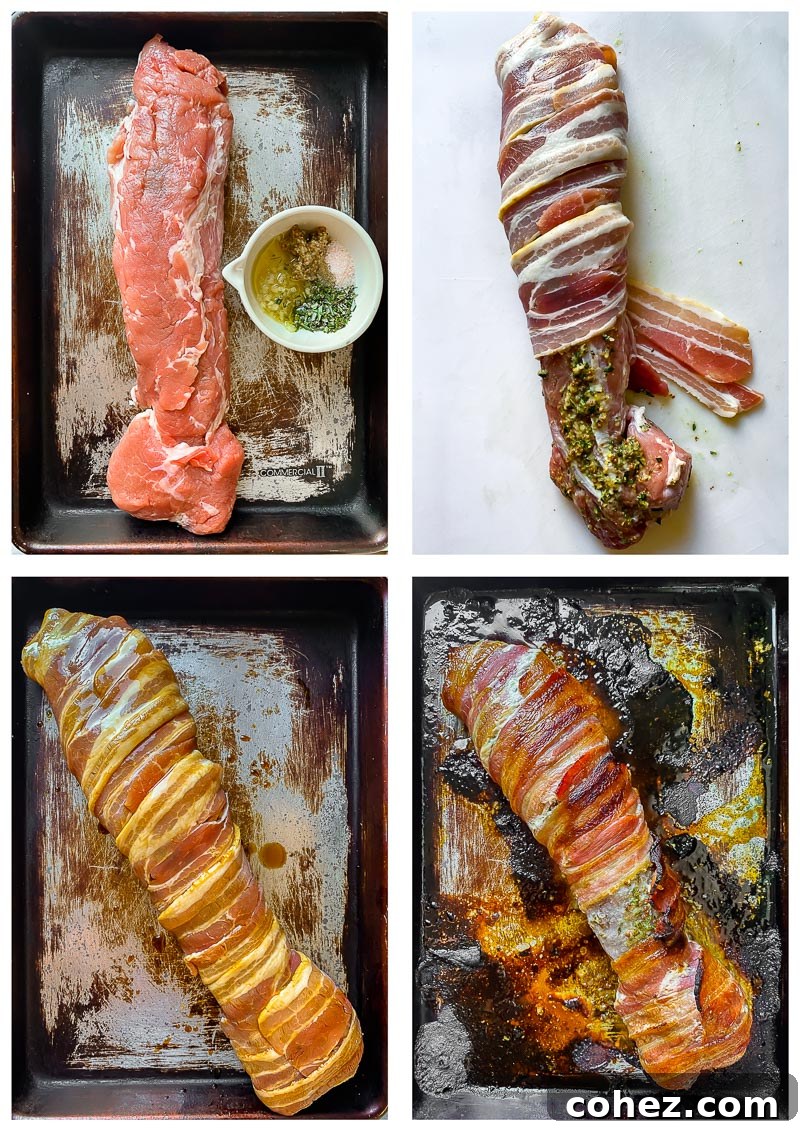
Preheat your oven to 200°C (400°F). In a small bowl, combine the grated garlic, finely chopped fresh rosemary, whole-grain mustard, salt, and olive oil to create a fragrant paste.
-
Using a sharp knife, carefully remove any visible silverskin from the pork tenderloin. Evenly rub the prepared paste all over the tenderloin. Next, carefully wrap the tenderloin with bacon strips, overlapping them slightly to ensure they stay secure during cooking. In a separate small bowl, whisk together the maple syrup and balsamic vinegar, then brush this glaze generously over the bacon-wrapped pork.
-
Place the bacon-wrapped pork tenderloin in the preheated oven and roast for 20-25 minutes. To ensure the juiciest pork, cook until the internal temperature reaches 65°C (150°F) when measured with a meat thermometer inserted into the thickest part. If the bacon hasn’t reached your desired crispness, you can finish it under the broiler (grill in the UK) for 3-5 minutes, keeping a close eye on it to prevent burning. Once cooked, transfer the tenderloin to a cutting board and let it rest for at least 10 minutes before slicing and serving. This resting period is crucial for the juices to redistribute, ensuring maximum tenderness and flavor.
Nutrition
Carbohydrates: 3g |
Protein: 24g |
Fat: 9g |
Saturated Fat: 2g |
Polyunsaturated Fat: 1g |
Monounsaturated Fat: 5g |
Trans Fat: 1g |
Cholesterol: 75mg |
Sodium: 367mg |
Potassium: 465mg |
Fiber: 1g |
Sugar: 2g |
Vitamin A: 18IU |
Vitamin C: 1mg |
Calcium: 15mg |
Iron: 1mg
Nutrition information is automatically calculated, so should only be used as an approximation.
Tried this recipe?
Let us know how it was!
Conclusion: Your New Go-To Weeknight Roast
This Bacon-Wrapped Pork Tenderloin recipe truly embodies the ideal blend of speed, simplicity, and gourmet flavor. It’s a testament that a luxurious roast dinner doesn’t demand hours in the kitchen, making it an indispensable recipe for busy weeknights and special occasions alike. With its tender pork, crispy bacon, and aromatic rosemary-balsamic maple glaze, it’s a dish that promises to impress with minimal effort. So, next time you’re craving a satisfying and elegant meal that comes together in a flash, reach for this recipe. It’s poised to become a cherished favorite in your culinary collection!