
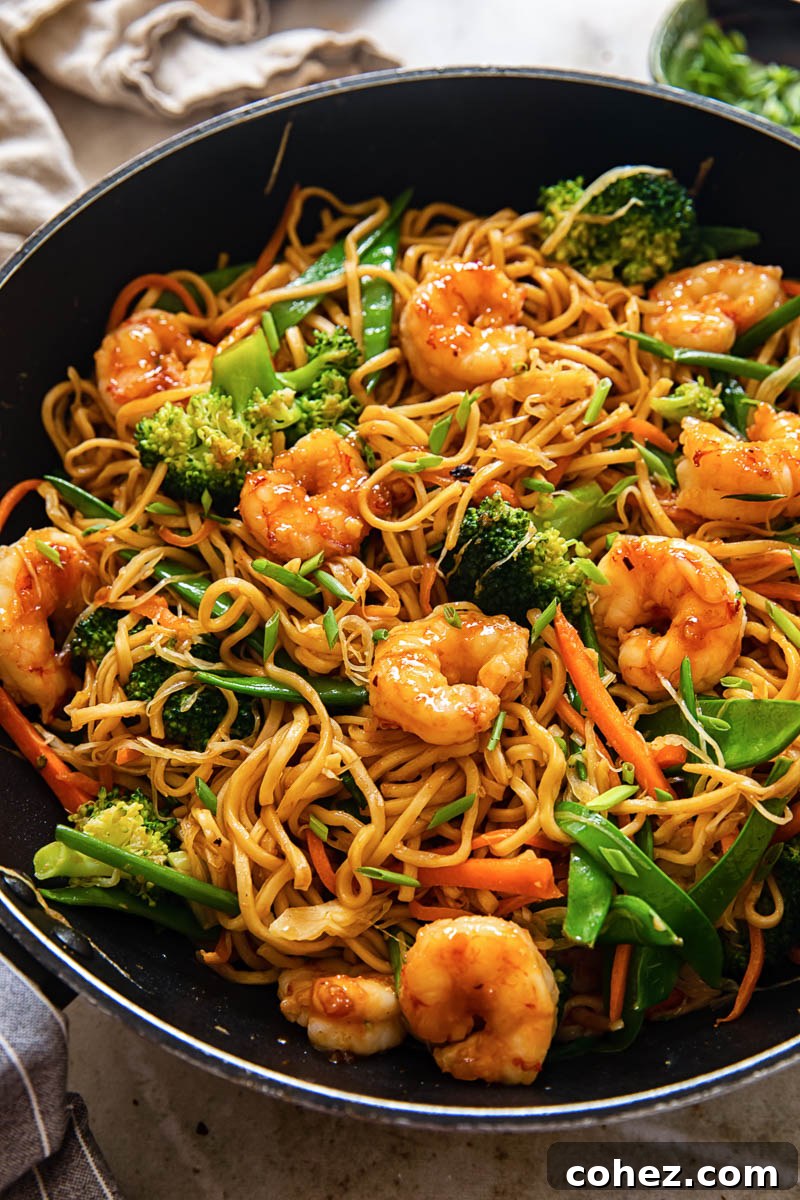
Craving your favorite Chinese takeout? Learn how to effortlessly recreate a succulent Shrimp Chow Mein right in your own kitchen in under 30 minutes! This easy, foolproof recipe promises authentic results, featuring juicy shrimp tossed with vibrant, flavor-packed vegetables and perfectly cooked noodles. More than just delicious, this homemade dish is a nutritious, straightforward, and budget-friendly alternative to restaurant fare.
For fellow seafood enthusiasts, you might also enjoy our delightful Honey Garlic Shrimp recipe.
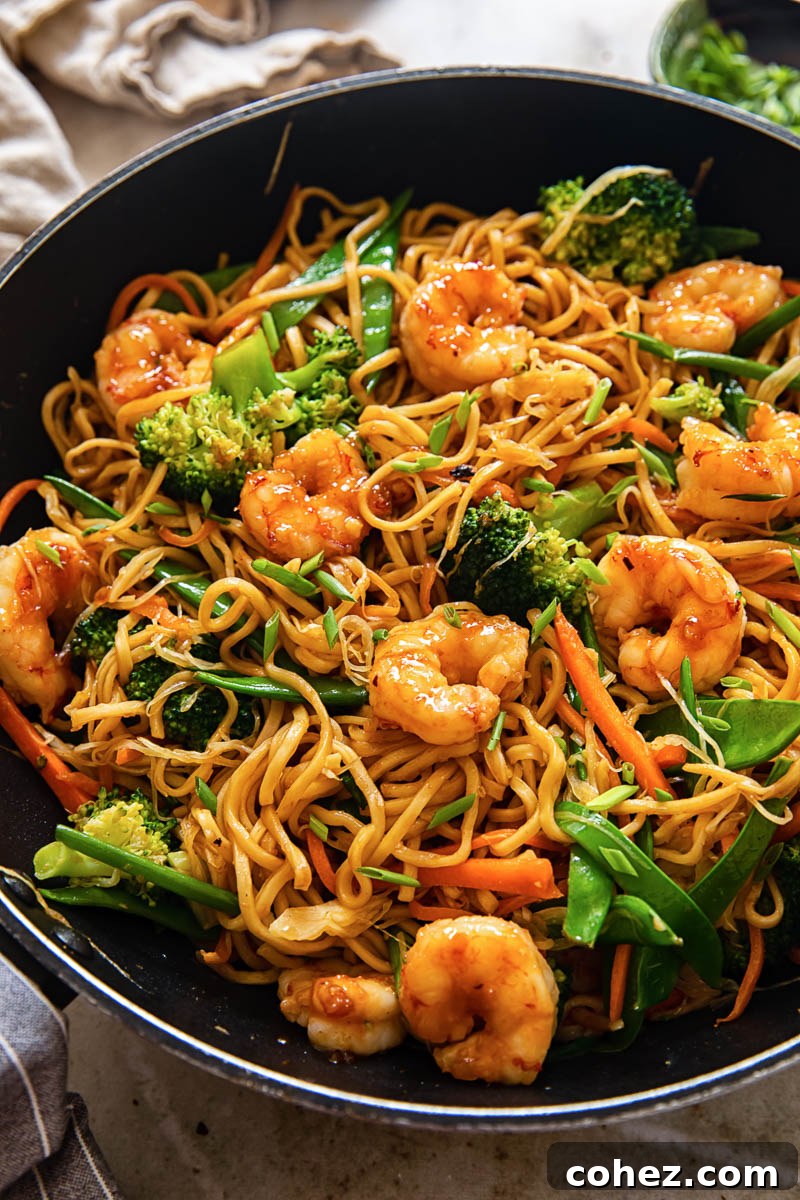
There’s a special satisfaction that comes from mastering your beloved Asian takeout recipes at home. Lately, I’ve embarked on a delicious challenge to do just that, and my family has been absolutely thrilled with the culinary outcomes. While the convenience of ordering in is undeniable, restaurant takeout often comes loaded with excessive fats and sugars. My kitchen, however, offers a healthier canvas for these classic dishes, allowing for a fresh and wholesome transformation.
Many traditional Asian cuisines naturally emphasize vegetables, using meat or tofu in smaller quantities primarily for flavor and texture. This approach creates dishes that are inherently lighter and more vibrant. My culinary journey to China years ago truly opened my eyes to this fact. The Chinese food I experienced there was remarkably fresh and abundant with a diverse array of vegetables, with proteins playing a supporting role. In my recipes, I strive to capture that authentic, garden-fresh taste, ensuring every bite is both delicious and genuinely good for you.
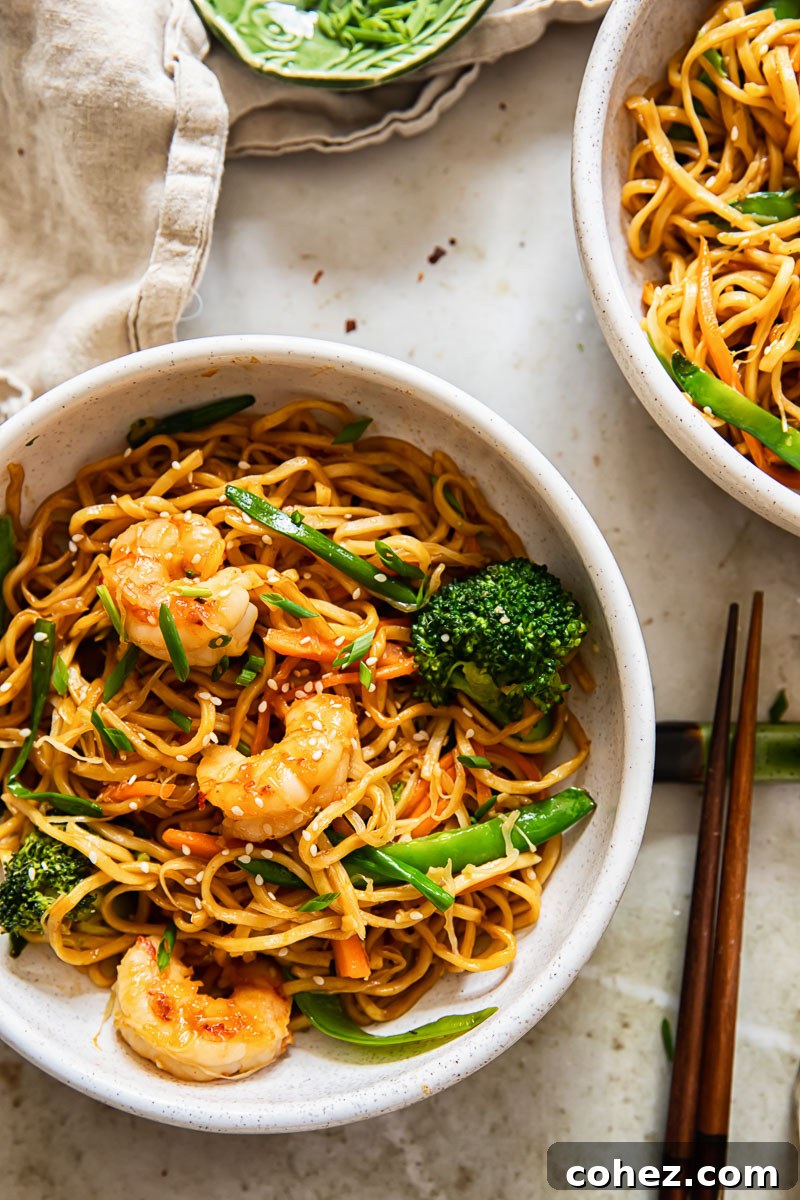
Homemade Shrimp Chow Mein: An Authentic and Healthy Take
Chow Mein, literally translating to “fried noodles,” is a cornerstone of Chinese cuisine. Despite the word “fried,” don’t be mistaken into thinking this is a heavy or overly oily dish. The traditional method involves a quick, high-heat stir-fry that requires only a modest amount of oil, resulting in a dish that’s light yet incredibly satisfying. At its heart, Chow Mein is a versatile noodle stir-fry, typically brimming with fresh vegetables and often enhanced with a protein of choice.
While this recipe focuses on succulent shrimp – a fantastic choice due to its rapid cooking time – the beauty of Chow Mein lies in its adaptability. Feel free to substitute with other thinly sliced proteins like tender chicken, savory beef, or even plant-based options like firm tofu. The key is to ensure your chosen protein cooks quickly and integrates seamlessly with the noodles and vegetables, absorbing all the aromatic flavors of the sauce.
Selecting Your Vegetables for the Perfect Chow Mein
When it comes to the vegetables for your Chow Mein, let your imagination and personal preferences be your guide! Almost any crisp, stir-fry-friendly vegetable can be incorporated. For this particular shrimp chow mein recipe, I’ve carefully selected a medley of textures and flavors: tender broccoli florets, crisp snow peas, thinly sliced carrots, finely shredded cabbage, and vibrant green onions. These vegetables not only add beautiful color but also provide a delightful crunch and essential nutrients to the dish.
Beyond these staples, I frequently experiment with other delicious additions. Bok choy, with its delicate leaves and crunchy stems, is an excellent choice. Cauliflower florets can add a heartier texture, while fresh bean sprouts introduce a refreshing, earthy note. Even finely chopped green beans or bell peppers can elevate the dish. The aim is to achieve a balanced mix that cooks evenly and retains a slight bite, ensuring a truly authentic experience.
Essential Chow Mein Cooking Tips and Notes
- Perfectly Cooked Vegetables: The secret to an authentic Chow Mein lies in achieving perfectly tender-crisp vegetables. The trick is to cook them briefly in a screaming hot wok or large frying pan until they soften slightly but still retain a satisfying crunch, what chefs often call “al dente.” Once cooked, immediately remove them from the pan before adding the noodles and sauce. This crucial step prevents the vegetables from becoming overcooked and soggy, ensuring a vibrant texture in the final dish. Everything comes together at the very end, allowing each component to shine.
- The Art of the Sauce: While perfectly cooked vegetables are vital, much of the irresistible flavor in Chow Mein comes from its expertly crafted sauce. Many home cooks might feel intimidated, believing that achieving that signature takeout taste is difficult. Fear not! All the ingredients for a truly authentic sauce are readily available, making it surprisingly simple to recreate that delicious flavor you crave.
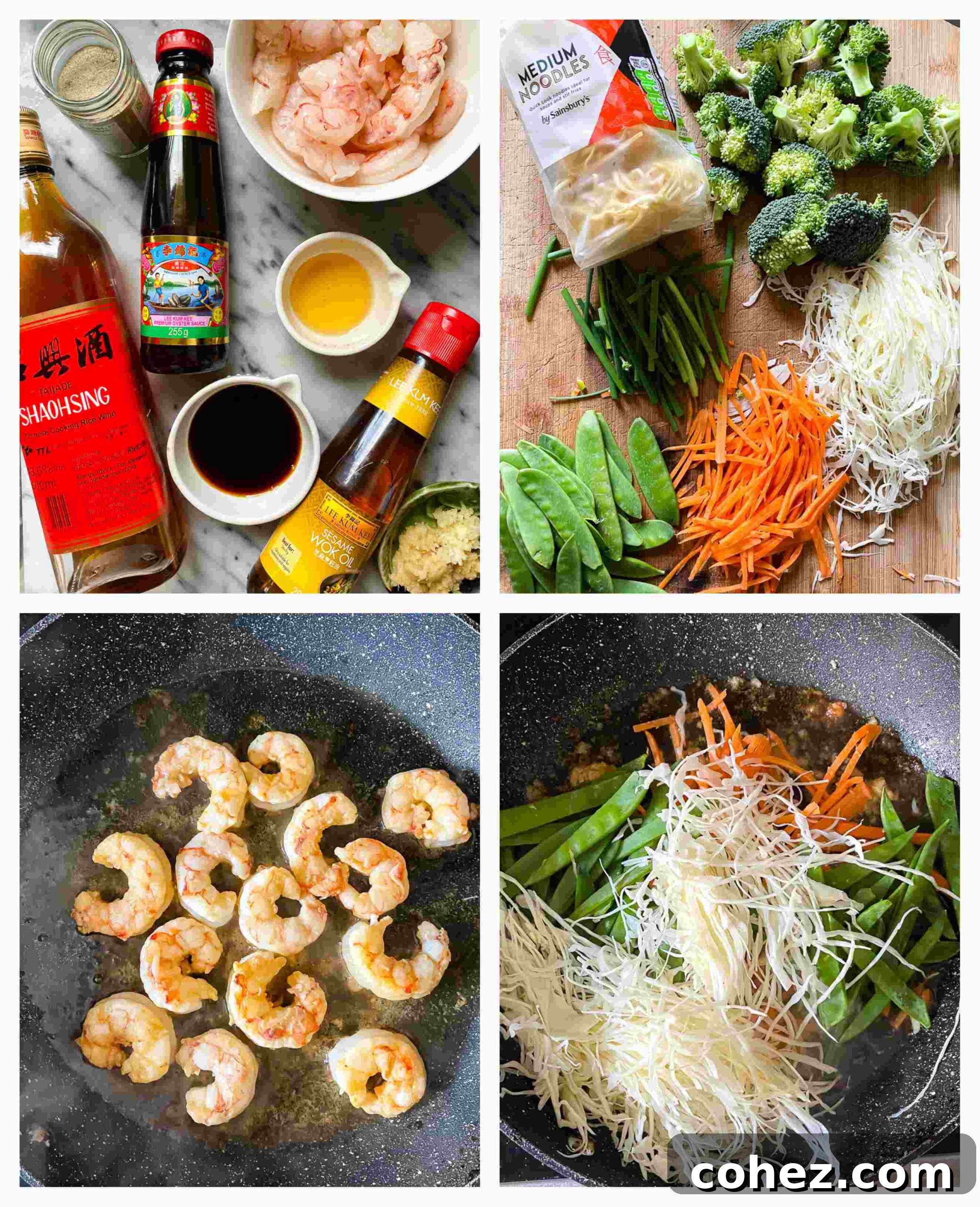
- Key Sauce Ingredients Demystified: For this exceptional sauce, you’ll need a harmonious blend of oyster sauce (for savory depth and umami), Shaoxing wine (a Chinese cooking wine that adds a unique aromatic complexity, or a dry sherry as a substitute), dark soy sauce (for rich color and a deeper, less salty soy flavor), fragrant sesame oil, and a touch of honey or sugar to balance the savory notes. Thanks to the global popularity of Chinese cuisine, these ingredients are now staples in the Asian aisle of most major supermarkets in Western countries. A quick look around, and you’ll find everything you need to create that coveted, balanced flavor.
- Precision Vegetable Preparation: How you prepare your vegetables significantly impacts their cooking time and final texture. Denser vegetables like cabbage and carrots take longer to cook through. Therefore, it’s essential to slice them as thinly and uniformly as possible. A mandoline makes this task incredibly easy, producing consistent matchsticks or shreds. However, a sharp knife and a steady hand will work just as well. Broccoli florets, being quite firm, benefit from a quick blanching before being added to the main stir-fry. This pre-cooking ensures they will cook evenly and quickly alongside the other vegetables. For maximum convenience and efficiency, I often cook the noodles and blanch the broccoli in the same pot, saving time and cleanup.
- Quality Shrimp Matters: While you don’t need a large quantity of shrimp – just one pound can easily feed 4 to 6 people – opting for decent quality, fresh or properly thawed peeled and deveined shrimp makes a noticeable difference in the final taste and texture of your Chow Mein.
What Are the Best Noodles to Use for Chow Mein?
The choice of noodles is paramount for an authentic Chow Mein experience. For this recipe, I recommend using medium egg noodles. These are widely available in the Asian sections of most major supermarkets, especially in the UK. In the United States, you might find them labeled specifically as “Chow Mein Noodles,” or sometimes simply “Chinese egg noodles.” These noodles are perfect for stir-frying as they have a good bite and absorb the sauce beautifully without becoming mushy.
If you find yourself unable to source traditional Asian egg noodles, don’t despair! You can absolutely opt for Italian spaghetti or linguine as a viable substitute. These pasta types are made similarly to egg noodles and will work surprisingly well in a stir-fry. However, there’s a crucial difference to note: Asian egg noodles typically cook very quickly, often requiring only 3-4 minutes. Italian spaghetti, on the other hand, will usually take more than double that time. Always read and follow the cooking instructions on your chosen noodle package carefully to ensure they are cooked al dente – firm to the bite – which is ideal for stir-frying.
Easy Serving Suggestions for Shrimp Chow Mein
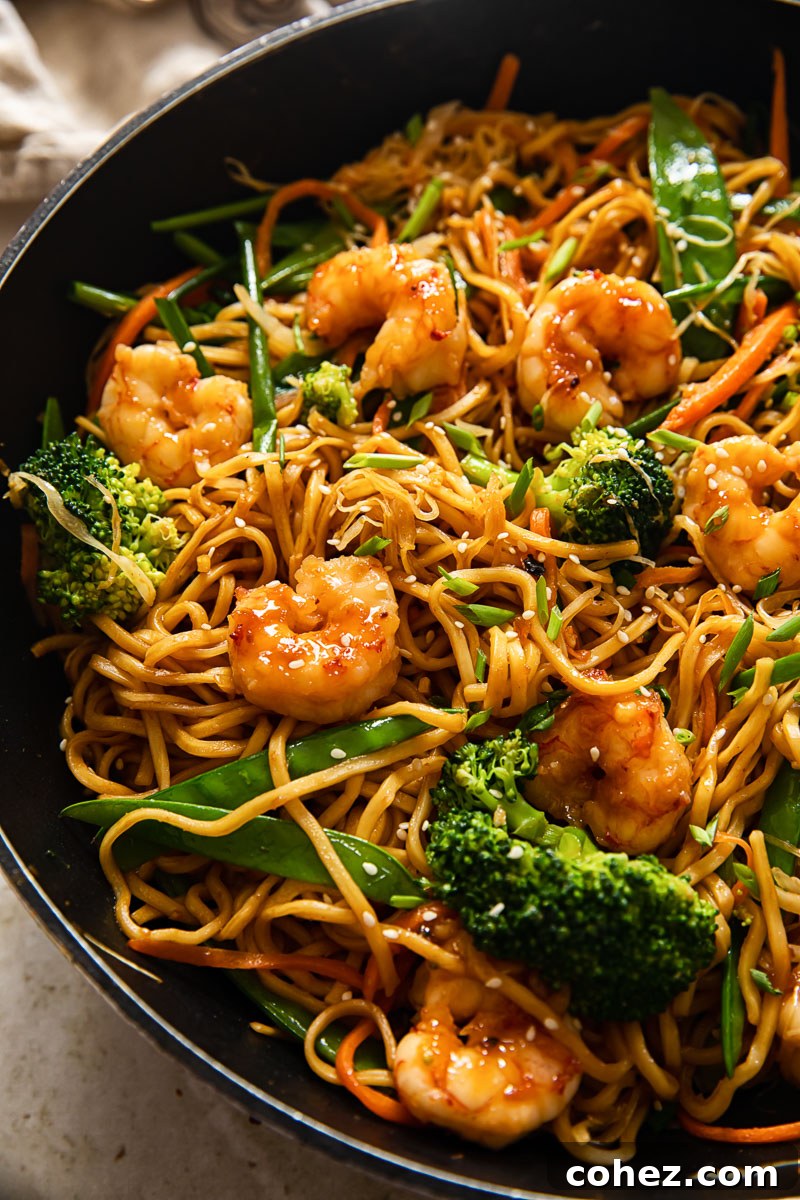
One of the many advantages of Shrimp Chow Mein is that it’s truly a complete meal in a single bowl. Packed with protein, carbohydrates, and a generous array of vegetables, there’s no real need to prepare anything elaborate to serve alongside it. It’s hearty, satisfying, and perfectly balanced on its own. Before digging in, I personally love to add a light sprinkling of toasted sesame seeds for an extra nutty flavor and an appealing visual garnish. A dash of chili flakes can also provide a pleasant kick for those who enjoy a bit of heat.
However, if you’re hosting a larger gathering, looking to expand the meal, or simply want to indulge in a more elaborate spread, consider adding a complementary appetizer. The goal is to select something that shares a similar Asian flavor profile without overpowering the main dish. For this, I highly recommend crispy appetizers such as crispy air fryer tofu bites, which offer a wonderful textural contrast and absorb flavors beautifully. Another fantastic option is Asian air fryer chicken wings – they are incredibly flavorful and always a crowd-pleaser, providing a perfect start to your homemade takeout feast.
Storage and Reheating Leftovers
One of the perks of cooking a delicious meal like Shrimp Chow Mein at home is the possibility of enjoying leftovers! If you have any remaining chow mein, it can be safely stored in an airtight container in the refrigerator for 3-4 days. Due to the shrimp content, it’s crucial not to push the storage time beyond this recommendation to ensure food safety and optimal flavor. Seafood-based dishes are best enjoyed fresh or within a short window.
While leftovers can technically be frozen for 2-3 months, be aware that freezing may affect the texture of the noodles, making them a little softer upon reheating. However you plan to store your leftovers, whether in the fridge or freezer, always ensure you do so within two hours of cooking to prevent bacterial growth and maintain freshness. For reheating, the microwave offers the simplest and quickest solution. Alternatively, you can add the leftovers back to a wok or large frying pan with a small amount of oil over medium heat, tossing gently until everything is warmed through. This method can help restore some of the stir-fry’s original texture and crispness.
More Asian Noodle Recipes You’ll Love
- Udon Noodle Soup
- Filipino Noodles Pancit
- Chilli Salmon Mee Goreng (Fried Noodles)
- Thai Noodle Soup
Shrimp Chow Mein
By Julia Frey of Vikalinka
Prep: 15 mins
Cook: 10 mins
Total: 25 mins
Servings: 3 -4
Print Recipe
Easy, foolproof recipe with authentic results! Juicy shrimp tossed with flavor-packed vegetables and noodles.
Equipment
-
Carbon steel wok
-
Mandoline (optional, for thin slicing)
Ingredients
- 250g / 1/2 lbs Asian medium egg noodles, or spaghetti
- 2 tbsp oyster sauce
- 2 tbsp Shaoxing wine, (Chinese cooking wine) or dry sherry
- 1 tbsp dark soy sauce
- 1-2 tsp sesame oil
- 2 tsp honey, or sugar
- 1/2 tsp white pepper
- 2 tbsp vegetable oil
- 450g / 1 lbs shrimp, peeled and deveined
- 2 cloves garlic, minced
- 1 tsbp ginger paste, or grated ginger
- 1 carrot, cut into matchsticks
- 200g / 7oz broccoli, 1 small head, broken into florets
- 70g / 1/2 cup cabbage, shredded
- 50g / 1/2 cup snow peas, cut in half lengthwise
- 4 green onions, white parts sliced, and green parts cut into 3 inch pieces
Instructions
-
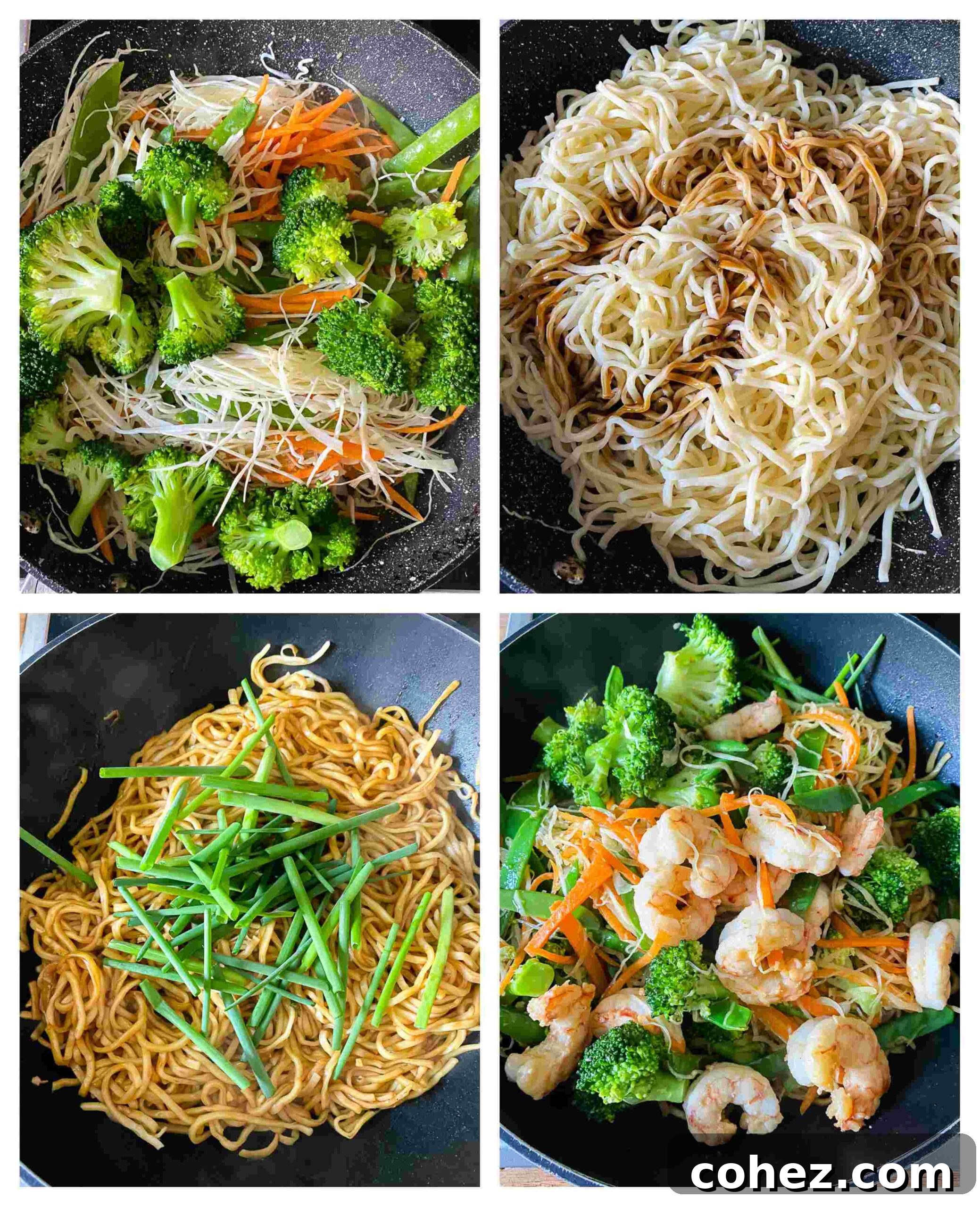
Boil noodles with broccoli florets until al dente. Drain, rinse the noodles with cold water (to prevent sticking), and set aside. (Dried egg noodles typically cook in about 3-4 minutes.)
-
While the noodles are cooking, prepare your vegetables. Cut the carrot into thin matchsticks, finely slice the cabbage, cut the white parts of the green onions into small pieces and the green parts into 7½ cm (3 inch) pieces, and cut the snow peas in half lengthwise.
-
Prepare the flavorful sauce by thoroughly mixing together the oyster sauce, Shaoxing wine (or dry sherry), dark soy sauce, honey (or sugar), white pepper, and sesame oil in a small bowl.
-
Take 2 tablespoons of the prepared sauce and use it to marinate the peeled and deveined shrimp. Set aside until ready to cook. Reserve the remaining sauce for later use with the noodles.
-
Heat 1 tablespoon of vegetable oil in a large frying pan or a wok over medium-high heat. Add the marinated shrimp and cook until just done, about 1 to 2 minutes per side, depending on their size. Remove the cooked shrimp from the pan and transfer to a separate plate.
-
Add another tablespoon of vegetable oil to the same pan. Once hot, add the chopped white parts of the green onions, minced garlic, and ginger paste (or grated ginger). Stir-fry for about 30 seconds until fragrant. Next, add the carrots, blanched broccoli florets, shredded cabbage, snow peas, and the green parts of the green onions. Stir-fry for 2-3 minutes, ensuring the vegetables are cooked until tender-crisp but still firm to the bite. Remove the stir-fried vegetables and add them to the plate with the cooked shrimp.
-
Return the pan to the heat. Add the cooked noodles and pour in the reserved sauce. Toss the noodles with the sauce until they are evenly coated and heated through. Finally, return the shrimp and stir-fried vegetables to the pan. Toss everything together gently to combine and allow the entire stir-fry to heat through for another minute or so. Serve immediately and enjoy your homemade Shrimp Chow Mein!
Nutrition
Calories: 354kcal
|
Carbohydrates: 32g
|
Protein: 29g
|
Fat: 11g
|
Saturated Fat: 7g
|
Cholesterol: 286mg
|
Sodium: 1516mg
|
Potassium: 394mg
|
Fiber: 4g
|
Sugar: 6g
|
Vitamin A: 3121IU
|
Vitamin C: 64mg
|
Calcium: 218mg
|
Iron: 5mg
Nutrition information is automatically calculated and should be used as an approximation.
Tried this recipe?
Let us know how it was!