

Transform your holiday dinner into an unforgettable feast with this comprehensive guide to crafting the perfect Prime Rib Roast. Featuring a delectable honey mustard rub and expert tips for culinary success, this recipe promises a tender, juicy, and spectacularly flavorful centerpiece. Serve alongside our exquisite Creamy Mushroom Marsala Sauce and rich Rosemary Potatoes au Gratin for a truly magnificent meal.
As the holiday season approaches, allow this magnificent Prime Rib Roast to crown your Christmas dinner. This recipe is more than just a meal; it’s an experience designed to impress and delight. Don’t forget to explore our extensive Christmas recipe collection, offering a diverse array of culinary inspirations, from celebratory main courses and hearty side dishes to elegant party appetizers and decadent desserts, ensuring your festive table is nothing short of spectacular.
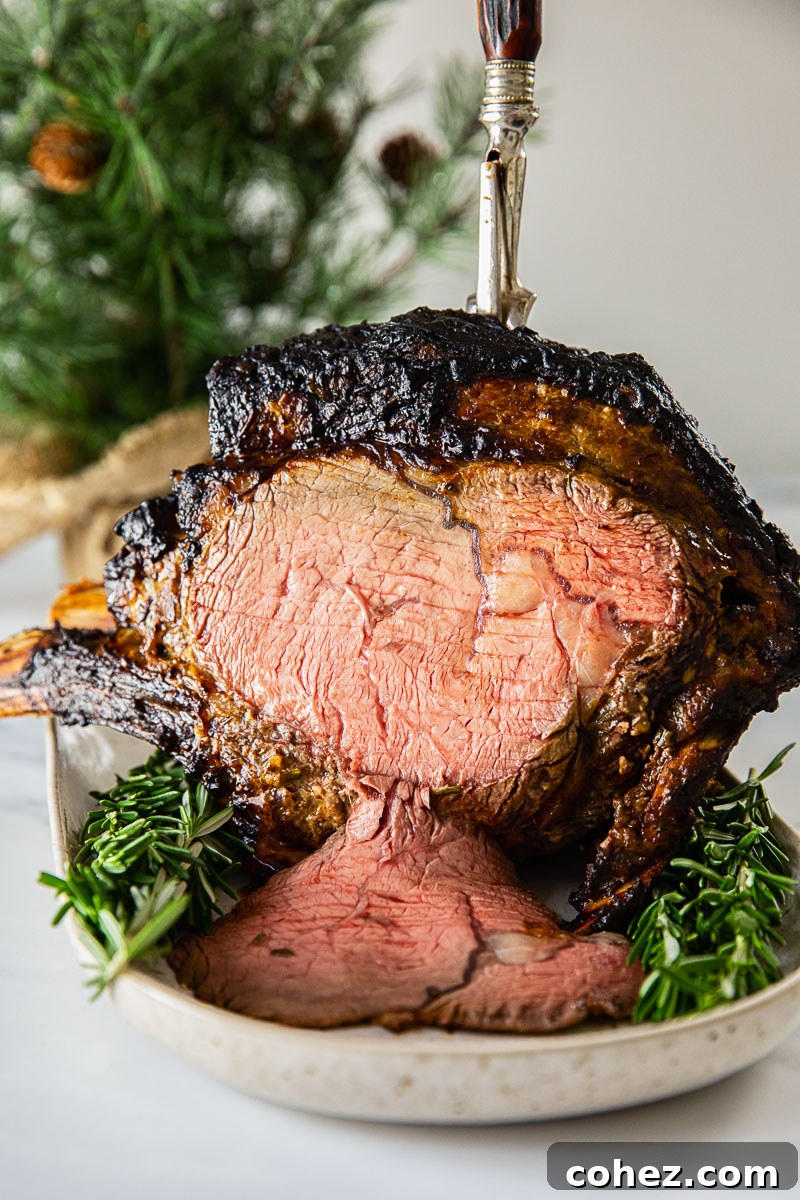
My passion for a well-executed roast dinner is no secret, a fact reflected in the variety of roast recipes featured on this website. While roast pork and roast chicken are cherished staples for our leisurely Sunday meals, the festive period calls for something truly extraordinary. For Christmas, we invariably turn to the undisputed monarch of roasts: the Prime Rib. I am absolutely thrilled to finally share the secrets to this exceptional recipe, guaranteeing a holiday feast that will be remembered for years to come.
Understanding Prime Rib: The King of Roasts
This esteemed cut of beef, known for its unparalleled flavor and tenderness, goes by several distinguished names. While commonly referred to as Prime Rib, it is also widely recognized as a Standing Rib Roast, or in the United Kingdom, a Rib of Beef. Sourced from the primal rib section of the cattle, this cut is inherently of superior quality, characterized by its generous marbling and rich, beefy flavor. The exceptional quality of Prime Rib is, understandably, reflected in its price, which is precisely why it is traditionally reserved for the most significant and joyous occasions of the year, such as Christmas or New Year’s Eve celebrations.
Prime Rib is typically sold with the bones still attached, which not only enhances its flavor during cooking but also acts as a natural roasting rack, promoting even heat distribution. The number of bones can vary, influencing the overall size and serving capacity of the roast. For instance, the cut utilized in this recipe features two bones and weighs approximately 2kg (4.5 lbs), providing ample portions to comfortably serve six people. Should you encounter a smaller cut with only a single bone, you’ve likely found a bone-in ribeye steak. While equally delicious, a single-bone cut is better suited for a smaller gathering rather than feeding a crowd.
Crafting the Perfect Honey Mustard Rub
While Prime Rib is undoubtedly a sublime cut of beef on its own, its inherent deliciousness can be further elevated with just a touch of thoughtful flavor enhancement. This is precisely where our signature honey mustard rub comes into play, transforming a great roast into an extraordinary one. The rub is a harmonious blend of simple yet powerful ingredients: sweet honey, tangy Dijon mustard, aromatic minced garlic, fragrant rosemary, rich olive oil, and coarse sea salt. Together, these components create a symphony of flavors that perfectly complement and deepen the natural richness of the beef.
When preparing any meat rub, it’s crucial to incorporate ingredients that not only infuse flavor but also help the herbs and spices adhere beautifully to the meat’s surface. Ingredients like honey, mustard, or even maple syrup excel in this role. Their slightly sticky texture ensures that the rub forms a magnificent, flavorful crust during roasting, locking in moisture and intensifying taste. This honey mustard rub, a classic for good reason, is incredibly versatile. While it’s ideal for Prime Rib, it can also be used to enhance other cuts of beef or even to create a glossy, flavorful glaze for ham, with only slight adjustments to the ingredient ratios. The core flavor profile, however, remains consistently delightful.
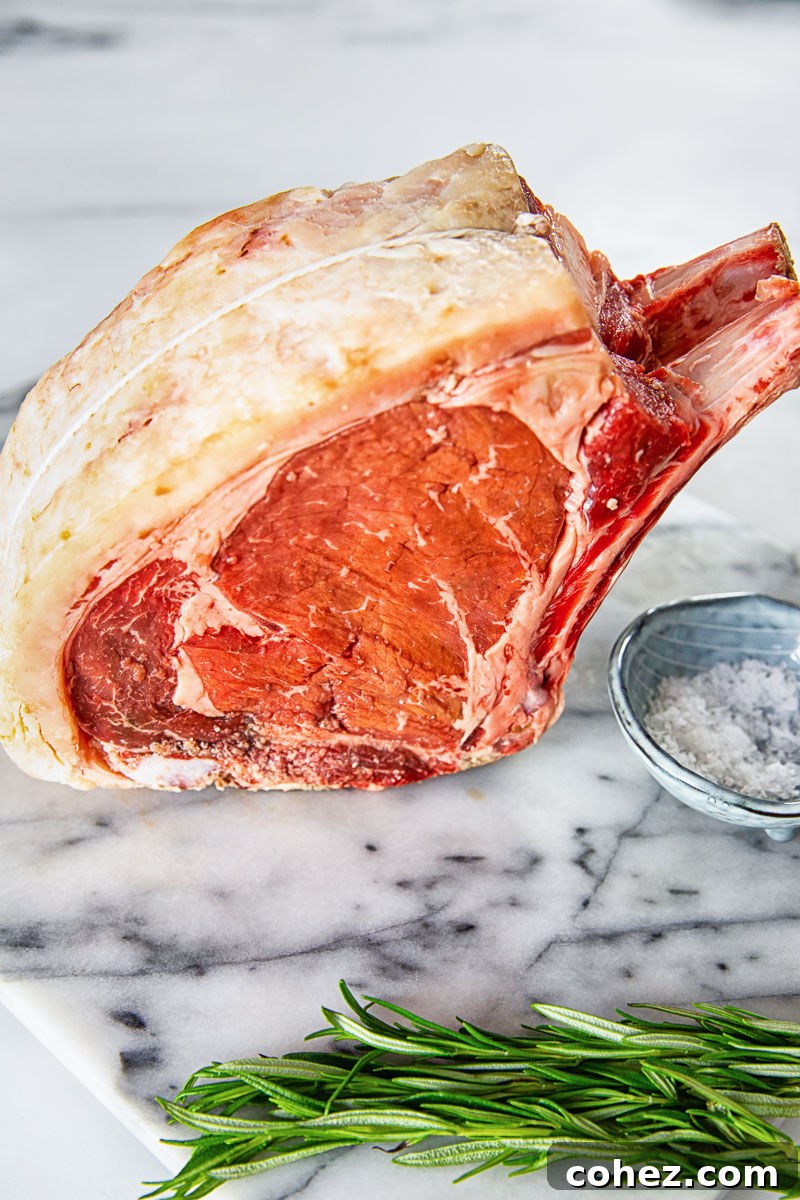
Mastering the Prime Rib Roasting Method
The prospect of cooking a Rib of Beef can often feel daunting, primarily due to its significant price tag and the added pressure of holiday entertaining. However, I’m here to assure you that Prime Rib is surprisingly simple to cook, with its inherent quality being the key to achieving those incredibly tender and juicy bites. The secret lies in a few crucial steps and a precise temperature control method that ensures perfection every time.
Firstly, it is absolutely essential to remove the meat from the refrigerator approximately 45 minutes to 1 hour before you plan to cook it. Allowing the beef to come to room temperature prior to roasting is a critical step that ensures the entire piece cooks more evenly. If the roast is still chilled in the center when it goes into the oven, it can significantly impact the cooking time, leading to uneven doneness where the exterior is overcooked while the interior remains underdone. Starting at an ambient temperature helps achieve a consistent cook from edge to center.
Secondly, preheat your oven to a robust 450°F (230°C). The optimal method for roasting Prime Rib involves an initial high-temperature sear. This intense heat is vital for developing a beautiful, caramelized crust on the surface of the meat, a process known as the Maillard reaction, which contributes immensely to its flavor and texture. After approximately 25 minutes at this high temperature, reduce the oven heat to 350°F (180°C) and continue roasting until your meat thermometer registers an internal temperature of 130°F (55°C). The bones attached to the roast are excellent conductors of heat, meaning a bone-in roast will cook more quickly than a boneless one. The greatest challenge when cooking Prime Rib is resisting the urge to overcook it, as even a few degrees too high can compromise its exquisite tenderness. An instant-read meat thermometer is therefore an indispensable tool for achieving consistently perfect results. Prime Rib truly shines when roasted to a medium-rare doneness, characterized by a vibrant pink interior when sliced, offering the most succulent texture and flavor.
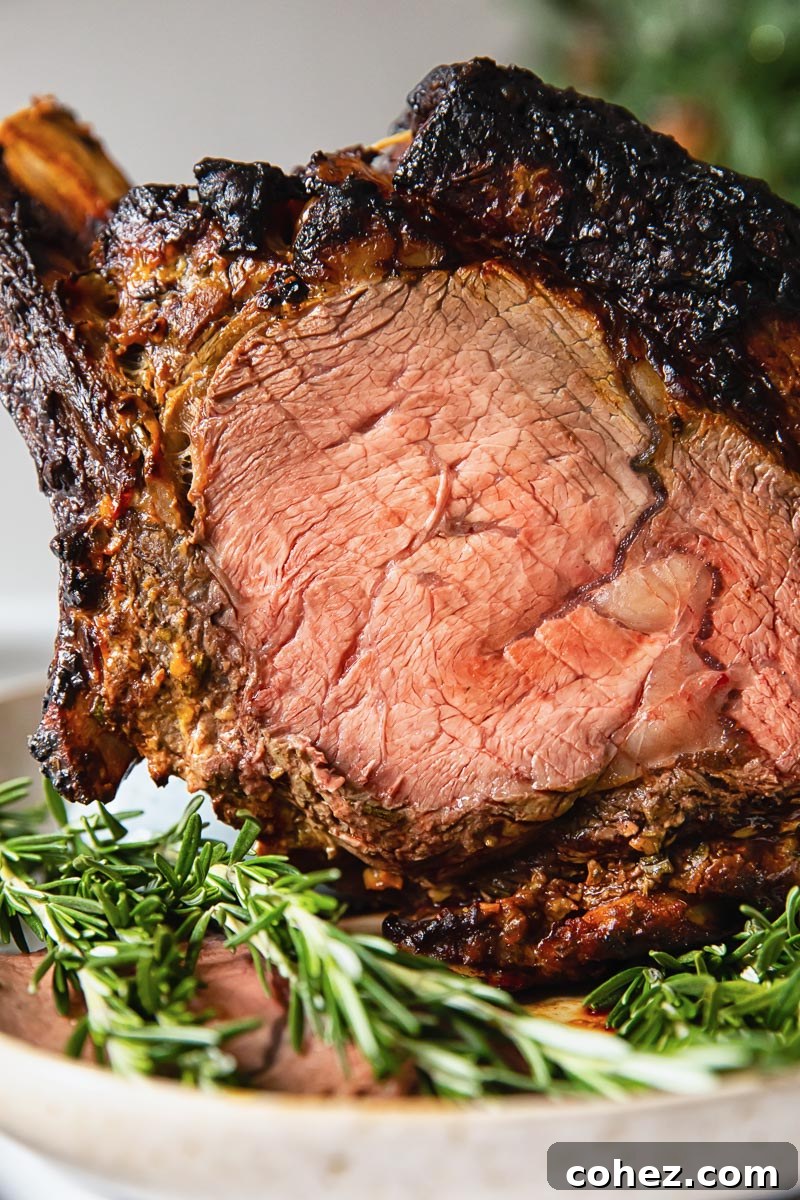
Prime Rib Oven Temperature and Cooking Time Guidelines
As previously mentioned, our roasting technique begins with a high-heat blast at 450°F (230°C) for the first 25 minutes, followed by a reduction to 350°F (180°C) for the remainder of the cooking time. The duration of this second phase will depend on your desired level of doneness and the size of your roast. Always remember that these are guidelines, and a reliable meat thermometer is your best friend for precision.
Below is a general timing chart based on the weight of your Prime Rib and your preferred doneness:
- For medium-rare: Roast for approximately 15 minutes per pound. Aim for an internal temperature of 135°F (55°C).
- For medium: Roast for approximately 20 minutes per pound. Aim for an internal temperature of 140°F (60°C).
- For well done: Roast for approximately 25 minutes per pound. Aim for an internal temperature of 150°F (65°C).
Once the Prime Rib reaches your desired internal temperature, remove it from the oven and, crucially, allow it to rest. Resting the meat for at least 30 minutes after cooking is a non-negotiable step that ensures a truly juicy and flavorful result. During roasting, the intense heat forces the meat’s juices to the surface. Resting allows these juices to redistribute back into the muscle fibers, resulting in a more tender and succulent roast. Loosely tent the prime rib with aluminum foil while it rests. During this period, the internal temperature will continue to rise by another 5 degrees (known as carryover cooking), further contributing to its perfect doneness. This ensures every slice is moist, tender, and bursting with flavor.
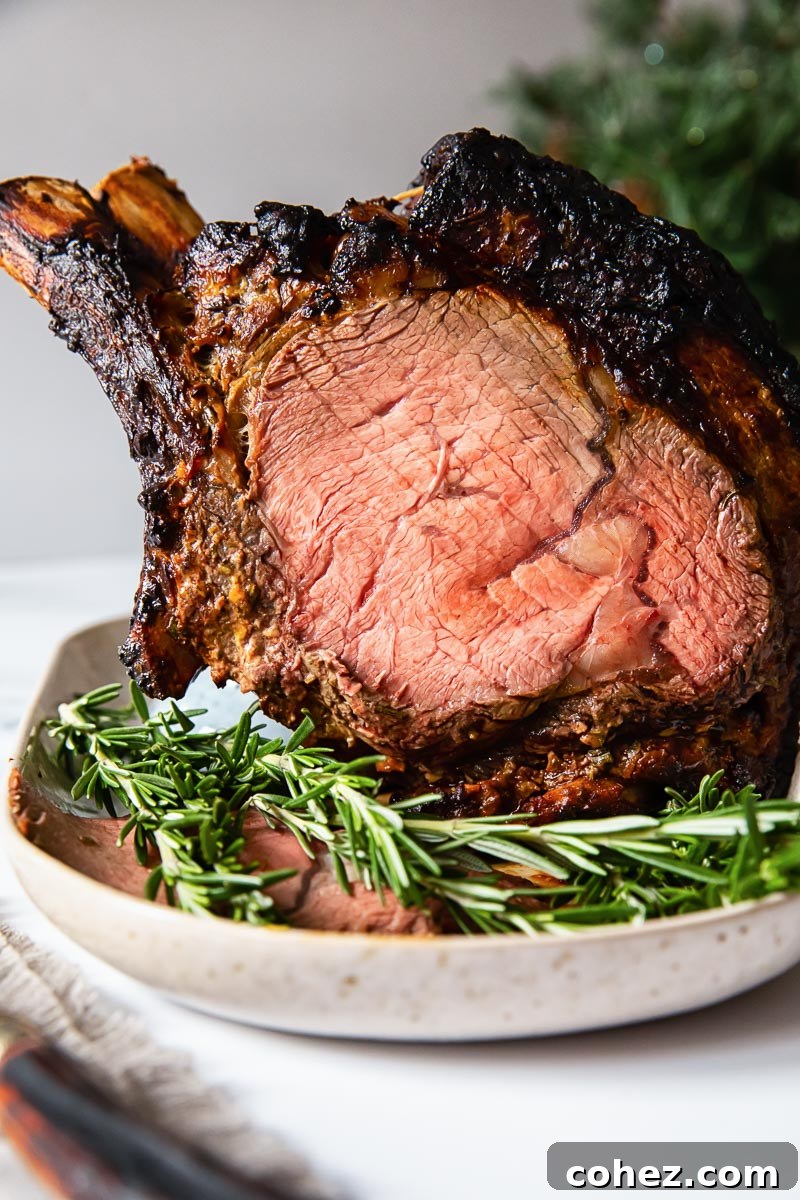
Expert Recipe Tips and Notes for Prime Rib Success
- Meat Quality Matters: Through extensive experience, I’ve learned that the quality of your Prime Rib profoundly impacts the final dish. While a “prime” grade cut can be a significant investment, its superior marbling and tenderness truly make a difference in taste and texture. My strongest recommendation is to purchase the highest quality beef you can reasonably afford, ideally from a trusted local butcher who can offer personalized advice and cuts. There’s a distinct reason why Prime Rib is synonymous with special celebrations!
- Understanding Beef Grades: In the US, beef is primarily graded as Select, Choice, and Prime. “Choice” grade is often readily available in most supermarkets, offering good quality. “Prime” grade, however, boasts the finest quality meat with the most desirable fat marbling, leading to exceptional flavor and tenderness. Other countries have their own grading systems, so always consult your butcher for guidance on the best cut available.
- Bone-In vs. Boneless: Bones are excellent conductors of heat, meaning a bone-in roast will generally cook faster than a boneless one. This is crucial information for precise cooking. Always use a reliable meat thermometer to monitor internal temperature, ensuring you never overcook your precious roast.
- Butcher’s Assistance: Your butcher can be a valuable resource. They may be able to expertly cut the bones off the roast and then reattach them with twine. Cooking with the bones attached is highly beneficial, as they act as an effective natural roasting rack, lifting the meat slightly and promoting even cooking.
- Tying the Roast for Evenness: If your Prime Rib doesn’t come pre-tied, it’s highly recommended to do so yourself. Tying helps the roast maintain its shape throughout cooking and ensures more even heat distribution. To tie, lay the roast upside down (bones facing up, fat side down) on top of several pieces of kitchen twine. Pull the string so it’s evenly spaced between the ribs, tie with a simple knot, and trim any excess string. The twine should be snug enough to hold the meat together but not so tight that it cuts into the roast.
- Bringing to Room Temperature: Always remove your Prime Rib from the refrigerator 45 minutes to an hour before cooking. Allowing it to come to an even, room temperature is a critical step that significantly contributes to even cooking throughout the entire roast.
- The Essential Rest: Resting the meat after it comes out of the oven is absolutely essential. This allows the juices, which migrate towards the surface during roasting, to redistribute back into the meat fibers. The result is a far more succulent, tender, and flavorful Prime Rib. Loosely tent the roast with aluminum foil and let it rest for a full 30 minutes.
- Carving with Precision: Carving a Prime Rib is best accomplished with a very sharp carving knife. As the video demonstrates, this is a lesson learned the hard way! Investing in a good quality carving knife specifically for occasions like this will make the task much easier and more enjoyable.
- Carve Against the Grain: Always carve the Prime Rib against the grain of the meat. This shortens the muscle fibers in each slice, making the meat feel incredibly tender and preventing it from being chewy. Each slice should ideally be at least 1/2 inch (1.25 cm) thick to showcase its beautiful texture and doneness.
Elevating Your Prime Rib: Serving Suggestions
No grand roast is complete without a complementary sauce or rich gravy to enhance its flavors. For those seeking elegance, our Bearnaise Sauce offers a luxurious pairing, though it can be a bit challenging to master. If you prefer a simpler yet equally delicious option, our easy homemade gravy recipe is a perfect choice, offering savory depth. For an even more complex and nuanced taste, consider preparing our red onion gravy recipe, which adds a delightful caramelized sweetness.
To perfectly accompany this spectacular beef roast, opt for classic, comforting side dishes. Creamy herb and garlic mashed potatoes or crispy roast potatoes offer a divine pairing. For a make-ahead option that’s just as impressive, our mashed potato casserole stuffed with mushrooms and caramelized onions can be prepared a day in advance, saving you precious time on the main event. And if you’re keen on adding another showstopper to your table, our stunning Hasselback Potatoes with Gremolata are sure to impress your guests.
To balance the richness of these indulgent dishes, I always strive to include a light, refreshing, and slightly zingy element. A vibrant winter salad, featuring crisp red cabbage, hearty kale, and sweet pomegranate seeds, provides a welcome contrast. Alternatively, add a plate of vibrantly flavored vegetables like our umami-rich Miso Roasted Carrots, which offer a delightful punch of flavor and color.
Storage and Creative Leftover Ideas
Should you be fortunate enough to have any Prime Rib remaining after your feast, leftover roast can be safely stored in the refrigerator for 3-4 days, offering fantastic opportunities for creative culinary reinvention. While simply recreating your roast dinner is always an option, there’s ample room to explore new and exciting ways to enjoy this delicious beef.
My personal favorite way to utilize leftovers? A hearty Hot Roast Beef Sandwich makes for an incredibly satisfying lunch. For those seeking a lighter alternative, a crisp Watercress and Roast Beef Salad with Creamy Horseradish Dressing offers a refreshing and flavorful meal. Reheating beef roast without sacrificing its tenderness and moisture can often be a challenge. The best method to ensure your meat remains tender and moist is to gently reheat it in an oven preheated to 300°F (150°C), nestled with a small amount of beef stock or gravy. The reheating time can vary between 15-30 minutes, depending on the thickness of your slices, so use a food thermometer to ensure it reaches a safe and enjoyable temperature without drying out.
More Inspirational Holiday Main Dishes
Beyond Prime Rib, explore other festive centerpieces that promise to make your holiday table shine:
- Blackcurrant Compote Glazed Ham: A sweet and savory ham with a vibrant glaze.
- Aromatic Spice Crusted Pork Roast (Buzhenina): A richly flavored pork roast with herbs and garlic.
- Mushroom Wellington (Vegetarian): An elegant and savory vegetarian alternative for special occasions.
- Roast Turkey: A classic and beloved holiday staple, perfect for larger gatherings.
Honey Mustard Crusted Prime Rib Roast
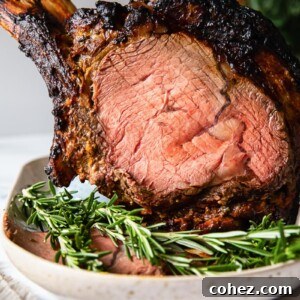
This easy guide to the perfect Prime Rib Roast, complete with a honey mustard rub and instructional video, will ensure your success this holiday season!
Equipment
- Meat thermometer
- Roasting pan
- Sharp carving knife
Ingredients
- 2kg/4.5 lbs Prime rib/rib of beef
For the Honey Mustard Rub
- 1 tbsp coarse salt
- 3 cloves garlic, minced
- 4-5 sprigs rosemary, finely chopped
- 2 tbsp Dijon mustard
- 2 tbsp honey
- 2 tbsp olive oil
Instructions
- Remove the beef from the refrigerator 45 minutes to 1 hour prior to cooking to allow it to come to room temperature, which ensures more even cooking. In a small bowl, combine the minced garlic, chopped rosemary, coarse salt, honey, Dijon mustard, and olive oil. Rub this mixture generously over all surfaces of the prime rib. Preheat your oven to 450°F (230°C).
- Place the prime rib in a roasting pan with the fat side facing up. Roast in the preheated oven for 25 minutes. After this initial high-heat sear, reduce the oven temperature to 350°F (180°C) and continue roasting. For the 2kg (4.5 lbs) beef specified in this recipe, roast for an additional 40 minutes. Add approximately 15 minutes of roasting time for each additional pound of beef. Refer to the detailed timing chart within the main article body for various degrees of doneness. The internal temperature of the meat should reach 130°F (55°C) for a perfect medium-rare.
- Once the desired internal temperature is achieved, carefully remove the prime rib from the oven. Loosely tent the roast with aluminum foil and allow the meat to rest for at least 30 minutes before carving. This crucial resting period permits the juices to redistribute throughout the roast, ensuring maximum tenderness and flavor.
Video
Nutrition
Nutrition information is automatically calculated and should be used as an approximation only.