
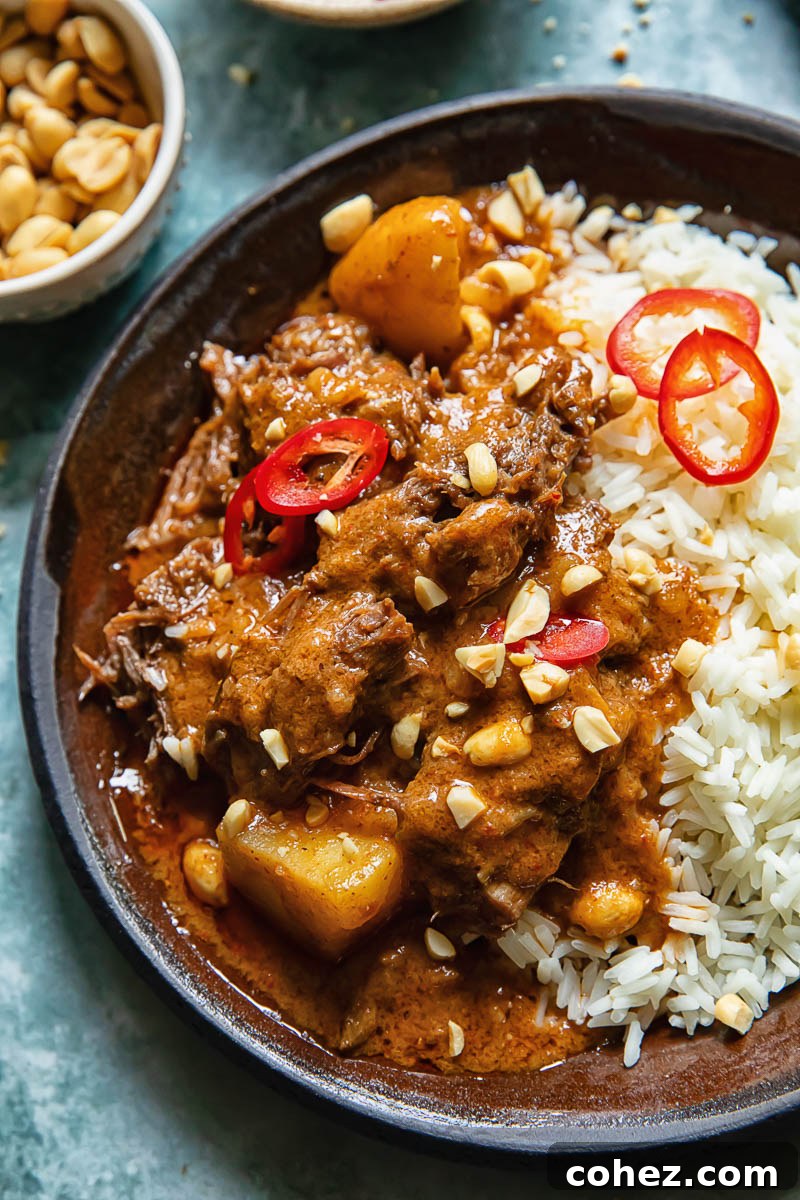
Experience the unparalleled richness of Beef Short Rib Massaman Curry – a dish renowned for its melt-in-the-mouth beef, tender potatoes, and the satisfying crunch of roasted peanuts, all harmoniously blended in a fragrant, creamy coconut milk sauce. Slow-cooked to perfection over several hours, this culinary masterpiece effortlessly achieves tantalizing tenderness, establishing itself as the undisputed king of curries. Its complex flavor profile, marrying aromatic spices with a hint of sweetness and tang, makes it a truly legendary and surprisingly accessible meal to prepare at home.
While many Thai curries are celebrated for their vibrant, lighter profiles—often showcasing fresh greens and fiery reds, typically made with chicken or seafood—Massaman curry offers a distinctly different, deeply satisfying experience. Think of classic Thai Red Curry with Prawns and Snow Peas or a comforting Vegetarian Thai Green Curry. Delicious in their own right, these dishes lean into the fresh, herbaceous notes often associated with Thai cuisine. Massaman, however, invites you on a unique flavor journey, rooted in a rich historical tapestry that sets it apart.
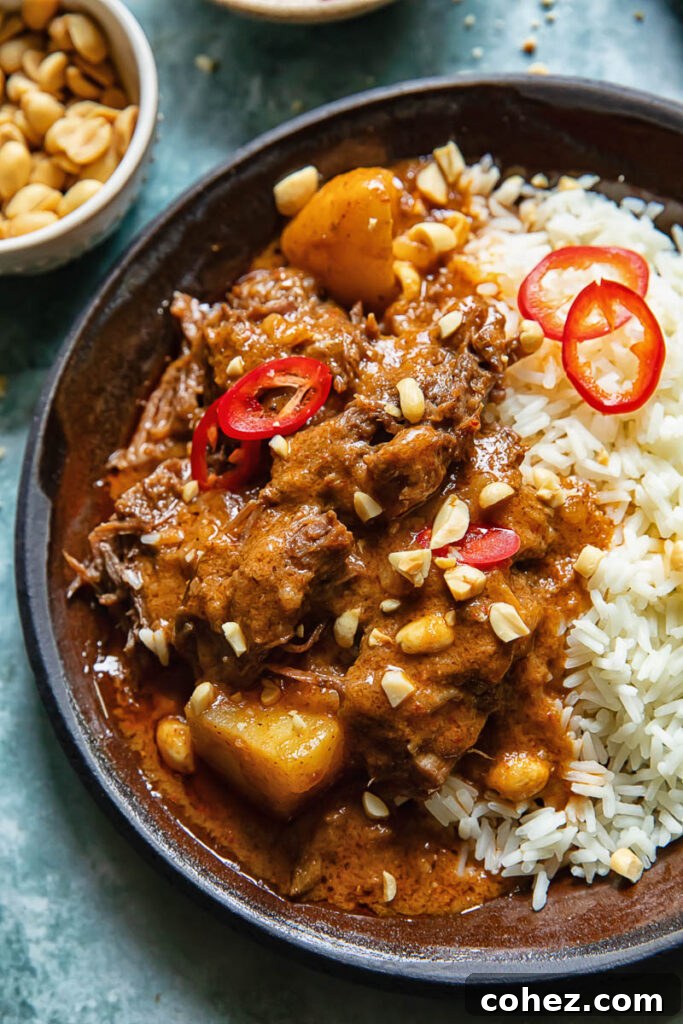
Massaman Beef Curry: A Culinary Fusion
Thai Massaman curry stands as a testament to the beautiful fusion of diverse cultures and cuisines. Its origins trace back to Persia, from where it embarked on a grand culinary journey across the Indian Subcontinent, eventually arriving in Thailand via the Malay Archipelago. This extensive travel allowed the curry to gather a fascinating array of ingredients and influences along the way, shaping its distinctive character.
Curries originating further west, particularly from the Indian subcontinent, are often characterized by their profound depth and potency derived from ground spices such as cinnamon, cumin, turmeric, and cardamom. In stark contrast, many traditional Thai curries, especially red and green varieties, burst with the vibrant freshness of local herbs and chilies like lemongrass, galangal, and holy basil. Massaman curry masterfully bridges these two worlds, bringing together the earthy warmth of Indian spices with the bright, aromatic notes of Southeast Asian ingredients. The result is a unique and wonderfully complex flavor profile that is both comforting and exhilarating, a true harmony of East and West.
Beyond its rich foundation of herbs and spices, a defining characteristic of an authentic Massaman curry recipe is the thoughtful inclusion of potatoes and peanuts. Potatoes, a staple in many North Indian curries, contribute a satisfying creaminess and substance. Peanuts, beloved in Thai and Chinese cooking, add a delightful nutty flavor and textural contrast. This unusual yet brilliant pairing, all bathed in luscious coconut milk, transforms the Massaman into an incredibly hearty, nutritious, and deeply satisfying dish that offers both warmth and exotic vibrancy in every spoonful.
Why Beef Short Ribs Are Perfect for Massaman
Given its global journey, Massaman curry can be found prepared with various meats such as lamb, chicken, or even duck or goat, but it is almost never made with pork. This makes perfect sense, as “Massaman” is widely understood to be a loose translation of “Muslim,” reflecting its historical and cultural ties. In our experience, however, Massaman truly shines when made with beef, and specifically, with beef short ribs.
Beef short ribs, typically cooked bone-in, are an exceptional choice for this curry due to their inherent qualities. They boast a high fat content and abundant marrow, both of which play a crucial role in developing the curry’s incredible depth of flavor and luxurious texture. As the short ribs slowly braise over hours, the fat renders beautifully and the marrow melts into the gravy, creating an intensely rich, unctuous sauce that coats the tongue with unparalleled creaminess. This slow transformation is what elevates the Massaman curry from simply good to truly unforgettable.
The appeal of short ribs extends beyond their flavor and texture; they are also a comparably economical cut of meat, making them an excellent choice for a hearty, filling meal that doesn’t strain your budget. Their stubby, robust nature is perfectly suited for long, slow cooking methods, ensuring maximum tenderness and flavor extraction. If you’re looking for other ways to enjoy this fantastic cut, consider trying them in a rich and spicy Korean Gochujang Short Ribs recipe, or opt for a more traditionally British-flavored dish like Braised Beef Short Ribs. But for an authentic and deeply satisfying Massaman, short ribs are undeniably the prime choice.
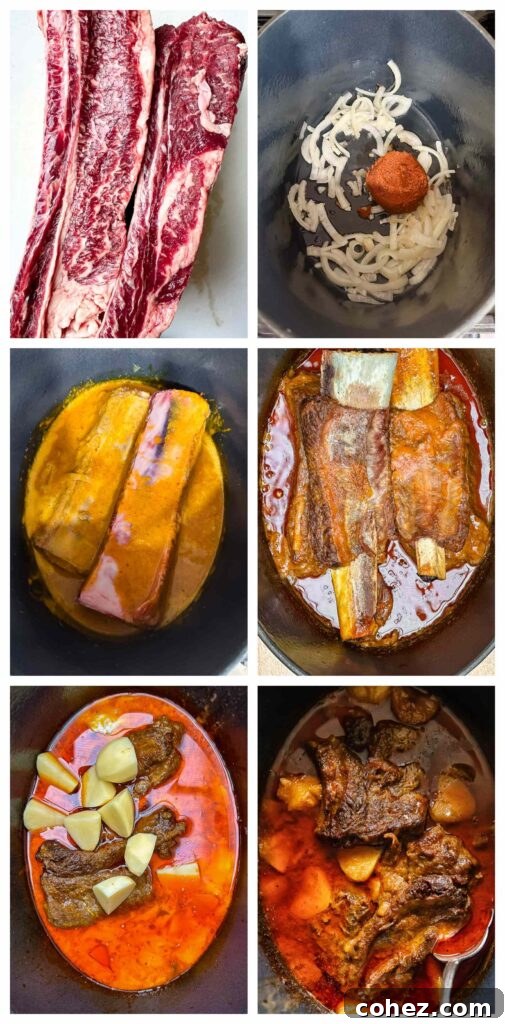
Expert Recipe Tips for the Best Massaman Curry
- **Choosing Your Beef:** This beef curry reaches its pinnacle of succulence and complex flavor thanks to beef short ribs. Their bone-in nature and marbling ensure the meat remains incredibly moist and tender, infusing the curry with unparalleled richness.
- **Avoid Leaner Cuts:** Through extensive testing, leaner cuts like topside (top round) and silverside have proven disappointing for this recipe, resulting in drier, less flavorful meat. Save yourself the trouble and opt for cuts with good fat content.
- **Recommended Alternatives:** If short ribs are unavailable, excellent alternatives include beef shin (also known as beef shank) or chuck roast. These cuts are well-marbled, meaning they contain ample fat and connective tissue that break down during slow cooking, yielding incredibly tender and flavorful results.
- **Trimming the Fat:** While fat is crucial for tenderness and flavor, we want to prevent an overly greasy curry. Trim any large, excess pieces of visible fat from the short ribs before cooking. This ensures the beef remains moist and juicy without creating an unappealing slick of oil floating on top of your beautiful gravy.
- **Slow Cooking Time is Key:** We recommend cooking the ribs for approximately 3 hours. At this point, the meat should be exceptionally tender, practically falling off the bone – the ultimate goal of slow cooking. However, always check your ribs at around 1.5 to 2 hours, as cooking times can vary depending on the specific cut, size, and quality of the meat.
- **Adding Potatoes:** If your beef is already fork-tender around the 1.5-2 hour mark, add the quartered potatoes at that stage. This ensures they cook through to a soft, creamy texture without becoming mushy.
- **The Peanut Paradox:** Many traditional Massaman recipes suggest adding peanuts at the very beginning of the cooking process. However, our trials have shown that this often leads to them becoming overly soft and mealy. For a delightful textural contrast and to retain their satisfying crunch, we highly recommend adding the roasted peanuts towards the very end of the cooking time.
- **Serving Perfection:** Serve this magnificent curry with generous piles of steaming jasmine rice. The fragrant rice is the perfect accompaniment, soaking up every last drop of the rich, aromatic gravy.
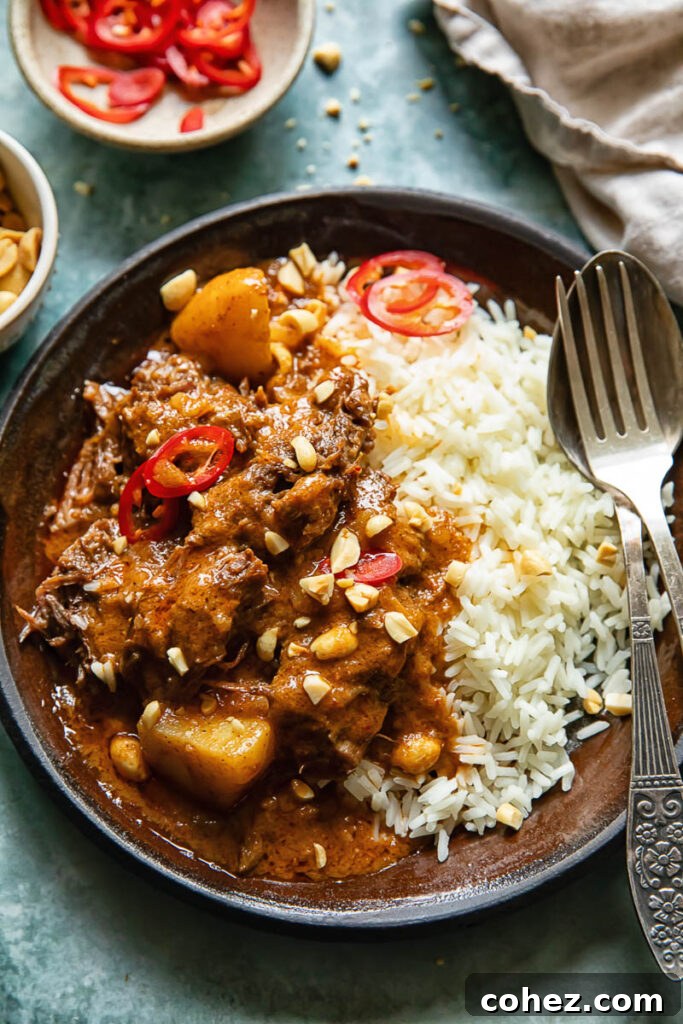
Serving Suggestions for a Complete Thai Feast
A truly spectacular Beef Short Rib Massaman Curry is a dish that can proudly stand on its own, with the essential accompaniment of perfectly cooked rice, of course. While this meat-heavy dish may not cater to vegetarian diners, its diverse global roots offer a wealth of delicious options for meat-free mains and simple, flavorful sides to complete your meal. Mix and match the following suggestions to create an inviting, multi-cultural table that will impress all your guests.
Vegetarian-Friendly Main Dishes (also perfect as sides for meat-eaters):
- Coconut, Lentil, and Butternut Squash Curry: A creamy, warming, and hearty curry that offers a wonderful contrast to the rich Massaman.
- Cauliflower and Potato Curry (Aloo Gobi): A classic Indian-inspired dish with tender cauliflower and potatoes, spiced just right to complement the main curry.
- Roasted Butternut Squash with Spiced Lentils and Feta: A lighter, yet flavorful option, offering earthy lentils and sweet roasted squash.
- Nepalese Red Lentil Dal: A comforting and nourishing lentil stew, perfect for balancing the richness of the Massaman.
Simple and Refreshing Vegetarian Sides:
- Crispy Air Fryer Tofu Bites: A fantastic protein-packed option that adds a satisfying texture and can soak up extra sauce.
- Fresh Carrot and Cucumber Slaw: A crisp, tangy, and refreshing slaw that provides a bright counterpoint to the rich curry.
- Aromatic Rice Variations: Elevate your meal with special rice. Try creamy Coconut Rice for extra indulgence, or earthy Mushroom Herbed Rice for a savory twist beyond plain jasmine.
And for those who appreciate more carbs to scoop up every last drop of that glorious sauce, consider serving naan-style flatbreads or delicate chapattis on the side. These additions turn a delicious meal into an expansive and memorable feast.
Storage and Leftovers: Massaman Curry Gets Better with Age
A generous portion of Massaman curry, especially one laden with tender beef, hearty potatoes, and crunchy peanuts, is incredibly satisfying, but it’s also a dish that often yields delicious leftovers. The good news is that Massaman curry, like many slow-cooked stews, truly excels on day two and three, as the flavors continue to meld and deepen.
Refrigeration: This flavorful curry will happily keep in an airtight container in the fridge for 3-4 days. During this time, the spices continue to infuse, resulting in an even more intense and complex flavor profile. Simply reheat gently on the stovetop over low to medium heat, stirring occasionally, until thoroughly warmed through. You may need to add a splash of water or coconut milk if the sauce has thickened too much.
Freezing: Massaman curry also freezes exceptionally well, making it perfect for meal prepping. Store it in a freezer-safe airtight container for up to 6 months. To enjoy, simply defrost the curry in the fridge overnight, then reheat on the stovetop until piping hot. This convenient option ensures you always have a comforting, gourmet meal ready to go.
Explore More Delicious Curry Recipes
- Paneer Tikka Masala
- Mango Chicken Curry
- Easy Egg Curry with Peas and Potatoes
- Braised Coconut Curry Chicken Thighs
Beef Short Rib Massaman Curry
Cook: 3 hrs
Total: 3 hrs 10 mins
Servings: 8 people
Ingredients
- 1 tbsp vegetable oil
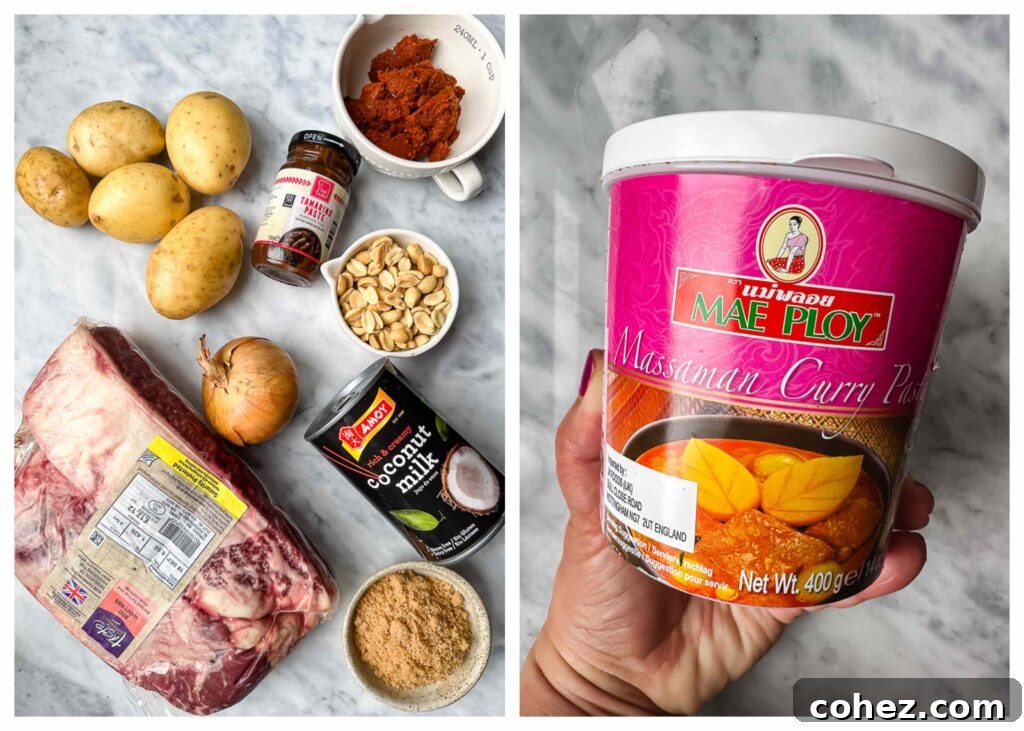
- 100g / 1/2 cup Massaman curry paste
- 1 onion, sliced
- 3 lbs beef short ribs, trimmed of visible fat
- 800ml or 2 x 14 oz cans coconut milk
- 250 ml / 1 cup water
- 4-5 small potatoes, peeled and quartered
- 2 tsp tamarind paste
- 50g/1/3 cup peanuts, roasted
- 3 tbsp brown sugar, or coconut sugar
Instructions
- Heat the oil in a large, deep oven-safe pan. Add the sliced onion and fry for 5-7 minutes over low heat until softened. Then add the curry paste and a splash (1/2 cup) of coconut milk, stirring constantly for a couple of minutes until fragrant. Pour in the remaining coconut milk and water, stirring to combine.
- Add the beef short ribs to the pan, ensuring they are mostly submerged in the liquid. Cover the pan with a lid and place it in a preheated oven at 160°C (325°F) for 2 hours.
- After 2 hours, carefully remove the pan from the oven. Check if the bones can be easily pulled from the meat – they should be very tender. Remove the bones at this stage if possible. Add the quartered potatoes, cover the pan again, and return it to the oven for another 30 minutes. (If the bones are still firmly attached, leave them in for now).
- After 30 minutes, take the pan out of the oven. Stir in the tamarind paste, brown sugar, and roasted peanuts. Return the uncovered pan to the oven for an additional 20-30 minutes. This allows the sauce to thicken slightly and the flavors to fully meld.
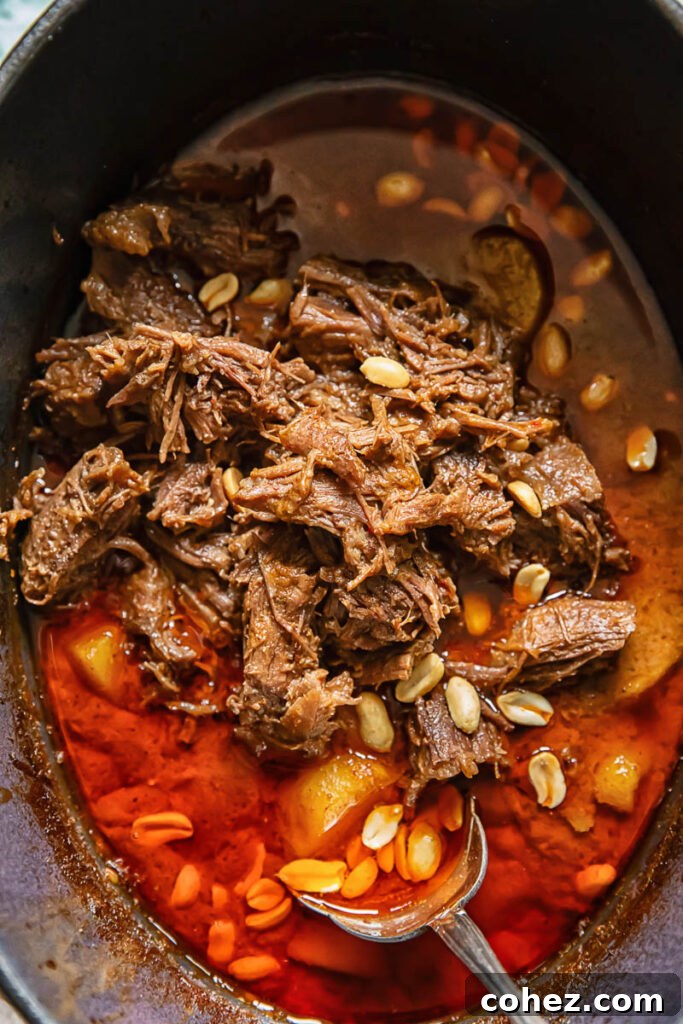
- At the end of the cooking time, the beef should be incredibly tender, easily falling apart with a fork. If the bones were left in, remove them now. Transfer the meat pieces from the liquid to a large bowl and gently shred them with two forks, then return the shredded beef to the pan and mix it thoroughly with the curry. Serve hot with fragrant jasmine rice.
Notes
- For the best and most authentic flavor, we highly recommend using Mae Ploy brand Massaman curry paste, which is traditionally made in Thailand.
- As mentioned in the tips, while our ribs cooked perfectly in 3 hours, always check your beef for tenderness around the 1.5 to 2-hour mark. If it’s already tender and falling off the bone, add the potatoes at that point and adjust the subsequent cooking times accordingly to prevent overcooking the meat.
Nutrition
Nutrition information is automatically calculated, so should only be used as an approximation.
Tried this recipe?
Let us know how it was!