
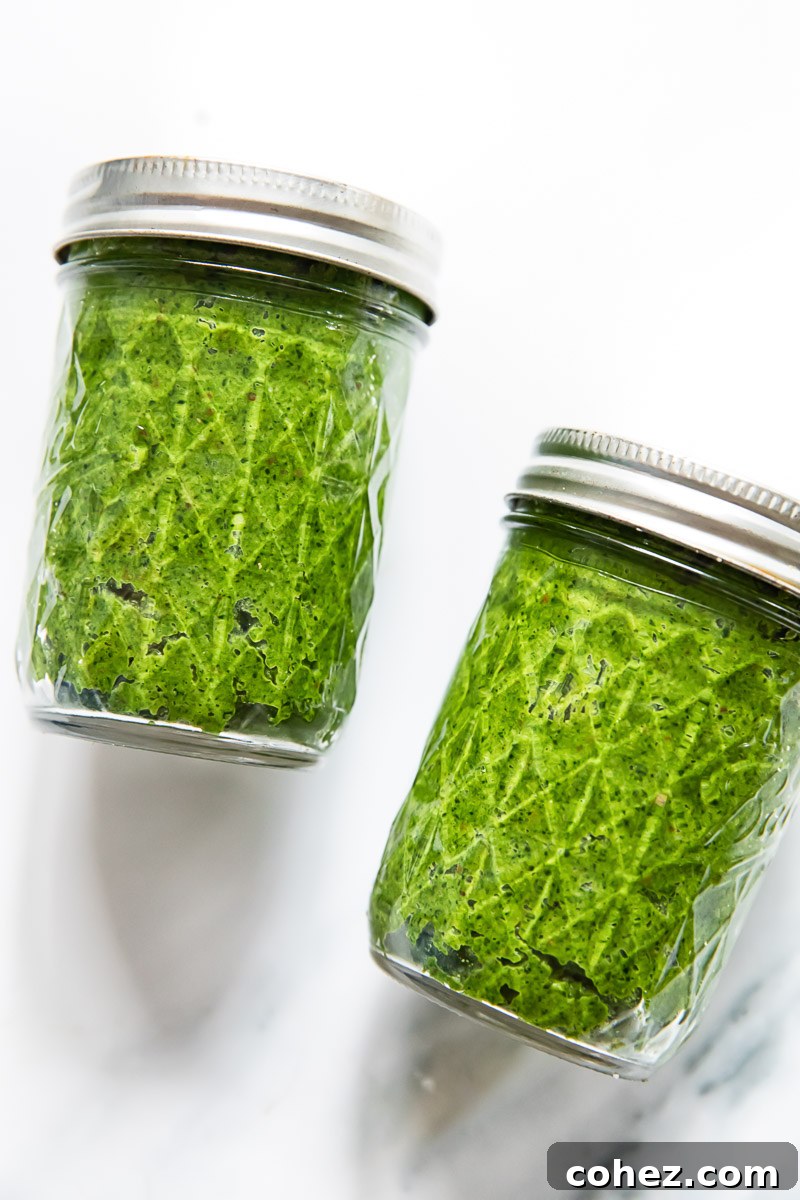
Unlock a world of vibrant flavor and incredible nutrition with this Tuscan Kale Pesto, also known as Cavolo Nero Pesto. Made with a handful of simple, everyday ingredients, this quick-to-prepare condiment is a powerhouse of goodness, ready to elevate countless dishes!
While the allure of store-bought pesto is undeniable – its deliciousness and convenience often make it a kitchen staple – it rarely captures the true essence of a homemade creation. The unparalleled freshness of flavors, the vivid, almost glowing color, and the pure joy of tasting something made with care and quality ingredients are distinctions only homemade pesto can offer. If you’re a fan of the traditional, fragrant classic, be sure to explore our basil pesto recipe, a timeless favorite that forms the foundation of many beloved meals.
Why Homemade Pesto Reigns Supreme: Beyond Convenience
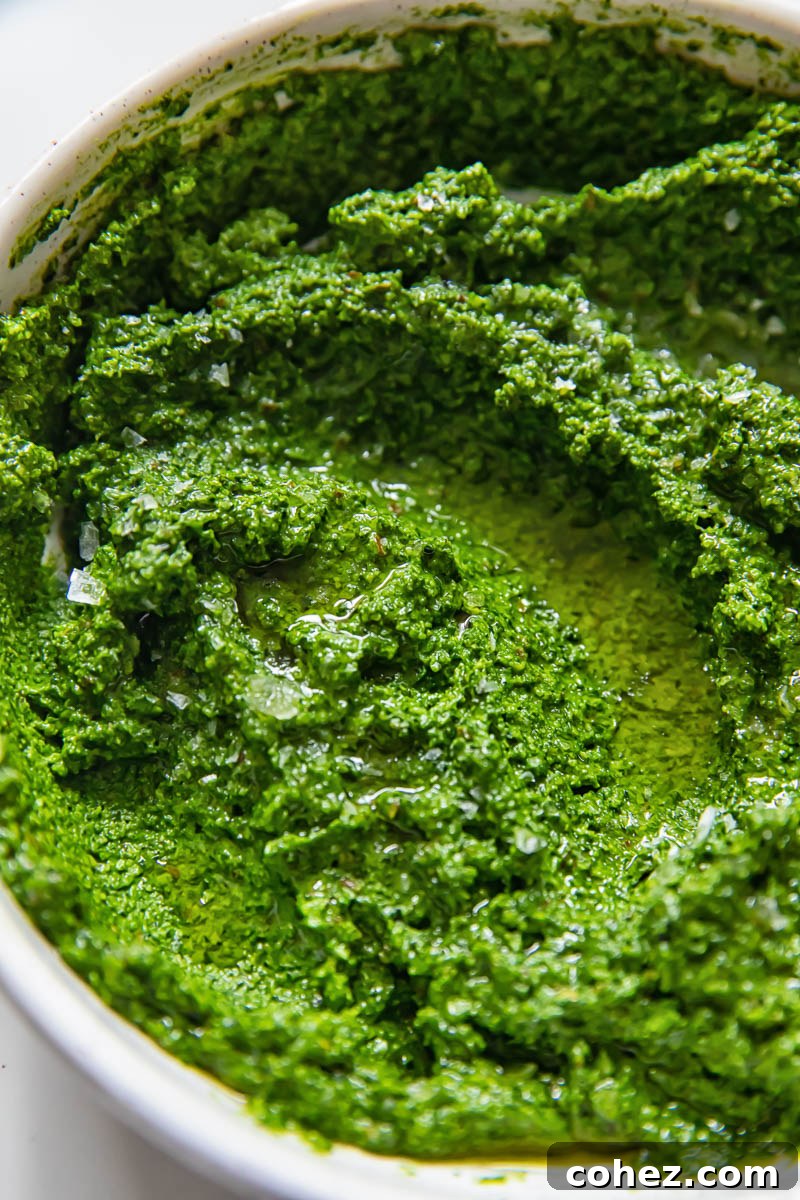
There’s a common misconception that pesto is a condiment best left to professional chefs or specialty stores. However, making pesto from scratch is surprisingly simple and immensely rewarding, offering benefits that extend far beyond mere convenience. The difference between a jar from the supermarket shelf and a freshly blended batch is truly night and day. Homemade pesto boasts an intensity of flavor, a brighter hue, and a fresher aroma that store-bought varieties, often laden with preservatives, artificial colors, and less premium oils, simply cannot match.
When you create pesto in your own kitchen, you gain complete control over the quality of every ingredient. You can select the finest extra virgin olive oil, choose your preferred nuts for their unique flavor profiles, and opt for freshly grated, authentic Italian cheeses. This level of control ensures a superior taste and a healthier nutritional profile, free from unwanted additives. Moreover, crafting your own pesto is often more cost-effective than repeatedly purchasing gourmet jars, especially if you have access to fresh, seasonal produce. It’s an investment in flavor, health, and culinary satisfaction that pays dividends in every spoonful.
My Culinary Awakening: Embracing Kale Pesto
For many years, like countless others, I was a devoted enthusiast of classic basil pesto. Its aromatic freshness, vibrant green color, and unmistakable peppery notes made it my absolute go-to for countless dishes, from simple pasta tosses to more elaborate creations. Recipes like my recent chicken caprese, generously slathered with basil pesto and crowned with melted mozzarella, quickly became a cherished favorite, proving that sometimes, the simplest flavors can be the most profoundly delicious.
However, the concept of “kale pesto” always gave me pause. My initial skepticism was profound; I just couldn’t imagine how the robust, slightly bitter, and earthy flavor of kale could possibly stand up to or even enhance a sauce traditionally defined by the delicate, aromatic potency of fresh basil. While I readily acknowledged kale’s impressive nutritional bona fides – it’s a veritable superfood, after all – I simply couldn’t envision it transforming into a truly palatable and flavorful pesto sauce. I had successfully experimented with other greens in my pesto-making endeavors, crafting delicious blends with spinach and cilantro, and even a refreshing mint and pistachio variety. Yet, kale remained an uncharted territory, a culinary challenge I instinctively avoided.
My culinary perspective took an unexpected and delightful turn during a memorable trip to Florence. It was there, amidst the rich culinary traditions of Tuscany, that I encountered cavolo nero pesto, and my preconceived notions were utterly shattered. The experience proved me delightfully wrong. Yes, kale can indeed stand shoulder-to-shoulder with basil, or even take center stage, in a pesto recipe. While it certainly offers a distinct flavor profile – deeper, slightly more earthy, with a pleasant, subtle bitterness that adds complexity – it is every bit as delicious and captivating as its basil-based counterpart. This discovery was a revelation, opening up a new world of possibilities for a sauce I thought I knew so well, particularly highlighting the versatility of a vegetable I had previously underestimated in this context.
What Exactly is Tuscan Kale? Understanding Cavolo Nero
For many, “kale” immediately conjures images of the curly, often crinkly and fibrous variety commonly found in UK supermarkets and across much of the Western world. And frankly, while it’s undeniably healthy, I’ve never been its biggest admirer; its texture can be a bit too coarse and abrasive for my preference in many dishes. However, my excitement truly ignites when I encounter its more elegant and distinctly Italian cousin: Cavolo Nero.
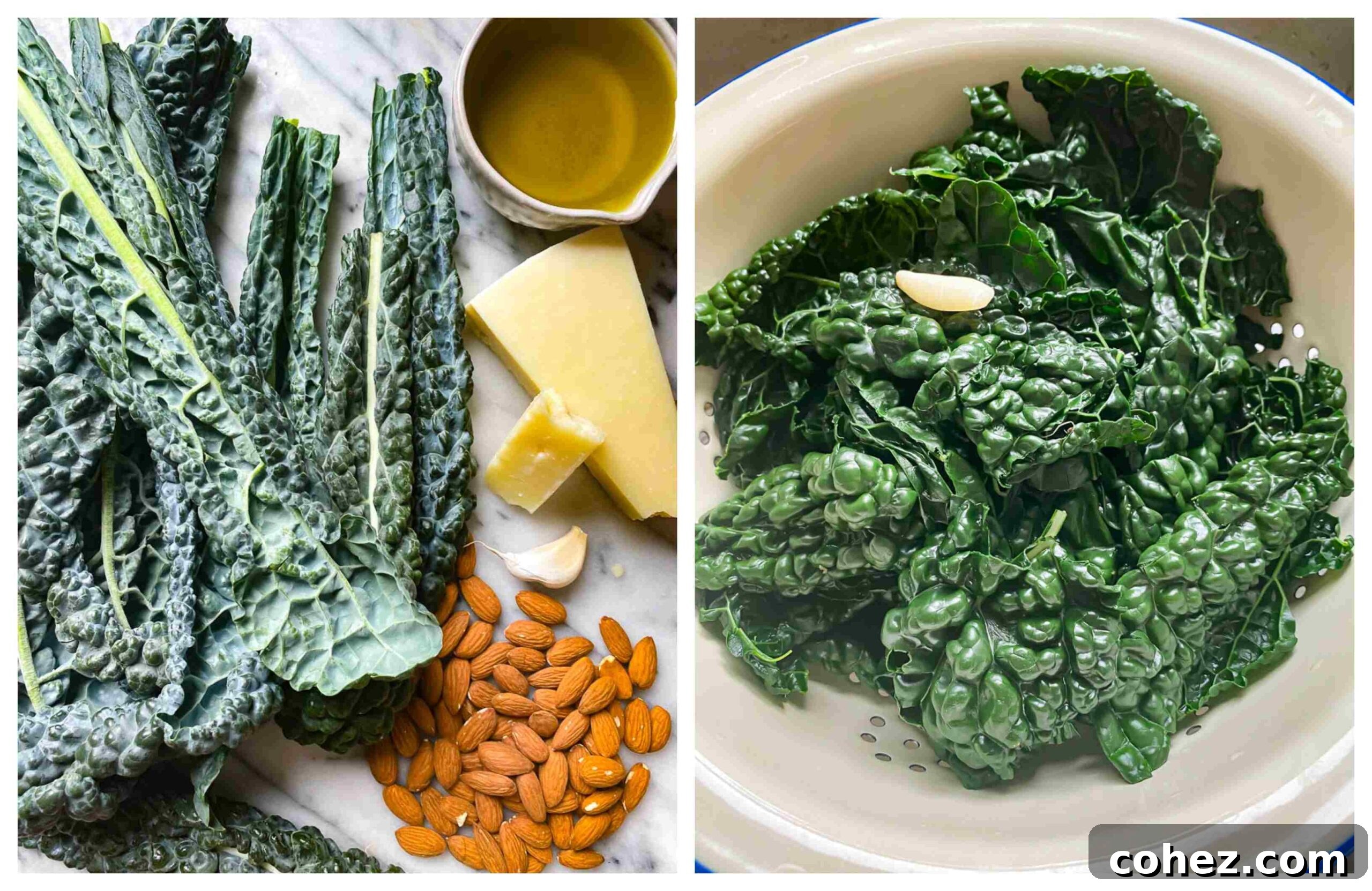
Cavolo Nero goes by several names, each hinting at its rich heritage and distinctive appearance. It’s most commonly known as Tuscan Kale, a direct nod to its origins in the picturesque heart of Italy’s Tuscany region, where it has been cultivated for centuries. You might also hear it referred to as Lacinato Kale, reflecting its elongated, strap-like leaves with a wonderfully dimpled or “lacinata” texture. In Italian culinary circles, it’s sometimes quite literally translated as black cabbage, thanks to its deep, dark green hue that often verges on black, making it instantly recognizable and a true feast for the eyes even before you taste it.
What sets Tuscan kale apart is its exceptional taste and incredibly tender texture, especially when cooked. Unlike its curly counterpart, cavolo nero becomes wonderfully silky and succulent, losing any hint of bitterness with proper preparation, transforming into a vegetable that’s both comforting and sophisticated. This makes it an incredibly versatile vegetable, shining brightly in a myriad of dishes. It’s absolutely delicious simmered in hearty soups, tossed into comforting pastas, or providing a robust and nutritious base for flavorful curries. In essence, if you can imagine a savory dish, Tuscan kale likely has a delightful place within it, adding depth, texture, and a wealth of nutrients.
A Nutritional Powerhouse for Optimal Health
Beyond its undeniable culinary appeal and visual charm, Tuscan kale is a genuine nutritional superstar, deserving of its superfood status. It’s packed with an impressive array of essential vitamins, vital minerals, and powerful antioxidants, making it an excellent and indispensable addition to any health-conscious diet. It is exceptionally rich in Vitamin K, which is crucial for blood clotting and bone health, as well as a significant source of Vitamin A (in the form of beta-carotene), important for vision and immune function, and Vitamin C, a potent antioxidant. Furthermore, cavolo nero provides a good source of dietary fiber, beneficial for digestive health, and important minerals like calcium and potassium. Incorporating this incredible leafy green into your meals is an effortless and delicious way to boost your intake of these essential nutrients, contributing significantly to overall well-being and vitality. Its robust yet tender structure often makes me choose it over spinach when I desire a firmer, more substantial leafy green that holds its own in my recipes.
And now, allow me to guide you through the straightforward process of transforming this incredible vegetable into a rich, flavorful, and incredibly healthy pesto that will undoubtedly become a new favorite in your kitchen. Prepare to be amazed by the depth of flavor and ease of preparation!
Mastering Your Tuscan Kale Pesto: Essential Tips for Perfect Flavor and Texture
Creating an exceptional Tuscan kale pesto is both simple and deeply satisfying when you follow a few key principles. Drawing inspiration from authentic Tuscan culinary practices, here’s what you need to know to achieve the most delicious, vibrant, and flavorful results in your homemade pesto:
- Proper Kale Preparation is Paramount: Unlike delicate basil, cavolo nero possesses a robust, somewhat fibrous texture. For a smooth, creamy, and palatable pesto, it is absolutely crucial to cook the kale before blending it. Blanching or steaming the leaves for a few minutes will soften them considerably, breaking down their tough fibers and mellowing any slight bitterness that might be present in raw kale. This essential step ensures your pesto has a wonderfully silky texture and a more agreeable, nuanced flavor profile.
- Garlic Preferences: Cooked for Milder Flavor, Raw for Bold Impact: In traditional Tuscan cuisine, garlic is often used with a lighter hand, or cooked to achieve a milder, sweeter flavor that melds seamlessly into the dish rather than dominating it. It is customary, and highly recommended, to gently cook the garlic cloves alongside the kale. This process infuses the pesto with a subtle, nuanced garlic essence, preventing the harshness that raw garlic can sometimes impart. While some traditionalists might even discard the cooked garlic, I recommend including it for its gentle contribution to the overall depth of flavor. However, if you are a true garlic aficionado and prefer a more pronounced, pungent kick that truly stands out, feel free to use 1 raw clove of garlic instead of cooking it with the kale. The choice is entirely yours, depending on your personal palate and desired intensity!
- The Foundation: High-Quality Core Ingredients: The inherent beauty of this pesto recipe lies in its elegant simplicity, relying on the quality of just a few core ingredients. Beyond the star ingredient, Tuscan kale, you’ll need premium nuts, a hard Italian cheese of excellent quality, and exceptional extra virgin olive oil. Combine all these elements – the prepared kale, the chosen garlic (cooked or raw), the toasted nuts, the freshly grated cheese, and the olive oil – in a food processor or a powerful blender. Process all the ingredients until you achieve your desired consistency, from chunky to velvety smooth. Remember to taste and adjust the salt as needed throughout the blending process, as the cheese will also contribute significant salinity.
- Choosing Your Nuts: Flavor and Texture Variations: While pine nuts are the undisputed classic choice for basil pesto, many other varieties of nuts work wonderfully and can even add intriguing new dimensions to Tuscan kale pesto. Almonds, with their delicate sweetness and firm texture when toasted, are an excellent and popular choice, providing a subtle nutty backdrop. Walnuts, on the other hand, offer a slightly more earthy, robust, and subtly bitter flavor profile that complements kale beautifully. Don’t hesitate to experiment with what you have on hand or what you prefer; pecans or even cashews can also be surprisingly delicious alternatives!
- The Cheese Factor: Opt for Freshly Grated Hard Italian Cheeses: The quality and type of cheese you use will significantly impact the final flavor and texture of your pesto. Always opt for freshly grated, hard Italian cheeses such as Pecorino Romano, Parmesan (Parmigiano-Reggiano), or Grana Padano. Pecorino Romano, being sheep’s milk cheese, offers a sharper, saltier, and more pungent flavor, while Parmesan is generally milder and nuttier. These cheeses provide the necessary salty, umami depth and contribute to the creamy texture of the sauce. Avoid pre-grated or freeze-dried versions, as they often contain anti-caking agents that can affect texture and lack the rich, authentic flavor of fresh, block cheese.
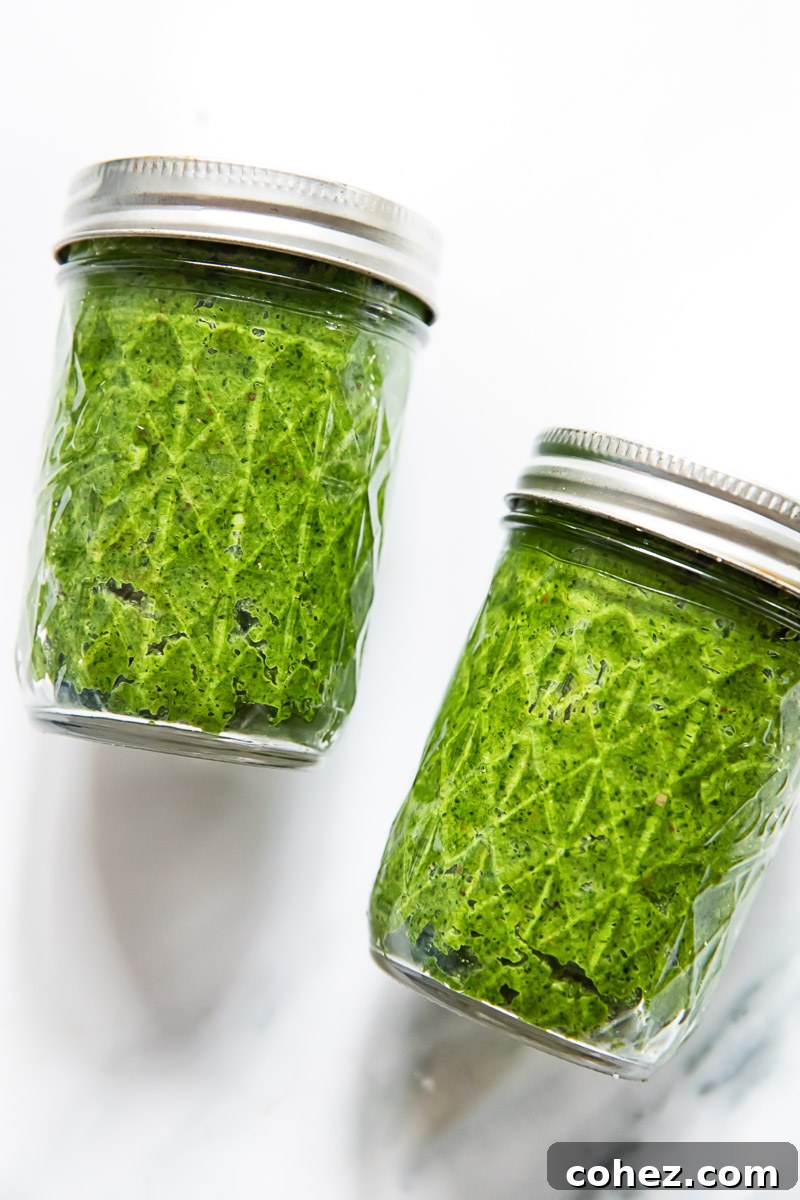
- The Olive Oil Seal for Enduring Freshness: One of the best-kept secrets for preserving the vibrant green color and delicious taste of your homemade pesto is to create an olive oil seal. Once you’ve packed your freshly made pesto into clean, airtight jars or containers, pour a thin, protective layer of high-quality extra virgin olive oil over the entire surface. This crucial layer acts as a barrier, preventing air from reaching the pesto and significantly slowing down the oxidation process, which is responsible for discoloration (turning brown) and potential flavor degradation. It’s a simple yet incredibly effective step that makes a huge difference in extending the freshness, vibrancy, and longevity of your homemade pesto.
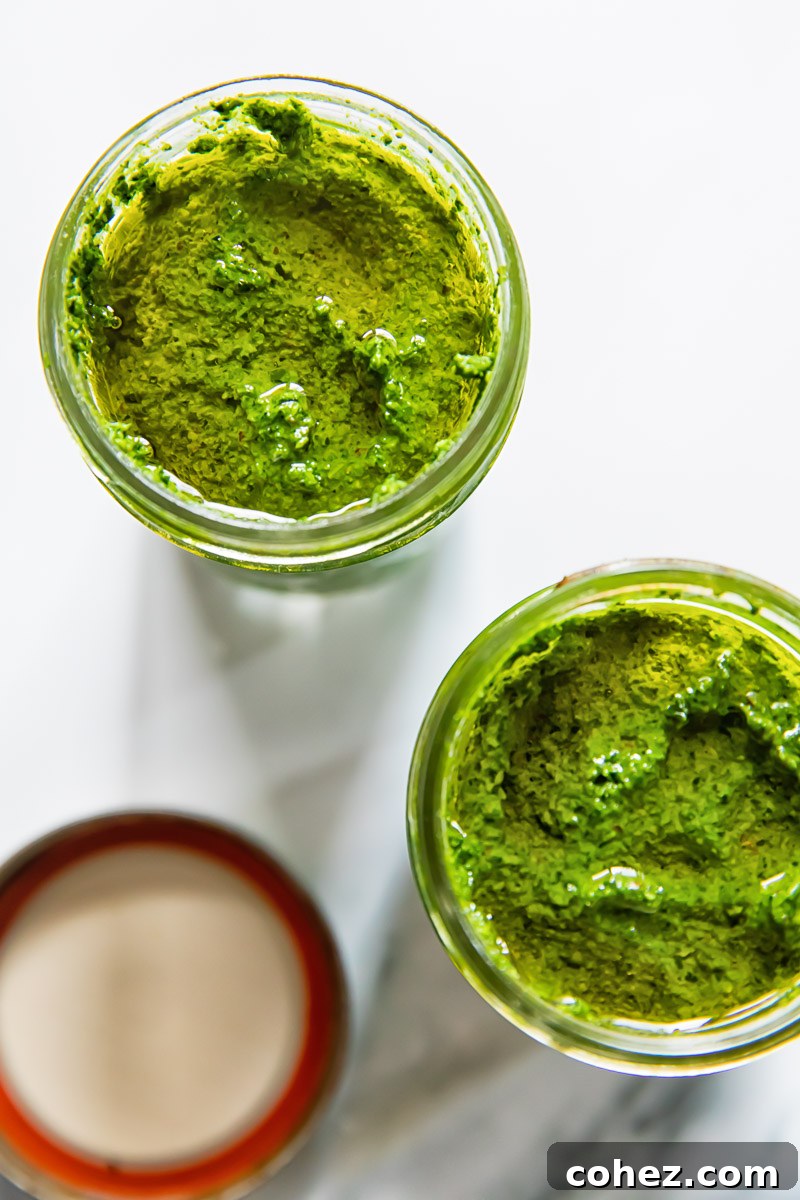
Unleash the Versatility: Creative Serving Suggestions for Tuscan Kale Pesto
The beauty of this Tuscan Kale Pesto lies not only in its robust flavor and impressive nutritional benefits but also in its incredible versatility. Once you have a fresh batch ready, the culinary possibilities are truly endless. Think of it as a concentrated flavor bomb, ready to transform ordinary meals into extraordinary experiences with just a spoonful. Here are just a few ideas to get your imagination flowing and help you discover new ways to enjoy this delicious homemade condiment:
- Pasta Perfection, Elevated: The most classic and perhaps most beloved application! Toss your freshly cooked pasta, whether delicate spaghetti, hearty rigatoni, or even gluten-free options, with a generous dollop of kale pesto for a quick, wholesome, and incredibly satisfying meal. The vibrant green sauce coats every strand beautifully. Consider enhancing it further by adding grilled chicken, roasted cherry tomatoes, or fresh rocket for extra layers of flavor and texture, as in a delicious pesto pasta with grilled chicken, cherry tomatoes, and rocket.
- Protein Power-Up and Flavor Infusion: This vibrant pesto makes an excellent and flavorful accompaniment to a variety of proteins. Spoon it generously over baked, pan-seared, or grilled fish, especially fatty fish like salmon, to add a bright, herbaceous, and savory note that complements the richness of the fish. It also pairs wonderfully with chicken dishes, whether smeared under the skin before roasting, used as a marinade, or stirred into a creamy sauce. For a truly unique and comforting dish, try my Salmon Orzo, which truly gets its heaps of complex flavor from this very Tuscan kale pesto!
- Appetizer Extravaganza and Elegant Starters: Elevate your appetizers and snacks with ease. Spread a vibrant and flavorful layer of kale pesto onto crispy crostini or bruschetta for an elegant and impressive starter that’s surprisingly simple to prepare. It’s also a fantastic addition to an Italian charcuterie platter, offering a fresh, zesty, and herbaceous counterpoint to rich cured meats, savory cheeses, and briny olives.
- Breakfast Brightener for a Zesty Start: Don’t reserve pesto just for lunch or dinner! This versatile sauce can instantly upgrade your morning meals. Stir a dollop into your scrambled eggs or omelets for an instant flavor boost and a beautiful green swirl. Drizzle it generously over crispy hash browns, roasted breakfast potatoes, or even avocado toast to make your mornings a little brighter and significantly more delicious.
- Sandwiches and Wraps, Reimagined: Bid farewell to plain mayonnaise or mustard! Smear a thin, flavorful layer of Tuscan kale pesto onto your sandwiches, wraps, paninis, or even homemade flatbreads for a gourmet touch. It adds essential moisture, a burst of complex flavor, and a healthy boost of nutrients to any midday meal, transforming a simple sandwich into a culinary delight.
- Pizza Perfection and Beyond: Use it as a vibrant, unconventional base sauce for homemade pizza instead of traditional tomato sauce, or swirl it over a finished pizza for an extra burst of fresh flavor just before serving. It pairs particularly well with mozzarella, creamy goat cheese, or a medley of roasted vegetables. Beyond pizza, consider adding it to soups, stews, or even spreading it on grilled corn on the cob for a unique twist.
- Vegetable Enhancer and Side Dish Upgrade: Effortlessly transform humble vegetables. Toss roasted vegetables like zucchini, bell peppers, asparagus, or broccoli with a spoonful of pesto for an easy, flavorful, and incredibly delicious side dish. It can also be stirred into warm grain bowls (like quinoa or farro), added to homemade salad dressings for a creamy, herbaceous kick, or mixed into mashed potatoes for a vibrant twist.
The culinary applications for this incredibly flavorful Tuscan kale pesto are truly limitless. Let your creativity be your ultimate guide and don’t be afraid to experiment with new pairings and uses. I would absolutely love to hear about the ingenious ways you incorporate this nutrient-packed Tuscan kale pesto into your own cooking and how it inspires your kitchen adventures!
Storage Solutions: Keeping Your Tuscan Kale Pesto Fresh and Flavorful
Proper storage is paramount to enjoying your homemade Tuscan kale pesto for as long as possible while maintaining its vibrant color, fresh taste, and optimal quality. Follow these guidelines to ensure your pesto remains delicious and readily available for all your culinary needs:
- Refrigeration for Short-Term Freshness: Store freshly made pesto in a clean, airtight container in the refrigerator for up to 7 to 10 days. The key to preventing oxidation and discoloration (where the bright green pesto can turn to a dull brown or olive drab) is the olive oil seal, a technique mentioned in our essential tips section. Always ensure a thin layer of good quality extra virgin olive oil generously covers the entire surface of the pesto before sealing the container. This creates an effective barrier against air, significantly preserving both its appetizing color and delicate flavor.
- Freezing for Extended Shelf Life and Convenience: For extended storage, Tuscan kale pesto freezes beautifully without significant loss of flavor or texture. This is an excellent option if you’ve made a large batch and want to have it readily available for future meals, making meal prep a breeze.
- Ice Cube Trays for Perfect Portions: For ultimate convenience and portion control, spoon the pesto into ice cube trays and freeze until thoroughly solid. Once frozen, pop the individual pesto cubes out and transfer them to a larger freezer-safe bag or container. This method is perfect for thawing just the amount you need for a single serving, a small dish, or a quick flavor boost without having to thaw a larger batch.
- Larger Containers for Batch Freezing: For larger quantities, spoon the pesto into small, freezer-safe containers or jars, leaving a little headspace for expansion. Again, remember to add a protective layer of extra virgin olive oil on top before sealing tightly to prevent freezer burn and further oxidation.
Frozen pesto can maintain its quality and deliciousness for up to 3-4 months. When you’re ready to use it, simply transfer the desired amount from the freezer to the refrigerator overnight to thaw gently, or let it sit at room temperature for a few hours. Give it a good stir before serving to recombine any separated oil and ensure a smooth consistency.
More Delightful Recipes Featuring Tuscan Kale
If you’ve fallen in love with the robust flavor, tender texture, and incredible versatility of Tuscan kale (cavolo nero) as much as I have, you’ll be thrilled to discover its culinary potential in these other fantastic dishes:
- Truffled Lentil and Kale Risotto: An earthy, deeply comforting, and luxurious risotto dish that’s elevated by the exquisite aroma and rich flavor of truffle, perfectly complemented by the heartiness of tender kale and protein-packed lentils.
- Winter Salad with Red Cabbage, Tuscan Kale and Pomegranate: A vibrant, refreshing, and beautifully textured salad, perfectly suited for colder months. It combines the crisp crunch of red cabbage, the tender bite of Tuscan kale, and bursts of sweet, juicy pomegranate seeds for a delightful sensory experience.
- Healthy Mini Frittatas: These delightful bite-sized frittatas are packed with nutrients and flavor, making them an ideal choice for a quick and healthy breakfast, a light brunch, or a convenient grab-and-go snack any time of day.
- Chicken Meatball Soup with Tortellini and Tuscan Kale: A wonderfully warming, hearty, and satisfying soup, featuring tender, savory chicken meatballs, delicate cheese-filled tortellini, and the wholesome, robust goodness of Tuscan kale. It’s comfort in a bowl.
Tuscan Kale Pesto Recipe
This recipe provides a quick and straightforward method to create a flavorful, nutrient-packed pesto using Tuscan kale (cavolo nero) and a few essential ingredients. Enjoy this fresh homemade condiment that’s perfect for countless dishes!
Recipe Details
- Author: Julia Frey of Vikalinka
- Prep time: 10 minutes
- Cook time: 10 minutes
- Total time: 20 minutes
- Yields: Approximately 20 servings
Equipment
- Blender or Food Processor
Ingredients
- 400g / 14 oz cavolo nero (Tuscan kale)
- 1-2 cloves garlic
- 100g / 1/2 cup almonds, toasted
- 165ml / 2/3 cup extra virgin olive oil
- 100g / 1 cup Pecorino Romano cheese, or Parmesan cheese, freshly grated
- Salt to taste
Instructions
- Prepare Kale and Almonds: Wash the cavolo nero thoroughly and remove the tough, woody stalks. In a pot of lightly salted boiling water, cook the kale along with 1-2 cloves of garlic for 5-7 minutes, or until the kale leaves are tender and vibrant green. While the kale is cooking, toast the almonds in a dry pan over medium heat for about 5 minutes, stirring frequently, until they are fragrant and lightly golden. Allow the cooked kale and garlic to cool slightly, and set aside the toasted almonds.
- Blend Ingredients: Carefully drain the cooked kale and garlic, then transfer them to a food processor or a high-speed blender. Add the toasted almonds, the freshly grated Pecorino Romano cheese (or Parmesan), and the extra virgin olive oil. Process all the ingredients until you achieve a smooth, creamy, and uniform consistency, scraping down the sides as needed.
- Season and Store: Taste the pesto and add salt as needed, blending briefly to incorporate it evenly. Transfer the finished pesto into clean, airtight jars or containers. To prevent discoloration and maintain optimal freshness, pour a thin, protective layer of extra virgin olive oil over the surface of the pesto before sealing the jars. Store the prepared pesto in the refrigerator.
Notes
For a bolder, more pungent garlic flavor that stands out, you can add 1 raw clove of garlic directly to the food processor in step 2, instead of cooking it with the kale. Adjust the amount of raw garlic according to your personal preference for intensity.
Nutrition Information (per serving)
Calories: 122kcal | Carbohydrates: 2g | Protein: 3g | Fat: 12g | Saturated Fat: 2g | Polyunsaturated Fat: 2g | Monounsaturated Fat: 7g | Trans Fat: 0.001g | Cholesterol: 5mg | Sodium: 187mg | Potassium: 111mg | Fiber: 1g | Sugar: 0.4g | Vitamin A: 2019IU | Vitamin C: 19mg | Calcium: 118mg | Iron: 1mg
Nutrition information is automatically calculated and should only be used as an approximation. Individual results may vary based on specific ingredient brands, exact measurements, and preparation methods.