
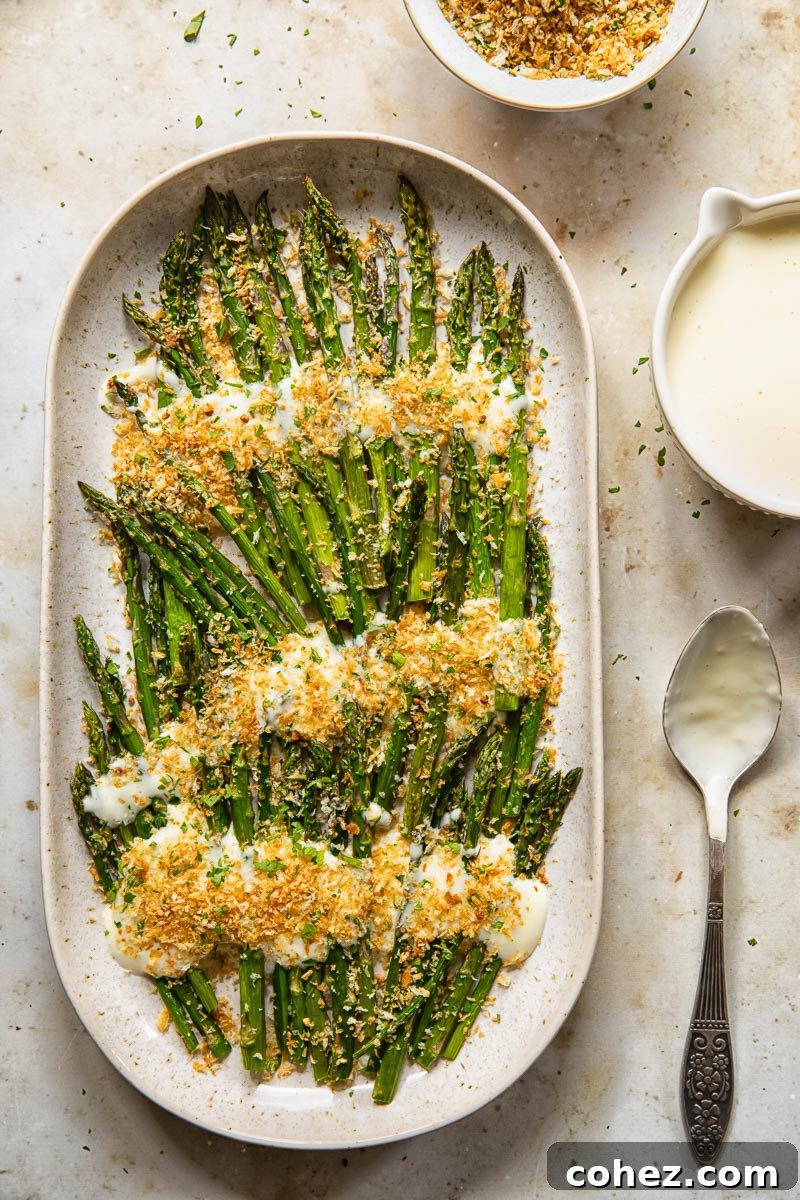
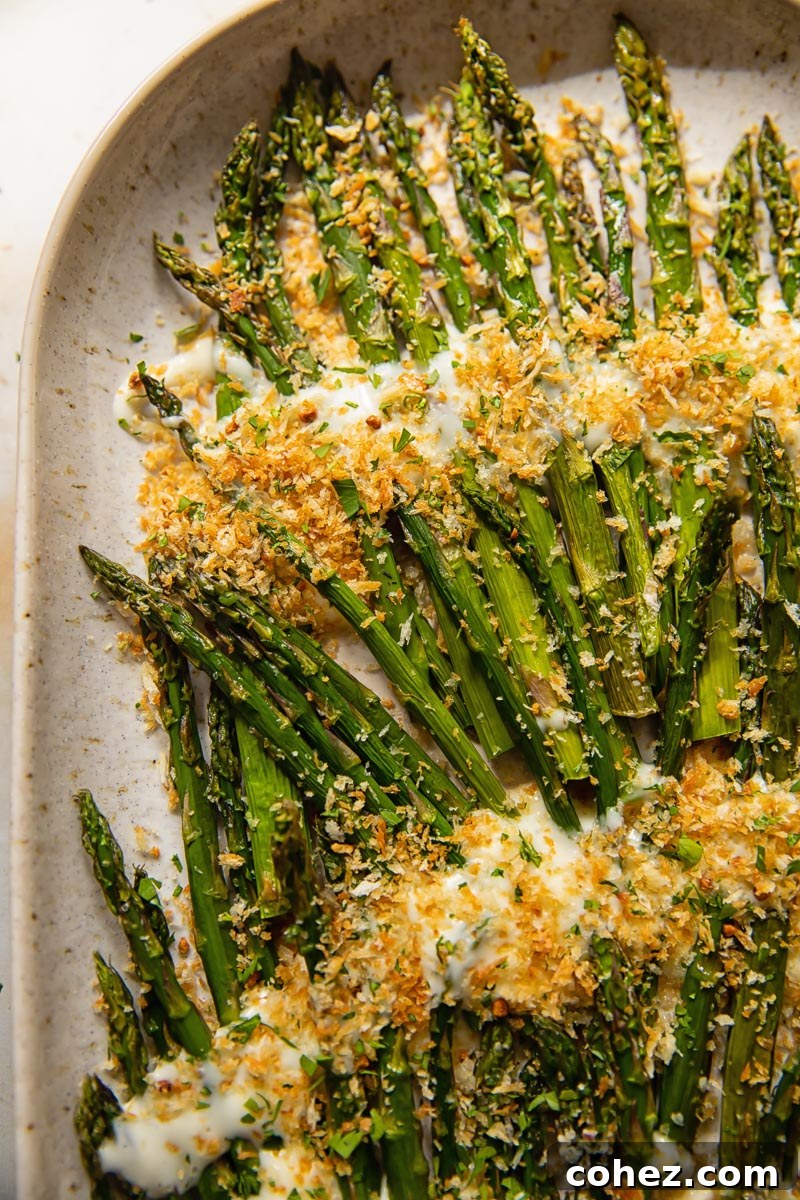
Elevate your culinary repertoire with this exquisite recipe for Roasted Asparagus, bathed in a velvety Mornay sauce and crowned with crisp, aromatic herb and garlic breadcrumbs. This isn’t just a side dish; it’s a statement, perfect for adding a touch of gourmet elegance to any meal, from a festive holiday gathering to a sophisticated weeknight dinner.
As spring blossoms, so does the vibrant green bounty of fresh asparagus. This versatile vegetable, celebrated for its delicate flavor and tender bite, truly shines when prepared with a thoughtful touch. Imagine it alongside a succulent Honey Glazed Ham or a perfectly seared steak – a pairing that promises a symphony of flavors and textures.
The Allure of Asparagus: A Seasonal Delight
When asparagus season arrives, my kitchen always seems to be bustling with these slender green spears. Its incredible versatility makes it a perennial favorite. I incorporate it into everything from rich risottos and fragrant curries to simple salads. Even in unexpected places, like inside my favorite sushi rolls, asparagus makes a delightful appearance, proving its universal appeal and adaptability in countless cuisines.
Beyond its culinary charm, asparagus is a nutritional powerhouse. It’s an excellent source of vitamins A, C, E, and K, as well as folate, potassium, and dietary fiber. Low in calories and high in antioxidants, it supports digestion, promotes heart health, and even boasts anti-inflammatory properties. Choosing fresh asparagus is key: look for firm, bright green stalks with tightly closed tips. Avoid any that appear wilted, shriveled, or have open, flowering tops, as these indicate older, less tender spears. For optimal freshness, store asparagus upright in a glass with about an inch of water in the refrigerator, covering the tips loosely with a plastic bag.
Mastering the Art of Roasted Asparagus
While a quick steam or blanch certainly has its place, my absolute favorite method for preparing asparagus is roasting. The oven works magic on vegetables, transforming their raw crispness into a tender, slightly caramelized perfection. Roasting deepens the natural flavors, coaxing out the inherent sweetness of the asparagus, and achieves those coveted, slightly charred ends that add a wonderful textural contrast.
The beauty of roasted asparagus lies in its simplicity. You truly need very little to achieve outstanding results – just a light drizzle of good quality olive oil and a pinch of salt. This minimal seasoning allows the natural flavor of the asparagus to shine through. The high heat of the oven ensures quick cooking, typically between 10 to 18 minutes, depending on the thickness of the stalks. This quick cook time also minimizes the risk of overcooking, which can result in limp, watery spears. Setting a timer is your best friend here, guaranteeing perfectly tender-crisp asparagus every time.
The Elegance of Mornay Sauce: A French Classic
While roasted asparagus is delightful on its own, a thoughtfully chosen sauce can elevate it to an entirely new level, especially when preparing a dish for a holiday table or a special occasion. Traditional pairings often include a rich hollandaise sauce. If you’re looking for an accessible recipe, consider exploring a blender hollandaise sauce or a blender bearnaise sauce – both French classics renowned for their luxurious textures and exquisite flavors. For a quicker, lighter option, a zesty mustard vinaigrette can be whipped up in mere minutes, requiring just a mason jar and a good shake.
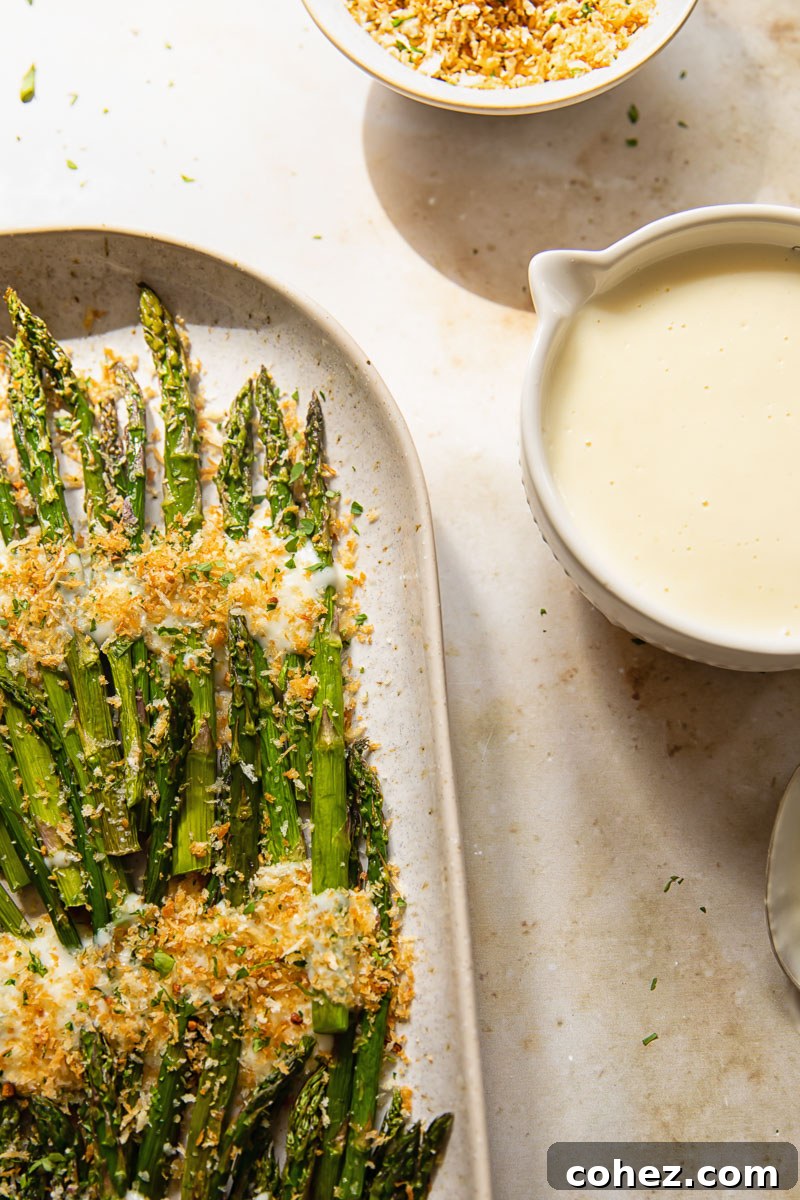
Today, however, we turn our attention to the magnificent **Mornay sauce**, another jewel in the crown of French cuisine that is surprisingly straightforward to master. The good news is, if you’re familiar with making a classic Béchamel sauce, you’re already halfway there. Mornay sauce is essentially a Béchamel sauce enriched with the luxurious addition of Gruyère cheese. It’s a supremely creamy, cheesy sauce, expertly crafted the French way, offering a sophisticated counterpoint to the fresh, slightly bitter notes of asparagus.
A Foundation of Flavor: Understanding Béchamel
To truly appreciate Mornay, it helps to understand its foundation: Béchamel sauce. Béchamel is one of the five “mother sauces” of classical French cuisine, known for its creamy, white appearance and subtle, milky flavor. It’s made from a simple roux (a cooked mixture of butter and flour) gradually whisked with heated milk. The key to a perfect Béchamel is constant whisking to prevent lumps and achieve a silky-smooth consistency. This neutral base is incredibly versatile, serving as a starting point for many other sauces and dishes.
The Gruyère Difference: Crafting Mornay
The transformation from Béchamel to Mornay happens with the incorporation of cheese. While the classic Mornay calls for Gruyère, a semi-hard, nutty Swiss cheese, its rich, savory notes melt beautifully into the Béchamel, creating a sauce that is deeply flavorful yet remarkably smooth. The Gruyère adds a distinctive complexity and a luxurious gooeyness that elevates any dish it accompanies. Its ability to melt without becoming stringy makes it ideal for sauces.
Mornay sauce is incredibly versatile and pairs wonderfully with a variety of ingredients beyond asparagus. Think gratin dishes, seafood, chicken, or even as an indulgent pasta sauce. Its richness and depth make it a fantastic choice for adding comfort and elegance to countless recipes.
The Perfect Crunch: Herb and Garlic Breadcrumbs
No elegant asparagus dish with a creamy sauce would be complete without a textural contrast. That’s where the herb and garlic breadcrumbs come in. This simple yet impactful topping adds a delightful crunch, a burst of fresh herbal notes, and a pungent warmth from the garlic, creating a harmonious balance with the tender asparagus and rich Mornay sauce.
For the best possible texture, we highly recommend using Panko breadcrumbs. Unlike traditional breadcrumbs, Panko is made from crustless white bread and processed into large, airy, flaky crumbs. This unique structure allows Panko to absorb less oil, resulting in an exceptionally light, crispy, and crunchy texture when toasted – far superior to the denser, often soggier results of regular breadcrumbs. The difference is truly remarkable, providing that satisfying “snap” with every bite.
When it comes to flavor, there’s no substitute for fresh garlic. While garlic powder is convenient, it simply cannot replicate the nuanced, aromatic depth of a freshly crushed clove. Sautéing fresh garlic in butter for just a short moment releases its fragrant oils, infusing the breadcrumbs with an authentic, savory warmth. Paired with freshly chopped parsley, which adds a bright, herbaceous counterpoint, these breadcrumbs are more than just a garnish; they are an integral component that ties the entire dish together.
Essential Recipe Tips for Success
- Asparagus Selection: Always choose the freshest asparagus available. Look for firm, vibrant green stalks with tight, compact tips. Shriveled or dry-looking spears will result in a woody texture when cooked. Before roasting, always trim the tough, woody ends, even if they appear pre-trimmed, to ensure every bite is tender and palatable.
- Roasting Perfection: Roasting times vary with asparagus thickness. For standard stalks, 10-15 minutes at 400F/200C is ideal. If your asparagus is extra thin (often labeled “extra fine”), reduce cooking time to 8-10 minutes. For exceptionally thick spears, you might need up to 18-20 minutes. The goal is tender-crisp, not mushy.
- Cheese for Mornay: While classic Mornay sauce features Gruyère cheese for its distinctive nutty and savory notes, it’s perfectly fine to customize. If Gruyère isn’t to your taste or available, a blend of freshly grated Parmesan and a good quality extra mature Cheddar makes a fantastic alternative, offering a robust and familiar cheesy flavor.
- Silky Smooth Sauce: Achieving a perfectly smooth Béchamel (and thus Mornay) requires constant stirring when adding the milk to the roux. If, despite your best efforts, your sauce develops any small lumps, don’t fret! Simply push it through a fine-mesh sieve or give it a quick blend with an immersion blender or standard blender for an effortlessly silky consistency.
- Avoid Pre-Grated Cheese: For the smoothest and creamiest Mornay, steer clear of pre-grated cheeses. These often contain anti-caking agents like starch or cellulose, which can prevent the cheese from melting properly and lead to a grainy or clumpy sauce. Always grate your cheese fresh for the best results.
- Breadcrumb Texture and Flavor: As mentioned, Panko breadcrumbs are superior for their light and crispy texture. For the most authentic and vibrant flavor in your breadcrumbs, always use fresh garlic, finely minced or crushed, rather than garlic powder. The difference in aroma and taste is significant.
Serving Suggestions and Perfect Pairings
This Roasted Asparagus with Mornay Sauce and Herb and Garlic Breadcrumbs is a truly versatile dish. It stands beautifully as an elegant side for a variety of main courses. Consider serving it with a perfectly roasted chicken, pan-seared salmon, a tender beef fillet, or even a simple grilled fish. Its rich and comforting profile also makes it an ideal accompaniment for holiday meals such as Thanksgiving or Easter, where it can add a touch of sophistication to your spread.
For a complete and balanced meal, pair it with a light grain like quinoa or wild rice, or a simple green salad dressed with a bright vinaigrette to cut through the richness of the sauce. The possibilities are endless, making this recipe a fantastic addition to your culinary repertoire for any occasion.
More Delicious Side Dishes to Try
- Maple Glazed Roasted Carrots
- Pan Fried Garlic Mushrooms
- Lemon Garlic Green Beans with Parmesan
Roasted Asparagus with Mornay Sauce and Breadcrumbs
Cook: 30 mins
Total: 40 mins
Servings: 8
Print Recipe
Elevate your roasted asparagus by serving it with elegant Mornay sauce, topped with herb and garlic breadcrumbs – a truly gourmet side dish!
Equipment
- Sharp Chef’s Knife
- Large Baking Tray
- Medium Saucepan
- Non-stick Frying Pan
- Whisk
- Fine-mesh Sieve (optional, for extra smooth sauce)
Ingredients
For the Roasted Asparagus
- 1/2 kg / 1 lb fresh asparagus, trimmed
- 1 tbsp olive oil
- Salt, to taste
For the Mornay Sauce
- 3 tbsp unsalted butter
- 3 tbsp all-purpose flour
- 500ml / 2 cups whole milk
- 1 bay leaf
- 120g / 4 oz Gruyère cheese, freshly grated
- Salt, to taste (and a pinch of white pepper, optional)
- Pinch of freshly grated nutmeg (optional, for authentic Béchamel flavor)
For the Herb and Garlic Breadcrumbs
- 60g / 1/2 cup Panko breadcrumbs
- 1 tbsp unsalted butter
- 1 clove fresh garlic, minced or crushed
- 1 tbsp fresh parsley, finely chopped
Instructions
-
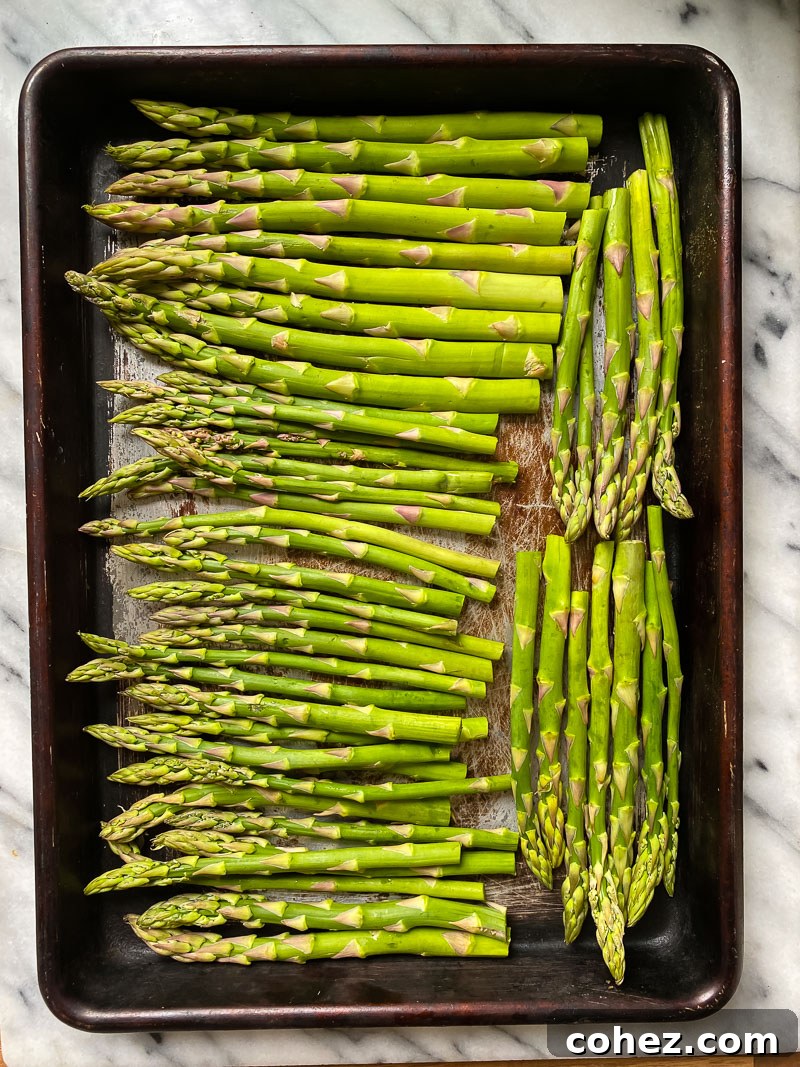
Prepare the Asparagus: Preheat your oven to 400F/200C. On a large baking tray, arrange the trimmed asparagus spears in a single layer. Drizzle evenly with olive oil and sprinkle with salt. Roast in the preheated oven for 10-15 minutes, or until tender-crisp. The exact time will depend on the thickness of your asparagus stalks. Once done, remove from the oven and keep warm while you prepare the sauce and breadcrumbs.
-
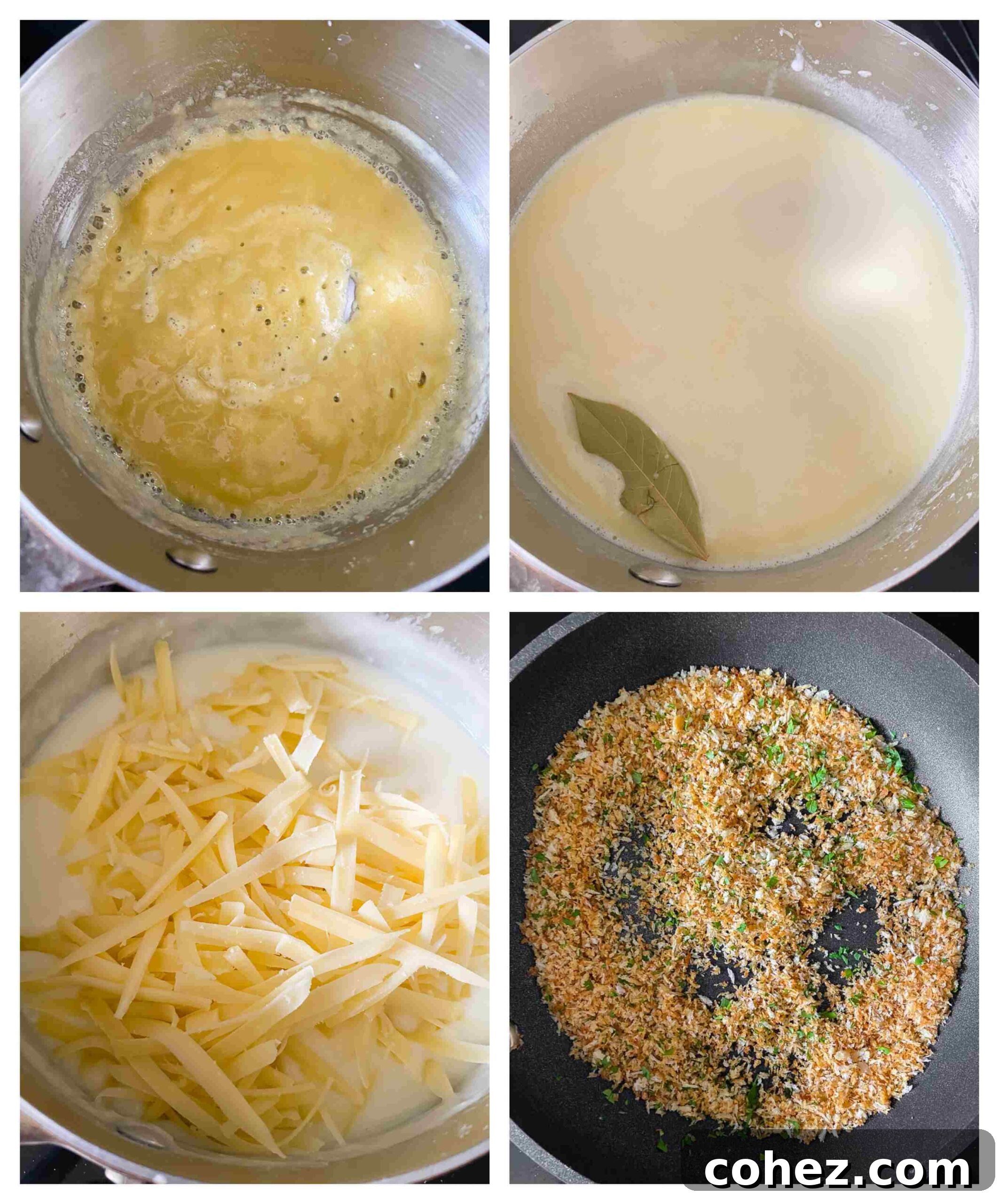
Make the Mornay Sauce: In a medium saucepan, melt the butter over medium heat. Add the flour and cook, stirring constantly with a whisk, for 1-2 minutes to create a smooth roux. It should smell slightly nutty but not brown. Gradually whisk in the cold whole milk, a little at a time, ensuring each addition is fully incorporated before adding more to prevent lumps. Add the bay leaf and season with salt (and optional white pepper and nutmeg). Continue to cook over low heat, stirring occasionally, until the sauce thickens to your desired consistency, about 8-10 minutes. For an extra silky sauce, pass it through a fine-mesh sieve or blend briefly. Return the sauce to the saucepan, remove the bay leaf, and stir in the freshly grated Gruyère cheese until it melts completely and the sauce is smooth and creamy. You may need to gently reheat if the sauce has cooled.
-
Prepare the Herb and Garlic Breadcrumbs: In a non-stick frying pan, melt the butter over medium-low heat. Add the minced or crushed garlic and sauté gently for about 30 seconds, being careful not to burn it. Add the Panko breadcrumbs and chopped fresh parsley to the pan. Cook, stirring frequently, until the breadcrumbs are golden brown and perfectly toasted, about 3-5 minutes. Remove from heat immediately to prevent over-browning.
-
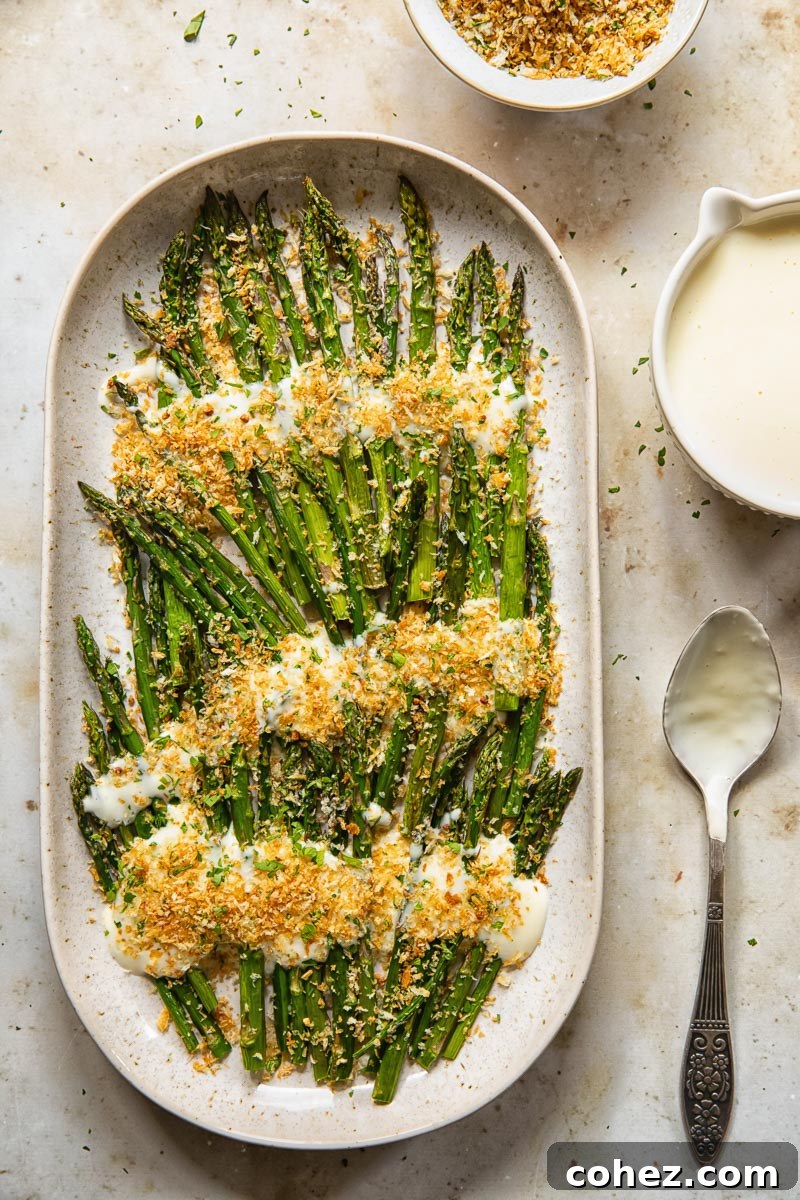
Assemble and Serve: Carefully arrange the roasted asparagus spears on a serving platter. Generously drizzle the warm Mornay sauce over the asparagus. Finish by sprinkling the toasted herb and garlic breadcrumbs evenly over the sauced asparagus. For guests who desire more, serve any remaining Mornay sauce in a small jug or bowl on the side. Serve immediately and enjoy this elegant and flavorful side dish!
Nutrition
Carbohydrates: 13 g
Protein: 6 g
Fat: 11 g
Saturated Fat: 6 g
Polyunsaturated Fat: 1 g
Monounsaturated Fat: 4 g
Trans Fat: 1 g
Cholesterol: 26 mg
Sodium: 442 mg
Potassium: 234 mg
Fiber: 2 g
Sugar: 5 g
Vitamin A: 781 IU
Vitamin C: 4 mg
Calcium: 144 mg
Iron: 2 mg
Nutrition information is automatically calculated and should be used as an approximation.
Tried this recipe?
Let us know how it was!