
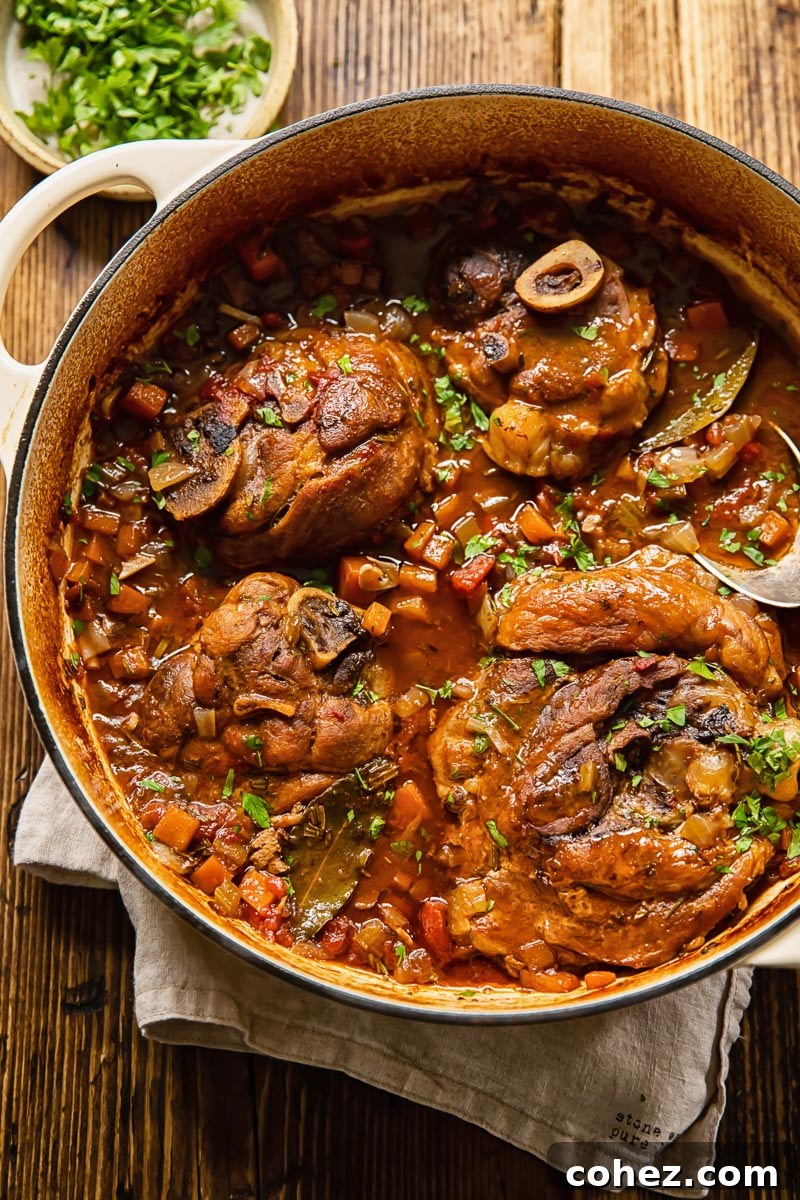
Indulge in the unparalleled richness of Pork Osso Buco, a slow-cooked, wine-braised Italian masterpiece where succulent, melt-on-the-tongue meat is bathed in a deeply flavored, marrow-rich gravy. This easy-to-prepare version reimagines the classic with juicy bone-in pork shanks, delivering a truly unforgettable culinary experience. Forget your ordinary Sunday roast; a new king of comfort food has arrived.
For those seeking another exquisite slow-cooked dish, consider this French Beef Bourguignon. Also braised to perfection in wine with aromatic vegetables, it offers a similar warmth and depth, traditionally made with economical stewing beef. Both dishes pair beautifully with your favorite hearty side dishes, promising a feast for the senses.
What is Osso Buco? A Taste of Lombardy
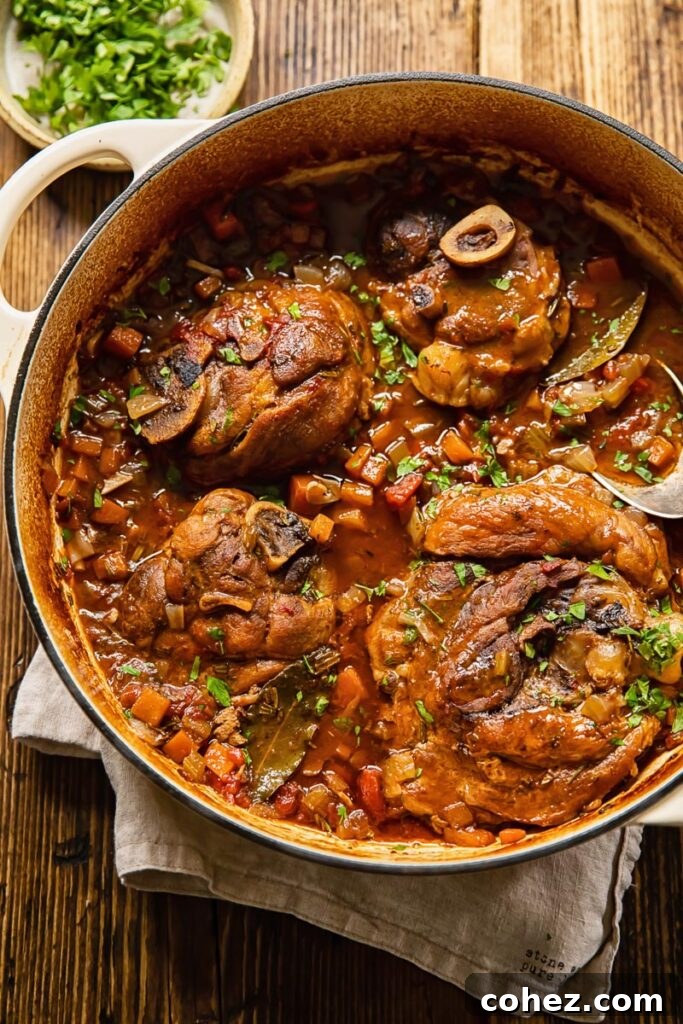
Osso Buco, which translates literally to ‘bone with a hole,’ is a culinary jewel originating from the Lombardy region of Northern Italy. This region, characterized by its mountainous terrain and cooler climate, has naturally shaped a cuisine focused on hearty, robust dishes. North Italian cooking celebrates rich ingredients like fatty meats, creamy polenta and potatoes, and an abundance of root vegetables, all frequently prepared in thick, comforting sauces. Osso Buco perfectly embodies this tradition, offering a profound depth of flavor and a wonderfully satisfying texture that warms from within.
In stark contrast to the lighter, seafood-centric and olive oil-rich dishes found in Southern Italy, Lombardy’s cuisine, including Osso Buco, is designed to nourish and sustain. While both northern and southern Italian culinary traditions offer incredible delights, this particular dish stands as a testament to the comforting and rich flavors of the north.
The Essence of Osso Buco: A Slow-Cooked Masterpiece
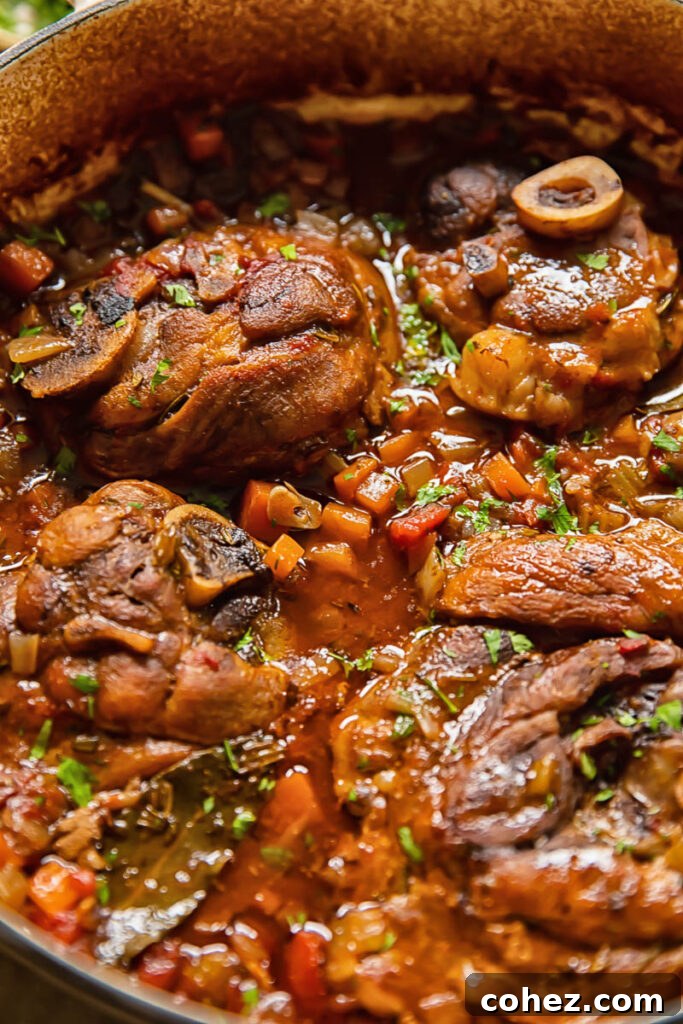
At its heart, Osso Buco is a luxurious, slow-cooked stew built upon a foundation of earthy vegetables – typically carrots, onions, and celery, forming the classic Italian soffritto. These aromatic vegetables are simmered in a wine-infused gravy that gently bathes and braises cross-cut shanks. Shanks, taken from the lower section of the animal’s leg, are highly prized for slow-cooking due to their abundant connective tissue. Over hours of gentle heat, this tissue gradually breaks down and transforms into a glorious, gelatinous juice, enriching the sauce with an unparalleled silkiness and body.
Beyond the meat itself, the “bone with a hole” holds the secret to Osso Buco’s signature richness: bone marrow. The cross-cut nature of the shanks exposes this sturdy, marrow-filled bone, allowing the marrow to slowly melt into the braising liquid. This infusion of marrow is what truly intensifies the gravy’s rich flavor and imparts an unimaginably unctuous, velvety texture that is simply irresistible. It’s this unique element that elevates Osso Buco from a simple stew to a truly gourmet experience.
Traditional Versus Accessible Meat Choices
Traditionally, Osso Buco is prepared with veal shanks, known for their delicate flavor and tenderness. However, modern interpretations often substitute veal with more readily available and equally delicious alternatives. In this recipe, we opt for pork shanks, which offer a fantastic flavor profile and tenderness, making this classic dish more accessible for home cooks. Pork shanks also tend to be more economical than veal, allowing more people to enjoy this exquisite dish. Beef shanks are another popular choice, and they too will yield a sublime and deeply flavorful meal, albeit with a slightly different robust character. Regardless of the meat used, the slow braising process and the magic of the marrow-rich bone guarantee a dish that is both comforting and sophisticated.
Expert Tips for Perfecting Your Pork Osso Buco
- Choosing Your Meat: While veal is the historical choice, pork shanks offer a delicious and more affordable alternative, which is why we’ve chosen it for this recipe. The rich flavor and tender texture of pork shanks stand up beautifully to the slow braising, often providing a slightly richer taste than veal. This recipe is also highly versatile and works exceptionally well with beef shanks, providing a robust and equally satisfying result that appeals to different palates. Don’t hesitate to experiment based on availability and personal preference for meat type.
- The Right Cooking Vessel: A deep and wide cast-iron pan or Dutch oven is truly ideal for preparing osso buco. The wide surface area promotes the evaporation of liquids, allowing the sauce to reduce and thicken to the perfect consistency, concentrating its savory essence. Additionally, a wider pan provides ample space for the pork shanks to sit in a single layer, ensuring even browning during searing and consistent cooking throughout the braising process. If you only have a deep but narrow pot, it will still work effectively; you might just need to stack the meat and remember to uncover the pot for the final 30 minutes of cooking to help the sauce reduce and concentrate its flavors to achieve the desired consistency.
- Selecting Your Wine: For deglazing the pan and building the rich sauce, choose a dry red or white wine. A dry wine provides the necessary acidity to balance the richness of the meat without adding unwanted sweetness, enhancing the overall depth of flavor. Whether you prefer the deeper notes of a dry red like Pinot Noir or the crispness of a dry white like Sauvignon Blanc, ensure it’s dry. If you’re a fan of cooking with Vermouth (which also makes for fantastic cocktails!), it serves as an excellent substitute, imparting a unique aromatic quality to the dish. Always ensure it’s a dry variety.
- Herbs: Fresh vs. Dried: Fresh herbs like rosemary and thyme impart an unbeatable vibrancy and aroma to osso buco, infusing the dish with bright, herbaceous notes that truly elevate the flavor profile. However, if you find yourself not frequently using fresh herbs and worry about potential waste, dried herbs are an absolutely fine and practical alternative for this recipe. As a general rule, use about one-third of the amount of dried herbs compared to fresh, as dried herbs are more concentrated in flavor. Remember to crush dried herbs slightly before adding them to release their essential oils.
- The Tomato Factor: The amount of tomato in osso buco can be adjusted to your liking. Some prefer a more pronounced tomato flavor, which adds a tangy sweetness and color, while others, like us, prefer a subtle hint that allows the rich pork and wine flavors to shine through unimpeded. In this recipe, we’ve dialed down the tomatoes to just ½ cup of canned chopped tomatoes, resulting in a sauce that is more brothy and less dominated by the sometimes-sour notes of tinned tomatoes. This approach ensures the savory pork and the complexity of the braising liquid remain the stars of the dish.
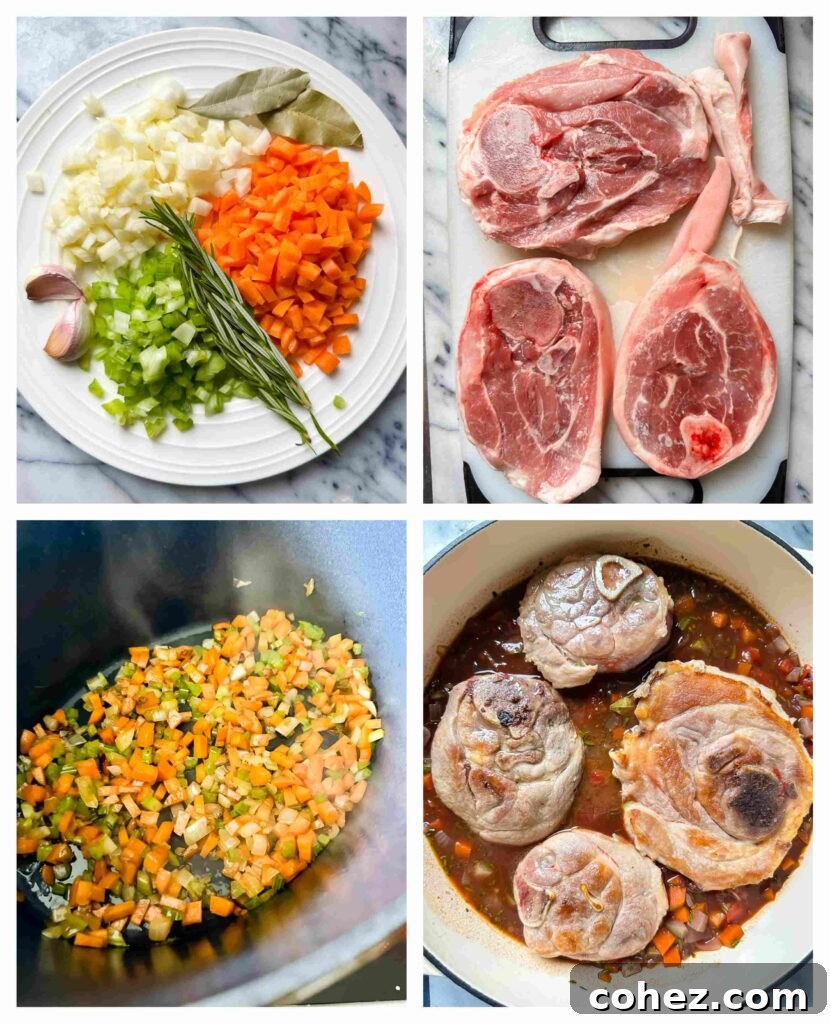
- Preparing Pork Shanks: Pork shanks sometimes come with the rind still attached. If this is the case, it’s advisable to carefully remove the rind and any excessively thick layer of fat beneath it. While some fat is desirable for flavor, too much rind can become chewy and excessive fat can make the sauce overly greasy. A sharp knife will make this task easier.
- Scoring the Fat: If any significant fat layer remains on the outside of the shanks after trimming, it’s crucial to score it with a sharp knife before cooking. Make several shallow cuts across the fat, being careful not to cut into the meat itself. This simple but effective step prevents the shanks from curling up at the edges during cooking due to the shrinking fat, ensuring they lay flat and cook evenly, developing a beautiful, golden-brown crust.
Serving Suggestions for Pork Osso Buco
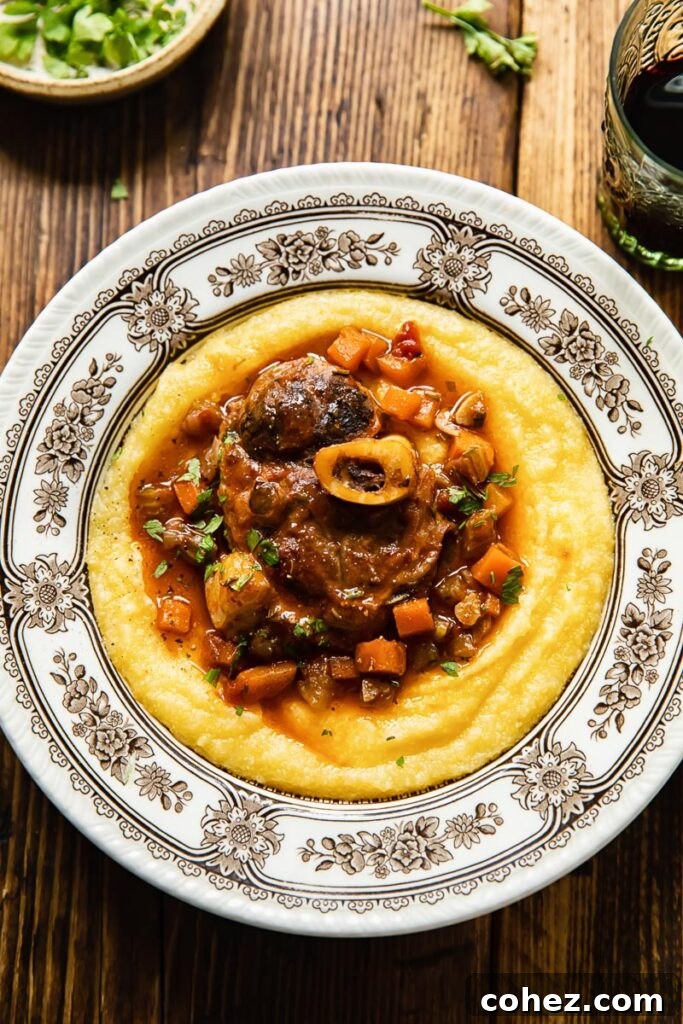
This sumptuous meaty wonder deserves equally delightful accompaniments to complete the Italian dining experience. To truly embrace the Lombardy style, serve your Pork Osso Buco over a bed of creamy polenta, which offers a soft, comforting texture that beautifully soaks up the rich gravy. Alternatively, a vibrant, golden saffron risotto provides an aromatic and luxurious pairing, its delicate threads of saffron adding a sophisticated touch. Both options provide a perfect canvas for soaking up the rich, flavorful gravy and enjoying every last drop.
For a fresh and bright green side, consider lightly sautéed cavolo nero (black kale), whose slight bitterness provides a wonderful contrast to the richness of the pork. Another excellent choice is this simple yet elegant pan-fried zucchini with basil and pecorino, offering a fresh, herbaceous element. Adding a side of hearty Tuscan butter beans with spinach and sun-dried tomatoes will not only complement the flavors with their earthy goodness but also ensure a truly satisfying and filling meal for everyone at the table.
Finally, no traditional Osso Buco experience is complete without a generous sprinkle of gremolata. Gremolata is a bright, zesty, and aromatic condiment made from finely chopped fresh parsley, finely grated lemon zest, and minced garlic, often with a drizzle of high-quality olive oil. Its fresh, pungent, and citrusy flavors cut through the richness of the slow-cooked stew, providing a burst of freshness that cleanses the palate and elevates the entire dish to another dimension of taste and aroma. It’s a simple addition that makes a profound difference, adding both visual appeal and a layer of vibrant flavor that shouldn’t be missed.
Storage and Reheating Leftover Osso Buco
This Italian pork osso buco recipe is indeed an investment of time, making it an excellent candidate for meal prep or a rewarding weekend cooking project to enjoy throughout the week. One of the many joys of slow-cooked dishes is that their flavors often deepen and meld even further after a day or two of resting, allowing the ingredients to harmonize and intensify. This osso buco is certainly no exception, tasting even better the next day!
Once cooked and thoroughly cooled to room temperature, transfer your pork osso buco, along with its luscious sauce, to an airtight container. Store it in the refrigerator, where it will keep beautifully for up to 4 days. You can expect the already delicious flavors to intensify during this time, transforming your midweek meal into an even more mouthwatering and aromatic experience, ready to be enjoyed with minimal effort.
When you’re ready to enjoy your leftovers, reheat them gently to preserve the meat’s tenderness and the sauce’s integrity. You can either warm them slowly on the stovetop over low heat, stirring occasionally, ensuring the pork is heated thoroughly all the way through, or place the covered dish in an oven preheated to 165°C (325°F) for 30-40 minutes. It’s always a good practice to use a meat thermometer to ensure the pork reaches a safe internal temperature of 74°C (165°F) before serving. This ensures both food safety and optimal enjoyment of your perfectly braised pork.
More Delicious Italian Recipes to Explore
- Slow Cooker Italian Beef Stew: Another hearty, hands-off stew bursting with the savory depths of Italian flavors, perfect for a comforting family meal.
- Chicken Broccoli Alfredo: A classic creamy pasta dish that’s rich and satisfying, ideal for a quick and flavorful weeknight meal.
- Tortelloni with Creamy Tomato Sauce and Spinach: A delightful pasta dish that combines tender tortelloni with a velvety tomato sauce and fresh greens for a balanced and indulgent experience.
- Italian Rosemary Chicken Stew: Fragrant and flavorful, this chicken stew is a comforting Italian staple, infused with aromatic rosemary and tender chicken.
Pork Osso Buco Recipe
By Julia Frey of Vikalinka
Prep Time: 15 minutes |
Cook Time: 2 hours 30 minutes |
Total Time: 2 hours 45 minutes |
Servings: 4 people

Slow-cooked, wine-braised, melt-on-the-tongue meat swimming in a dark marrow-rich gravy, that is the famed Italian dish, pork osso buco.
Equipment
- Cast iron casserole dish (Dutch Oven)
- Meat thermometer
Ingredients
- 1 kg / 2.2 lbs pork osso buco (4 pieces)
- Salt, to taste
- Pepper, to taste
- 1 tbsp olive oil
- 1 large carrot, diced
- 1 large onion, diced
- 1 celery rib, diced
- 2 cloves garlic, minced or thinly sliced
- 2 fresh rosemary sprigs or 1 teaspoon dried rosemary (alternatively, use thyme)
- 2 bay leaves
- 125ml / 1/2 cup dry white wine or dry red wine
- 250ml / 1 cup chicken stock (low sodium recommended)
- 125ml / 1/2 cup canned chopped tomatoes (undrained)
Instructions
- If your pork osso buco chops come with pork rind, carefully cut it off and trim any excessively thick layer of fat beneath it. Score any remaining fat on the outside of the shanks with a sharp knife to prevent curling. Season the pork generously on all sides with salt and freshly ground black pepper. In a large cast iron casserole dish (Dutch Oven) or similar heavy-bottomed pot, heat the olive oil over medium-high heat. Brown the pork shanks thoroughly on all sides until golden and caramelized. This step is crucial for developing deep flavor. Remove the browned pork from the pan and set aside.
- To the same pot (adding a little more olive oil if needed), add the diced carrots, onions, and celery. Cook over low to medium heat for about 10 minutes, stirring occasionally, until the vegetables have softened and become aromatic. Add the minced or sliced garlic, fresh rosemary (or dried, if using), and bay leaves, and cook for another 30 seconds until fragrant, being careful not to burn the garlic. Deglaze the pan with the dry white or red wine, scraping up any browned bits from the bottom of the pot with a wooden spoon. Let the wine bubble for a couple of minutes to reduce slightly and allow its alcohol to evaporate.
- Pour in the chicken stock and canned chopped tomatoes, stirring well to combine all ingredients and create a cohesive sauce base. Return the browned pork osso buco pieces to the pot, nestling them into the sauce so they are partially submerged. Ensure both sides of the meat are coated in the liquid by flipping them once. The sauce should come up about halfway to two-thirds of the way up the shanks.
- Reduce the heat to low, cover the pot with a tight-fitting lid, and simmer gently on the stovetop for 1 hour and 20 minutes, or until the pork is very tender but still holds its shape. After this initial braising time, uncover the pot and continue to simmer for an additional 10-15 minutes, allowing the sauce to thicken and the flavors to concentrate further. Alternatively, you can cook it in the oven at 150°C (300°F) for 1 hour and 20 minutes, covered, then uncover for the final 10-15 minutes to help caramelize the pork and reduce the sauce to the desired consistency. Serve hot, garnished with fresh gremolata if desired.
Nutrition Information (Approximate per serving)
Calories: 388kcal | Carbohydrates: 9g | Protein: 50g | Fat: 13g | Saturated Fat: 3g | Polyunsaturated Fat: 1g | Monounsaturated Fat: 6g | Cholesterol: 189mg | Sodium: 360mg | Potassium: 1032mg | Fiber: 1g | Sugar: 4g | Vitamin A: 2596IU | Vitamin C: 7mg | Calcium: 80mg | Iron: 3mg
Nutrition information is automatically calculated and should only be used as an approximation. Individual results may vary based on exact ingredients and preparation methods.