
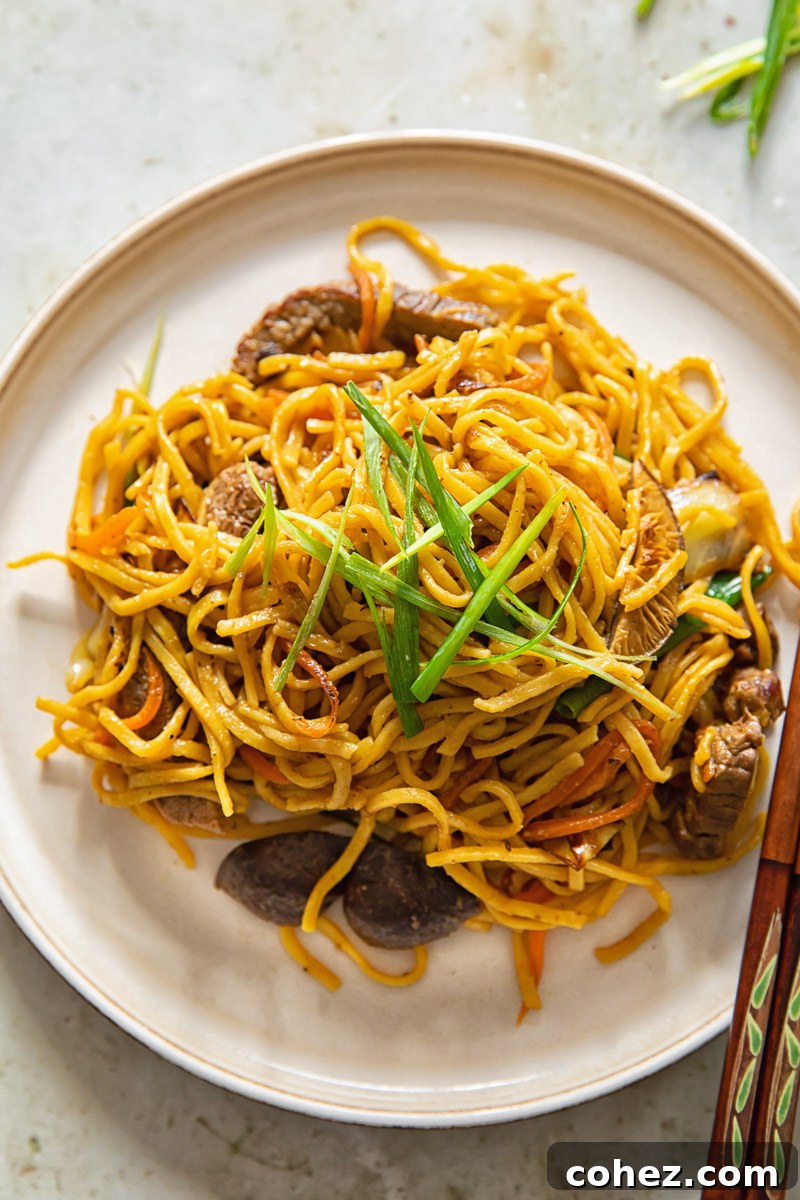
Experience the vibrant flavors and exciting textures of Japanese street food right in your own kitchen with this incredible Quick Beef Yakisoba recipe. Forget waiting for takeout; in just a fraction of the time and for a fraction of the cost, you can create a steaming, savory bowl of perfectly stir-fried noodles, tender strips of juicy beef, and an array of crisp, fresh vegetables. Get ready to impress your taste buds and perhaps even make your local Japanese spot a little nervous!
If you’re craving more noodle adventures, explore the fiery kick of Singapore Noodles or match the savory beef with our Quick Gochujang Noodles with Beef. For a wider journey through East Asian cuisine, be sure to check out our extensive Asian Recipe Collection for endless inspiration.
Unveiling the Delight of Yakisoba: A Japanese Culinary Icon
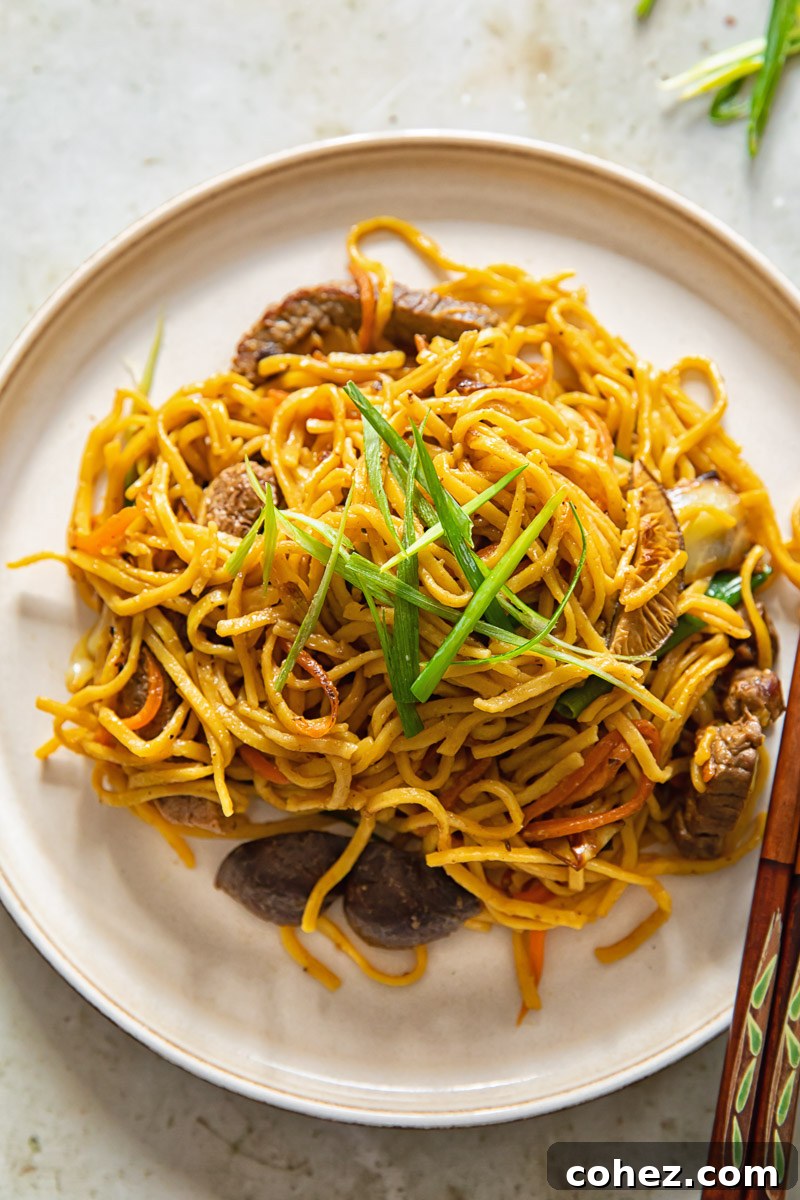
Yakisoba, often seen written as Yaki Soba, is much more than just a noodle dish; it’s a beloved staple of Japanese street food, a culinary tradition that brings people together at festivals and everyday eateries alike. While many Japanese dishes boast centuries of history, Yakisoba is a relatively modern creation, having emerged less than a hundred years ago. Despite its youth, it has quickly captured the hearts of food lovers worldwide with its irresistible combination of stir-fried noodles, fresh vegetables, tender protein, and a unique sweet-and-savory sauce.
The name “Yakisoba” literally translates to “stir-fried noodles.” Intriguingly, despite the “soba” in its name – which typically refers to thin buckwheat noodles – the noodles traditionally used in Yakisoba are actually made from plain wheat flour. These yellow, chewy, and slightly wavy noodles are ideal for stir-frying as they hold their texture well and absorb the rich flavors of the sauce. However, the beauty of Yakisoba lies in its adaptability. Don’t hesitate to experiment with other noodle varieties like egg noodles, ramen noodles, or even thicker udon noodles if that’s what you prefer or have on hand. The goal is a satisfying, flavorful stir-fry, and the right noodle provides the perfect foundation.
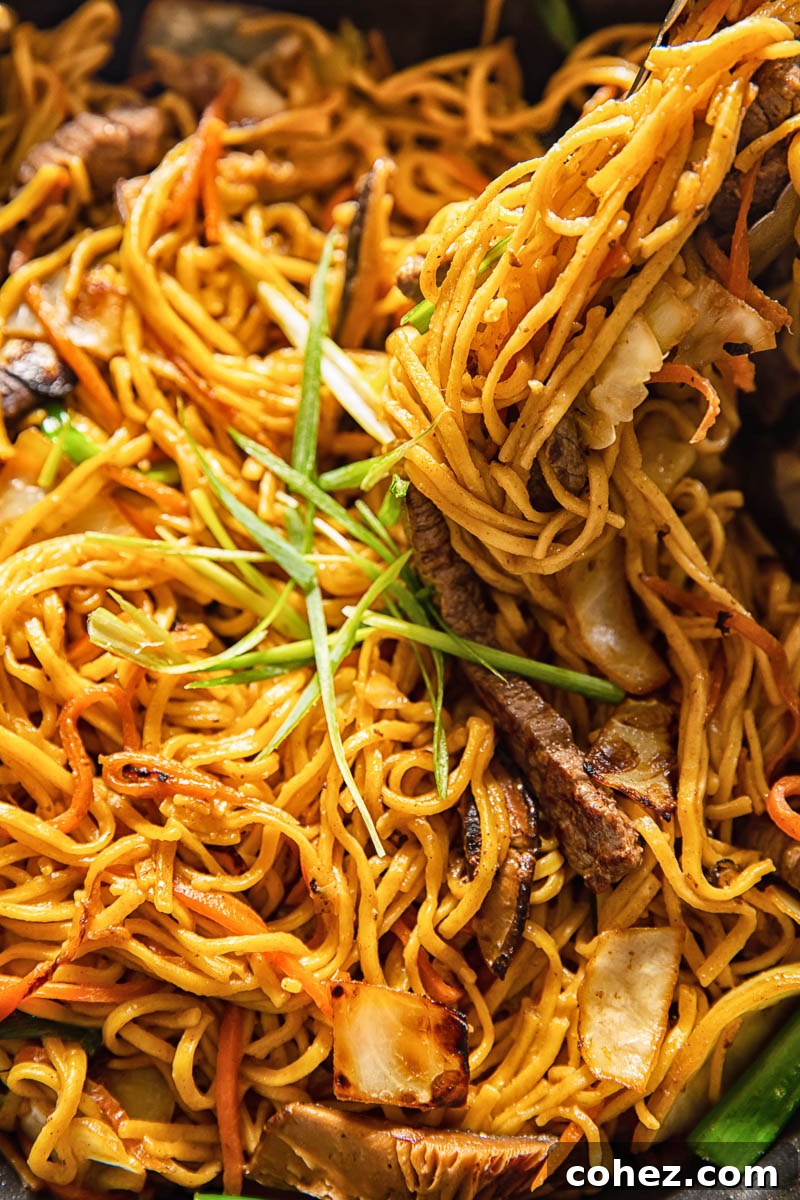
This particular recipe focuses on a delicious Beef Yakisoba, but the versatility of this dish is truly one of its greatest strengths. You are free to customize the protein to suit your preferences or what’s available in your fridge. Common and equally delicious variations include succulent chicken, savory pork, plump prawns, or even plant-based options like firm tofu or tempeh for a vegetarian-friendly meal. Each protein brings its own unique flavor and texture to the mix, allowing for endless culinary exploration.
The same goes for your choice of vegetables. I often gravitate towards the satisfying crunch of thinly sliced carrots and cabbage, along with earthy mushrooms for added depth and texture. Bell peppers, with their vibrant colors and slight sweetness, also make an excellent addition, especially if you need to use up what’s in your crisper drawer. To maintain an authentic East Asian profile, consider incorporating fresh bean sprouts for a refreshing bite or delicate bok choy for a touch of greens. The key is to select vegetables that cook relatively quickly and retain some bite, ensuring a dynamic texture contrast in every mouthful.
Yaki Soba vs. Yaki Udon: A Noodle Showdown
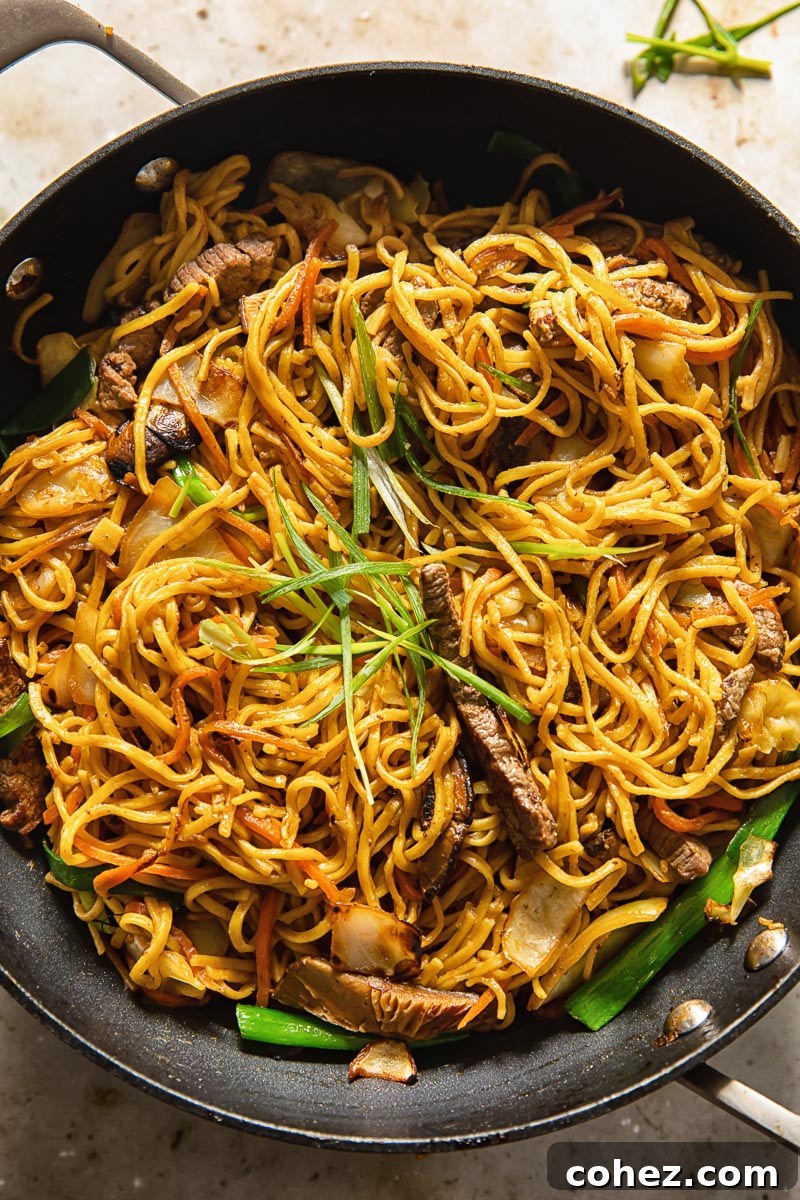
When it comes to Japanese stir-fried noodles, the debate between Yaki Soba and Yaki Udon is less of a contest and more a matter of personal preference. For me, choosing a definitive winner would be impossible, as both offer distinct and equally delightful experiences. The primary difference between these two iconic dishes lies, as you might guess, in the noodle itself.
Yaki Udon shares many core components with Yaki Soba – the same savory sauce, fresh vegetables, and protein choices. However, instead of the thinner, chewier wheat noodles of Yakisoba, Yaki Udon uses thick, smooth, and wonderfully chewy udon noodles. These robust noodles provide a satisfying mouthfeel, making for a truly indulgent “slurper” of a dish. If you enjoy a heartier noodle that stands up to a rich sauce, Yaki Udon is an excellent choice. But for classic, lighter stir-fry perfection, Yakisoba remains king.
Crafting the Perfect Yakisoba Sauce
The soul of any great Yakisoba lies in its sauce – a harmonious blend of sweet, savory, and tangy notes that coat every noodle and piece of protein. My preferred Yakisoba sauce is both simple and deeply authentic, built upon a classic Japanese “threesome” with an easy-to-remember 3:2:1 ratio. Mastering this base will unlock endless possibilities for customization.
Leading the charge is **Soy Sauce** (3 parts), the cornerstone of East Asian cooking. It brings a profound salty, umami-rich intensity that forms the backbone of countless dips, soups, sauces, and marinades. Choose a good quality Japanese soy sauce for the best flavor profile.
Next, we have **Mirin** (2 parts), a sweet Japanese rice wine that is slightly syrupy in consistency. Mirin is more than just a sweetener; it’s an elegant seasoning that imparts a beautiful shine to glazes and a delicious luster to every dish it graces. Its subtle sweetness balances the saltiness of the soy sauce perfectly.
Completing the trinity is **Tsuyu** (or dashi stock) (1 part), which invigorates the sauce with its distinctive sea-flavored essence. Dashi is a fundamental stock in Japanese cuisine, typically made from bonito (tuna) flakes and kelp (seaweed). Its unique umami depth provides a much-needed counterpoint, cutting through the richness of its saucy companions and adding a layer of sophisticated flavor.
While this trinity forms a perfect authentic base, Yakisoba sauce recipes can vary widely according to individual taste and regional preferences. Some cooks might add a touch of tomato ketchup for an extra layer of tartness and a hint of sweetness, while others might incorporate sriracha or chili garlic sauce for a spicy kick. Once you’ve become comfortable with this foundational blend, feel free to experiment with other flavors – perhaps a dash of rice vinegar for extra tang, a hint of garlic or ginger, or even a touch of oyster sauce for added umami – to achieve a balance that perfectly suits your palate.
Expert Recipe Tips for Perfect Yakisoba
- **Sourcing Dashi/Tsuyu:** If you find it challenging to locate tsuyu or dashi stock in your local supermarket, it’s often readily available online or in Asian specialty stores. If that’s still not an option, don’t despair! A good quality Worcestershire sauce can serve as a surprisingly effective substitute, offering a similar tangy and umami profile.
- **The Power of Mise en Place:** This is a truly fast-paced recipe, designed for quick cooking. It is absolutely essential to have all your steak and vegetables prepped, sliced, and ready to go before you even turn on the heat. Once the wok is hot, there’s no time to stop and chop. This ensures everything cooks evenly and quickly.
- **Mushroom Prep:** For fresh shiitake mushrooms, always trim off the tough, woody stems as they can be unpleasant to chew. If using smaller button mushrooms, a quick stem trim is usually sufficient.
- **Dried Shiitake Magic:** Dried shiitake mushrooms are an excellent, often more accessible alternative to fresh ones, and they pack an even more intense umami punch. To use them, simply rehydrate them in a bowl of boiling water for 20-30 minutes until soft. Once rehydrated, trim their stems and proceed as you would with fresh mushrooms. Don’t discard the soaking liquid; it makes a fantastic, flavorful addition to stocks or sauces!
- **Achieving Wok Hei:** If you’re using a carbon steel wok, ensure it’s screaming hot before adding oil and ingredients. This high heat is crucial for achieving “wok hei” – the smoky, complex flavor that is the hallmark of great stir-fries.
- **Don’t Overcrowd the Pan:** Cook the beef and vegetables in batches if your pan isn’t large enough. Overcrowding lowers the temperature, steaming the ingredients instead of stir-frying them, leading to a less desirable texture.
Elevate Your Yakisoba: Serving Suggestions
While Yakisoba is a wonderfully complete one-pan meal, offering everything you need in a single delicious bowl, that doesn’t mean you can’t enhance the experience with thoughtful garnishes or complementary side dishes. The key is to introduce additional flavors and textures that harmonize with the dish’s Japanese roots.
For an authentic touch, consider garnishing your finished Yakisoba with a sprinkle of beni shoga (pickled red ginger), a dash of ao-nori (dried green seaweed flakes), or even a handful of delicate katsuobushi (bonito flakes) that “dance” from the heat of the noodles. These garnishes not only add visual appeal but also introduce layers of salty, tangy, and umami flavors that perfectly complement the stir-fry.
If you’re looking to expand the meal, a simple side salad with a Japanese-inspired dressing, such as sesame or ginger, would be light and refreshing. And while tofu might sound like a step too far for some, our Hoisin Glazed Crispy Tofu is an absolutely irresistible side dish that could convert even the most skeptical of diners with its perfect balance of crispy texture and sweet-savory glaze.
Storage and Reheating: Enjoying Yakisoba All Over Again
One of the many great things about stir-fries like Yakisoba is how well they stand up to being reheated, making them perfect for meal prep or enjoying as delicious leftovers. Any leftover stir-fry can be stored in an airtight container and kept safely in the refrigerator for 2-3 days. This ensures that you can savor the delightful flavors of your homemade Yakisoba even after the first sitting.
When you’re ready for Round Two, reheating is a breeze. Simply add a small amount of oil to a pan or wok over medium heat. Once the pan is hot, toss in your leftover Yakisoba. Stir-fry for a few minutes, gently breaking up any clumps, until the noodles are thoroughly heated through and the beef is piping hot. This quick reheating method ensures your Yakisoba retains its delicious texture and flavor, ready to be enjoyed again in less time than it takes to decide on takeout!
More Delicious Noodle Recipes to Explore
- Beef Chow Mein
- Easy Dan Dan Noodles
- Filipino Noodles with Pork and Shrimp (Pancit Canton)
- Prawn Noodle Stir Fry
- Vegan Dan Dan Noodles
Quick Beef Yakisoba
By Julia Frey of Vikalinka
Cook: 10 mins
Total: 20 mins
Servings: 4
This quick beef Yakisoba, loaded with crunchy vegetables, is a homemade delight that surpasses takeout and will quickly become a family favorite.
Equipment
- Carbon steel wok (or large frying pan)
Ingredients
For the Stir-Fry:
- 250g / 8 oz dried medium egg noodles or Yakisoba noodles
- 1 tbsp vegetable oil
- Salt, to taste
- 300g / 10 oz lean steak (such as sirloin or rump), thinly sliced
- 100g / 1 cup white cabbage, chopped into bite-sized pieces
- 100g / 1 cup shiitake mushrooms or button mushrooms, or a mix of both, sliced
- 1 carrot, julienned
- 4 green onions, green parts cut into 2-inch pieces for garnish, white parts chopped
For the Yakisoba Sauce:
- 3 tbsp soy sauce
- 2 tbsp mirin (or dry sherry)
- 1 tbsp tsuyu/dashi stock (or Worcestershire sauce as a substitute)
- 1 tsp sesame oil
Instructions
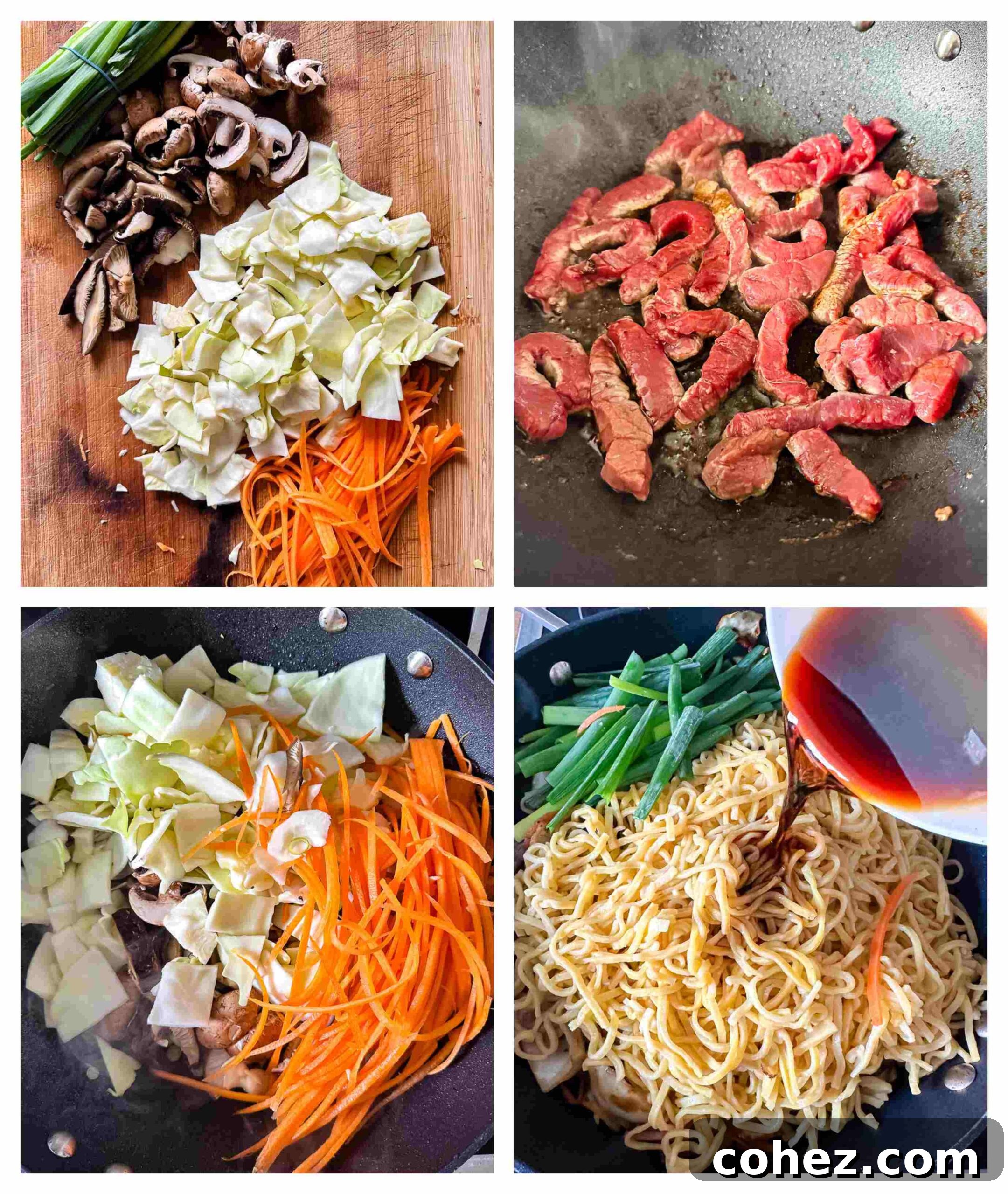
- **Prepare Ingredients:** Finely slice the cabbage and cut the carrot into thin matchsticks. Remove tough stems from large shiitake mushrooms and trim smaller ones, then cut mushrooms into bite-sized pieces or leave small ones whole. Cut the steak into thin, bite-sized pieces and season lightly with salt.
- **Make the Sauce:** In a small bowl, whisk together the soy sauce, mirin, and dashi stock (or Worcestershire sauce). Set aside.
- **Cook Noodles:** Cook the noodles according to package instructions until al dente. Drain and rinse briefly with cold water to prevent sticking, then set aside.
- **Stir-Fry Beef and Vegetables:** Heat the vegetable oil in a wok or large frying pan over high heat. Add the seasoned steak and stir-fry quickly until sealed on the outside and just beginning to brown (about 2-3 minutes). Add the chopped white parts of the green onions, cabbage, mushrooms, and carrots. Continue to stir-fry for 5-7 minutes, until the vegetables are cooked through but still have a firm, crisp bite. They will reduce in volume by about half.
- **Combine and Finish:** Add the cooked noodles and the green parts of the green onions to the pan with the beef and vegetables. Pour in the prepared Yakisoba sauce. Toss everything together vigorously to ensure the noodles and all ingredients are evenly coated with the sauce. Continue to heat through for another 2-3 minutes. Drizzle with sesame oil just before serving for an extra layer of flavor.
Notes
You can use dried shiitake mushrooms, which are often easier to source and offer a richer umami flavor. To prepare them, simply pour boiling water over the dried mushrooms and let them rehydrate for 20-30 minutes until soft. Always remove the tough stems from dried mushrooms before slicing and using them.
Nutrition
| Carbohydrates: 54g
| Protein: 25g
| Fat: 6g
| Saturated Fat: 1g
| Polyunsaturated Fat: 1g
| Monounsaturated Fat: 2g
| Cholesterol: 47mg
| Sodium: 1082mg
| Potassium: 488mg
| Fiber: 3g
| Sugar: 5g
| Vitamin A: 2692IU
| Vitamin C: 12mg
| Calcium: 42mg
| Iron: 2mg
Nutrition information is automatically calculated and should only be used as an approximation.
Let us know how it was!