
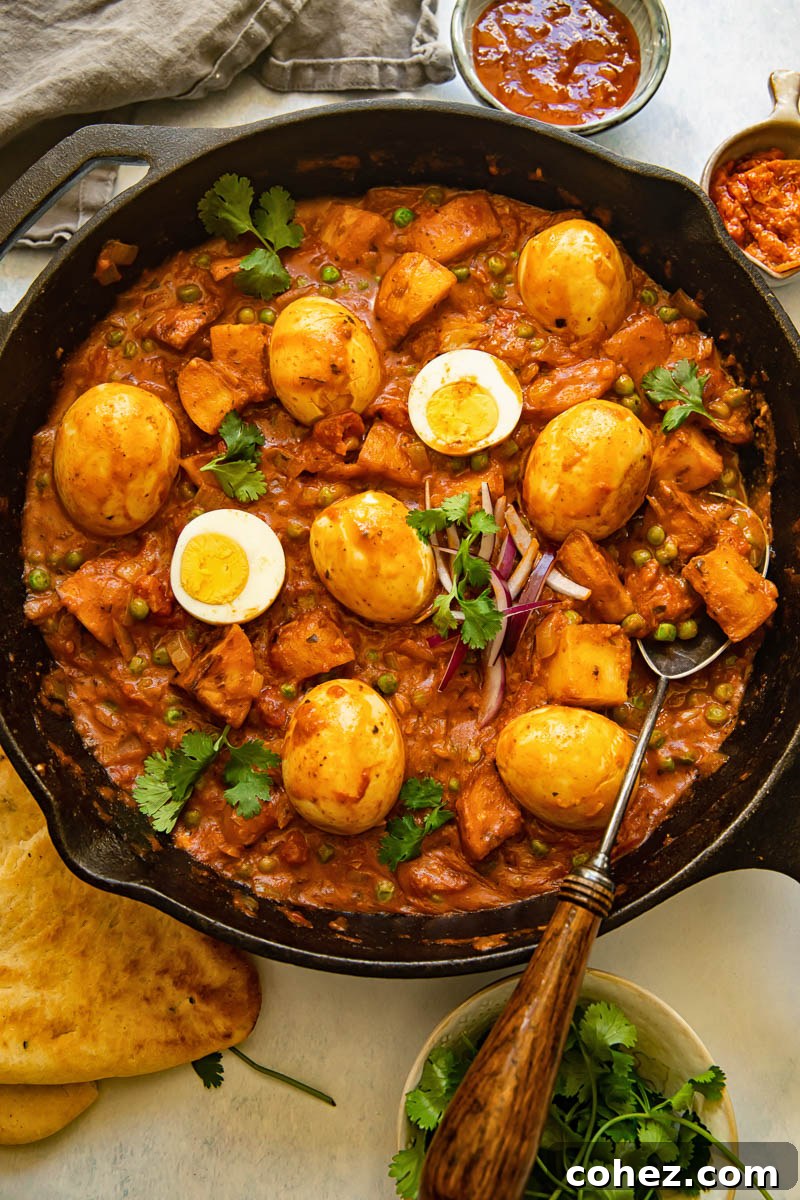
Experience the delightful simplicity and rich flavors of an Indian classic with this incredible Egg Curry. Often overlooked, this comforting dish offers a mild, aromatic spice profile that will quickly become a cherished addition to your weekly dinner rotation!
India boasts a culinary heritage brimming with exquisite curry recipes, each telling a unique story of regional flavors and traditional techniques. While many associate Indian curries with meat-based dishes, the heart of Indian cuisine lies in its diverse and vibrant vegetarian offerings. For those eager to explore the expansive world of Indian curries, a wealth of options awaits, and this egg curry is the perfect starting point.

Egg curry, though perhaps not as widely known internationally as its chicken or paneer counterparts, is a culinary gem that truly deserves a spot in every home cook’s repertoire. It brilliantly showcases the versatility of eggs, transforming them into a star ingredient that adds both substance and a luscious texture to a rich, fragrant sauce. Eggs are an excellent and affordable source of high-quality protein, making this curry not only delicious but also incredibly nutritious.
The foundation of this particular egg curry recipe is a time-honored classic, providing a robust base that is endlessly adaptable. Traditional curry ingredients like potatoes and peas are natural complements, adding wholesome bulk and sweetness that make this dish universally appealing. However, the beauty of this recipe lies in its flexibility; don’t hesitate to experiment with other vegetables or even leafy greens like spinach to truly make it your own.
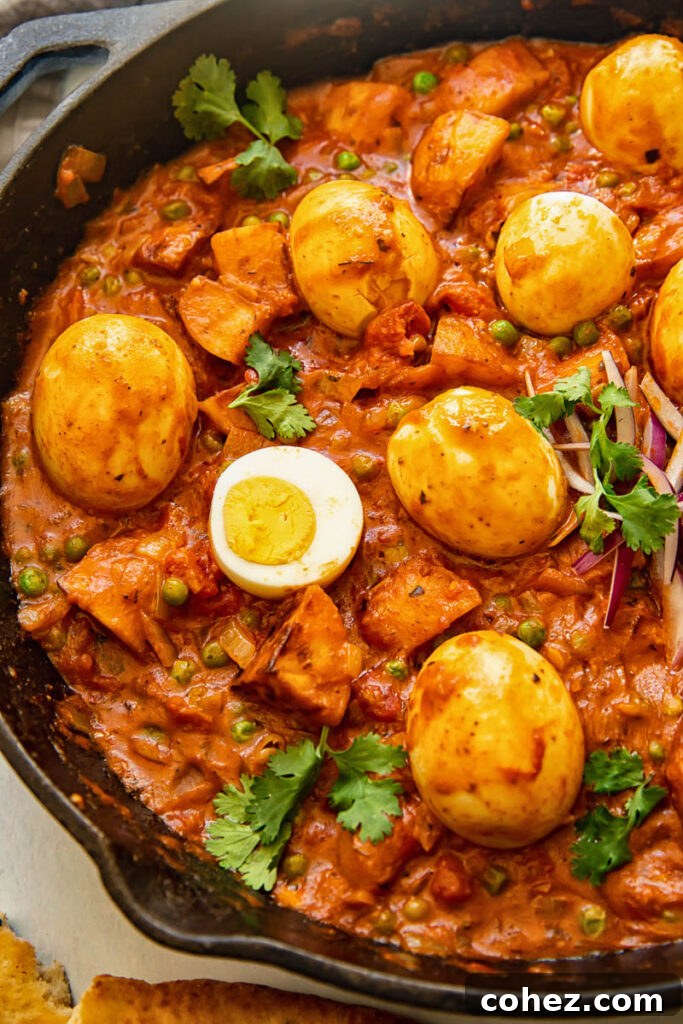
The addition of perfectly hard-boiled eggs is the defining element, infusing the warming, aromatic curry with an unexpected creaminess and a substantial dose of protein. Their smooth texture contrasts beautifully with the tender potatoes and vibrant peas, creating a satisfying and well-rounded meal. This truly is a vegetarian curry that promises to be a delightful and frequent return to your table.
Embracing the Richness of Vegetarian Curries
For many outside of India, the concept of a “curry” often conjures images of dishes built around chicken, lamb, or other meats. However, within India itself, vegetarian curries are not just common; they are a cornerstone of daily cuisine and celebrated for their incredible depth of flavor and nutritional value. The tradition of meatless cooking in India is centuries old, driven by cultural, religious, and economic factors, leading to an unparalleled mastery of plant-based culinary artistry.
While meat is globally recognized for its ability to impart robust flavors, Indian cooks have perfected the art of extracting equally stunning and complex tastes from an array of vegetables, legumes, and spices. This skill transforms simple ingredients into extraordinary meals, proving that meat is by no means a prerequisite for a truly flavorful dish.
A diverse array of spices is undoubtedly central to this culinary philosophy. However, for the average home cook, investing in an extensive spice cupboard filled with rarely used ingredients can be daunting. This is where modern convenience meets traditional flavor.
Fortunately, high-quality curry pastes offer a fantastic shortcut. These pastes are expertly blended with a complex medley of fragrant spices, providing an authentic flavor profile without the need for individual spice sourcing. It’s a pragmatic and excellent solution, especially if you find a reputable brand (Patak’s is a widely recognized and reliable choice). The beauty of using curry paste also lies in its ability to transform a recipe; the same base can yield entirely different dishes simply by swapping out one paste for another, opening up a world of culinary experimentation.
Another fundamental yet incredibly impactful technique for building exceptional flavor in any curry involves the simple act of frying onions, garlic, and ginger together in oil. As elementary as this step may seem, it is absolutely vital. This process, often referred to as “bhunao” in Indian cooking, caramelizes the onions and mellows the pungency of the garlic and ginger, creating a deep, savory, umami base that is indispensable for a truly good curry. Taking the time to properly brown these aromatics is a secret weapon for achieving authentic Indian flavors.
While I’ve recommended frying the onion for 5-7 minutes for a quicker meal, dedicating 10 minutes or even longer on a low heat will yield an even deeper, sweeter flavor. Patience in this initial step pays dividends in the final taste of your curry. Should the onions show signs of burning, a small splash of water can halt the process and help them soften further without scorching.
Crafting the Perfect Egg Curry: A Simplified Approach
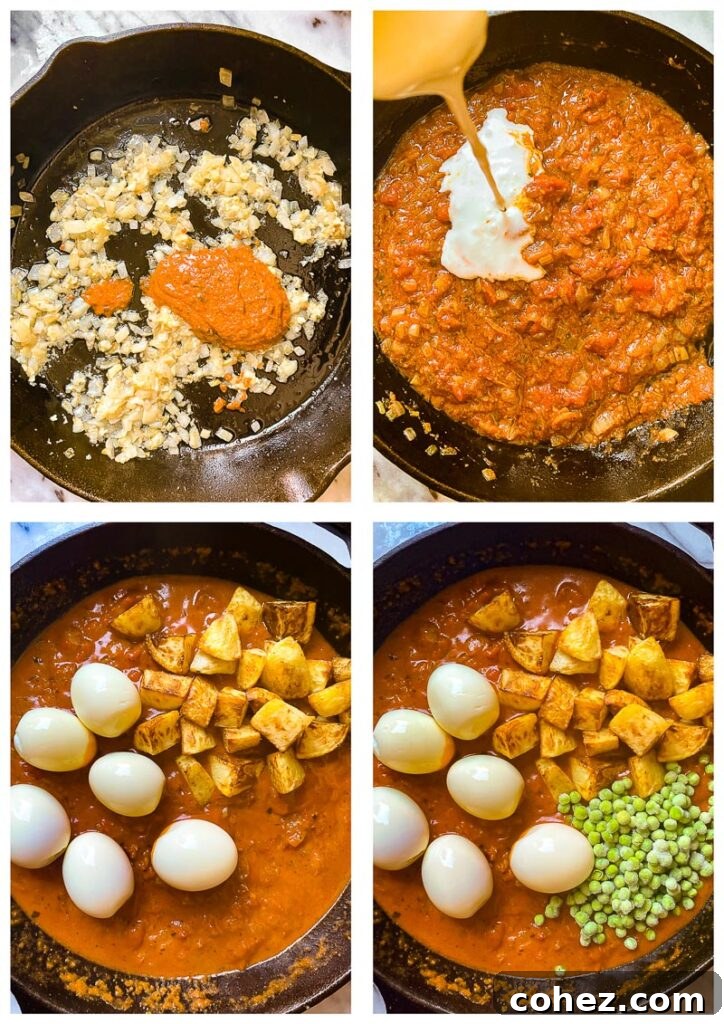
This delightful egg curry recipe begins with preparing its star ingredients: the eggs and potatoes. For the eggs, boil them for approximately 10 minutes to achieve a firm, fully cooked yolk. Immediately after boiling, plunge them into an ice-cold water bath. This crucial step not only stops the cooking process, preventing a rubbery texture, but also helps the eggs cool rapidly, making them significantly easier to peel without tearing the whites. Simultaneously, the cubed potatoes can be browned in oil until they develop a beautiful golden exterior. This pre-frying step adds texture and prevents the potatoes from becoming mushy in the curry sauce. Once browned, set them aside.
As highlighted earlier, the underlying cooking methodology for this curry is quite standard for Indian dishes and serves as an excellent foundational skill for any aspiring home cook. It’s all about meticulously building layers of flavor from the ground up.
To streamline the process and avoid the need to acquire an extensive collection of individual spices, utilizing a high-quality pre-made curry paste is highly recommended. For this recipe, I opted for This is an affiliate link.tikka masala paste. Its balanced flavor profile and versatility make it adaptable to a wide array of dishes, which is why I often incorporate it into chicken tikka masala and paneer tikka masala, among other curry creations.
However, before introducing the curry paste, the initial and most vital step is to sauté the finely chopped onions. Allow them to cook gently until they are translucent and begin to caramelize, developing a wonderful sweetness and fragrance. This stage is paramount for the overall depth of flavor in your curry. Following the onions, add the minced garlic and grated ginger, cooking for just another 30 seconds until aromatic, being careful not to burn them.
Next, it’s time to stir in the curry paste, ensuring it blends thoroughly with the aromatic base. Shortly after, incorporate the This is an affiliate link.canned chopped tomatoes, allowing the mixture to simmer and meld for approximately 5 minutes. This simmering period allows the flavors to deepen. Then, pour in the This is an affiliate link.coconut milk, bring the curry to a gentle boil, then reduce the heat and let it simmer for another 10 minutes, allowing the sauce to thicken and flavors to fully develop.
Finally, carefully add the peeled hard-boiled eggs, the browned potatoes, and the frozen peas to the simmering sauce. At this juncture, the curry sauce might be a bit too thick, so don’t hesitate to add a splash of water to achieve your desired consistency. Continue to simmer the curry for about 10 minutes, or until the potatoes are tender but still hold their shape beautifully, ensuring they don’t become overly soft and fall apart. The goal is tender, not mushy.

Expert Recipe Tips and Notes for a Flawless Egg Curry
- Curry Paste Selection: While I specifically used tikka masala paste for its versatile and complementary flavors in this recipe, feel free to experiment with other Indian curry pastes. Be aware that swapping pastes will introduce different spice profiles and result in a unique final dish, offering endless possibilities for customization.
- Developing Onion Flavor: The duration you allow the onions to fry in oil directly impacts the depth of flavor in your curry. If time permits, reduce the heat to low and let them gently caramelize for 10 minutes or even longer. This slow cooking process sweetens the onions and builds a rich base. If they appear to be browning too quickly or sticking, a small splash of water can prevent burning and aid in softening.
- Handling Boiled Eggs: For the easiest peeling and handling, ensure your hard-boiled eggs have cooled completely. If you’re planning ahead, consider boiling them in advance and refrigerating until ready to use. This not only simplifies the cooking process but also allows for cleaner peeling.
- Serving Perfection: This fragrant egg curry is wonderfully satisfying when served simply over fluffy This is an affiliate link.basmati rice. To enhance the experience, pair it with warm naan bread or thin chapatis, which are perfect for scooping up the rich sauce. Traditional accompaniments like tangy mango chutney and a spicy Indian pickle add layers of flavor and contrast that elevate the meal.
- Ingredient Spotlight: Curry Paste: For this specific recipe, I relied on This is an affiliate link.Patak’s tikka masala curry paste. Using a pre-made curry paste is an incredibly convenient and efficient method to infuse your dish with a complex blend of authentic Indian spices without the need to purchase and measure numerous individual ingredients. While other curry pastes can be substituted, each will impart a distinct flavor, leading to a different but equally delicious outcome.
Elevating Your Meal: Thoughtful Serving Suggestions
While a generous mound of perfectly cooked basmati rice is truly all you need to fully appreciate the fragrant allure of this Egg Curry and transform it into a wholesome, hearty meal, I personally love to introduce a bit more variety and texture to my Indian curry dinners. Thoughtful side dishes can turn a simple weeknight meal into a vibrant feast, offering a spectrum of flavors and sensations.
To diversify your spread, consider pairing this comforting egg curry with aromatic coconut rice, which adds a subtle sweetness and creamy undertone. A bowl of warm, earthy red lentil dal (Dahl) can provide an additional layer of protein and a different textural dimension. No Indian meal feels complete without a fresh, warm bread for scooping up every last drop of that delicious sauce, so homemade naan bread is always a welcome addition.
Beyond the staples, I often include a dollop of sweet and tangy mango chutney or a spicy Indian pickle on the side. These condiments act as fantastic flavor enhancers, providing contrasting notes that cut through the richness of the curry. And, for those occasions when I want to truly elevate the meal, an additional vegetable side dish like creamy saag paneer (spinach with Indian cheese) can introduce even more textural and flavor complexity, creating a truly memorable dining experience.
Finally, a sprinkle of fresh cilantro (also known as coriander) as a garnish is not just for visual appeal. Its bright, herbaceous notes add a refreshing counterpoint to the warm spices of the curry, enhancing the overall freshness and beauty of this already delightful dish.
Storage and Leftovers: Maximizing Flavor and Convenience
One of the many joys of cooking curry is how incredibly well it tastes the next day. In fact, allowing these leftovers to rest for a day or two in the refrigerator will only do good things for the flavor. The spices have more time to meld, deepen, and intensify, often resulting in an even more delicious and harmonious dish. When properly stored in an This is an affiliate link.airtight container, this egg curry will keep beautifully in the refrigerator for 3-4 days, making it an ideal candidate for meal prepping.
For longer-term storage, this curry can also be frozen for up to three months. While the overall flavor profile will remain excellent, it’s worth noting that the texture of the potatoes may become slightly softer or more mealy upon thawing and reheating. The eggs, however, tend to hold up quite well. To freeze, ensure the curry is completely cooled before transferring it to freezer-safe containers.
When you’re ready to enjoy your leftovers, reheat the curry gently. It can be warmed in a microwave, stirring occasionally to ensure even heating. Alternatively, for a stovetop method, transfer the curry to a This is an affiliate link.saucepan and reheat over medium-low heat, stirring frequently. If the sauce appears too thick or has reduced significantly, add a splash of water or vegetable broth to loosen it to your desired consistency. Ensure it is heated through thoroughly before serving.
Explore More Delicious Vegetarian Curry Recipes
If you loved the flavors of this Egg Curry and are eager to delve deeper into the vibrant world of vegetarian Indian cuisine, here are some other fantastic recipes to try:
- Potato and Cauliflower Curry ‘Aloo Gobi’
- Chickpea and Butternut Squash Curry
- Paneer Tikka Masala
- Coconut Lentil Curry with Butternut Squash
- Sweet Potato and Lentil Curry
Egg Curry with Peas and Potatoes

Ingredients
- 8 eggs
- 1 tbsp vegetable oil
- 2 potatoes
- 1 onion
- 1 tbsp garlic paste or 2 cloves garlic
- 1 tbsp grated ginger
- 3 tbsp curry paste, I used tikka masala
- 200g / 7oz This is an affiliate link.canned chopped tomatoes
- 250ml / 1 cup This is an affiliate link.coconut milk
- 150g / 1/2 cup frozen peas
- Cilantro, for garnish
Instructions
- In a large pot, cook the eggs for 10 minutes until hard-boiled. Immediately plunge them into cold water to stop the cooking and cool them, then carefully peel the shells.
- Peel and cube the potatoes. Heat vegetable oil in a pan and brown the potatoes until golden on the outside but not fully cooked through. Remove them to a separate plate and set aside.
- In the same pan, add chopped onion and sauté over medium heat for 5-7 minutes until softened and translucent. Then, add the garlic paste (or minced garlic cloves) and grated ginger, cooking for an additional 30 seconds until fragrant. Stir in the Indian curry paste and cook for a few seconds to release its aromas. Add the canned chopped tomatoes and let the curry simmer for 5 minutes. Pour in the coconut milk, bring it to a gentle boil, then reduce the heat and simmer for 10 minutes, allowing the sauce to thicken. Finally, add the peeled eggs, browned potatoes, and frozen peas to the pan. If the sauce appears too thick, add a splash of water to reach your desired consistency. Let it simmer for another 10 minutes, or until the potatoes are tender but still intact and not falling apart.
- Garnish generously with fresh cilantro/coriander and serve hot with basmati rice, naan bread, and a side of mango chutney or a spicy pickle.
Notes
Nutrition
Nutrition information is automatically calculated, so should only be used as an approximation.
Tried this recipe?Let us know how it was!