
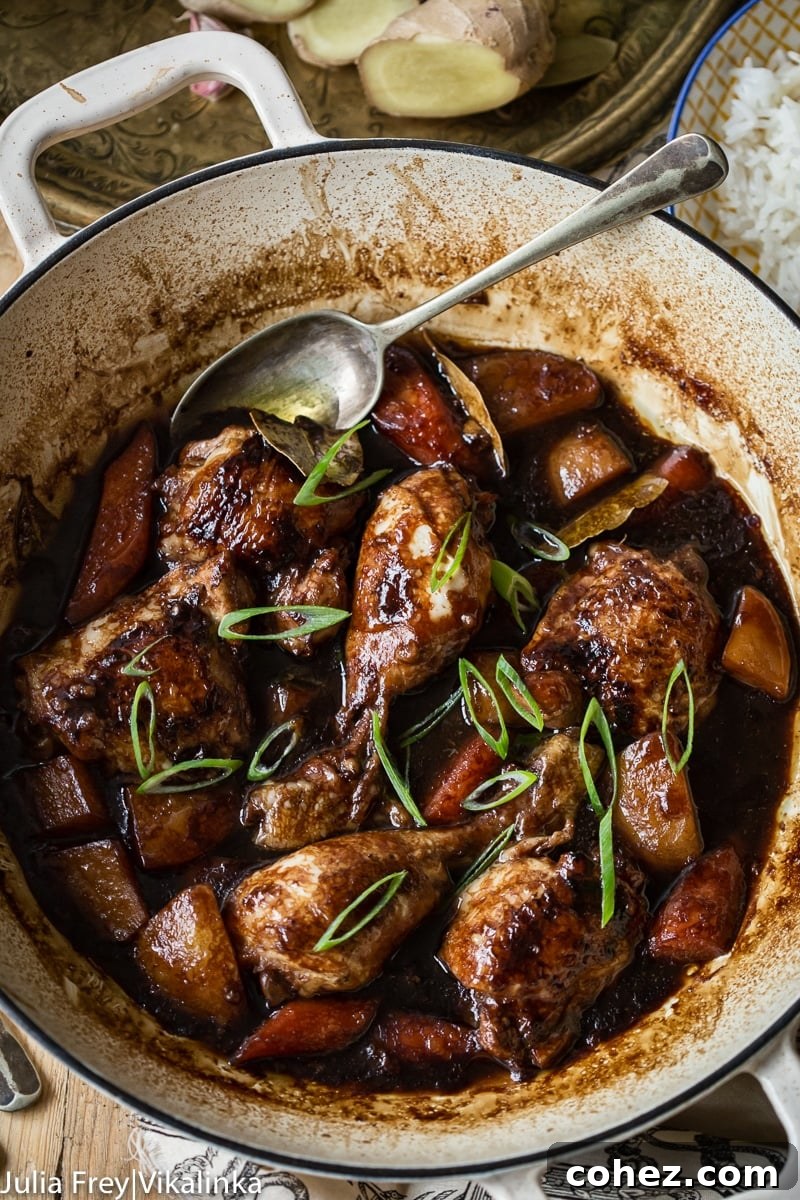
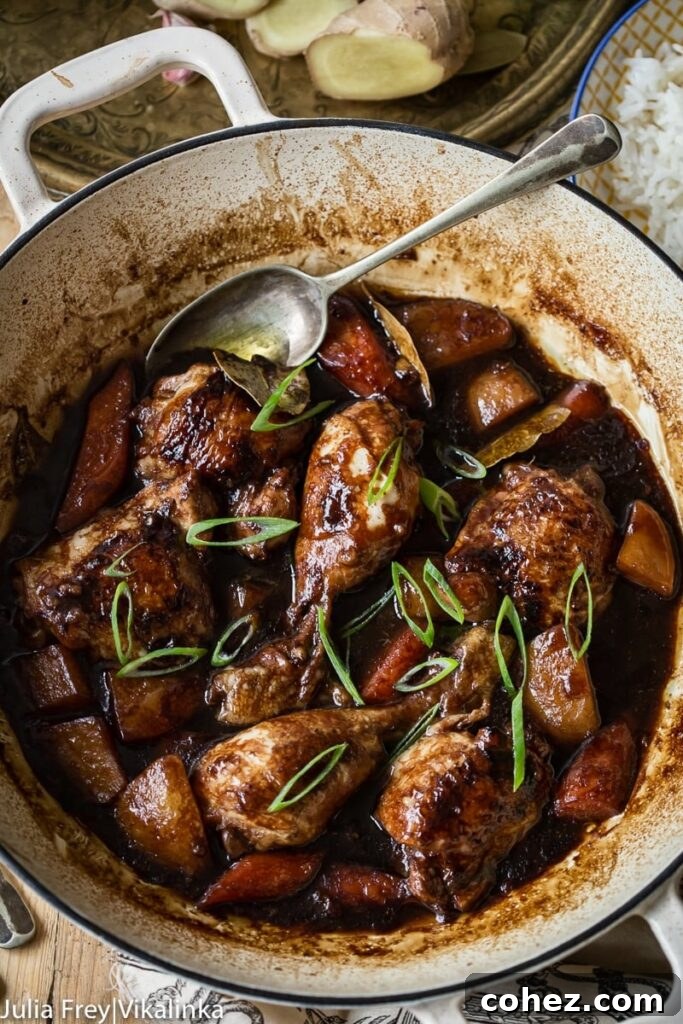
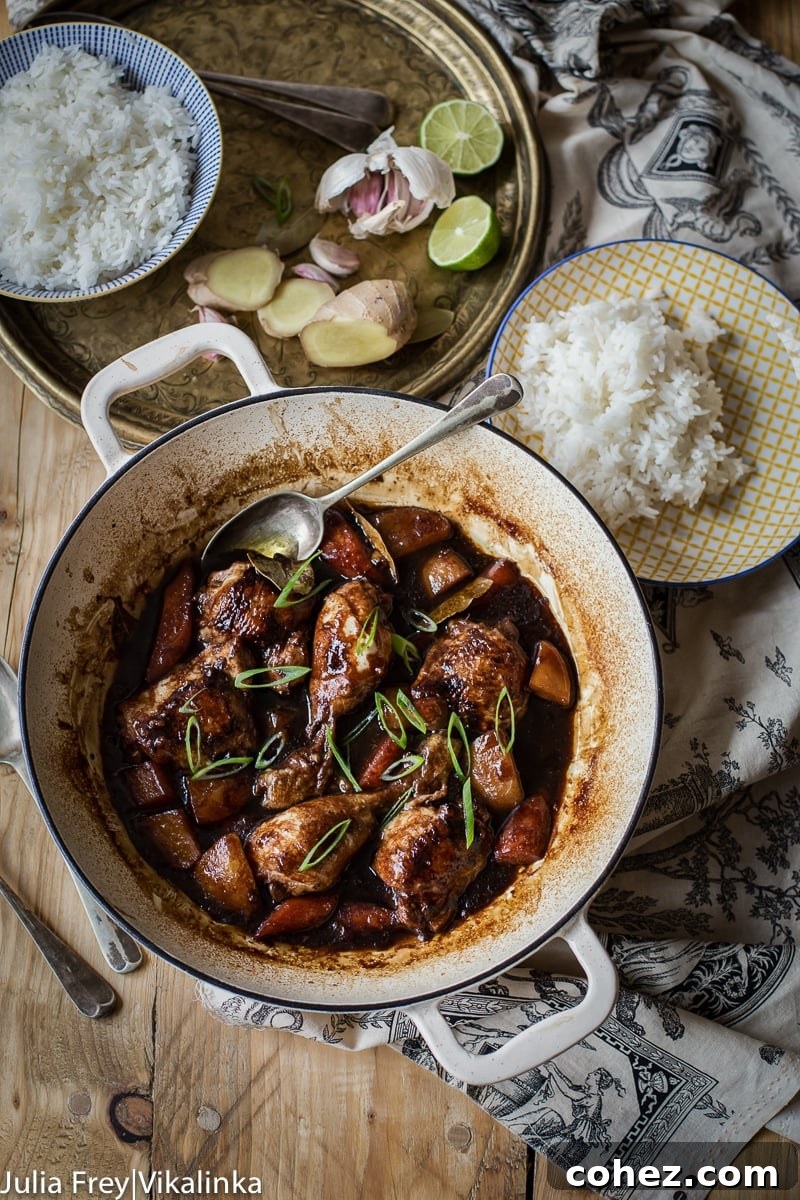
Welcome to a culinary journey that promises to tantalize your taste buds and transport you to the vibrant heart of the Philippines with a dish that is anything but “the same old”! This authentic **Filipino Chicken Adobo** recipe showcases tender chicken thighs and drumsticks, slow-braised to perfection in a rich, pungent sauce made from simple pantry staples like savory soy sauce and tangy vinegar, infused with aromatic garlic and zesty ginger. The result is an unforgettable flavor profile that has captivated palates for generations, cementing its status as one of the most beloved and iconic dishes in Filipino cuisine.
If you’re eager to explore more traditional Filipino flavors, be sure to check out my Pancit Canton recipe – another staple that brings comfort and joy to the table.
It might come as a surprise, given my background, that I hold a deeply strong emotional connection to all things Filipino, and particularly to this Chicken Adobo. My early twenties saw me spend a transformative year living in the Philippines. While it was undoubtedly one of the most challenging periods of my young adult life, it was also a time that fostered an profound appreciation and love for the country and its incredibly warm, resilient people.
Among the many precious memories and invaluable lessons I brought back, a handful of cherished recipes stand out. This very Chicken Adobo recipe is one of them. It’s truly fascinating how quickly the strange and foreign can become familiar, even deeply soothing. This hearty Chicken Adobo stew became my ultimate comfort food in a land so wonderfully different from my own, offering solace and warmth with every flavorful bite. Its incredible simplicity, combined with its rich and complex taste, made it a constant source of joy and nourishment during my time there.
Filipino Cuisine: Unpacking the Magic of Adobo
Filipino cuisine is a magnificent tapestry, wonderfully varied and delightfully complex – a natural reflection of a country comprising over 7,000 islands and boasting a rich mosaic of cultures. This vibrant culinary landscape has absorbed influences over centuries from diverse traditions, including Spanish, Chinese, Malay, and American, creating a unique fusion of flavors that is distinctly Filipino.
One unwavering constant across this vast archipelago is rice, which is not merely a side dish but the very foundation of almost every meal, and often even snacks. Consequently, many Filipino dishes are thoughtfully prepared with abundant, flavorful sauces designed to be generously poured over and thoroughly mixed with plain rice, ensuring every spoonful is bursting with taste. To stand up to heaps of rice, these sauces must carry a powerful punch, and Filipino cooking employs numerous ingenious ways to achieve this.
Strong, bold flavors that hit notes of acidity, saltiness, and pungency are frequently found in common, readily available ingredients such as soy sauce, local vinegars (like palm or cane vinegar), savory fish sauce, and copious amounts of fresh garlic. These elements are not just seasonings; they are the building blocks of Filipino flavor, creating dishes that are deeply satisfying and incredibly addictive. **Chicken Adobo** stands as a quintessential example of how these foundational ingredients are expertly combined to create culinary magic. Its distinctive salty and vinegary taste, which might seem intense on its own, mellows into a harmonious symphony of flavors when lovingly spooned over steaming white rice. This perfect balance is why Adobo is not just a dish; it’s a culinary institution, proudly regarded as the national dish of the Philippines.
As with any cherished national dish, the beauty of Adobo lies in its endless variations. Every cook, every family, and every region boasts its own treasured recipe, passed down through generations. My personal rendition of Adobo, which I am thrilled to share with you, was lovingly modeled after observing several talented Filipino women cook during my unforgettable year in Isabela. It’s a testament to the dish’s adaptability and the personal touch that each chef brings to this timeless classic.
What is Filipino Chicken Adobo and Its Delicious Variations?
At its core, **Filipino Chicken Adobo** is a cooking process, not just a specific recipe. The term “adobo” itself refers to a style of cooking where meat (or seafood or vegetables) is braised in a flavorful liquid composed primarily of vinegar, soy sauce, garlic, and peppercorns. This method not only tenderizes the protein but also preserves it, a practical benefit in the tropical climate of the Philippines before refrigeration was widespread. This chicken dish, in particular, is elevated by the aromatic additions of fresh garlic and ginger, creating a robust and deeply satisfying stew.
One of the most appealing aspects of Adobo is its reliance on the simplest of pantry staples. You won’t find any obscure or hard-to-find ingredients here, making it an accessible and rewarding dish for any home cook. While the fundamental components remain constant, many regional variations exist. For instance, in the part of the Philippines where I lived, it was common to add carrots and potatoes to the adobo. These additions not only absorb the rich, tangy sauce beautifully but also provide a wonderful textural balance to the dish. I wholeheartedly recommend incorporating them for an even more fulfilling meal!
Beyond chicken, **Pork Adobo** is another incredibly popular variation, often just as delicious, though typically richer and fattier. If you’re considering using pork instead of chicken, cuts like pork belly or pork shoulder work wonderfully. For optimal tenderness and flavor, especially with pork, I suggest using a slow cooker to allow the meat to braise gently for an extended period. The version featured in this recipe is very traditional to the specific region of the Philippines I experienced, but remember that Adobo is cooked in countless ways across the country, with nuances varying from island to island, and even from family to family. Some versions might include coconut milk for a creamier texture, others a hint of chili for a spicy kick, and some may even incorporate liver spread for added richness. Each variation tells a unique story of local flavors and culinary heritage.
Serving Suggestions for the Perfect Adobo Experience
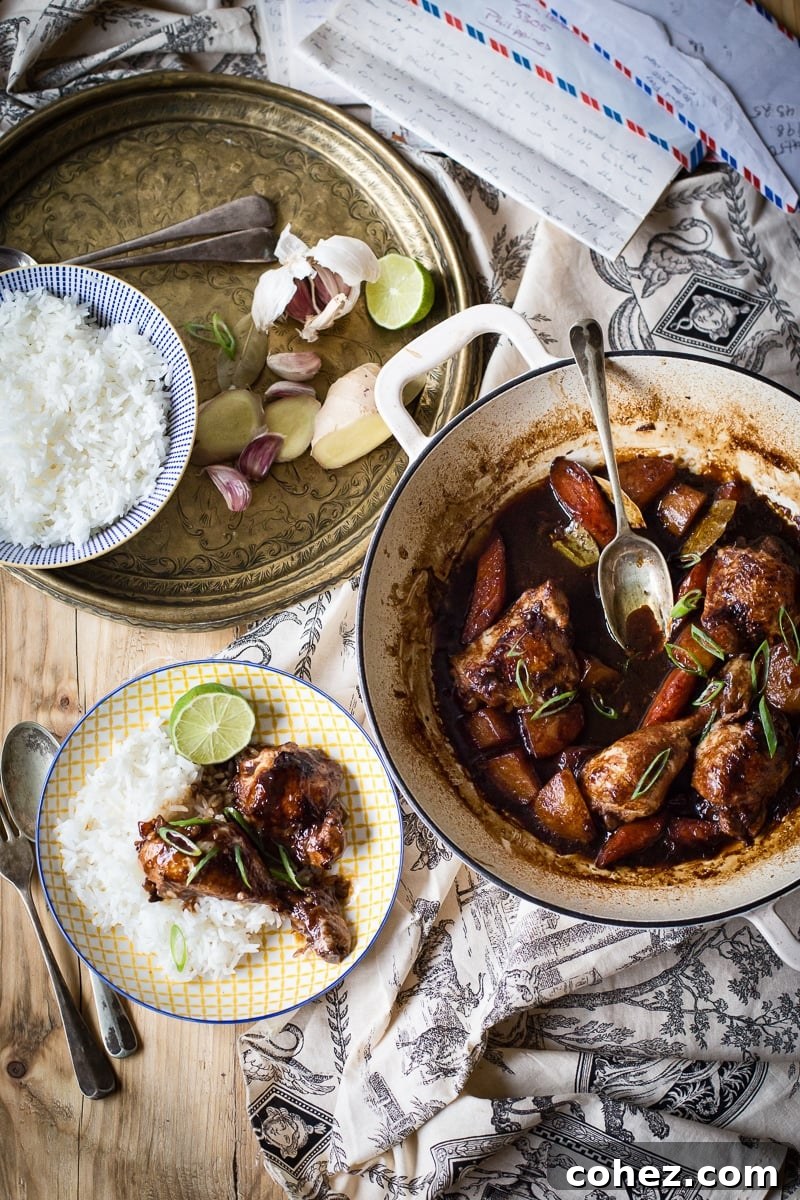
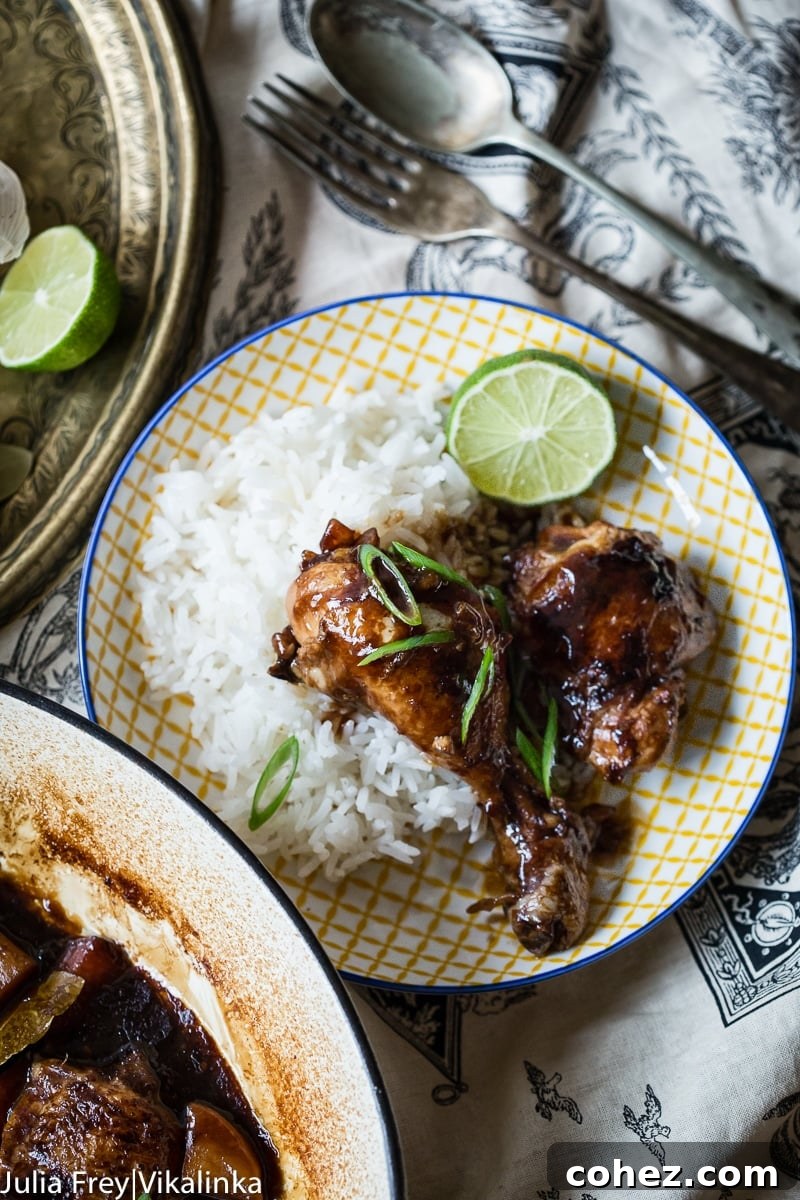
To truly enjoy **Filipino Chicken Adobo** like a local, it’s essential to understand its traditional accompaniment. Filipinos will almost always serve Adobo with a generous portion of plain, unsalted white rice. The rice acts as a neutral canvas, perfectly soaking up the rich, tangy, and savory adobo sauce, allowing its complex flavors to truly shine. The simplicity of the rice is key; it balances the intensity of the stew without competing with its bold taste.
Another crucial element, if you can find it, is tiny citrus fruit known as calamansi, often referred to as Filipino lime. Calamansi boasts a unique flavor profile – a delightful blend of lime, lemon, and mandarin orange – which provides an unparalleled burst of freshness and acidity that cuts through the richness of the Adobo. Sadly, outside of the Philippines, calamansi can be quite elusive. It’s a real shame, as its taste is truly unmatched by any other citrus I’ve encountered. In this recipe, and for most cooks globally, regular limes make an excellent substitute. Simply squeeze a little bit of fresh lime juice into individual portions before serving to mimic that vibrant tang. This small addition brightens the entire dish and adds another layer of authentic flavor.
Beyond rice and citrus, you might consider serving your Chicken Adobo with steamed vegetables like bok choy or green beans for a fresh contrast. Some also enjoy a side of pickled papaya (atchara) to complement the richness. Whatever your preference, remember that the goal is to balance the bold flavors of the Adobo, making each bite a delightful experience.
Expert Recipe Tips and Notes for Perfect Adobo
- **Marinating for Flavor:** While marinating the chicken for the recommended 30 minutes significantly enhances the depth of flavor, if you find yourself short on time, you can either skip this step entirely or reduce the marinating time to just 15-20 minutes. The dish will still be delicious!
- **Achieving Golden Brown Chicken:** When browning the chicken pieces in your wok or deep pan, it’s crucial not to overcrowd the pan. Ensure there is ample space between each piece. Overcrowding will cause the chicken to steam instead of searing and developing that desirable golden-brown crust. You may need to work in batches, removing the browned chicken to a plate before adding more. Remember, the chicken won’t be fully cooked at this stage.
- **Slow Cooker Adaptation:** This recipe is wonderfully versatile and can be easily adapted for a slow cooker. Follow the recipe instructions until step 3, where you add all ingredients to the pan. Instead of simmering on the stovetop, transfer everything to your slow cooker and cook on low for approximately 8 hours, or until the chicken is fork-tender and the vegetables are soft. Stir in the cornstarch slurry at the very end of the cooking process to thicken the sauce to your desired consistency.
- **Instant Pot Method:** For a quicker cooking time, an Instant Pot can be used. Follow the recipe up to step 3. Once all ingredients are in, cook at high pressure for 10 minutes. After cooking, perform a manual pressure release. Then, add the cornstarch slurry and use the Sauté function for a couple of minutes, stirring continuously, to thicken the sauce until it coats the chicken beautifully.
- **Pork Variations:** If you prefer pork, it can be used in place of chicken for a rich and hearty Adobo. For the best results, especially with tougher cuts, cooking pork adobo in a slow cooker is highly recommended. For a truly authentic and flavorful experience, pork belly is an excellent choice, rendering delicious fat into the sauce. If you’re seeking a leaner option, pork shoulder or loin are also great alternatives.
- **Chicken Breast Option:** While chicken thighs and drumsticks are more traditional for their juiciness and flavor, chicken breasts can certainly be used. However, be mindful that they cook faster and can dry out if overcooked. Adjust simmering times accordingly to ensure they remain tender.
- **Convenience with Pastes:** On busy weeknights, preparing fresh ginger and garlic can be time-consuming. For convenience, you can readily find jarred garlic paste and ginger paste in most supermarkets. While they might not offer the exact freshness of their raw counterparts, they are excellent time-savers and will still deliver delicious flavor to your Adobo.
- **The Role of Carrots and Potatoes:** The carrots and potatoes in this Adobo are not merely an afterthought or a side dish; they are integral to the stew. They brilliantly soak up the tangy, savory sauce, becoming incredibly flavorful. Both vegetables contribute to the dish’s balance, adding sweetness from the carrots and a comforting starchiness from the potatoes, creating a more wholesome and satisfying meal.
Storage and Leftovers: Maximizing Your Adobo Enjoyment
One of the many wonderful qualities of **Filipino Chicken Adobo** is that it often tastes even better the next day! As the adobo sauce has more time to meld and the vinegar mellows slightly, the flavors deepen and become more harmonious. This makes it an ideal dish for meal prepping.
Leftovers can be stored in the refrigerator in an airtight container for 3-4 days. For longer storage, Adobo freezes exceptionally well. Simply transfer the cooled adobo to a freezer-safe container or heavy-duty freezer bag and store it for up to three months. Thaw frozen adobo overnight in the refrigerator before reheating.
When you’re ready to enjoy your leftovers, you have a couple of easy reheating options:
- **Microwave:** For individual portions, place the adobo in a microwave-safe dish, cover loosely, and heat on high for 2-3 minutes, stirring halfway through, until thoroughly hot.
- **Stovetop:** For larger quantities, transfer the adobo to a saucepan or pot. Reheat over medium-low heat, stirring occasionally, until it’s simmering gently and heated through. You may notice the sauce has thickened significantly in the fridge; if so, add a splash of water or chicken broth to loosen it up to your desired consistency.
Always ensure the chicken is covered with a lid during reheating to prevent it from drying out. Typically, it will be ready in approximately 10-15 minutes on the stovetop. Reheating Adobo offers a second chance to savor its delightful flavors, making it a truly practical and delicious dish.
More Asian-Inspired Chicken Recipes to Explore
- Shoyu Chicken Recipe
- Sticky Asian Chicken
- Honey Soy Chicken Thighs and Drumsticks
- Chicken Satay with Easy Peanut Sauce
Filipino Chicken Adobo Recipe

Equipment
-
Carbon steel wok or deep pan
Ingredients
- 8 chicken pieces, legs and thighs
- 125ml / 1/2-3/4 cup soy sauce, Bragg or Kikkoman brand for gluten-free version
- 125ml / 1/2-3/4 cup rice vinegar, adjust to your taste
- 2 tbsp vegetable oil
- 2 inch long piece of ginger, grated
- 5 cloves garlic , crushed
- 2-3 bay leaves
- 1/2 tsp fresh ground black pepper
- 1-2 carrot, medium, cut in large chunks
- 3 potato, medium, cut in large chunks
- 125ml / 1/2 cup water
- 1 tbsp corn starch
- 1 tbsp water
- 1 spring onion, optional, sliced for garnish
- 1 lime, for serving, cut into wedges
Instructions
-
In a large bowl, combine the soy sauce, rice vinegar, 1 tablespoon of vegetable oil, 4 crushed garlic cloves, half of the grated ginger, and fresh ground black pepper. Add the chicken pieces to this mixture, ensuring they are well coated. Let the chicken marinade in the fridge for at least 30 minutes to absorb the flavors. For an even deeper flavor, you can marinate it for up to 2-4 hours.
-
Heat a wok or a deep pan over medium-high heat. Once hot, add the marinated chicken pieces and brown them for about 3 minutes on each side until a golden crust forms. Avoid overcrowding the pan; if necessary, brown the chicken in batches to ensure proper searing rather than steaming. Once browned, remove the chicken from the pan and set it aside on a plate. Do not discard the marinade remaining in the bowl.
-
Using the same pan (no need to clean it, as the residual flavors are desirable), add the remaining 1 tablespoon of vegetable oil. Sauté the remaining sliced garlic and ginger for about 1 minute until fragrant, being careful not to let them burn or brown. Return the browned chicken pieces to the pan. Pour in the reserved marinade, water, and add the bay leaves, potatoes, and carrots. The liquid may not fully cover the chicken, which is perfectly fine. Increase the heat to bring the sauce to a gentle boil, then reduce the heat to low, cover, and let it simmer for approximately 45 minutes. Continue simmering until the chicken is thoroughly cooked through and the carrots and potatoes are tender, easily pierced with a fork.
-
In a small bowl, whisk together the cornstarch and 1 tablespoon of water until completely smooth, ensuring there are no clumps. Slowly stir this cornstarch slurry into the simmering adobo sauce. Continue to simmer for another 2-3 minutes, stirring gently, which will allow the sauce to thicken to a glossy consistency that beautifully coats the chicken and vegetables. If the sauce isn’t thick enough, continue to simmer for a few more minutes until your desired consistency is achieved. Before serving, garnish with freshly sliced spring onion, if desired.
-
Serve your delicious Filipino Chicken Adobo hot, accompanied by fluffy plain white rice and fresh lime wedges. Encourage diners to squeeze fresh lime juice over their individual portions for a bright, authentic finish.
Notes
- For the **Slow Cooker**: Follow the recipe instructions until step 3, then transfer all ingredients to your slow cooker. Cook on low for 8 hours. Stir in the cornstarch slurry at the very end to thicken the sauce to your liking.
- For the **Instant Pot**: Follow the recipe until step 3, then cook at high pressure for 10 minutes. Perform a manual pressure release. Add the cornstarch slurry and use the Sauté function for a couple of minutes to thicken the sauce, stirring continuously.
Nutrition
Nutrition information is automatically calculated, so should only be used as an approximation.
Tried this recipe?Let us know how it was!