
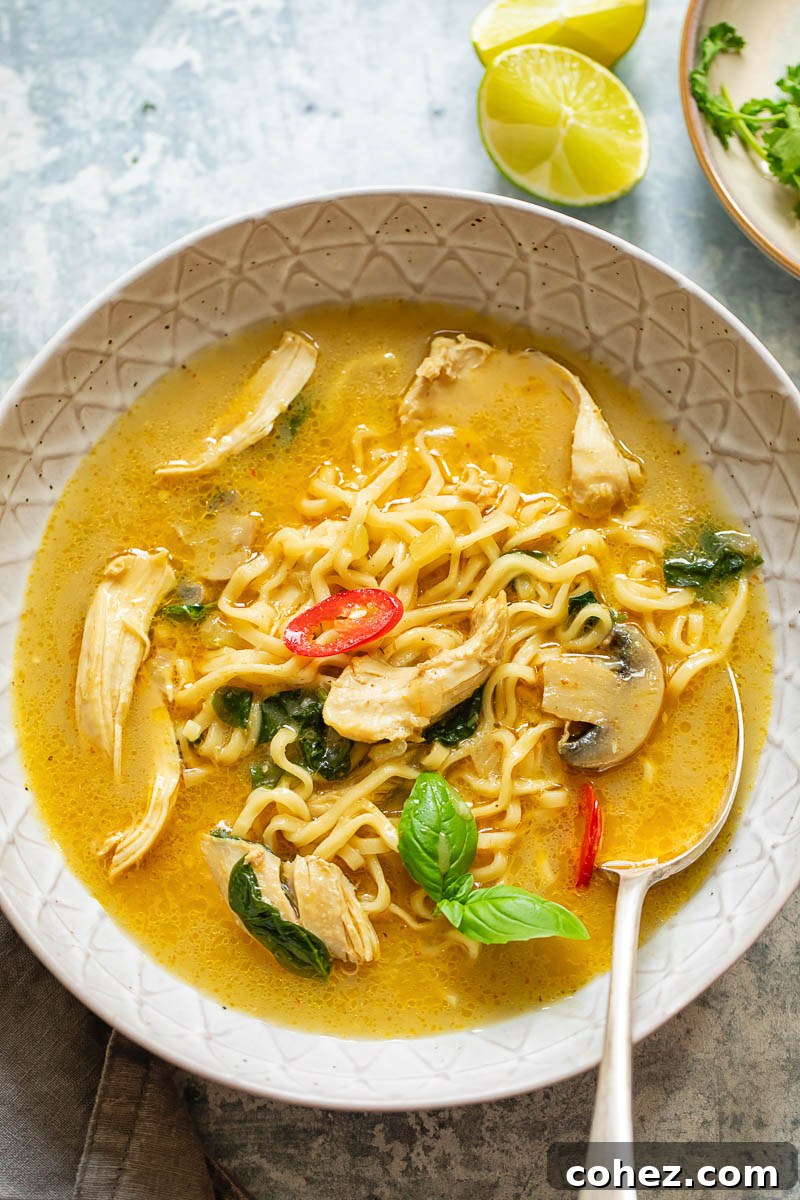
Experience the vibrant explosion of flavors with this incredible Thai Coconut Chicken Noodle Soup. More than just a meal, this rich and aromatic dish is a journey for your taste buds, blending the hearty comfort of classic chicken noodle soup with the exotic, spicy, and creamy notes of Thai yellow curry. Overflowing with tender chicken, wholesome spinach, earthy mushrooms, and a luxurious coconut milk broth, it’s a nutritionally packed bowl that promises warmth, satisfaction, and an unforgettable culinary adventure. And the best part? It all comes together beautifully in just one pot, making cleanup a breeze.
While some Thai noodle soups lean towards a clearer, more brothy base with a hint of sourness, this recipe embraces the rich, sweet undertones of coconut milk, infused with a lively kick of spice. It’s a comforting yet invigorating dish, designed to be both deeply flavorful and surprisingly simple to prepare from scratch.
Thai Dining Etiquette: Spoon, Fork, and the Noodle Exception
Before we dive into the delightful details of this soup, let’s explore a fascinating aspect of Thai culture that often surprises Western diners: cutlery. Did you know that in Thailand, meals are primarily enjoyed with a spoon and fork, not a knife and fork, and, perhaps most surprisingly for some, not typically chopsticks?
This culinary custom is widespread throughout much of Southeast Asia, a fact I happily discovered during my travels in the Philippines in my twenties, where the spoon and fork reign supreme. Back then, navigating chopsticks was still a formidable challenge for me, so the familiar comfort of a spoon and fork was a welcome relief!
In the Thai style, diners typically hold the spoon in their dominant hand (which for many Westerners would be their knife hand) and the fork, tines up, in their non-dominant hand (often the fork hand). The fork serves as a pusher, gently guiding food onto the spoon, which then delivers the perfectly portioned bite to the mouth. This method makes immense practical sense, especially for saucy and richly composed dishes like curries and stir-fries, ensuring every drop of flavor is savored. My family has even adopted this sensible practice for many of our home-cooked meals!
So, how exactly are larger pieces of food managed without a knife? Thai cuisine, by design, often presents food in bite-sized pieces or with easily spoonable accompaniments like rice. Consider dishes like Thai fish curry, where ingredients are inherently tender and small. If a morsel does require further breakdown, such as a piece of bone-in chicken, the fork deftly holds it in place while the spoon tears it into smaller, manageable portions.
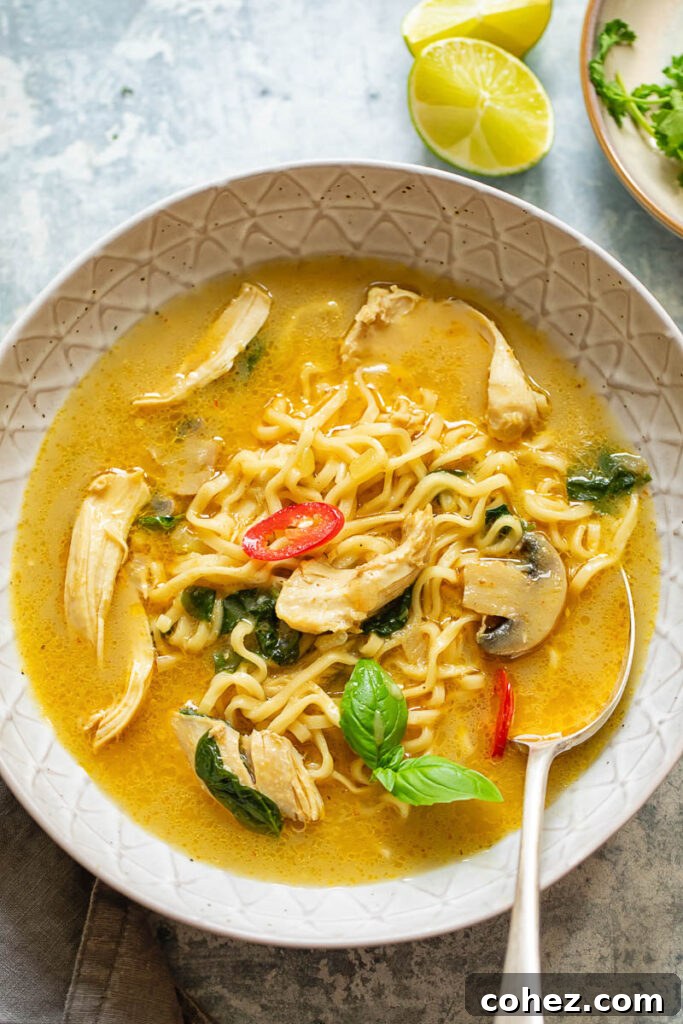
However, there’s a delightful exception to this spoon-and-fork rule, one that brings us right back to our star dish: noodle soup. For soup, Thais will indeed use chopsticks to gracefully lift the noodles from the bowl onto the spoon, which then serves as the sole utensil to enter the mouth, ensuring that both noodles and broth are enjoyed together. So, as you prepare your bowl of this exquisite Thai chicken noodle soup, how will you choose to savor each flavorful bite?
Thai Chicken Noodle Soup: A Culinary Rocket Ride
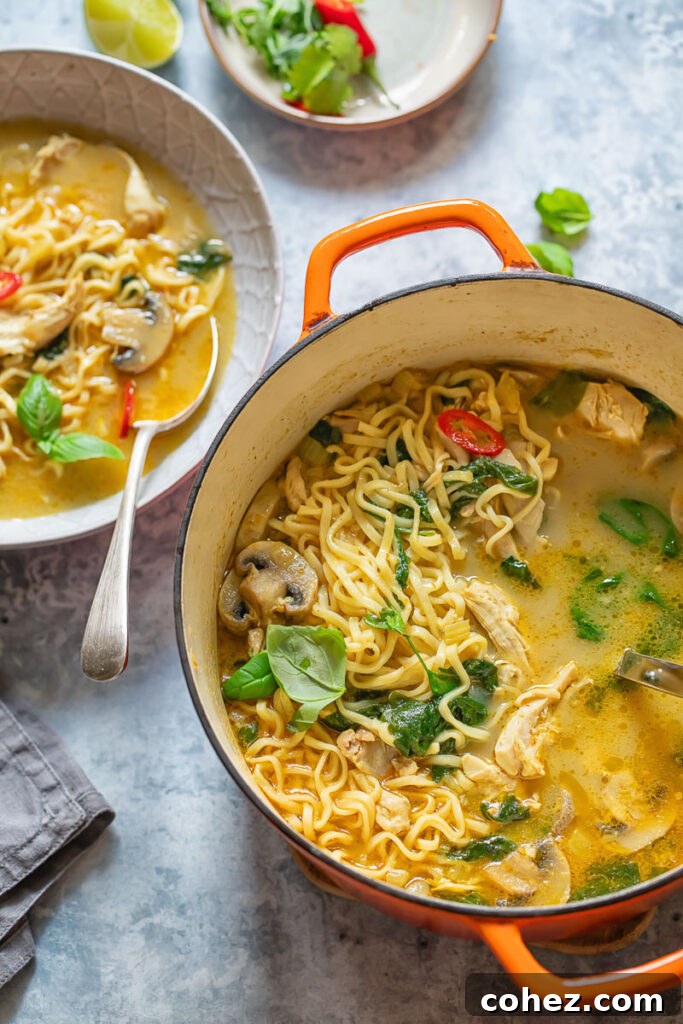
Imagine your quintessential, tissues-at-the-ready, soul-soothing bowl of homemade chicken noodle soup. Now, envision that classic comfort food infused with an exhilarating burst of exotic flavors – that’s precisely what our Thai Coconut Chicken Noodle Soup delivers. It’s a familiar embrace with an extraordinary twist, transcending the ordinary into something truly spectacular.
Let’s be clear: when I say “rocket,” I don’t mean an astronomically spicy, tear-inducing dish (though you can certainly make it so!). Instead, I mean this soup is packed with a fireworks display of complex and captivating flavors, a vibrant symphony that awakens the palate in the most delightful way.
A Flavorful Evolution: Thai vs. Traditional Chicken Noodle Soup
Comparing our Thai-inspired creation to its Western counterpart reveals a fascinating evolution of taste and aroma. While both offer profound comfort, their flavor profiles diverge dramatically:
The Aromatic Foundation (Soffritto)
In a traditional chicken noodle soup, the “soffritto,” or flavor base, typically consists of humble onions, carrots, and celery, gently sautéed in butter. Our Thai chicken noodle soup begins with a similar earthy trio of onion, celery, and garlic, but they are fried in oil, laying the groundwork for a lighter, yet equally profound foundation.
Exotic Spices & Herbs
Where a classic Eastern European chicken noodle soup might rely on the subtle warmth of bay leaves and peppercorns for its aromatics, our Thai version bursts forth with the sharp, sour, and gingery notes of lemongrass and galangal. These distinctive ingredients are the heart and soul of Thai cuisine, imparting an unmistakable zest and depth that elevates the broth to new heights. Further enriching the flavor are limey kaffir leaves or fragrant, slightly liquorice-like holy basil – herbs that transport you directly to the bustling streets of Bangkok.
Chicken: Boneless for the Best Experience
While I often advocate for bone-in chicken in soups, especially for their rich broth contribution, for this vibrant Thai interpretation, boneless chicken is unequivocally superior. It allows the chicken to be easily shredded into tender, bite-sized pieces that are perfect for scooping with a spoon or gracefully lifting with chopsticks, providing a seamless and enjoyable eating experience.
The Magic of Yellow Curry Paste
To infuse this soup with an authentic Thai essence efficiently, I’ve boosted the recipe with two tablespoons of high-quality Thai yellow curry paste. This ingredient is a true kitchen hero, especially if you don’t regularly stock all the individual, less common aromatics and spices typically found in traditional Thai cooking. Yellow curry paste offers a pungent yet not overly fiery blend of cumin, turmeric, ginger, coriander, chili, galangal, and lemongrass – a powerhouse of flavors that is unmistakably Thai and incredibly convenient.
The Creamy Finish: Coconut Milk
Finally, in stark contrast to the clear, often light broth of Western chicken noodle soup, this Thai version achieves its signature richness and velvety texture with the addition of full-fat coconut milk. A quintessential ingredient in Southeast Asian cuisine, coconut milk imparts a smooth, silky, and luxurious finish, transforming the soup into a truly indulgent and comforting masterpiece.
Expert Tips for Your Thai Soup Journey
- While this recipe may not claim 100% strict authenticity, it brilliantly delivers on other crucial fronts! It’s intensely flavorful, satisfyingly nutritious, uses readily accessible ingredients, and is incredibly simple to prepare – ticking all the right boxes for a fantastic home-cooked meal!
- The secret to this soup’s effortless preparation lies in a brilliant shortcut: a jar of quality store-bought Thai yellow curry paste. Think of it not as a “cheat,” but as an “efficient hack” that allows you to enjoy complex Thai flavors with minimal fuss.
- Curry pastes can vary significantly in potency between brands, and their heat can even diminish slightly over time once opened. Always trust your own palate! If you suspect your paste might be on the milder side, feel free to increase the suggested amount to achieve your desired depth of flavor.
- For those who crave authentic “Thai spicy” heat, consider using a stronger paste, such as a red or green curry paste, for an extra fiery kick.
- Personally, I find that medium egg noodles offer the perfect texture and chewiness for this chicken noodle soup. However, if you prefer, delicate rice vermicelli or other rice noodles make an excellent alternative, offering a lighter mouthfeel.
- If you’re looking to add another layer of texture, consider incorporating bamboo shoots. Commonly found in Thai curries, these provide a delightful, crisp bite. They are typically sold canned and are easily located in the Asian section of most supermarkets.
Elevate Your Bowl: Serving Suggestions
In Thailand, a bowl of noodle soup is often a canvas for customization, reflecting the country’s love for diverse textures and flavors. A roadside soup stand will typically present you with a plethora of fresh toppings to choose from, ranging from fiery chopped bird’s eye chilies and crunchy crushed peanuts to crisp raw green beans and bright, tangy lime wedges. Beyond that, an array of condiments awaits on the table, inviting you to fine-tune your soup to perfection with splashes of fish sauce for umami, a dash of vinegar for acidity, a sprinkle of chili flakes for heat, and even a pinch of sugar to balance it all out.
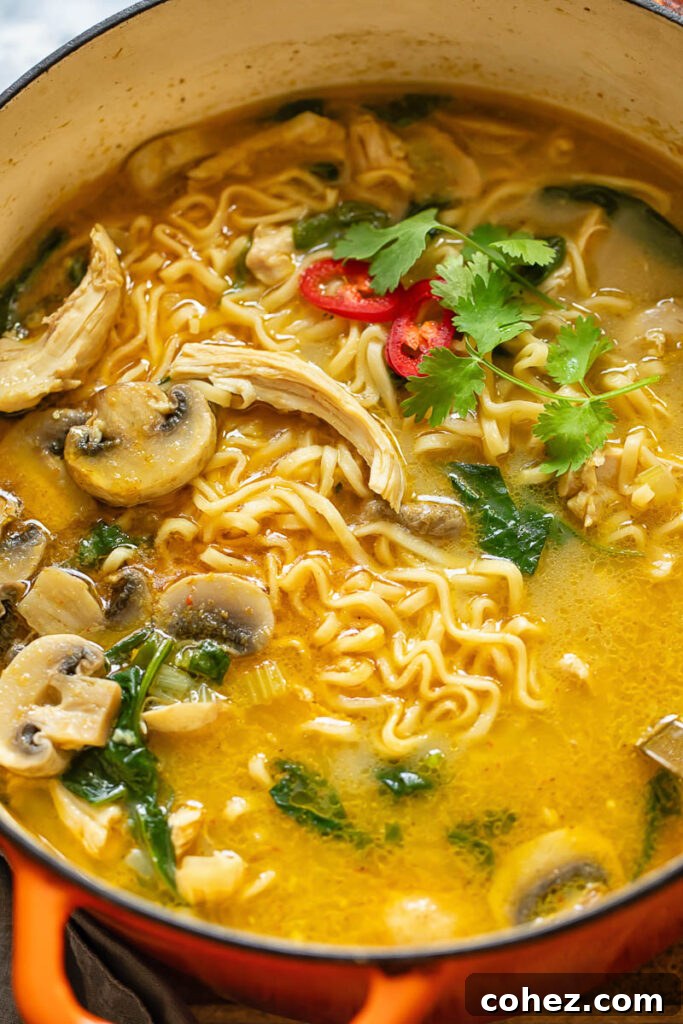
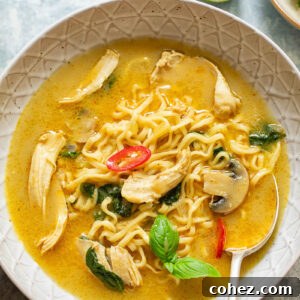
For a beautifully balanced and visually appealing finish to your homemade Thai Coconut Chicken Noodle Soup, I recommend keeping the toppings elegantly simple. A scattering of thinly sliced red chilies will provide a striking flash of color and a gentle warmth, while a garnish of fresh basil leaves adds an aromatic, peppery note. A single lime wedge, served on the side, allows diners to squeeze in a burst of fresh acidity, brightening all the rich flavors of the broth. These simple additions enhance both the aesthetic and the intricate taste profile of the soup, making each spoonful a delight.
Storage, Leftovers, and Reheating
Like many deeply flavored stews and curries, bold soups such as this Thai yellow curry soup often improve with a little time. The flavors meld and deepen beautifully after a night or two in the refrigerator, making leftovers an absolute treat. This soup can be safely stored in an airtight container in the fridge for up to 4 days.
It’s important to note that the noodles, particularly if using egg noodles, will likely absorb some of the liquid over time, causing the soup to thicken. When you’re ready to reheat, simply transfer the desired portion to a saucepan on the hob. To restore the soup to your preferred consistency, add a cup of water or chicken stock, stirring gently as it warms through. Bring it to a gentle simmer, ensuring the chicken and vegetables are thoroughly heated, and enjoy a bowl that tastes just as good, if not better, than the day it was made.
More Soup Recipes to Try
- Lentil and Bacon Soup
- Peanut Miso Chicken Ramen
- Chorizo Beans and Vegetable Soup
- Roasted Butternut Squash and Sweet Potato Soup
Thai Coconut Chicken Noodle Soup
Julia Frey of Vikalinka
10
30
40
6
people
Ingredients
- 1 tbsp vegetable oil
- 1 onion, diced
- 2 ribs celery, diced
- 4 cloves garlic, minced
- 2 tbsp Thai yellow curry paste
- 400ml / 14 oz coconut milk, full fat
- 1.5 litres / 6 cups chicken stock
- 600g / 4 skinless boneless chicken thighs, or breasts
- 125g / 5 oz medium egg noodles, or rice vermicelli
- 150 g button mushrooms, sliced
- 70g / 2 cups fresh spinach
- 1 lime, to serve
Instructions
-
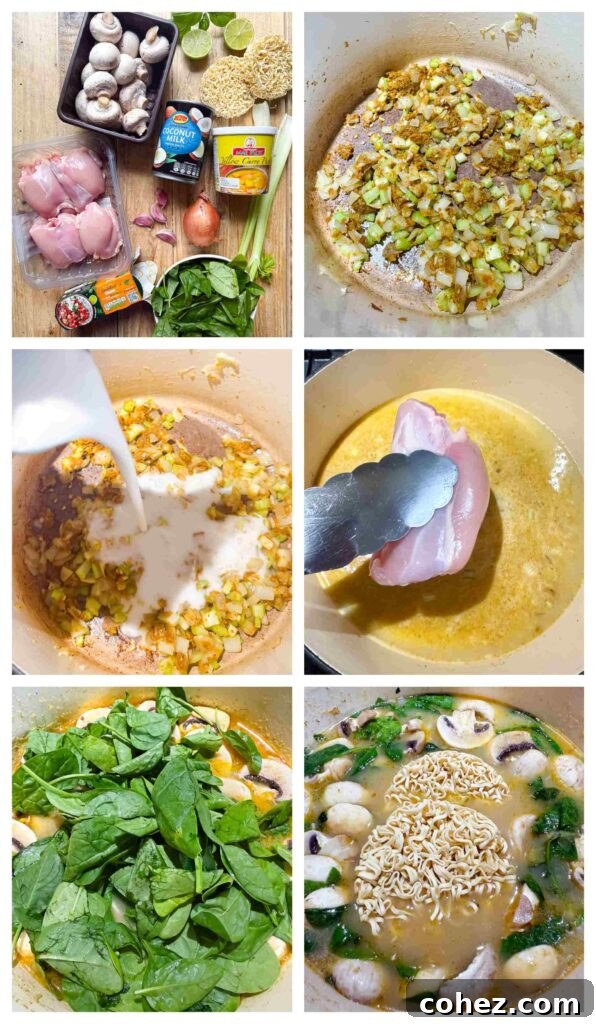
Heat the vegetable oil in a large soup pot. Add the diced onion and celery, and sauté over low heat for 5 minutes until softened. Stir in the minced garlic and continue sautéing for another 30 seconds until fragrant. Now, add the Thai yellow curry paste and stir-fry briefly for about 1 minute, allowing its aromatic oils to release.
-
Pour in the coconut milk and chicken stock, bringing the mixture to a gentle simmer. Carefully add the boneless chicken thighs or breasts and let them cook in the simmering broth for 15 minutes, or until cooked through and tender. Remove the cooked chicken from the pot and place it in a large bowl. Using two forks, shred the chicken into bite-sized chunks.
-
Add the sliced mushrooms, fresh spinach, and medium egg noodles (or rice vermicelli) to the simmering soup. Cook for 3 minutes, or until the noodles are al dente and the spinach has wilted. Return the shredded chicken to the pot of soup and warm through for another 2 minutes. Before serving, taste and adjust seasoning if needed. Remove from heat and serve immediately with fresh lime wedges for squeezing.
Notes
- Using a store-bought Thai yellow curry paste significantly simplifies the preparation of this delicious soup. Keep in mind that the intensity and spice level of curry pastes can vary by brand and how long the jar has been open. Adjust the amount to your taste preference.
- For those who enjoy more heat, consider using a stronger curry paste, such as red or green curry, to kick up the spice level.
- If you’re able to find them, bamboo shoots are a common ingredient in Thai curries and would add a wonderful, unique texture to this soup. They are typically available canned in the Asian foods section of most supermarkets.
Nutrition
Carbohydrates: 30g |
Protein: 31g |
Fat: 22g |
Saturated Fat: 14g |
Polyunsaturated Fat: 2g |
Monounsaturated Fat: 4g |
Trans Fat: 0.03g |
Cholesterol: 120mg |
Sodium: 458mg |
Potassium: 877mg |
Fiber: 2g |
Sugar: 6g |
Vitamin A: 1935IU |
Vitamin C: 9mg |
Calcium: 63mg |
Iron: 4mg
Nutrition information is automatically calculated, so should only be used as an approximation.
Tried this recipe?
Let us know how it was!