
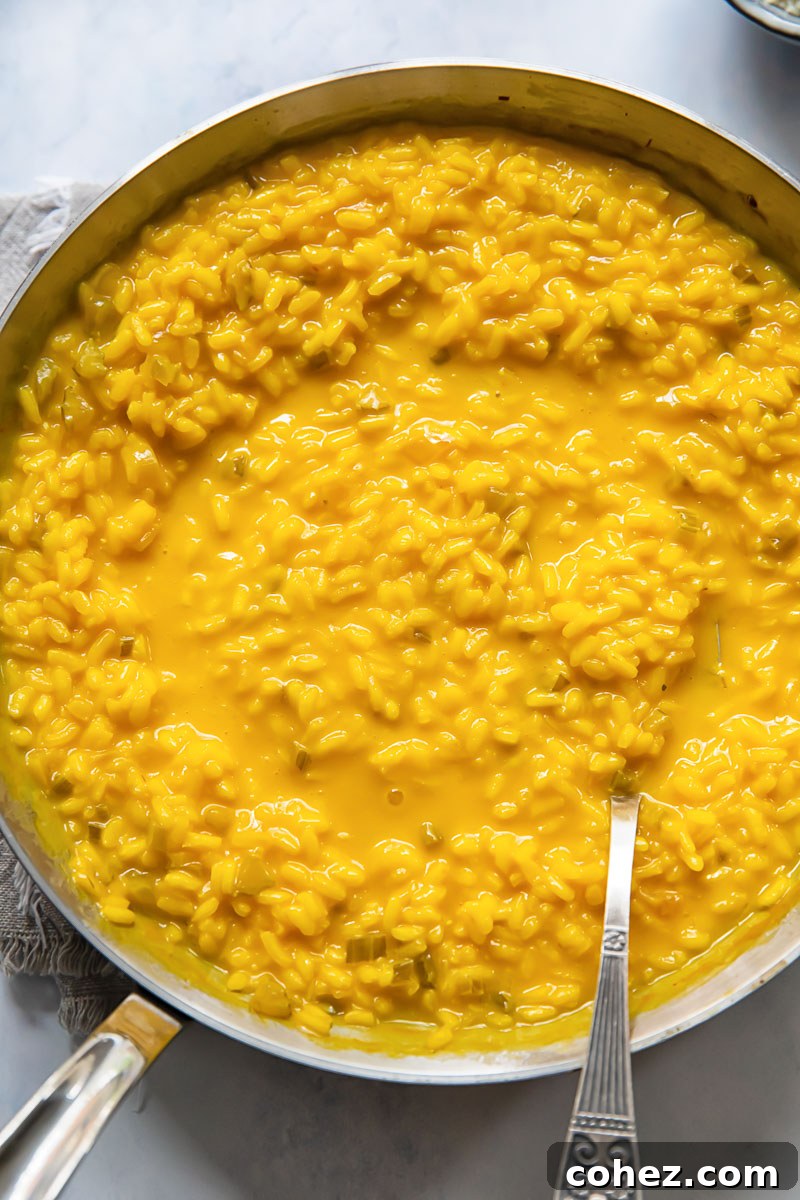
Breathtakingly beautiful, vibrantly golden, and utterly delicious – Saffron Risotto, or “Risotto alla Milanese,” is more than just a dish; it’s a culinary experience. Evoking the warm glow of a Mediterranean sunrise, this gleaming plate of romance can grace your table as a sophisticated main course or a spectacular side. It’s a comforting blend of perfectly creamy rice and the enchanting aroma of delicate saffron threads, a masterpiece that is surprisingly achievable for any home cook. Let me guide you through the simple yet profound art of mastering this Italian classic.
Once you’ve confidently perfected this golden wonder, why not explore other exquisite variations? Challenge your culinary skills with this supremely special truffle risotto with wild mushrooms, an earthy delight that promises to impress. Or, for a different aromatic rice experience, discover the fragrant simplicity of saffron rice.
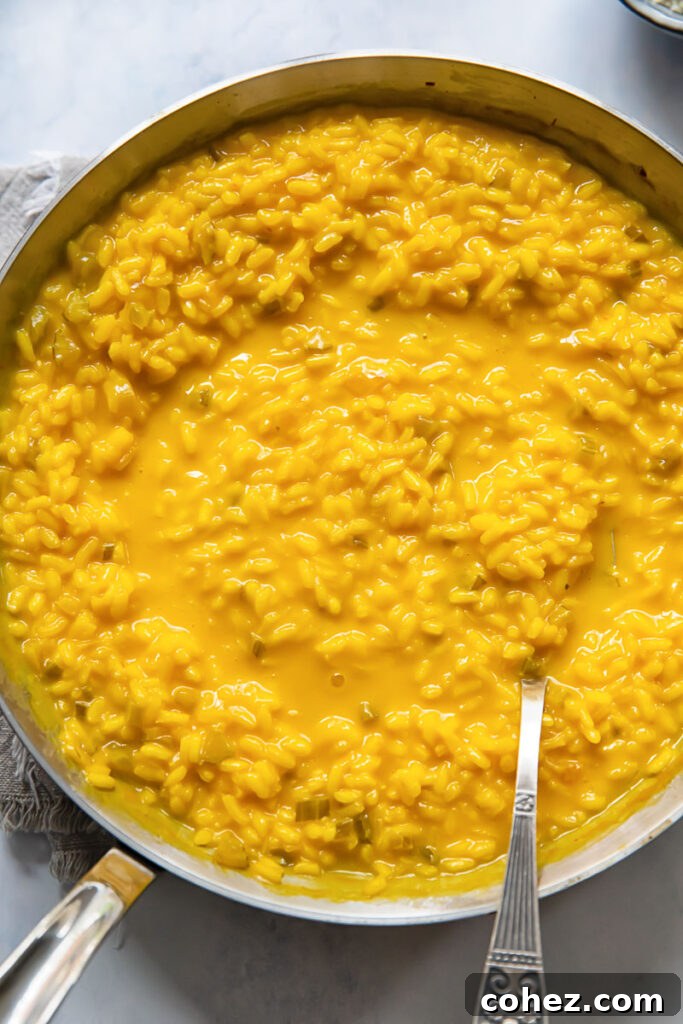
Whether you’re seeking a delightful change from your everyday pasta dishes, catering to a gluten-free guest, or simply craving a dish that feels both indulgent and wholesome, risotto is an excellent choice. At its core, it’s a humble preparation of rice, rich stock, and aromatic additions. While the ingredients are refreshingly simple, the technique, often described as a labor of love, truly blossoms with practice. Indeed, risotto has earned a reputation for being somewhat tricky to perfect, demanding attentiveness and a gentle hand. However, with a little time, patience, and the detailed guidance I’m about to provide, you’ll soon be serving up steaming bowls of this delicious, filling, and deeply satisfying family favorite, impressing everyone with your newfound Italian cooking prowess.
What sets risotto apart from other rice dishes? It’s all about the transformation. This iconic Italian dish is typically prepared on the stovetop through a distinctive method: small quantities of hot, flavorful stock are gradually added to a pan of lightly sautéed rice. Each addition of liquid is carefully stirred until it is almost completely absorbed by the rice, and this process is repeated, spoonful by spoonful, until the rice reaches an al dente perfection. As I mentioned, it requires time and patience, but this methodical approach is precisely what makes risotto so special. The constant stirring, coupled with the gradual absorption of liquid, encourages the rice grains to release their starches, resulting in that decadently rich, velvety, and utterly luscious texture that is the hallmark of a truly great risotto. The end reward is a dish that is far more complex and satisfying than its simple components might suggest.
What is Risotto? Understanding the Milanese Masterpiece
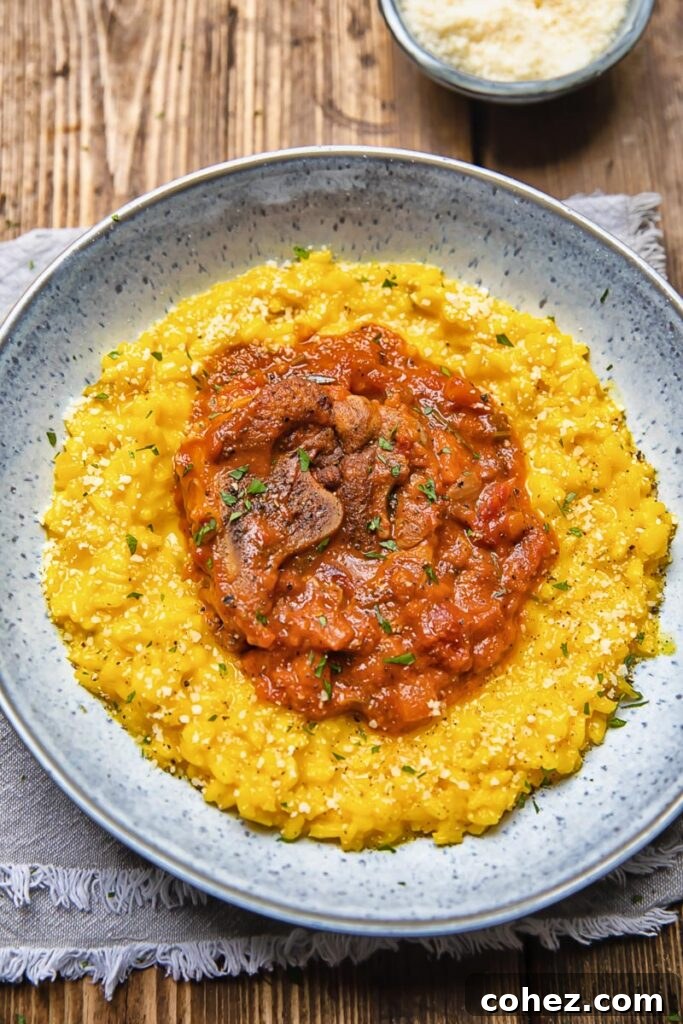
Saffron Risotto, famously known as Risotto alla Milanese, is prepared using this same classic technique, but with one crucial, luxurious addition: saffron. This precious spice infuses the dish with its signature brilliant golden hue and a subtly complex flavor profile. The thin, fiery-colored saffron threads, when cooked, impart notes that are both delicately sweet and profoundly earthy. This elegant base is then harmoniously complemented by the addition of sharp, salty Parmesan cheese, which lends a savory edge and contributes to the risotto’s irresistible creaminess. This balance of flavors makes saffron risotto the perfect, traditional partner for a hearty dish like osso buco, where its richness can beautifully cut through the savory meat.
The intriguing origin story of saffron risotto adds another layer to its charm. Legend has it that this now-iconic golden dish came about not through meticulous culinary design, but as the result of a playful prank. In medieval Northern Italy, during a period perhaps less abundant in varied entertainment, a mischievous apprentice glassmaker, working on the stained glass windows of the Duomo di Milano, decided to add some of the vibrant saffron pigment he used to tint glass into a wedding banquet’s usually plain, ghostly-white risotto. His intention was to add a bit of unexpected color and amusement to the meal. Whether the guests initially reacted with surprise or delight is left to imagination, but presumably, they found the saffron-infused rice as palatable as it was amusing. Fast forward centuries, and gourmands around the world continue to appreciate this “joke” today, proving that sometimes, the most exquisite culinary innovations arise from the most unexpected circumstances. This tale underscores saffron risotto’s enduring appeal, blending history, artistry, and incredible flavor into one memorable dish.
The Heart of Risotto: Choosing the Right Rice
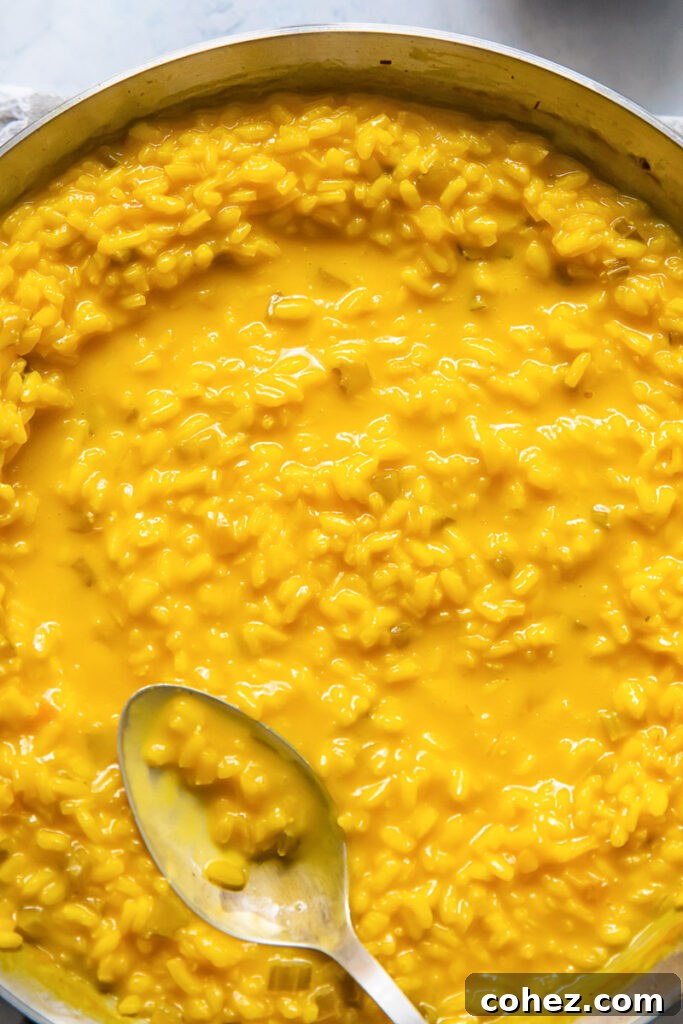
The secret to achieving that signature sleek, velvety sauce and perfectly tender-chewy grains in your saffron risotto lies almost entirely in one fundamental ingredient: the rice itself. It is absolutely vital that you start with the correct type of rice, as not all rice varieties are created equal when it comes to risotto. For a truly authentic and successful risotto, you primarily have a choice of two superior Italian short-grain rice varieties: Arborio or Carnaroli.
Arborio rice stands out as the most popular and widely available choice, largely due to its affordability and ease of access in most supermarkets. Characterized by its short, plump, and somewhat stubby grains, Arborio rice possesses an exceptional ability to absorb liquid while simultaneously releasing a generous amount of starch. It’s this high starch content that is crucial for creating the oozy, creamy sauce that defines a classic risotto, making it an excellent and reliable option for beginners and seasoned cooks alike.
On the other hand, Carnaroli rice, while perhaps less familiar and sometimes harder to find, is often hailed by Italian chefs as the “king of risotto rice.” Its grains are plumper and longer than Arborio, and it boasts an even higher starch content. This attribute allows Carnaroli to yield an even richer, creamier texture while maintaining a more distinct al dente bite in the center of each grain. It’s also known for being more forgiving, less prone to overcooking, and capable of absorbing more liquid without becoming mushy, making it a favorite for those seeking the ultimate risotto experience.
It’s important to heed this advice: resist the temptation to use standard long-grain rice varieties from your pantry, such as basmati or jasmine. While these rice types are wonderful for many dishes, their lower starch content and different textural properties mean they simply will not yield the sought-after creamy consistency essential for risotto. Opting for them will unfortunately result in a thin, watery sauce and disappointingly chewy, separated rice grains. Your hard work deserves the best outcome, so invest in the right rice from the start!
Expert Tips for Perfect Saffron Risotto
- The trademark creamy texture of risotto is entirely dependent on your choice of rice. Get your rice right, and you’re already halfway to success. A starchy, short-grain rice like Arborio or Carnaroli are perfect. Sometimes, grocery store packaging will simply label it as ‘risotto rice’, which is a safe bet. Ensure the rice is not washed before cooking, as washing removes the vital outer layer of starch that contributes to the creamy texture.
- A touch of acidity truly elevates any risotto, brightening its flavors and adding depth. This is precisely why I incorporate a little dry white wine into my recipe. If you frequently cook with wine but don’t always finish the bottle, consider investing in a bottle of dry Vermouth. It performs the same magic in terms of flavor and acidity, but once opened, it will last considerably longer in your pantry.
- For those who prefer not to use alcohol in their cooking, or simply don’t keep wine in the house, a tablespoon of white wine vinegar makes a perfect and equally effective substitute. Add it at the same stage as the wine, allowing it to reduce and infuse its bright notes.
- Risotto relies on retaining moisture and ensuring even cooking, so choosing the right pan is crucial. I recommend using a large, high-sided saucepan or a wide, deep skillet. The high sides help prevent splashing and retain heat, while the wide surface area allows for maximum evaporation and even exposure of the rice to the heat, promoting consistent cooking and starch release.
- To truly unlock the optimum flavor and achieve that gorgeous, radiant golden glow from your saffron, avoid adding the saffron threads whole. Instead, lightly crush them in a mortar with a pestle or between your fingertips, then steep them in a small amount of warm stock or water for about 10-15 minutes before adding them to the rice. This blooming process helps to extract and disperse their precious color and complex aroma more effectively throughout the dish.
- Still feeling a little nervous about tackling risotto? Don’t fret! Let me provide an extra layer of confidence. You can watch me walk you through the entire process of making the perfect risotto step-by-step with this video guide, making it even easier to visualize and replicate the technique.
- Alternatively, for more in-depth knowledge and additional expert insights, you can read my comprehensive top risotto-making tips in this detailed article, which covers various nuances and common troubleshooting advice.
Beyond the Basics: The Magic of Saffron
Saffron, the world’s most expensive spice by weight, is integral to the allure of Risotto alla Milanese. Derived from the stigma of the Crocus sativus flower, it takes thousands of blossoms and painstaking manual labor to harvest just a small amount of these delicate threads. This labor-intensive process, coupled with saffron’s unique flavor and coloring properties, accounts for its high price. But its value extends beyond just culinary aesthetics; saffron is also rich in antioxidants and has been used for centuries in traditional medicine for its potential health benefits, including mood enhancement and antioxidant properties. When purchasing saffron, look for long, deep red threads with minimal yellow parts, as this indicates higher quality and potency. Store it in an airtight container away from light and heat to preserve its precious aroma and vibrant color. Understanding the value and proper handling of saffron elevates not just your risotto, but your appreciation for this remarkable spice itself.
Serving Suggestions for Your Golden Risotto
Saffron risotto, with its rich flavor and luxurious texture, is incredibly versatile and pairs beautifully with a variety of dishes. Traditionally, it is often served alongside osso buco, a robust dish from the Italian region of Lombardy, typically made with veal shanks braised with vegetables, white wine, and broth. While veal is classic, I often prepare my osso buco with pork for a slightly different, yet equally delicious, twist. The creamy, slightly tart risotto acts as a perfect counterpoint to the rich, tender meat. Beyond osso buco, I find it absolutely divine when served with a perfectly cooked rib-eye steak, where its creaminess can balance the steak’s char, or alongside delicate, tender veal piccata, allowing the bright, lemony sauce of the piccata to sing against the risotto’s subtle richness.
To provide a fresh contrast to such creamy and hearty dishes, a crisp, vibrant salad is always a welcome addition. Keeping with the Italian theme, serving a refreshing Caprese Salad as a side dish is an inspired choice. The simple combination of ripe tomatoes, fresh mozzarella, fragrant basil, and a drizzle of balsamic glaze offers a bright, acidic counterpoint that cleanses the palate and enhances the overall dining experience.
Storage and Leftovers: Enjoying Your Risotto Again
Risotto is wonderfully filling and satisfying, which means I almost always find myself with more cooked than anyone can eat in a single sitting. Fortunately, this delicious saffron risotto keeps remarkably well, allowing you to enjoy its comforting flavors for another meal. Simply transfer any leftovers into an airtight container, making sure it’s tightly sealed, and store it in the fridge. For optimal flavor and safety, ensure you consume it within 3-4 days.
When you’re ready to reheat, the best method is to gently warm it on the hob (stovetop) over low to medium heat. Risotto can thicken considerably in the fridge, so you’ll likely need to add a splash of water, broth, or even a little white wine to loosen it up and restore its creamy consistency. Stir it gently and continuously until it’s heated through and reaches your desired texture. Avoid reheating it too quickly or at too high a temperature, as this can dry out the rice and compromise its delicate texture. Leftover risotto can also be a fantastic base for other dishes, such as forming delicious arancini (fried rice balls) – a testament to its versatility!
More Risotto Recipes to Explore
- Butternut Squash Risotto with Sage and Goat Cheese
- Spring Asparagus Risotto
- Prawn Risotto with Tomatoes and Peas
- Chicken Risotto with Mushrooms and Thyme
- Roasted Mushroom Risotto
Saffron Risotto
By Julia Frey of Vikalinka
Prep: 10 mins Cook: 25 mins Servings: 4 – 6
It’s a comforting blend of creamy risotto rice and aromatic saffron threads that is surprisingly simple to master.
Ingredients
- 2 tbsp olive oil, extra virgin
- 1 large shallot, or 1/2 onion diced
- 1 celery stalk, diced
- 300g / 1½ cups risotto rice, arborio or carnaroli
- 125ml / 1/2 cup dry white wine
- 1 litre / 4 cups vegetable or chicken stock
- 1/2 tsp saffron threads
- salt to taste
- 50g / 1/2 cup Parmesan cheese
- 1 tbsp butter
Instructions
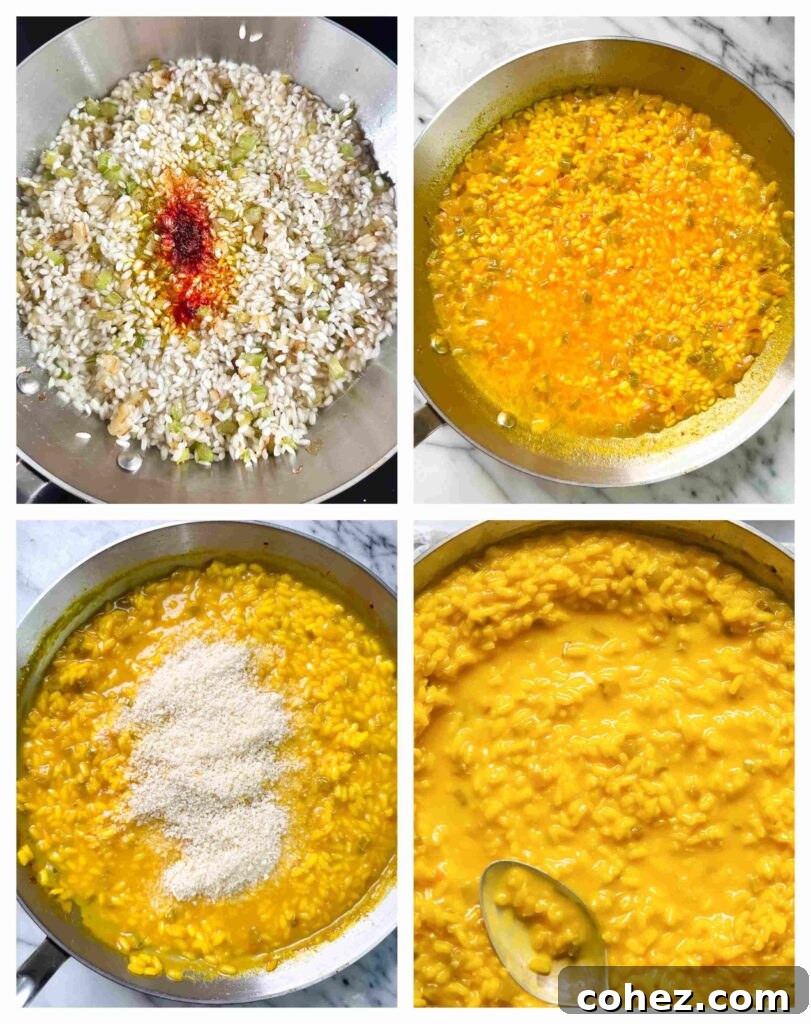
- Heat one tablespoon of olive oil in a large deep pan or in a large saucepan, then add finely diced celery and shallot, sauté over low heat for 10 minutes until softened.
- Once the celery and shallot are softened, add the rice and toast for a couple of minutes, stirring constantly, until every grain is evenly coated with oil and slightly translucent. Pour in the white wine and simmer for a minute until nearly evaporated. Add the crushed saffron threads, stirring them into the rice.
- Pour in about a quarter of the hot stock, ensuring it just covers the rice level, and stir gently. Let everything simmer over medium heat, stirring occasionally. As the liquid is absorbed and the rice begins to dry, add another ladleful of stock. Repeat this process gradually, adding stock little by little and stirring until all the liquid is gone and the rice is cooked al dente—tender yet with a slight chewiness in the center.
- When the rice is cooked to your liking, remove the pan from the heat. Stir in the freshly grated Parmesan cheese and the tablespoon of butter. Stir vigorously one more time to create that desirable creamy texture, known as “mantecatura.” Cover the pan with a lid and let it sit for 5 minutes. Uncover, give it a final gentle stir, and serve immediately.
Nutrition
Calories: 422kcal | Carbohydrates: 65g | Protein: 10g | Fat: 11g | Saturated Fat: 3g | Polyunsaturated Fat: 1g | Monounsaturated Fat: 6g | Cholesterol: 9mg | Sodium: 1779mg | Potassium: 115mg | Fiber: 2g | Sugar: 3g | Vitamin A: 631IU | Vitamin C: 1mg | Calcium: 156mg | Iron: 3mg
Nutrition information is automatically calculated, so should only be used as an approximation.