
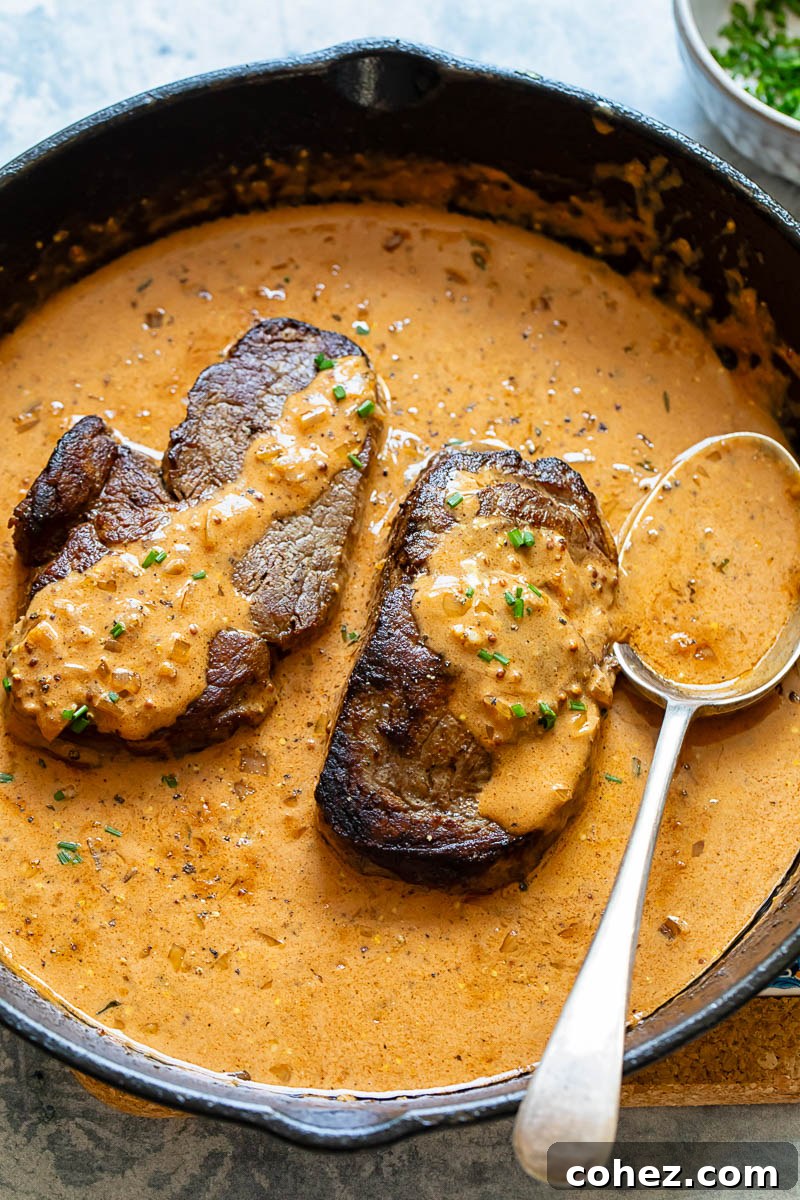
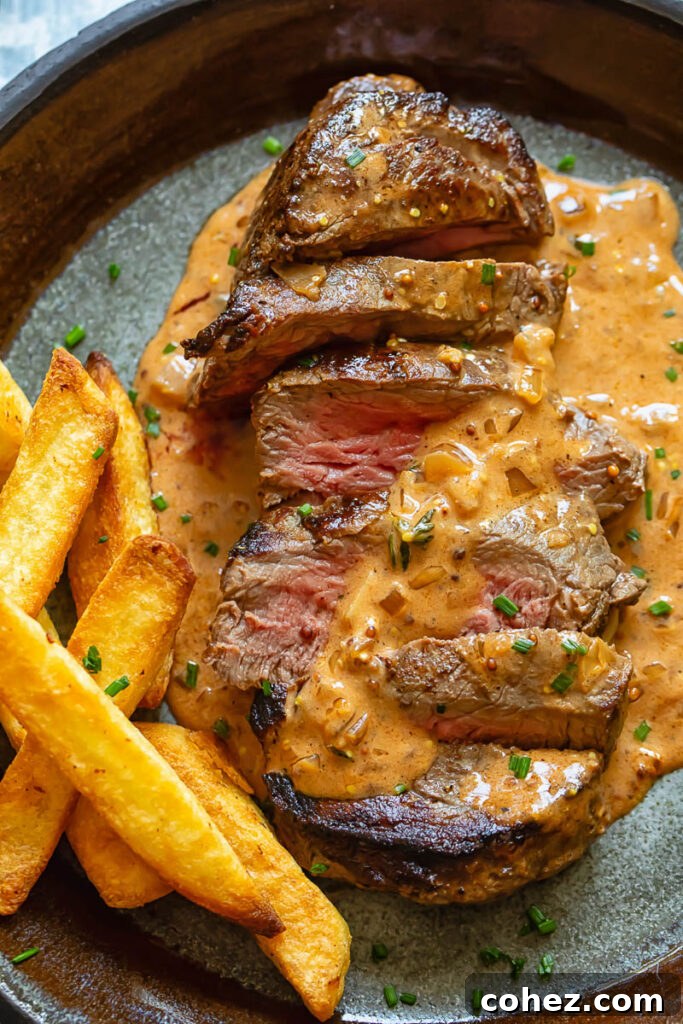
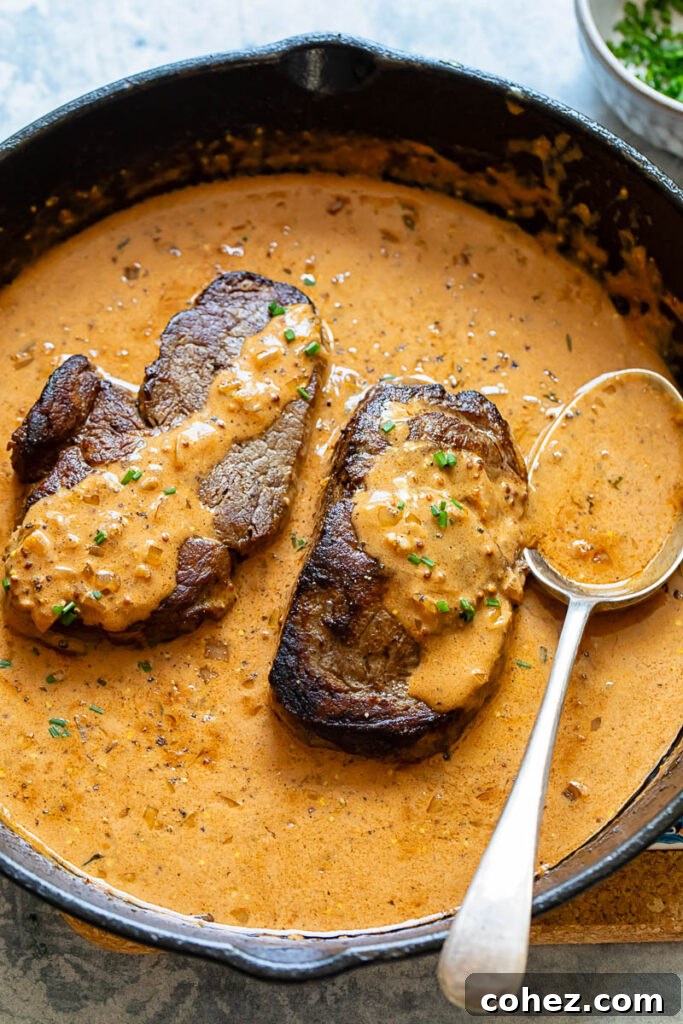
Sink your teeth into a perfectly cooked fillet steak, generously adorned with the luxurious and unmistakable Steak Diane sauce. This retro classic promises an unforgettable culinary experience, featuring a rich, velvety sauce crafted from fruity brandy, sweet shallots, pungent wholegrain mustard, and decadent cream. It’s a dish that speaks of timeless elegance and masterful flavor balance, surprisingly simple to recreate in your own kitchen.
When it comes to elevating a steak, the right sauce can transform a good meal into an extraordinary one. While many delightful options exist, such as the tangy hollandaise-like Bearnaise, the bold kick of peppercorn sauce, or even a savory mushroom marsala sauce, Steak Diane stands in a league of its own. For those who prefer dairy-free alternatives, a vibrant, herb-heavy, and citrus-fresh Sicilian salmoriglio offers a refreshing contrast. Yet, the allure of Steak Diane’s creamy, complex notes often proves irresistible, drawing diners back to its sophisticated charm.
In a world constantly chasing the next new trend, there’s a unique pleasure in rediscovering and preserving culinary gems from the past. I feel a certain responsibility for reviving classic retro recipes that, through no fault of their own, are in danger of fading from our collective memory. It would truly be a shame for future generations to miss out on such archival culinary treasures. Imagine a world without the refreshing crispness of Waldorf Salad, the comforting richness of Turkey a la King, the hearty satisfaction of Salisbury Steak, or the nostalgic appeal of Tater Tot Casserole (though, admittedly, Tater Tot Casserole shows no signs of going anywhere anytime soon!).
Steak Diane is one such gastronomic classic, a true icon from the mid-20th century. Born in an era of elegant dining and theatrical tableside service, this dish encapsulates a bygone era of sophisticated cuisine. It’s time to bring Steak Diane back from the dusty dining halls of yore and give it the glorious second serving it so richly deserves, proving that some classics are truly timeless. This detailed guide will help you master the art of preparing this exquisite steak dish, transforming your home kitchen into a gourmet haven.
What is Steak Diane? The Story Behind the Sauce
Steak Diane is much more than just a steak with sauce; it’s a piece of culinary history. In its heyday, particularly in the swanky restaurants of 1950s America, ordering Steak Diane was a dramatic affair. Fillet steak was cooked to perfection right at the diner’s table, culminating in a theatrical brandy flambé that would ignite the sauce with a breathtaking burst of flames. This dazzling display was as much a part of the experience as the exquisite taste of the dish itself. Given today’s stringent health and safety regulations, it’s no wonder that few establishments still offer such a fiery spectacle. However, the good news is that this sophisticated sauce is remarkably easy to recreate at home, allowing you to capture its luxurious flavor, even without the dramatic flames.
The defining characteristics of an authentic Steak Diane sauce, which contribute to its depth and complexity, are surprisingly straightforward:
- Pan-Made Foundation: The sauce is meticulously prepared in the very same pan used to sear the steak. This critical step ensures that all the rich, savory fond – the caramelized beef drippings and browned butter left in the pan – becomes the flavorful base of the sauce, adding unparalleled depth.
- Slow Reduction for Flavor: A key to the sauce’s intensity is the painstaking, slow reduction of brandy, followed by beef stock. This process concentrates the flavors, allowing the aromatic notes of the brandy and the robust essence of the beef to meld beautifully.
- Punchy Flavor Boosters: The sauce is further enhanced with a vibrant combination of ingredients. Worcestershire sauce adds a savory, umami-rich tang, while wholegrain mustard provides a delightful sharpness and textural intrigue. A touch of tomato paste contributes a subtle sweetness and body, balancing the other strong flavors.
- Velvety Finish: Finally, the sauce is brought to its luscious, decadent conclusion with the addition of rich heavy cream (known as double cream in the UK). This not only adds a silky texture but also harmonizes all the contrasting elements into a smooth, luxurious embrace.
It might seem counterintuitive that such a diverse array of flavors – the sweet fruitiness and heady oak of brandy, the earthy depth of beef, the tangy and salty notes from Worcestershire sauce and mustard, and the mild, creamy richness – could harmonize so perfectly. Yet, they do! This ingeniously mastered balance is precisely what makes Steak Diane so utterly delectable. Each ingredient plays its part, creating a symphony of taste that is both subtle and profound.
Variations of Steak Diane are common, allowing for personalized touches. Many recipes, including my preferred version, incorporate finely diced shallots and garlic. These additions contribute a lovely sweetness and a delicate texture to the sauce, enhancing its overall complexity. As a self-proclaimed herb enthusiast, I also like to include fresh thyme, which adds an aromatic freshness. Some recipes even call for sautéed mushrooms, but I generally opt for a finer-grained consistency to keep the sauce smooth and elegant, allowing the core flavors to shine.
Now, for the intriguing question: who exactly is Diane? The origin of the name is somewhat of a tenuous link, in my opinion, yet it’s a charming piece of culinary lore. The sauce is believed to take its name from Diana, the Roman Goddess of the hunt. This association with the hunt traditionally suggests game meats like venison or pheasant. However, the leap to beef, a staple in many cuisines, while perhaps not immediately obvious, has allowed this magnificent sauce to grace countless fillet steaks. Regardless of the exact etymology, the name “Steak Diane” evokes a sense of classical elegance that perfectly matches the dish itself.
Mastering Steak Diane: Essential Recipe Tips and Notes
Achieving the perfect Steak Diane requires attention to detail, especially when it comes to preparing the steak and crafting its exquisite sauce. Here are some invaluable tips to ensure your dish is nothing short of spectacular:
-
The Art of Resting Steak: There are two golden rules for treating steak right, and both involve resting. Lucky steak!
- Rule One: Bring to Room Temperature: Always remove your fillet steaks from the refrigerator 20-30 minutes before you plan to cook them. Cooking meat directly from cold can lead to uneven cooking, resulting in a tough exterior and a less tender interior. Allowing the steak to come to room temperature ensures a more even cook throughout, yielding a uniformly tender and juicy result.
- Rule Two: Rest After Cooking: Once cooked to your desired doneness, it is absolutely crucial to rest the steak. For fillet steaks, a resting period of at least 5 minutes is ideal. Resting allows the muscle fibers to relax and the internal juices, which have been pushed to the center during cooking, to redistribute throughout the meat. Neglecting this rule will result in a significant loss of those precious juices onto your plate, leaving you with a drier steak and a “bloody” puddle.
- Alcohol-Free Option: If you prefer not to cook with alcohol, simply omit the brandy from the recipe. There’s no need to substitute it with anything else; the sauce will still be wonderfully flavorful thanks to the beef stock and other aromatics.
- Patience with the Sauce: The Steak Diane sauce thrives on patience. Take your time during the reduction steps. Allow the brandy to reduce almost completely, concentrating its fruity and oaky notes. Similarly, give the beef broth ample time to reduce and thicken, intensifying its savory depth. These reductions are essential for building a complex and robust flavor profile.
- Handling Cream with Care: When adding the cream, it’s vital to remember that heating cream to a vigorous boil can cause it to split or curdle, resulting in an undesirable grainy texture. To prevent this, always add the heavy cream off the heat, or once the pan has cooled slightly, stirring it gently until fully incorporated and heated through without boiling.
- Achieving the Right Consistency: This Steak Diane sauce recipe does not call for any artificial thickeners like flour or cornstarch. The desired consistency is naturally silky, fluid, and elegant – not thick or gloopy. The high fat content of heavy cream (or double cream in the UK) will naturally thicken the sauce as it reduces and emulsifies, creating that perfect, luxurious texture that clings beautifully to the steak. Trust the process and avoid the temptation to add thickeners.
Serving Suggestions for Your Gourmet Steak Diane
Steak Diane is a star on its own, but pairing it with the right accompaniments elevates the entire dining experience. As a “steak and chips” enthusiast at heart, I firmly believe that this exquisite steak recipe shines brightest with substantial, thick-cut chips. While I’m also a fan of fries, those thin, spindly sticks simply can’t hold their own against the sumptuous richness of the Diane sauce and the juicy slab of beef; they’d quickly become overshadowed and soggy.
For those looking to impress with equally robust potato offerings, consider these golden and crispy alternatives:
- Parmesan-crusted potatoes: Their savory crust provides a wonderful textural contrast.
- Hasselback potatoes: With their cleverly crafted ridges, these are not only visually appealing but also perfect sauce-catchers, ensuring every bite is infused with the rich Diane sauce.
- Oven-fried potatoes with mushrooms and onions: A hearty and flavorful side that complements the steak beautifully.
With a creamy sauce like Steak Diane, I typically lean towards cooked vegetables rather than a fresh salad, as their textures and flavors tend to integrate more seamlessly with the richness of the dish. I like to keep things seasonal, so your choice of vegetable might vary, but here are some fantastic options:
- Garlic butter sautéed cauliflower: Offers a delightful tenderness with a hint of garlic.
- Roasted asparagus with radishes: Provides a slightly earthy and refreshing counterpoint.
- Lemon butter green beans: A vibrant and zesty side that cuts through the richness of the sauce.
If you have a heartier appetite and enjoy the comforting embrace of melted cheese with your steak, consider these safe bets that won’t eclipse the special sauce but rather enhance the meal with their creamy indulgence:
- Macaroni cheese: A classic comfort food that pairs surprisingly well.
- Cauliflower gratin: A sophisticated gratin offering creamy, cheesy goodness.
To complete the gourmet experience, consider pairing your Steak Diane with a medium-bodied red wine, such as a Pinot Noir or a Merlot, which will complement the rich flavors of the beef and sauce without overpowering them.
Storage and Leftovers: Maximizing Your Steak Diane Experience
It’s a rare occurrence indeed for anyone to leave behind precious fillet steak! However, the wonderfully rich and creamy nature of Steak Diane sauce often means that a little goes a long way, and you might find yourself with some luscious leftovers. If the sauce remains separate from the cooked steak, it can be stored in an airtight jar in the refrigerator for 2-3 days. While creamy sauces don’t always freeze well due to potential separation upon thawing, you can certainly try freezing it in small portions. Thaw slowly in the refrigerator and gently reheat over low heat, whisking frequently, to minimize separation.
Should you find yourself fresh out of fillet mignon, don’t despair! That exquisite leftover Diane sauce is incredibly versatile and will quite nicely elevate other proteins. It’s particularly delicious when served over tender chicken thighs or juicy pork chops, transforming them into a gourmet meal with minimal effort. You can also stir it into a hearty chicken casserole or a robust beefy pie for an added layer of rich, complex flavor. For a quick lunch, it makes a fantastic topping for baked potatoes or even a sophisticated grilled cheese sandwich. Embrace the versatility of this incredible sauce and let it inspire new culinary creations!
More Gourmet Beef Recipes to Explore
If you’ve enjoyed the rich flavors of Steak Diane, here are more beef recipes that promise to tantalize your taste buds and expand your culinary repertoire:
- Braised Beef Short Rib: Tender, fall-off-the-bone goodness.
- Slow Cooker Beef Brisket: Effortlessly delicious and incredibly flavorful.
- Beef Stew with Dumplings: A comforting and hearty classic.
- Harissa Beef Stuffed Eggplant: A unique and exotic twist on beef dishes.
Classic Steak Diane Recipe
Julia Frey of Vikalinka
10 mins
20 mins
30 mins
2 people
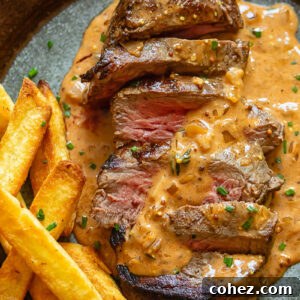
Fillet steak cooked to your own doneness and served with a luxurious sauce of fruity brandy, sweet shallots, wholegrain mustard and cream.
Ingredients
- 2 tbsp butter
- 2 x 200g / 8 oz beef fillet steaks, (fillet mignon)
- Salt
- 1 shallot, diced
- 2 cloves garlic, minced
- 3-4 sprigs fresh thyme
- 50ml / 1/4 cup brandy
- 150ml / 2/3 cup beef stock
- 2 tsp Worcestershire sauce
- 1 tbsp wholegrain mustard
- 1 tbsp tomato paste
- 1/4 tsp black pepper
- 50ml / 1/4 cup double / heavy cream
Instructions
-
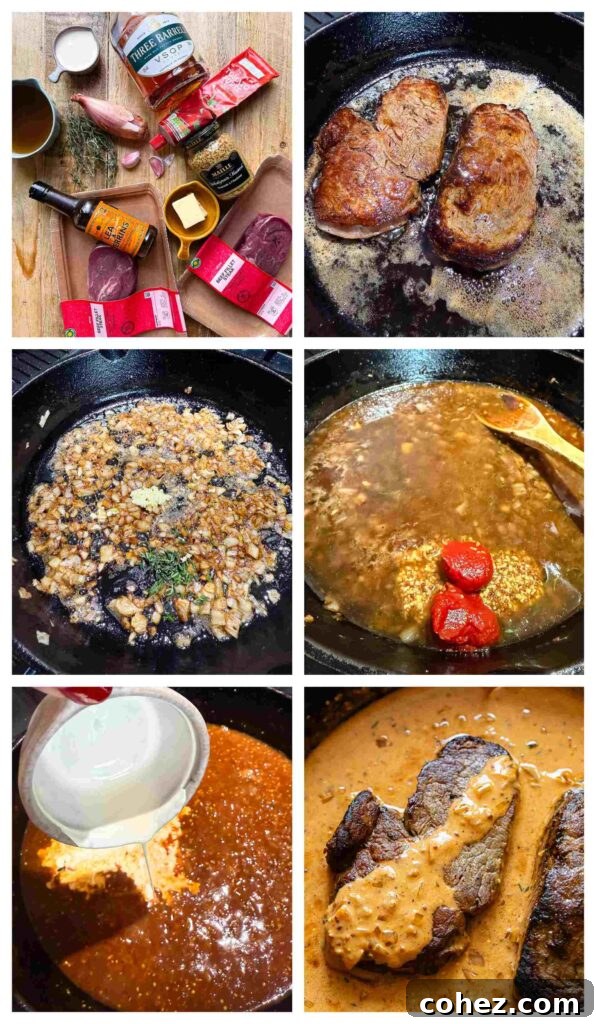
Allow the steaks to come to room temperature by removing them from the fridge 20-30 minutes before cooking. Pat the steaks thoroughly dry with a paper towel and season generously with salt on both sides. Melt the butter in a heavy-bottomed frying pan or cast iron skillet over medium-high heat. Once hot, add the steaks and cook for 4-5 minutes on each side for a perfect medium-rare finish, ensuring a beautiful brown crust develops. Remove the cooked steaks from the pan and let them rest on a plate, lightly covered with foil to keep warm and allow the juices to redistribute.
-
Using the same pan with the flavorful drippings, add the diced shallot and sauté for 2-3 minutes until softened. Then, add the minced garlic and fresh thyme leaves, continuing to sauté for another 30 seconds, stirring constantly to prevent the garlic from burning. Deglaze the pan by pouring in the brandy, scraping up any browned bits from the bottom. Allow the brandy to reduce almost completely, until a syrupy consistency is achieved.
-
Now, pour in the beef stock, followed by the tomato paste, Worcestershire sauce, wholegrain mustard, and a pinch of salt and pepper. Bring the sauce to a gentle simmer and cook, stirring occasionally, until it has slightly thickened and the flavors have melded together, which should take about 5-7 minutes.
-
Remove the pan from the heat and allow the vigorous bubbling to subside for a moment. Gently stir in the heavy cream until it is fully blended into the sauce, creating a smooth and creamy texture. Do not bring the sauce back to a rolling boil after adding the cream, as this can cause it to split.
-
Slice the rested steaks against the grain into thick medallions. Serve immediately, generously spooning the warm, luxurious Steak Diane sauce over the tender beef. Pair with your favorite robust potato side and a fresh cooked vegetable.
Notes
-
There are two important rules for getting the steak just right. The first is to take the steak from the fridge 20-30 minutes before cooking. It will cook more evenly and become tender if cooked from room temperature.
-
And secondly, rest the steak after cooking to allow the juices to be reabsorbed. It will only take 5 minutes but really does make a big difference to the tenderness and juiciness.
-
If you don’t want to cook with alcohol, just leave it out. No need to find a substitute; the sauce will still be delicious.
-
Take your time when making the sauce. Give ample time for the brandy and beef stock to reduce fully, as this concentrates the flavors.
-
Boiling the cream vigorously will result in it splitting. Make sure it’s only added off the heat or over very gentle heat, and avoid rapid boiling.
Nutrition
Calories: 494kcal | Carbohydrates: 8g | Protein: 24g | Fat: 35g | Saturated Fat: 19g | Polyunsaturated Fat: 2g | Monounsaturated Fat: 12g | Trans Fat: 0.5g | Cholesterol: 120mg | Sodium: 526mg | Potassium: 643mg | Fiber: 1g | Sugar: 4g | Vitamin A: 940IU | Vitamin C: 7mg | Calcium: 64mg | Iron: 3mg
Nutrition information is automatically calculated, so should only be used as an approximation.
Tried this recipe?
We’d love to hear how it turned out! Share your experience in the comments below.