
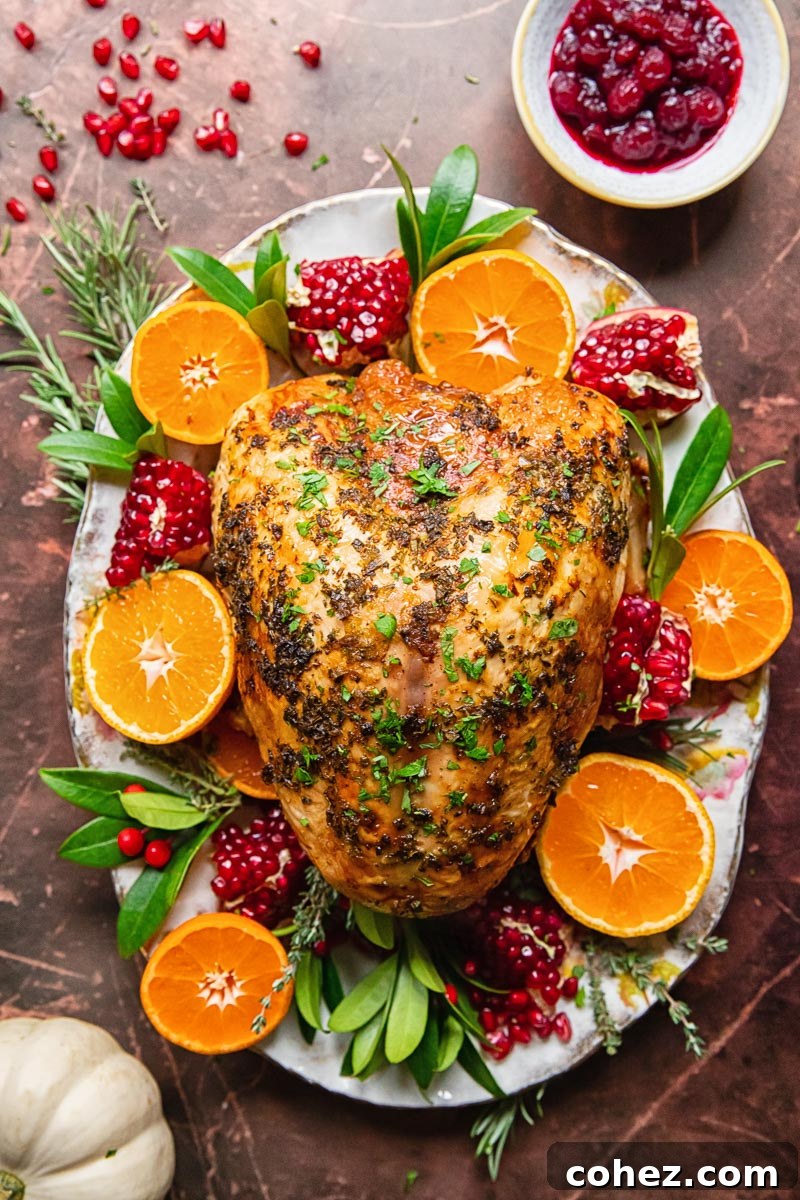
Discover the ultimate guide to roasting a succulent, herbed butter-infused turkey crown (also known as turkey breast). This method promises a dish that’s significantly easier and faster to prepare than a whole turkey, delivering unparalleled juiciness and flavor, perfect for any festive gathering. Elevate your holiday meal effortlessly and pair this exquisite roast with our effortless homemade gravy for a truly unforgettable experience.
Planning your festive feast for the upcoming holidays? Explore our curated Thanksgiving and Christmas Collections for a wealth of delicious and inspiring recipes that will surely impress your guests and make your celebration truly special.
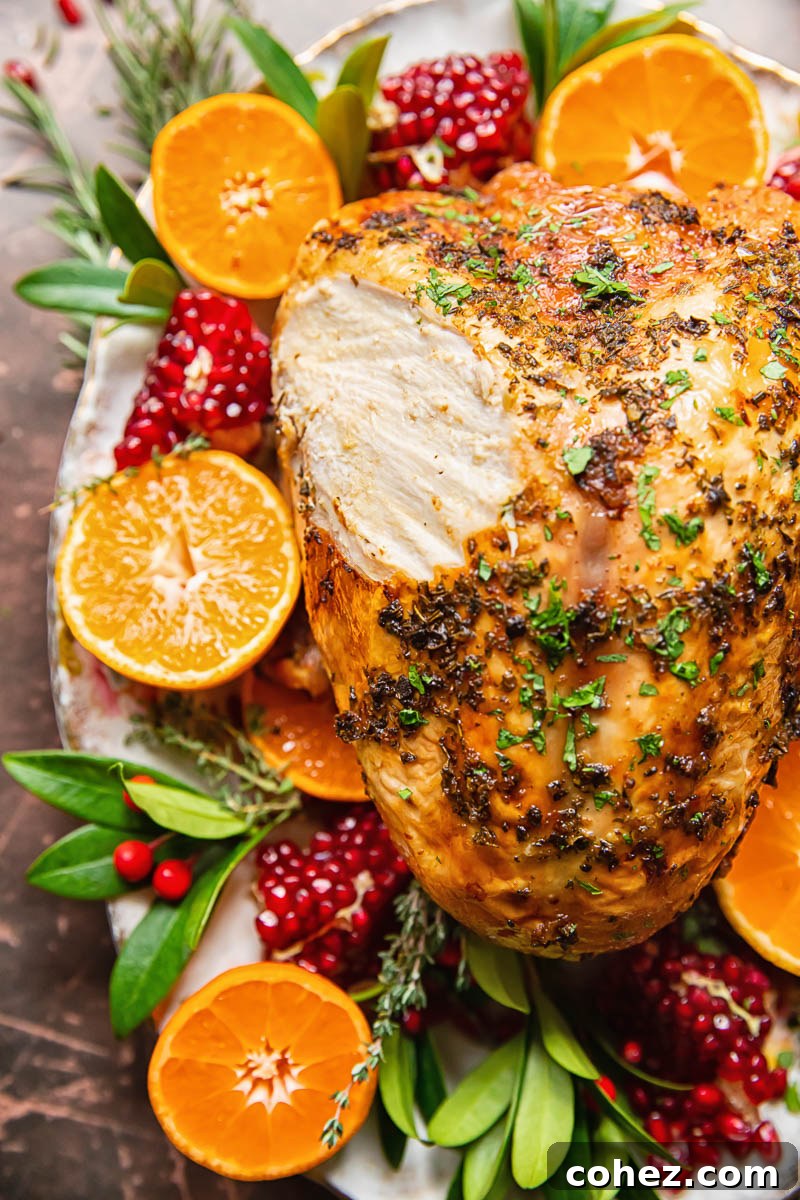
Embracing the Turkey Crown: A Stress-Free Holiday Solution
For many years, the idea of hosting a Thanksgiving or Christmas dinner felt incomplete without the grand, show-stopping centerpiece of a whole roasted turkey. I confess, it took considerable persuasion and personal experience to convince myself that a turkey breast, affectionately known as a turkey crown in the UK, could ever truly satisfy the elevated expectations of a holiday meal. I imagined I would miss the impressive presentation of the big bird and, perhaps more importantly, the cherished dark meat.
However, my culinary journey proved me wonderfully wrong! This very recipe is designed to transform your perspective, demonstrating unequivocally how a perfectly roasted turkey crown can not only be the star of your festive meal but also simplify your holiday cooking significantly. It’s an ideal solution for a multitude of reasons: whether you’re hosting a smaller, more intimate gathering, seeking a less daunting cooking experience, or simply craving consistently tender, incredibly moist white meat without the traditional fuss and culinary acrobatics often required by a whole bird. Prepare to be converted to the effortless elegance of the turkey crown!
The Unbeatable Advantages of Roasting a Turkey Crown
Cooking an entire turkey often presents a unique and frustrating set of challenges for even the most experienced home cooks. The primary hurdle stems from the bird’s inherent anatomy: it comprises both lean white meat (the breast) and richer dark meat (the legs and thighs), which naturally cook at vastly different rates. White meat, being leaner, cooks faster and is highly susceptible to drying out, while dark meat requires more time and higher temperatures to achieve optimal tenderness and flavor. This often leads to a culinary dilemma where perfecting one part means inevitably compromising the other, resulting in either a dry breast or undercooked dark meat.
The sheer size of a whole turkey further exacerbates these issues. It demands a significantly longer roasting time, increasing the overall risk of overcooking and dryness throughout the bird. My personal quest for a consistently moist and flavorful turkey led me to a few practical solutions. Initially, I found success by limiting the size of my whole turkey to no more than 4.5kg (10lbs), making it slightly more manageable. However, I soon realized that finding smaller turkeys can be a challenge, particularly in regions like the US where larger birds are more common. This is precisely where the turkey crown steps in as a brilliant, game-changing alternative.
A turkey crown brilliantly bypasses the dark meat conundrum entirely, allowing you to focus solely on perfecting the white meat. When lovingly prepared with a rich, aromatic herbed butter, it not only guarantees exceptional flavor but also infuses crucial moisture directly into the meat, leading to a truly succulent and tender result every single time. Moreover, for those smaller, more intimate holiday gatherings where a traditional turkey might be overkill, consider an equally impressive yet more manageable alternative: a roast duck with port cranberry sauce offers an incredibly flavorful and sophisticated centerpiece.
Decoding the Turkey Crown: What You Need to Know
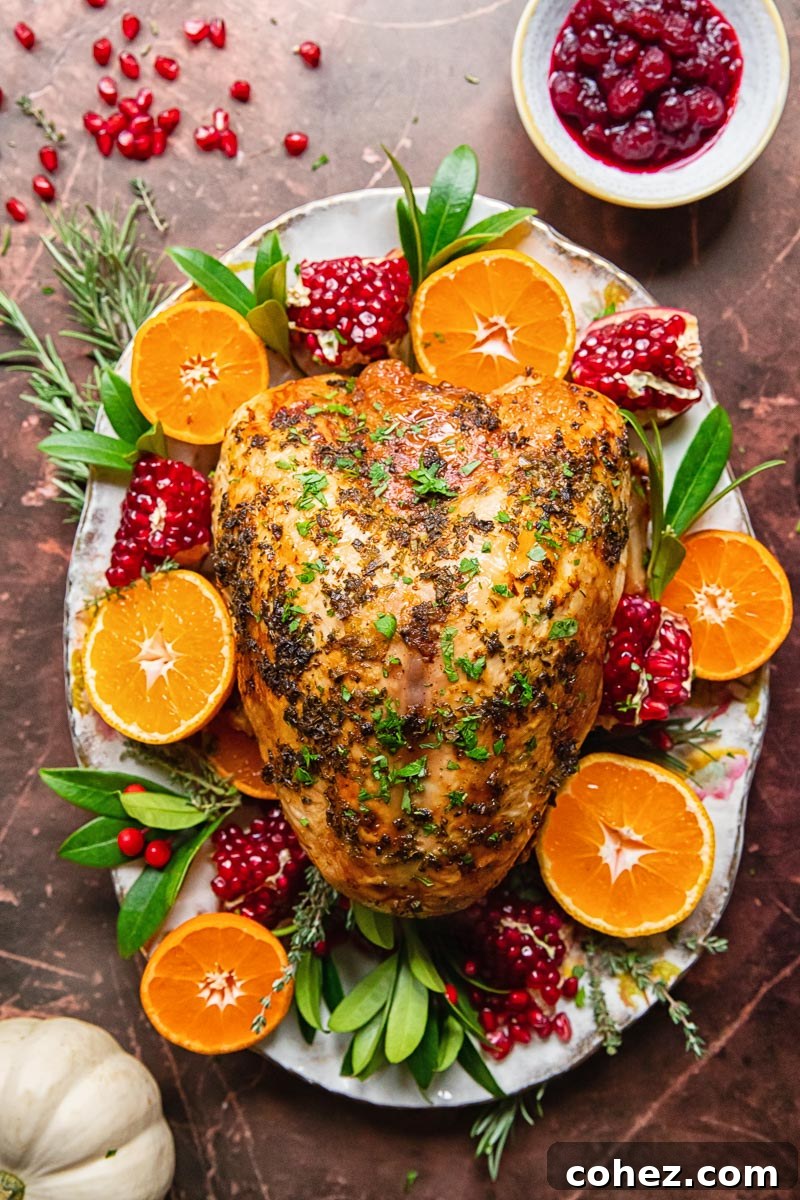
For those outside of the United Kingdom, the term “turkey crown” might conjure images of something quite elaborate or even intimidating. When I first encountered this nomenclature after moving here, I was equally perplexed. Despite its rather regal-sounding name, a turkey crown is simply the breast portion of the turkey, typically sold with the bones and skin still attached. In essence, it comprises the entire white meat section of the bird, thoughtfully removed from the legs, wings, and back.
The inherent beauty and simplicity of a turkey crown lie in its singular focus. By isolating just the white meat, you entirely eliminate the culinary complexity of attempting to cook different meat types with varying requirements simultaneously. This makes it significantly easier to accurately gauge cooking times and achieve consistent doneness throughout the breast, ensuring every slice is as perfect as the last. While boneless turkey breasts are indeed available and might initially appear to offer greater convenience, I strongly advocate for opting for a bone-in turkey crown, and here’s a compelling explanation why:
The bones within the turkey crown play a vital, often underestimated, role in protecting the delicate white meat from succumbing to dryness during the roasting process. They act as a natural insulator, helping to distribute heat more evenly throughout the meat and, critically, retaining precious moisture within the muscle fibers. This protective barrier is particularly beneficial for larger turkey breasts, preventing them from becoming disappointingly dry and stringy. For instance, a medium-sized 5 lb (2.2 kg) bone-in turkey crown, roasted at a moderate 350°F (180°C), typically requires approximately 1 hour and 45 minutes to 2 hours of roasting, yielding a wonderfully moist and tender interior.
Furthermore, the utility of the bones extends beyond just ensuring a moist roast. Once you’ve expertly carved your magnificent turkey, these bones become an excellent resource for culinary enthusiasts. They can be utilized to craft a rich and profoundly flavorful homemade turkey stock. This homemade liquid gold can then form the foundational base for an array of incredible dishes, from comforting soups and luscious gravies to sophisticated risottos, adding another layer of culinary value and minimizing waste from your holiday meal. Should you, for personal preference or convenience, choose a boneless turkey breast, it’s imperative to significantly reduce your cooking time, as it will cook much faster without the insulating protection of the bones. Always rely on a meat thermometer for accuracy.
Essential Tips for a Perfectly Roasted Turkey Crown
Achieving a showstopping, incredibly juicy, and flavorful turkey crown is simpler than you might imagine when armed with these expert tips:
- Thoroughly Defrost Your Turkey: This initial step is absolutely non-negotiable for both even cooking and, crucially, food safety. Ensure your turkey crown is completely thawed before it even contemplates entering the oven. A practical and safe guideline is to allow approximately 1 full day of thawing time in the refrigerator for every 2.2 kg (5 lbs) of turkey. The refrigerator method is by far the safest and most recommended approach for defrosting poultry, preventing bacterial growth.
- The Magic of Herbed Butter and Strategic Orange Placement: Our herbed butter recipe intentionally incorporates fragrant orange zest, which imparts a bright, aromatic, and subtly sweet lift to the rich butter. However, resist the temptation to add the orange juice directly to the butter mixture, as it can separate. Instead, after zesting your mandarin orange, simply cut it in half and strategically place these halves directly under the turkey crown within the roasting pan. As the turkey roasts, the gentle heat will slowly release the delicate juices and vibrant aromas from the orange, effectively infusing the meat with subtle citrus notes and generously contributing additional moisture to the pan drippings, which are an invaluable base for an incredible homemade gravy.
- Dry Skin is Paramount for Crispy Perfection: For that coveted, irresistibly crispy skin, it is absolutely crucial to thoroughly pat the entire surface of the turkey breast skin dry with paper towels before you even begin to apply the herbed butter. A wet or damp surface will unfortunately prevent the butter from adhering properly, causing it to slide off during the roasting process, hindering crispiness. Don’t be overly concerned if the butter mixture doesn’t spread perfectly smoothly across the skin; the naturally slippery nature of turkey skin combined with soft butter can be a bit challenging. Just do your best to distribute it as evenly as possible. Approximately 30 minutes into the roasting time, carefully remove the turkey from the oven and generously baste it with the melted, flavorful butter and pan juices that have lovingly collected at the bottom of the pan. This ensures thorough coverage and helps to develop a beautiful, deep golden-brown crust.
- Season Generously with Salt for Enhanced Flavor and Crispness: Salt is truly your best friend and a powerful ally when it comes to roasting turkey. Do not be shy with your seasoning! A generous application of coarse salt before roasting is absolutely key to drawing out moisture from the skin, resulting in unparalleled crispness, while simultaneously enhancing the inherent delicious flavor of the turkey itself.
- Temperature is Your True Guide, Not Just Time: While a common rule of thumb suggests allowing approximately 20 minutes of cooking time per pound of turkey, relying solely on an exact timing chart can be remarkably misleading due to significant variations in turkey size and, even more so, the inconsistencies of domestic oven temperatures. The only truly reliable and foolproof method to guarantee a perfectly cooked, safe, and exquisitely juicy turkey breast is to meticulously measure its internal temperature using an instant-read meat thermometer. Insert the thermometer into the thickest part of the breast, being careful to avoid touching the bone. The turkey is considered fully cooked when it consistently registers an internal temperature of 160-165°F (72-73°C). Remember, a phenomenon known as “carryover cooking” will gently raise the temperature a few additional degrees as the turkey rests after being removed from the oven.
- The Indispensable Importance of Resting the Meat: Once your turkey crown is perfectly cooked, resist the compelling urge to slice into it immediately. Allowing the roasted turkey to rest for a crucial 20-30 minutes before carving is absolutely essential for achieving maximum juiciness. This vital resting period enables the muscle fibers, which contract during cooking, to relax and, more importantly, to reabsorb the precious juices that have migrated towards the center of the meat. Skipping this critical step means all those delectable juices will simply escape onto your cutting board, leaving you with disappointingly dry meat. Resting guarantees a remarkably moist, tender, and flavorful result with every single slice.
How to Expertly Carve Your Roasted Turkey Crown
After your beautifully roasted turkey crown has had its essential resting period, it’s time for the final, satisfying step: carving. A properly carved turkey not only looks incredibly impressive on your platter but also ensures that each guest receives a tender, perfectly sliced piece of juicy meat. Here’s a simple, step-by-step guide to help you carve with confidence:
- Stabilize the Turkey: Place the rested turkey crown, skin-side up, on a sturdy cutting board. If you chose a bone-in crown, the central bone will naturally help to keep it stable during carving.
- Remove the Breast Meat: Using a very sharp carving knife, make a long, clean cut down one side of the breast bone, carefully following the natural curve of the bone. Continue cutting, gently separating the entire breast meat from the bone in one large, cohesive piece. Repeat this precise process on the other side of the breast bone to remove the second breast half.
- Slice Against the Grain: Once both breast halves are removed, place each piece skin-side up on the cutting board. Now, slice the meat across the grain into uniform slices, ideally about 1/2-inch thick. Slicing against the grain is a crucial technique that shortens the muscle fibers, ensuring maximum tenderness and a more pleasant eating experience for every bite.
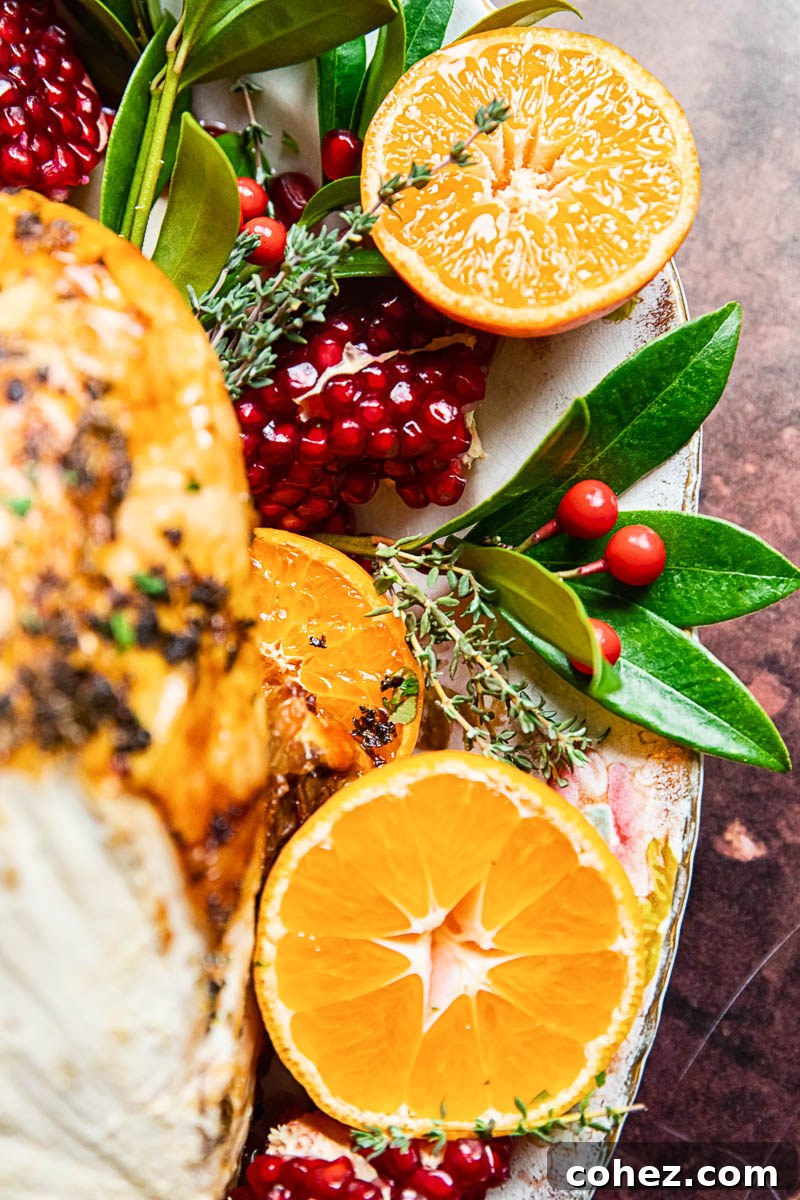
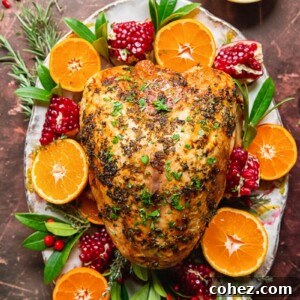
- Arrange and Serve: Artfully arrange the freshly sliced turkey on a warm serving platter. Garnish with fresh herbs, citrus slices, or pomegranate seeds as desired, and present it proudly alongside your delicious array of holiday sides and gravy.
Serving Suggestions for Your Unforgettable Festive Feast
While the herbed butter roast turkey crown will undoubtedly be the glorious star of your table, a truly memorable holiday dinner is undeniably made extraordinary by its accompanying side dishes. These flavorful additions transform a simple meal into an unforgettable, heartwarming feast. Here are some of our top recommendations to thoughtfully complete your holiday spread and delight your guests:
- No holiday meal feels complete without the perfect potato dish! Our Perfect Roast Potatoes are always a perennial crowd-pleaser, offering an irresistible combination of crispy exteriors and wonderfully fluffy interiors. For a richer, more unique, and utterly comforting twist, be sure to try our indulgent Brown Butter Mashed Potatoes.
- Elevate your stuffing game beyond the ordinary with a savory Sausage, Pear and Sage Stuffing, which offers a delightful classic flavor profile. Or, for the more adventurous palate seeking something truly exotic and memorable, our Chorizo and Fig Stuffing delivers an unexpected burst of flavor.
- For a sophisticated and deeply comforting potato dish, consider our elegant Rosemary Potatoes au Gratin, baked to golden perfection. If you prefer a sweeter, equally comforting alternative that offers a delightful hint of autumn, our Butternut Squash Casserole is simply divine.
- Ensure a balance of vibrant greens and a satisfying crunch with our Easy Roasted Brussels Sprouts and Carrots with Parmesan, a colorful and healthy addition.
- Add a touch of culinary elegance and a tangy-sweet counterpoint to your rich main course with a side of Braised Red Cabbage, a truly sophisticated accompaniment.
- And, of course, no magnificent turkey dinner would be truly complete without a rich, velvety, and utterly essential simple homemade gravy, expertly crafted from the flavorful pan drippings!
To perfectly conclude your magnificent Thanksgiving or joyous Christmas celebration, a delightful and decadent dessert is an absolute must. It’s genuinely impossible for us to pick just one favorite from our extensive repertoire, so we warmly invite you to explore our comprehensive Thanksgiving dessert collection to discover and choose the perfect sweet ending that will crown your festive feast!
Storage and Creative Leftover Ideas for Your Turkey Crown
One of the many delightful benefits of roasting a turkey crown is the potential for an abundance of delicious leftovers! Properly stored, your succulent cooked turkey breast can be safely kept in the refrigerator for 4-5 days, offering you ample opportunity for quick, convenient, and incredibly easy meals throughout the busy week following your holiday celebration. For longer-term preservation, you can freeze leftover turkey for up to 6 months. This ensures you always have a readily available supply of flavorful, cooked protein whenever the craving strikes or you need a speedy dinner solution.
Beyond the beloved classic turkey sandwich, perhaps with a dollop of zesty cranberry sauce, leftover turkey is remarkably versatile and can be ingeniously transformed into a wide array of exciting new dishes. Don’t let your precious leftovers go to waste; instead, reinvent them into something completely fresh, innovative, and delicious! Here are some of our favorite creative and inspiring recipes for utilizing every last savory bit of that flavorful roasted turkey:
- Turkey Marsala Pot Pie: A comforting, rich, and hearty dish, absolutely perfect for a cozy evening in.
- Hearty Turkey Stew: A warming and deeply satisfying meal, ideally suited for colder days when you crave something robust.
- Leftover Turkey Soup: A light yet incredibly flavorful soup, offering a fantastic and healthy way to utilize both turkey and any leftover vegetables.
- Chicken and Dumpling Soup (Use leftover turkey instead): A clever and delicious substitution that makes this beloved classic comfort food even easier and quicker to prepare.
- Turkey á la King: A creamy, elegant, and surprisingly gourmet dish that feels luxurious but is delightfully simple to whip up with pre-cooked turkey.
Herbed Butter Roast Turkey Breast Recipe
Herbed Butter Roast Turkey Breast
Equipment
-
Roasting pan
-
Meat thermometer
Ingredients
- 2.2-2.5 kg / 5 lbs-5.5 lbs turkey crown (breast), with the skin and bones attached
- 4 tbsp unsalted butter, softened
- 1 tbsp fresh chopped rosemary (from 2 sprigs)
- 2 tsp fresh chopped thyme (from 4 sprigs)
- 1 tbsp fresh sage (3-4 leaves)
- 1 tbsp fresh parsley (4-5 sprigs)
- 3 cloves garlic, minced
- 1 mandarin orange, zest only (save halves for roasting)
- Coarse salt, to taste
- 4-5 fresh bay leaves, optional
For the garnish
- 2-3 mandarin oranges, sliced or whole
- 1 pomegranate, seeds removed
- Fresh rosemary and thyme sprigs
- Additional greenery (e.g., kale, fresh cranberries)
Instructions
- Preheat your oven to 350°F (180°C). Carefully remove the turkey crown from its packaging and place it skin-side up in a sturdy roasting pan. Ensure you remove any turkey giblets from the cavity; you can either keep them for making stock or discard them (but never forget to remove them before cooking!).
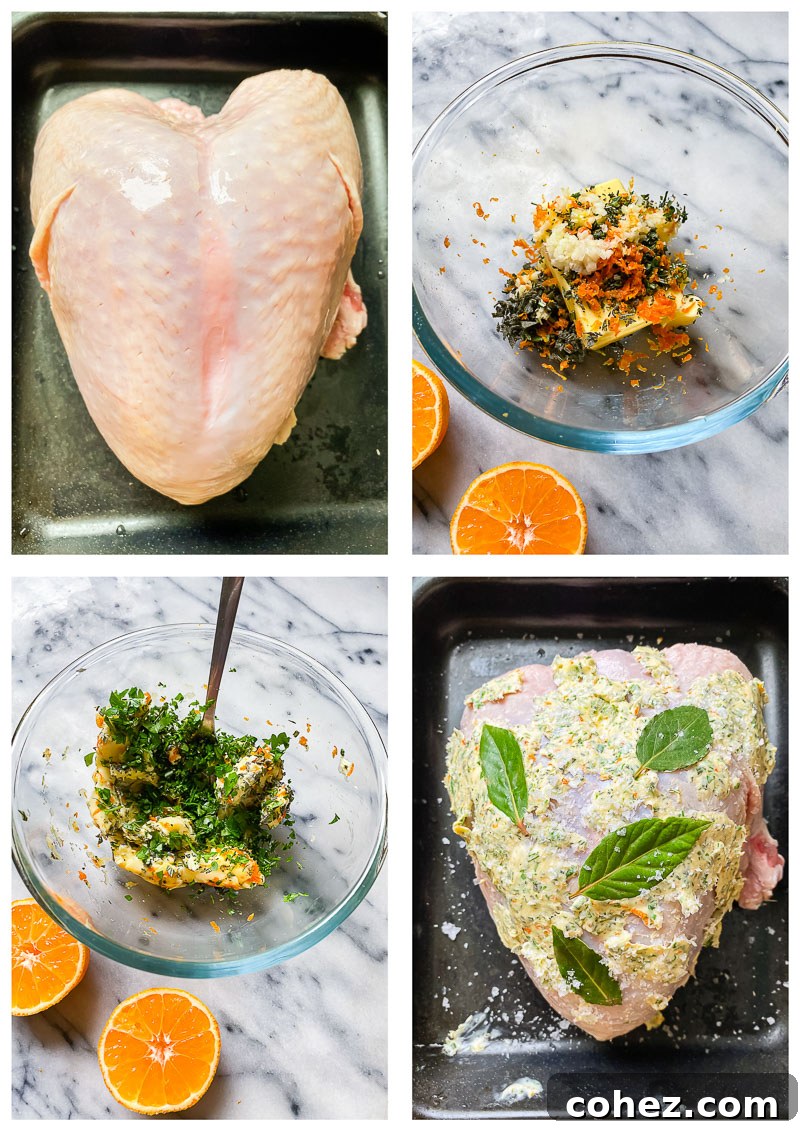
- Prepare your herbed butter: Take the fresh rosemary, thyme, sage, and parsley off their stalks and finely chop them. Mince the garlic cloves. Zest the mandarin orange. In a small bowl, combine the softened unsalted butter with the chopped herbs, minced garlic, and orange zest. Mix thoroughly until all ingredients are well combined. Next, pat the entire surface of the turkey breast skin thoroughly dry with paper towels. This step is critical; if the skin is wet, the herbed butter will not adhere properly and will slide off. Generously apply the herbed butter mixture evenly over the turkey breast, gently working it under the skin if possible for even more flavor. Don’t worry if it clumps slightly; just ensure good coverage. Stick the fresh bay leaves (if using) all over the butter-coated skin for extra aroma. Finally, sprinkle the turkey generously with coarse sea salt, which will help create that irresistible crispy skin. Cut the zested mandarin orange in half and place both halves, cut-side down, directly under the turkey breast in the roasting pan.
- Place the turkey crown in the preheated oven. Roast for approximately 1 hour 45 minutes to 2 hours. The most accurate way to determine doneness is by checking the internal temperature with an instant-read meat thermometer, inserted into the thickest part of the breast (being careful to avoid touching the bone). It should register a safe internal temperature of 160-165°F (72-73°C). Around 30 minutes into the cooking time, carefully remove the turkey from the oven and generously baste it with the melted butter and rich juices that have collected at the bottom of the pan. One thorough basting is usually sufficient. As a general guide, a turkey crown typically requires about 20 minutes of cooking time per pound. If you are using a boneless turkey crown, it will cook even faster, so start checking its internal temperature after about one hour and adjust accordingly based on its size. Once cooked, transfer the turkey to a clean cutting board and allow it to rest undisturbed for 20-30 minutes before carving. This crucial resting period is vital for the juices to redistribute evenly throughout the meat, ensuring a tender and exceptionally moist final product.
Nutrition
Carbohydrates: 4g |
Protein: 55g |
Fat: 20g |
Saturated Fat: 8g |
Polyunsaturated Fat: 1g |
Monounsaturated Fat: 2g |
Trans Fat: 1g |
Cholesterol: 162mg |
Sodium: 499mg |
Potassium: 38mg |
Fiber: 1g |
Sugar: 1g |
Vitamin A: 410IU |
Vitamin C: 5mg |
Calcium: 32mg |
Iron: 1mg
Nutrition information is automatically calculated, so should only be used as an approximation.
Tried this recipe?
Let us know how it was!