
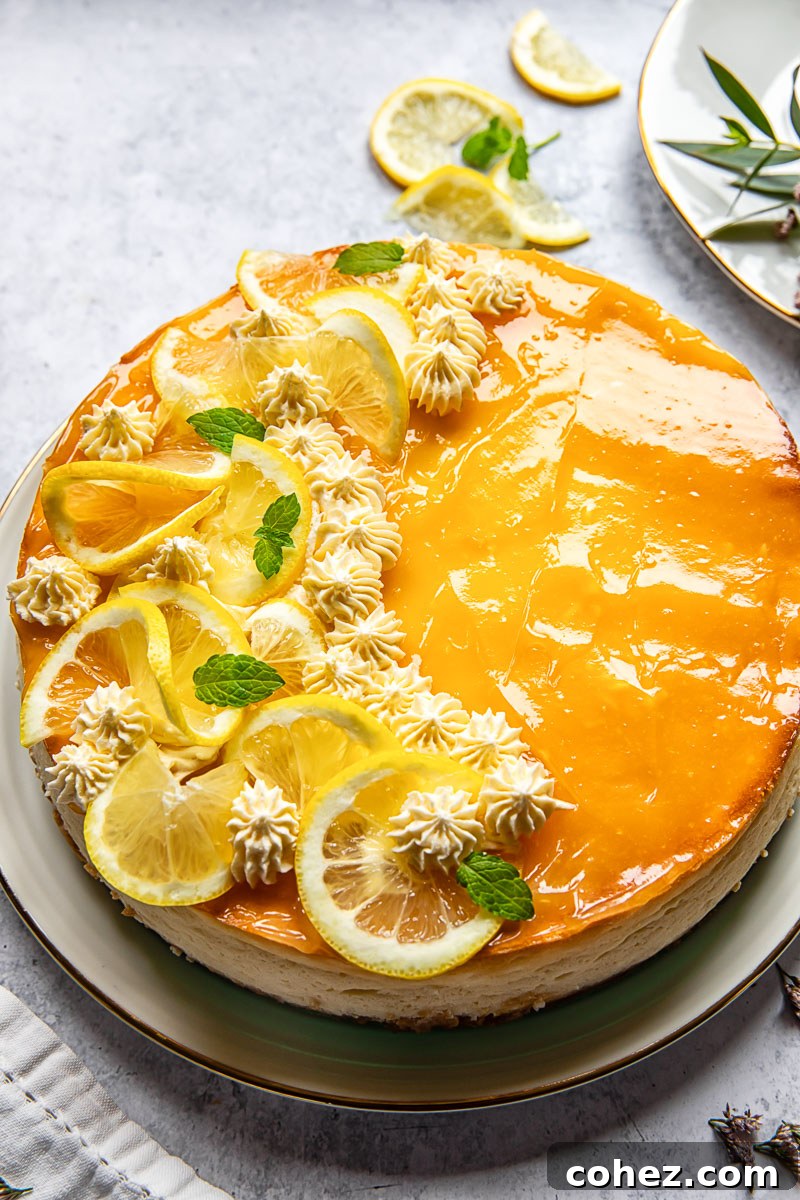
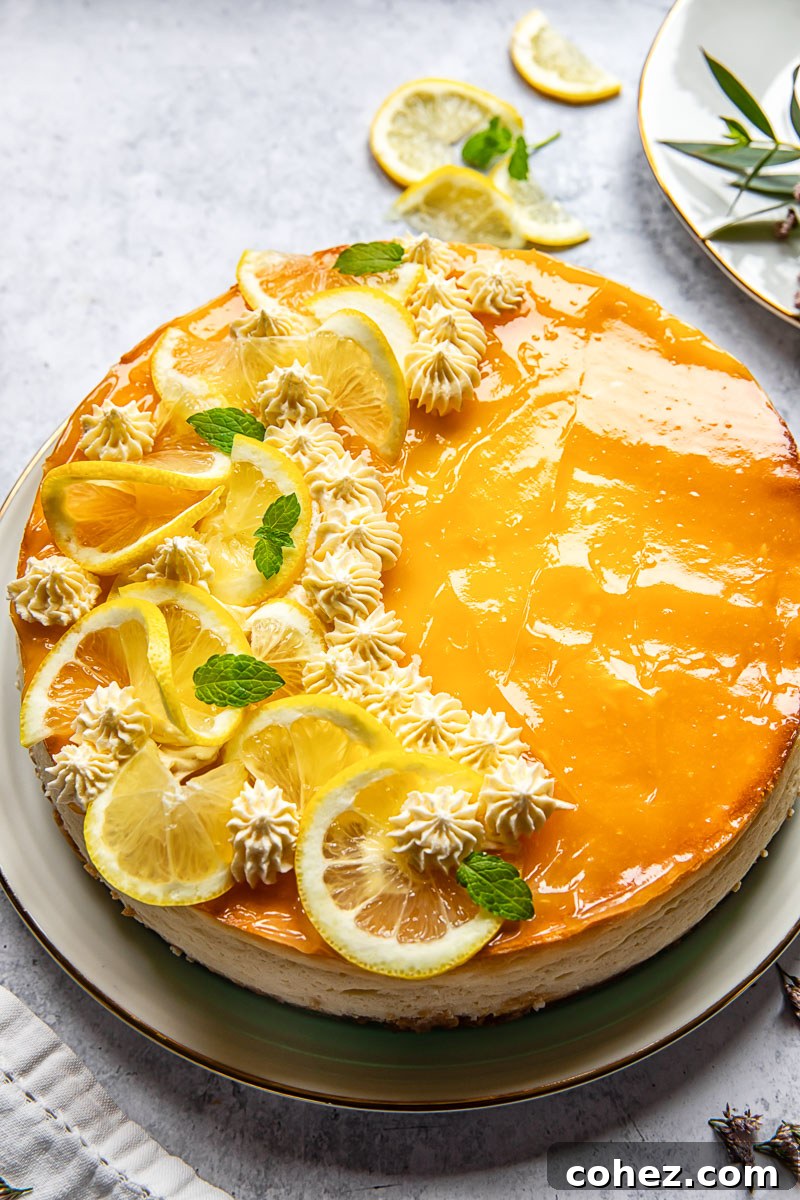
Indulge in the unparalleled luxury of this Lemon Curd Cheesecake, crowned with homemade lemon curd and elegant whipped cream rosettes. This recipe unveils the secrets to achieving an incredibly fluffy interior and a perfectly smooth, crack-free top, making it a showstopper for any occasion.
If you adore the creamy delight of cheesecake but prefer a fuss-free approach, be sure to explore our delectable No-Bake Cheesecake options, offering exquisite flavor without turning on the oven.
There’s nothing quite like the bright, invigorating taste of lemon to herald the arrival of spring, and this Lemon Curd Cheesecake embodies that spirit perfectly. With its remarkably airy and fluffy texture, infused with vibrant citrus notes, this dessert is a refreshing and light treat that captivates the senses. It’s an ideal choice for springtime gatherings, Easter celebrations, or simply to brighten any day.
For those new to baking cheesecakes, the process can sometimes feel a bit daunting. However, put your worries aside! I’m here to guide you through every step, ensuring your journey from ingredients to a stunning dessert is smooth and rewarding.
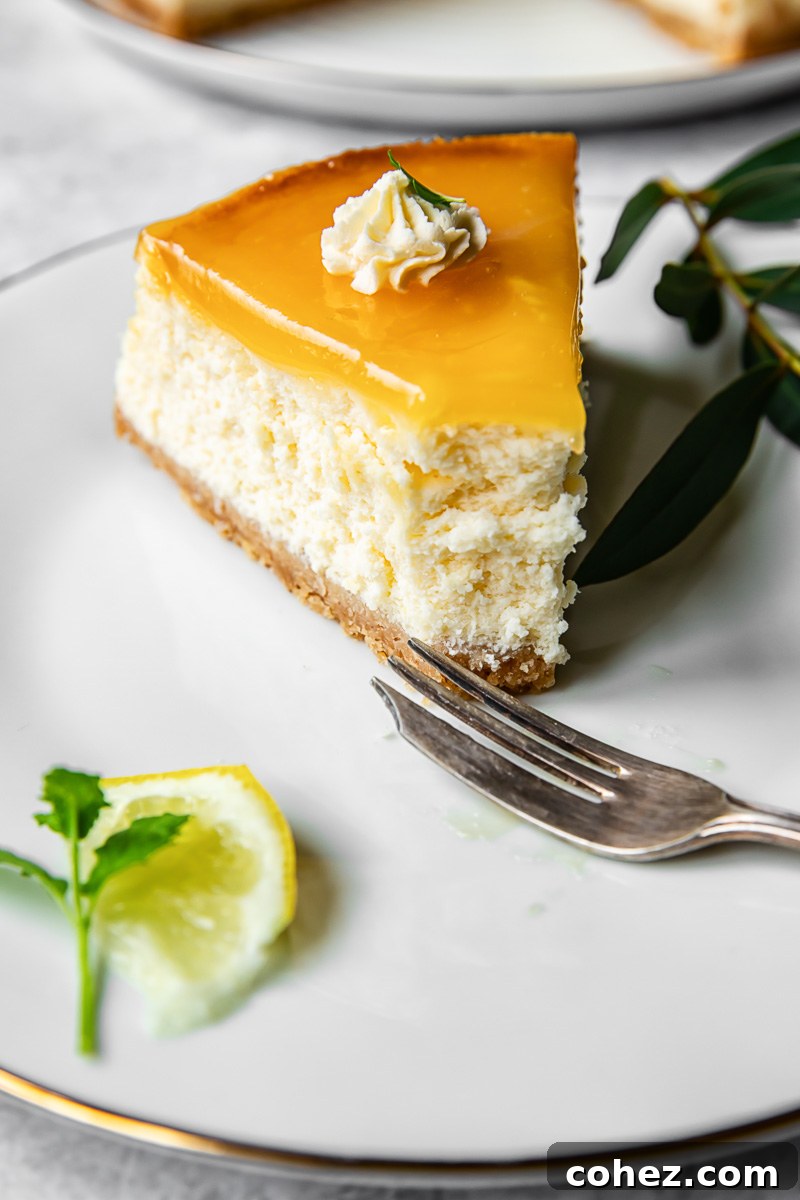
By following our detailed instructions, you will create a lemon cheesecake that boasts a gloriously glossy, crack-free surface and a rich, yet delicate and melt-in-your-mouth interior. Prepare to impress yourself and your guests with this culinary masterpiece.
The Ultimate Lemon Cheesecake Recipe: A Springtime Delight
For me, the Easter dessert table is incomplete without some form of cheesecake. This tradition stems from cherished childhood memories, and while I may not adhere to every tradition religiously, I often find joy in reimagining and modernizing classic recipes to bring fresh flavors and techniques to the forefront. This Lemon Curd Cheesecake is a perfect example of such an evolution, taking inspiration from a beloved traditional treat.
This particular recipe is a delightful interpretation of the classic sweet cheese Paskha, a staple from my upbringing. While drawing inspiration from the Paskha cheesecake, I’ve veered significantly from the traditional preparation methods to create something truly unique and spectacular. My goal was to enhance both the texture and flavor, transforming a familiar concept into an unforgettable dessert experience.
Instead of serving it raw, I opted to bake this cheesecake, which results in a wonderfully sturdy yet delicate structure. To further intensify the citrusy goodness, I topped it with the most exquisite lemon curd. You have the flexibility to either craft your own lemon curd from scratch, ensuring peak freshness and flavor, or, if time is short, opt for a high-quality ready-made variety, just as I sometimes do for convenience. Both options yield a delicious result.
Feeling a bit adventurous? Consider a seasonal twist by substituting the lemon curd with homemade rhubarb curd. The tartness of rhubarb beautifully complements the creamy cheesecake, creating an exciting flavor profile. In fact, you can easily adapt our rhubarb curd recipe to make your own lemon curd by simply swapping fresh rhubarb juice for lemon juice. It’s a versatile base that can be customized to your taste preferences.
For those who love lemon desserts in all forms, you might also enjoy our single-portion versions like the elegant Lemon Vanilla Possets, which offer a similar delicate citrus experience. Or, for a true baking classic, don’t miss out on our timeless Lemon Bars!
Before diving into the intricate details of the recipe, I want to highlight two fundamental techniques that truly distinguish this Lemon Curd Cheesecake recipe from many others you might encounter. These methods are crucial for achieving the perfect texture and appearance we’re aiming for.
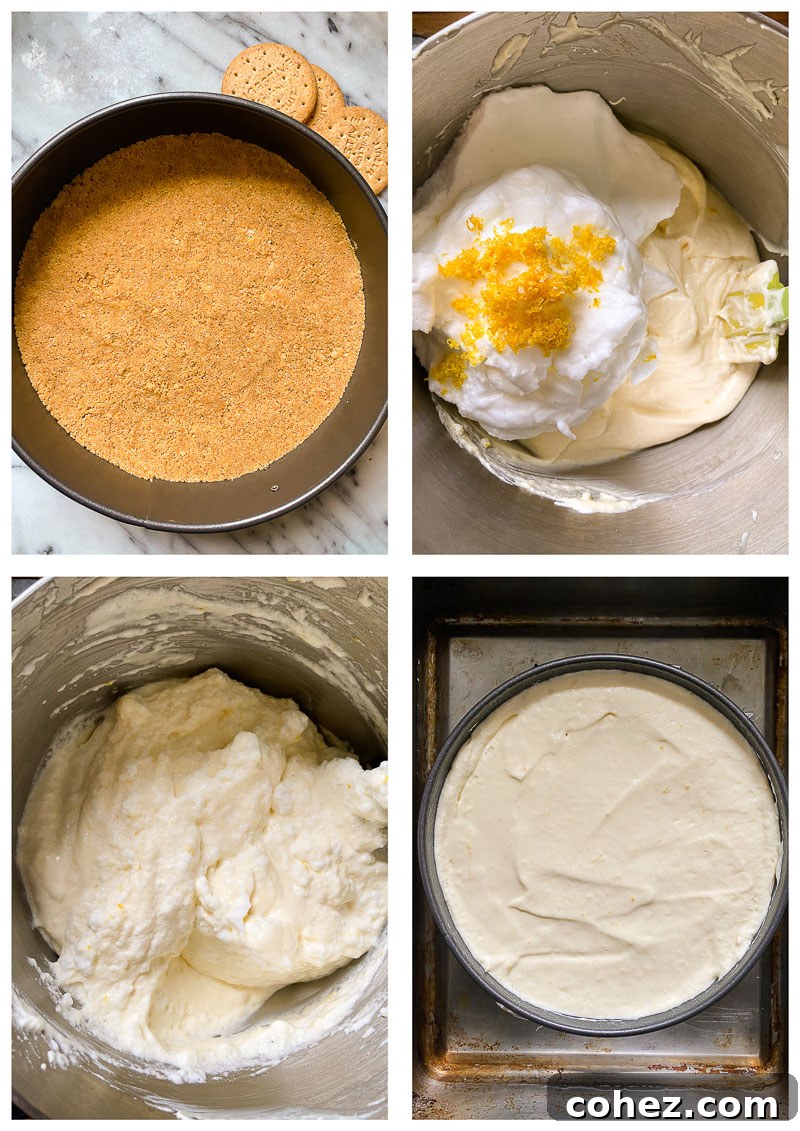
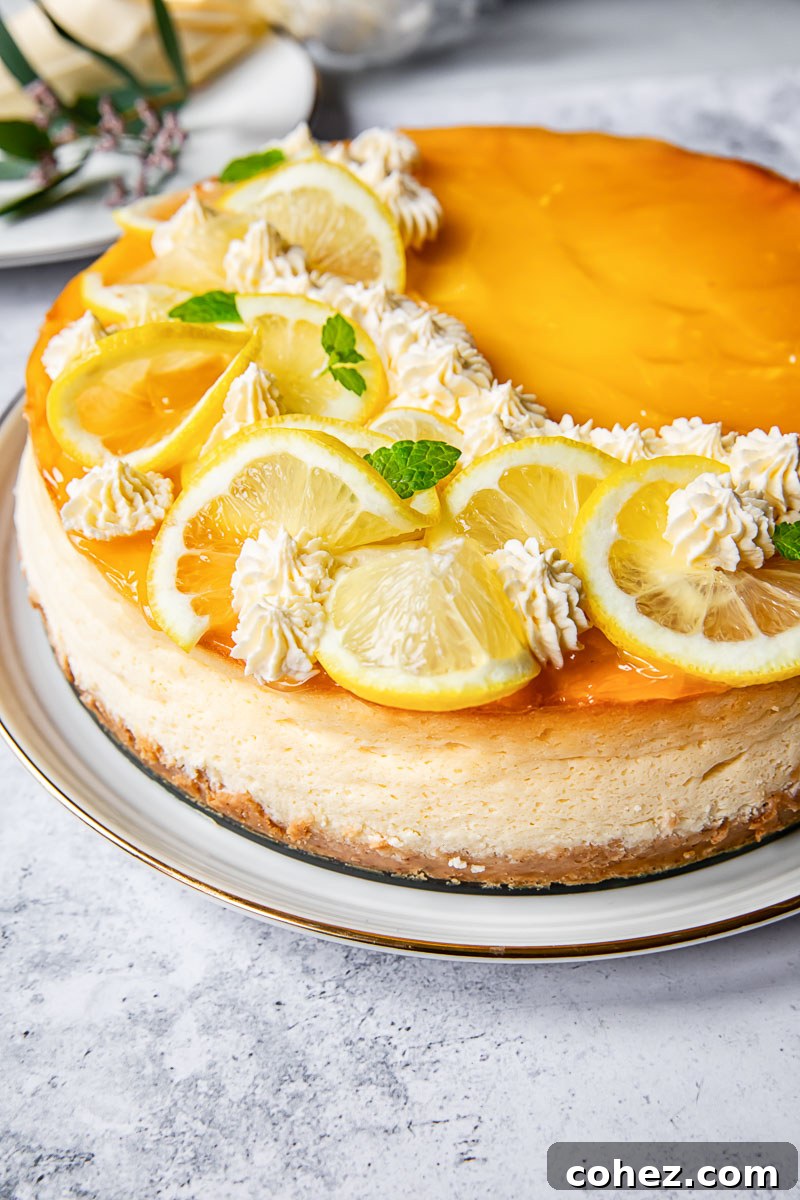
Firstly, this cheesecake is baked using the time-honored bain-marie method, commonly known as a water bath. This involves placing the springform pan containing the cheesecake batter into a larger roasting pan, which is then filled with about an inch of hot water. This technique creates a moist, consistent heat environment around the cheesecake as it bakes. This even heat distribution is vital when cooking delicate foods like cheesecakes and custards. I’ve found that it results in an incomparably lighter and silkier texture in cheesecakes, as the additional moisture helps to prevent the edges from setting too quickly and the center from overbaking, which are common culprits behind unsightly cracks.
Secondly, a crucial step in this recipe involves separating the egg yolks from the whites. The egg whites are then whipped to soft peaks before being gently folded into the cheese mixture. While this does add an extra step to the preparation, the improvement it brings to the cheesecake’s texture is tenfold. The incorporation of air from the whipped egg whites lightens the batter considerably, producing a cheesecake that is astonishingly airy, delicate, and practically melts in your mouth. It’s a magical transformation that elevates the entire dessert experience, moving beyond dense, heavy cheesecakes to something truly ethereal.
Expert Recipe Tips and Notes for a Flawless Cheesecake
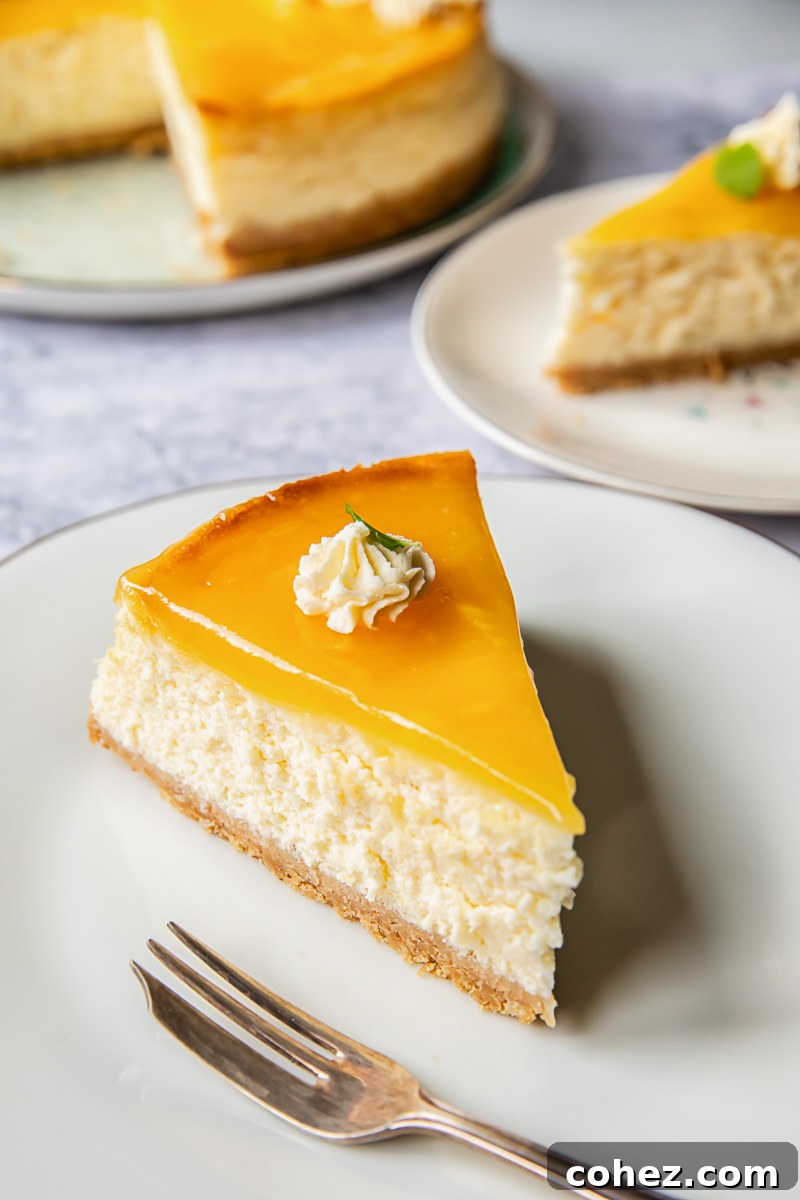
- Perfect Crust Every Time: Always pre-bake your crust in the oven for 10 minutes at 160°C/325°F and allow it to cool completely before spreading the cheese mixture. This critical step ensures a firm, golden-brown base and prevents the dreaded soggy bottom.
- Embrace Fresh Lemon: The key to a truly vibrant lemon flavor lies in using both fresh lemon juice and, more importantly, fresh lemon zest. The essential oils in the zest provide an intense, aromatic citrus punch that cannot be replicated by juice alone. Don’t skip this step!
- The Whipped Egg White Secret: For that signature airy and delicate texture, separating egg yolks from whites and whipping the egg whites to soft peaks is non-negotiable. Gently fold these whipped whites into your cheese mixture with a spatula to maintain the airy volume.
- Quality Cream Cheese Matters: For the best, creamiest results, always opt for full-fat cream cheese. Brands like Philadelphia are highly recommended for their consistent quality and rich texture.
- The Magic of the Bain-Marie: Utilize the water bath (bain-marie) method as described above. This provides even, gentle heat, infusing your cheesecake with moisture, preventing dryness, crumbliness, and those unwelcome cracks. Say goodbye to dry, dense cheesecakes!
- Gradual Cooling is Key: Once your cheesecake is cooked, turn the oven off but keep the cheesecake inside for an additional 20-30 minutes. Then, open the oven door and leave it ajar for about an hour, allowing the cheesecake to cool slowly within the gradually cooling oven. This gentle transition in temperature dramatically reduces the risk of cracks, which are often caused by drastic temperature changes. (Even if a small crack appears, don’t fret; the lemon curd topping will beautifully conceal it!)
- Chill for Perfection: Once the cheesecake has reached room temperature after its gradual oven cooling, cover the pan tightly with plastic wrap and chill it in the refrigerator overnight. This extended chilling period allows the cheesecake to fully set, firm up, and develop its optimal flavor and texture.
- Decorate Just Before Serving: For the freshest presentation and best taste, spread the luscious lemon curd over the chilled cheesecake just before serving. If you desire an extra touch of elegance, pipe on delicate whipped cream rosettes.
- Curd Consistency Check: If your lemon curd is too firm or stiff to spread easily, gently warm it in a microwave for 20-30 seconds. Then, whisk it vigorously with a wire whisk until it regains a smooth, spreadable consistency.
Explore More Delightful Cheesecake Recipes
If you’ve fallen in love with the art of cheesecake making, we have a variety of other irresistible recipes waiting for you to discover. Each offers a unique flavor profile and baking experience:
- Almond Raspberry Cheesecake Bars: A delightful bite-sized treat perfect for sharing.
- Strawberry Meringue Cheesecake (No Bake): A light and fruity no-bake option for warm weather.
- Raffaello Cheesecake: Indulge in the rich, coconut-almond flavors inspired by the famous confection.
- Crumb Apricot Cheesecake: A comforting cheesecake with a sweet apricot filling and a delicious crumb topping.
- Carrot Cake Cheesecake: A fusion of two beloved desserts, combining spice and creamy goodness.
Lemon Curd Cheesecake
Pin
Equipment
-
This is an affiliate link.Fine grater
-
This is an affiliate link.Springform pans
-
This is an affiliate link.Stand mixer
-
This is an affiliate link.Icing piping tip set
Ingredients
- 200g/1 3/4 cup digestive biscuits (UK)/graham crackers (US), crushed finely
- 80g/1/4 cup unsalted butter, melted
- 750g/24oz cream cheese (e.g., Philadelphia), full fat, softened to room temperature
- 3 large eggs, separated
- 200g/1 cup white granulated sugar
- 3 tbsp semolina or all-purpose flour
- 1 large lemon , freshly squeezed juice and finely grated zest
- 1 tbsp This is an affiliate link.vanilla extract
For the topping
- 250ml/1 cup This is an affiliate link.lemon curd, homemade or good quality store-bought
- 250ml/1 cup double cream (UK) or heavy whipping cream (US)
- 4 tbsp icing sugar (powdered sugar)
- 4-5 fresh mint leaves, for decoration, optional
- 5-6 thin lemon slices, for decoration
Instructions
-
Begin by preheating your oven to 160 C/325F. Carefully zest and juice the fresh lemon, setting both aside for later use. Next, finely crush the digestive biscuits or graham crackers until they resemble fine crumbs. In a medium bowl, combine these crumbs with the melted butter, mixing thoroughly until all crumbs are moistened. Press this mixture firmly and evenly into the bottom of a 21cm/9 inch springform pan, creating a compact crust. Bake this crust in the preheated oven for exactly 10 minutes. Once baked, remove it from the oven and allow it to cool completely while you prepare the filling. This crucial step prevents a soggy base.
-
Separate the egg yolks from the egg whites into two separate, clean bowls. In a large mixing bowl, combine the softened cream cheese, egg yolks, granulated sugar, semolina (or all-purpose flour), fresh lemon juice, and vanilla extract. Using an electric mixer, beat these ingredients together until the mixture is completely smooth and well blended, with no lumps of cream cheese remaining. In the separate bowl, whip the egg whites until soft peaks form. Gently fold these whipped egg whites into the prepared cheese mixture, along with the reserved lemon zest. Use a spatula for this step to maintain as much air as possible, ensuring a light and fluffy cheesecake.
-
Carefully pour the cheesecake batter over the cooled, pre-baked crust in your springform pan. To prepare for the water bath (bain-marie) method, wrap the bottom and sides of your springform pan tightly with a double layer of heavy-duty aluminum foil. This prevents any water from seeping into the pan during baking. Place the foil-wrapped springform pan inside a larger roasting pan, then fill the roasting pan with about 1 inch of hot water. Ensure the water level does not reach the top edge of the springform pan’s foil wrapping.
-
Carefully transfer the roasting pan with the cheesecake into your preheated oven. Bake at 160 C/325 F for 60-65 minutes, or until the edges of the cheesecake appear lightly browned and the center is mostly set, with just a slight jiggle. Once baked, turn off the oven completely, but do not remove the cheesecake. Leave it inside the cooling oven for an additional 20-30 minutes. After this time, open the oven door slightly (leaving it ajar) and let the cheesecake continue to cool gradually inside the oven for about an hour, until it reaches room temperature. This slow cooling process is crucial for preventing cracks on the surface. (If, despite these steps, your cheesecake still develops minor cracks, rest assured that the lemon curd topping will beautifully disguise them!) Once fully cooled to room temperature, cover the springform pan with plastic wrap and chill the cheesecake in the refrigerator overnight to allow it to firm up completely.
To Decorate
-
The following day, remove the chilled cheesecake from the refrigerator. Run a thin, sharp knife carefully along the sides of the springform pan to gently release the cheesecake, then carefully remove the outer ring of the pan. Before applying the lemon curd, ensure it has a smooth, spreadable consistency. If your lemon curd is too stiff, place it in a microwave-safe bowl and warm it for 20-30 seconds, then whisk vigorously with a wire whisk until it’s perfectly smooth and easily spreadable.
-
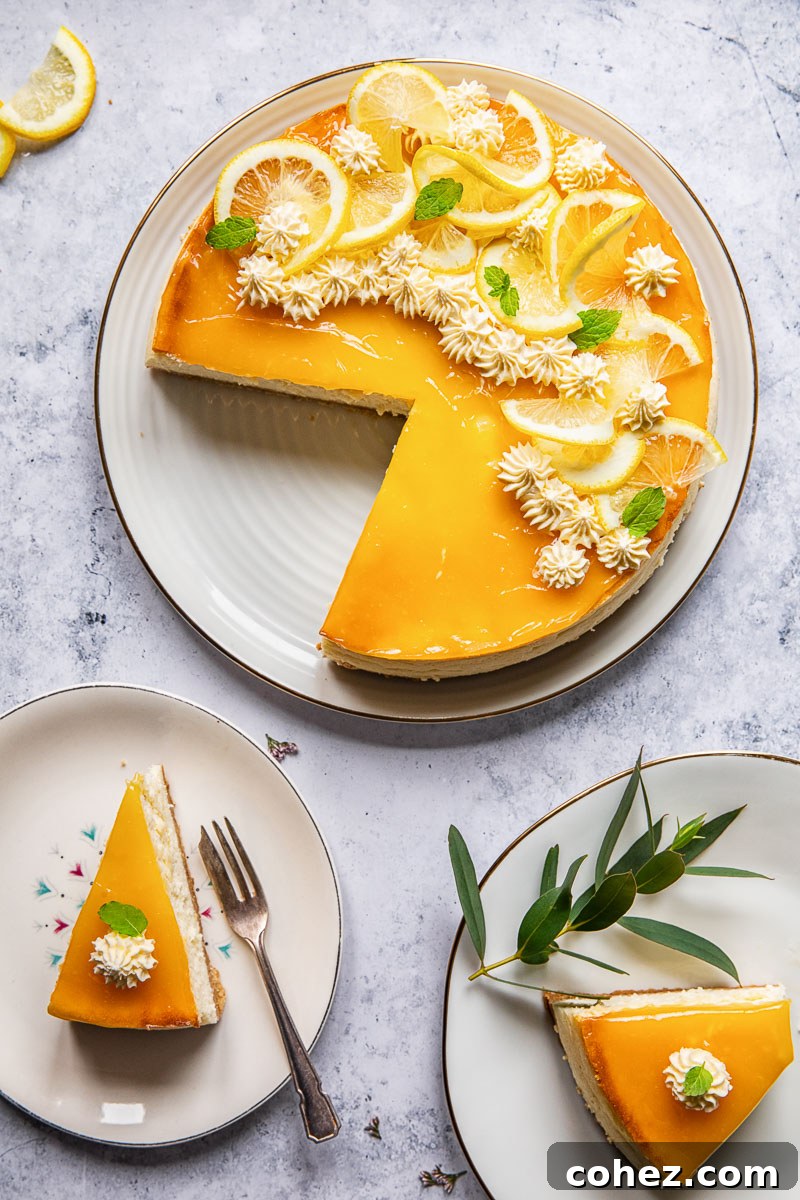
Prepare your garnishes: slice the remaining lemon very thinly. In a separate bowl, whip the double cream (or heavy whipping cream) with the icing sugar until stiff peaks form. Load the whipped cream into a piping bag fitted with your favorite decorative tip (a star tip works wonderfully for rosettes). Spread the smooth lemon curd evenly over the entire surface of the cheesecake. Then, using your piping bag, create beautiful whipped cream rosettes around the edge or across the top. Finally, adorn your masterpiece with the thin lemon slices and a few fresh mint leaves for a vibrant, elegant finish. Serve immediately and enjoy!
Nutrition
Nutrition information is automatically calculated, so should only be used as an approximation.
Tried this recipe?Let us know how it was!