
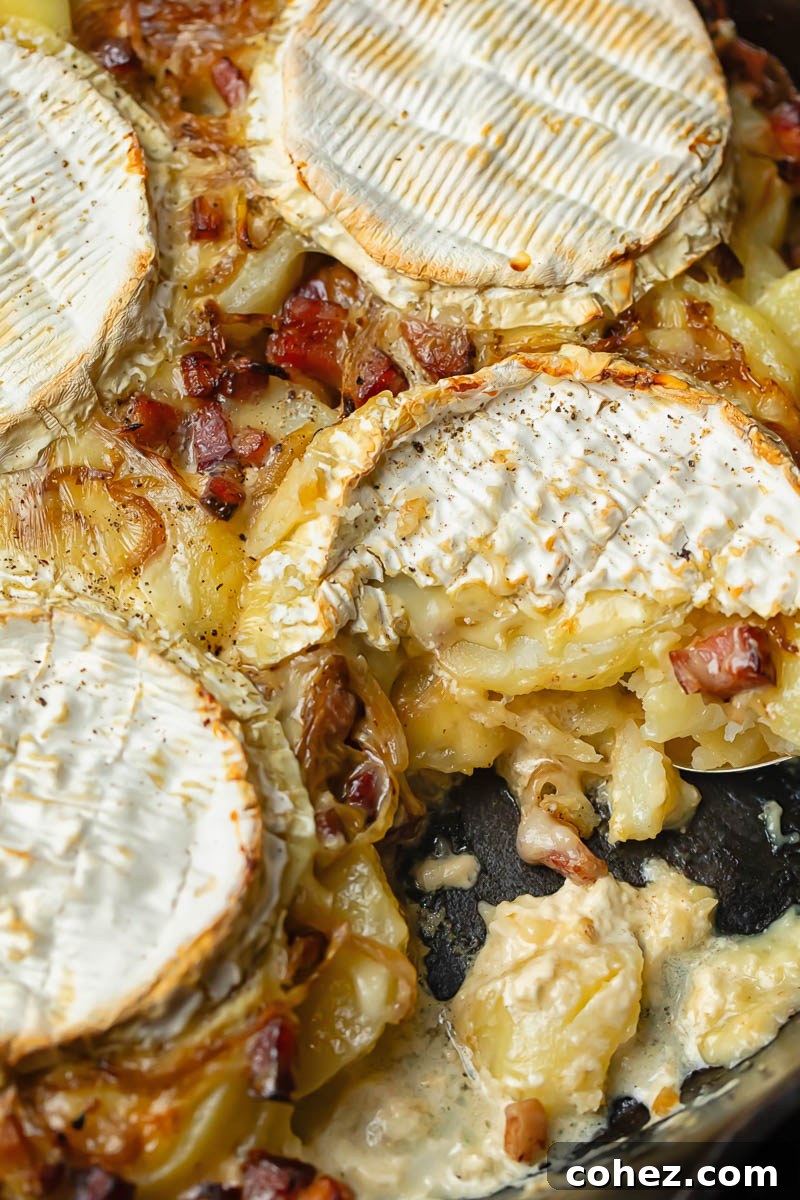
Authentic Tartiflette: Your Ultimate Guide to French Alpine Cheesy Potato Gratin
If the mere mention of snow-capped mountains and cozy chalets conjures up delicious culinary dreams, then this Tartiflette recipe is your gateway to an authentic French Alpine experience. Originating from the heart of the Savoie region, Tartiflette is a quintessential winter dish that celebrates the harmonious marriage of tender potatoes, savory bacon, sweet caramelized onions, and an irresistible blanket of melted, pungent cheese. It’s more than just a meal; it’s a comforting embrace, a hearty main course, or a show-stopping side dish that will transport your taste buds straight to the French Alps.
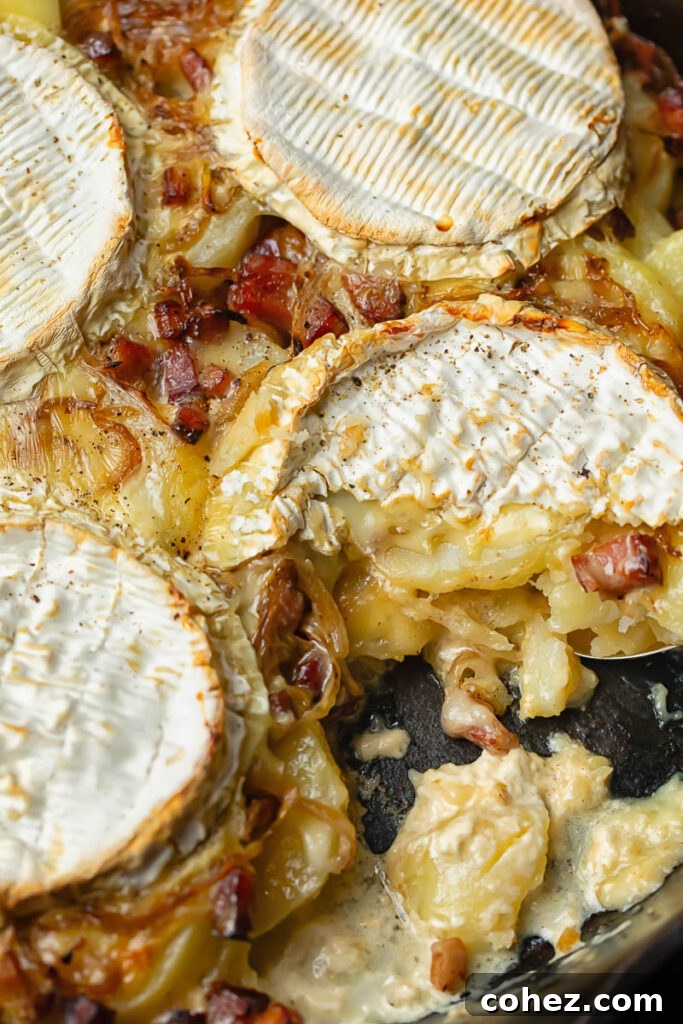
The true star of this rustic French potato gratin is Reblochon cheese. This soft, washed-rind cheese, with its distinct fruity and nutty notes, is paramount to achieving the authentic flavor profile of Tartiflette. While Reblochon can be challenging to source outside of France, readily available alternatives like Camembert offer a similar creamy texture and rich, buttery flavor. For those who prefer a milder cheese or are exploring vegetarian options, a hard, subtly fragrant Comté or even a rich Gruyère can create a delightful gratin experience, ensuring no one misses out on the cozy “après-ski” vibe this dish embodies.
What Exactly is Tartiflette?
Tartiflette is a traditional French dish from the Savoie region of the Alps, a culinary masterpiece that embodies rustic elegance and soul-satisfying comfort. It’s essentially a rich gratin made with sliced potatoes, reblochon cheese, lardons (small strips of bacon), onions, and a splash of white wine. While the combination sounds simple, the flavors meld into a complex symphony of savory, creamy, and slightly tangy notes that is utterly addictive.
The dish gained widespread popularity in the 1980s, driven by a marketing campaign from the Reblochon cheese producers looking to boost sales. However, its roots stretch back much further, likely evolving from older, local potato and cheese dishes. The name itself, “Tartiflette,” is derived from the Arpitan word for potato, “tartifla,” highlighting the humble yet central role of potatoes in Alpine cuisine.
More than just a recipe, Tartiflette represents the warmth and heartiness needed after a day on the ski slopes or a brisk winter walk. It’s the kind of food that brings people together, served in a large baking dish, encouraging communal enjoyment. Historically, it would have been prepared by Savoyard farmers and mountaineers, utilizing readily available local ingredients to create a filling and energy-rich meal. Today, it remains a beloved staple in French mountain resorts and beyond, celebrated for its robust flavors and comforting qualities.
While Reblochon is the traditional choice, its protected designation of origin (AOP) means it’s strictly regulated and often difficult to find outside specific regions or specialty shops. Its unique aroma and melting properties are central to Tartiflette’s character. For home cooks globally, excellent substitutes like Camembert or Brie can deliver a similar creamy, melt-in-your-mouth texture, though with a slightly different flavor profile. The key is finding a cheese that melts beautifully and carries enough flavor to stand up to the other robust ingredients.
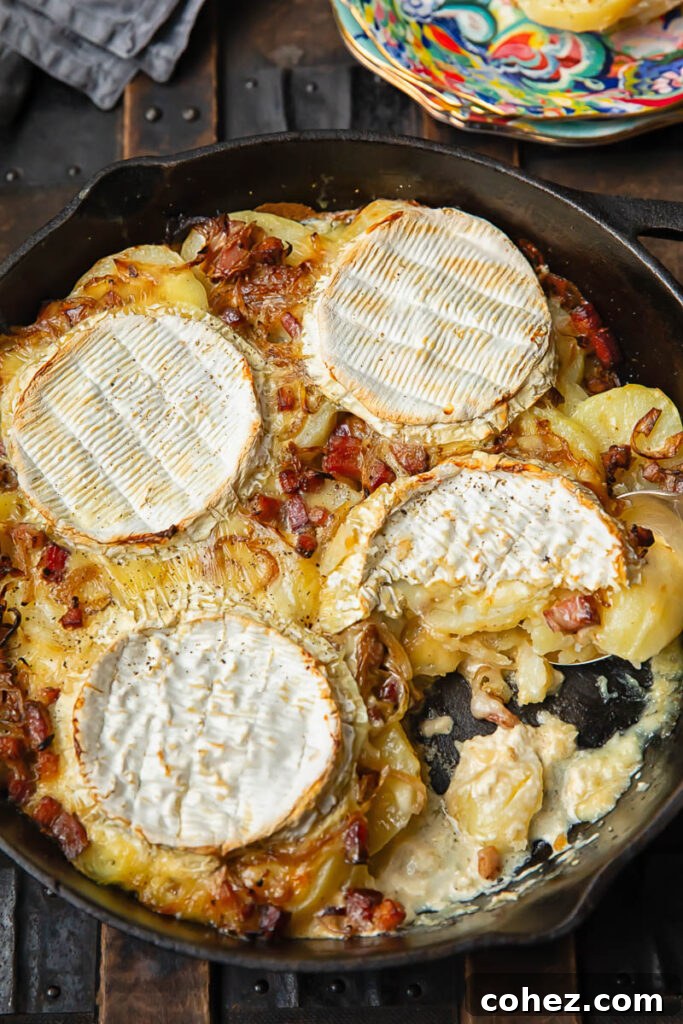
Crafting the Perfect Tartiflette: Key Ingredients Explained
This cheesy potato gratin is surprisingly simple to prepare, yet yields an incredibly satisfying winter warmer. With just a few classic kitchen staples and the right cheese, you can create an authentic Tartiflette in about an hour, regardless of your culinary skill level. Let’s delve into the essential ingredients that make this dish so special.
The Star: Cheese
Reblochon: If you’re committed to authenticity and can source it, round, washed-rind Reblochon is the undisputed king for Tartiflette. Hailing from the Savoie region, this semi-soft, pressed cheese is celebrated for its unique nutty and fruity flavor profile, with a slight tang and an earthy aroma. It melts into a velvety, milky lava, creating that signature gooey texture. Look for its AOP (Appellation d’Origine Protégée) stamp to ensure you’re getting the real deal.
Alternatives: Should Reblochon prove elusive, don’t despair! Several excellent cheeses can stand in beautifully:
- Camembert: This is my go-to substitute, and for good reason. Similar in shape and texture to Reblochon, Camembert offers a buttery, slightly earthy flavor and melts into a glorious, oozy consistency.
- Brie: A close cousin to Camembert, Brie will also provide a wonderfully creamy and mild alternative.
- Taleggio: For an Italian twist, this semi-soft, pungent cheese offers a strong aroma but a surprisingly mild, fruity flavor when melted, making it a fantastic choice.
- Gruyère: If you prefer a firmer cheese with a more pronounced nutty and savory flavor, Gruyère works wonderfully. It melts well and adds a depth that’s distinct but equally delicious.
- Comté (for vegetarian option): For a vegetarian version, a hard, yellow, mildly fragrant Comté cheese is an excellent choice. It provides a savory depth and lovely texture, ensuring the dish remains flavorful even without bacon.
Remember, a crucial element of Tartiflette is the cheese rind. Many of these cheeses have edible rinds that become beautifully crispy and dark during baking, adding an extra layer of texture and flavor. Don’t discard them!
The Foundation: Potatoes
Waxy Potatoes: The choice of potato is critical for Tartiflette. You need waxy varieties that hold their shape well during cooking and don’t turn mushy under the weight of the cheese. Examples include Charlotte or Maris Peer in the UK, and Red Bliss or Yukon Gold potatoes in the US. Avoid starchy, floury potatoes like Russets, as these can disintegrate and lead to a sludgy, rather than layered, gratin. Slice them thickly, about ¼ to ½ inch, to ensure they cook evenly and retain their structure.
The Savory Kick: Bacon
Lardons: Traditionally, Tartiflette uses lardons, which are small, thick strips of fatty bacon. They are pre-chopped and have an ideal fat-to-meat ratio that renders beautifully, crisping up and infusing the entire dish with a rich, smoky, salty flavor.
Alternatives: If lardons aren’t available, simply use good quality smoked bacon or pancetta, diced into small pieces. The goal is to render out the fat, which will be used to sauté the onions, adding layers of flavor from the very beginning.
Aromatic Essentials: Onions and Garlic
Onions: A French dish is rarely complete without onions, and Tartiflette is no exception. Sautéed slowly until tender and golden, they add a delicate sweetness that perfectly balances the richness of the cheese and bacon.
Garlic: Minced garlic, added towards the end of the sautéing process, provides a pungent aromatic kick that elevates the entire dish without overpowering it.
Richness and Flavor: Butter
Butter: Another staple of French cuisine, butter is used to sauté the onions if the bacon isn’t fatty enough, or simply to add an extra layer of richness and flavor. High-quality unsalted butter is always a good choice.
Deglazing and Depth: Dry White Wine
Dry White Wine: A splash of dry white wine is used to deglaze the pan after cooking the bacon and onions, lifting all those delicious browned bits from the bottom and incorporating them back into the sauce. Choose a crisp, dry white wine – a Sauvignon Blanc or a local French Savoie wine would be perfect. The alcohol cooks off, leaving behind a subtle acidity and complex flavor that brightens the dish. Promise yourself you’ll serve the rest of the bottle with your meal!
Optional Creaminess: Cream
Single or Heavy Cream: While the original, most traditional Tartiflette recipes don’t always include cream (the Reblochon provides ample creaminess), many modern versions do. A drizzle of single (light) cream or heavy cream adds an extra layer of luxuriousness and ensures the gratin remains incredibly moist and luscious. It’s not essential to flood the potatoes; just enough to create that “slippery slope” effect for the cheese. Crème fraîche is another excellent option for a tangy creaminess.
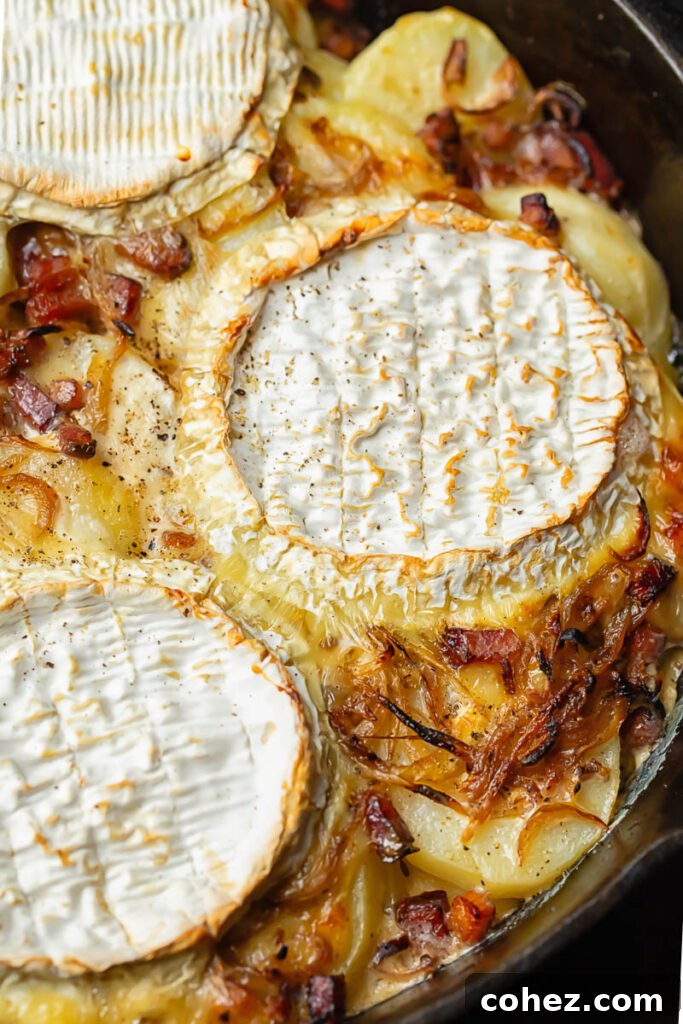
Expert Tips for a Flawless Tartiflette
- Cheese Selection is Key: As mentioned, Reblochon is the traditional ingredient, but its availability can be limited. Don’t hesitate to use Camembert, Brie, Taleggio, or Gruyère as worthy substitutes. Each offers a unique character while providing the essential creamy, melted texture.
- Embrace the Rind: For soft, washed-rind cheeses like Reblochon or Camembert, the rind is edible and contributes significantly to the flavor and texture of the dish. It crisps up beautifully in the oven, adding a delightful savory crunch. Don’t remove it!
- Potato Perfection: Always opt for waxy potatoes (e.g., Charlotte, Red Bliss) over starchy ones. Waxy potatoes maintain their shape and firm texture when cooked, preventing the gratin from becoming a mushy mess. Slice them consistently for even cooking.
- Salt the Water: When parboiling your potatoes, ensure the water is generously salted. Potatoes are notoriously bland without proper seasoning, and salting the water infuses flavor from the inside out, making a huge difference to the final taste.
- Parboil, Don’t Overcook: The goal of parboiling is to soften the potatoes slightly, not cook them completely. About 3-5 minutes after the water boils is usually sufficient. They will continue to cook in the oven. Drain them thoroughly and allow them to steam dry to prevent excess moisture in your gratin.
- The Sautéed Foundation: Take your time when cooking the lardons and onions. Allow the bacon fat to render slowly, then sauté the onions until they are deeply golden and caramelized. This step builds the foundational flavors of your Tartiflette. Add butter if the bacon isn’t fatty enough to achieve proper caramelization.
- Deglaze for Depth: Don’t skip deglazing the pan with white wine after sautéing. This simple step captures all the flavorful browned bits (fond) stuck to the bottom, adding immense depth and complexity to your dish.
- Cream, Your Choice: While the classic Savoyard method often omits cream, many modern recipes (and personal preferences) include it for an extra layer of richness and moisture. If you love a lusciously creamy texture, a drizzle of single or heavy cream is a welcome addition, and there’s absolutely no judgment here for indulging!
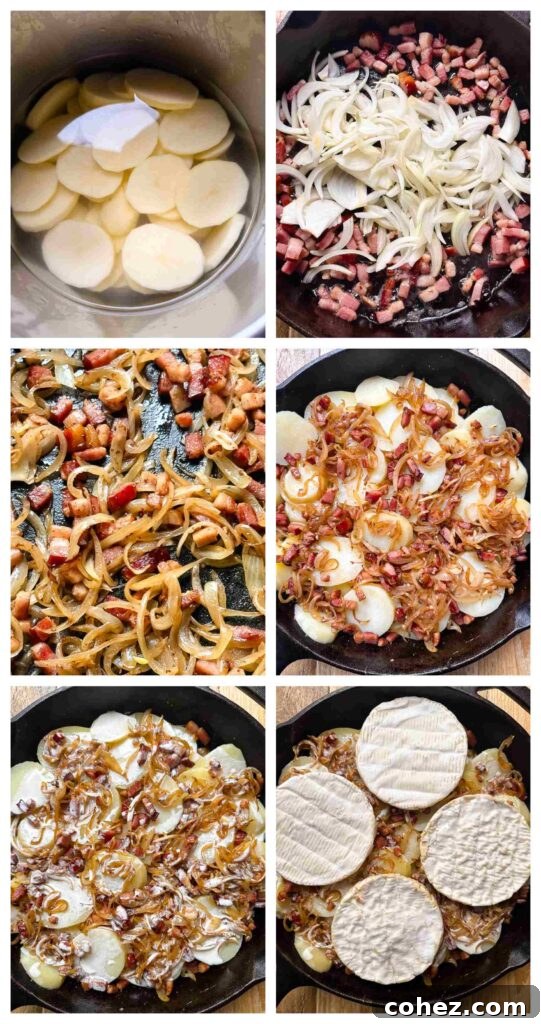
- Layering with Love: When assembling, ensure an even distribution of potatoes, bacon, and onions. The cheese should be placed cut-side down directly on top, allowing it to melt down into the layers beneath and create that irresistible cheesy blanket.
- No Pre-Cooking Overkill: Some traditional methods suggest boiling potatoes and then frying them in butter before assembly. While decadent, I find this step unnecessary and often overkill. Parboiling and then baking is perfectly sufficient for fantastic results.
- Experiment Fearlessly: While tradition is wonderful, feel free to experiment with cheese combinations or even add a hint of fresh thyme or rosemary for an aromatic twist. The beauty of comfort food is making it your own.
Serving Your Delicious Tartiflette
Luxuriously cheesy and satisfyingly hearty, Tartiflette is truly a dish that can induce a delightful food coma. Its richness means it can be served either as the undisputed main event or as a decadent side dish, depending on the occasion and the appetites of your diners.
As a Main Course:
When Tartiflette takes center stage, it benefits immensely from accompaniments that cut through its richness and add contrasting textures and flavors.
- Pickles: Tangy, vinegary pickles, especially small French cornichons, are non-negotiable. Their sharp acidity provides a welcome counterpoint to the creamy cheese and fatty bacon.
- Sturdy Salad: A crisp, bitter leaf salad dressed with a light vinaigrette is essential. Think radicchio, frisée, endive, or watercress. The bitterness and freshness cleanse the palate, making each bite of Tartiflette even more enjoyable. A simple lemon-herb vinaigrette works wonders.
- Charcuterie: A platter of cured meats like French saucisson, jambon de Bayonne, or thinly sliced prosciutto adds another layer of salty, savory goodness and a delightful textural contrast.
- Crusty Bread: For those who subscribe to the “carbs-on-carbs” philosophy (and who can blame them with a dish this good?), generous hunks of crusty baguette or sourdough bread are perfect for soaking up every last bit of melted cheese and potato. It’s like a ski lift for cheesy potatoes directly to your mouth!
- White Wine: Naturally, a crisp, dry white wine from the Savoie region or a Sancerre will complement the dish beautifully.
As a Side Dish:
If you choose to serve Tartiflette as a lavish side, pair it with simply prepared proteins that won’t compete with its bold flavors.
- Roasted Chicken: A classic roast chicken, perhaps infused with rosemary and thyme, offers a comforting pairing.
- Pork Tenderloin: A lean pork tenderloin, especially one wrapped in bacon or served with a light pan sauce, provides a lovely balance. Consider serving with lemony green beans to add a touch of freshness.
- Simple Greens: Alongside a main protein, a side of roasted tenderstem broccoli with a lemon-garlic vinaigrette can offer a bright, fresh contrast.
- Grilled Sausages: Simple grilled or pan-fried French-style sausages can also be a wonderful, easy accompaniment.
And always, always, a glass of dry white wine to complete the experience.
Storage and Leftovers: The Unfortunate Truth
While the idea of Tartiflette leftovers might sound appealing, there are a few strict rules to this cheesy potato recipe:
- Serve Immediately: Tartiflette is best enjoyed straight from the oven when the cheese is at its peak ooziness and the potatoes are perfectly tender. Don’t plan to cook this dish ahead of time for optimal results.
- Losing the Luster: Leftover cheese will inevitably lose its creamy, molten texture and much of its appealing ooze. It tends to firm up and can become slightly oily when reheated, losing its irresistible charm.
- Reheating Challenges: A quick blast in the microwave won’t revive the original creaminess of the cheese, and oven reheating can dry out the potatoes. While edible, the magic of freshly baked Tartiflette is largely diminished.
- Waxy Potato Woes: Remember, you’ve used waxy potatoes for this bake precisely because they hold their shape. This means attempting to mash the remains into a creamy potato dish the next day might not yield the smooth results you desire. However, if you must, no one’s watching – go ahead and experiment, but be prepared for a different texture.
The moral of the story: Tartiflette is a dish designed for immediate, generous consumption. It’s an invitation to savor the moment, indulge in its warmth, and enjoy every single gooey, savory bite while it’s at its absolute best.
More Comforting Side Dishes to Explore
- Herb and Garlic Mashed Potatoes
- Hot Honey Baked Camembert in Bread Bowl
- Hasselback Potatoes with Gremolata
- Walnut Beet Salad with Garlic Mayonnaise Dressing
Tartiflette: Classic French Alpine Potato Gratin
Print Recipe
Ingredients
- 1kg / 2 lbs waxy potatoes (4-5 medium), peeled and sliced thickly (such as Charlotte in the UK and red potatoes in the US)
- 150g / 5 oz bacon lardons
- 1-2 tbsp butter
- 1 large onion, or 2 small ones, diced
- 2 cloves garlic, minced
- 80ml / 1/3 cup dry white wine
- 170ml / 2/3 cup single / heavy cream, or crème fraîche (optional, for extra richness)
- 500g / 18oz Reblochon cheese, or 2 Camembert cheese wheels, split in half lengthwise (with rind)
Instructions
-
Peel the potatoes and slice them thickly, about ¼ to ½ inch. Parboil the potato slices in generously salted water for 3-5 minutes after boiling (they should still be firm but slightly tender). Drain them thoroughly and allow them to steam dry in the colander for a few minutes. This prevents sogginess in the gratin.
-
While the potatoes are cooking, heat a large oven-safe pan (such as a cast iron skillet) over medium heat. Add the bacon lardons and sauté until the fat renders and the lardons are crispy. Remove the lardons with a slotted spoon and set aside, leaving the rendered fat in the pan.
-
Reduce the heat to low. Add the diced onion to the pan with the bacon fat (add 1-2 tbsp of butter if there isn’t enough fat). Sauté the onions slowly for 8-10 minutes until they are tender and caramelized to a golden brown. Add the minced garlic and stir-fry for another 30 seconds until fragrant. Deglaze the pan with the dry white wine, scraping up any browned bits from the bottom. Cook until the wine has almost completely evaporated. Remove the onion mixture from the pan and set aside with the bacon.
-
Preheat your oven to 200°C (400°F). Arrange half of the par-boiled potato slices evenly in the bottom of the same oven-safe pan (no need to clean it). Season the potatoes with a pinch of salt and black pepper. Top with half of the cooked bacon and onion mixture. Drizzle half of the cream (if using) over this layer.
-
Repeat the layering with the remaining potatoes, seasoning them again. Then add the rest of the bacon and onion mixture, and drizzle with the remaining cream.
-
Take your Reblochon or Camembert cheese wheels and split them in half lengthwise, creating two thinner discs. Arrange these cheese halves directly on top of the potato, bacon, and onion layers, cut-side down, ensuring they cover the surface.
-
Bake for 20-25 minutes, or until the cheese has melted into a bubbly, golden-brown crust and the potatoes are fork-tender. If the cheese starts to brown too quickly, you can loosely cover the pan with foil.
-
Serve Tartiflette immediately, straight from the oven, for the ultimate gooey, comforting experience.
Nutrition
Nutrition information is automatically calculated, so should only be used as an approximation.
Tried this recipe?Let us know how it was!