
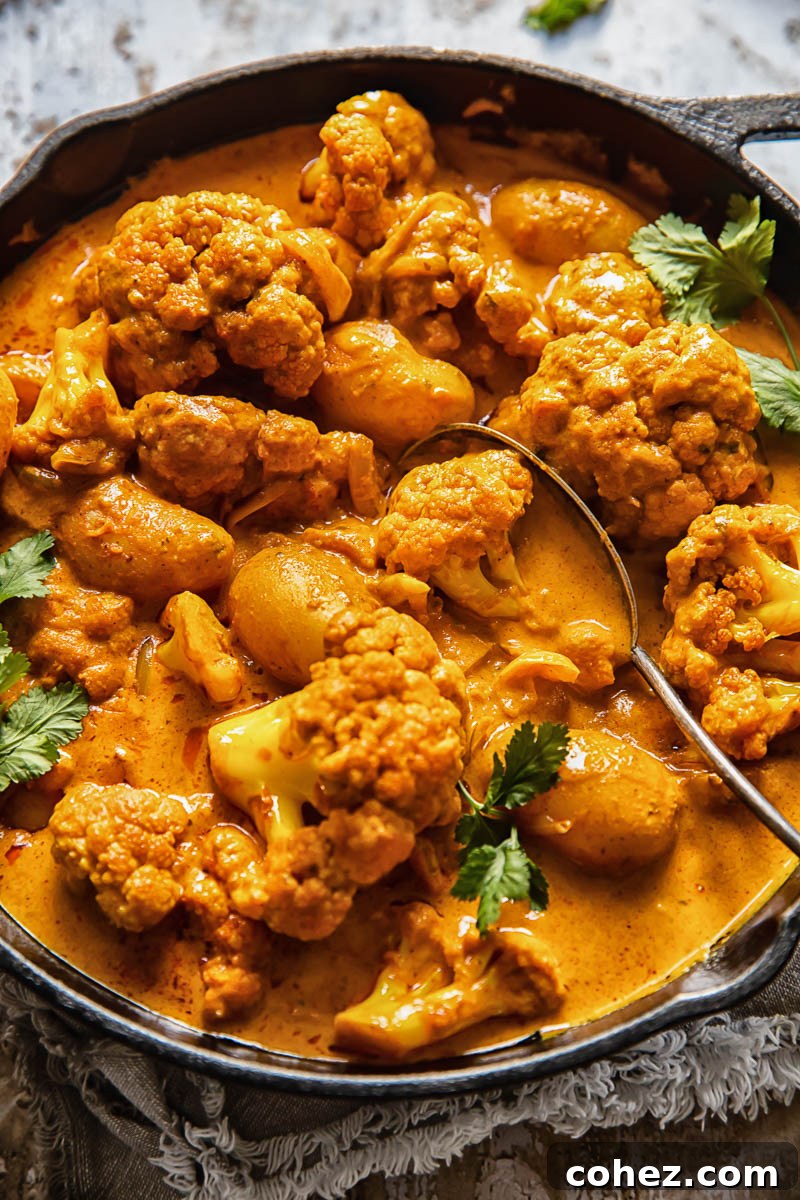
Indulge in the rich, comforting flavors of Vegetable Tikka Masala, a creamy and vibrant curry that truly shines with tender potatoes and cauliflower. This beloved dish, characterized by its subtly sweet and mildly spiced sauce, is a timeless classic for all the right reasons.
If you adore these authentic Indian-inspired flavors, don’t miss out on the traditional Chicken Tikka Masala for another delightful culinary experience!
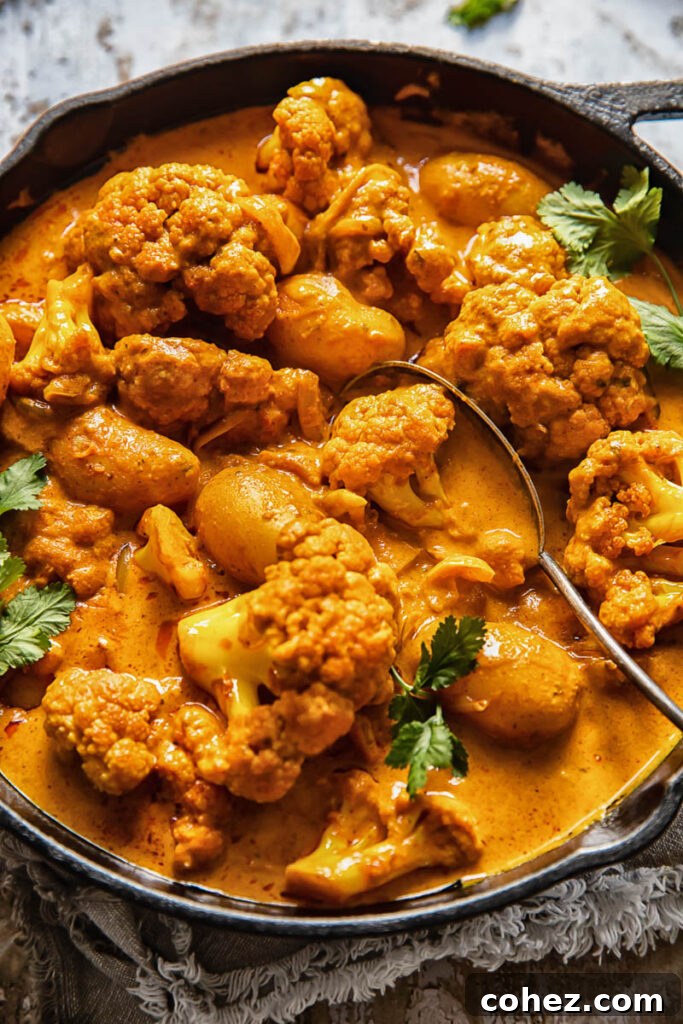
When dinner inspiration runs low, I often find myself gravitating towards the comforting embrace of a well-made curry. While ordering takeout might seem like the easiest solution, its appeal often fades quickly. Not only can it be surprisingly expensive, but it rarely offers the same nutritional value or fresh taste as a home-cooked meal. Fortunately, crafting a sensational curry from scratch is far simpler than many imagine and significantly lighter on the wallet.
A truly great curry has the magical ability to transform humble ingredients into a symphony of flavors, creating a meal that feels indulgent yet is surprisingly straightforward to prepare. It’s a testament to the power of spices and a well-balanced sauce, proving that extraordinary taste doesn’t require extraordinary effort.
Vegetable Tikka Masala: A Vegetarian Triumph
One of the primary reasons Tikka Masala has captured hearts worldwide is its beautifully restrained flavor profile. It strikes a perfect balance of sweetness, never becoming cloying, and offers a gentle warmth without overwhelming heat. This mildness makes it an exceptional choice for family dinners, appealing even to children or those who prefer less spicy cuisine. It’s a comforting dish that welcomes everyone to the table, regardless of their heat tolerance.
In this vegetarian rendition, cauliflower and potatoes truly shine. As they gently simmer in the rich, aromatic tikka masala sauce, they absorb every delicious note, transforming into incredibly tender, flavor-packed morsels. The starchy potatoes provide a satisfying heartiness, while the cauliflower adds a delightful texture and nutrient boost. While preparing tikka masala with individual spices offers a deeper dive into culinary artistry, sometimes convenience is key. Opting for a high-quality tikka masala paste makes this recipe an absolute breeze, delivering complex flavors without the extensive spice rack. It’s the perfect shortcut to a gourmet experience at home.
Decoding Tikka Masala: A Global Culinary Story
Tikka Masala holds a unique place in the culinary world, being both distinctly South Asian and quintessentially British. How can a dish embody such dual identities? Its fascinating origin lies with Bangladeshi or Indian chefs residing in the UK, who ingeniously crafted this curry to appeal to the British palate. It beautifully marries the aromatic traditions of classic South Asian curries with a milder, sweeter flavor profile that resonates with a global audience, contributing to its enduring and widespread popularity.
Like many beloved dishes, there isn’t a single, definitive recipe for Tikka Masala. Its beauty lies in its adaptability, with countless variations existing across kitchens and communities. However, certain core components almost always feature: ripe tomatoes for their tangy base, cream or yogurt for luxurious richness, and a distinctive masala spice mix – which itself can vary widely in composition. Beyond these staples, cooks have ample creative freedom to personalize their Tikka Masala, making each rendition a unique expression of flavor.
The sauce typically boasts a vibrant orange hue, ranging from a lighter, creamy peach to a deeper, burnished tangerine, depending on the specific ingredients and proportions used. Traditionally, Tikka Masala is famous for its chicken variant, but its robust and versatile sauce is perfectly suited for a vegetarian rendition, allowing vegetables to absorb and carry its rich, iconic flavors beautifully. This makes it an ideal canvas for a truly satisfying plant-based meal.
Essential Ingredients for a Perfect Vegetable Tikka Masala
While crafting a curry with a bespoke blend of individual spices offers an unparalleled opportunity to fine-tune the flavors to your exact preference, the sheer convenience and consistent quality of a good store-bought paste are often too compelling to overlook for everyday cooking. It significantly streamlines the cooking process without compromising on taste.
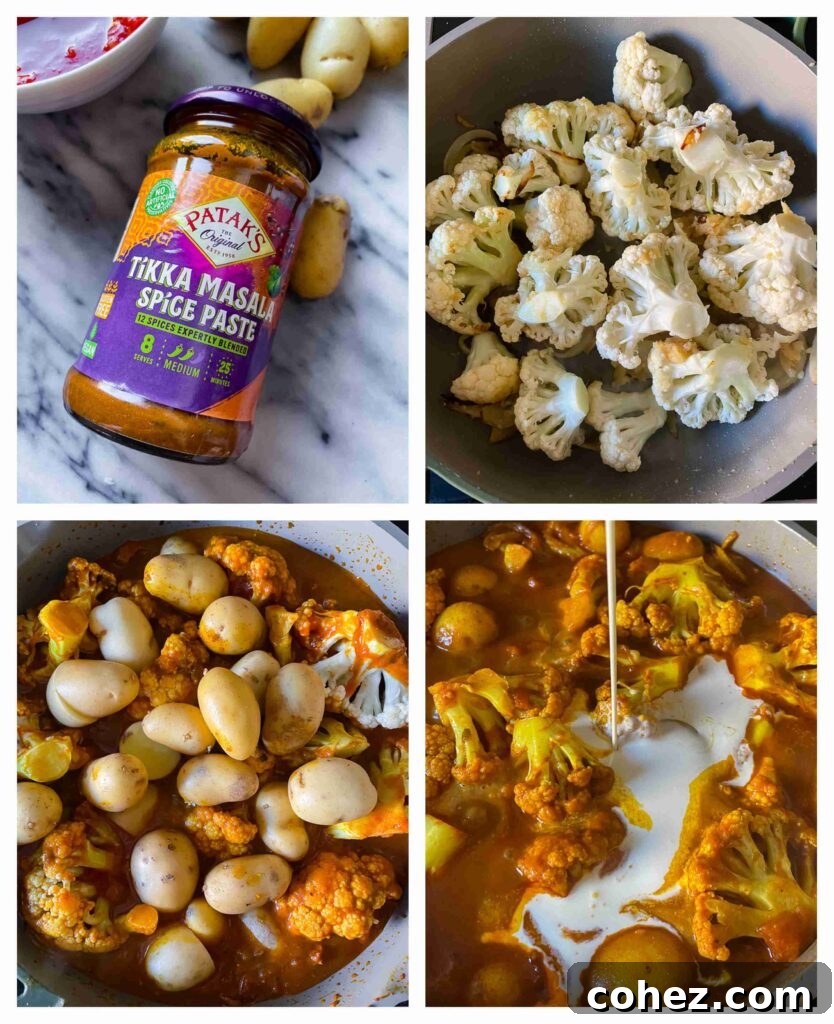
The tikka masala paste is the undisputed star of this recipe, acting as the foundation and primary source of its complex flavor. This means that the quality of your paste will directly impact the final dish. Therefore, it’s crucial to select the best quality paste your budget allows. Many home cooks, myself included, often rely on trusted brands like Patak’s, known for their authentic and robust flavor profiles, but explore what’s available and well-regarded in your local area.
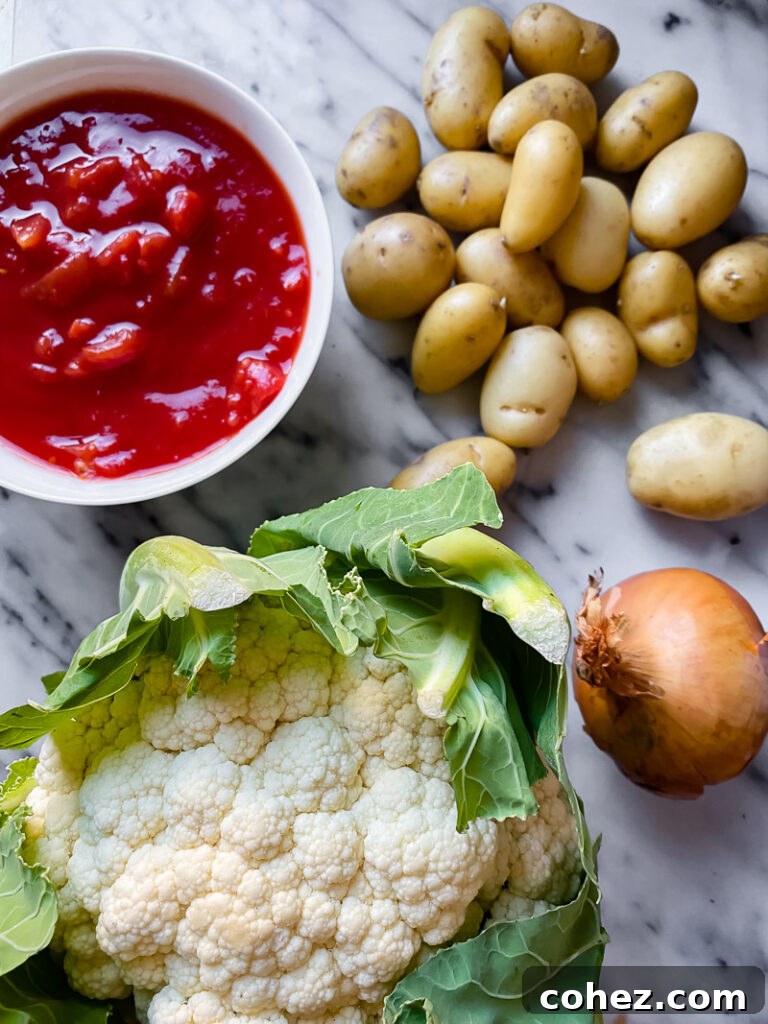
For the potatoes, I personally used baby potatoes when developing this recipe, as they were readily available and offer a wonderful texture. However, any waxy potato variety will perform admirably. The key is consistency: if you’re using larger potatoes, ensure they are cut into roughly uniform chunks. This simple step guarantees that all the potato pieces cook evenly and become tender at the same rate, preventing some from being undercooked while others are perfectly done.
The same principle applies to the cauliflower. I highly recommend purchasing a whole head of cauliflower rather than pre-cut florets. This allows you to break it down into larger florets, which are ideal for this curry. Larger florets hold their shape better during the longer cooking time and will achieve a similar tender consistency to the potatoes, ensuring a harmonious texture throughout the dish. This thoughtful preparation contributes significantly to the overall enjoyment of the Vegetable Tikka Masala.
Expert Tips for Your Vegetable Tikka Masala
- Paste vs. Sauce: Always ensure you buy tikka masala *paste*, not cooking sauce. These are distinct products; paste is a concentrated flavor base that needs to be cooked out, while sauce is a ready-to-use liquid often designed for a quicker preparation and might lack the depth achievable with paste.
- Potato Alternatives: While potatoes are wonderful in this recipe, chickpeas make an excellent substitute or addition for extra protein and texture. Sweet potatoes or other root vegetables can also be used for a different flavor dimension.
- Even Cooking: If using larger waxy potatoes, cut them into uniform, bite-sized pieces so they cook evenly with the cauliflower. Likewise, break your cauliflower head into large, consistent florets to ensure they become tender at roughly the same rate as the potatoes. This prevents some pieces from being over or undercooked.
- Ghee or Oil: Traditionally, ghee (clarified butter) is a staple in South Asian cooking, imparting a rich, nutty flavor. However, for a vegan-friendly option, a neutral cooking oil like vegetable or canola oil works perfectly. Both will provide the necessary fat for sautéing and building flavor.
- Time-Saving Ginger & Garlic: Freshly grated ginger and minced garlic are essential for the curry’s aromatic base. To save time, I often keep a stash of frozen grated ginger in my freezer. It thaws quickly and performs brilliantly in this recipe, offering all the fresh flavor without the prep work. Similarly, pre-minced garlic can be a lifesaver on busy weeknights.
- Browning for Depth: Don’t rush the initial steps. Allowing the onions to brown thoroughly and the cauliflower to get a slight golden sear adds significant depth of flavor and improves the texture of the vegetables, contributing to a richer, more satisfying curry.

Elevating Your Meal: Serving Suggestions
It will come as no surprise that I highly recommend serving this delightful vegetarian curry atop a generous mound of fluffy, fragrant basmati rice. Its long grains and distinct aroma perfectly complement the rich sauce. For a delightful twist, consider my aromatic Coconut Rice, which adds an extra layer of sweetness and creaminess. A side of hearty Red Lentil Dal or warm, pillowy Homemade Naan Bread (or store-bought for convenience) is also an absolute must for scooping up every last drop of the delicious sauce.
To further enhance the experience, I often add a dollop of sweet mango chutney or a fiery spicy pickle, offering contrasting flavors and textures. If I’m feeling particularly ambitious and want to create a grand Indian feast, a vibrant side dish like Saag Paneer (spinach with Indian cheese) or a fresh cucumber raita provides a refreshing balance to the rich curry.
While this Vegetable Tikka Masala is undeniably satisfying as a standalone main course, its robust flavor profile also makes it an exceptional side dish that complements other curries beautifully. Consider pairing it with a protein-rich option such as a flavorful Kofta Meatball Curry, the intensely spiced Chicken Rogan Josh, or the mild and creamy classic Chicken Korma. This versatile curry truly earns its place on any Indian-inspired menu.
Storing and Savoring Leftovers
One of the many joys of cooking curry at home is how wonderfully it transforms into leftovers. A bit of time spent resting in the fridge allows the flavors to meld and deepen even further, often making the curry taste even better the next day! You can comfortably store this Vegetable Tikka Masala in an airtight container in the refrigerator for 4-5 days. To reheat, simply warm it gently in the microwave or on the stovetop over medium-low heat. If the sauce has thickened too much, add a splash of water or vegetable broth to loosen it to your desired consistency.
This curry also freezes exceptionally well, making it perfect for meal prep or busy weeknights. While the vegetables, particularly the potatoes, might become slightly softer in texture after freezing and thawing, this change is typically minor and doesn’t significantly detract from the overall enjoyment of the dish. To freeze, allow the curry to cool completely, then transfer it to freezer-safe containers. It can be stored for up to 3 months. When ready to enjoy, let the frozen curry thaw completely in the refrigerator overnight before reheating as described above. This ensures a delicious and convenient meal anytime.
Discover More Vegetable Curry Dishes
- Coconut Lentil Curry with Butternut Squash
- Paneer Tikka Masala
- Simplified Cauliflower and Potato Curry ‘Aloo Gobi’
- Chickpea and Butternut Squash Curry
Vegetable Tikka Masala with Potatoes and Cauliflower

Ingredients
- 1 tbsp ghee, oil for a vegan option
- 1 onion, sliced
- 1 tbsp ginger, grated
- 2 cloves garlic, minced
- 250g/½lb baby potatoes, or other waxy potatoes; cut larger potatoes in half
- 250g/½lb cauliflower, broken into large florets
- 125ml/½ cup tikka masala paste, not cooking sauce
- 400ml/14 oz canned chopped tomatoes
- 250ml/1 cup water
- 125ml/½ cup single cream, or double cream; coconut milk for a vegan option
- 2-3 tsp brown sugar
- 1 tbsp fresh cilantro/coriander, for garnish
Instructions
-
Heat the oil or ghee in a large deep pan. Add the sliced onion and cook over medium heat for about 7-10 minutes until it turns nicely browned and softened. To the same pan, add the cauliflower, broken into large florets, and continue cooking for about 5 minutes until the florets are golden in places. At this stage, the cauliflower won’t be fully cooked, but browning it will add significant flavor and improve its texture in the final dish.
-
Now, add the grated ginger and minced garlic to the pan and cook briefly for about 30 seconds until fragrant. Stir in the tikka masala paste and cook it while stirring continuously for another 30 seconds to bloom the spices. Pour in the canned chopped tomatoes and water, stir well to combine all ingredients. Add the prepared potatoes and bring the mixture to a boil. Once boiling, cover the pan with a lid and reduce the heat to a simmer. Cook for 20-25 minutes, or until both the potatoes and cauliflower are tender and easily pierced with a fork.
-
Finally, stir in the cream (or coconut milk for a vegan option) and the brown sugar, mixing until well combined. Let the curry simmer gently for just one minute to allow the flavors to marry and the sauce to thicken slightly. Remove from the heat and serve immediately, garnished generously with fresh cilantro/coriander. Enjoy your delicious homemade Vegetable Tikka Masala!
Nutrition
Calories: 166kcal | Carbohydrates: 17g | Protein: 3g | Fat: 10g | Saturated Fat: 6g | Polyunsaturated Fat: 1g | Monounsaturated Fat: 3g | Cholesterol: 29mg | Sodium: 121mg | Potassium: 448mg | Fiber: 3g | Sugar: 6g | Vitamin A: 3392IU | Vitamin C: 35mg | Calcium: 82mg | Iron: 2mg
Nutrition information is automatically calculated and should only be used as an approximation.