
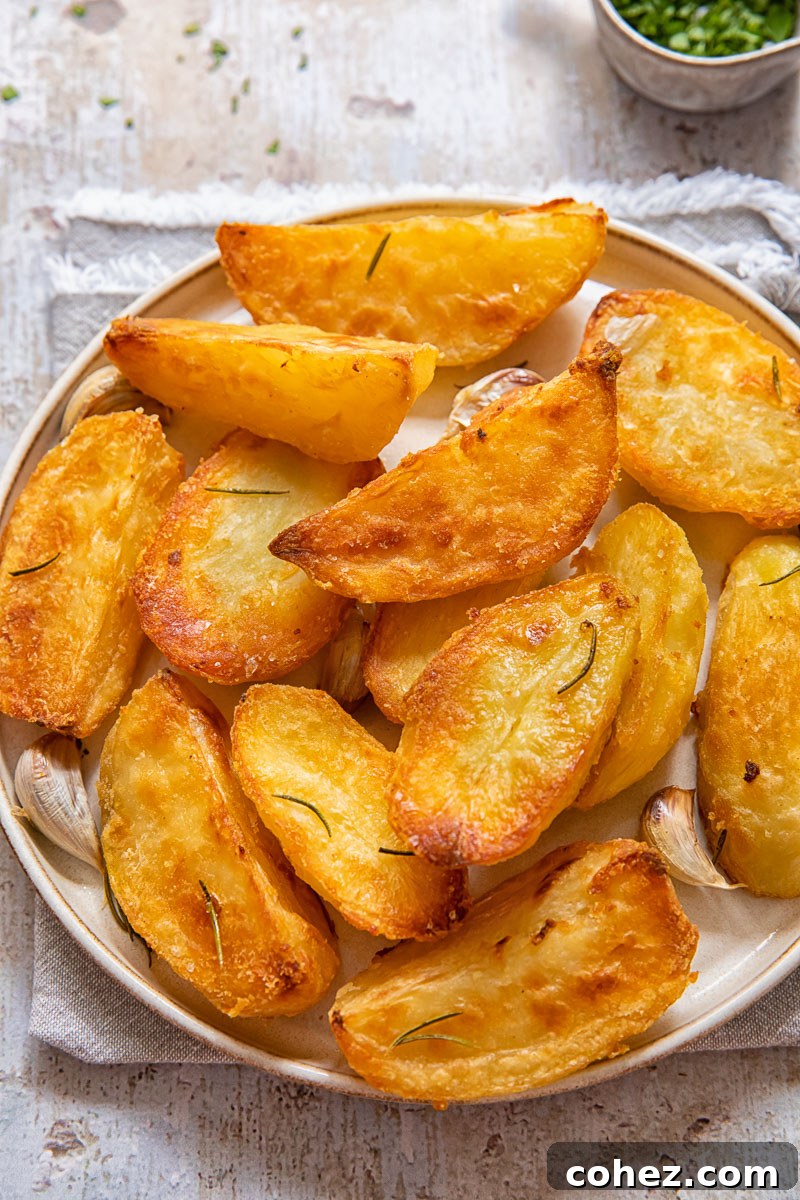
Unlocking the Secret to Perfect Roast Potatoes: Golden, Crispy, and Unforgettable
Transform your Sunday roast with truly exceptional roast potatoes that boast a gloriously golden, crunchy shell and a light, cloud-like interior. Forget soggy spuds – this definitive guide will help you achieve gold medal-worthy results every time, impressing even the toughest family critics.
The roast potato isn’t just a side dish; it’s the undisputed star of any Sunday feast, a crispy crown jewel that completes the culinary experience. Whether nestled alongside a succulent rosemary and thyme infused roast chicken or complementing a rich slow-cooked beef pot roast, these golden nuggets elevate every bite. Prepare to master the art of the perfect roast potato and claim your title as the Champion Potato Roaster!
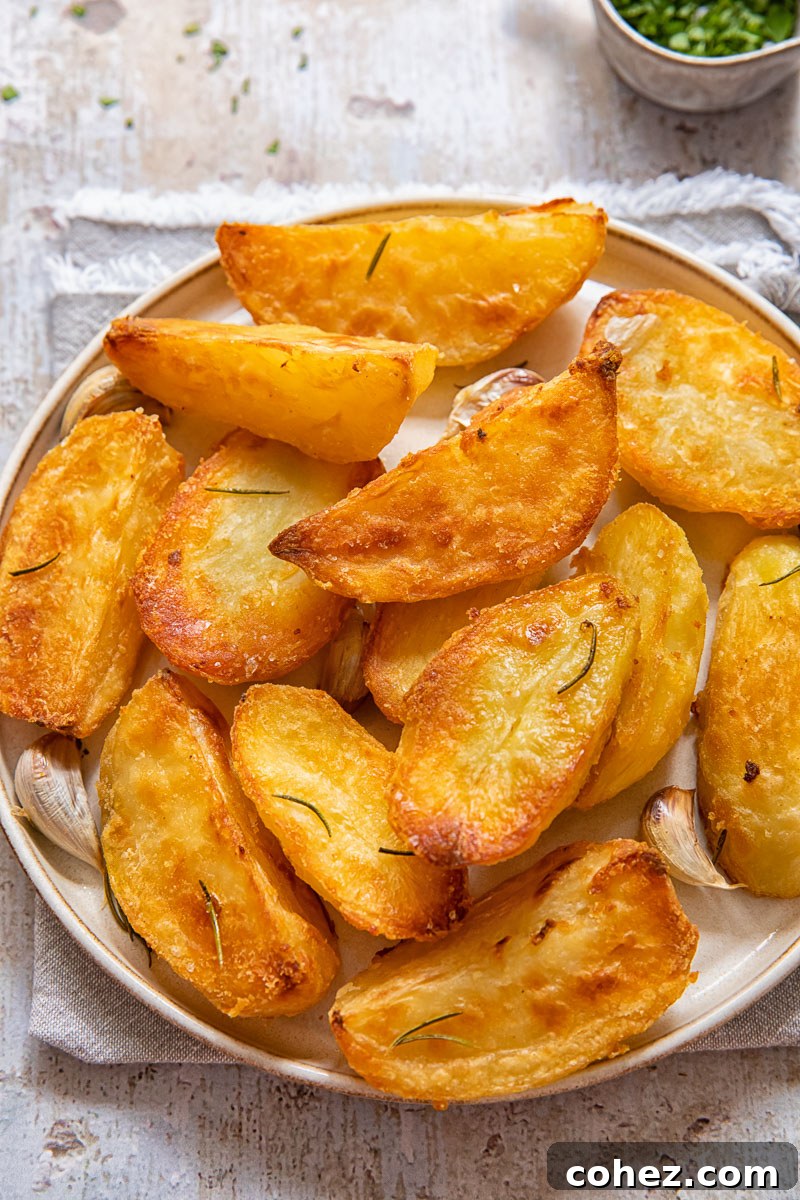
What Exactly Are Roast Potatoes?
At their core, roast potatoes are simply roughly cut potato pieces cooked in hot oil or fat in an oven until beautifully browned and tender. While they can be enjoyed in many forms, they are most famously and frequently served as an essential accompaniment to a traditional roast meat dinner. Indeed, a Sunday roast without roast potatoes feels almost incomplete, an omission many would consider culinary sacrilege!
The exact origin of the roast potato isn’t definitively British, despite their fervent dedication to perfecting them. Historical records suggest that the practice of roasting potatoes alongside meat dates back centuries. Roughly 500 years ago, it was common for families to place a pan containing meat, vegetables, and potatoes into the communal ovens found in bakeries, leaving them to cook slowly while attending church on a Sunday morning. This tradition, practical and delicious, gave rise to the iconic “Sunday roast.” The vegetables and potatoes would absorb the rich, savory juices and fats rendered from the roasting meat, resulting in incredibly flavorful and tender potatoes – perhaps the very first iteration of what we now cherish as roast potatoes.
Beyond the UK, the appeal of roasted potatoes is universal, manifesting in countless regional variations across Europe and beyond. Consider the vibrant Spanish patatas bravas, deliciously crispy potato cubes often served with a piquant tomato sauce. Or Germany’s hearty bratkartoffeln, featuring roasted or fried potatoes combined with savory bacon and onions. In French cuisine, parmentier potatoes offer small, elegant cubes of roast potato infused with aromatic garlic and herbs, showcasing a refined approach to the humble spud.
Choosing the Best Potatoes for Roasting
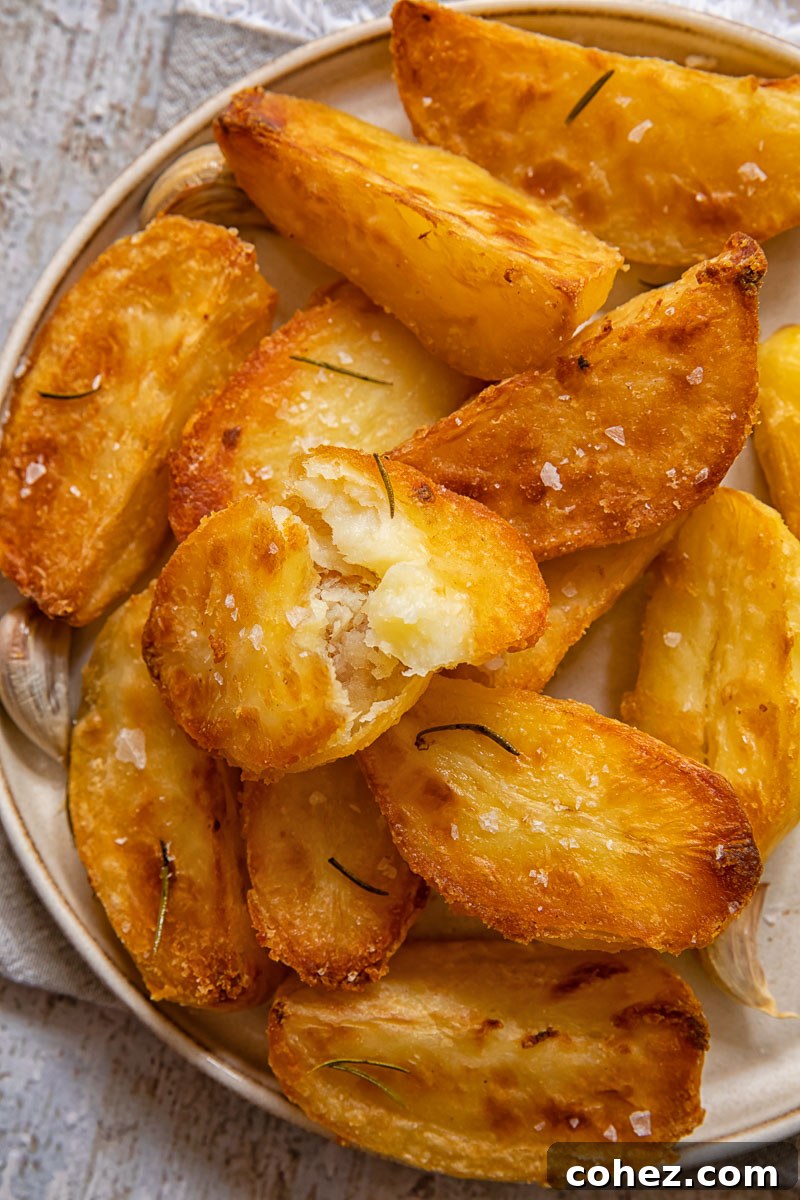
The foundation of a truly perfect roast potato lies in selecting the right variety. For optimal results, you need a floury, or starchy, potato. These varieties are characterized by a coarser, grainier texture and a higher starch content. When roasted, this starch breaks down, creating that coveted fluffy, almost cloud-like interior, while also contributing to the crispy exterior. Absolutely steer clear of any potatoes labeled ‘waxy,’ as their low starch and high water content will lead to a dense, often mushy texture, lacking the desired crunch.
With over 4000 potato varieties globally, and hundreds available in major markets like the US (200+) and UK (500+), knowing which to pick is crucial. In the UK, the Maris Piper is widely considered the undisputed champion for roasting. Its consistent floury texture and ability to crisp up beautifully make it a top choice. Following closely are the King Edward, known for its superb flavor and roasting qualities, and the Desiree, which offers a lovely golden color and delicate texture.
Across the pond in the USA, the debate for the top roasting potato often comes down to the Russet and the Yukon Gold. For many enthusiasts, including myself, the Russet takes the lead. Much like the British Maris Piper, Russets boast a high starch content that ensures a wonderfully soft, pillowy interior. Their thinner skins also contribute to an excellent, shatteringly crisp crust. While Yukon Golds are delicious, I find their slightly waxier nature makes them better suited for applications like mashed potatoes or wedges, where a creamy interior is prioritized over a dramatically fluffy one.
Selecting the Ideal Roasting Oil or Fat
The choice of oil or fat is paramount in achieving perfectly golden and crispy roast potatoes. The most critical factor to consider is the oil’s smoking point – the temperature at which it begins to break down, smoke, and burn. A higher smoking point is always preferable for high-heat roasting, as it prevents your potatoes from tasting burnt and ensures an even cook. Here are the most popular options, each with distinct advantages:
Goose or Duck Fat: The Gold Standard
These animal fats are undeniably my top recommendation and a secret weapon for truly luxurious roast potatoes. While they might be pricier and less common in everyday store cupboards, the investment is well worth it. Goose and duck fats infuse the potatoes with an incredibly rich, savory flavor that’s hard to beat. Their unique composition means they aren’t absorbed as readily by the potato as vegetable oils, leading to an exceptionally crackly, golden crust and an impossibly soft, tender interior. With a medium-high smoking point, they perform admirably under intense oven heat, delivering consistent excellence.
Canola, Grapeseed, or Sunflower Oil: Accessible and Versatile
For a widely available, vegetarian-friendly, and cost-effective option, these neutral-flavored vegetable oils are an excellent choice. They boast a fairly high smoking point, making them forgiving and easy to work with in the oven. They reliably produce crispy potatoes without imparting any strong flavors of their own, allowing the potato’s natural taste to shine. This versatility and accessibility make them a popular go-to for many home cooks.
Olive Oil: A Flavorful but Tricky Choice
While I adore olive oil for its rich flavor in countless dishes, it’s generally not my first pick for roasting potatoes. Its smoking point is considerably lower than goose fat or vegetable oils, meaning it’s more prone to burning at the high temperatures required for achieving a truly crispy roast potato. If it does burn, it can impart an undesirable bitter flavor to your dish. If you absolutely must use olive oil, opt for a light olive oil, which typically has a higher smoke point than extra virgin varieties, and monitor your potatoes closely.
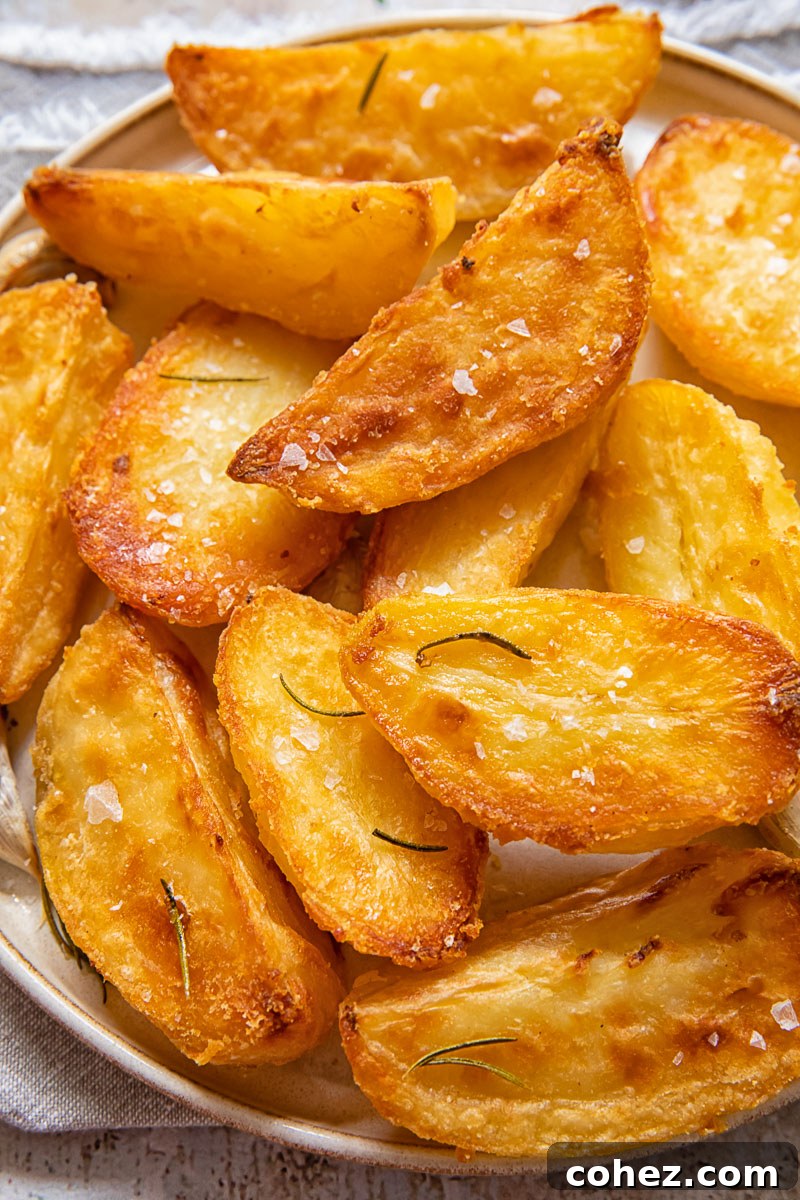
Mastering the Method: Essential Tips for Perfect Roast Potatoes
Achieving that glorious contrast between a crispy exterior and a fluffy interior isn’t magic; it’s a careful combination of technique and attention to detail. Follow these steps and tips to ensure your roast potatoes are nothing short of spectacular:
- Potato Selection is Key: As discussed, always choose a floury or starchy potato variety. Avoid waxy types at all costs to prevent a dense, unappealing texture.
- Peel and Parboil: This step is non-negotiable for the ultimate dual texture. Peel your chosen potatoes and cut larger ones in half lengthwise, ensuring all pieces are roughly uniform in size for even cooking. Then, parboil them in salted cold water until they are tender but still hold their shape – typically about 15 minutes. This pre-cook gelatinizes the starch, which is crucial for crispiness.
- Drain and Steam Dry Thoroughly: After parboiling, drain the potatoes completely in a colander. Crucially, allow them to air dry for at least 5 minutes. Any excess moisture is the enemy of crispiness and can lead to soggy spuds. The steam drying helps create the perfect surface for roughing up.
- Rough Them Up: This is where the magic happens! Gently shake the drained, steamed-dry potatoes in the colander. This action will rough up their edges, creating a floury, starchy coating that, when roasted, transforms into a myriad of crispy nooks and crannies. This increased surface area is vital for an outstanding crust.
- Preheat the Fat: Pour your chosen fat (goose fat, duck fat, or high smoke point vegetable oil) into your roasting pan and place it in the oven while it preheats to 350°F (180°C). Roasting potatoes in already hot fat ensures an immediate crisping effect and prevents them from absorbing too much oil and becoming greasy.
- A Light Flour Dusting for Extra Crunch: For an additional layer of delicate crunch, lightly sprinkle the rough-up potatoes with a couple of teaspoons of flour and a teaspoon of salt before adding them to the hot fat. Toss gently to ensure an even coating.
- Flavor Infusion: Elevate your roast potatoes with aromatics. In this recipe, we add whole, unpeeled garlic cloves and fresh rosemary sprigs to the roasting pan alongside the potatoes. Ensure they are also lightly coated in the hot fat. These aromatics will infuse the potatoes with sweet, earthy, and herbaceous notes, perfectly complementing any roast meat, especially a succulent roast leg of lamb. Remember to discard the garlic and rosemary after cooking, as their purpose is purely for flavor infusion.
- Don’t Overcrowd the Pan: Give your potatoes space to breathe! If the roasting pan is too full, the potatoes will steam rather than roast, preventing them from crisping up properly. Use multiple pans if necessary to ensure a single layer with sufficient space around each potato.
Storage and Reviving Leftover Roast Potatoes
There’s no denying that a freshly roasted potato, piping hot and glistening with fat straight from the oven, is at its absolute best. However, if you find yourself with a few too many (a common and understandable predicament!), leftover roast potatoes can be stored. Place them in an airtight container and keep them in the refrigerator for 2-3 days. While they won’t retain their initial crispness directly from the fridge, they can be wonderfully revived.
To recapture that desired crispy exterior, the best method for reheating roast potatoes is undoubtedly in an air fryer. Its circulating hot air works wonders, typically taking only 3 to 5 minutes, depending on your appliance and the size of the potatoes, to bring them back to their former glory. Alternatively, you can reheat them in a hot oven (around 400°F/200°C) for 10-15 minutes, or even pan-fry them with a little extra fat until crispy.
Other Delicious Recipes to Explore
- Slow Cooked Pot Roast with Gravy
- Classic Beef Bourguignon Recipe
- Roasted Rainbow Carrots with Pistachios
- Hearty Irish Beef Stew
Perfect Roast Potatoes Recipe
By Julia Frey of Vikalinka
- Prep Time: 10 mins
- Cook Time: 1 hr 30 mins
- Total Time: 1 hr 40 mins
- Servings: 4 people
Ingredients
- 1½ kg / 3 lbs Maris Piper potatoes (or Russet/Yukon Gold), peeled and cut in half lengthwise
- 4 tbsp goose or duck fat (or high smoke point vegetable oil like canola or sunflower)
- 2 tsp flour
- 1 tsp salt (more to taste)
- 2-3 rosemary sprigs
- 1 head of garlic, unpeeled
Instructions
- Peel the potatoes and cut any large ones in half lengthwise to ensure all pieces are roughly the same size. Place the potatoes in a large pot, cover with cold water, and add a generous pinch of salt. Bring to a boil and cook for 15 minutes, or until tender enough to be easily pierced with a fork but still holding their shape.
- Drain the potatoes thoroughly in a colander. Allow them to air dry for 5 minutes, letting the steam escape. Then, gently shake the colander to rough up the edges of the potatoes slightly. This creates more surface area for crisping.
- While the potatoes are drying, preheat your oven to 350°F (180°C). Pour your chosen fat (goose fat, duck fat, or vegetable oil) into a large roasting pan and place it in the preheating oven for 10-15 minutes until it’s sizzling hot.
- Carefully remove the hot roasting pan from the oven. Sprinkle the parboiled and roughed-up potatoes with the flour and salt, tossing to coat evenly. Add the coated potatoes to the hot fat in the roasting pan. Turn them over with tongs or a spatula to ensure they are fully coated in the hot fat.
- Add the whole, unpeeled garlic cloves and rosemary sprigs to the pan, ensuring they are also coated in oil.
- Roast for 30 minutes, then carefully flip the potatoes using tongs to brown on all sides. Continue roasting for another 30 minutes, or until they are deeply golden brown and deliciously crispy.
- The garlic and rosemary are included solely for flavour infusion; they can be discarded after cooking. Serve your perfect roast potatoes immediately and enjoy!
Nutrition Information (Approximate per serving)
- Calories: 380 kcal
- Carbohydrates: 60g
- Protein: 7g
- Fat: 13g
- Saturated Fat: 4g
- Polyunsaturated Fat: 2g
- Monounsaturated Fat: 6g
- Cholesterol: 13mg
- Sodium: 602mg
- Potassium: 1437mg
- Fiber: 8g
- Sugar: 3g
- Vitamin A: 8 IU
- Vitamin C: 67mg
- Calcium: 43mg
- Iron: 3mg
Nutrition information is automatically calculated and should only be used as an approximation.
Tried this recipe?
We’d love to hear how it was! Share your experience in the comments below.