
Indulge in Perfection: The Ultimate Lemon Curd Cheesecake Recipe
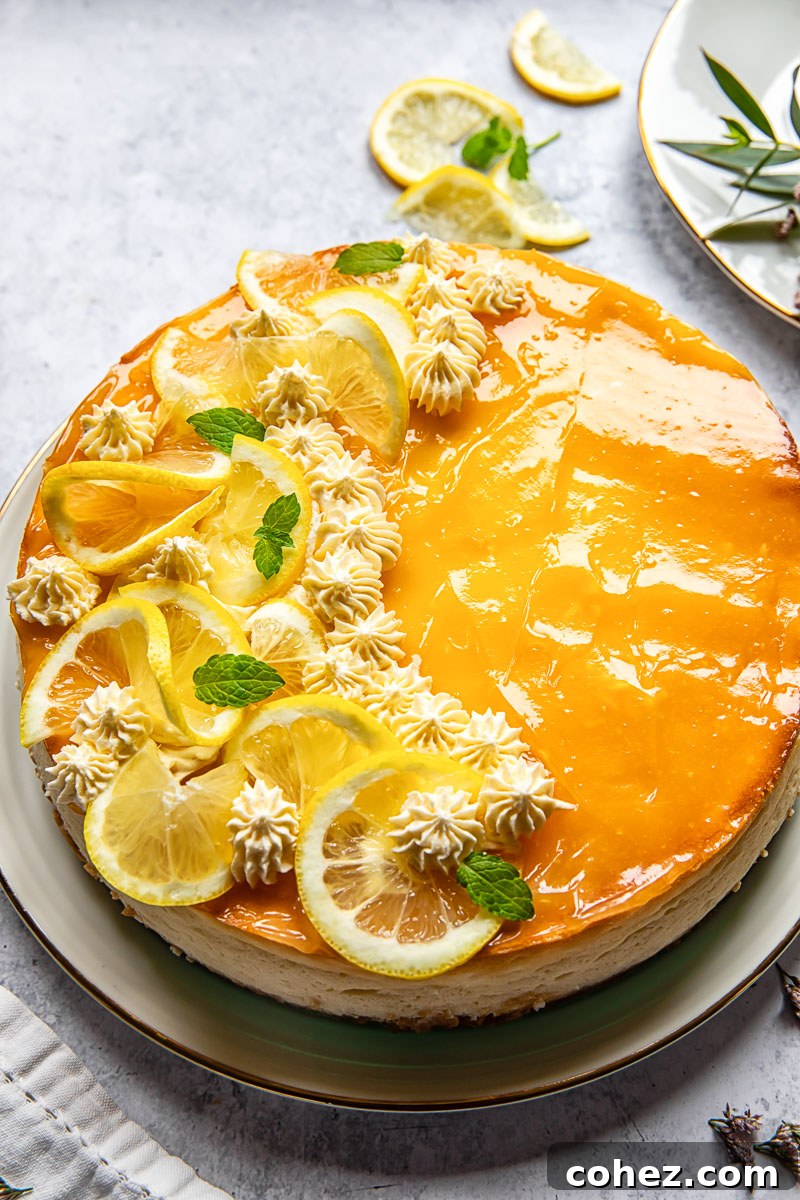
Prepare to elevate your dessert experience with this exquisite Lemon Curd Cheesecake. Adorned with delicate whipped cream rosettes and a glistening lemon curd topping, this dessert is a masterpiece of flavor and texture. It promises a remarkably fluffy interior and a perfectly crack-free top, making it as visually stunning as it is irresistibly delicious. Whether you’re a seasoned baker or new to the world of cheesecakes, this guide will unlock the secrets to achieving bakery-quality results right in your own kitchen.
While this baked lemon cheesecake offers unparalleled indulgence, if you’re seeking a quicker route to cheesecake bliss, you might enjoy our easy No-Bake Blood Orange Cheesecake, offering a different, yet equally delightful, experience.
A Zesty Celebration: Why Lemon Cheesecake Steals the Show
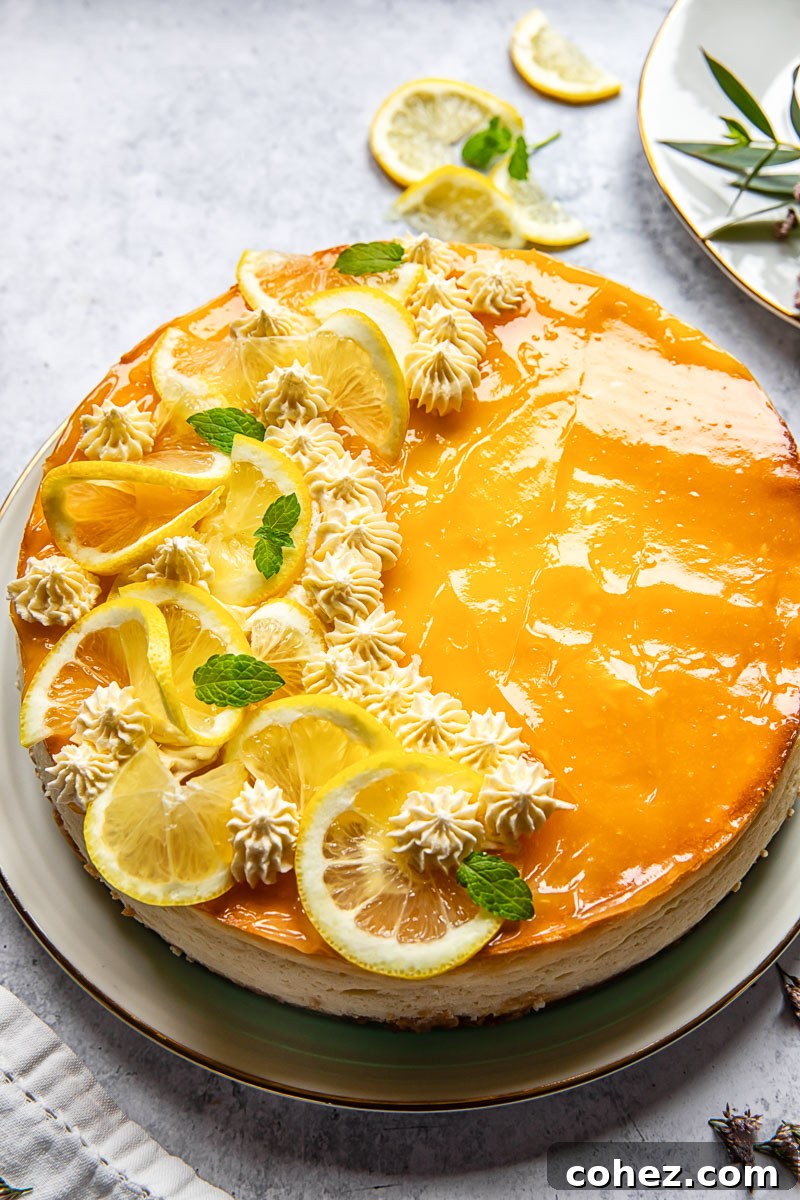
There’s an undeniable charm that lemon-flavored desserts bring, especially as seasons transition into spring and summer. This lemon curd cheesecake perfectly encapsulates that fresh, bright essence. With its airy and fluffy texture, each bite is a refreshing burst of citrus notes, making it an ideal treat for any occasion, from casual gatherings to elegant celebrations.
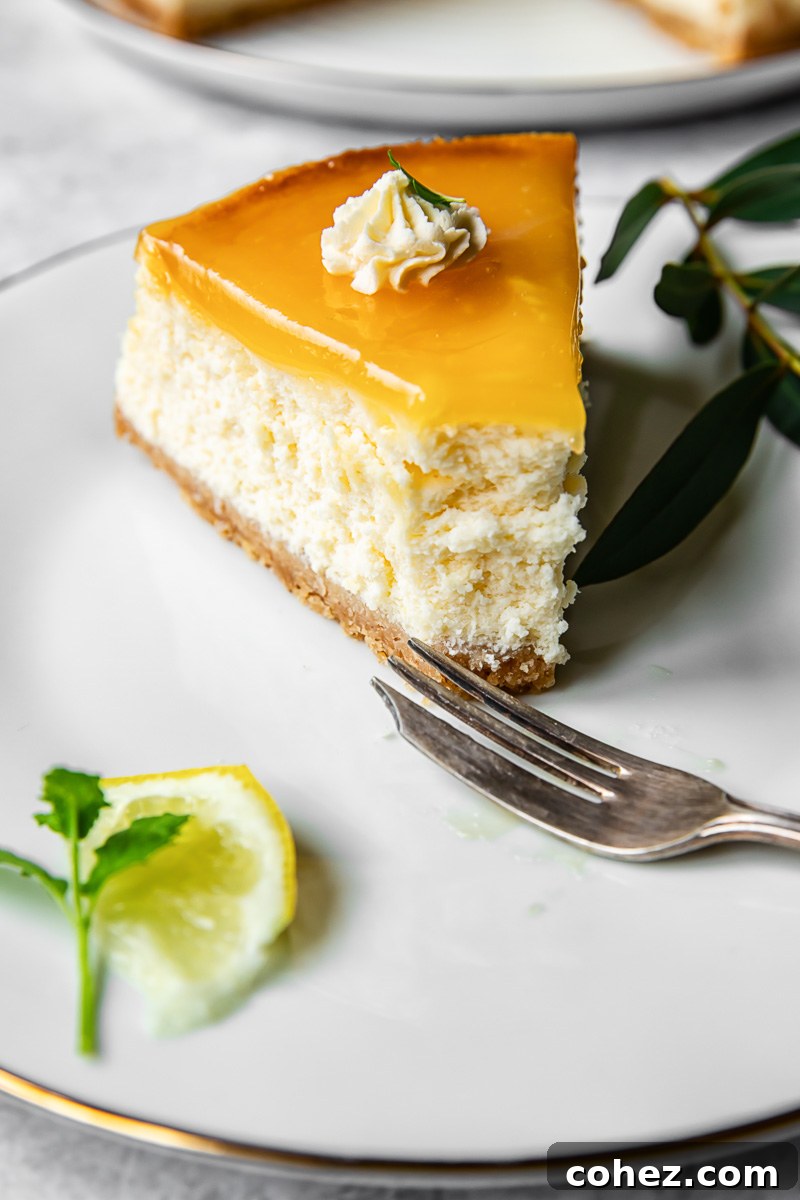
For many, the idea of baking a cheesecake can feel daunting. Visions of cracks, dense textures, or overly sweet flavors might deter even enthusiastic home cooks. But fret not! This recipe simplifies the process, guiding you step-by-step to a creation that will impress everyone. You’ll achieve a cheesecake with a beautifully glossy, unblemished top and an interior that is both rich in flavor and wonderfully delicate in consistency.
Crafting Culinary Excellence: The Secrets to a Flawless Lemon Cheesecake
Cheesecakes often hold a special place on our dessert tables, especially during festive times like Easter. This particular lemon cheesecake draws inspiration from beloved childhood traditions, specifically the classic sweet cheese Paskha. While rooted in tradition, this recipe takes a modern approach, offering a delightful twist on a classic. Instead of the traditional raw preparation, this cheesecake is baked to perfection, enhancing its depth of flavor and creating an exceptionally smooth texture. The addition of a luscious lemon curd topping further intensifies the vibrant lemon notes, making it truly unforgettable.
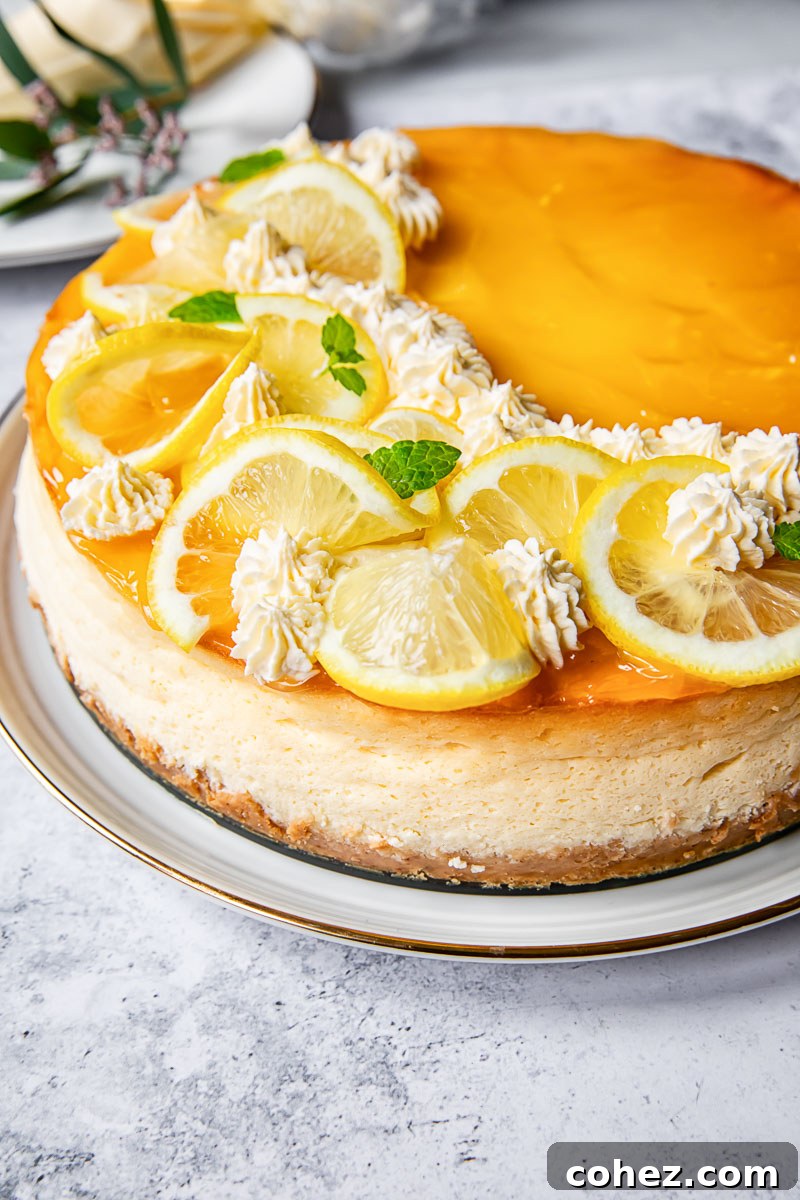
You have the flexibility to either craft your own lemon curd from scratch, ensuring peak freshness and flavor, or opt for a high-quality store-bought variety for convenience, as I often do. For those feeling adventurous and looking to experiment with flavors, consider a seasonal alternative like rhubarb curd. The tangy sweetness of rhubarb pairs beautifully with lemon, creating a unique and sophisticated taste profile. In fact, you can easily adapt a rhubarb curd recipe to make your own lemon curd by simply substituting rhubarb juice with fresh lemon juice.
If you love lemon desserts and are keen to explore more, try my Lemon Vanilla Possets for a delightful single-serving treat, or indulge in the timeless classic, Lemon Bars.
The Core Techniques: What Makes This Cheesecake Special
Before delving into the detailed steps, it’s crucial to highlight two primary techniques that truly set this lemon cheesecake recipe apart, guaranteeing its signature light texture and pristine appearance.
1. The Magic of the Water Bath (Bain-Marie)
This cheesecake is baked using the time-honored bain-marie method, also known as a water bath. This technique involves placing your springform pan, wrapped in foil, into a larger roasting pan filled with about an inch of hot water. This creates a moist, even heat environment around the cheesecake, which is crucial for delicate baked goods.
The gentle, consistent heat of the water bath prevents the cheesecake from cooking too quickly around the edges, which is a common culprit for cracking. It also infuses the cheesecake with additional moisture, resulting in an exceptionally creamy, light, and airy texture that simply melts in your mouth. This technique is your best friend in preventing those dreaded cracks and ensuring a smooth, custard-like consistency.
2. The Whisked Egg White Advantage
Another fundamental secret to this cheesecake’s ethereal texture lies in how the eggs are incorporated. Unlike many recipes that mix whole eggs, we recommend separating the egg yolks from the egg whites. The egg whites are then whipped to soft peaks before being gently folded into the rich cheese mixture. This extra step, though seemingly minor, makes a monumental difference.
By aerating the egg whites, you introduce a significant amount of air into the batter, which translates into an incredibly light, airy, and delicate cheesecake. This method ensures the cheesecake isn’t dense or heavy, but rather a cloud-like confection that feels luxurious on the palate. The resulting texture is pure magic, distinguishing this cheesecake from others you might have tried.
Ingredient Spotlight: Choosing for Success
The quality of your ingredients plays a pivotal role in the outcome of any baked good, and cheesecake is no exception. Selecting the best components will ensure a superior flavor and texture for your Lemon Curd Cheesecake.
Cream Cheese: The Foundation of Flavor
For the quintessential creamy texture, always opt for full-fat cream cheese. Brands like Philadelphia are consistently recommended for their rich, smooth consistency. Ensure your cream cheese is at room temperature before mixing. This allows it to blend smoothly with other ingredients, preventing lumps and ensuring a uniform, velvety batter.
Fresh Lemons: Zest for Zestiness
The vibrant, aromatic essence of lemon in this cheesecake comes primarily from fresh lemon zest, not just the juice. While juice provides acidity, zest contains the concentrated essential oils that deliver that powerful, bright lemon flavor. Always use fresh lemons, and if possible, organic, to ensure maximum flavor and minimize pesticide exposure from the rind.
Crust Options: A Perfect Base
The recipe calls for digestive biscuits (UK) or graham crackers (US), which create a wonderfully buttery and crumbly base. You can experiment with other cookie types if you prefer, such as shortbread or vanilla wafers, adjusting the butter quantity slightly if needed to achieve the right consistency for pressing into the pan.
Lemon Curd: Homemade vs. Store-Bought
While making your own lemon curd allows for custom flavor intensity and freshness, a good quality store-bought lemon curd can be a convenient and delicious alternative. If you choose to make it, consider infusing it with a touch more lemon zest for an extra burst of citrus. And as a creative alternative, don’t forget the delightful pairing of rhubarb curd.
Pro Tips for Cheesecake Perfection
Recipe Tips and Notes
- Preventing a Soggy Bottom: Always pre-bake your crust. Baking the crushed biscuits or graham crackers with melted butter for 10 minutes at 160°C/325°F before adding the cheese mixture creates a barrier, preventing your crust from becoming soggy and ensuring a delightful crisp base. Allow it to cool completely before spreading the filling.
- Maximize Lemon Flavor: For that truly vibrant, zesty lemon flavor, rely on fresh lemon juice and, more importantly, lemon zest. The zest contains essential oils that deliver a concentrated citrus punch that juice alone cannot replicate.
- Achieve Fluffy Texture: The secret to an airy and delicate cheesecake is separating the egg yolks from the whites. Whip the egg whites until soft peaks form, then gently fold them into the cheese mixture using a spatula. This technique incorporates air, giving the cheesecake its signature light consistency.
- Cream Cheese Choice: For the richest, creamiest texture, use full-fat cream cheese. Brands like Philadelphia are known for their consistent quality and excellent results in cheesecakes. Ensure it’s at room temperature for smooth mixing.
- Master the Water Bath (Bain-Marie): As described above, employing the bain-marie method is crucial for an even bake and a moist, crack-free cheesecake. This gentle cooking environment prevents overbaking and dryness.
- Gradual Cooling is Key: To prevent surface cracks, cheesecake requires a slow, gradual cooling process. Once baked, turn off the oven but leave the cheesecake inside for an additional 20-30 minutes. Then, open the oven door slightly (leave it ajar) and let the cheesecake cool completely to room temperature within the oven for about an hour. Drastic temperature changes are a common cause of cracks. Even if a small crack appears, don’t worry—your luscious lemon curd topping will beautifully conceal it!
- Overnight Chill: For the best results, chill your cheesecake in the refrigerator overnight. This allows the cheesecake to fully set, firm up, and for the flavors to meld and deepen, resulting in a perfectly sliceable and intensely flavored dessert. Cover the pan with plastic wrap once at room temperature.
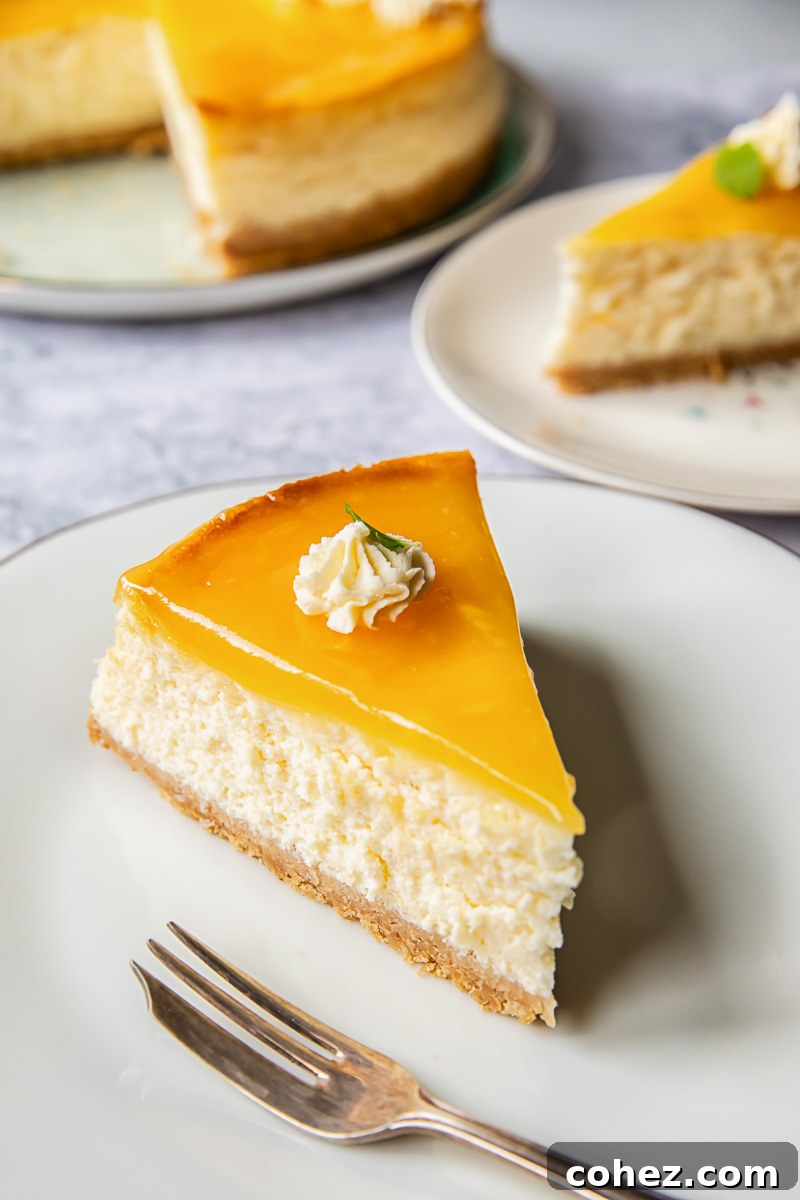
- Serving Perfection: Before serving, generously spread the lemon curd over the chilled cheesecake. If desired, pipe elegant whipped cream rosettes around the edge for a professional touch.
- Curd Consistency: If your lemon curd is too firm to spread easily, microwave it for 20-30 seconds on low power. Then, whisk it with a wire whisk until it achieves a smooth, spreadable consistency.
Lemon Curd Cheesecake: The Recipe
Here’s the comprehensive recipe to guide you through creating this delightful Lemon Curd Cheesecake. Follow these steps carefully for a truly exceptional dessert.
Lemon Curd Cheesecake

Equipment
-
Fine grater
-
Springform pans
-
Stand mixer
-
Icing piping tip set
Ingredients
- 200g/1 3/4 cup digestive biscuits (UK)/graham crackers (US), crushed
- 80g/1/4 cup butter, melted
- 750g/24oz cream cheese such as Philadelphia, full fat
- 3 large eggs
- 200g/1 cup white granulated sugar
- 3 tbsp semolina or all purpose flour
- 1 lemon , juice and zest
- 1 tbsp vanilla extract
For the topping
- 250ml/1 cup lemon curd
- 250ml/1 cup double/whipping cream
- 4 tbsp icing sugar
- 4-5 mint leaves for decoration, optional
- 5-6 lemon slices for decoration
Instructions
-
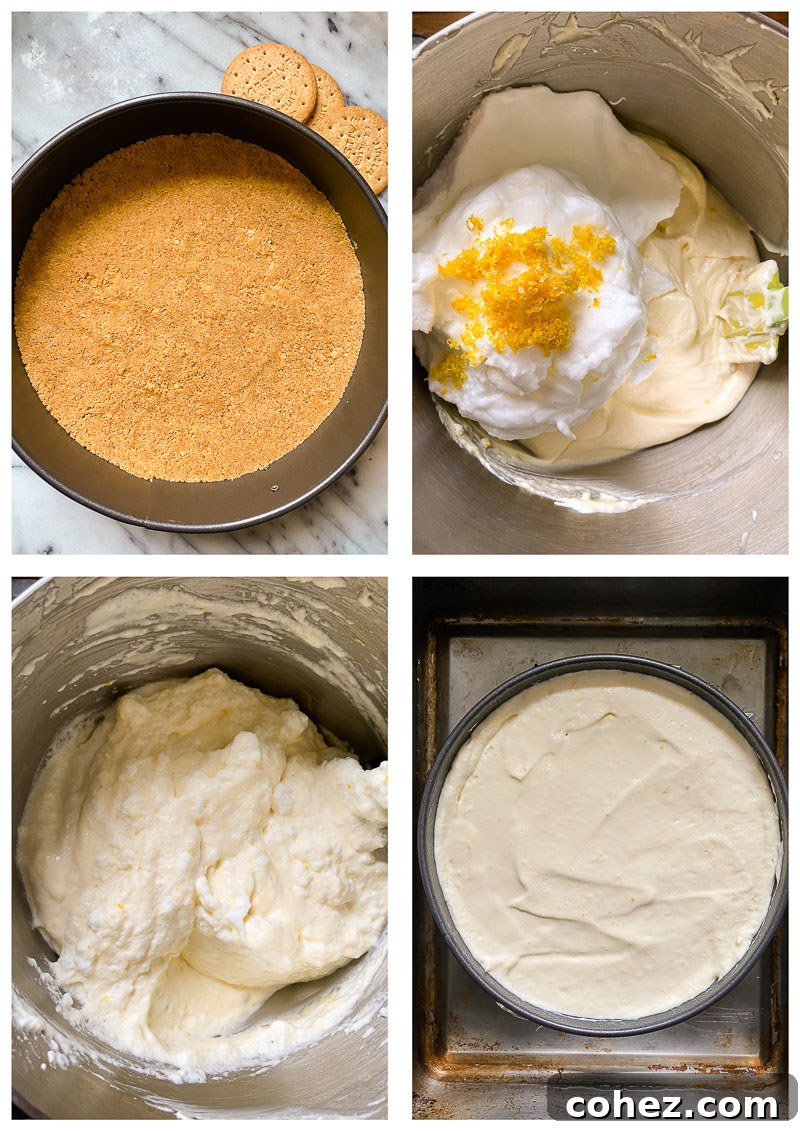
1. Prepare the Crust: Preheat your oven to 160°C/325°F. Finely zest and juice your lemon, then set both aside. Crush the digestive biscuits or graham crackers thoroughly until fine crumbs are formed. In a bowl, mix these crumbs with the melted butter until well combined. Press this mixture firmly into the bottom of a 21cm/9-inch springform pan. Bake in the preheated oven for 10 minutes, then remove and allow to cool completely on a wire rack.
-
2. Prepare the Filling: Carefully separate the egg yolks from the egg whites. In a large mixing bowl, combine the softened cream cheese, egg yolks, granulated sugar, semolina or all-purpose flour, fresh lemon juice, and vanilla extract. Beat with an electric mixer until the mixture is smooth, creamy, and well blended. In a separate, clean bowl, whip the egg whites until they form soft peaks. Gently fold the whipped egg whites into the cream cheese mixture along with the reserved lemon zest, using a spatula to preserve the airiness.
-
3. Prepare for Water Bath: Pour the cheesecake mixture evenly over the cooled crust in the springform pan. To prepare for the water bath, wrap the bottom and sides of your springform pan tightly with a layer or two of heavy-duty aluminum foil. This prevents any water from seeping into the crust. Place the foil-wrapped springform pan inside a larger roasting pan, then carefully fill the roasting pan with about 1 inch (2.5 cm) of hot water.
-
4. Bake and Cool Gradually: Bake the cheesecake in the water bath at 160°C/325°F for 60-65 minutes, or until the edges are lightly browned and the center is mostly set with a slight jiggle. Once baked, turn off the oven but leave the cheesecake inside with the door closed for an additional 20-30 minutes. After this time, open the oven door and leave it ajar, allowing the cheesecake to cool gradually to room temperature within the cooling oven for about an hour. This slow cooling process is essential to prevent cracks. (Should any cracks appear, rest assured they will be covered by the lemon curd topping.) Once at room temperature, cover the pan with plastic wrap and chill the cheesecake completely in the refrigerator overnight for best results.
To Decorate
-
5. Release and Prepare Topping: The following day, remove the chilled cheesecake from the refrigerator. Run a thin knife carefully along the sides of the springform pan to loosen the cheesecake, then release the springform ring and remove the cheesecake from the pan base. Check the consistency of your lemon curd; if it’s too stiff to spread smoothly, warm it gently in a microwave for 20-30 seconds, then whisk it with a wire whisk until it’s smooth and spreadable.
-
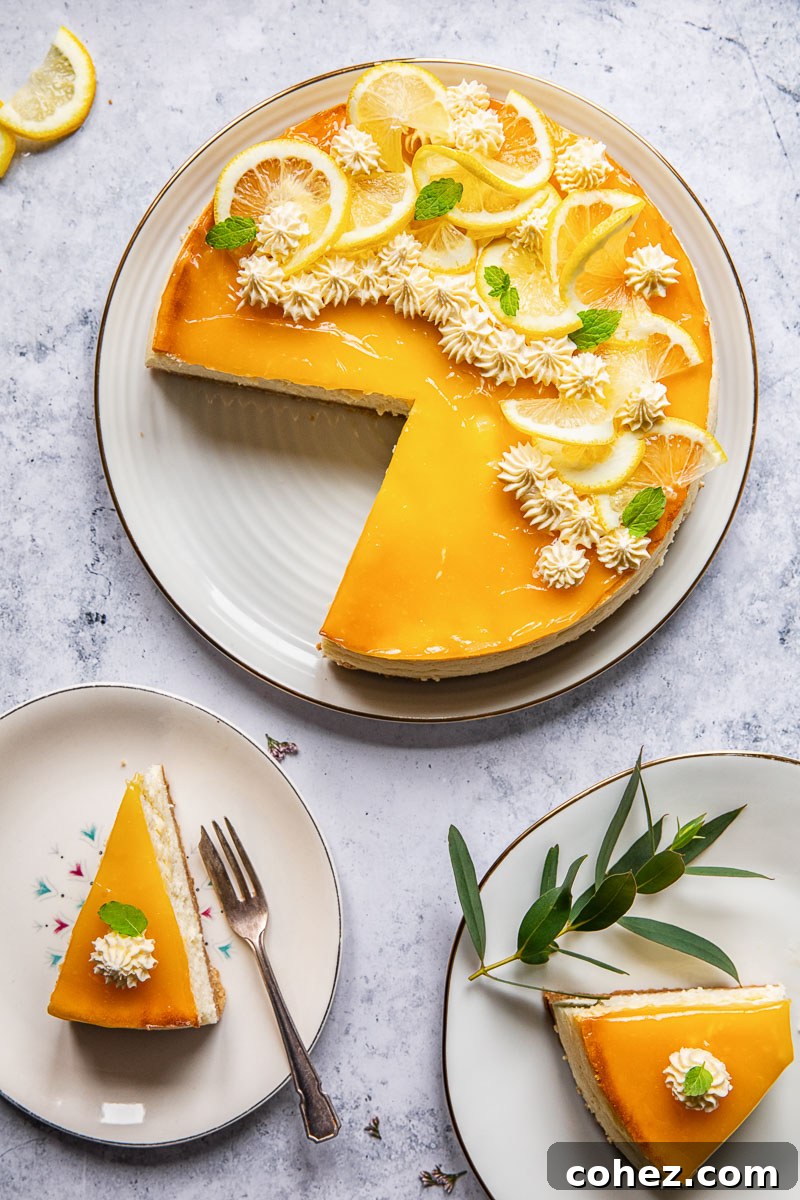
6. Decorate and Serve: Slice a fresh lemon very thinly for decoration. In a separate bowl, whip the double or whipping cream with icing sugar until stiff peaks form. Load the whipped cream into a piping bag fitted with your favorite decorative tip (e.g., a star tip). Spread the softened lemon curd evenly over the surface of the cheesecake. Then, pipe elegant rosettes of whipped cream around the edge of the cheesecake. Garnish with the thin lemon slices and a few fresh mint leaves for a beautiful, vibrant finish. Slice and serve immediately.
Nutrition
Nutrition information is automatically calculated, so should only be used as an approximation.
Tried this recipe?Let us know how it was!
Beyond the Zest: More Cheesecake & Lemon Delights
If you’ve fallen in love with this Lemon Curd Cheesecake, there’s a world of other delightful cheesecakes waiting to be explored. Each offers a unique flavor profile and experience, from fruity to rich and decadent.
More Cheesecake Recipes to Try
- Raspberry Cheesecake Bars
- Strawberry Meringue Cheesecake (No Bake)
- Raffaello Cheesecake
- Crumb Apricot Cheesecake
- Carrot Cake Cheesecake
And for those who simply can’t get enough of that bright, tangy lemon flavor, consider revisiting our Lemon Vanilla Possets for individual servings of creamy bliss, or whip up a batch of classic Lemon Bars for a crowd-pleasing treat. There’s always a new lemon-infused adventure to embark on in the kitchen!