If there’s one French cheese you absolutely must discover, it’s Comté cheese – and that’s no exaggeration. Its rich history, unique production, and extraordinary flavor profile make it a true culinary icon of France, particularly from the picturesque Jura region.
An Irresistible Invitation to the Heart of French Gastronomy
Imagine receiving an impromptu invitation to fly to France, with the sole purpose of indulging in cheese and wine for two consecutive days. What would your immediate response be? For me, it was an enthusiastic “YES!” followed by a frantic reshuffling of my schedule. Truly, who could possibly decline such an extraordinary opportunity?
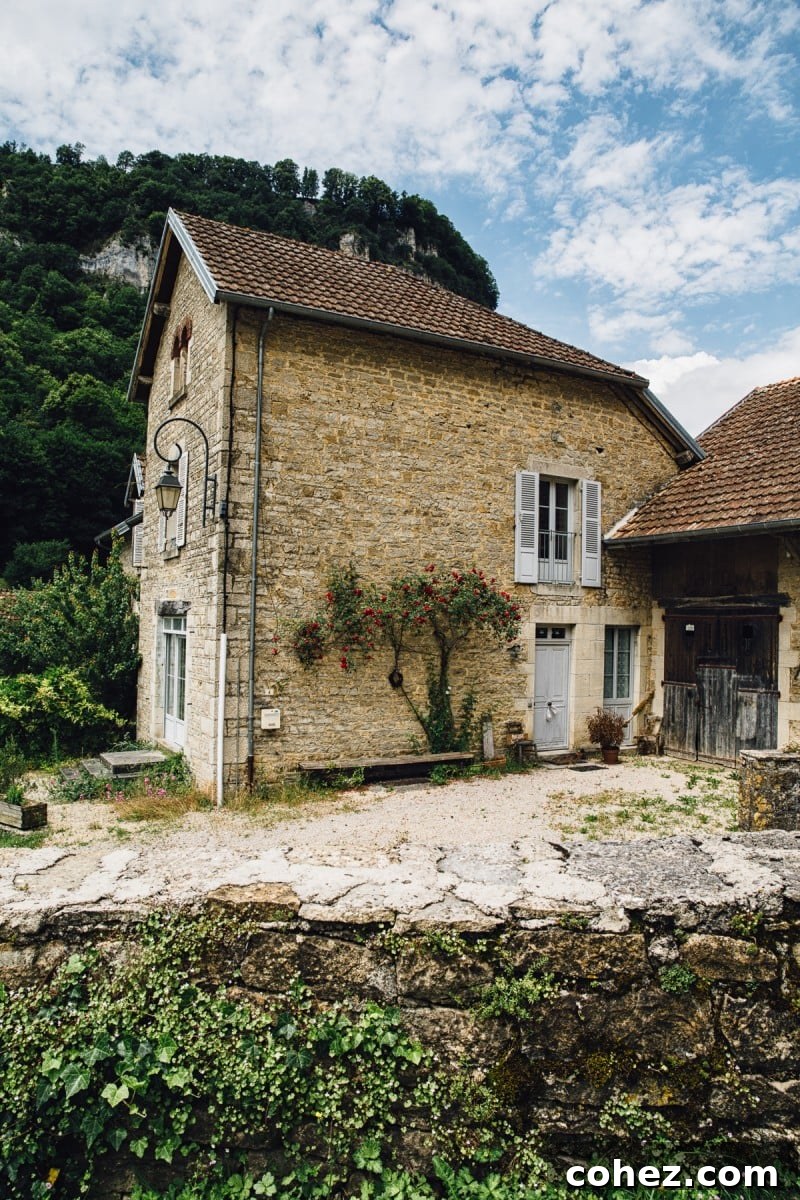
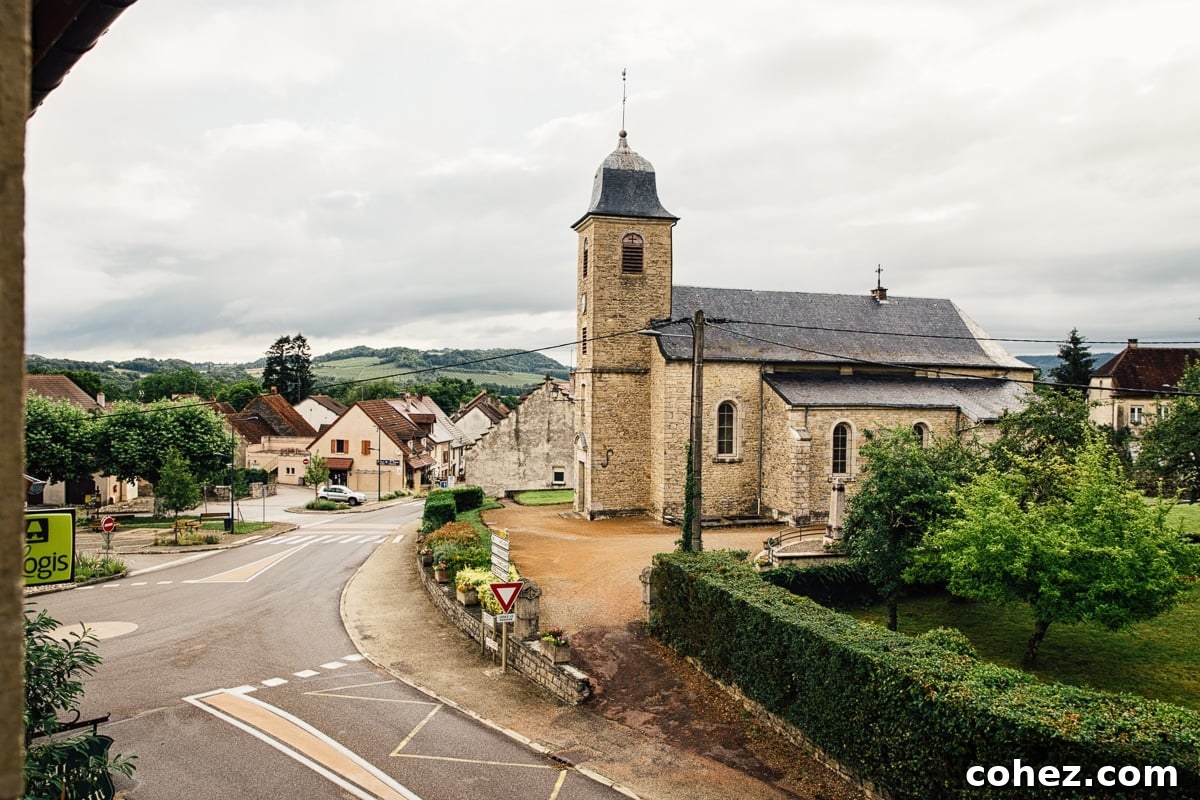
This wasn’t just any invitation; it was a ticket to immerse myself in a dream long held – to explore the rural heartland of France, existing blissfully on a diet of exquisite cheese, freshly baked bread, and fine wine. Despite living a mere stone’s throw from France, my explorations had largely been limited to Paris. The prospect of venturing into its lesser-known, yet deeply authentic, regions was incredibly enticing.
A Lifelong Admiration for French Culture
My fascination with France dates back to my school days, ignited by the captivating narratives of French literary giants like Victor Hugo, Guy de Maupassant, and Honoré de Balzac. My studies in French continued through university, cementing my status as a dedicated “French geek.” Every aspect of the country, from its language to its history and culinary traditions, held a special place in my heart. This deep appreciation only heightened the excitement when the invitation to the Jura region arrived.
Although my knowledge of Jura was, at the time, primarily limited to the celebrated Comté cheese and its distinctive Vin Jaune (Yellow Wine), I knew enough to be thrilled. Comté was already a staple in my kitchen, a cheese I frequently featured in recipes on my blog, such as Rosemary Potatoes au Gratin and Truffled Egg Soldiers. I was captivated by its rich, creamy texture and its characteristic sharp, nutty flavor. However, I harbored a common misconception, believing Comté to be the product of a large, singular brand or corporation.
Unveiling the True Spirit of Comté: A Collective Legacy
My preconception about Comté couldn’t have been further from the truth. During my visit, I discovered that Comté cheese is not owned by a single wealthy entity, but rather by the very people who create it: a vibrant network of farmer and cheesemaker cooperatives. This revered French cheese embodies the spirit of solidarity and community, mirroring the republican ideals of France itself. Beyond its exquisite taste, the deep-rooted origins and the cooperative nature of Comté production became, for me, its most endearing quality.
The Historical Tapestry of Comté in the Jura Region
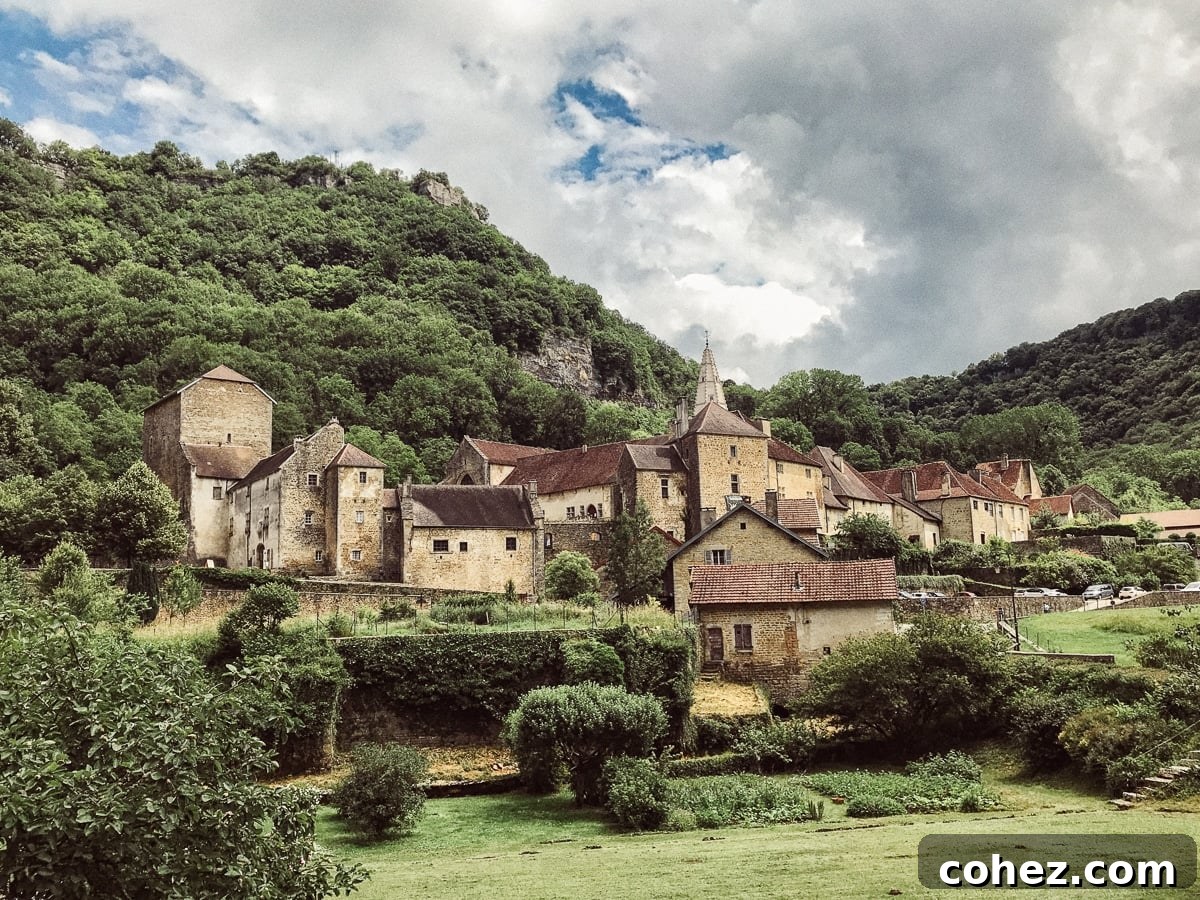
The story of Comté cheese began centuries ago in the challenging, yet stunning, Jura region of France. Its inception was born out of necessity – a ingenious method to preserve milk in an area characterized by scorching summers and long, harsh, snowy winters. A quick glance at a map reveals the geographical isolation of the Jura mountains, making it nearly inaccessible during winter months in centuries past. Treacherous, winding roads meant that venturing out in the dead of winter was a risky endeavor.
This geographical isolation fostered a culture of self-reliance, pushing the inhabitants to innovate sustainable food sources. It was this demanding yet beautiful landscape that spurred the development of one of France’s most celebrated cheeses, alongside a tradition of producing exceptional wines. The ingenuity and resilience of the Jura people shaped not just their survival, but also a rich culinary heritage that endures to this day.
Solidarity: The Unifying Principle of Comté Production
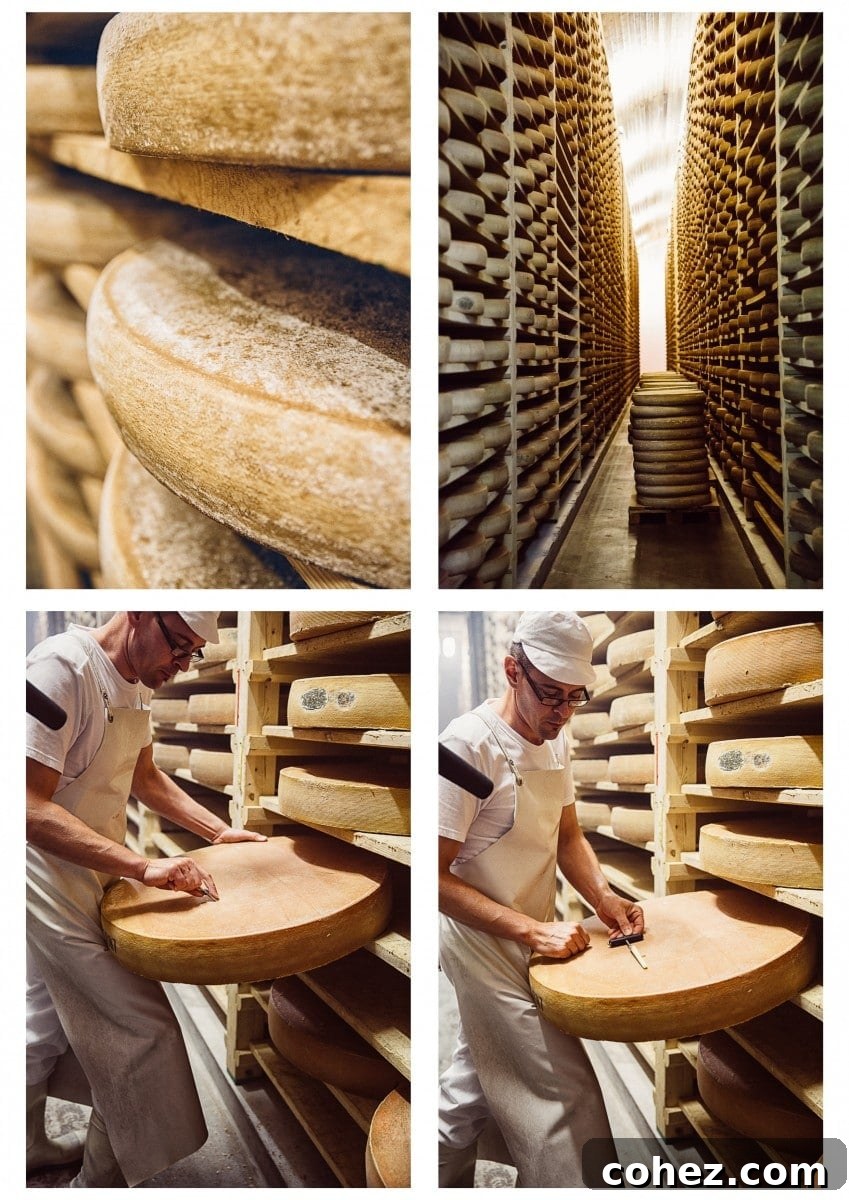
One of the foundational principles of Comté cheese production is “solidarity,” a concept that might initially seem unusual within the context of a modern food industry. However, for Comté, solidarity is not merely a word but a living tradition with a beautiful narrative at its core. Producing a single wheel of Comté, which weighs a substantial 40kg (approximately 80lbs), requires an immense quantity of milk – far more than any single farm could reliably supply.
Centuries ago, farmers in the Jura region recognized this challenge and collectively decided to pool their milk resources. This collaborative effort was crucial for creating a product that could sustain their communities through the arduous winter months. Thus, the Comté cooperatives, known as fruitières, were born. Remarkably, these cooperatives have largely retained their original structure and principles throughout the centuries. I was both surprised and deeply impressed to learn that the core process of making Comté has remained largely unchanged, safeguarded by strict regulations designed to preserve its authentic character and quality.
Protected Designation of Origin: Guaranteeing Comté’s Authenticity
Comté cheese proudly holds a valued PDO (Protected Designation of Origin) status, a prestigious certification that underscores its unique heritage and stringent production standards. Much like how authentic Champagne can only originate from the Champagne region of France, genuine Comté cheese can only be produced within the specific confines of the Jura region. This designation ensures that every wheel of Comté reflects the distinct terroir and artisanal traditions of its birthplace.
Rigorous Regulations for Uncompromising Quality
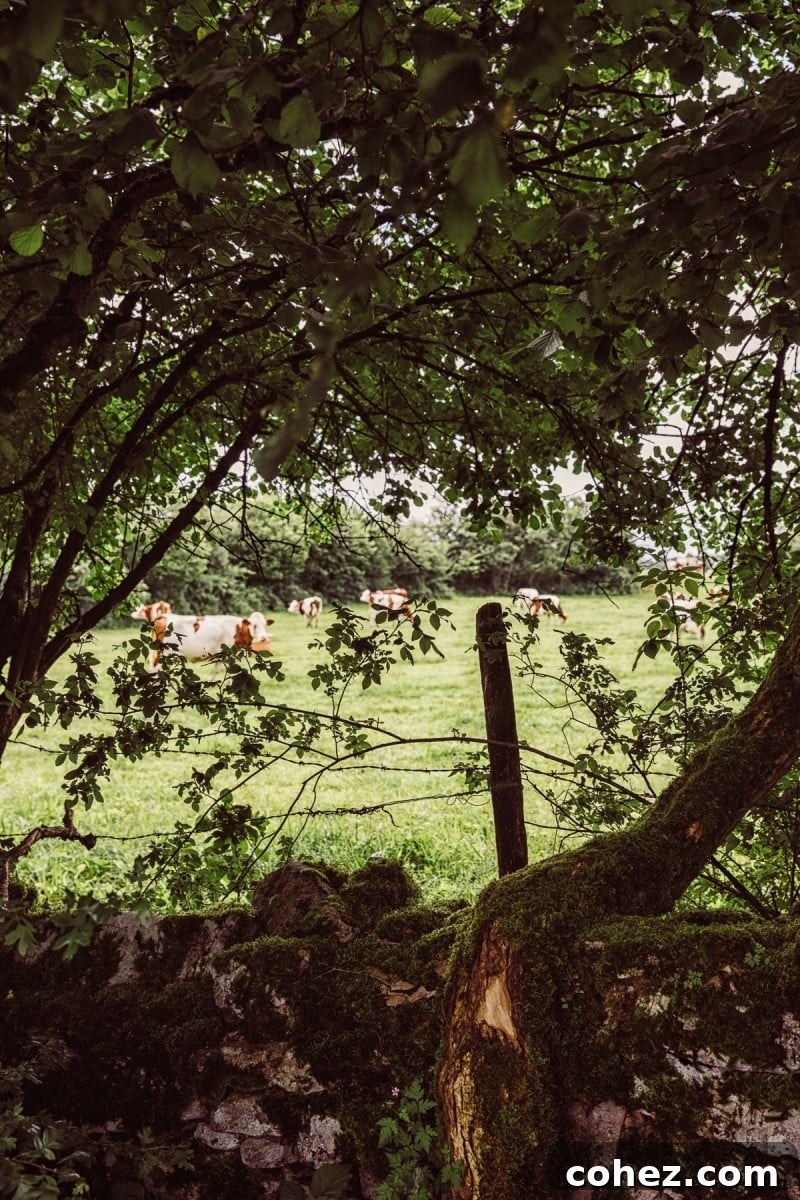
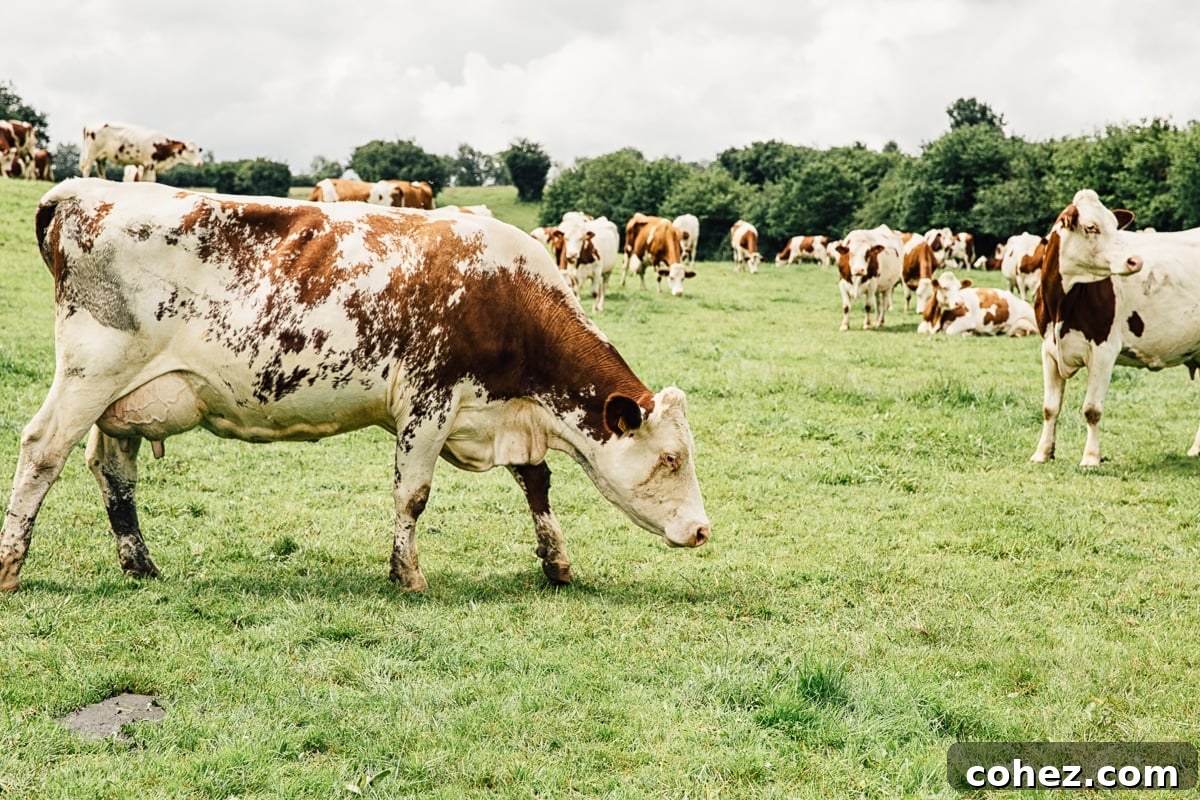
The PDO restrictions extend far beyond geographical boundaries, dictating every aspect of Comté’s creation. Only milk from specific breeds of cows – the Montbéliarde and French Simmental – is acceptable for Comté production. These cows graze on pastures that adhere to a required number of plant species, as the quality and diversity of their feed, whether fresh grass in summer or hay in winter, directly influences the milk’s quality and, consequently, the cheese’s nuanced flavor profile.
Furthermore, the milk used must be raw, preserving its natural microbial flora essential for flavor development. Salt application is limited to the entire wheels, and each Comté cheese wheel must undergo an aging process of at least four months, although some are matured for up to 36 months to develop deeper complexities. Even younger Comté is far from inferior; all wheels undergo rigorous quality checks by expert affineurs. Only upon meeting these exacting standards is the famous green label applied, alongside a unique number. This individual identifier allows each wheel of Comté to be traced back to its specific fruitière, ensuring unparalleled quality control and transparency.
A Sensory Journey: Tasting the Nuances of Comté
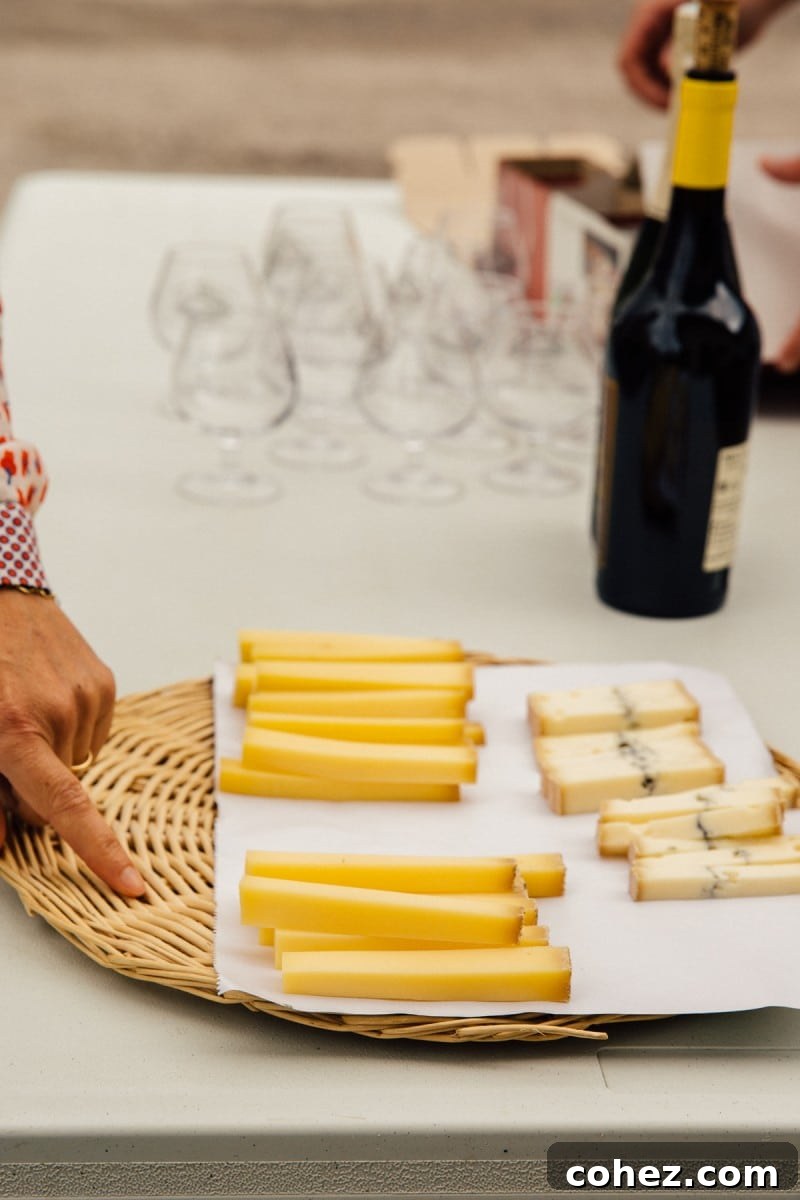
From the outset of our tour, we were advised that Comté is to be savored much like a fine wine – with attention to its subtle variations and evolving flavors. Indeed, no two wheels of Comté taste exactly alike; each possesses its own unique character, a testament to its specific aging process, the season of its production, and even the particular microclimate of its cellar. Over two days, my fellow travelers and I engaged in extensive tastings, meticulously sharing our notes and marveling at the incredible diversity within this single cheese type. It was an unforgettable journey for the palate, revealing notes from fruity and nutty to roasted and even spicy, depending on the age and origin of the Comté.

Comté’s Enduring Legacy: Artisanal Craft in a Modern World
Comté boasts an impressive production volume, being the largest cheese appellation in France, with approximately 160,000 metric tons produced annually. Yet, despite this scale, the spirit of artisanal craftsmanship remains paramount. Only about 12% of this production is exported, highlighting its deep integration into French culinary life. The strong connection between the cheesemakers and their land is a cornerstone of Comté’s philosophy, prioritizing environmental responsibility through reduced carbon footprints, the complete absence of additives, GMOs, or pesticides.
The farmers we spoke with shared fascinating anecdotes of a time when their steadfast adherence to traditional principles was met with skepticism and even derision from a world rushing towards modernization. Today, however, these same Comté cheesemakers are lauded and emulated for their unwavering standards and integrity. Their commitment to sustainable, authentic production methods serves as a powerful example of how tradition can thrive and inspire in the contemporary world.
Beyond Comté: Discovering Jura’s Diverse Culinary Treasures
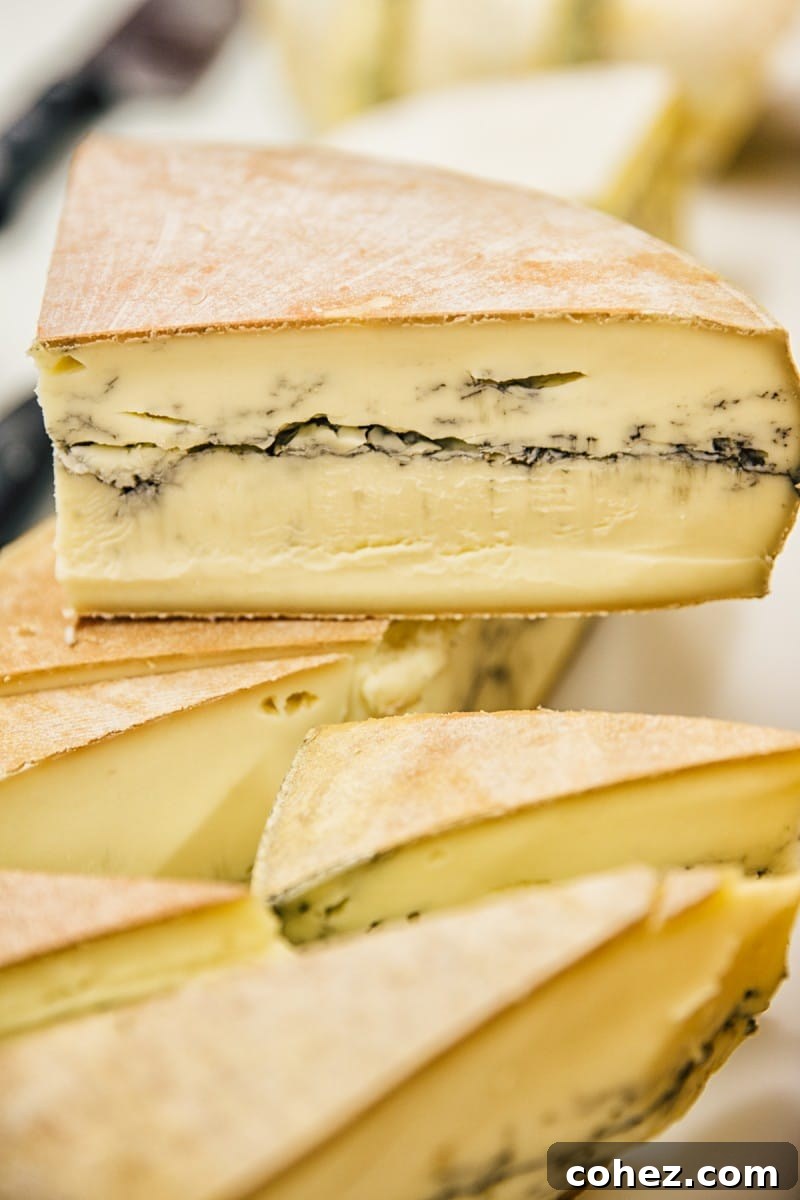
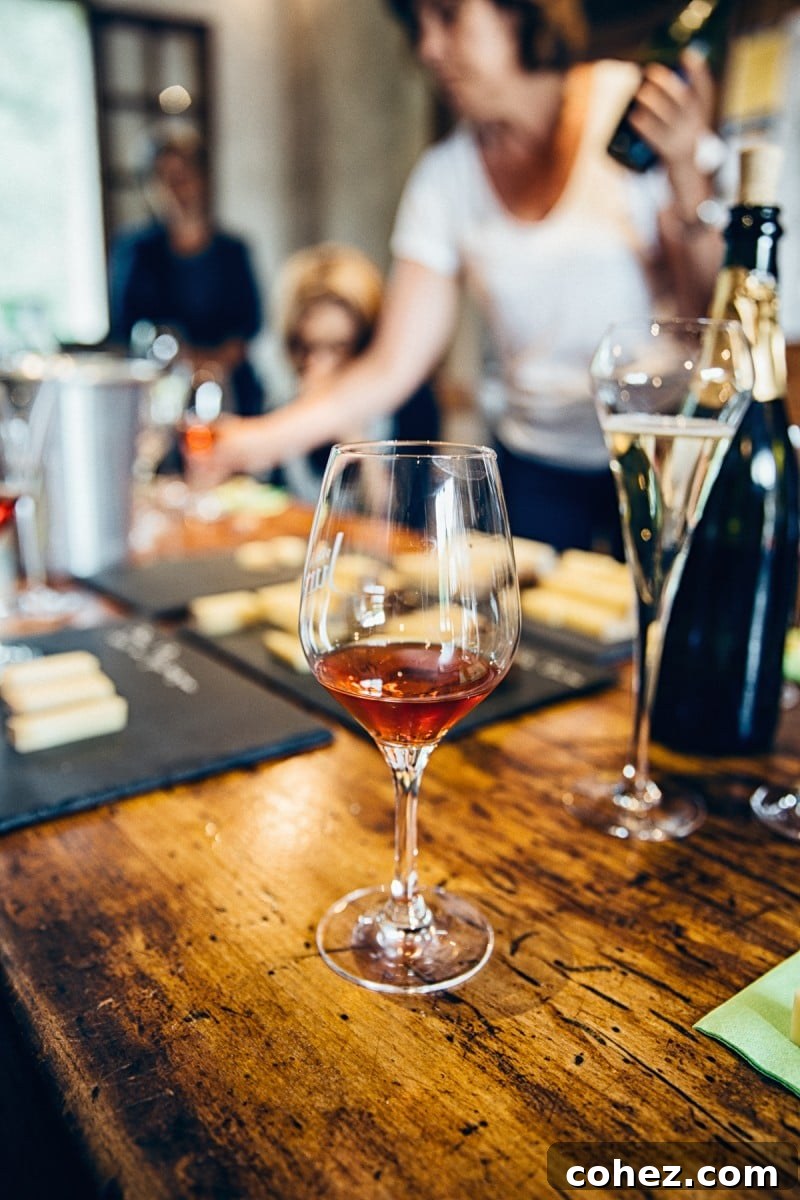
While Comté cheese is undoubtedly the star, the Jura region offers a plethora of other exceptional specialties. Among these are the distinctive Morbier cheese, with its characteristic layer of ash, and the robust Marteau sausage. And, of course, no culinary exploration of Jura would be complete without delving into its unique wines. It felt incredibly fitting that our two-day tour culminated in a sublime Comté cheese and Jura wine tasting experience at the picturesque Domaine de Montbourgeau vineyard.
The Allure of Vin Jaune: Jura’s Liquid Gold
At the vineyard, I encountered an array of exquisite Jura wines that I would have happily “smuggled” back to London. However, one particular wine captivated me above all others: Vin Jaune, or “Yellow Wine” of Jura. This oxidative wine, aged under a veil of yeast (flor) similar to Sherry, boasts an incredibly complex flavor profile, often featuring notes of walnuts, curry, and green apple. Its distinctiveness and depth left an indelible impression, and I’ve been diligently scouring the internet ever since, determined to locate and acquire this liquid gold.
A Breathtaking Conclusion: The Enduring Charm of Jura
My visit to the Jura region, though perhaps one of the most intense two days of my life, left me utterly awestruck by the dedicated individuals behind Comté cheese. Their unwavering commitment to preserving the traditions passed down through generations – from their fathers and grandfathers – coupled with the immense pride they take in their product, is truly remarkable. This journey wasn’t just about tasting cheese and wine; it was an immersion into a culture built on heritage, solidarity, and a profound respect for the land.
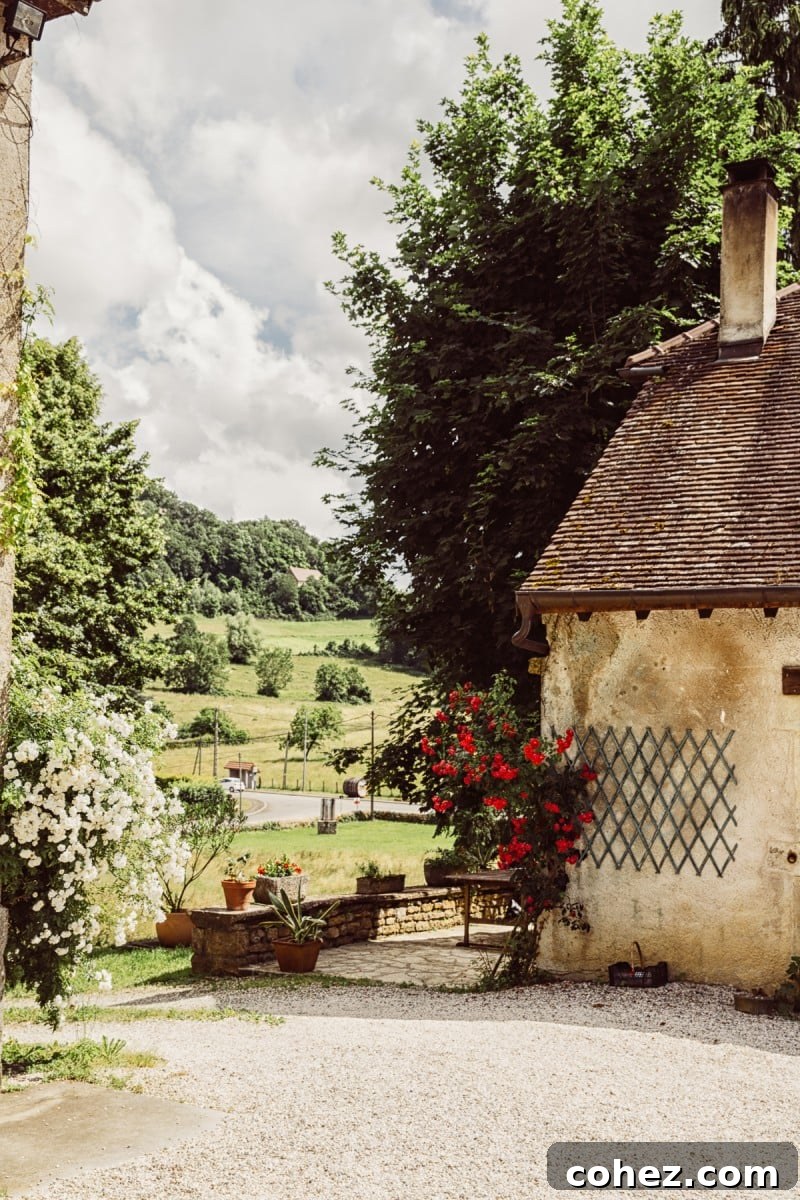
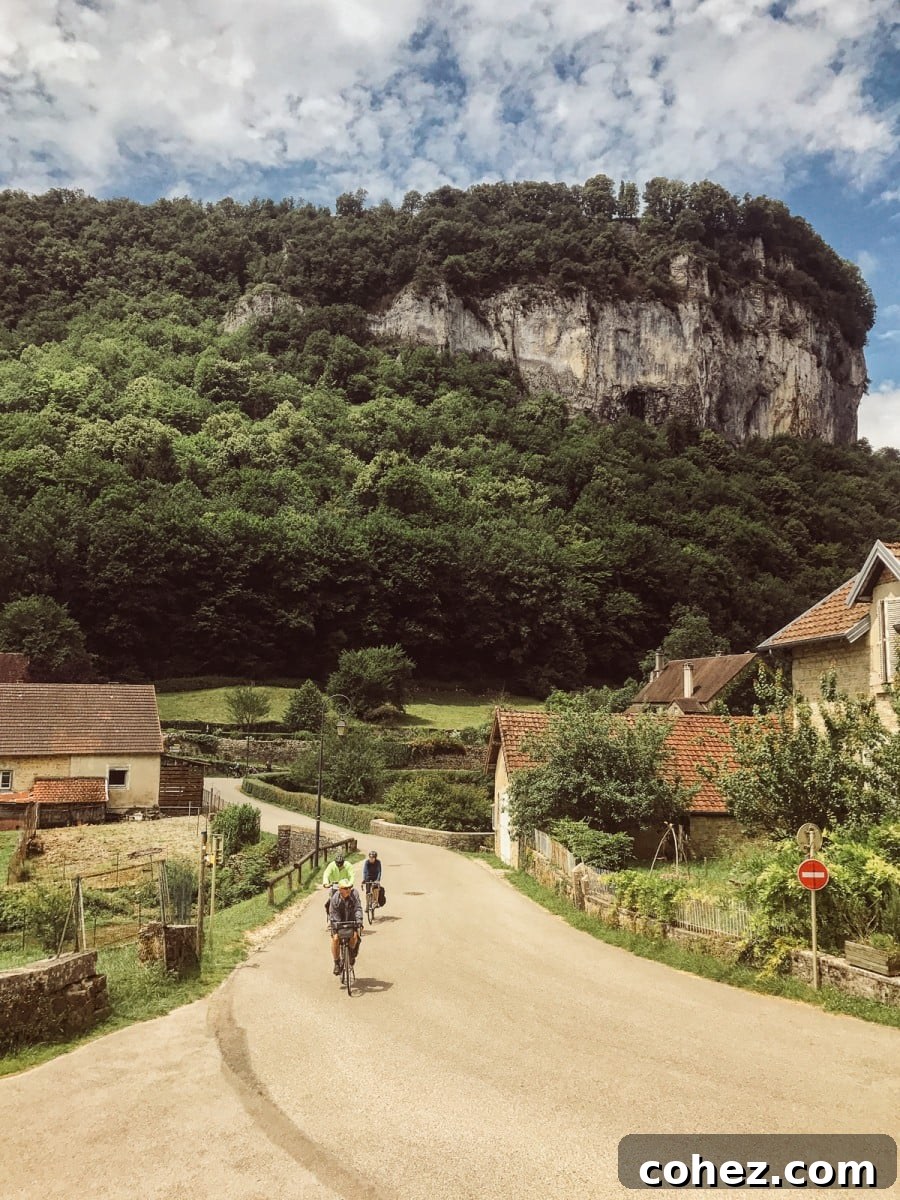
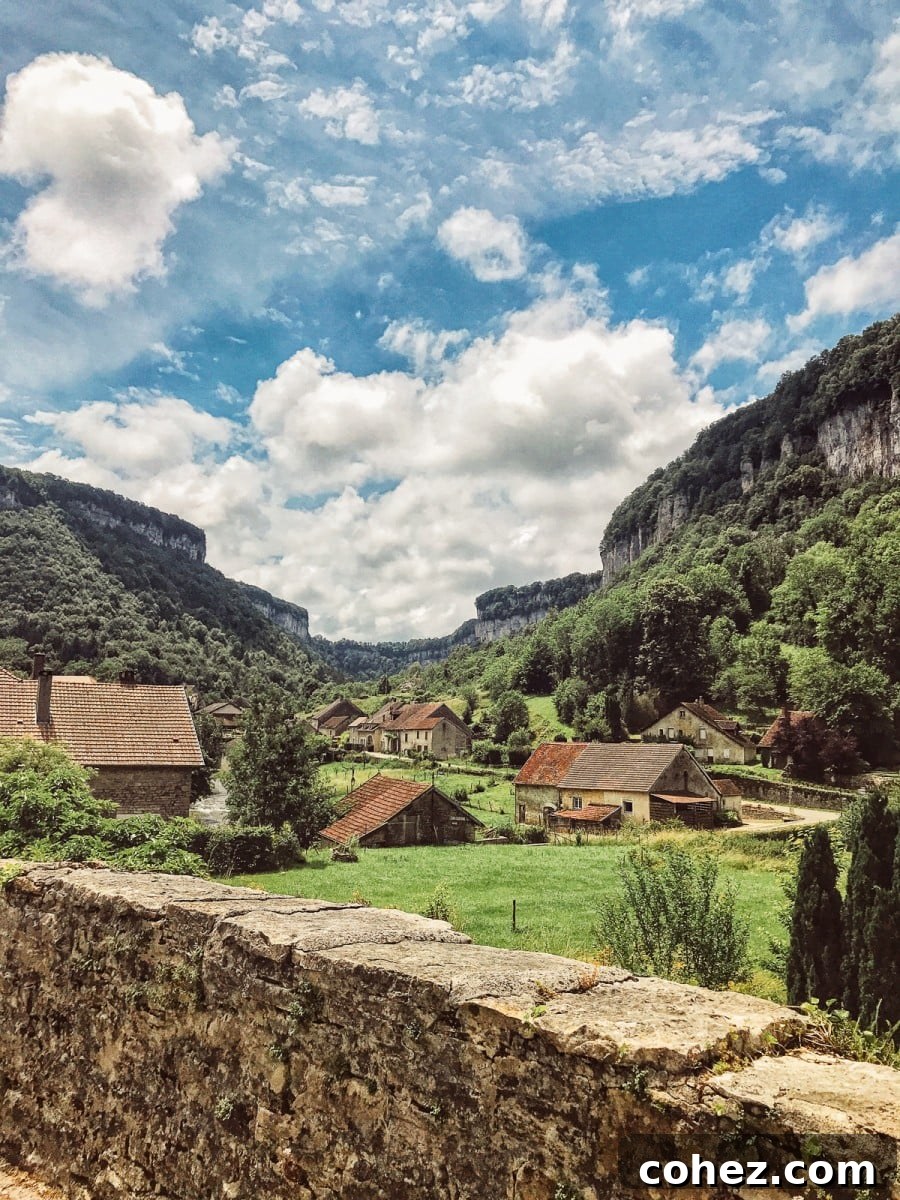
Beyond the culinary delights, the Jura region itself is breathtakingly beautiful. Its majestic landscapes, charming villages, and serene atmosphere made it a truly memorable discovery. I eagerly anticipate the opportunity to return with my family, sharing the magic of this hidden French gem and its unparalleled Comté cheese with them. If you seek an authentic French experience, rich in flavor, history, and natural beauty, the Jura region and its iconic Comté cheese should be at the very top of your travel list.