
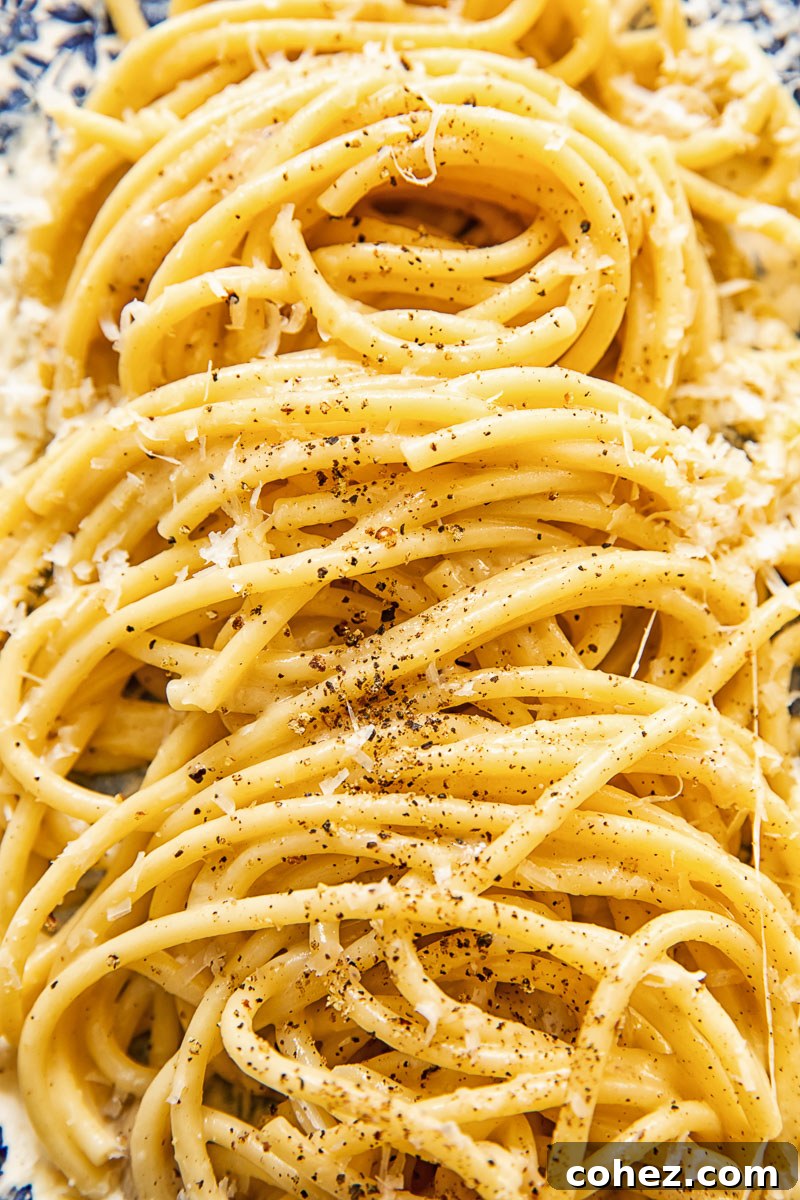
Bucatini Cacio e Pepe: A Timeless Roman Classic
What is this wonderfully simple, yet incredibly elegant dish that sings with a romantic name? Quite simply, Bucatini Cacio e Pepe is a celebrated Italian pasta dish featuring a vibrant sauce crafted from sharp cheese and freshly ground black pepper. It stands as a sophisticated and flavorful alternative to the more common tomato-based pasta recipes, offering a taste of authentic Roman culinary tradition. With just a handful of readily available ingredients and a preparation time of under 20 minutes, you can transport your family’s dinner table straight to the heart of Rome, feasting like true connoisseurs of Italian cuisine.
Italians traditionally enjoy their pasta as a modest first course, known as a “primo piatto,” rather than the generously sized main courses often served elsewhere. Embracing this authentic approach, I recommend savoring this exquisite Roman pasta dish as a delightful prelude to a second course. Consider following it with something equally delightful, perhaps a light protein or vegetable dish, to complete a truly balanced and traditional Italian meal.
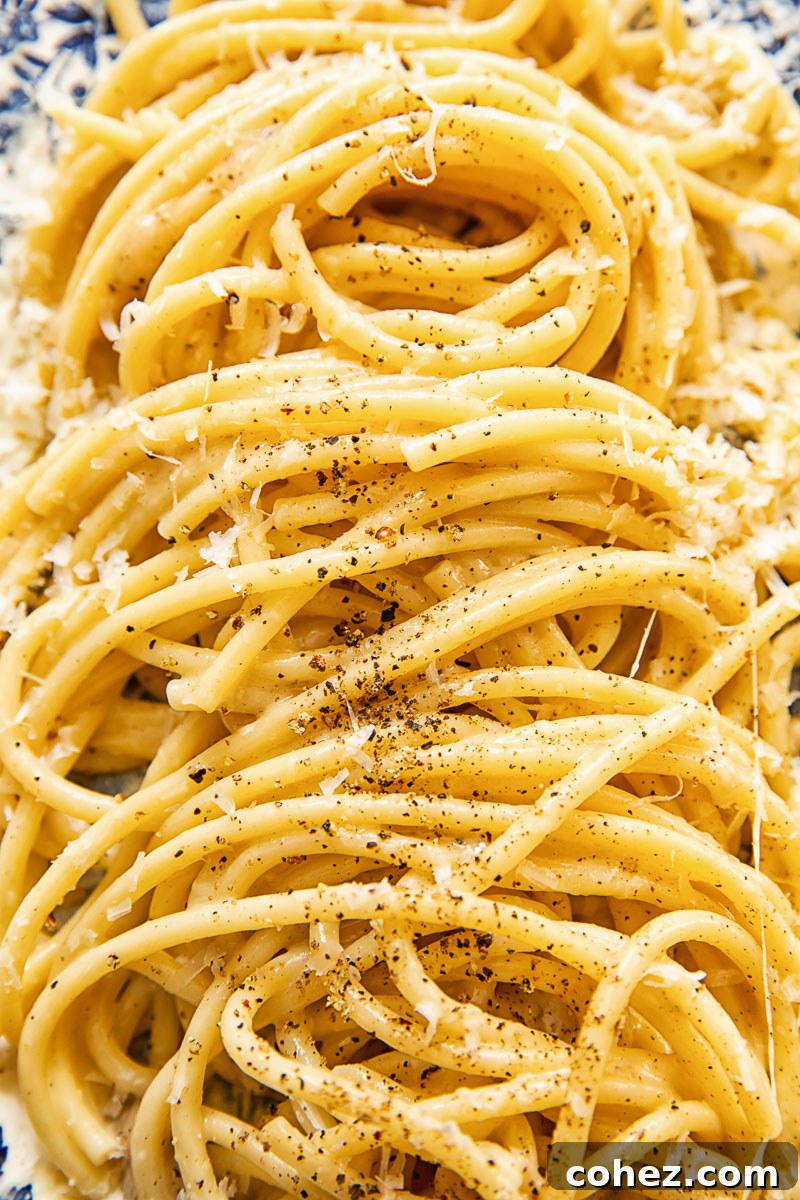
What is Cacio e Pepe? Unveiling a Roman Culinary Gem
The name “Cacio e Pepe” literally translates to “cheese and pepper,” perfectly encapsulating the minimalist essence of this iconic Italian dish. Like many globally cherished recipes built from basic staples, Cacio e Pepe likely originated from humble, rustic beginnings. Imagine Roman shepherds traversing the vast Italian hillsides, relying on simple, non-perishable ingredients readily available to them: dried pasta, hard cheese (pecorino, made from sheep’s milk), and black pepper. These ingredients were easy to carry and provided much-needed sustenance and flavor after a long day.
Over centuries, thanks to its easily sourced components, remarkable depth of flavor, and satisfying texture, Cacio e Pepe transcended its humble origins to achieve legendary status. It’s a testament to the Italian culinary philosophy that extraordinary taste can be born from simplicity and quality ingredients. This Roman pasta dish is not just food; it’s a cultural statement, celebrated for its ingenious preparation that transforms three basic elements into a masterpiece of creamy, peppery delight.
The authentic Cacio e Pepe recipe famously calls for just three core ingredients, each playing a crucial role in creating its distinctive profile:
Choosing Your Pasta: The Foundation of Cacio e Pepe’s Texture
While many traditional recipes for Cacio e Pepe might suggest pici, a hand-rolled, thick spaghetti-like pasta originating from Tuscany, its availability can be limited outside of Italy. For a practical and equally delightful alternative, I enthusiastically recommend bucatini. Bucatini offers a similar satisfying chew thanks to its generous girth, but with a unique advantage: it’s a tubular pasta. This hollow center allows the luscious, unctuous sauce to coat both the exterior and interior, creating more surface area to cling to the rich flavors. This ensures that every bite is an explosion of cheese and pepper, enhancing the overall experience. Other viable options include tonnarelli, another Roman favorite, or even good quality spaghetti, provided it’s cooked perfectly al dente.
The Kick of Black Pepper: Aromatic Depth and Pungency
In a dish where the spotlight is shared among so few ingredients, each one must truly shine. This holds especially true for the black pepper. Forget pre-ground pepper; for an authentic Cacio e Pepe experience, you must use fresh, coarsely ground black pepper. Grinding it just before use releases its volatile oils, ensuring maximum aroma and a potent, complex heat. The coarser grind adds a textural element and allows the pepper’s flavor to gradually unfold, providing a noticeable yet harmonious kick that is central to the dish. Toasting the peppercorns lightly in a dry pan before grinding can further amplify their fragrant oils, adding another layer of depth to your sauce.
The Soul of the Dish: Pecorino Romano Cheese
Pecorino Romano is not just the traditional cheese for this dish; it’s an indispensable element that defines its character. And no, it is emphatically not the same as Parmesan (Parmigiano Reggiano). The distinction is crucial for both flavor and texture. Pecorino is a hard, salty cheese made from sheep’s milk—a nod to its shepherd origins. It boasts a sharper, tangier, and saltier profile compared to the nuttier, milder, and often sweeter Parmesan, which is made from cow’s milk. Furthermore, Pecorino Romano is less grainy and melts more smoothly, properties that are absolutely essential for achieving the silken, emulsified texture of the Cacio e Pepe sauce without it becoming clumpy or separating. Its robust flavor stands up perfectly to the assertiveness of the black pepper, creating a harmonious balance that is unmistakably Roman.
This unembellished, unadorned recipe has truly stood the test of time, proving that culinary greatness doesn’t require complexity. The elegantly simple sauce remains as salty, as peppery, and as luxuriously silky as those ancient Roman shepherds would have desired. I urge you to follow the instructions to the letter, embracing each step, for a mouthful of authentic Italian pasta like no other you’ve tasted before. It’s a culinary journey back to the heart of Rome, one delicious forkful at a time.
The Art of Emulsification: Crafting the Perfect Cacio e Pepe Sauce
Do not let the apparent simplicity of the ingredients deceive you. While Cacio e Pepe relies on minimal components, it can be a surprisingly tricky dish to master on the first attempt. This isn’t your standard “dump and stir” one-pot wonder sauce; it’s a delicate dance, a precise marriage of starchy pasta water and salty Pecorino cheese. These two ingredients can be reluctant partners, requiring careful coaxing, proper introduction, and gentle warming to combine into the singularly smooth, velvety, and slippery sauce that defines a truly authentic Cacio e Pepe.
The secret to its incredible creaminess lies in emulsification. The starch released from the pasta as it cooks, when combined with the fat in the cheese and the residual heat, forms a bond, transforming disparate ingredients into a cohesive, unctuous sauce. Achieving this perfect harmony is an art form, but with attention to detail, it’s entirely within reach.
The keys to mastering this delicate emulsification and achieving a flawless sauce are:
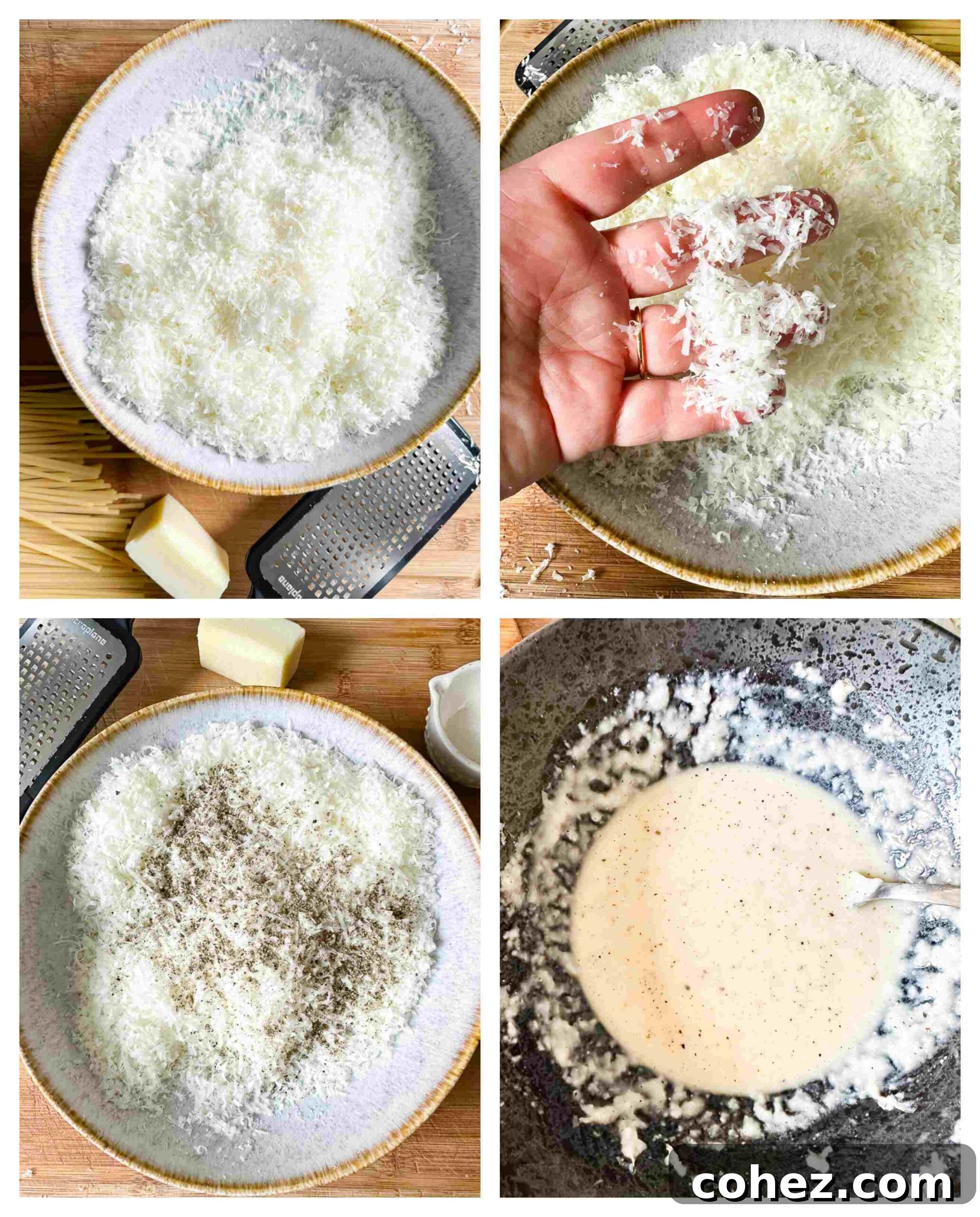
- The Cheese: A high-quality, very finely grated fresh Pecorino Romano is non-negotiable. Its fine texture allows it to melt more readily and evenly, integrating smoothly into the liquid rather than clumping. Pre-grated cheeses often contain anti-caking agents that hinder proper melting and emulsification.
- Pasta Water Temperature: Crucially, the pasta water used for the sauce must be warm, not boiling hot. Scalding hot water will shock and curdle the cheese, leading to a lumpy, separated sauce. Warm water allows the cheese to melt slowly and gently, encouraging the formation of a stable emulsion.
- The Warm Bowl: Introducing the cheese and pasta water into a comfortably heated mixing bowl provides the ideal environment for them to relax and combine. A cold bowl will rapidly cool the mixture, making emulsification difficult. A warm bowl maintains the gentle heat necessary for the cheese to melt into a silky consistency with the starchy water.
Yes, these might seem like overly exaggerated or meticulous steps for such a seemingly simple sauce. However, I implore you: do not be tempted to cut corners. Trust in the process, as every detail contributes to the magic. Take it from an experienced cook – skipping these steps almost guarantees a less-than-perfect result!
Expert Tips & Troubleshooting for Your Cacio e Pepe
- Embrace the Learning Curve: The simplicity of ingredients does not automatically equate to a simple dish. I am not too proud to admit that my first attempt at Cacio e Pepe was a complete failure, and my second wasn’t much better! But remember, “Rome was not built in a day.” This dish rewards patience and practice. Don’t be discouraged by initial setbacks; each attempt brings you closer to perfection.
- The Delicate Dance of Sauce Creation: Did I mention the sauce is tricky? The pasta water and cheese truly need some gentle persuasion to become friends and form that perfect emulsion. Your task is to ensure the conditions are absolutely perfect for this culinary match.
- First, the pasta water must be warm, not scalding hot. This controlled temperature slowly melts the cheese, preventing it from seizing or curdling.
- Second, the two ingredients must be introduced and combined in a warm bowl, not directly in a hot stovetop pan. This ideal environment, coupled with gentle but continuous whisking or stirring, will encourage the cheese and starchy water to merge and emulsify beautifully, creating that pale, silken, and utterly irresistible sauce.
- Troubleshooting Common Issues: If your result is milky water with unfortunate globs of cheese, I’m afraid you’ve forced the friendship, and it’s gone wrong. The cheese has likely curdled due to excessive heat or insufficient whisking. While the texture may not be right, please don’t discard it! The flavor will still be delicious. I ate my “failed” attempts with no shame – the true shame would be to waste such good ingredients! For minor lumps, you can try adding a tiny bit more warm pasta water and whisking vigorously off the heat.
- Personalize Your Pepper Kick: One teaspoon of freshly ground black pepper per two portions is generally to my taste, providing a robust yet balanced peppery kick. However, personal preferences vary greatly. If you crave a more intense, fiery punch, feel free to give it a few more grinds. Taste as you go, and adjust to your liking.
- Pecorino Romano is Paramount: As previously mentioned, Pecorino Romano is the authentic and superior cheese choice for Cacio e Pepe. Its finer, less grainy texture compared to large-grained Parmesan or Grana Padano allows it to melt much more willingly and seamlessly into the sauce. This characteristic is a huge advantage in achieving the smooth, creamy consistency that is the hallmark of this particular Roman recipe.
Serving & Wine Pairings: Elevating Your Roman Feast
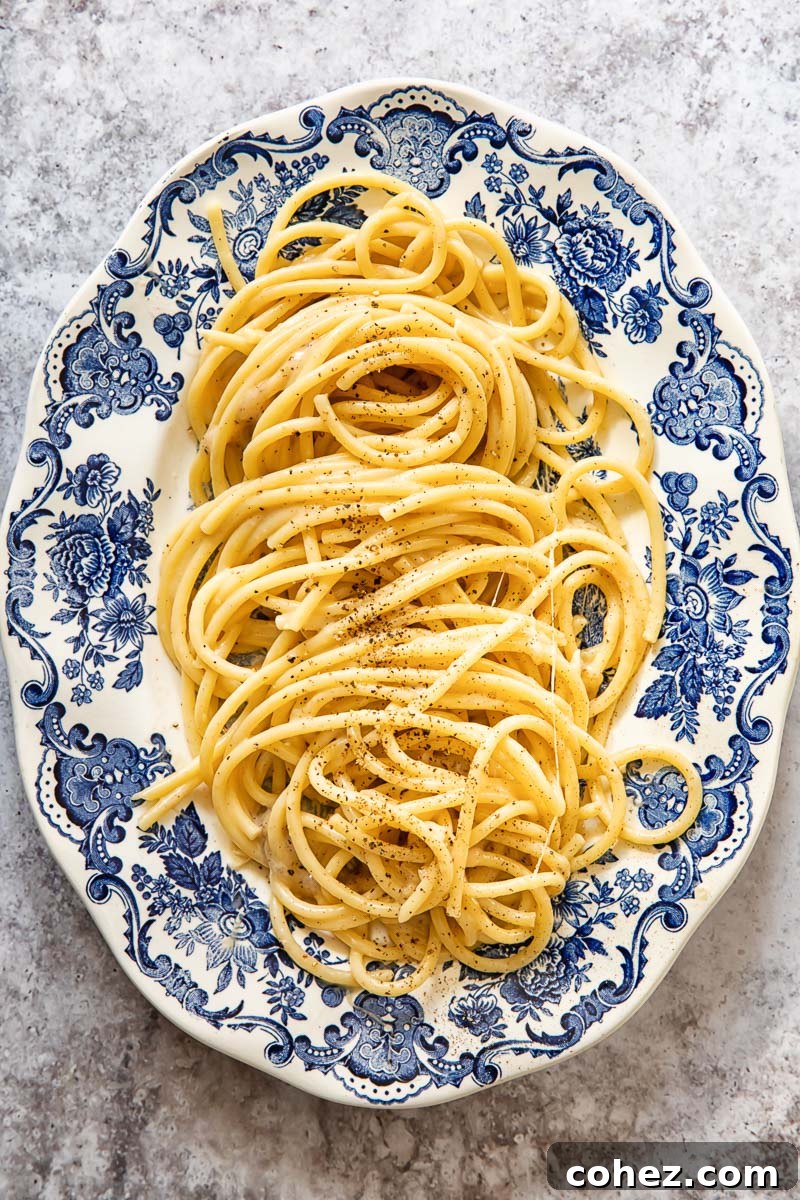
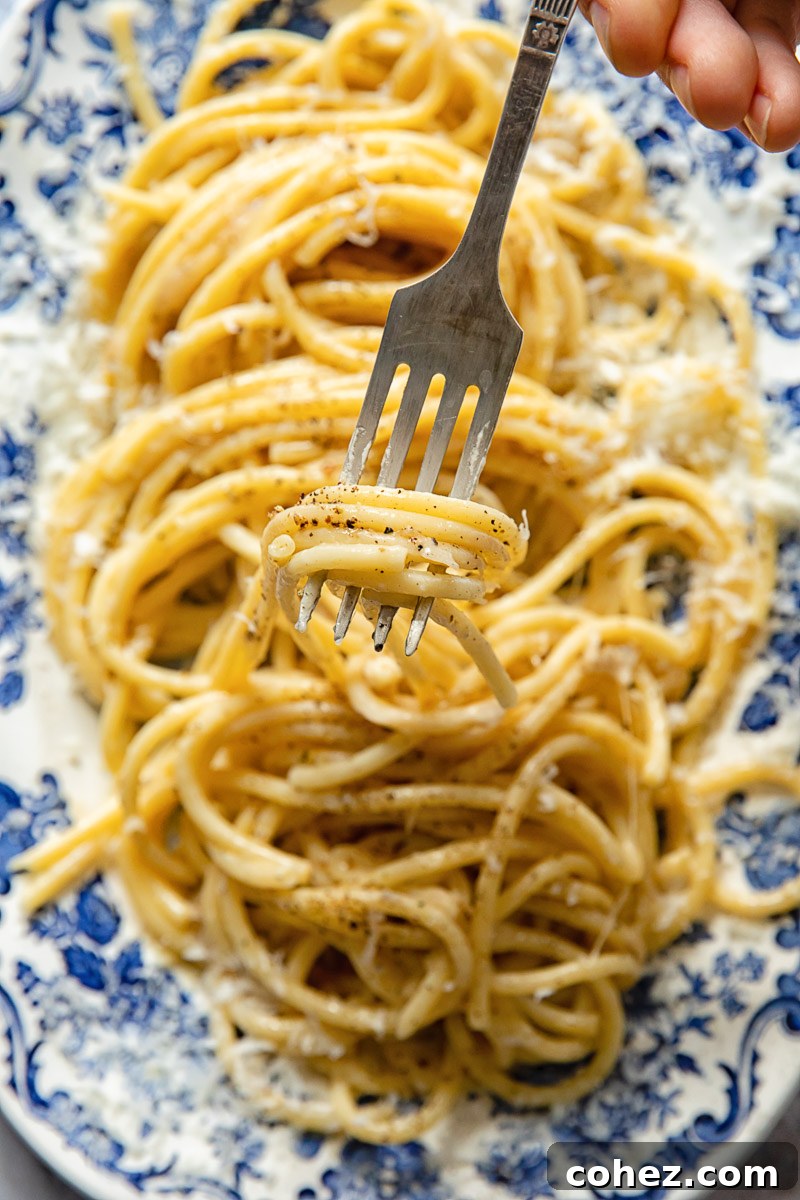
Once your Bucatini Cacio e Pepe is perfectly coated in its glorious, silky sauce, it’s ready to be savored. Serve immediately in warm bowls to maintain its ideal temperature and prevent the sauce from cooling and potentially separating. A final flourish of freshly ground black pepper and an extra grating of Pecorino Romano cheese will not only enhance the visual appeal but also intensify the flavors, bringing that authentic trattoria experience right to your table. For a truly Roman presentation, twirl the pasta high on your fork for that dramatic, yet elegant, first bite.
To complete your authentic Roman feast, consider pairing Cacio e Pepe with complementary dishes. As a “primo piatto,” it’s often followed by a “secondo” (main course) of meat or fish, accompanied by a side of vegetables. A simple green salad with a light vinaigrette or some crusty Italian bread to sop up any leftover sauce would be perfect additions. For wine lovers, a well-chosen pairing can elevate the entire meal. Look for crisp, dry Italian white wines that can cut through the richness of the cheese and stand up to the pepper’s spice. Excellent choices include a Frascati, Vermentino, or a white wine made from the Pecorino grape itself. If you prefer red, opt for something lighter-bodied with good acidity, such as a young Chianti or a Pinot Noir, to complement rather than overpower the delicate balance of the dish.
Storage and Leftovers: When Freshness Fades (But Flavor Lingers)
It’s an undeniable truth: Bucatini Cacio e Pepe is a dish that is best enjoyed immediately upon preparation. The magic of its emulsified sauce is at its peak right off the stove, coating each strand of pasta with luxurious creaminess. Over time, the sauce can start to separate, losing its perfect texture and consistency. However, if you find yourself with the delightful problem of having leftovers – perhaps you’ve defied the Italian tradition of modest portions – they can certainly be stored.
To store, cover any remaining pasta tightly with cling film or place it in an airtight container and refrigerate for up to 2 days. While the sauce’s texture may not be quite as pristine as when freshly made, the flavors will still be wonderfully robust.
When it comes to reheating, a little care goes a long way to revive the dish as much as possible. Avoid high heat that can shock the cheese and cause it to curdle further. Instead, add a splash of water (or even better, a little chicken or vegetable broth) to the pasta and reheat slowly on the hob over low heat, stirring gently and continuously. The added liquid helps to loosen the pasta and encourages the sauce to re-emulsify. Alternatively, for ultimate convenience, you can microwave it for 40 seconds to 1 minute, depending on your microwave’s power, stirring halfway through. The goal is to warm it through gently, bringing back some of its original charm, even if not its initial perfection.
Favourite Quick Pasta Recipes to Try:
- Spaghetti Carbonara
- Three Ingredient Creamy Pasta Sauce
- Homemade Pasta Alfredo
- Spaghetti alla Siciliana
Bucatini Cacio e Pepe
Julia Frey of Vikalinka
10 mins
10 mins
20 mins
2
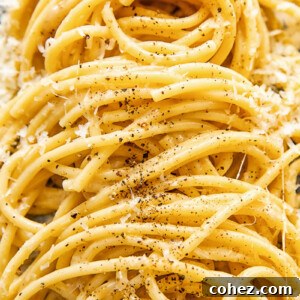
Quite simply, bucatini cacio e pepe is pasta in a sharp cheese and black pepper sauce. A great alternative to a tomato-based pasta recipe, offering a taste of authentic Roman cuisine.
Equipment
-
Colander
-
Large pot
Ingredients
- 200g/1/2 lbs bucatini, or spaghetti
- 1 tsp black pepper, freshly ground
- 80g/3/4 cup/3 oz Pecorino Romano, or Parmigiano Reggiano
- 1 tbsp butter
- 170ml/3/4 cup hot pasta water
Instructions
-
Begin by cooking the pasta in a large pot of boiling, generously salted water. To concentrate the starch, which is essential for the sauce, reduce the amount of water in the pot by about 1/3 of what you would typically use. Cook the pasta according to package instructions until al dente.
-
While the pasta cooks, finely grate the cheese using the smallest grater holes possible. The cheese needs to be extra fine to achieve a silky-smooth sauce. Do not use pre-grated cheese for this recipe, as it often contains anti-caking agents that hinder proper emulsification. Separately, freshly grind and measure out the black pepper.
-
Preheat a mixing bowl so it’s comfortably warm. You can achieve this by placing it in a low-setting oven for a few minutes or microwaving it for about one minute, as I prefer to do. Add the finely grated cheese and the freshly ground black pepper to the warm bowl. Gradually start adding the warm pasta water, a little bit at a time, mixing continuously with a whisk. Continue whisking until you achieve a smooth, creamy sauce that resembles béchamel. The cheese should be completely incorporated and melted. I typically add about 170ml (3/4 cup) of warm pasta water in total, adjusting as needed for desired consistency.
-
Once the pasta is perfectly al dente, drain it immediately, reserving some extra pasta water just in case. Add the drained pasta directly to the prepared sauce in the warm bowl. Using a pair of tongs or two large spoons, gently but thoroughly coat every strand of bucatini with the sauce. Serve immediately in warm bowls, garnished with an extra grating of cheese and a final sprinkle of black pepper, if desired.
Nutrition
Calories: 579kcal
|
Carbohydrates: 77g
|
Protein: 26g
|
Fat: 18g
|
Saturated Fat: 11g
|
Polyunsaturated Fat: 1g
|
Monounsaturated Fat: 5g
|
Trans Fat: 0.2g
|
Cholesterol: 57mg
|
Sodium: 531mg
|
Potassium: 272mg
|
Fiber: 3g
|
Sugar: 3g
|
Vitamin A: 346IU
|
Calcium: 453mg
|
Iron: 2mg
Nutrition information is automatically calculated, so should only be used as an approximation.
Tried this recipe?
Let us know how it was!