
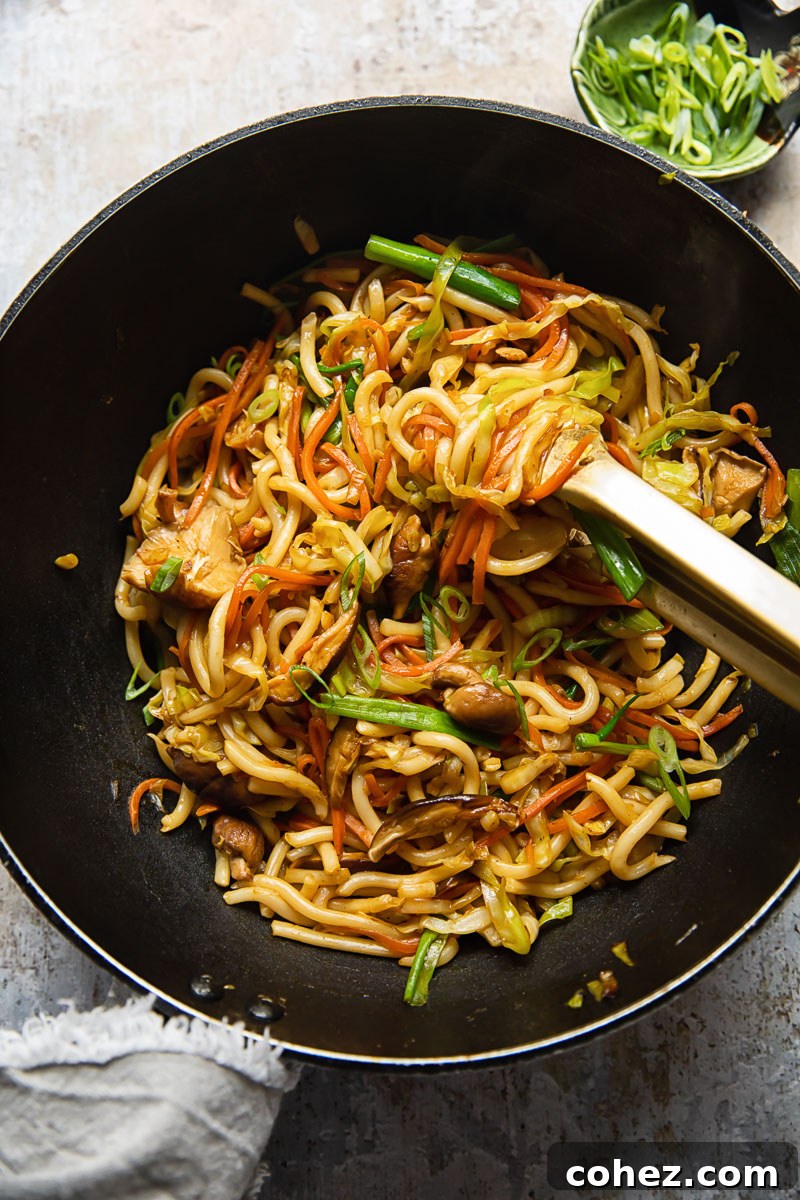
Experience the vibrant flavors of Japan with this exquisite Vegetarian Yaki Udon recipe, a delightful meatless rendition of a beloved classic. Quick to prepare and bursting with nutritious ingredients, this dish promises to become a staple in your culinary repertoire.
Craving more exciting meatless stir-fry options? Don’t miss out on my Spicy Peanut Noodles with Cabbage and Carrots, another fantastic plant-based creation!
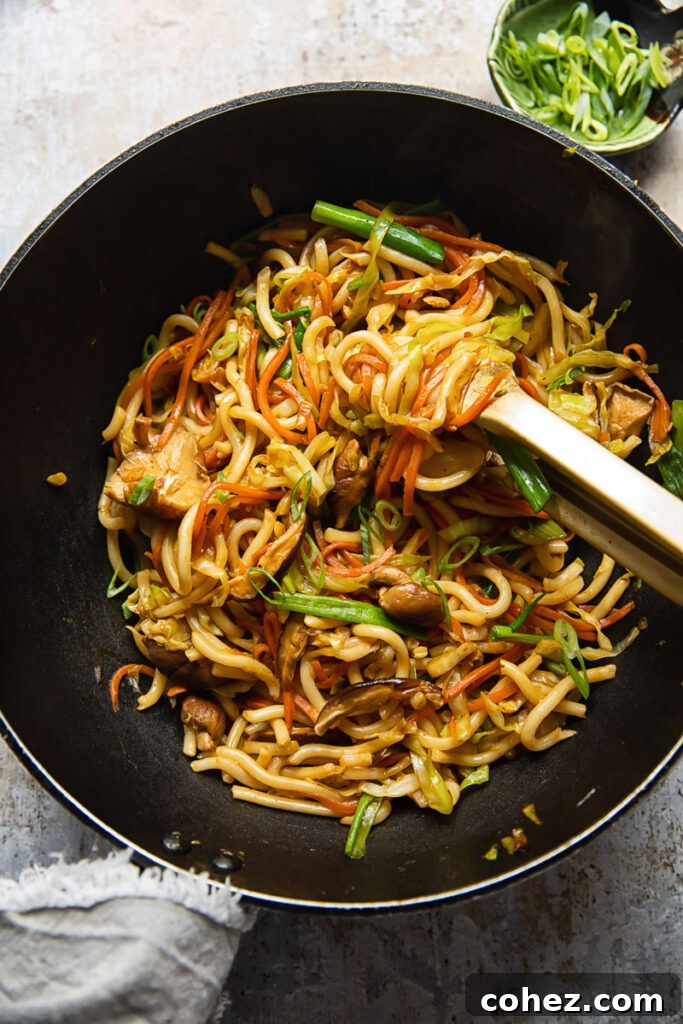
In the bustling world of Japanese cuisine, udon noodles have carved out a special place, much like their ramen counterparts. Their thick, chewy texture makes them an incredibly versatile foundation for countless dishes, particularly those that are both economical and incredibly flavorful. Vegetarian Yaki Udon stands as a shining example, proving that a satisfying, rich meal doesn’t require meat or extensive cooking time.
This dish masterfully combines a medley of fresh vegetables with a savory, umami-rich sauce, creating layers of flavor that surprise and delight with every bite. It’s the kind of meal that comes together in a flash, yet tastes as if it simmered for hours, offering a profound depth that belies its simple preparation.
Traditionally, Yaki Udon, or Japanese stir-fried udon noodles, is a popular fast-food staple often featuring ingredients like pork belly or chicken. However, this recipe embraces a vibrant vegetarian approach, highlighting the natural goodness of an array of vegetables. The magic truly happens when these fresh ingredients mingle with the iconic Japanese trifecta: soy sauce, mirin, and dashi stock. The resulting symphony of tastes is profoundly satisfying, transforming simple ingredients into a dish you’ll undoubtedly crave time and again.
The Versatile World of Udon Noodles
Udon noodles are more than just a culinary ingredient; they are a fundamental pillar of Japanese gastronomy, renowned for their incredible versatility. Like pasta in Italian cuisine or bread in many Western cultures, udon serves as a foundational “blank slate” upon which an infinite array of flavors and textures can be built. Their neutral flavor profile and satisfying chewiness allow them to beautifully absorb and complement whatever sauces and ingredients they are paired with, making them ideal for both elaborate and simple preparations.
The origins of udon noodles are shrouded in a bit of mystery, but it is widely believed they stem from Chinese culinary traditions, having made their way to Japan through various historical exchanges. Once integrated into Japanese culture, they quickly became indispensable. Different regions developed their own unique takes, leading to a delightful diversity in udon types across Japan today. For instance, Sanuki Udon from Kagawa Prefecture is famous for its square shape and firm, chewy texture, while Inaniwa Udon from Akita Prefecture is thinner and smoother, often enjoyed cold. This rich history and regional variation underscore their deep cultural significance.
When preparing Yaki Udon, you typically have two main options for the noodles: dried or pre-cooked. Both have their merits, and your choice can subtly influence the final dish. Pre-cooked udon noodles offer unparalleled convenience, needing only a quick rinse or direct addition to the pan, drastically cutting down prep time. However, they can sometimes be more delicate and prone to breaking apart during vigorous stir-frying. Dried udon noodles, on the other hand, require cooking according to package instructions, similar to pasta, but tend to hold their shape and chewiness exceptionally well, providing a more robust texture. If opting for dried udon, remember that you’ll generally need about half the weight compared to pre-cooked noodles, as they expand significantly upon absorbing water. Whichever you choose, the key is to cook them just right – al dente for that perfect chewy bite.
Beyond stir-fries, udon noodles shine in various other applications. They are absolutely exquisite when served in a comforting hot soup, where their thickness soaks up the broth beautifully. They are also wonderful in cold dishes during warmer months, often served with a light dipping sauce. Should you find udon noodles difficult to source locally, common substitutes include soba noodles for a slightly different flavor profile, egg noodles for a similar texture, or even regular spaghetti in a pinch, though the authentic udon chewiness is truly unique.
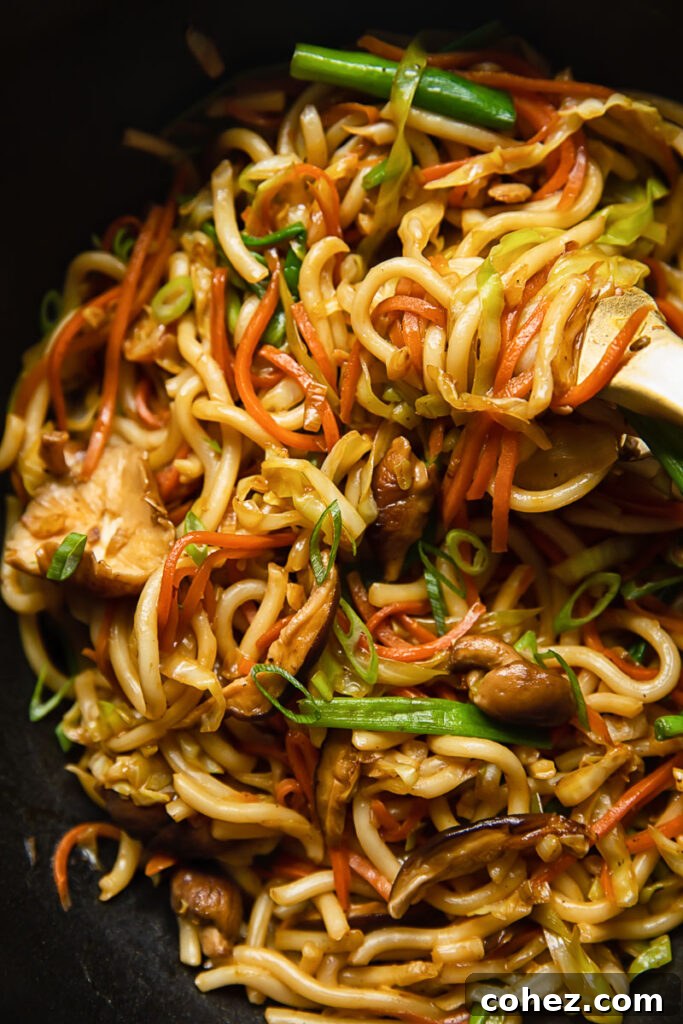
Crafting Your Vegetarian Yaki Udon: Preparation and Cooking
One of the most appealing aspects of this Vegetarian Yaki Udon recipe is its surprising simplicity and incredible speed. The actual cooking phase is remarkably brief, often taking no more than 10 minutes from start to finish. This makes it an ideal choice for busy weeknights or whenever you need a quick yet wholesome meal.
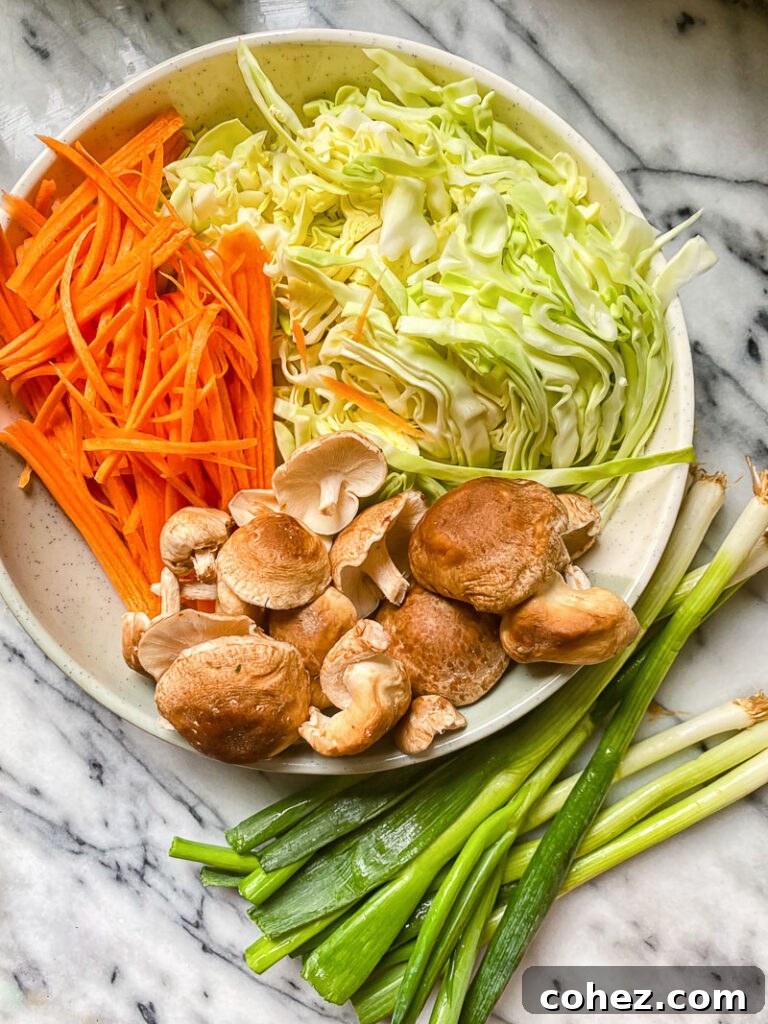
Given the rapid cooking time, the importance of “mise en place” – having all your ingredients prepped and ready before you even turn on the stove – cannot be overstated. This crucial step ensures a smooth, stress-free cooking process and prevents anything from burning while you scramble for the next ingredient. Pay particular attention to the carrots, cabbage, and green onions, ensuring they are all uniformly chopped and within arm’s reach.
For the mushrooms, especially shiitake, proper preparation is key to their texture and flavor. If you’re using large shiitake mushrooms, it’s highly recommended to remove their tough, woody stems, which can be unpleasant to eat. For smaller mushrooms, a simple trim of the stem is usually sufficient. Once trimmed, cut the mushroom caps into uniform, bite-sized pieces. If you have tiny mushrooms, you might even leave them whole. This ensures even cooking and a consistent texture throughout the dish.
If your choice falls on dried udon noodles, now is the time to cook them according to the package instructions. This usually involves boiling them in water until they are tender but still retain a pleasant chewiness – avoid overcooking, as they will be stir-fried further. Once cooked, drain them thoroughly and immediately rinse them under cold water. This step is vital as it halts the cooking process, preventing the noodles from becoming mushy, and also washes away excess starch, ensuring they remain separate and don’t clump together in the wok. If you’re using pre-cooked udon noodles, you can skip this step entirely and add them directly to the wok later, as they are already tender and ready to go.
When stir-frying the vegetables in your wok or large pan, observe how they transform. They will soften and release their moisture, typically reducing their volume by about half. The goal is to cook them until they are tender-crisp – fully cooked through, but still retaining a slight bite, adding a wonderful textural contrast to the soft noodles.
Essential Recipe Tips and Notes for Perfect Yaki Udon
- **Noodle Choice Matters:** As discussed, you have the option of precooked or dried udon noodles. While precooked noodles are incredibly convenient and shave off precious minutes from your cooking time, they can sometimes be more delicate and may break up a bit during the vigorous tossing of a stir-fry. Dried udon noodles, once cooked, tend to be more resilient and hold their shape beautifully, offering a firmer, more satisfying chew. Both will deliver a delicious result, so choose based on your preference for convenience versus texture.
- **The Cold Water Rinse:** This is a small but critical step if you’re cooking dried udon noodles. After draining your freshly cooked noodles, running them under cold water serves two important purposes: it immediately stops the cooking process, preventing them from becoming overcooked and mushy, and it washes away excess starch, which helps prevent the noodles from sticking together and clumping in the wok. This ensures each strand is perfectly coated in the savory sauce.
- **Sourcing Dashi/Tsuyu Stock:** Dashi stock is a fundamental building block of Japanese flavor, providing a deep umami base. Tsuyu is a concentrated noodle soup base that often contains dashi. These can usually be found in the international aisle of larger supermarkets or Asian grocery stores. If you’re struggling to locate them, a functional and widely available substitute is Worcestershire sauce. However, be aware that many traditional Worcestershire sauces contain anchovies, so if you’re aiming for a strictly vegetarian or vegan dish, you’ll need to seek out a certified vegan version.
- **Ensuring Plant-Based Purity:** For those committed to a purely plant-based or vegan diet, it’s important to verify the ingredients in your sauces. Traditional dashi is often made with katsuobushi (bonito flakes), and as mentioned, Worcestershire sauce can contain anchovies. Fortunately, vegan versions of both dashi stock (often kombu-based) and Worcestershire sauce are increasingly available in health food stores or online. Always check the labels carefully to ensure your Yaki Udon remains truly plant-based.
- **Mastering “Mise en Place”:** This recipe cooks at lightning speed, which is a blessing, but also means there’s no time to chop while cooking. Having all your vegetables prepped, sauces measured, and noodles ready before you even turn on the heat will make the entire process incredibly smooth, enjoyable, and free from frantic last-minute chopping.
- **Preparing Shiitake Mushrooms:** If using fresh shiitake mushrooms, remember to trim off their tough, fibrous stems, as these can be quite unpleasant to chew. The caps are where all the delicious umami flavor and meaty texture reside. If you’re using dried shiitakes, rehydrate them by soaking them in boiling water for 20-30 minutes until soft. Once rehydrated, squeeze out any excess water, trim the stems, and proceed as you would with fresh mushrooms. The soaking liquid can even be strained and added to your dashi stock for an extra boost of mushroom umami.
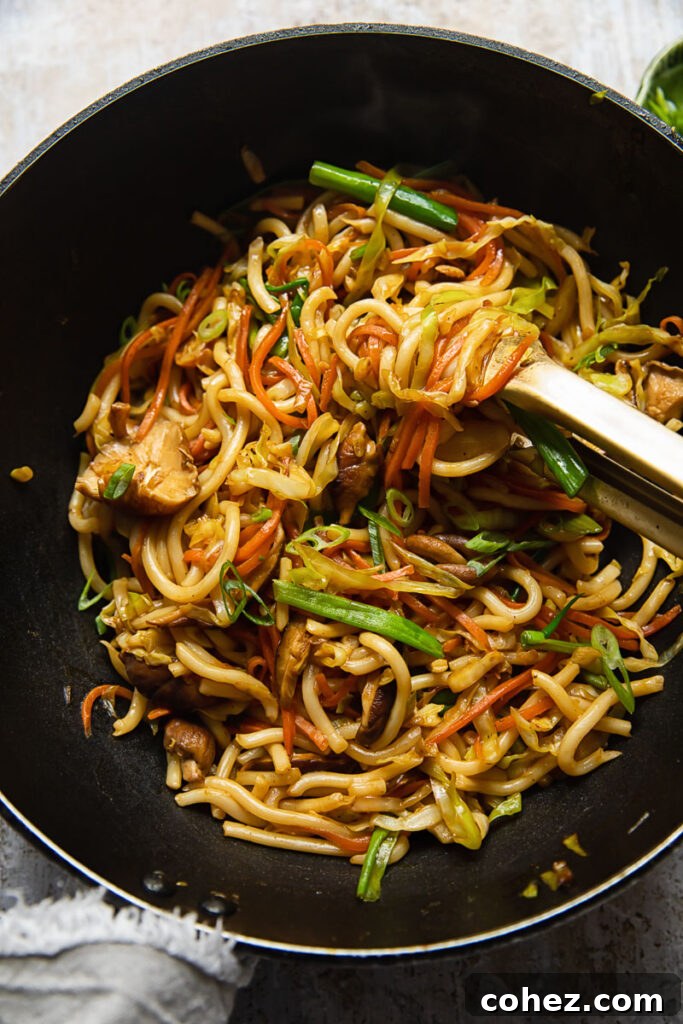
Serving Your Delicious Vegetarian Yaki Udon
Vegetarian Yaki Udon is at its absolute best when served piping hot and fresh straight from the wok. The warmth brings out the full depth of flavors in the noodles and vegetables, and the texture is perfectly tender-crisp. Therefore, plan to enjoy your meal immediately after cooking. For those who appreciate an extra layer of flavor and heat, I highly recommend drizzling a generous amount of chili oil or sriracha over your portion – the spicy kick perfectly complements the savory, umami notes of the stir-fry. A sprinkle of toasted sesame seeds also adds a delightful nutty crunch and visual appeal.
This dish is a fantastic one-pan meal, meaning it’s incredibly satisfying and complete on its own, requiring no further culinary effort. However, if you’re hosting or simply desire a more elaborate spread, and if you’re not strictly adhering to vegetarianism for the entire meal, it pairs wonderfully with light, complementary sides. For example, a simple side of steamed edamame, a crisp cucumber salad with a light vinaigrette, or even a small bowl of miso soup could enhance the experience. If you’re open to non-vegetarian additions, my Teriyaki Salmon offers a harmonious blend of flavors that would beautifully complement the Yaki Udon, creating a diverse and fulfilling Japanese-inspired feast.
Storage and Reheating for Later Enjoyment
While Vegetarian Yaki Udon is undoubtedly best enjoyed fresh, it also makes for excellent leftovers, offering a convenient and delicious meal for another day. To store any remaining portions, allow the noodles to cool completely to room temperature before transferring them to an airtight container. Stored properly in the refrigerator, they will remain fresh and flavorful for 2 to 3 days. This makes it an ideal dish for meal prepping, allowing you to quickly assemble a healthy lunch or dinner with minimal effort later in the week.
When you’re ready to reheat, the best method is to gently warm the noodles in a pan on the stovetop. Add a small amount of oil (sesame oil or a neutral cooking oil works well) to a pan and heat it over medium heat. Once hot, add the leftover Yaki Udon and stir-fry gently, tossing occasionally, until it is thoroughly heated through. Be careful not to overheat, as this can cause the noodles to become too soft. The goal is to warm it just until it’s hot and fragrant, ready to be enjoyed once again. A quick reheat will bring back much of its original texture and flavor, making for a satisfying continuation of your meal.
More Japanese Recipes to Explore
- Chicken Katsu Curry
- Teriyaki Chicken Stir Fry
- Miso Aubergine (Eggplant)
- Shoyu Chicken
Rating: 4 out of 5 stars based on 2 votes.
Vegetarian Yaki Udon (Japanese Fried Noodles)
Julia Frey of Vikalinka
10 minutes
10 minutes
20 minutes
6
This Vegetarian Yaki Udon recipe is a meatless version of a Japanese legend, perfect for a quick and satisfying meal. It’s packed with nutritious ingredients and promises to be a new favorite!
Ingredients
- 600g / 20oz udon noodles (precooked, or 300g / 10oz dry)
- 1 tbsp oil (such as vegetable or canola oil, for stir-frying)
- 100g / 1 cup white cabbage (finely sliced)
- 100g / 1 cup shiitake mushrooms (or button mushrooms, stems removed from large ones, sliced)
- 1 carrot (julienned into thin matchsticks)
- 3 green onions (green parts cut into 5cm/2 inch pieces; white parts sliced thinly)
- 2 tbsp soy sauce (ensure vegan if preferred)
- 2 tbsp mirin (sweet rice wine, adds sweetness and gloss)
- 1 tbsp tsuyu/dashi stock (or a vegan Worcestershire sauce for a plant-based option)
- 1 tsp sesame oil (optional, for a nutty aroma before serving)
Instructions
-
Begin by preparing all your vegetables. Slice the carrot into very thin matchsticks or julienne them for quick cooking and visual appeal. Finely slice the white cabbage. For the shiitake mushrooms, gently remove the tough stems from any large ones, as they can become woody when cooked. Trim the ends of smaller mushroom stems and then slice all mushrooms into uniform, bite-sized pieces. This careful preparation, known as “mise en place,” is crucial for a smooth and quick stir-fry.
-
If you are using dried udon noodles, now is the time to cook them. Follow the package instructions carefully, typically boiling them in ample water until they are tender but still firm to the bite (al dente). Once cooked, drain the noodles thoroughly in a colander and immediately rinse them under cool running water. This essential step prevents the noodles from overcooking and becoming sticky, ensuring they remain separate and chewy for your stir-fry. If you are using precooked udon noodles, you can skip this step as they are ready to be added directly to the wok later.
-
Heat 1 tablespoon of oil in a large wok or a spacious frying pan over medium-high heat. Once the oil is shimmering, add the prepared cabbage, julienned carrots, sliced mushrooms, and the white sections of the green onions to the pan. Stir-fry these vegetables continuously for approximately 5-7 minutes. The goal is for them to become tender-crisp – they should be cooked through but still retain a slight firmness and vibrant color. You’ll notice their volume will visibly reduce by about half as they soften and release moisture.
-
Now, add the cooked udon noodles (or precooked noodles if using) to the pan along with the remaining green onion greens. Pour in the soy sauce, mirin, and dashi stock (or vegan Worcestershire sauce). Toss all the ingredients vigorously to combine them thoroughly, ensuring the noodles and vegetables are evenly coated in the savory sauce. Continue to heat and toss for another 2-3 minutes, allowing the flavors to meld and the noodles to warm through. Before serving, you can optionally drizzle with 1 teaspoon of sesame oil for an added nutty aroma. Taste the dish and add a pinch of salt if needed to balance the flavors. Serve immediately and enjoy!
Notes
Nutrition
Calories:
196kcal
|
Carbohydrates:
34g
|
Protein:
8g
|
Fat:
4g
|
Saturated Fat:
0.3g
|
Polyunsaturated Fat:
1g
|
Monounsaturated Fat:
2g
|
Trans Fat:
0.01g
|
Sodium:
891mg
|
Potassium:
144mg
|
Fiber:
4g
|
Sugar:
7g
|
Vitamin A:
1775IU
|
Vitamin C:
8mg
|
Calcium:
17mg
|
Iron:
0.4mg
Nutrition information is automatically calculated, so should only be used as an approximation.
Tried this recipe?
Let us know how it was!