
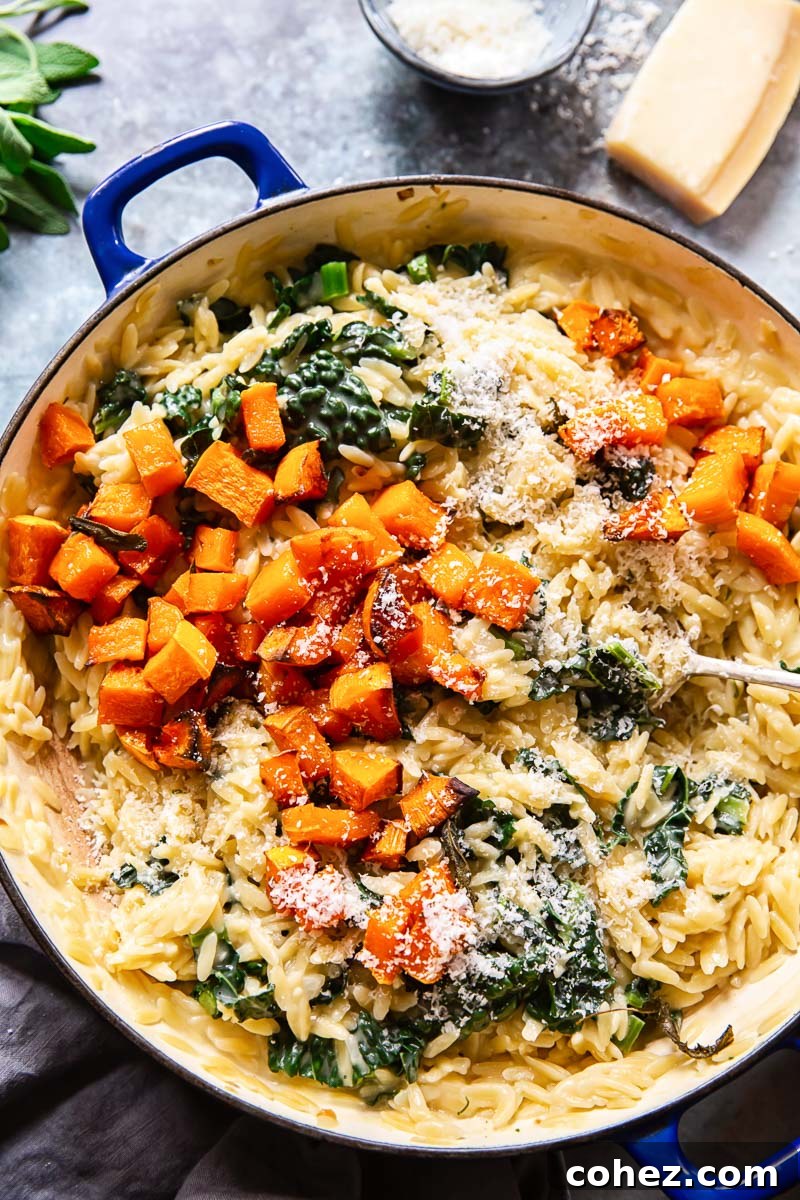
Embrace the cozy flavors of autumn with this incredibly delicious and heartwarming Creamy Butternut Squash Orzo recipe. This delightful pasta dish, featuring tender roasted butternut squash, vibrant kale, aromatic fresh sage, and rich Parmesan cheese, is a true culinary masterpiece that checks all the boxes. It’s not just a meal; it’s a celebration of fall — brimming with nutrients, deeply satisfying, and perfect for a cozy night in or a festive holiday gathering.
If you’re a fan of creamy, effortless one-pan meals like this, you’ll absolutely love exploring other comforting dishes such as Creamy Chorizo and Spinach Orzo. But for now, let’s dive into the autumnal magic of our star dish.
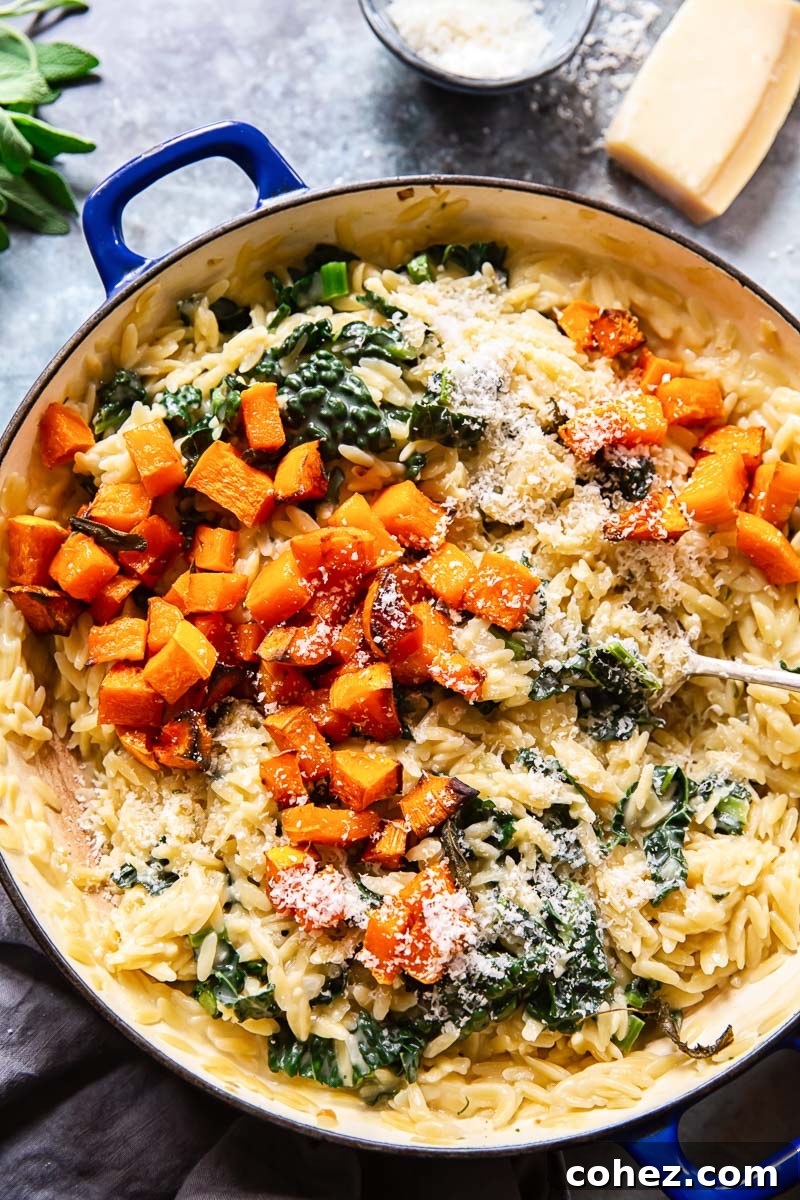
Creamy Butternut Squash Orzo: Your New Favorite Fall Pasta
Pasta dishes are undeniably the heroes of weeknight dinners. They offer a delightful combination of quick preparation and endless customization, making them a staple in households worldwide. It’s genuinely challenging to find someone who doesn’t appreciate a well-made pasta meal.
However, pasta sometimes carries the reputation of being overly rich in carbs and fats. While its carbohydrate content is a given, the fat aspect doesn’t necessarily have to dominate your pasta recipes. In fact, by pairing pasta with bold, flavorful, and nutritious ingredients, you can transform it into a healthy and incredibly substantial meal option.
Take this Creamy Butternut Squash Orzo recipe, for instance. It’s a testament to how pasta can be both indulgent and wholesome. The first time I crafted this vegetarian masterpiece, I was so thrilled that I immediately messaged my husband, boasting about the incredible dish awaiting him at home. My exact words might have been, “This orzo pasta is absolutely ridiculous! Sooooo tasty!” And the beauty of it is, it’s packed with vibrant vegetables and wonderful flavors, proving that healthy eating can be utterly delicious.
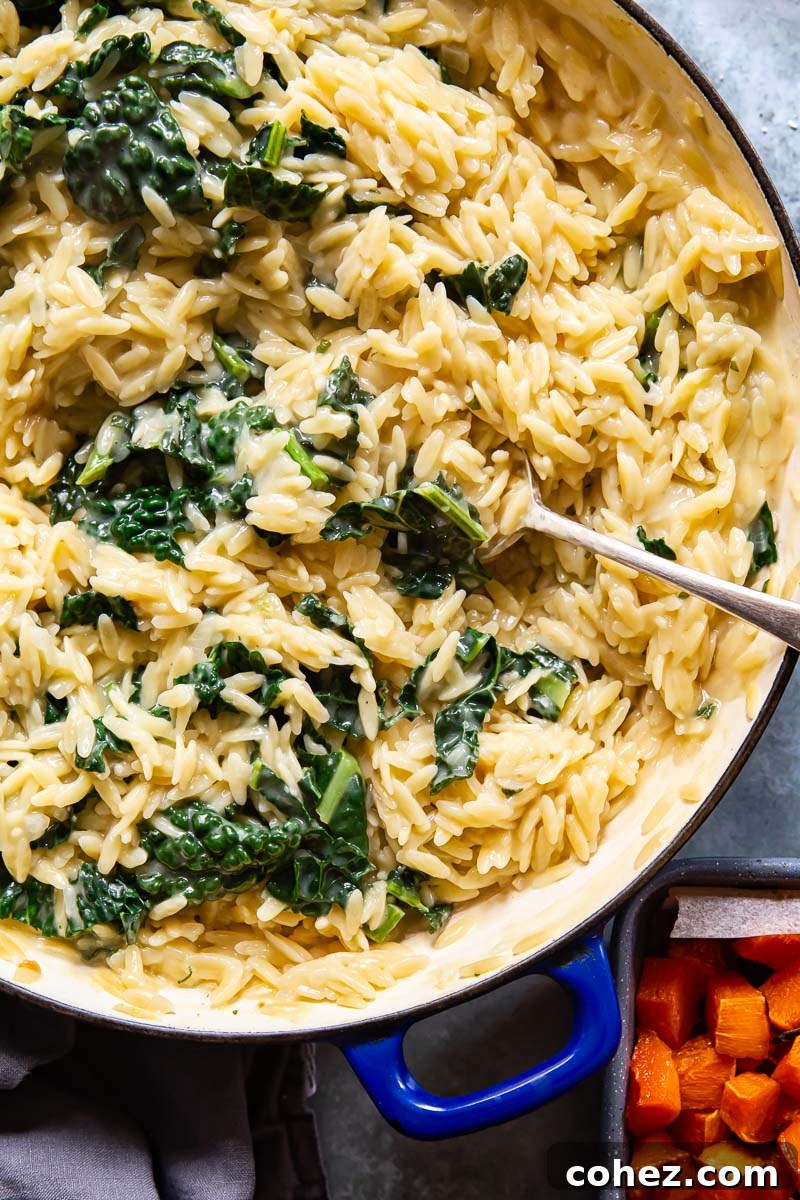
What is Orzo? The Tiny Pasta with Big Flavor Potential
Despite its resemblance to rice, orzo is indeed a type of pasta, specifically a short-cut pasta shaped like a grain of barley. The word “orzo” actually means “barley” in Italian, a nod to its appearance rather than its ingredients. It’s crafted from the same durum wheat semolina as most other pastas, making it a versatile and delightful addition to countless dishes.
What makes orzo truly special is its small size, allowing it to cook remarkably quickly. This characteristic makes it a fantastic choice for hearty soups, delightful pasta salads, and especially for creamy one-pot meals, much like the Butternut Squash Orzo we’re featuring today. Its ability to absorb flavors and sauces makes it an ideal canvas for rich ingredients.
Over the years, orzo has become a favorite in my kitchen for its adaptability. I’ve used it in various one-pan dinners, from Lemon Chicken Orzo and Greek Chicken Orzo to flavorful Italian Sausage and Kale Orzo, and even as the base for Meatball Orzo and refreshing Greek Orzo Salad with Grilled Zucchini. The beauty of orzo lies in how effortlessly it can be incorporated into healthy and satisfying meals, largely depending on the nutritious additions you choose.
Cooking orzo is straightforward, following the same principles as cooking any other pasta shape. Simply boil it in water or stock until it reaches that perfect al dente stage – tender with a slight bite – and it’s ready to elevate your dish.
Essential Ingredients for a Perfect Butternut Squash Orzo
The foundation of this exquisite dish lies in a relatively simple yet impactful list of ingredients, each playing a crucial role in creating its rich flavor and creamy texture. You’ll need: orzo pasta, shallots, garlic, fresh sage, butternut squash, kale, high-quality vegetable stock, and grated Parmesan cheese. One of the best aspects of this recipe is its flexibility; you can easily adjust it to suit your personal preferences or make use of ingredients you already have on hand.
Spotlight on Key Ingredients:
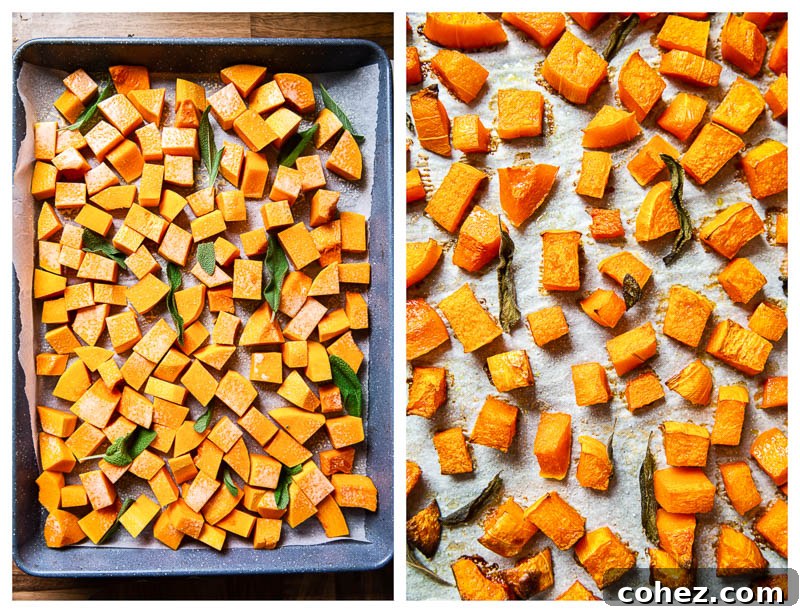
- Butternut Squash: The star of this autumnal dish. Roasting butternut squash is key here. The high heat of the oven transforms the squash, making it incredibly tender and intensifying its natural sweetness, bringing out a delightful caramelization. It’s a simple process: just peel, de-seed, cube, and roast on a baking sheet with a drizzle of olive oil, salt, and pepper. If you don’t have butternut squash, other fantastic alternatives include pumpkin, sweet potatoes, carrots, or even broccoli florets. Just remember to roast them first for that essential depth of flavor.
- Kale: I particularly love adding kale, especially Cavolo Nero (also known as Tuscan kale), for its slightly earthy flavor and robust nutritional benefits. It provides a wonderful textural contrast and a boost of healthy greens. If kale isn’t your preference or isn’t available, spinach or Swiss chard are excellent and equally nutritious substitutes that wilt beautifully into the warm pasta.
- Fresh Sage: This herb is quintessential for fall dishes, offering an aromatic, slightly peppery, and earthy note that perfectly complements the sweetness of the butternut squash. While dried sage can be used, fresh sage elevates the dish with its vibrant aroma.
- Shallots and Garlic: These aromatic powerhouses form the savory base of our orzo. Sautéing them gently coaxes out their sweet and pungent flavors, laying the groundwork for a truly rich sauce.
- Vegetable Stock: Essential for cooking the orzo and building the creamy sauce. Using a good quality vegetable stock adds depth and savory notes to the entire dish.
- Parmesan Cheese: For that ultimate creamy finish and a salty, umami kick. Freshly grated Parmesan melts into the sauce seamlessly, contributing significantly to the luxurious texture.
Selecting fresh, high-quality ingredients will undoubtedly make a noticeable difference in the final taste of your Creamy Butternut Squash Orzo, ensuring every bite is bursting with flavor.
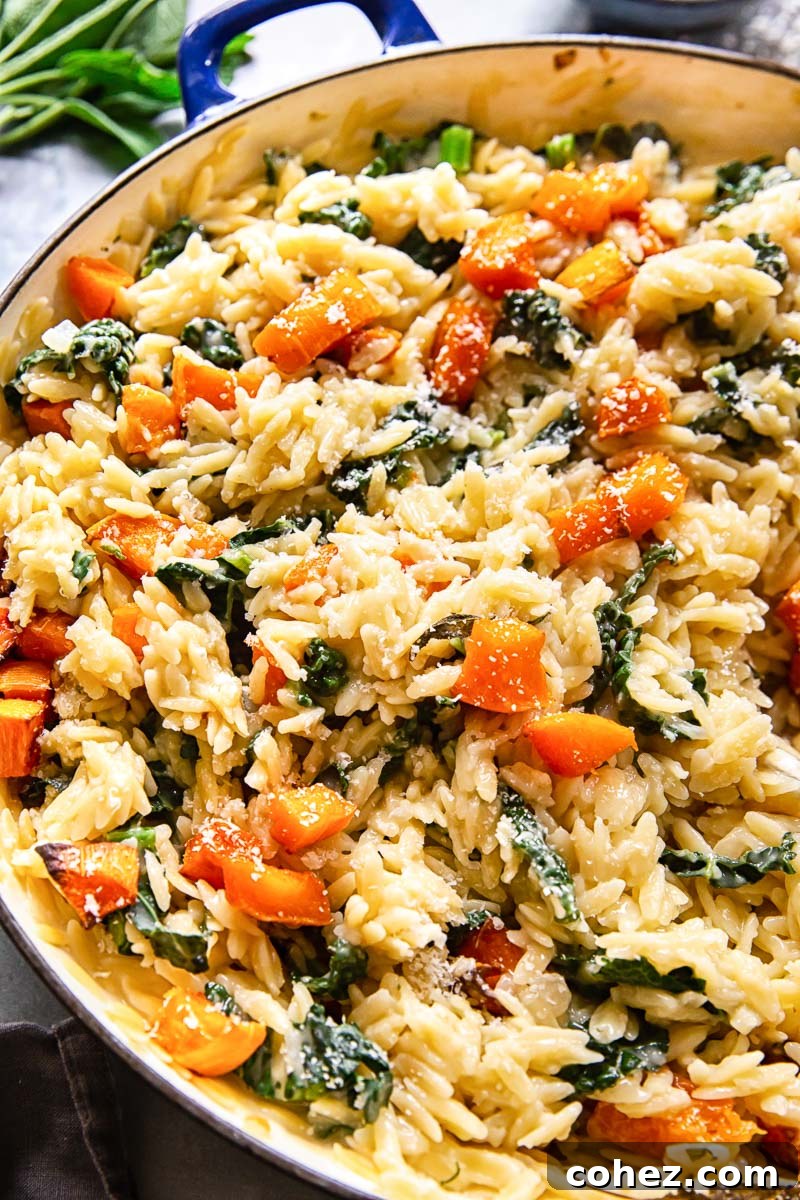
Crafting Your Creamy Butternut Squash Orzo: A Step-by-Step Guide
Creating this rich and creamy orzo dish is simpler than you might imagine, and the results are truly rewarding. The secret to its luscious creaminess lies in a few key techniques.
The Path to Creaminess:
- Starch Release: To achieve that desirable creamy texture, it’s crucial to stir the orzo occasionally throughout the cooking process. As the orzo cooks, it releases its natural starches into the cooking liquid, which then emulsifies to create a naturally thick and velvety sauce. This is similar to the technique used in risotto, where constant stirring is employed to extract starch from the rice grains.
- Parmesan Boost: For an extra layer of richness and an irresistible savory depth, we incorporate freshly grated Parmesan cheese at the end. As it melts, it adds to the creaminess and infuses the dish with its distinctive, delightful flavor.
Cooking Method – A Risotto-Inspired Approach:
While this one-pot pasta bears a strong resemblance to risotto in its creamy outcome, the initial cooking method for the orzo itself is slightly different. With traditional risotto, dry rice is gradually cooked by adding stock a ladleful at a time. However, for orzo, I’ve found it most effective to add the uncooked pasta directly to boiling liquid—specifically, boiling vegetable stock in this recipe. This method is crucial for preventing the small orzo grains from sticking to the bottom of the pan and ensures even cooking.
Putting It All Together:
- Roast the Butternut Squash: Begin by preheating your oven and preparing the butternut squash. Peel, de-seed, and cut the squash into uniform bite-sized cubes. Toss them with a tablespoon of olive oil, salt, pepper, and a few sage leaves. Roast until golden, tender, and slightly caramelized. This step not only cooks the squash but also enhances its inherent sweetness.
- Sauté Aromatics: While the squash roasts, heat the remaining olive oil in a deep pan (such as a cast iron pan). Over a gentle, low heat, sauté the chopped shallots and minced garlic along with the rest of the fresh sage leaves. Cooking them slowly allows their flavors to develop beautifully without burning, which can turn garlic bitter.
- Cook the Orzo: Pour in the vegetable stock and bring it to a boil. Add the orzo, stir well, and cook according to package instructions, which typically takes about 7-8 minutes, until it’s tender but still al dente. Remember to stir frequently to encourage starch release and prevent sticking. If the sauce becomes too thick during cooking, simply add an extra half cup of vegetable stock or water to maintain that perfect creamy, risotto-like consistency.
- Add Greens and Finish: Stir in the chopped kale during the last few minutes of orzo cooking, allowing it to wilt beautifully. Once the orzo is perfectly cooked, remove the pan from the heat. Stir in the freshly grated Parmesan cheese and adjust seasoning with salt and pepper to taste.
- Serve: Top generously with the fragrant roasted butternut squash cubes. A final sprinkle of fresh sage or Parmesan can add a lovely touch.
This method ensures a harmonious blend of flavors and textures, culminating in a comforting and visually appealing dish that’s sure to impress.
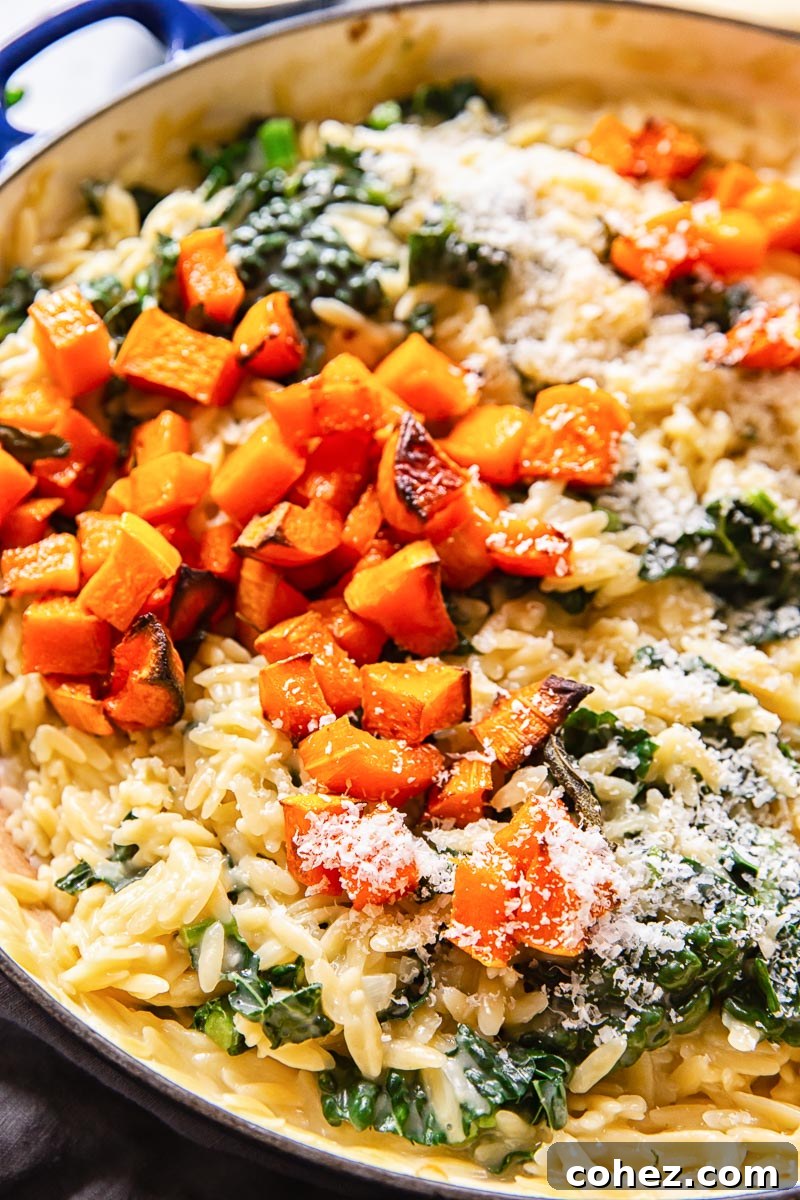
Expert Tips and Recipe Notes for Perfection
- Gentle Sauté for Aromatics: When adding the garlic and shallots to the pan, always use a low heat. Burnt garlic is notoriously bitter and can quickly ruin the flavor profile of your dish. Low heat allows these aromatics to slowly become a beautiful golden brown and gently release their sweet and savory flavors, building a rich base for your orzo.
- Controlling Sauce Thickness: You are the master of your pasta sauce’s consistency! If you prefer a slightly looser, more flowing sauce, simply whisk in a small amount of extra vegetable stock or even water towards the end of cooking. Continue to stir until you achieve your desired thickness.
- Kale Customization: While I highly recommend adding kale for its delightful earthy flavor and impressive nutritional benefits, it’s completely optional. Feel free to omit it if it’s not to your taste, or swap it out for other leafy greens like fresh spinach or vibrant Swiss chard, which also wilt beautifully into the pasta.
- Prepare Your Kale Properly: Before adding kale to your dish, remember to remove the tough, woodsy stalks from the leaves. These stalks are significantly tougher than the leaves and will not tenderize sufficiently in the relatively short cooking time of this dish, potentially affecting the texture.
- Vegetable Versatility: Butternut squash is fantastic, but this recipe is incredibly forgiving when it comes to vegetables. Feel free to experiment with other roasted vegetables you enjoy. Great alternatives include sweet pumpkin, vibrant carrots, crunchy broccoli florets, or even parsnips. Just ensure they are roasted until tender and slightly caramelized before adding them to the orzo.
- The Parmesan Difference: For the best flavor and melt, always opt for freshly grated Parmesan cheese. While pre-grated varieties are convenient, they often contain anti-caking agents that prevent them from melting smoothly and can compromise the authentic salty, nutty taste that fresh Parmesan provides. A block of Parmesan and a grater are well worth the small effort!
- Seasoning as You Go: Taste your dish throughout the cooking process, especially after adding the stock and cheese. This allows you to adjust the salt and pepper to your preference, ensuring a perfectly balanced flavor.
- Quality Stock Matters: Using a high-quality vegetable stock can significantly enhance the overall flavor of your orzo. Consider making your own or choosing a low-sodium option to better control the seasoning.
Serving Suggestions for Your Butternut Squash Orzo
Like most pasta dishes, this Creamy Butternut Squash Orzo is truly at its best when served immediately after cooking. The “al dente” texture of the orzo is preserved, and the sauce remains perfectly creamy. With time, pasta can lose its ideal texture and become a bit gummy, while the overall dish might thicken too much. So, plan to serve this delightful creation hot and fresh!
If you’re looking to plan ahead for a quicker meal, I highly recommend roasting the butternut squash up to a day before you intend to serve the dish. This allows you to prepare the main orzo component in just about 20 minutes on the day of, making it a perfect option for busy weeknights without compromising on freshness or flavor.
This dish is robust and satisfying enough to be served entirely on its own as a fulfilling vegetarian main course. However, if you or your guests prefer a bit of extra protein, it pairs wonderfully with a light grilled chicken or fish. Consider serving it alongside my quick and easy Chicken Paillard in Sherry Caper Sauce for an elevated dining experience.
Storage and Reheating: Making the Most of Leftovers
As noted, this is a dish that shines brightest when fresh, a common characteristic of most pasta recipes. However, if you find yourself with delightful leftovers (a rare occurrence with this recipe!), they can certainly be enjoyed. Store any remaining Creamy Butternut Squash Orzo in an airtight container in the refrigerator for up to 3-5 days.
When reheating, a microwave is usually the quickest and most convenient option. To revive its creamy texture and prevent it from drying out, you might want to add a splash of vegetable stock or water before reheating, stirring well. Gently heat until warmed through.
One important tip: avoid the temptation to freeze this dish. Pasta, particularly smaller shapes like orzo, tends to become mushy and unappetizing when frozen and then thawed. It loses its desirable al dente texture entirely, making it far from the ideal experience. This dish is best enjoyed fresh or from short-term refrigeration.
Explore More Delicious Vegetarian Dishes
If you loved this vegetarian orzo, you might also enjoy these other wholesome and flavorful meat-free options:
- Mediterranean Pasta with Zucchini
- Creamy Mushroom Stroganoff
- Vibrant Vegetarian Thai Green Curry
- Authentic Spaghetti alla Siciliana
★★★★★
Creamy Roasted Butternut Squash Orzo

Pin Recipe
Print Recipe
Equipment
-
Cast iron pan
-
Enamel colander
Ingredients
- 2 tbsp olive oil, divided
- 1 butternut squash, large, approximately 2 lbs/1 kg, peeled, de-seeded, and cubed
- salt and pepper to taste
- 2 shallots, finely chopped
- 2-3 cloves garlic, minced
- 10 leaves fresh sage, divided, finely minced if using dried, use 0.5 tsp dried sage
- 500g/ 2 ½ cups orzo pasta
- 1 litre + 250ml / 5 cups vegetable stock, plus ½ cup if needed for consistency
- 100g / 1 cup kale, chopped, tough stems removed (e.g., cavolo nero)
- 50g / 3/4 cup Parmesan cheese, freshly grated
Instructions
-
Preheat oven to 200C/400F (or 180C/350F for fan-assisted ovens). Peel, de-seed, and cut the butternut squash into uniform bite-sized cubes. Season with salt, pepper, and 1 tbsp of olive oil (or a low-calorie cooking spray). Arrange the seasoned squash on a shallow baking pan, scatter 4-5 sage leaves throughout, and roast in the preheated oven for 45 minutes, or until the squash is tender and beautifully golden brown.
-
Approximately 20 minutes before the butternut squash is due to finish roasting, heat the remaining 1 tbsp of olive oil in a deep pan. Add the chopped shallots, minced garlic, and the remaining minced sage leaves. Sauté over very low heat for 2-3 minutes, allowing the aromatics to soften and become fragrant without burning. Burnt garlic can impart a bitter taste.
-
Pour the vegetable stock into the pan with the aromatics. Add a pinch of salt and the chopped kale (with stems removed). Bring the mixture to a rolling boil. Once boiling, add the orzo pasta and cook according to the package instructions, which typically takes about 7-8 minutes, until the orzo is tender yet still al dente. Throughout the cooking process, stir the orzo frequently to prevent it from sticking to the bottom of the pan and to encourage the release of its starches, which will create a naturally creamy sauce. If the mixture appears too thick for your preference, add an additional ½ cup of vegetable stock or water to achieve your desired creamy, risotto-like consistency.
-
Once the orzo is cooked, remove the pan from the heat. Stir in the freshly grated Parmesan cheese until it melts into the sauce. Taste and adjust the seasoning with salt and pepper as needed. Top generously with the fragrant roasted butternut squash cubes. Serve immediately and enjoy this comforting fall dish!
Notes
- Be sure to use low heat when sautéing garlic and shallots to prevent burning and ensure a pleasant, mellow flavor.
- Adjust the thickness of the pasta sauce to your liking by adding more stock or water for a looser consistency.
- Kale is optional but adds flavor and nutrition; spinach or Swiss chard are good substitutes.
- Always remove the tough stalks from kale leaves before cooking as they will not tenderize adequately.
- Experiment with other roasted vegetables like pumpkin, carrots, or broccoli as alternatives to butternut squash.
- For the best taste and melt, always use freshly grated Parmesan cheese instead of pre-grated options.
Nutrition
Nutrition information is automatically calculated and should be used as an approximation.