

Nasi Goreng is not just a dish; it’s a culinary journey, a symphony of textures and vibrant flavors hailing from Indonesia. This iconic fried rice recipe, renowned globally for its impressive depth and exciting complexity, is surprisingly simple to recreate in your own kitchen. Prepare to embark on an unforgettable taste adventure that will redefine your perception of fried rice!
For those eager to explore more Indonesian delights, don’t miss our Indonesian coconut chicken and rice recipe.

My first encounter with Nasi Goreng was entirely unexpected, served to me at a friend’s house. I vividly recall the moment—a plate brimming with an unfamiliar yet irresistibly aromatic dish. With each bite, I was captivated. The harmonious blend of diverse textures and a spectrum of savory, spicy, and subtly sweet flavors was nothing short of a revelation. Having spent a year immersed in the diverse cuisines of Southeast Asia in my early twenties, I’m certainly no stranger to fried rice. However, this Indonesian iteration immediately seized my attention. While I appreciate any good fried rice, Nasi Goreng possesses an unparalleled depth of character. It’s not merely flavorful; it’s profoundly fragrant, boasting an aromatic profile that lingers and delights.

Since that memorable introduction, Nasi Goreng has firmly established itself as a beloved staple in our home, particularly when we have leftover rice to transform. The gentle yet exotic fragrance of the spices, combined with a delightful range of savory and fresh elements, made it an instant hit. Even the pickiest eaters among my family were enchanted by its unique charm. This dish truly exemplifies comfort food with an adventurous spirit, proving that humble leftovers can be elevated into something truly extraordinary.
What is Nasi Goreng? The Heart of Indonesian Cuisine
At its core, Nasi Goreng shares a fundamental concept with many fried rice traditions around the world: transforming yesterday’s leftovers into today’s culinary delight, often serving as a hearty breakfast. This ingenious approach is precisely why so many fried rice recipes, including Nasi Goreng, frequently feature eggs – a perfect complement to start the day. But its appeal isn’t limited to dawn. While commonly enjoyed as a breakfast dish, Nasi Goreng is savored at any hour, from a quick lunch to a satisfying dinner. It’s also a quintessential street food across Indonesia, expertly cooked to order, allowing patrons to customize their preferred level of spiciness.
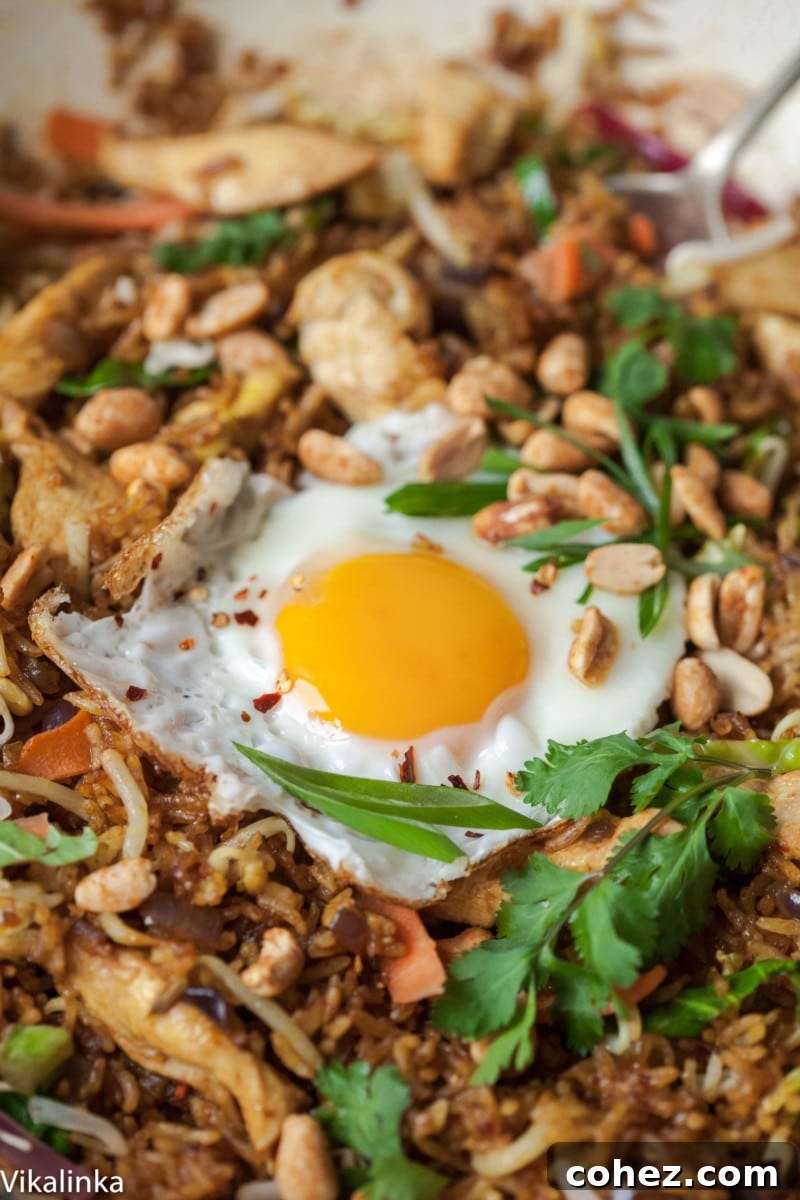
Imagine perfectly cooked rice infused with the warm, earthy notes of turmeric and coriander, brightened by a kick from spicy chillies and the fresh zest of spring onions. This intricate flavor profile is what sets Nasi Goreng apart. The textural interplay is equally captivating: fluffy rice grains contrasting beautifully with the satisfying crunch of roasted peanuts. And, of course, the crowning glory – a glorious fried egg, its runny yolk cascading over the vibrant rice, adding a layer of rich, luxurious creaminess. This combination creates an irresistible experience that is both comforting and exhilarating.

Unlocking the Flavors: Essential Nasi Goreng Ingredients
When I first received the Nasi Goreng recipe from my friends, I initially felt a touch of trepidation upon spotting a few unfamiliar ingredients. Specifically, Sambal Oelek, a raw chili paste known for its vibrant heat, and Ketjap Manis, a thick, sweet, and syrupy Indonesian soy sauce infused with sugar and aromatic spices. While these items might not be standard in every pantry, their availability is far wider than I initially imagined. You’ll likely find them readily available in the international aisle of most major supermarkets or Asian specialty stores. It’s truly astonishing how often we overlook new ingredients until we have a specific reason to seek them out.
Another authentic ingredient frequently used in traditional Nasi Goreng, particularly for adding an umami depth, is terasi or shrimp paste. Unfortunately, I’ve found it challenging to source in my local area. In such cases, it’s perfectly acceptable to omit it or seek alternative flavor enhancers. The beauty of Nasi Goreng lies in its adaptability. While specific ingredients contribute to its signature profile, a delicious version can still be crafted with readily accessible components.
Beyond these unique Indonesian staples, Nasi Goreng relies on a foundation of aromatic spices and fresh produce. Onions and garlic form the fragrant base, while ginger, turmeric, and cumin infuse the dish with its characteristic warmth and earthy aroma. Fresh vegetables like shredded carrot, bean sprouts, and green cabbage add essential texture and nutritional value. For protein, diced chicken breast is a popular choice, but as we’ll explore, this too can be customized. The final touches of fresh cilantro, spring onions, peanuts, and a squeeze of lime juice elevate the dish, adding layers of brightness and crunch that are simply indispensable.
Crafting Your Perfect Nasi Goreng: A Step-by-Step Guide
Creating Nasi Goreng at home is a rewarding experience that comes together quickly, especially if you have your ingredients prepped. The key is in the layering of flavors and ensuring each component is cooked to perfection before being combined.
Begin by heating a combination of vegetable and sesame oil in a large pan or wok over medium heat. Add your chopped onions and sauté them for about five minutes until they soften and turn translucent, releasing their sweet aroma. Next, introduce the minced garlic, stirring for another minute until fragrant but not browned. Now, it’s time for the spices: ground ginger, turmeric, and cumin. Add them to the pan and cook, stirring constantly, for just about a minute. This short burst of heat allows the spices to bloom, intensifying their beautiful fragrance.
Once your aromatic base is established, add the diced chicken breast. Cook for several minutes, stirring occasionally, until all pieces are lightly seared and sealed, locking in their juices. The next crucial step involves the rice. Add your cooked rice to the pan along with the Sambal Oelek, soy sauce, and Ketjap Manis. If you’re using day-old leftover rice, which is ideal for Nasi Goreng as it’s drier and less likely to clump, you can lower the temperature and cover the pan for a couple of minutes. This brief steaming period will help to soften the rice slightly, making it easier to separate and coat evenly.
Remove the lid and give everything a thorough stir, ensuring that every grain of rice is coated with the rich spice mixture. Break up any clumps of rice as you stir-fry. Now, add your chosen vegetables – shredded carrot, bean sprouts, and green cabbage are classic additions, but feel free to get creative with what you have on hand. Stir-fry for another 2-3 minutes, just until the vegetables are tender-crisp. While the rice and vegetables are mingling in the pan, quickly fry your eggs in a separate pan to your desired doneness, ideally with a runny yolk for that signature Nasi Goreng touch.
To complete this vibrant dish, squeeze the juice of half a fresh lime over the entire Nasi Goreng, adding a bright, tangy counterpoint to the savory flavors. Finally, sprinkle generously with freshly sliced green onions, chopped cilantro or coriander, and crunchy peanuts. Top each serving with a freshly fried egg. I always recommend serving extra peanuts, green onions, cilantro, and even some fresh chilies on the side. This allows everyone at the table to personalize their Nasi Goreng, adjusting the crunch, freshness, and heat to their individual taste preferences. The result is a dish that’s not only visually stunning but also incredibly versatile and deeply satisfying.
Embracing Authenticity and Customization in Nasi Goreng
The concept of an “authentic recipe” can often be a culinary labyrinth, and Nasi Goreng is a prime example. Much like many beloved traditional dishes around the world, there’s no single, universally agreed-upon authentic version. Instead, there are as many ‘authentic’ Nasi Goreng recipes as there are cooks preparing it across Indonesia and beyond. This beautiful diversity stems directly from the dish’s very origin and purpose.
Nasi Goreng, at its heart, is a resourceful creation designed to utilize leftovers. This means the ingredients were traditionally dictated by what was available in the kitchen at the time of preparation. This inherent flexibility is what makes it so enduringly popular and adaptable. My version, while deeply inspired by traditional Indonesian flavors, utilizes ingredients that are readily available in my local region. I have consciously strived to capture the spirit and signature taste profile of the original, even if it may not precisely mirror what you might find sizzling from a street vendor’s wok in the bustling alleys of Jakarta. I make no claim that this recipe is the “purest” Indonesian Nasi Goreng, but I assure you, my friends, it is PURE LOVELINESS on a plate!
This adaptability extends to almost every component. Feel free to experiment with different proteins like pork, beef, shrimp, or even tofu for a vegetarian option. The vegetables can also be varied according to season and preference; peas, green beans, or broccoli would all be excellent additions. The spice level is also entirely in your hands. Whether you prefer a mild background warmth or a fiery kick, Nasi Goreng allows for complete personalization, making it a perfect canvas for your culinary creativity.

Recipe Tips and Notes for Perfect Nasi Goreng
- Rice Preparation is Key: The ideal Nasi Goreng uses day-old, chilled rice. This dried-out rice prevents the dish from becoming mushy. If you don’t have leftover rice, cook your rice first and spread it out on a baking sheet in a thin layer. Allow it to cool completely (and ideally, chill it in the refrigerator for an hour or two) before proceeding with the recipe.
- Protein Versatility: While chicken breast is a popular choice, Nasi Goreng is incredibly adaptable. Feel free to substitute it with pork, beef, shrimp, other seafood like calamari, or even a vegetarian option like firm tofu or tempeh, diced and stir-fried until golden.
- Vegetable Customization: The suggested vegetables (carrot, bean sprouts, green cabbage) are a great starting point, but don’t limit yourself! Beans, peas, broccoli florets, bell peppers, or even leafy greens like bok choy would work beautifully. Add harder vegetables earlier in the cooking process and softer ones towards the end to maintain a pleasant texture.
- Adjusting Spiciness: For those who crave more heat, Nasi Goreng welcomes it! You can increase the amount of Sambal Oelek, or add a dash of sriracha, extra chili flakes, or a different spicy chili paste to taste. Always add a little at a time and taste as you go.
- Seasoning Mindfully: Soy sauce and Ketjap Manis contribute significant saltiness to the dish. I generally avoid adding extra salt during cooking to prevent over-salting. If you feel it needs more seasoning, taste the Nasi Goreng towards the end of the cooking process and add a pinch of salt if absolutely necessary.
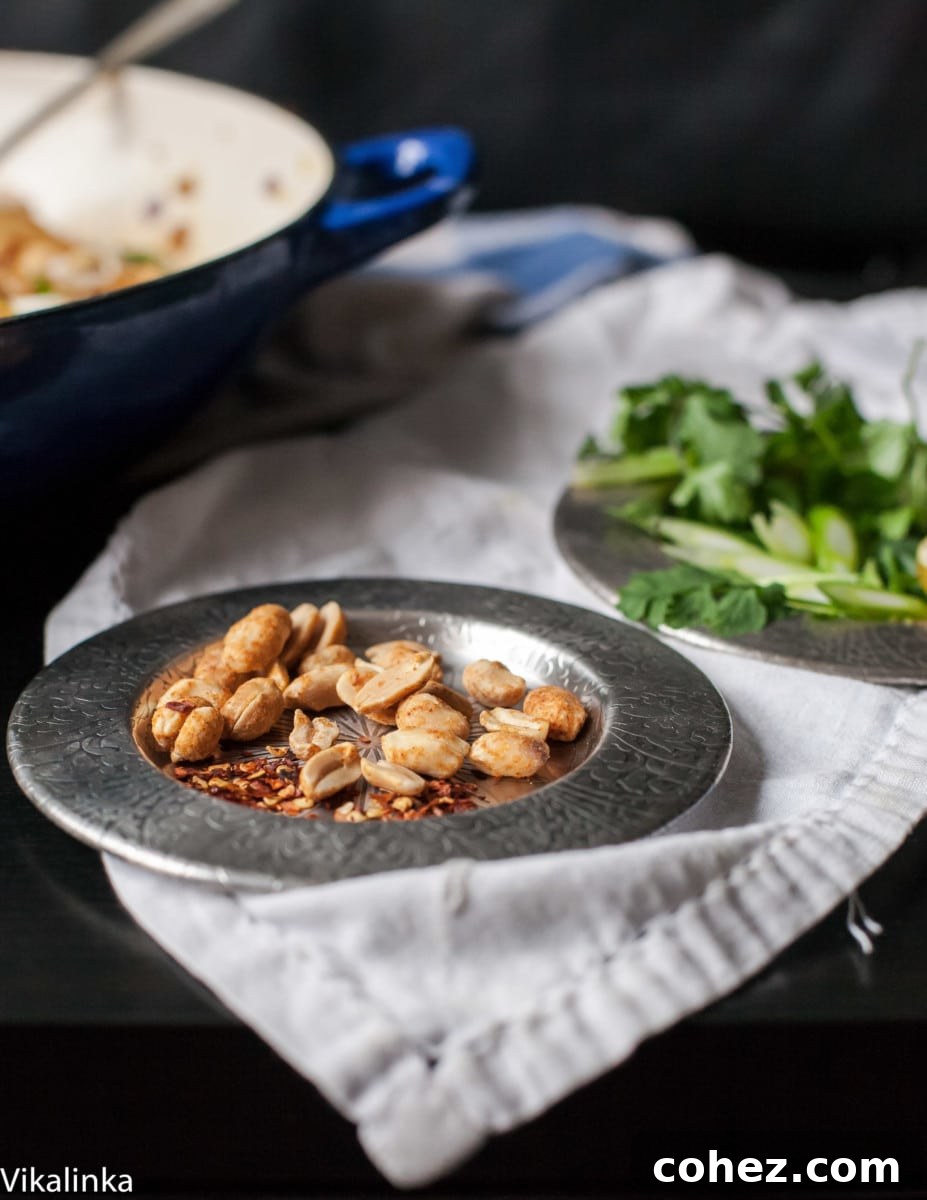
- Interactive Serving: To enhance the dining experience, serve additional peanuts, fresh cilantro/coriander, sliced chilies, and extra green onions on the side. This allows each person to customize their Nasi Goreng with their preferred level of crunch, freshness, and spice.
- Wok vs. Pan: While a wok is traditionally used for stir-frying and provides excellent heat distribution, a large, heavy-bottomed frying pan or skillet will work perfectly fine. Ensure your pan is hot to get that characteristic stir-fried flavor.
- Don’t Overcrowd the Pan: Cook in batches if necessary, especially if you’re doubling the recipe. Overcrowding cools down the pan and steams the ingredients instead of stir-frying them, leading to a less desirable texture.
More Delicious Rice Recipes to Explore
- Cajun Dirty Rice with Shrimp
- Easy Spanish Chicken and Rice with Shrimp
- Peri Peri Rice and Chicken Wrap
20-Minute Indonesian Fried Rice Nasi Goreng
Julia Frey of Vikalinka
10
15
25
2

Ingredients
- 1 tbsp vegetable oil
- 1 tsp sesame oil
- 1 onion, chopped
- 2 garlic cloves, minced
- 1/4 tsp ground ginger
- 1/4 tsp turmeric
- 1/2 tsp cumin
- 1 chicken breast, diced
- 2 cups / 400g basmati rice, cooked
- 2 tsp sambal oelek
- 2 tsp soy sauce
- 2 tsp ketjap manis
- 1/4 cup / 25g carrot, shredded
- 1/4 cup / 45g bean sprouts
- 1/4 cup / 80g green cabbage, shredded
- 1 tbsp fresh cilantro, chopped
- 2 spring onions, sliced
- 1-2 eggs
- 1/4 cup / 30g peanuts
- 1/2 lime, juice only
- Chilli flakes, optional
Instructions
-
Heat both vegetable and sesame oils in a large frying pan or wok. Cook the chopped onion over medium heat for 5 minutes until softened. Add the minced garlic and continue cooking for 1 minute longer until fragrant.
-
Add the ground ginger, turmeric, and cumin to the pan. Cook, stirring continuously, for 1 minute until the spices become aromatic. Incorporate the diced chicken breast and cook for 5 minutes, ensuring all pieces are seared and sealed.
-
Now, add the cooked rice to the pan along with the Sambal Oelek, soy sauce, and Ketjap Manis. Since soy sauce is quite salty, I typically do not add extra salt, but you may adjust to your preference. If using day-old rice that has dried out, lower the heat and cover the pan with a lid for 2 minutes to allow steam to gently soften the rice.
-
Remove the lid and thoroughly stir the rice to coat it evenly with the spices and break up any large clumps. Add your preferred vegetables (e.g., carrots, bean sprouts, cabbage; beans, peas, or broccoli also work well). Stir-fry for 2-3 minutes until tender-crisp.
-
Meanwhile, fry your eggs in a separate pan to create toppings with a runny yolk. Alternatively, whisk your eggs, cook them like a thin omelette, slice them into strips, and use them as a topping.
-
To finish the Nasi Goreng, squeeze the juice of 1/2 lime over the entire dish. Garnish with sliced spring onions, chopped cilantro, peanuts, and the fried egg. Serve extra peanuts, sliced green onions, chopped cilantro, and chilies on the side to allow for personalized additions.
Notes
Nutrition
Carbohydrates: 82g |
Protein: 40g |
Fat: 17g |
Saturated Fat: 3g |
Polyunsaturated Fat: 5g |
Monounsaturated Fat: 7g |
Trans Fat: 1g |
Cholesterol: 154mg |
Sodium: 684mg |
Potassium: 971mg |
Fiber: 6g |
Sugar: 13g |
Vitamin A: 2434IU |
Vitamin C: 32mg |
Calcium: 119mg |
Iron: 3mg
Nutrition information is automatically calculated, so should only be used as an approximation.
Tried this recipe?
Let us know how it was!