
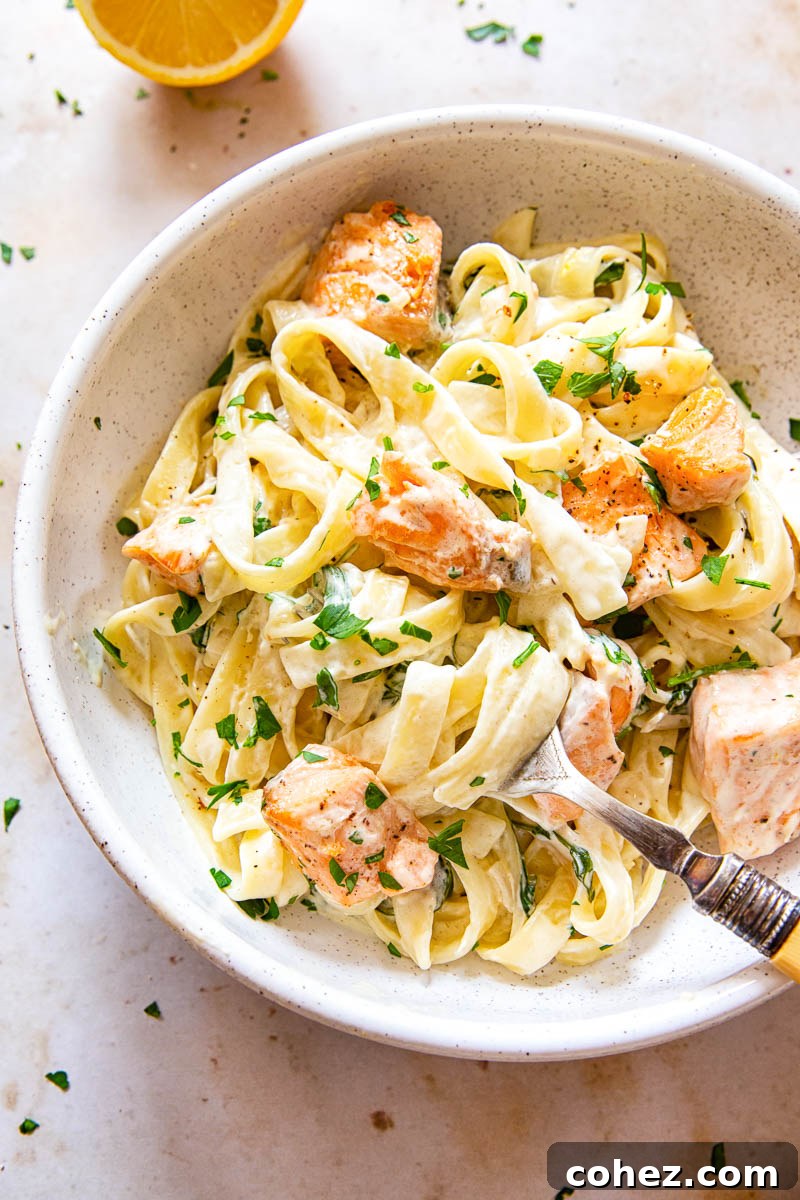
Creamy Salmon Pasta with White Wine Sauce & Fresh Greens: Your 30-Minute Dinner Hero
Imagine a gourmet meal that’s both incredibly flavourful and surprisingly simple to prepare. This creamy salmon pasta with white wine cream sauce is exactly that – a perfect harmony of delicate salmon, a rich yet bright sauce, and a vibrant medley of fresh greens. The best part? This entire impressive dish can be on your table in just 30 minutes, making it an ideal choice for a busy weeknight or a relaxed weekend treat.
If you’re a fan of elegant, seafood-infused pasta dishes, you’ll find this recipe utterly irresistible. It shares the comforting allure of our Pasta with Smoked Salmon, but with the added depth and texture of freshly seared salmon.
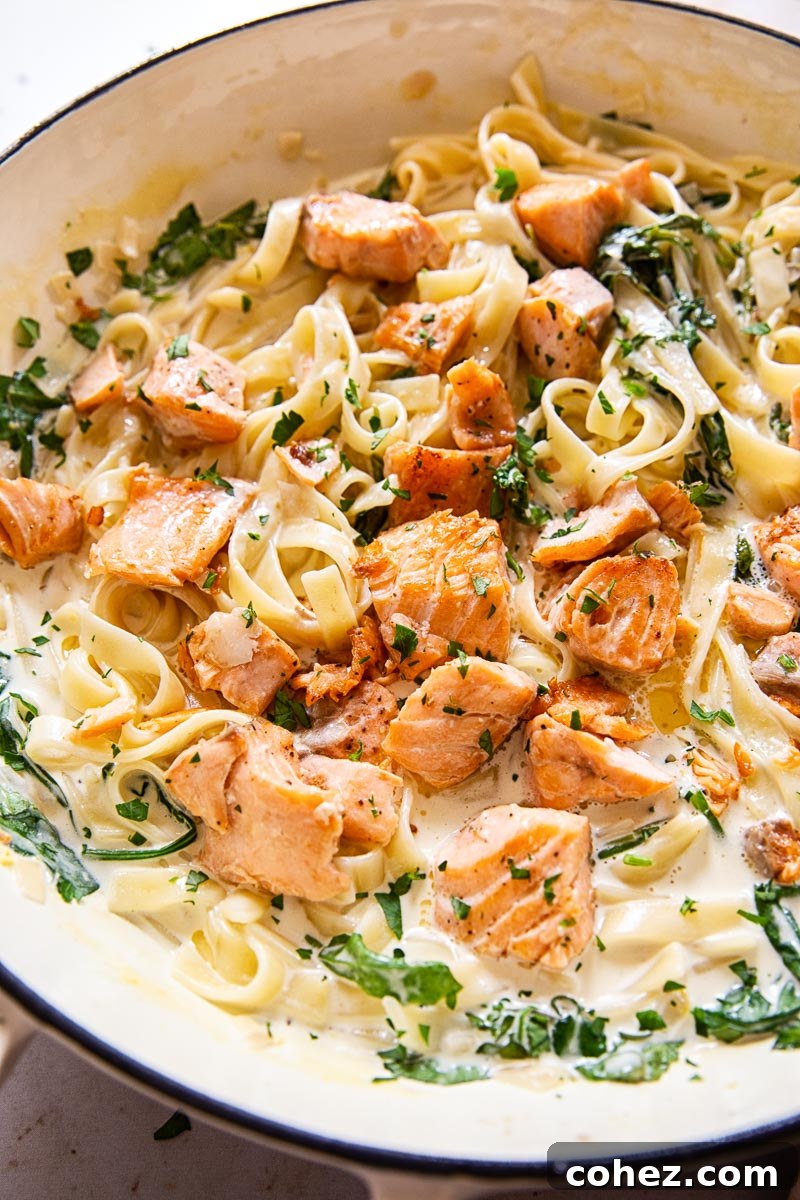
Why This Creamy Salmon Pasta Will Become a Family Favorite
A few years ago, my mission was to introduce more fish into our family’s diet. Salmon quickly became the star. Its naturally mild flavour and buttery texture make it exceptionally appealing, even to those who typically shy away from seafood. Unlike some fish that can have a pronounced “fishy” taste, salmon offers a delicate profile that’s easy to fall in love with.
This culinary experiment was a resounding success! Now, my family eagerly anticipates salmon dishes, appreciative of its rich content of healthy fats, essential vitamins, and delightful taste. This continuous success fuels my passion for discovering innovative ways to incorporate this nutritious fish into our meals.
While salmon is undoubtedly healthy and delicious, it can also be a bit of an investment. This is where combining it with pasta truly shines. By integrating succulent salmon into a pasta dish, you can stretch its exquisite flavour much further, making it a more economical option without compromising on taste. Our creamy salmon pasta recipe, for instance, requires only about half a pound (200g/7oz) of salmon and generously serves at least four people. This makes it an incredibly satisfying and budget-friendly solution for a wholesome weeknight dinner that feels decidedly gourmet.
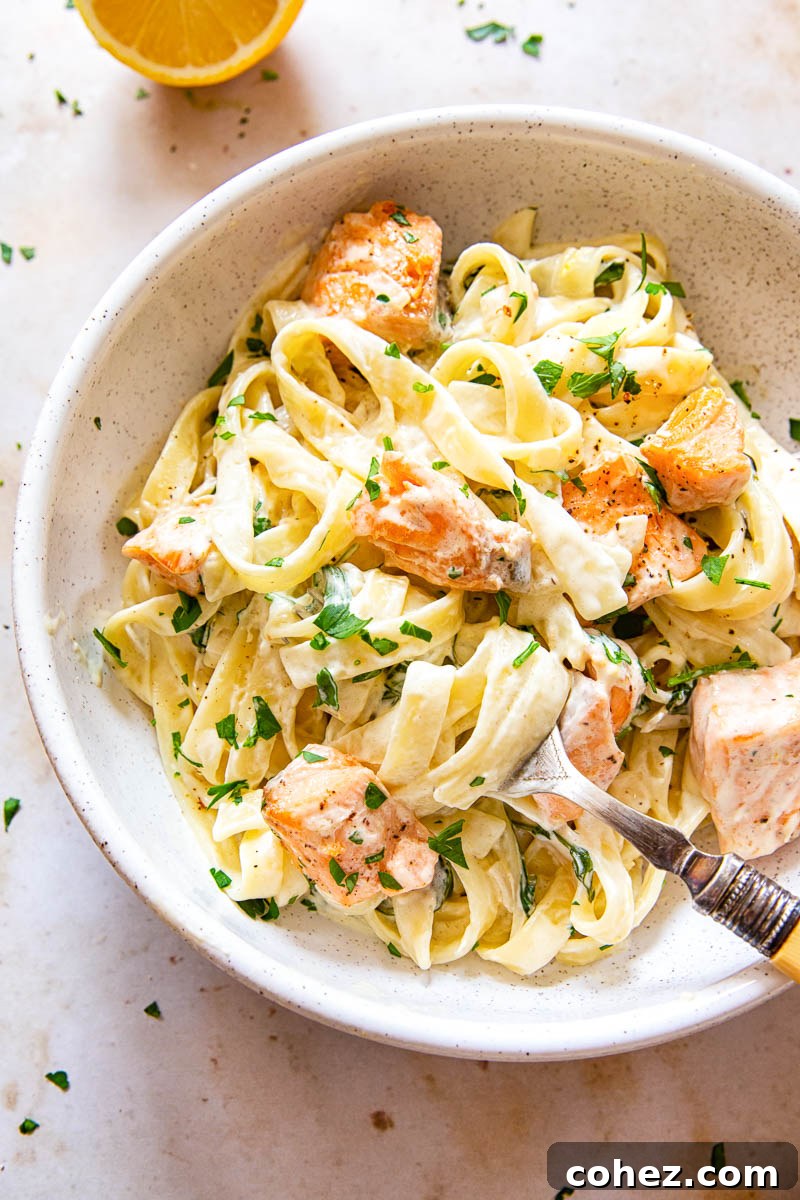
Crafting the Perfect Creamy Salmon Pasta: A Step-by-Step Guide
The inspiration for this indulgent pasta dish comes from one of my all-time favorite ways to prepare salmon: baking it in foil in the oven and serving it with a luxurious white wine cream sauce. That method delivers a tender, flaky salmon infused with incredible flavour, and it’s both easy and impressive.
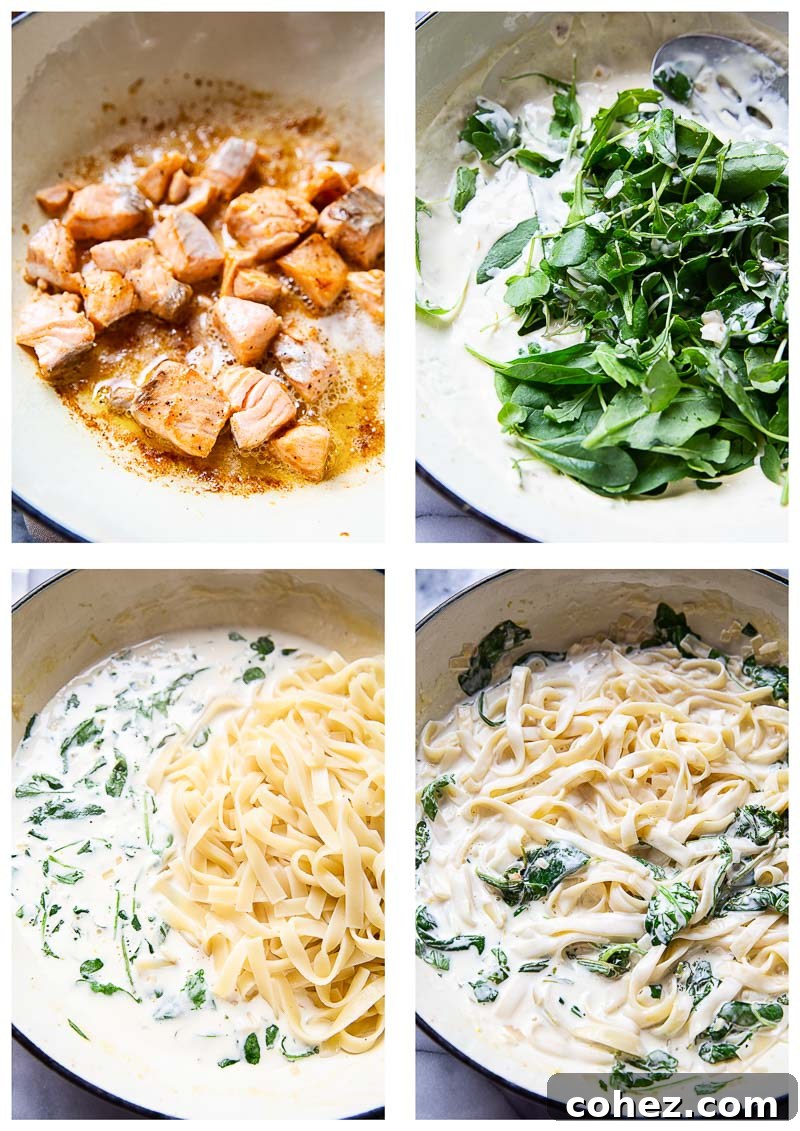
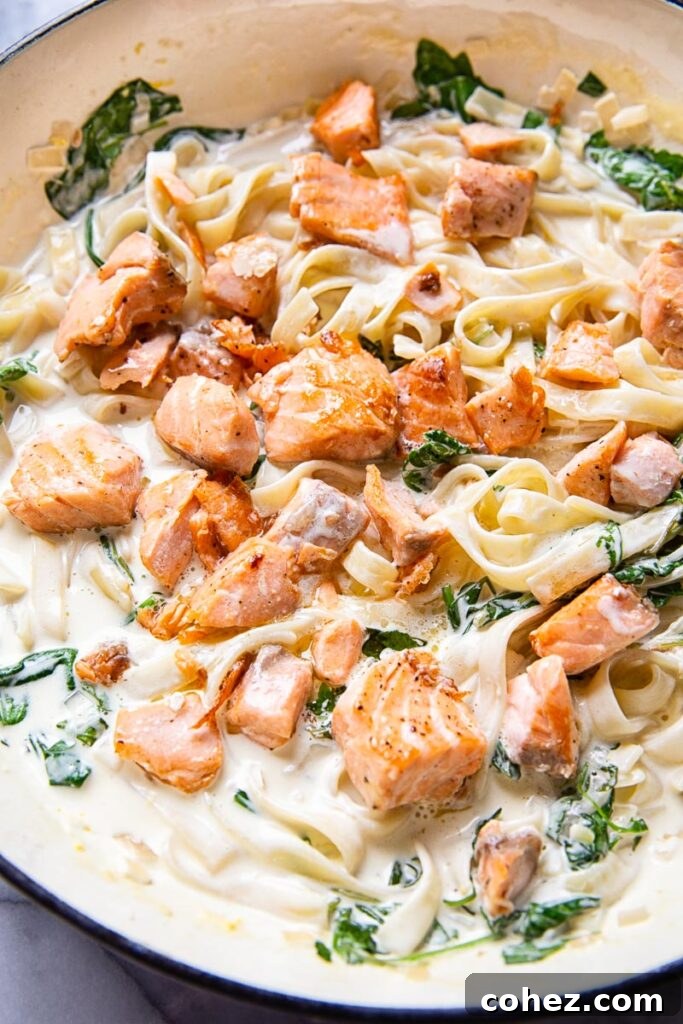
For this pasta creation, I’ve adapted that successful formula. Instead of baking, I simply take a fresh salmon fillet, season it lightly, and sear it in a hot skillet. This quick searing process creates a beautiful crust and locks in even more flavour, offering a delightful contrast to the creamy sauce. Once the salmon is cooked, it’s set aside while the magic of the white wine cream sauce comes together. Cooked pasta is then tossed generously in this velvety sauce.
Watch a video demonstration of how to make this creamy salmon pasta with mixed greens!
To elevate both the nutritional value and the visual appeal of the dish, I incorporate a generous amount of fresh, vibrant greens. A mix of spinach, peppery arugula (also known as rocket), and slightly bitter watercress adds wonderful fresh and sharp notes, cutting through the richness of the cream sauce. This not only boosts the nutrition but also provides a beautiful burst of colour, transforming the dish into a feast for the eyes as well as the palate.
Finally, the dish is elegantly topped with the flaky, seared salmon pieces, ensuring every forkful is loaded with texture and taste. It’s a simple, yet incredibly satisfying and very tasty meal that comes together with remarkable speed.
Choosing the Best Salmon for Your Pasta Recipes
When it comes to selecting salmon for your pasta, or any dish, I always advocate for purchasing the highest quality you can reasonably afford. The most critical factor to consider is the source of your salmon. Whenever possible, opt for wild-caught salmon over farmed varieties. Wild salmon typically has a better flavour, firmer texture, and a more natural nutritional profile, even if it comes with a slightly higher price tag.
The world of salmon can be quite diverse, with many varieties that might seem overwhelming at first glance. Understanding a few key types can help you make an informed decision:
- Sockeye Salmon (Red Salmon): Widely regarded as superior for its rich, deep red flesh and intense flavour. It’s often more expensive due to its wild nature and distinct taste.
- Pink Salmon: A fantastic second choice if sockeye is out of reach or unavailable. Wild pink salmon is a more sustainable and affordable option, offering a milder flavour and lighter colour, yet still packed with nutrients.
- Atlantic vs. Pacific Salmon: If you’re wondering which is better, the simplest advice is to go with what is local and freshest to your region. If you live inland, prioritize freshness and availability, regardless of the ocean source. Both Atlantic (though often farmed) and Pacific (Sockeye, Pink, Coho, Chinook, Chum) varieties offer distinct characteristics.
Here’s the good news: you don’t necessarily need the most expensive cut of salmon for this particular pasta recipe. The robust flavours of the white wine cream sauce, the aromatic shallots and garlic, and the freshness of the mixed greens all contribute significantly to the overall taste experience. This means you can still achieve a truly spectacular dish with a more moderately priced fillet, allowing the other ingredients to shine alongside the delicious salmon.
Expert Tips for Creamy Salmon Pasta Success
- Searing the Salmon: For that perfect golden crust and tender interior, ensure your salmon is added to a large skillet or frying pan that has been preheated to medium-high or high heat. If the pan temperature is too low, the salmon will steam rather than sear, resulting in a less desirable texture and flavour.
- Choosing the Right Wine: While there’s no need for an expensive bottle, the white wine you select must be dry. Sweet wines will significantly alter the delicate balance of the pasta sauce. Excellent dry white wine options include Pinot Grigio, Sauvignon Blanc, and Chardonnay, which will lend a crisp, aromatic depth to your cream sauce.
- The Magic of Pasta Water: Before draining your pasta, remember to reserve a cup or so of the starchy cooking water. This liquid is a culinary secret weapon! It holds onto both salt and starch, which when added to your sauce, acts as a natural emulsifier. This helps the sauce cling beautifully to the pasta, enhancing its flavour and creating an incredibly silky, creamy texture.
- Selecting Your Pasta Shape: This type of rich, creamy sauce pairs wonderfully with long, sturdy pasta shapes that can hold the sauce well. Tagliatelle, which I often use, is an excellent choice. Fettuccine or linguine also work beautifully. If you prefer shorter pasta shapes, opt for thick, textured varieties like penne or rigatoni, as their ridges and tubes are perfect for capturing and delivering every drop of the luscious sauce.
- Salt Your Pasta Water: It’s absolutely crucial to generously salt the water when cooking your pasta. Pasta absorbs flavour during the cooking process, and properly salted water ensures the seasoning permeates the pasta strands from the inside out. Salting the sauce later will only coat the surface, leaving the pasta itself bland. Aim for water that tastes “like the sea.”
- Achieving “Al Dente”: Always cook your pasta al dente, meaning it should still have a slight bite and firmness to it. Overcooked, mushy pasta can ruin an otherwise perfect dish. I recommend setting a timer for one minute less than the package instructions suggest, then testing for doneness. This ensures your pasta retains its ideal texture.
- Taste and Adjust Seasoning: Before serving, always taste your pasta dish and adjust the seasoning as needed. Salt, in particular, is a fundamental flavour enhancer in pasta dishes, bringing out the best in all the ingredients. Don’t be shy to add a pinch more if you feel it’s lacking.
Customize Your Creamy Salmon Pasta: Substitutions & Variations
One of the true beauties of this creamy salmon pasta recipe is its incredible versatility. The base white wine cream sauce acts as a perfect blank canvas, allowing you to easily adapt and customize the dish to suit your preferences or what you have on hand.
- Greens Galore: I love the dynamic combination of spinach, arugula, and watercress for their varied textures and peppery notes. However, you can certainly use any single green you prefer, such as just spinach for a milder flavour, or kale (finely chopped and massaged) for extra heartiness.
- Adding More Vegetables: Don’t hesitate to incorporate other vegetables for added nutrition and flavour. Sweet peas, tender asparagus, or crisp broccoli florets are all excellent choices. Remember that some vegetables, like broccoli, will require a bit more cooking time than leafy greens. For such additions, it’s often best to blanch or sauté them separately before adding them to the pasta, similar to how I prepare vegetables in my lemon garlic pasta recipe.
- Tomato Boost: For a bright, tangy counterpoint to the creamy sauce, consider adding tomatoes. Sun-dried tomatoes offer an intense, concentrated flavour and are a simple toss-in. For an even more vibrant addition, I personally love to roast cherry tomatoes until they burst with sweetness, then mix them into the pasta just before serving.
- Alternative Proteins: While salmon is the star, the adaptable cream sauce works beautifully with other proteins too. Consider using pan-seared chicken breast, succulent shrimp, or even flaked smoked haddock in place of salmon for a different, yet equally delicious, meal.
Elevating Your Meal: Serving Suggestions
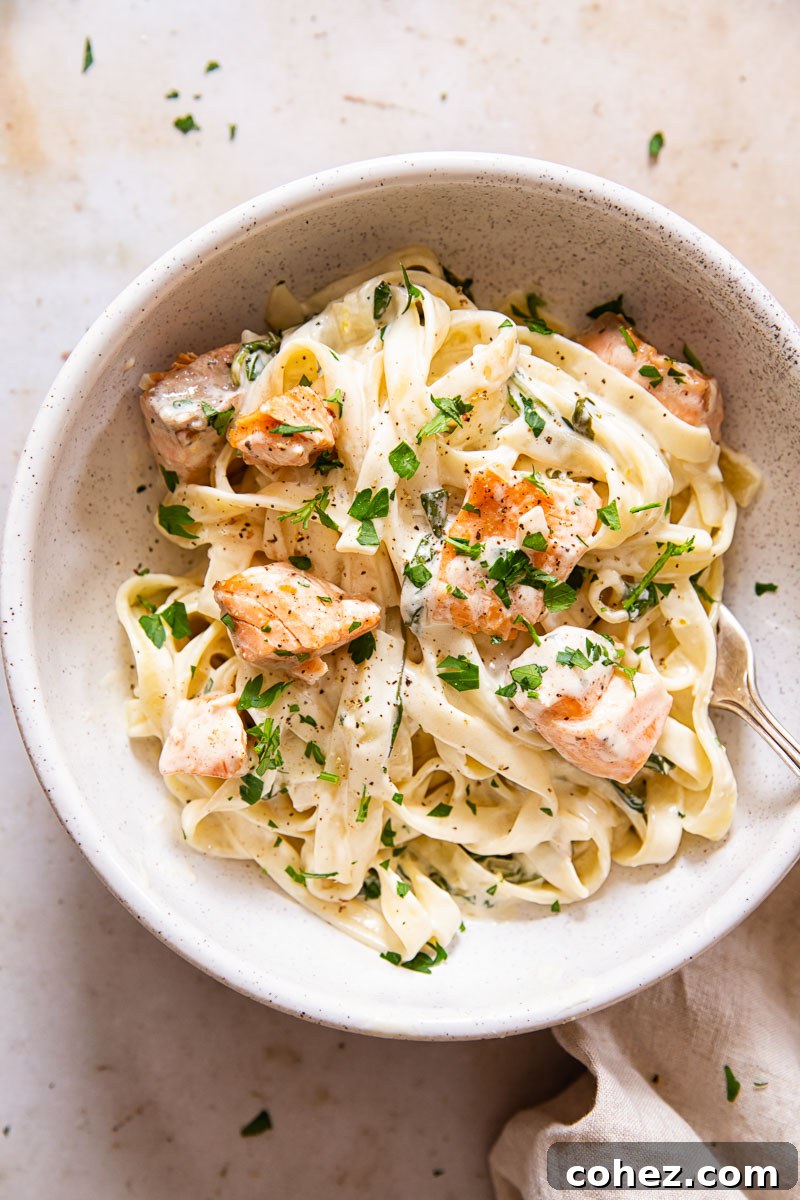
To finish off this decadent creamy salmon pasta, I love a simple sprinkling of freshly cracked black pepper. A garnish of chopped fresh parsley not only adds a burst of colour but also a herbaceous freshness that beautifully balances the richness of the cream sauce. And while it might raise an eyebrow among Italian purists, I confess my love for a delicate grating of fresh Parmesan cheese over seafood pasta. It’s certainly not traditional in Italy, where cheese and fish rarely mix, but for my palate, it absolutely works!
A rich and creamy pasta dish like this always benefits from lighter, zestier side dishes that provide a refreshing contrast. Here are some of my favorite pairings:
- Fresh Salads: A vibrant salad is the perfect accompaniment. I adore serving this pasta with a Tuscan Panzanella Salad, with its crusty bread and ripe tomatoes, or a classic Caprese Salad featuring juicy tomatoes, fresh mozzarella, and aromatic basil. Both offer a wonderful lightness.
- Garlic Bread: Of course, no pasta meal is truly complete without something to soak up every last bit of that delicious sauce! Perfectly crispy Garlic Bread is always a crowd-pleaser and pairs impeccably with this creamy dish.
Storage and Leftovers: Maximizing Your Creamy Salmon Pasta Experience
Pasta often serves as a true weeknight dinner hero, but when it comes to leftovers, it can sometimes disappoint. The beautiful al dente texture we strive for when fresh is difficult to maintain once cooled and reheated. However, this creamy salmon pasta recipe is far too good to waste, even if it’s not quite at its peak after reheating!
- Refrigeration: Store any leftover pasta in an airtight container in the refrigerator for up to 3 days.
- Reheating: To reheat, gently warm the pasta in a microwave or on your stovetop in a saucepan over medium heat. To revive the sauce and prevent it from becoming too thick or clumpy, add a splash of water, milk, or broth during reheating. Stir gently until warmed through and the sauce loosens to your desired consistency.
- Freezing Not Recommended: Freezing pasta dishes that have been pre-tossed in a cream-based sauce, such as this one, is generally not recommended. While it might still be edible, freezing can significantly alter the texture of the sauce, often causing it to curdle or separate upon thawing and reheating. Furthermore, the pasta itself will likely become overcooked and soft. For the best quality and enjoyment, it’s advisable to consume this dish fresh or within the recommended refrigeration period.
More Delicious Salmon Recipes to Explore
If you’ve enjoyed this salmon pasta, you’ll love exploring other ways to prepare this versatile and nutritious fish:
- Teriyaki Salmon with Bok Choy
- Salmon en Croute (Salmon in Pastry)
- Salmon Fishcakes in Creamy White Wine Sauce
- Asian Salmon with Carrot and Cucumber Slaw
- Chicken Broccoli Alfredo (A delicious alternative!)
Salmon Pasta with Mixed Greens
By Julia Frey of Vikalinka
Prep time: 10 mins
Cook time: 20 mins
Total time: 30 mins
Servings: 6
This salmon pasta with white wine cream sauce is only made better by a bunch of spinach, arugula and watercress greens mixed in for more flavour and a pop of colour.
Ingredients
- ½ kg / 1 lb pasta (such as tagliatelle, fettuccine or linguine)
- 1 shallot, finely chopped
- 1 clove garlic, minced
- 1 tbsp butter
- 200g / 7oz salmon fillet, skin removed
- 125ml / ½ cup dry white wine
- 250ml / 1 cup double/heavy cream
- 80g / 2 cups mixed greens (such as spinach, arugula, watercress)
- ½ lemon (zest and 1 tbsp juice)
- ¼ tsp salt or to taste
- 1 tbsp fresh parsley, chopped (for garnish)
- 1 tbsp olive oil (for sautéing)
Instructions
- Cook the pasta in a large pot of generously salted boiling water according to package instructions until al dente. Reserve about 1 cup of pasta water before draining.
- While the pasta cooks, remove the skin from the salmon fillet, check for any residual bones, and cut the salmon into bite-sized pieces. Season the salmon with salt and pepper.
- Heat 1 tablespoon of butter in a large frying pan or skillet over medium-high heat. Sear the salmon pieces on all sides until cooked through and slightly browned, which should take only 2-3 minutes. Remove the cooked salmon to a separate plate.
- In the same pan, add 1 tablespoon of olive oil. Add the chopped shallots and minced garlic and sauté over low heat for 1-2 minutes until fragrant.
- Increase the heat to medium, pour in the dry white wine, and allow it to reduce by about half for 5-7 minutes, scraping up any browned bits from the pan.
- Stir in the heavy cream and the mixed greens. Add the lemon zest and lemon juice, along with salt to taste. Mix well to combine everything.
- Add the drained, cooked pasta to the sauce in the pan and toss thoroughly to coat the pasta. If the sauce seems too thick, add a little reserved pasta water, one tablespoon at a time, until it reaches your desired consistency.
- Divide the pasta among serving bowls, top with the seared salmon pieces and a sprinkle of chopped fresh parsley. Serve immediately.
Video
Watch the full recipe video for creamy salmon pasta with mixed greens here.
Notes
- Reserve some of the pasta water before you drain the pasta to add later to the sauce. Pasta water holds on to salt and starch and it therefore adds both flavour and creaminess when added to the sauce.
- Because you want to sear the salmon, make sure it’s added to a large skillet or frying pan over medium-high heat or high heat.
- A sauce like this works well with long but sturdy pasta shapes, which is why I made mine with tagliatelle, which does a good job of holding the sauce.
- The white wine you use doesn’t have to be expensive, but does need to be dry. A sweet wine will alter the taste of the pasta sauce. Wines like Pinot Grigio, Sauvignon Blanc and Chardonnay are all good options.
Nutrition
Nutrition information is automatically calculated, so should only be used as an approximation.
- Calories: 515kcal
- Carbohydrates: 60g
- Protein: 18g
- Fat: 21g
- Saturated Fat: 11g
- Cholesterol: 81mg
- Sodium: 162mg
- Potassium: 479mg
- Fiber: 3g
- Sugar: 3g
- Vitamin A: 1989IU
- Vitamin C: 10mg
- Calcium: 64mg
- Iron: 2mg
Tried this recipe? Let us know how it was!