
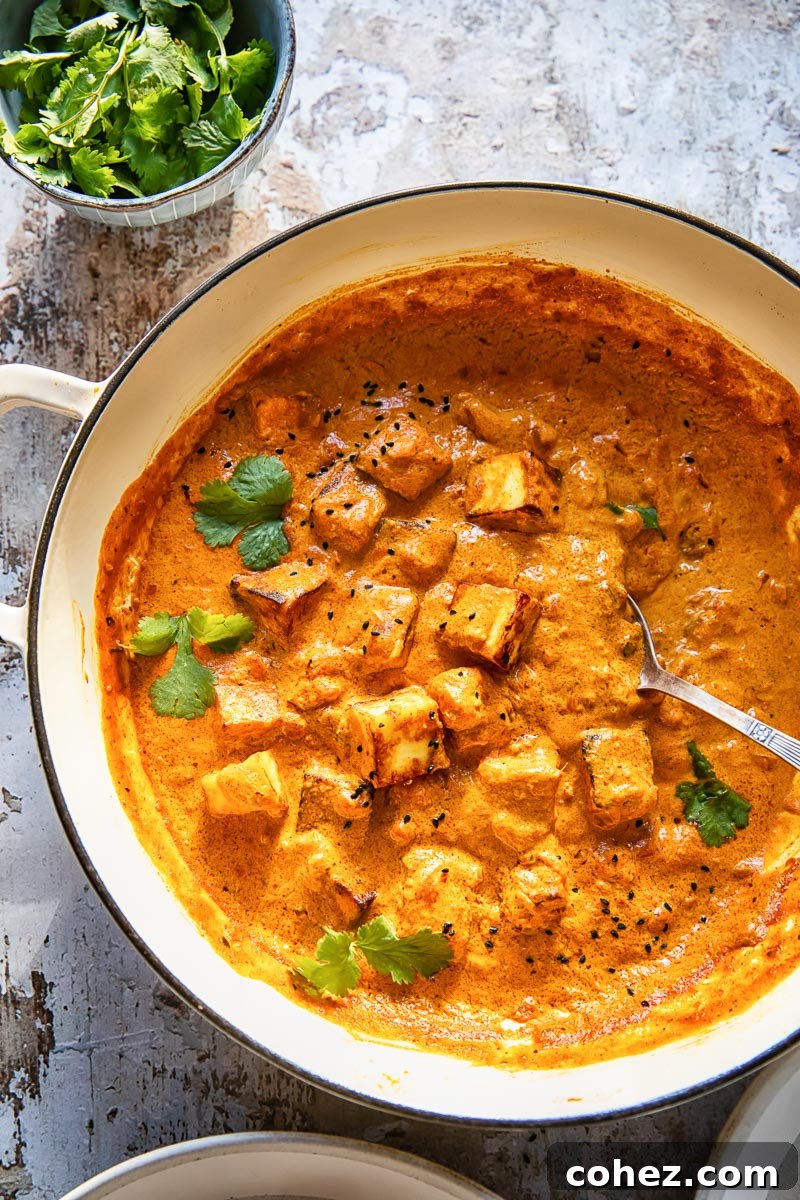
Experience the rich, creamy, and subtly spiced flavors of India with this incredible Paneer Tikka Masala recipe. A beloved classic reimagined for vegetarians, this dish takes the iconic meat curry and transforms it into a satisfying, flavor-packed meal that’s both vibrant and utterly delicious. Dive into the world of homemade Indian cuisine and discover why paneer is the perfect centerpiece for this aromatic delight.
For those who adore the depth of Tikka Masala, explore our other equally tempting versions: classic Chicken Tikka Masala for meat lovers, or another fantastic plant-based option, Vegetable Tikka Masala with Potatoes and Cauliflower. Whether you’re seeking comfort, a culinary adventure, or a healthy vegetarian alternative, Tikka Masala always delivers.
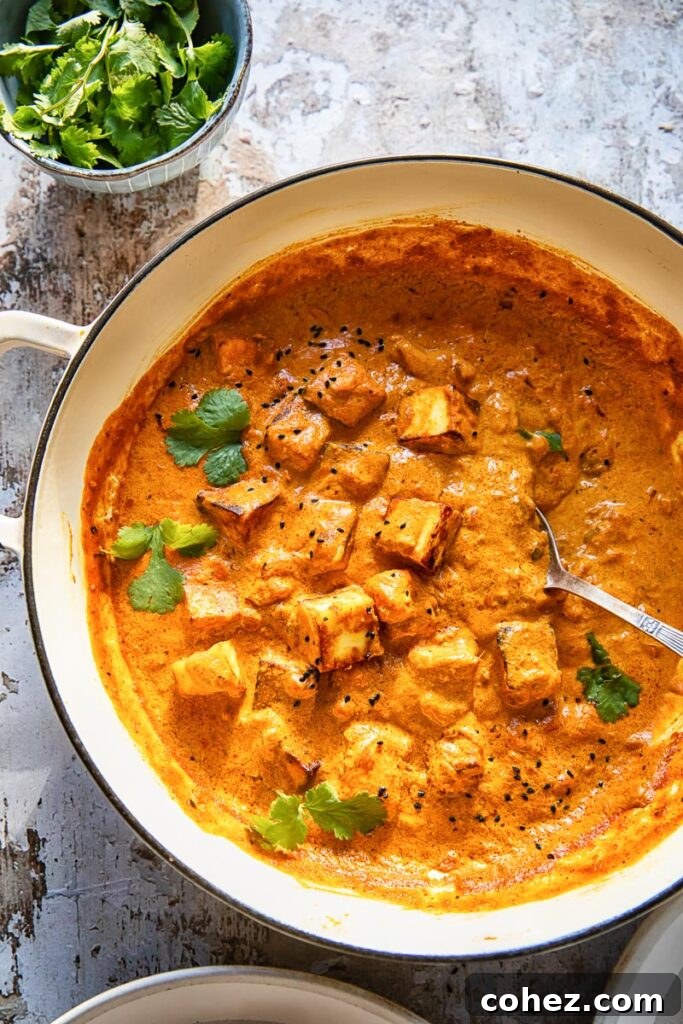
Curry has long held a special place in my heart as the ultimate comfort food. The mere thought of a fragrant, spiced dish conjures up images of warmth and satisfaction. From quick weeknight takeaways to elaborate weekend cooking projects, Indian curries are a staple that never disappoints. Tikka Masala, in particular, stands out with its universally adored profile: a symphony of sweet, tangy, and subtly spicy notes, all wrapped in a creamy, vibrant sauce.
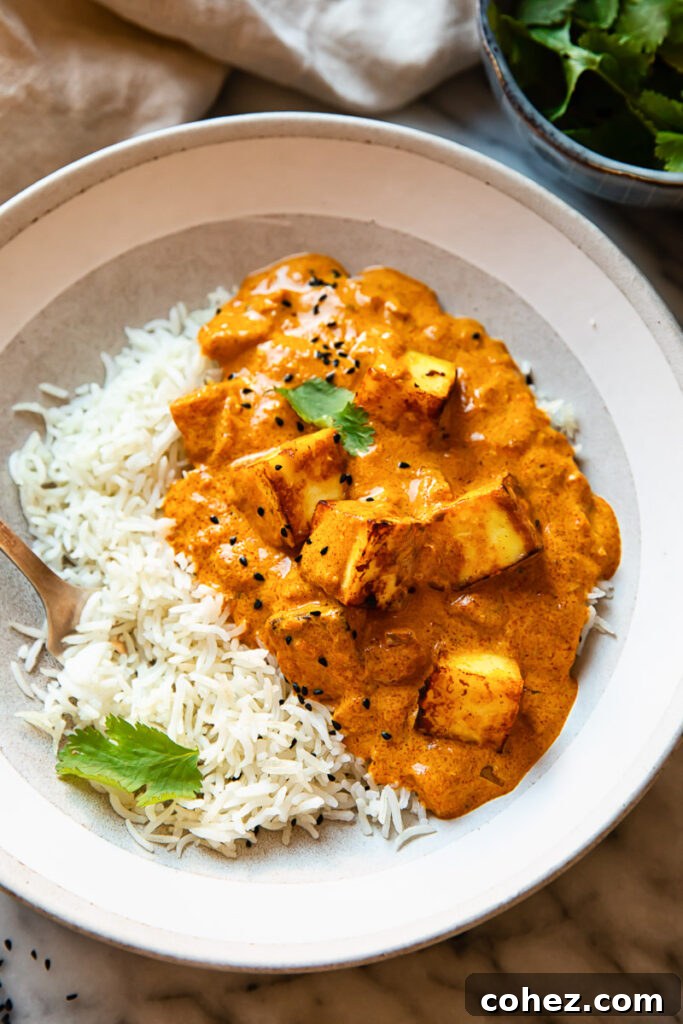
The beauty of Tikka Masala lies not just in its exquisite taste but also in its captivating appearance. Its rich orange-red hue, often garnished with fresh cilantro, is as inviting to the eyes as it is to the palate. While often associated with chicken, this versatile curry base lends itself perfectly to a vegetarian rendition using paneer, creating a dish that is equally hearty and fulfilling. What’s even better is that achieving this authentic flavor at home is surprisingly simple and immensely rewarding.
The Fascinating Origin of Tikka Masala
Indian cuisine is renowned for its diverse flavors and rich culinary traditions, with a long-standing history of vegetarian dishes. This makes it an ideal choice for those seeking delicious meat-free options. Among the countless Indian dishes, Tikka Masala has transcended borders, becoming one of the most popular curries worldwide. Its exact origin, however, remains a subject of lively debate, adding to its mystique.
One prevalent theory suggests that Tikka Masala originated in India, crafted relatively recently but in harmony with traditional Indian culinary principles. It’s believed to be a natural evolution of existing tandoori and curry techniques, adapted to suit modern palates. The spices, the cooking methods, and the essence of the dish all point to its deep roots in Indian cooking heritage.
Another widely circulated theory places its birth in the United Kingdom. Legend has it that an Indian chef in Glasgow, Scotland, created the dish in the 1970s. A customer, reportedly finding his chicken tikka too dry, requested some “gravy.” In response, the chef, possibly using a can of tomato soup and cream, improvised a mild, creamy sauce to accompany the chicken. This innovative blend of British and Indian culinary sensibilities is said to have given birth to the beloved Tikka Masala we know and love today. Regardless of its true birthplace, Tikka Masala has undeniably captured the hearts and taste buds of millions, evolving into a global phenomenon.
This same delightful, creamy, and subtly tangy sauce, celebrated in the classic chicken version, beautifully complements paneer. The paneer, with its unique texture, absorbs the rich flavors of the marinade and the curry sauce, offering a satisfying bite that is both creamy and slightly firm. The smokey undertones from browning the paneer, combined with the zesty and complex masala, create a harmonious and deeply satisfying experience for any palate, making this vegetarian tikka masala a truly exceptional dish.
Paneer: The Versatile Indian Cheese
At the heart of our vegetarian Tikka Masala lies paneer, a fresh, non-melting cheese widely popular across the Indian subcontinent. Made by curdling cow or buffalo milk with an acidic agent like lemon juice or vinegar, then pressing the curds into a solid block, paneer offers a unique texture and mild flavor. Unlike many Western cheeses, paneer does not melt, making it an excellent choice for curries as it holds its shape beautifully and provides a delightful textural contrast.
When cooked correctly, paneer develops a pleasantly soft interior with an incredibly satisfying chew. Its porous nature allows it to effectively absorb the rich spices and sauces it’s cooked in, becoming infused with flavor from within. This characteristic makes it an ideal substitute for meat in many Indian dishes, including curries, where it provides a substantial and protein-rich component without overpowering the other ingredients. Paneer is incredibly versatile, lending itself to a vast array of recipes, from savory curries and stir-fries to sweet desserts, making it a staple in vegetarian Indian cooking.
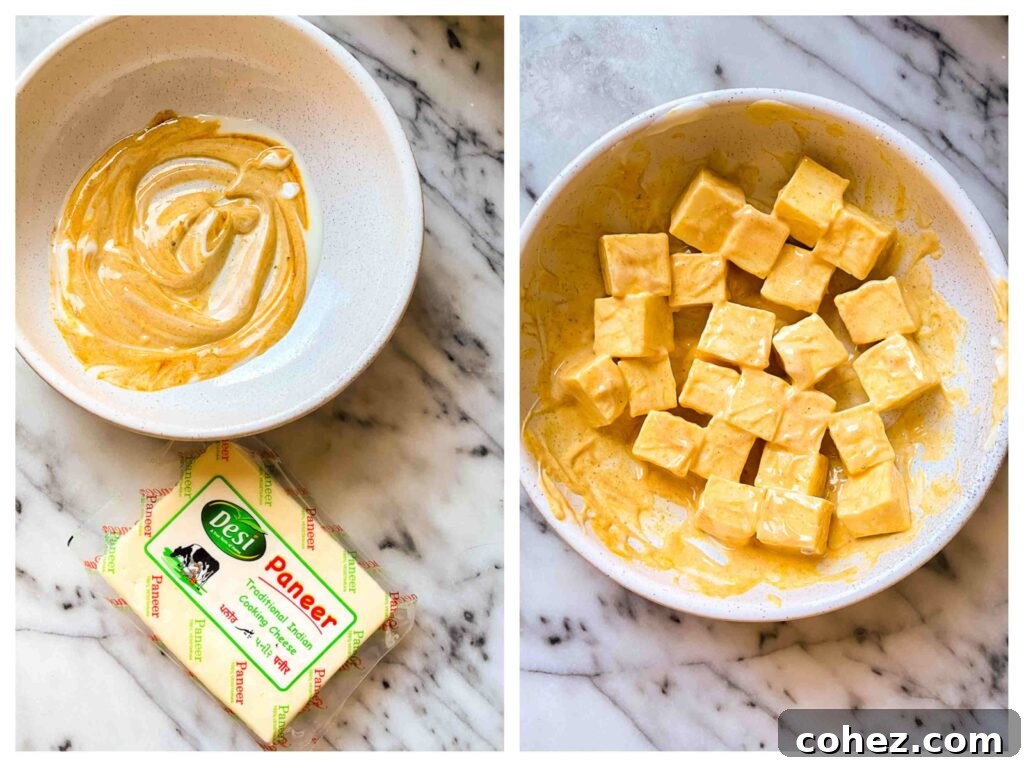
In traditional Tikka Masala, chicken pieces are typically marinated in a mixture of yogurt and spices, which tenderizes the meat and infuses it with flavor before cooking. Paneer benefits immensely from a similar marination process. Allowing the paneer to soak in a spiced yogurt mixture not only enhances its flavor but also helps it achieve that desirable golden-brown crust when pan-fried, adding another layer of texture and depth to the final dish.
For this Paneer Tikka Masala recipe, we marinate the paneer cubes in a simple yet effective blend of creamy yogurt and potent tikka masala paste. A quick 20-minute soak is all it takes to allow the paneer to absorb these wonderful flavors. Following marination, the paneer is quickly browned over medium heat. This crucial step creates a slightly crisp, golden exterior, adding a delightful textural dimension and a subtle depth of flavor before the paneer is gently folded into the luscious curry sauce.
Crafting Your Homemade Paneer Tikka Masala
While the process of making Paneer Tikka Masala might seem to involve several steps, it is far from difficult and immensely rewarding. The preparation unfolds in distinct stages, each contributing to the rich tapestry of flavors that defines this iconic Indian curry. Let’s walk through the creation of this delightful dish.
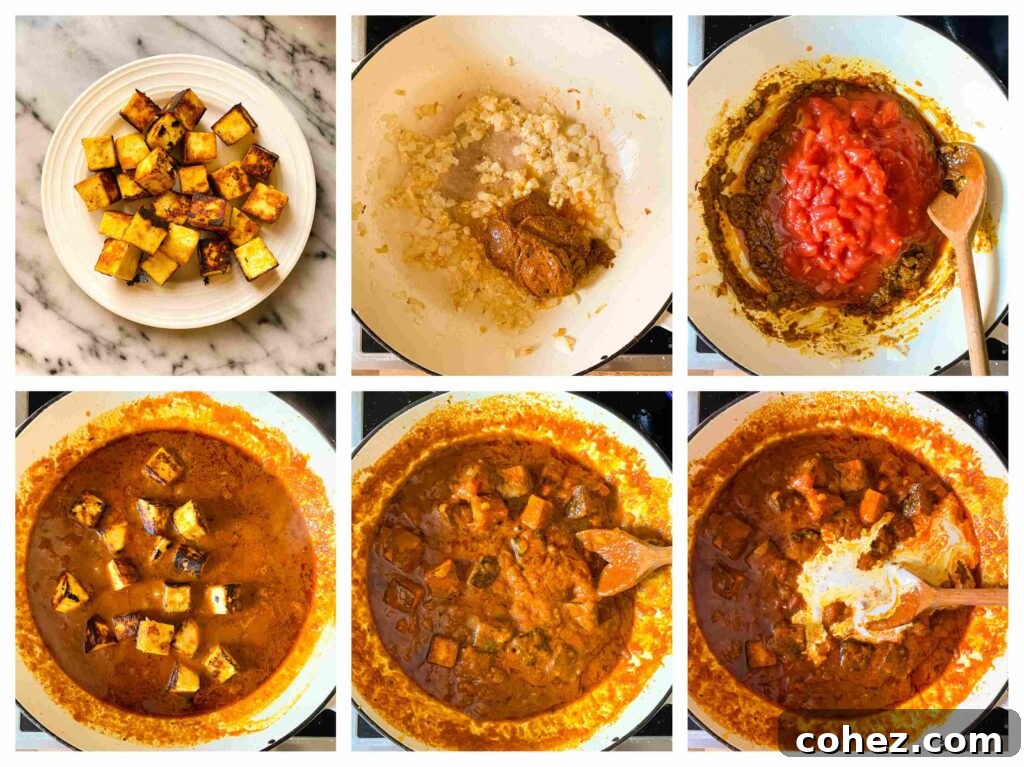
Begin by preparing your paneer. Cut the paneer into even cubes, ensuring consistent cooking. In a bowl, combine creamy yogurt with a good quality tikka masala paste. Gently toss the paneer cubes in this aromatic mixture, making sure each piece is thoroughly coated. Allow the paneer to marinate for approximately 20 minutes; this brief period is sufficient for the flavors to begin permeating the cheese. Once marinated, heat a pan over medium heat with a tablespoon of vegetable oil (or ghee for an even richer flavor). Carefully brown the paneer on all sides until it achieves a beautiful golden hue. This step is essential for developing texture and a deeper flavor. Once browned, remove the paneer from the pan and set it aside on a plate.
Next, it’s time to build the foundation of your curry sauce. In the same pan, if necessary, add a little more vegetable oil. Add the finely chopped onion and sauté over medium heat for 7-10 minutes, or until the onions turn soft and translucent. This slow cooking allows the onions to caramelize slightly, adding a natural sweetness to the sauce. Then, introduce the aromatic duo of ginger paste and minced garlic. Stir well and cook for just about one minute until fragrant. Be careful not to burn the garlic, as it can turn bitter.
Now, for the heart of the flavor: add the main tikka masala paste to the pan. Cook it with the onion-ginger-garlic mixture for a couple of minutes, stirring constantly, to allow the spices to bloom and release their full aroma. Pour in water and the chopped tomatoes. Bring the mixture to a gentle boil, then reduce the heat to a simmer. At this point, carefully return the browned paneer cubes to the pan, nestling them into the simmering sauce. Cover the pan with a lid and let it cook for about 20 minutes, allowing all the flavors to meld beautifully and the paneer to soak up the creamy goodness.
Finally, remove the lid and stir in the heavy cream (or double cream) and brown sugar. The cream adds a luxurious richness and balances the tanginess of the tomatoes and spices, while the sugar enhances the overall depth of flavor. Mix everything together until thoroughly combined and heated through. Before serving, a generous sprinkling of fresh chopped cilantro (coriander) not only adds a burst of freshness and a vibrant green contrast but also contributes to the authentic Indian experience. Serve immediately with your choice of accompaniments for a truly memorable meal.
Recipe Tips and Notes for Perfect Paneer Tikka Masala
- **Paneer Preparation is Key:** For even cooking and a beautiful presentation, cut your paneer into uniformly sized cubes. When browning the paneer, keep a close eye on it, as it can transition from perfectly golden to burnt quite quickly. A medium heat allows for controlled browning without scorching.
- **The Fat Matters:** While vegetable oil works wonderfully, consider using ghee (clarified butter) for frying your paneer and sautéing your aromatics. Ghee boasts a higher smoking point than regular butter, meaning it can withstand higher temperatures without burning, while imparting an unparalleled nutty, rich flavor that significantly enhances the authenticity of your Indian curry. Making your own ghee at home is also surprisingly simple!
- **Choosing Your Tikka Masala Paste:** While the adventurous home cook might consider making their own tikka masala paste from scratch, it often involves sourcing numerous specialized spices that may not be frequently used in other dishes. For convenience and consistent results, a high-quality store-bought tikka masala paste is an excellent choice. Look for brands known for authentic Indian flavors to ensure your curry has that professional touch.
- **The Freshness of Cilantro:** The addition of fresh cilantro (coriander) at the end is optional but highly recommended. It introduces a bright, herbaceous freshness that cuts through the richness of the curry, elevating the overall flavor profile. Beyond taste, its vibrant green color provides a beautiful visual contrast, making your Paneer Tikka Masala even more appealing on the plate.
- **Adjusting Spice Levels:** This recipe provides a balanced flavor profile. If you prefer a spicier curry, consider adding a pinch of cayenne pepper or a finely chopped green chili along with the ginger and garlic. For a milder version, you can slightly reduce the amount of tikka masala paste.
- **Sugar for Balance:** The brown sugar in this recipe isn’t just for sweetness; it plays a crucial role in balancing the acidity of the tomatoes and deepening the overall flavor profile of the curry. Don’t skip it, even if you prefer savory dishes, as it brings out the best in the spices.
Serving Suggestions for a Complete Indian Feast
Paneer Tikka Masala is a star on its own, but it truly shines when served as part of a larger Indian meal. Creating an Indian feast at home is a delightful experience, and this curry pairs wonderfully with a variety of side dishes and accompaniments.
No Indian curry is complete without the perfect carb to soak up all that rich sauce. Fluffy basmati rice is a classic choice, its fragrant, long grains providing an excellent base. For an elegant twist, consider serving it with coconut rice, which adds a subtle sweetness and creamy texture. Warm, soft naan bread, whether plain or garlic-infused, is also a fantastic companion, perfect for scooping up every last drop of the delicious curry. You can also opt for simple chapatis or rotis for a lighter touch.
To further enhance your meal, consider adding a vibrant side dish. Red lentil dahl or dal makhani offer comforting, protein-packed additions, bringing a different textural and flavor dimension to your plate. Another excellent choice is spiced roasted baby potatoes (aloo chat), which provide a delightful contrast with their earthy, spiced flavors and tender interiors.
Don’t forget the condiments! A good Indian pickle, especially a tangy lime pickle or a mixed vegetable pickle, adds a zesty kick that beautifully complements the creamy curry. You can often find high-quality options in the international aisle of most sizable grocery stores. A cooling raita (yogurt with cucumber and spices) can also offer a refreshing counterpoint to the rich curry. For a fresh element, a simple kachumber salad (diced cucumber, tomato, onion with a lemon dressing) is always a welcome addition.
Storage and Leftovers: Maximizing Your Paneer Tikka Masala Enjoyment
One of the best qualities of many curries, including this Paneer Tikka Masala, is that they often taste even better the next day. The flavors have more time to meld and deepen, resulting in an even richer and more complex dish. Proper storage ensures you can enjoy your delicious creation for days to come.
For refrigeration, allow the curry to cool completely to room temperature before transferring it to an airtight container. Stored this way, Paneer Tikka Masala will remain fresh and flavorful in the refrigerator for 3-4 days. It’s a fantastic meal prep option, allowing you to enjoy a gourmet Indian dish with minimal effort on busy weeknights.
Freezing is also an option for longer storage, extending the life of your leftovers for up to six months. However, be aware that freezing can sometimes alter the texture of the paneer, potentially making it a bit more crumbly or slightly tougher upon reheating. To minimize this, ensure the paneer is fully submerged in the sauce before freezing. When ready to enjoy, transfer the frozen curry to the refrigerator to thaw overnight before reheating.
Whether refrigerated or thawed from frozen, Paneer Tikka Masala can be reheated successfully. While a microwave offers a quick solution, for the best results, reheating on the stovetop is highly recommended. Use a medium to medium-high heat, stirring occasionally, until the curry is thoroughly warmed through. If the sauce appears too thick, a splash of water, milk, or even a little extra cream can be added to restore its creamy consistency. Avoid overheating, as this can further affect the paneer’s texture. Gently simmering until hot is key to maintaining its deliciousness.
More Delicious Vegetarian Curry Recipes to Try
- Easy Coconut Lentil Curry with Butternut Squash
- Hearty Chickpea and Butternut Squash Curry
- Simplified Cauliflower and Potato Curry (Aloo Gobi)
Paneer Tikka Masala Recipe
Print Recipe
Paneer is a great way to make classic Indian dishes into delicious vegetarian options. This recipe takes the meat out of tikka masala, while keeping the delicious flavor and satisfying tang!
Equipment
- Cast iron casserole dish
Ingredients
- 250g/9oz paneer
- 1 tbsp vegetable oil
- 2 tbsp yogurt
- 1 tsp tikka masala paste
- 1-2 tsp vegetable oil
- 1 onion, chopped
- 1 tbsp grated ginger
- 1 clove garlic, minced
- 125ml/1/2 cup tikka masala paste
- 400ml/14oz chopped tomatoes
- 125ml/1/2 cup double cream/heavy cream
- 3 tsp brown sugar
- Fresh cilantro/coriander, for garnish (optional)
Instructions
- Mix yogurt and 1 tsp tikka masala paste. Marinate cubed paneer in it for 20 minutes. Brown over medium heat in 1 tbsp oil until golden, then remove to a plate and set aside.
- Add 1-2 tsp oil to the same pan (if needed) and heat. Add chopped onion and cook for 7-10 minutes until soft. Then add grated ginger and minced garlic, and cook for 1 minute longer until fragrant.
- Add the 125ml/1/2 cup curry paste and cook for a few minutes, stirring. Then add 125ml water and chopped tomatoes. Bring to a boil, then lower the heat. Return the browned paneer to the pan.
- Cover with a lid and cook for 20 minutes, allowing flavors to meld.
- Stir in the double/heavy cream and brown sugar. Mix thoroughly and heat through.
- Garnish with fresh chopped cilantro/coriander before serving.
Nutrition
Carbohydrates: 85g |
Protein: 17g |
Fat: 13g |
Saturated Fat: 7g |
Polyunsaturated Fat: 2g |
Monounsaturated Fat: 3g |
Cholesterol: 28mg |
Sodium: 2811mg |
Potassium: 3746mg |
Fiber: 21g |
Sugar: 52g |
Vitamin A: 6017IU |
Vitamin C: 186mg |
Calcium: 688mg |
Iron: 20mg
Nutrition information is automatically calculated, so should only be used as an approximation.
We hope this comprehensive guide inspires you to create a truly memorable Paneer Tikka Masala in your own kitchen. This vegetarian masterpiece is more than just a meal; it’s an experience of rich flavors, comforting textures, and aromatic spices that will transport your taste buds straight to India. Embrace the joy of cooking this classic curry, experiment with accompaniments, and savor every delicious bite. Share your culinary journey with us, and let us know how your homemade Paneer Tikka Masala turned out!