
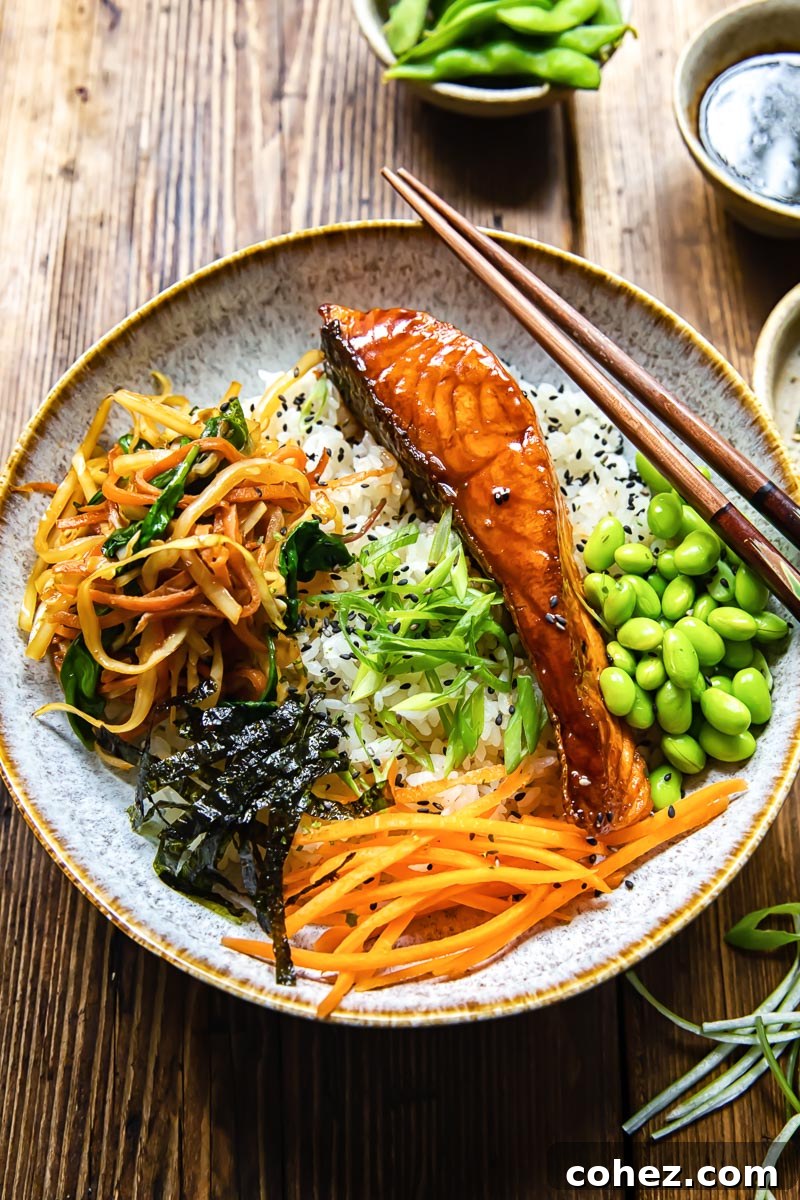
Discover the ultimate guide to creating flavorful, restaurant-quality Teriyaki Salmon Donburi bowls right in your own kitchen. This wholesome and satisfying Japanese rice bowl, packed with tender teriyaki-glazed salmon, vibrant stir-fried vegetables, and perfectly cooked sticky rice, can be yours in just about 30 minutes. Forget takeout – master this classic dish at home and impress your family and friends with a truly authentic and delicious meal!
For more exquisite teriyaki recipes, explore our delightful beef teriyaki or savory teriyaki meatballs.
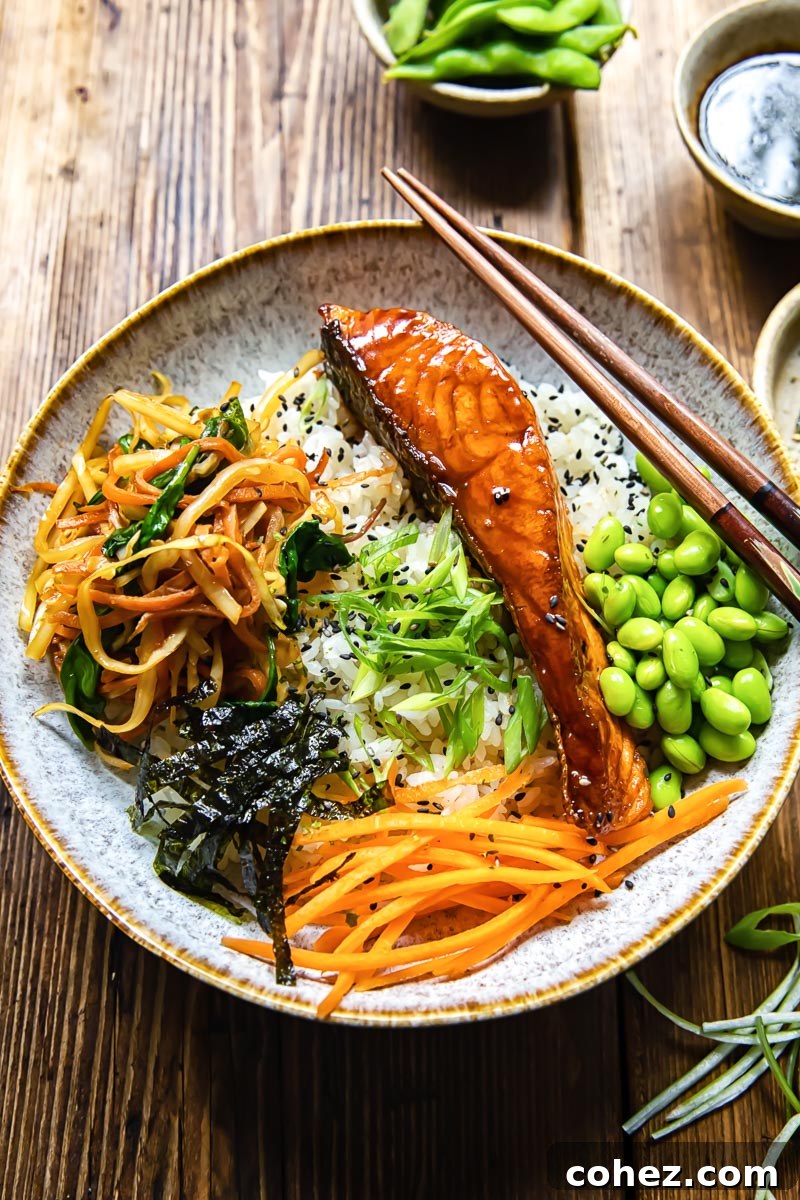
Japanese cuisine has earned a special place in my family’s heart over recent years. There’s something undeniably comforting and exciting about its diverse flavors and fresh ingredients. On evenings when cooking feels like a chore, our go-to solution is almost always a Japanese feast. What started as an appreciation for sushi has blossomed into a love affair with countless other dishes, with Donburi quickly becoming one of our absolute favorites.
What Exactly is a Donburi Bowl?
At its core, “Donburi” (丼) simply translates to “rice bowl” in Japanese. This straightforward definition belies the incredible versatility and endless variations this dish offers. A Donburi bowl is essentially a generous serving of freshly cooked rice topped with various ingredients, ranging from meats and seafood to vegetables, all simmered together or arranged artfully. It’s a canvas for culinary creativity, allowing you to fill your bowl with anything your heart desires. My children, for instance, are particularly fond of teriyaki salmon, chicken, or duck variations.
Personally, I find immense joy in building my Donburi bowls with an abundance of vibrant stir-fried vegetables, crowned with a sprinkle of furikake – a delightful Japanese seasoning blend typically composed of toasted sesame seeds, dried nori, salt, and sometimes other savory additions. The beauty of Donburi lies in its infinite possibilities, ensuring that I never grow tired of exploring new combinations. Beyond its incredible taste and often lean nutritional profile, a well-prepared Donburi bowl is also a feast for the eyes, a true work of edible art that’s as unique as the ingredients you choose.
Why Make Homemade Teriyaki Salmon Donburi?
While Japanese restaurants offer fantastic Donburi, crafting your own Teriyaki Salmon Donburi at home comes with a host of advantages. Firstly, it provides complete control over the quality and freshness of ingredients, ensuring a wholesome and healthy meal free from unwanted additives. Secondly, it’s often more cost-effective than ordering takeout, allowing you to enjoy this gourmet experience without breaking the bank. Furthermore, making Donburi at home is surprisingly quick and simple, with most recipes, including this teriyaki salmon version, taking around 30-40 minutes from start to finish. This makes it an ideal choice for busy weeknights when you crave something nutritious, delicious, and deeply satisfying. Experience the joy of customizing every aspect of your bowl, from the choice of vegetables to the amount of teriyaki glaze, to perfectly suit your palate.
The Perfect Foundation: What Rice to Use
Given that rice forms the essential base of any Donburi bowl, selecting and preparing the correct type is paramount. Having grown up in a European household, I initially believed all rice was essentially the same. However, a year spent in the Philippines completely transformed my understanding, revealing the vast diversity of rice varieties and their specific culinary applications.
For Donburi, much like sushi, the ideal rice is short-grain and possesses a sticky, slightly chewy texture when cooked. When shopping, actively look for “sushi rice” or “Japanese rice.” These varieties are specifically cultivated for their high starch content, which yields that characteristic desirable stickiness that helps bind the ingredients together in your bowl. If these aren’t readily available, suitable substitutes include other short-grain options such as Italian Arborio rice (commonly used for risotto), Spanish Bomba rice (a staple for Paella), or Thai sticky rice. While these alternatives will work, Japanese short-grain rice offers the most authentic texture and flavor.
The cooking method for this sticky rice is straightforward. My preferred technique is using an Instant Pot for consistent results, but a traditional rice cooker or a simple stovetop method will also yield excellent rice. Regardless of the method, always rinse your rice thoroughly under cold running water until the water runs clear. This step removes excess starch, preventing your rice from becoming overly gummy and ensuring each grain is distinct yet perfectly sticky.
The Star: Irresistible Teriyaki Salmon
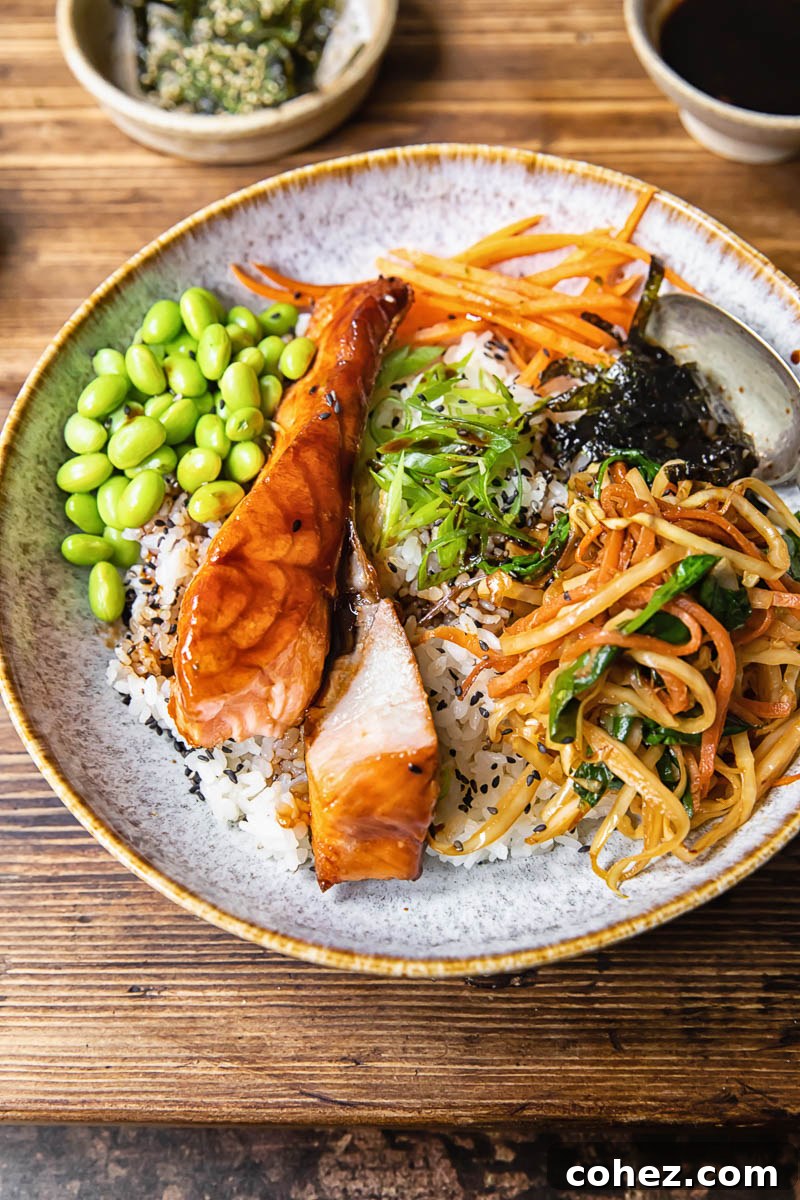
Salmon is an exceptional choice for Donburi due to its rich flavor, flaky texture, and numerous health benefits, being an excellent source of omega-3 fatty acids and protein. When paired with a glossy teriyaki glaze, it transforms into a succulent and deeply flavorful component that truly elevates the entire bowl. Preparing the teriyaki salmon at home allows you to control the sweetness and saltiness of the sauce, tailoring it to your preference. While store-bought teriyaki marinade offers convenience, a simple homemade sauce can be made with soy sauce, mirin, sake (optional), sugar, and a touch of ginger and garlic.
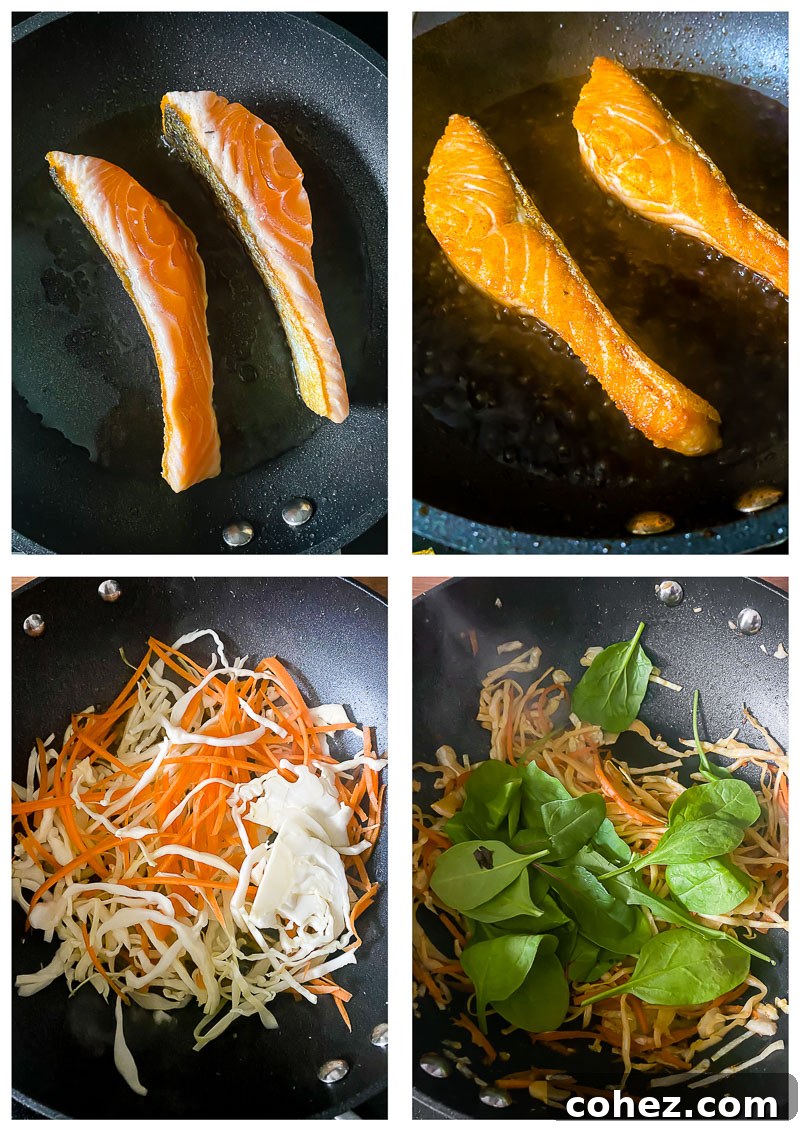
For perfectly cooked salmon, heat a frying pan with a tablespoon of vegetable oil. Place the salmon fillet skin-side up first, cooking for 2-3 minutes to get a beautiful sear and render the fat. Then, carefully flip it to each side for about 1 minute, finally placing it flesh-side up. Continue to fry for another 2 minutes until all sides are golden and the fish is nearly cooked through. The magic happens when you add your pre-mixed teriyaki sauce to the pan. Allow it to simmer, tilting the pan occasionally to scoop and baste the salmon with the luscious sauce. This basting process ensures the salmon is evenly coated and absorbs all the delicious flavors, resulting in a thick, glossy, and caramelized glaze. Once it reaches this point, remove the salmon from the heat and keep it warm while you prepare the remaining components.
Vibrant Stir-Fried Vegetables
The addition of fresh, crisp-tender stir-fried vegetables not only adds color and texture to your Donburi but also boosts its nutritional value. While wilted spinach is a common choice in many Donburi preparations, the beauty of this dish lies in its adaptability. I particularly enjoy a medley of thinly shredded cabbage, finely julienned carrots, and tender spinach. These vegetables cook quickly and absorb flavors beautifully.
To prepare them, simply heat another pan or a wok with a touch of vegetable oil. Briefly stir-fry minced garlic and grated ginger for a few seconds until fragrant. Then, add the thinly sliced cabbage and carrots, stir-frying them over medium-high heat for 2-3 minutes until they start to soften but still retain a pleasant bite. Finish by adding a splash of soy sauce and the spinach, cooking for just a couple more minutes until the spinach wilts. This quick cooking method ensures the vegetables remain vibrant and flavorful. Feel free to forage through your fridge; mushrooms, broccoli florets, bell peppers, or even thinly sliced cucumber would also be delightful additions, offering varied textures and flavors that complement the sticky rice perfectly.
Elevating Your Donburi with Essential Toppings
What truly distinguishes a good Donburi bowl from a truly exceptional one are the thoughtful additions and toppings sprinkled on just before serving. These elements contribute layers of flavor, contrasting textures, and vibrant visual appeal that make each spoonful a delight. My personal favorite is a generous dusting of furikake seasoning over the entire dish, instantly adding a savory, umami-rich depth and a satisfying crunch from the toasted sesame seeds and nori.
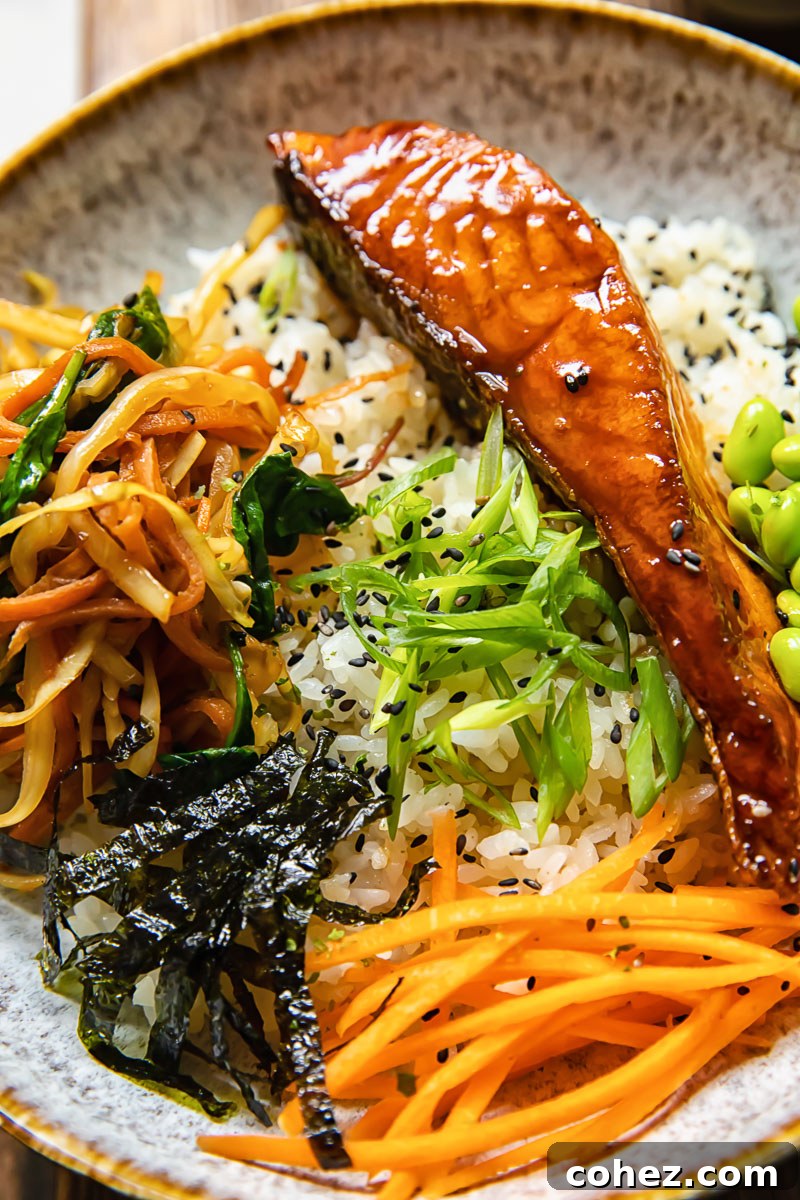
My teenagers introduced me to the brilliance of incorporating thinly sliced julienned carrots and a scattering of black sesame seeds. These simple additions bring a fresh, slightly sweet crunch and a striking visual contrast that I now consider indispensable. Sliced green onions (scallions) are another must-have, providing a mild, pungent bite and a burst of attractive green color. If you’ve ever made sushi at home, chances are you have leftover nori sheets. Cut into narrow strips and sprinkled over the bowl, they contribute a wonderful oceanic umami flavor and a delicate crispness. Finally, a handful of vibrant green edamame beans (shelled and defrosted) adds a significant boost of protein and a delightful pop of texture, making the bowl even more wholesome. Alternatively, you can serve edamame pods on the side as a simple appetizer.
Recipe Tips for Donburi Success
- Achieving long, thin carrot strips is crucial for both presentation and texture. While challenging with a regular knife, a julienne peeler makes this task incredibly simple and efficient.
- Embrace flexibility with your vegetables! Although carrots, cabbage, and spinach are suggested, feel free to use what you have on hand. Mushrooms, broccoli, snap peas, bell peppers, or even thinly sliced cucumber are all excellent choices that will complement this dish beautifully. It’s a fantastic opportunity to clear out your fridge.
- Do not underestimate the power of toppings. These aren’t mere garnishes; they are integral to the dish’s overall flavor profile, texture, and visual appeal. Skipping them will leave your Donburi feeling incomplete and less authentic.
- Japanese cooking often emphasizes precision and attention to detail. To achieve a truly restaurant-quality Donburi bowl, take the time to prepare your vegetables properly, especially when slicing. Uniformly cut ingredients cook more evenly and enhance the aesthetic presentation of your finished dish.
Assembling Your Masterpiece: Serving Suggestions
Unlike a cold poke bowl, a Donburi bowl is intended to be served and enjoyed warm, allowing the flavors to meld beautifully. Presentation is part of the experience, so serve each portion in individual, deep bowls, which traditionally highlight the layered ingredients. Begin by piling a generous amount of hot, sticky rice at the bottom. Next, artfully arrange the stir-fried vegetables around one side of the bowl. Place the perfectly cooked teriyaki salmon fillet on top of the rice, adjacent to the vegetables. Finally, complete your culinary creation with a scattering of all your chosen toppings – the julienned carrots, sliced green onions, nori strips, furikake, and edamame beans. Drizzle any remaining teriyaki sauce from the pan over the salmon and rice for an extra burst of flavor. For an authentic dining experience, grab a pair of chopsticks and savor every bite!
Storage and Leftovers
Donburi bowls are truly best enjoyed fresh and hot. Unfortunately, cooked rice, especially after being combined with other ingredients, doesn’t store particularly well in the refrigerator due to changes in texture and potential food safety concerns if not handled correctly. For this reason, it’s generally recommended to prepare Donburi as a fresh meal rather than planning for significant leftovers.
However, if you do find yourself with extra components, the best approach for storage is to keep the ingredients separate. The cooked salmon can be stored in an airtight container in the refrigerator for 3-4 days, and the stir-fried vegetables will last even longer. When you’re ready to enjoy another bowl, simply cook a fresh batch of rice, gently reheat the salmon and vegetables, and assemble your Donburi as if making it for the first time. This method ensures the best possible flavor and texture for your subsequent meals.
Teriyaki Salmon Donburi Bowl Recipe
Teriyaki Salmon Donburi Bowl
Julia Frey of Vikalinka
15 mins
20 mins
35 mins
2
This donburi bowl is chock full of delicious sticky rice, teriyaki salmon, stir-fried vegetables and lots of extra toppings.
Equipment
-
Julienne peeler
-
Frying pan
-
Wok (optional, a large frying pan works too)
Ingredients
- 210g / 1 cup sushi rice
- 2 pieces salmon fillet, 120g / 4 oz each
- 4 tbsp teriyaki marinade
- 2 tbsp light soy sauce
- 2 tsp mirin
- 1 tsp sugar
- 1 tbsp vegetable oil (for salmon)
- 1 clove garlic, minced or grated
- 1 inch piece ginger, grated
- 100g / 1 cup cabbage, thinly sliced
- 1 carrot, julienned (for stir-fry)
- 30g / 1 cup spinach
- 1 tbsp soy sauce (for vegetables)
Toppings
- 2 green onions, sliced
- 40g / 1/4 cup edamame beans, shelled and defrosted (optional)
- 1/2 carrot, julienned (fresh for topping)
- 1 tbsp furikake seasoning, optional
- 1 sliced nori sheet (cut into thin strips), optional
- 1 tsp black sesame seeds, optional
Instructions
-
Begin by cooking the sushi rice using your preferred method (stovetop, rice cooker, or Instant Pot). Ensure it’s perfectly sticky and fluffy.
-
Prepare the teriyaki sauce by whisking together the teriyaki marinade, light soy sauce, mirin, and sugar in a small bowl. Thinly slice the cabbage and julienne one large carrot for the stir-fry. Grate the fresh ginger and mince the garlic. Set all prepped ingredients aside.
-
Heat 1 tablespoon of vegetable oil in a frying pan over medium-high heat. Place the salmon fillets skin side up and cook for 2-3 minutes until the skin is crispy. Flip the salmon to one side and cook for 1 minute, then flip to the other side for another minute. Finally, place the salmon flesh side up and cook for 2 minutes longer, until all sides are golden and the fish is nearly cooked through. Pour the pre-mixed teriyaki sauce into the pan and let it simmer. Tilt the pan to one side and use a spoon to baste the salmon with the glossy sauce. Continue simmering and basting until the sauce thickens and achieves a beautiful, glistening glaze. Remove from heat and keep warm.
-
In a separate pan or a wok, heat another tablespoon of vegetable oil. Add the grated ginger and minced garlic, stir-frying briefly for a few seconds until fragrant. Add the sliced cabbage and julienned carrots, stir-frying over medium-high heat for 2-3 minutes until they begin to soften but still retain a slight crunch. Stir in the soy sauce and spinach, continuing to cook for a few more minutes until the spinach wilts and the vegetables are tender-crisp.
-
To assemble your Donburi bowls, divide the hot cooked rice evenly between two individual serving bowls. Carefully place a teriyaki salmon fillet on top of the rice in each bowl, alongside the vibrant stir-fried vegetables. Drizzle any remaining rich teriyaki sauce from the pan over the salmon and rice. Finish with a generous scattering of the sliced green onions, fresh julienned carrots (for topping), and black sesame seeds. If desired, add the defrosted edamame beans and thinly sliced nori for extra texture and flavor. Serve immediately and enjoy!
Notes
- For more ideas on delicious toppings to customize your Donburi bowls, refer to the “Elevating Your Donburi with Essential Toppings” section of the article above.
- The carrots for topping should be cut into long, thin strips for the best presentation and texture. A julienne peeler will make this task significantly easier than using a knife.
- While carrots, cabbage, and spinach are suggested for the stir-fry, don’t hesitate to use any vegetables you have in your fridge. Donburi bowls are incredibly versatile, and ingredients like mushrooms, broccoli, bell peppers, or even snow peas work wonderfully.
- The toppings may seem like simple garnishes, but they add a considerable amount of flavor, texture, and visual appeal to the dish. Don’t skip them for a truly authentic and satisfying experience.
- Attention to detail in preparation, especially careful and uniform slicing of vegetables, contributes greatly to achieving restaurant-quality Donburi bowls.
Nutrition
Carbohydrates: 110g |
Protein: 40g |
Fat: 10g |
Saturated Fat: 1g |
Polyunsaturated Fat: 4g |
Monounsaturated Fat: 3g |
Cholesterol: 66mg |
Sodium: 3054mg |
Potassium: 1310mg |
Fiber: 8g |
Sugar: 14g |
Vitamin A: 12177IU |
Vitamin C: 31mg |
Calcium: 121mg |
Iron: 5mg
Nutrition information is automatically calculated, so should only be used as an approximation.
More Japanese Recipes to Try
- Chicken Yaki Udon
- Udon Noodle Soup
- Chicken Katsu Curry
- Shoyu Chicken (Soy Sauce Chicken)