
The Ultimate Guide to Perfect Yorkshire Puddings: Crispy Crowns for Your Roast Dinner
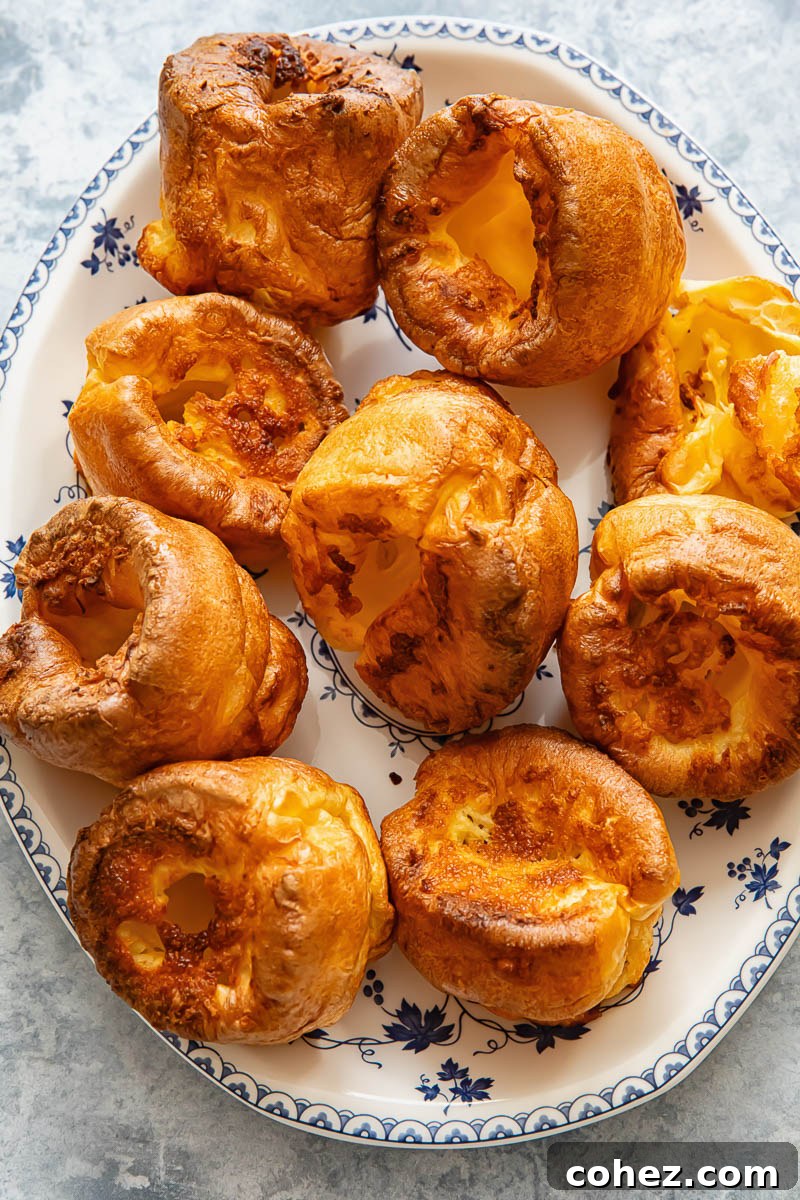
Yorkshire Puddings are more than just a side dish; they are a cherished icon of British cuisine, an indispensable star in the grand tradition of the Sunday roast. Imagine golden, puffed-up crowns, their outer shells exquisitely crispy, their interiors wonderfully light and airy. These culinary marvels proudly stand alongside succulent roast beef, fluffy roast potatoes, tender vegetables, and, most importantly, generous rivers of rich, savoury gravy. Crafted from a handful of fundamental ingredients – eggs, milk, flour, and a pinch of salt – these simple yet spectacular creations are surprisingly easy to master, promising to elevate your Sunday dinners from ordinary to extraordinary. Intrigued by the allure of these magnificent British staples? Read on to uncover their secrets and make them your own.
Let’s clarify something right from the start, to avoid any potential disappointment: Yorkshire Puddings are not what most people outside of the UK might imagine when they hear the word “pudding.” In British culinary context, “pudding” can refer to a wide array of dishes, both sweet and savoury. However, these specific “puddings” are decidedly savoury, a far cry from the sweet, often custardy or cake-like desserts commonly associated with the term. If it’s a dessert you’re after, you might want to explore other recipes. Now that we’ve cleared up this important distinction and perhaps saved a few readers from an unexpected culinary journey, let’s delve deeper into the fascinating world of Yorkshire Puddings.
My own introduction to the Yorkshire Pudding was, admittedly, a moment of delightful confusion. The pub menu proudly declared: “Roast Beef with Yorkshire Pudding.” My suspicions were immediately piqued. What could this “pudding” entail when served alongside a hearty roast? Driven by a fondness for culinary mysteries and an eagerness to savour my first authentic British roast beef on UK soil, I embraced the unknown.
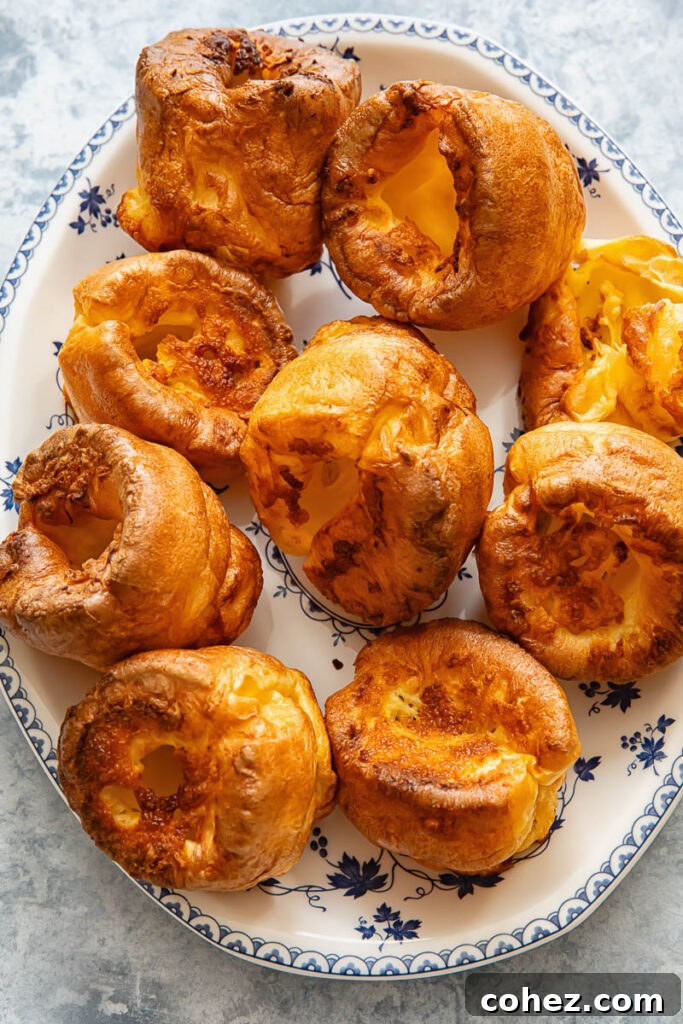
To my pleasant surprise, the Yorkshire Puddings that arrived were strikingly familiar. Nestled on the plate beside the perfectly cooked beef and its accompanying trimmings, bathed in a shimmering pool of rich, dark gravy, sat two delightfully uneven, somewhat doughy-looking mini chimney pots. Their form and texture instantly reminded me of the North American popover, a close culinary cousin from across the Atlantic.
Upon tasting, the resemblance was undeniable; they shared a virtually identical base recipe. However, a subtle but significant difference emerged: the British versions possessed a distinctly savoury character, often imbued with a luscious, unctuous richness from the cooking fat. Popovers, in contrast, tend to be butterier, frequently enjoyed with sweet accompaniments like butter and jam. This subtle savoury depth solidified my affection for the Yorkshire Pudding. Realizing the core recipe was within my grasp, I embarked on a journey over the next few years to refine the method, perfecting the art of the ultimate Yorkshire Pudding. And now, I’m thrilled to share my perfected technique with you.
What Exactly Are Yorkshire Puddings? A Culinary History
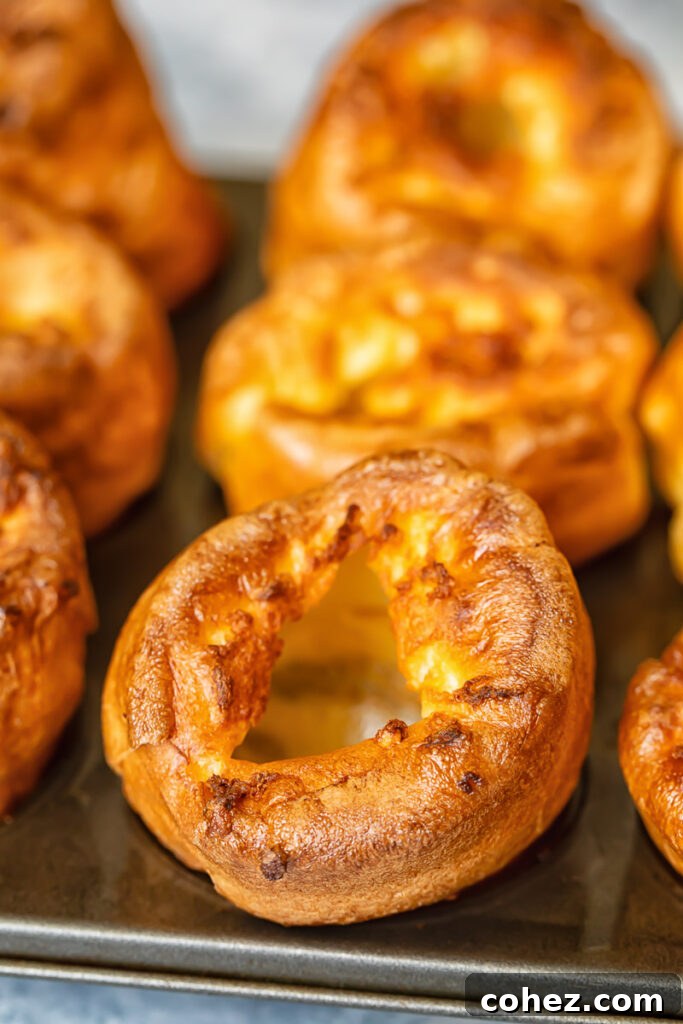
At their heart, Yorkshire Puddings are a centuries-old British delicacy, concocted from a deceptively simple batter of eggs, milk, flour, and salt. Sound familiar? Indeed, it’s remarkably similar to a classic pancake batter! Yet, unlike its typically flat, round cousin, the Yorkshire Pudding undergoes a glorious transformation, rising dramatically in the oven to achieve its characteristic puffy, round, and often irregular shape. Imagine an edible, golden-brown bowl, perfectly crafted for cradling generous amounts of rich, flavourful gravy.
This gravy-holding capacity points to their humble origins. Originally known as “dripping puddings,” these inexpensive and easily accessible ingredients were ingeniously utilized to create substantial, belly-filling vessels. In times when meat was a luxury and budgets were tight, these puddings would be cooked beneath the roasting joint, catching the precious meat drippings. Served as a first course, they filled hungry stomachs, making the smaller, more expensive portion of meat go further. This frugal innovation highlights the ingenuity of traditional British cooking.
Today, the ideal Yorkshire Pudding is a masterpiece of lightness. Far from being heavy or stodgy, it should boast a wafer-light, crisp shell that shatters delicately with each bite, revealing a tender, airy interior. Their size can vary wildly, from dainty teacup-sized portions, which I personally prefer as they complement the other elements of the meal, to impressively “giant” versions often found in competitive culinary displays. While these colossal Yorkies are certainly a sight to behold, they can sometimes overshadow the star of the show – the roast itself.
But why “Yorkshire”? The name itself is steeped in history and local pride, with two primary theories explaining its origin. The first, and most widely accepted, attributes the name to a cookbook from the 1700s. Originally referred to as “Dripping Pudding,” the dish gained its regional identifier after being featured prominently in a publication by a Yorkshire-born cook, solidifying its association with the county. The second, more debated theory, suggests that Yorkshire’s burgeoning coal industry during that era led to exceptionally hot ovens. A fiercely hot oven is, as any seasoned Yorkshire Pudding maker will attest, an absolutely essential element for achieving that magnificent rise and unparalleled crispness. Thus, it’s argued that the very best puddings could be reliably produced in Yorkshire, lending the region its enduring claim to fame for this beloved dish.
Mastering the Perfect Yorkshire Pudding: Essential Tips and Tricks
Creating truly show-stopping Yorkshire Puddings is an art, but one that is entirely achievable with a few key techniques. Over the years, countless home cooks and professional chefs have shared their wisdom, and these tips are universally agreed upon for consistent success:
- **Embrace Simplicity:** For the lightest and crispiest puddings, I often refer to the wisdom of British baking royalty like Mary Berry. Her timeless recipes prove that the classic, basic ratio of ingredients is often the best.
- **Adjusting Texture:** If your preference leans towards a more substantial, slightly spongier Yorkshire Pudding, simply double the amount of flour in the recipe. This small adjustment adds a delightful density that some find more satisfying.
- **The Popover Connection:** For my North American friends, rest assured, Yorkshire Puddings are indeed the original popovers! The primary distinction lies in the cooking fat; traditionally, Yorkies use beef dripping or other animal fats, while popovers often rely on butter.
- **Choosing Your Fat:** Traditionally, beef dripping, rendered from a roasting joint, was the fat of choice, imparting an unparalleled depth of flavour. However, modern recipes frequently use vegetable oil for wider accessibility and to accommodate various dietary requirements. Duck fat also makes an excellent, flavourful alternative. It’s crucial, however, to avoid olive oil due to its relatively low smoke point, which can cause it to burn at the high temperatures required.
- **The Importance of Resting:** Allowing your batter to rest is a non-negotiable step for achieving that signature towering rise. Even a minimum of 30 minutes makes a significant difference, as it allows the gluten in the flour to relax, resulting in a more tender structure and a magnificent puff.
- **Dedicated Oven Space:** Yorkshire Puddings are divas; they demand their own space! They should never share an oven with other roasting items like meat, potatoes, or vegetables. The moisture released by these foods can create steam, hindering the puddings’ ability to rise properly and leaving them disappointingly soggy.
- **Timing is Everything:** Conveniently, Yorkshire Puddings cook beautifully during the time your roast meat is resting. This means there’s no need to stress about dinner getting cold while you wait for your puddings to bake.
- **Scorching Hot Conditions:** This is perhaps the most critical rule: both your oven and, crucially, your chosen fat must be screaming hot before the batter is introduced. The intense heat is what triggers the rapid expansion of the batter, creating those characteristic airy pockets.
- **Precision Pouring:** When adding the batter, use a jug with a spout and pour directly into the very centre of each muffin cup. Avoid splashing the sides of the tray. An oily barrier around the base and sides is essential to prevent sticking and ensure a clean, impressive rise.
- **Resist the Urge to Peek:** Once the puddings are in the oven, do not, under any circumstances, open the oven door until they are fully baked and gloriously golden. Prematurely checking will cause them to deflate instantly, and unfortunately, there’s no recovery from this culinary tragedy.
- **The Learning Curve:** Perfecting Yorkshire Puddings can be a journey. If your puddings emerge from the oven looking like golden crowns, only to sadly collapse into flimsy flat caps, it usually means they hadn’t quite finished baking. Leave them in for a little longer next time; they need that full baking time to set their structure.
Serving Suggestions: The Perfect Accompaniment
The question of what to serve with Yorkshire Puddings is, for some, an area of profound controversy. Die-hard traditionalists will staunchly argue that these golden puffs can only ever be served alongside a magnificent joint of roast beef, complete with all the customary Sunday trimmings. This deeply ingrained tradition stems from their historical association with beef drippings and their role in a classic beef roast.
However, due to their undeniable popularity and versatile appeal, home cooks and pubs alike have increasingly bent these long-standing rules. Today, it’s not uncommon to find Yorkshire Puddings served with almost any type of roast meat, or even creative vegetarian alternatives. While I appreciate an open mind in the kitchen, I confess my loyalty remains with authenticity. For me, the ultimate experience involves a perfectly rare, pink-centred roast beef, providing the ideal counterpoint to the savoury, crisp Yorkies. Having embraced British culinary traditions, I truly feel I’ve become an honorary Brit!
My dream roast dinner features a juicy prime rib roast beef as the centrepiece, flanked by perfectly crunchy-shelled roast potatoes, tender roasted carrots, sweet parsnips, and vibrant cabbage greens. It’s a feast for the senses! However, while mouth-wateringly delicious, prime rib can be eye-wateringly expensive. So, unless it’s a truly special occasion, more budget-friendly cuts like beef topside (top round) or a comforting slow cooker roast beef will often grace my Sunday table.
Rest assured, no one is truly judging if you opt to serve your Yorkshire Puddings with a succulent roast pork, a fragrant roast leg of lamb, a classic roast chicken, or even a festive turkey. Each combination offers its own unique charm and flavour profile. But there is one unwavering, universally agreed-upon truth: no matter what roast you choose, there must be buckets – and I mean buckets – of rich, homemade gravy!
Storage and Leftovers: Maximizing Your Yorkshire Pudding Experience
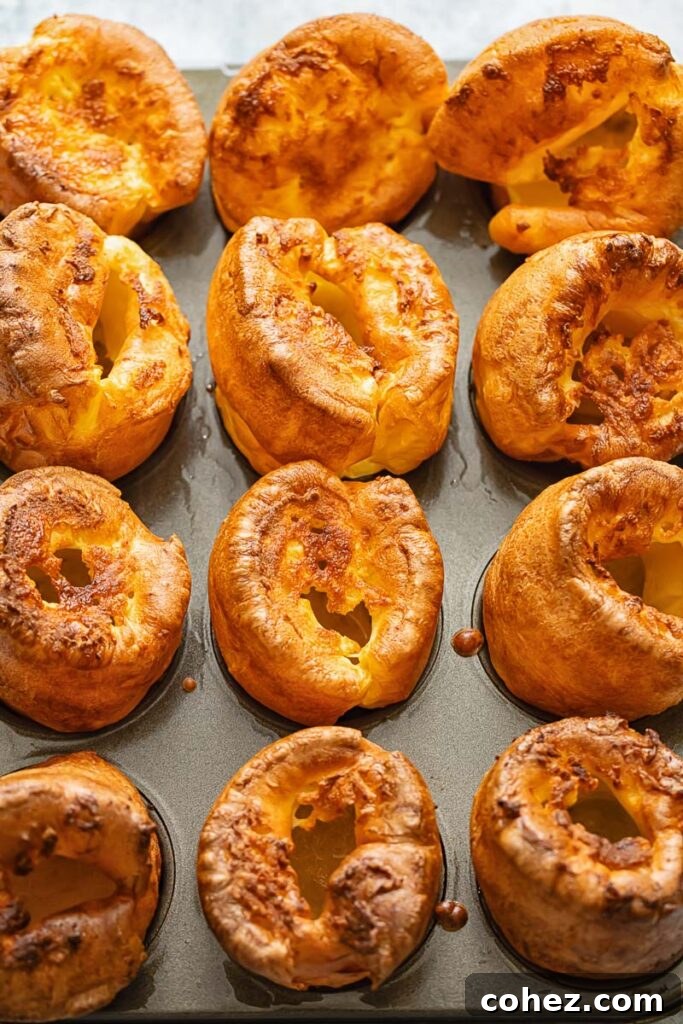
This straightforward Yorkshire Pudding recipe typically yields 12 muffin tin-sized delights. In my household, my daughter and I manage a restrained two Yorkies each, but my husband and son are usually quick to devour their generous quota of three. This often leaves a conundrum: is there even a point in trying to save the last couple of Yorkshire Puddings? Frankly, no. While delicious fresh, refrigerating them tends to leave them rather cold, soft, and somewhat flabby, diminishing their initial crispy glory.
However, during the colder months, especially if I’ve had the opportunity to use some flavourful beef or duck drippings in the recipe, it makes perfect sense to double the batch and make 24 puddings. The beauty of Yorkshire Puddings is their freezer-friendliness. Once completely cooled, they can be transferred to a freezer-safe bag or airtight container and stored in the freezer for up to three months.
These frozen delights are incredibly convenient for future family holiday roasts, such as Thanksgiving or Christmas. A quick reheat of about 5 minutes at 220°C/428°F will bring them back to life, restoring much of their original crispness and warmth. Just be prepared for the culinary purists who might argue that Yorkshire Puddings, while a staple with beef, traditionally should not be served with turkey!
More Delicious Holiday Sides to Try
- Traditional Colcannon Recipe
- Herb and Garlic Mashed Potatoes
- Hot Honey Baked Camembert in Bread Bowl
- Garlic Butter Sautéed Cauliflower with Breadcrumbs
Yorkshire Puddings

Ingredients
- 3 large eggs
- 225ml / 1 cup milk, 1%
- 100g / 3/4 cup plain / all-purpose flour
- 1/4 tsp salt
- Beef dripping, lard or duck fat (or vegetable oil with high smoke point)
Instructions
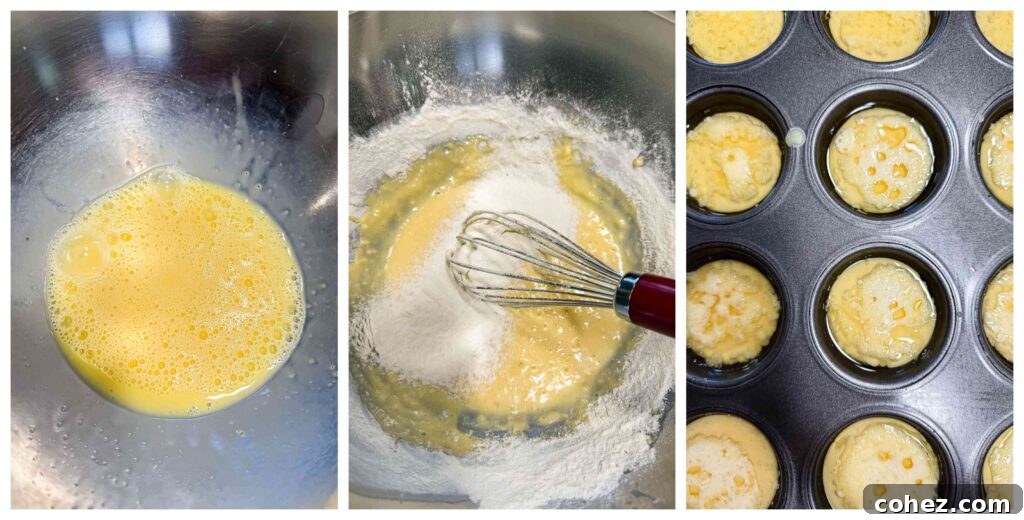
- Whisk the eggs with milk. Slowly add flour through a sifter and mix until you have a lump-free batter. Season with salt. Transfer the batter to a jug with a spout and let it rest for at least 30 minutes. Preheat the oven to 200°C/400°F (fan assisted) or 220°C/450°F (conventional).
- 10-15 minutes before the batter finishes resting, add a spoonful of lard, duck fat, or beef drippings (or vegetable oil) to each muffin cup, ensuring it covers the bottom up to 1 cm. Place the muffin tin in the preheated oven and heat the oil for 10-15 minutes, or until it’s piping hot and almost smoking.
- Once the batter is rested and the oil is hot, carefully remove the pan from the oven. Working quickly, distribute the batter evenly among the muffin cups. Pour the batter directly into the centre of each cup, trying to avoid splashing the sides. Use a spoon to catch any drips.
- Immediately return the muffin tin to the preheated oven and bake at 200°C/400°F (fan assisted) for 20 minutes. Do not open the oven door to check on the puddings, as this will cause them to deflate.
Notes
- To achieve a more substantial, heftier Yorkshire Pudding, double the amount of flour in the batter.
- While traditionally made with leftover beef drippings for authentic flavour, vegetable oil with a high smoke point offers a more accessible alternative, especially for those with varied dietary requirements. Avoid olive oil due to its low smoke point. Duck fat can also be used for a rich flavour.
- Resting the batter is crucial for a good rise. Even a short 30-minute rest allows the gluten to relax, contributing to a lighter, airier texture.
- Yorkshire puddings demand high heat and dry air. Avoid cooking them in the same oven as other dishes like roasting meat or vegetables, as the moisture released can prevent them from rising properly and lead to a soggy result. A convenient time to cook them is while your roast meat is resting.
- Ensure both the oven and the fat in the muffin tin are extremely hot before adding the batter. This extreme heat is key to achieving the characteristic puff.
- When pouring the batter, aim for the centre of each muffin cup and try not to splash the sides. The hot oil acts as a barrier, preventing sticking and facilitating a clean rise.
- Resist the urge to open the oven door during baking. Any sudden drop in temperature will cause the puddings to deflate, and they will not recover.
- Perfecting Yorkshire Puddings can take a little practice. If they rise beautifully only to deflate soon after removal from the oven, it usually indicates they needed a bit more baking time to fully set their structure. Extend baking time slightly next time.
Nutrition
Nutrition information is automatically calculated, so should only be used as an approximation.