
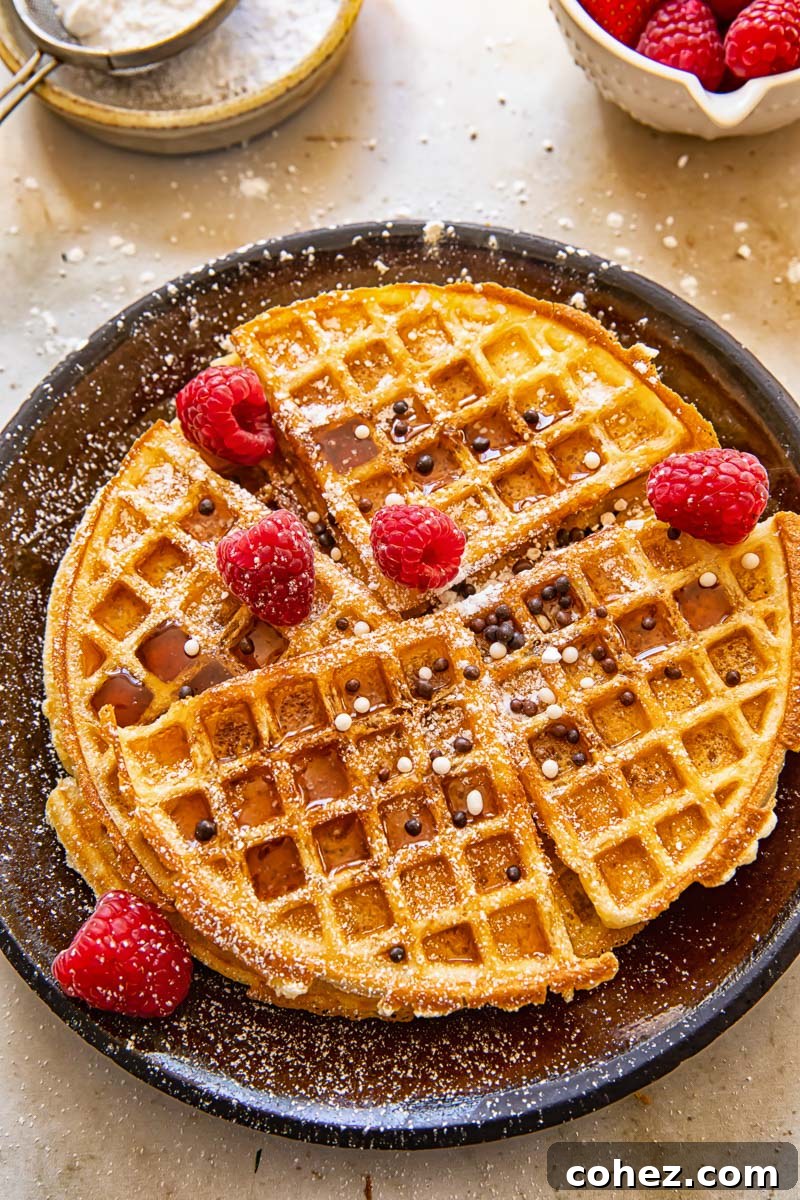
Prepare to elevate your breakfast game! Belgian waffles are universally celebrated as the ultimate festive breakfast, and it’s time to make yours truly unforgettable. This comprehensive guide will show you how to achieve the most golden, delightfully crunchy, and irresistibly fluffy wonder waffles imaginable. Get ready to explore their rich history, master essential techniques, and unleash your creativity with an array of spectacular toppings.
For those quieter mornings, these Buckwheat Pancakes offer a wholesome and subtly delicious alternative.
The Origins and Evolution of Belgian Waffles
The fascinating history of waffles dates back further than many realize, tracing its roots all the way to Ancient Greece. What started as simple, wafer-like discs, often used in religious ceremonies as blessings, has undergone centuries of delicious evolution. From those humble beginnings, the waffle journeyed across Europe, transforming with each culinary innovation. Medieval Europeans savored thin, crisp wafers often cooked between ornate iron plates, sometimes depicting family crests or religious symbols. These early versions laid the groundwork for the more substantial and elaborate waffles we enjoy today.
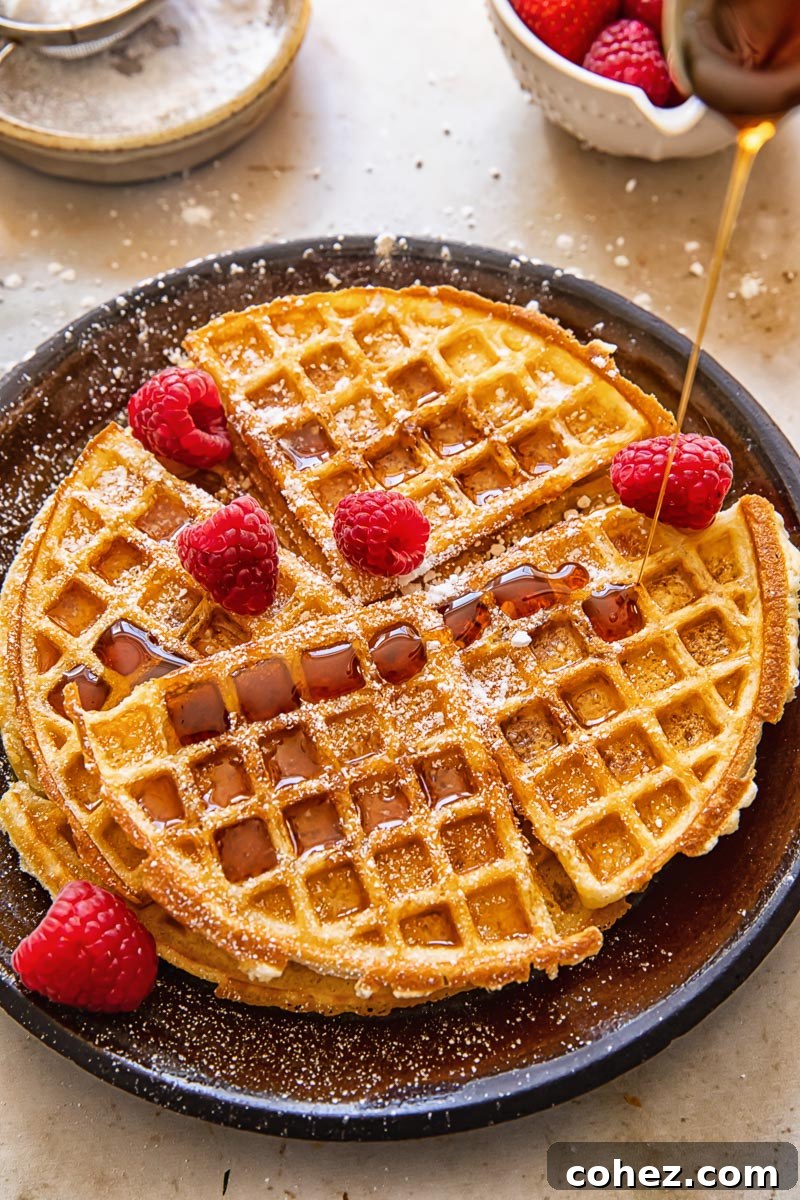
The modern Belgian waffle, as we recognize it, truly made its mark on the global culinary scene in the early 1960s. Its surge in popularity in the United States is largely credited to two enterprising Belgians. One notable figure, Maurice Vermersch, introduced his “Brussels Waffle” at the 1964 New York World’s Fair. He quickly realized that American consumers were more familiar with “Belgian,” leading him to rename his product the “Belgian Waffle.” Priced at just a dollar each, these distinct waffles captivated the American public. They were characterized by their impressive thickness, deep, generous grooves, a delightful crunchy golden exterior, and an incredibly light, fluffy interior. Served lavishly with mounds of whipped cream and vibrant strawberry slices, this iconic presentation ignited a worldwide obsession that continues to this day.
While many cultures boast their own beloved waffle varieties, the classic Belgian waffle stands out. It’s instantly recognizable by its distinct, mattress-like dimensions and those perfectly formed deep pockets – often referred to as “potholes” – which are ideal for pooling generous amounts of delicious sauces and toppings. Imagine warm chocolate ganache, rich maple syrup, or slowly melting scoops of ice cream nestled in those inviting crevices. It’s a culinary design masterpiece!
Beyond the borders of Belgium, other nations have crafted their unique takes on the waffle. Consider the Dutch Stroopwafel: two penny-thin, dark, crisp waffle discs delicately sandwiched together with a luscious, gooey caramel filling. These are typically snack-sized and perfect for on-the-go enjoyment, often warmed over a hot cup of coffee or tea. Then there are the Swedish waffles, delicate, thin, and often petal-shaped rounds that are wonderfully crisp and light. Traditionally served with a dollop of cream and a spoon of sweet jam, they make a dainty and elegant afternoon tea delight.
And, of course, American waffles. While often inspired by the Belgian waffle’s structure, they frequently incorporate buttermilk into the batter, resulting in a denser texture and shallower pockets. This subtle difference creates a distinct experience. No matter your preference, the world of waffles offers a delightful journey for every palate. Are you ready to discover your ultimate waffle allegiance?
The Science of Texture: Waffle Batter vs. Pancake Batter
It’s a common misconception that waffle and pancake batters are interchangeable. After all, they share many core ingredients: eggs, milk, and flour. You might even have been tempted to try making waffles with a pancake recipe. The results, however, are often quite different, highlighting the nuanced culinary science at play. While both create delicious griddled delights, their distinct characteristics stem from subtle yet crucial differences in formulation and preparation.
A true Belgian waffle recipe incorporates some indulgent extras that are key to its signature texture. These include a more generous amount of sugar, melted butter, and a robust leavening agent (often baking powder, or sometimes yeast for more traditional versions like Liège waffles). In contrast, many European pancake recipes tend to be simpler, often containing fewer enriching ingredients, which yields a thinner, flatter result.
So, what exactly makes them so distinct? First and foremost, the secret to the famous pillow-soft interior of a Belgian waffle lies in the meticulous separation of egg yolks from whites. The egg whites are beaten to stiff peaks, then carefully folded into the batter. This process incorporates a significant amount of air, creating that wonderfully light, airy, and fluffy texture that Belgian waffles are renowned for. Pancake ingredients, especially for thinner European crepes, are typically whisked together without this separation, relying solely on the whisking action to create some air bubbles. While delicious, this method generally results in a denser, less voluminous pancake.
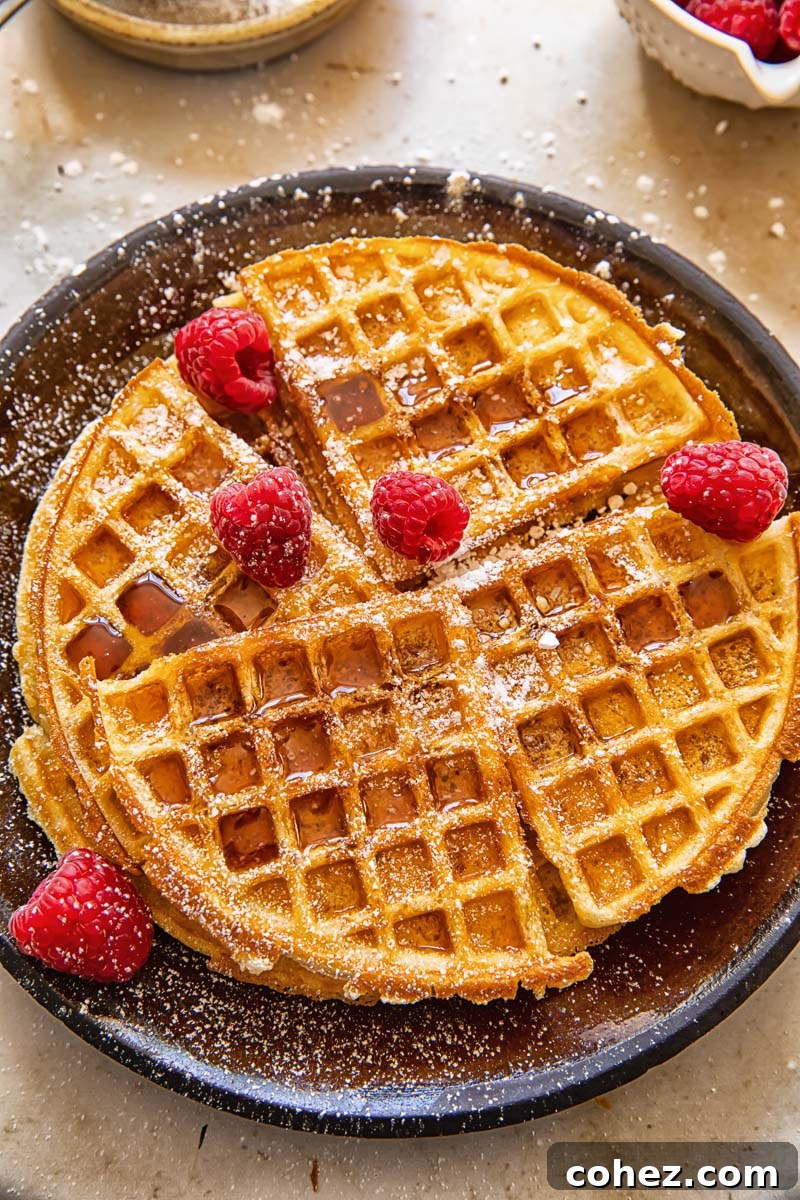
Secondly, the higher sugar and butter content in Belgian waffle batter plays a critical role in achieving its irresistible golden crispiness. As the batter cooks in the hot waffle iron, these elements caramelize, forming a delicate, crunchy shell that encases the soft interior. European pancake recipes, often lacking substantial sugar, will brown but won’t develop that distinct, satisfying crunch. The butter not only adds richness but also contributes to browning and helps prevent sticking.
Finally, consider the consistency of the batter itself. Belgian waffle batter is typically thick and luxuriously oozy, designed to hold its shape within the deep grids of a waffle maker without overflowing. This thickness is essential for creating those deep, well-defined pockets. Pancake batter, especially for thinner varieties, is much runnier. It’s meant to spread easily and evenly across a flat frying pan, forming perfect, uniform circles. Understanding these differences is crucial for achieving the perfect texture for each delightful dish.
Unleash Your Creativity with Glorious Waffle Toppings
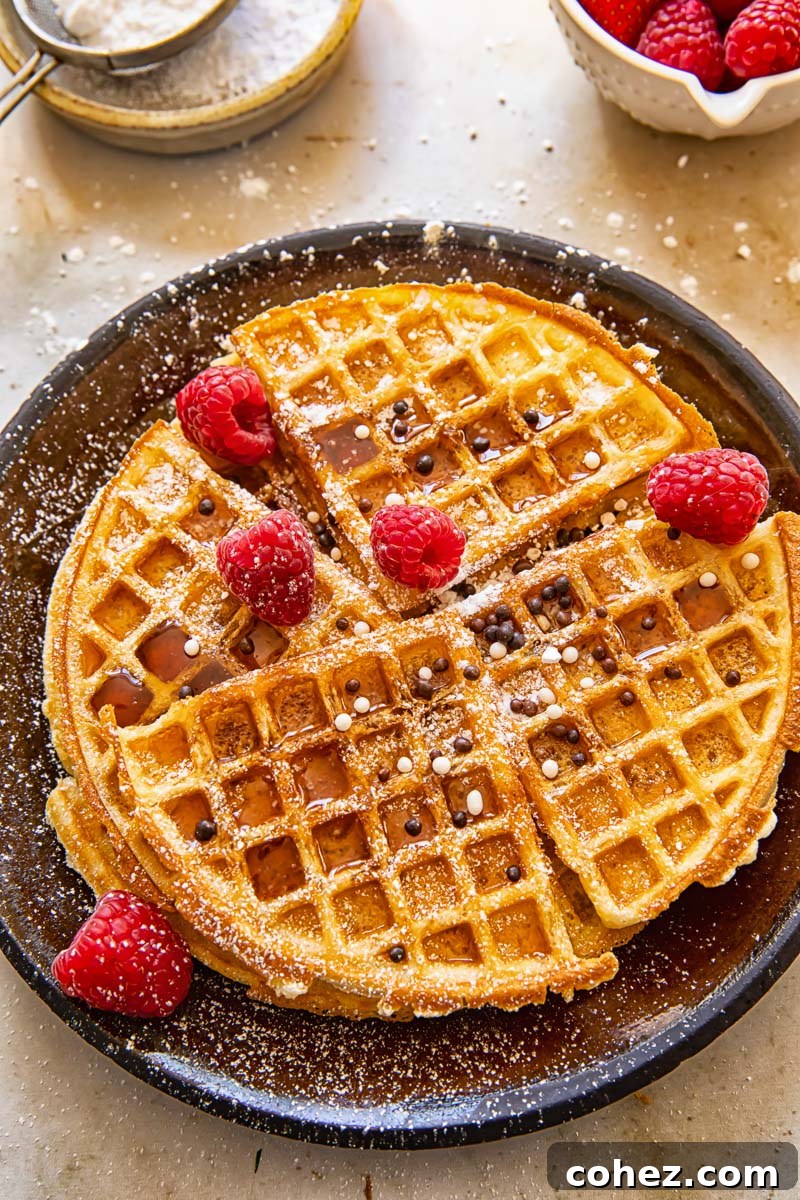
This is where the real fun begins! When it comes to waffle toppings, the possibilities are truly limitless. You can lean into classic sweet indulgence, explore exciting savory combinations, or even dare to blend sweet and savory for an unforgettable taste experience. That’s right, there are absolutely no waffle rules when it comes to personalization!
To spark your imagination and guide you through the delicious world of waffle adornments, here are some of our absolute favorites, categorized for every craving and occasion:
Classic & Fruity Delights:
- The Timeless Original: Fresh, vibrant strawberries and peaks of fluffy whipped cream. A pairing that started the global waffle craze and remains a beloved classic for good reason.
- The Healthy & Refreshing Choice: Creamy Greek yogurt, sliced ripe bananas, and a handful of juicy blueberries. A fantastic way to add nutrition and natural sweetness to your morning.
- Berry Medley: A mix of seasonal berries (raspberries, blackberries, blueberries) with a drizzle of honey or agave nectar and a sprinkle of chopped mint for freshness.
- Apple Cinnamon Dream: Sautéed apple slices with a hint of cinnamon and a scoop of vanilla ice cream, creating a comforting, pie-like experience.
Hearty & Savory Brunch Creations:
- The Ultimate Breakfast Stack: Crispy bacon, perfectly fried or scrambled eggs, and savory breakfast sausage. A complete breakfast served on a waffle!
- The Elegant Brunch Masterpiece: Delicately poached eggs Benedict, draped with a rich, silky hollandaise sauce, and slices of high-quality cured ham. A sophisticated twist on a brunch favorite.
- Southern Comfort Fusion: Golden fried chicken tenders nestled atop a warm waffle, perhaps with a side of creamy avocado, zesty salsa, and cooling sour cream. A bold and utterly delicious combination.
- Mediterranean Morning: Crumbled feta cheese, cherry tomatoes, fresh spinach, and a drizzle of olive oil. A lighter, yet flavorful savory option.
Decadent Dessert & Innovative Pairings:
- The Dreamy Dessert Sandwich: Transform your waffles into indulgent waffle ice cream sandwiches. Choose your favorite ice cream flavor and sandwich it between two warm, soft waffles.
- Nutella & Hazelnut Heaven: A generous smear of Nutella, topped with toasted chopped hazelnuts and a dusting of powdered sugar. Pure bliss for chocolate lovers.
- S’mores Indulgence: Toasted mini marshmallows, chocolate chips, and crushed graham crackers. Recreate your favorite campfire treat!
- Caramel Pecan Delight: Warm caramel sauce, toasted pecans, and a swirl of whipped cream. Perfect for those who love a sticky, sweet treat.
And if you’re truly ready to go wild, remember that a generous pour of maple syrup and/or a scoop of your favorite ice cream can elevate almost any of these options. In this waffle game, there’s no judgment – only pure, unadulterated enjoyment!
Essential Tips for Perfect Belgian Waffles
- Separate Those Eggs: Yes, it’s a non-negotiable step if you desire the iconic contrast of a signature crunchy exterior and a cloud-like fluffy interior. Beating egg whites to stiff peaks and gently folding them into the batter is the secret to unparalleled lightness.
- Invest in Quality: For the ultimate waffle experience, it’s truly worth investing in a high-quality waffle maker. A good machine provides even heat distribution, consistent cooking, and often deeper grids, making a monumental difference in the final product. Trust me, after trying countless models, the right equipment is a game-changer. Look for models with adjustable temperature settings and non-stick surfaces.
- Heat is Key: Your waffle iron must be piping hot before you pour in the batter. A properly preheated iron ensures immediate caramelization on the surface, resulting in that desirable golden crisp. I always recommend making a small “test waffle” first. This allows you to fine-tune your machine’s setting for a lighter or darker finish, perfecting the crispiness to your liking.
- Keep Them Warm: No one enjoys a lukewarm, limp waffle! As you cook your batches, preheat your oven to a low temperature (around 200°F / 95°C) and place the cooked waffles directly onto a wire rack set over a baking sheet. This keeps those first glorious creations perfectly toasty and crisp while you continue cooking the rest, ensuring everyone enjoys a warm waffle.
- Don’t Overmix: Mix your batter until just combined. A few lumps are perfectly fine! Overmixing develops gluten in the flour, which can lead to tough, chewy waffles instead of light and tender ones.
- Don’t Peek Too Early: Resist the urge to open the waffle maker too soon. Opening it repeatedly releases steam and heat, which can prevent your waffles from fully cooking and crisping up. Most modern waffle makers have indicator lights that signal when your waffle is ready.
Storage and Leftovers: Batch Cooking for Convenience
Leftovers of delicious Belgian waffles? Unlikely to happen often! However, Belgian waffles are wonderfully suited for batch cooking and freezing. This brilliant strategy allows you to enjoy homemade waffles anytime, skipping the prep work on busy mornings. Here’s how to do it effectively to preserve their quality:
First, cook your waffles as you normally would, but pull them from the iron just slightly before they reach maximum crispiness – they should be cooked through but still a little soft. This prevents them from becoming too dry when reheated. Allow the cooked waffles to cool completely on a wire rack. Cooling is crucial to prevent ice crystals from forming and making them soggy.
Once fully cooled, stack them with a piece of baking parchment paper between each waffle. This prevents them from sticking together and makes it easy to grab just one or two at a time. I typically stack them in pairs or threes, depending on how many I usually reheat at once. Place these parchment-separated stacks into a freezer bag, ensuring as much air as possible is removed from the bag before sealing. Properly stored, they’ll maintain their freshness and flavor in the freezer for up to three months.
To reheat, there’s no need to defrost them first. Simply arrange the frozen waffles in a single layer on a baking tray. Place the tray in a preheated oven at 175°C (350°F) for approximately 10-15 minutes, or until the edges begin to turn crispy and they are heated through. Alternatively, some people opt for the toaster. While it can work, it often requires some trial and error with your specific toaster’s settings to achieve the perfect crispness without burning. The oven method generally provides more consistent and reliable results for multiple waffles.
More Delicious Breakfast Recipe Ideas
- Russian Crepes Blini Recipe
- Oatmeal Pancakes
- Kefir Pancakes “Oladi”
- Blueberry and Limoncello Blintzes
- Cinnamon Sourdough French Toast
Belgian Waffles
Julia Frey of Vikalinka
20 minutes
20 minutes
40 minutes
6

Print Recipe
Here’s how to make the most golden, crunchiest, fluffiest Belgian waffles ever, complemented by a plethora of glorious topping ideas.
Equipment
-
Waffle maker
Ingredients
- 250g / 2 cups plain/all purpose flour
- 150g / 3/4 cup granulated sugar
- 3½ tsp baking powder
- 2 large eggs, separated
- 350ml / 1½ cups whole milk
- 250g / 1 cup melted butter
- 1-2 tsp vanilla extract
Instructions
-
Carefully separate the egg whites from the egg yolks. In a large mixing bowl, combine the flour, granulated sugar, and baking powder. In a separate bowl, lightly beat the egg yolks. Add the milk, melted butter, and vanilla extract to the egg yolks and mix thoroughly until well combined.
-
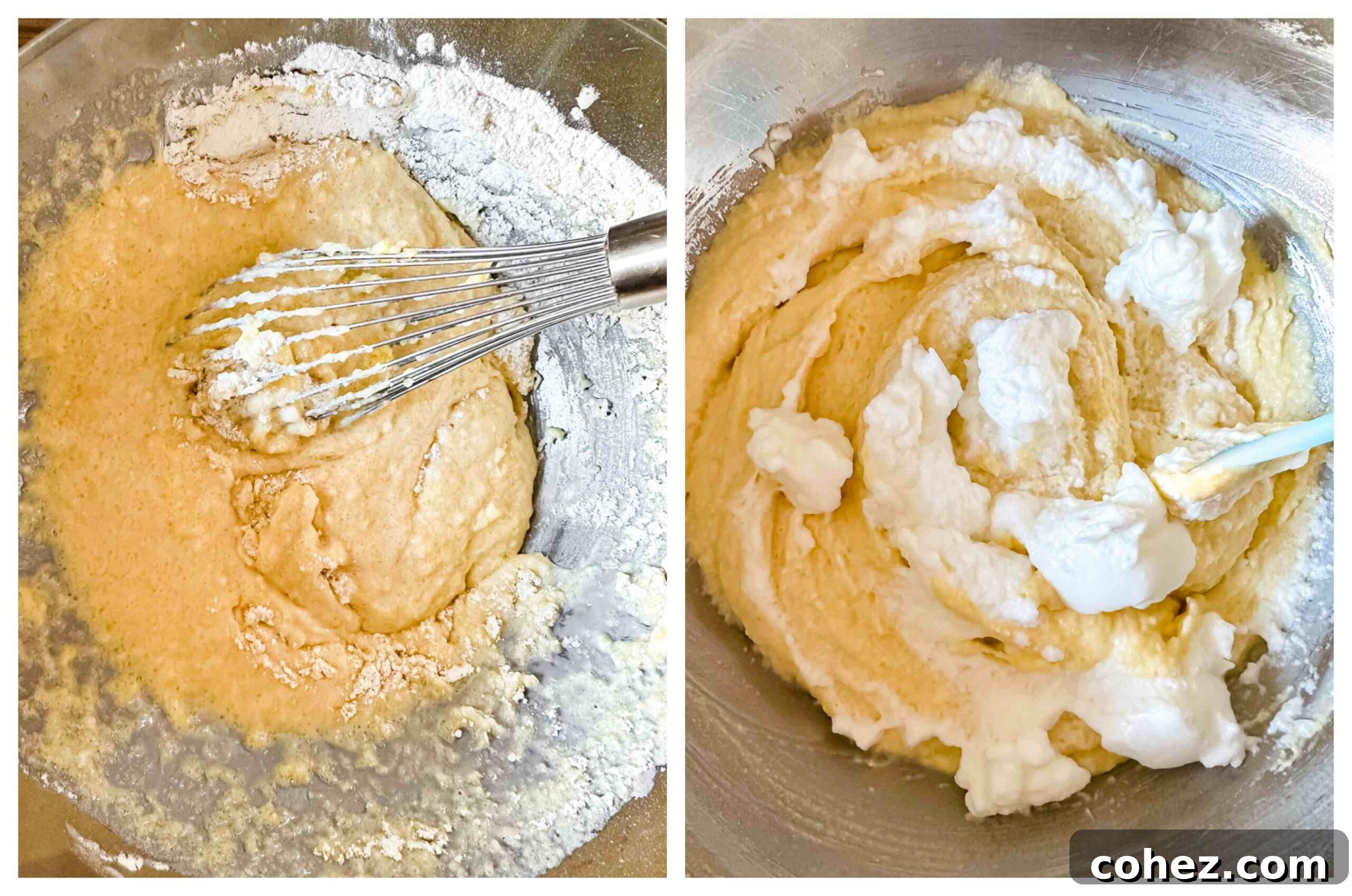
Gradually stir the wet mixture into the dry ingredients until just combined. Be careful not to overmix; a few small lumps are acceptable. In another clean bowl, beat the separated egg whites with an electric mixer until they form stiff, glossy peaks. Gently fold the beaten egg whites into the waffle batter until no streaks remain, being careful not to deflate the air.
-
Preheat your waffle maker according to the manufacturer’s instructions. Lightly brush the grids with oil or non-stick spray for easy removal of the waffles. Pour approximately 1/2 cup of batter onto the preheated waffle iron. Adjust the amount as needed after cooking your first waffle to perfectly fill your specific appliance. Close the lid and bake until golden brown and crispy, typically 3-5 minutes depending on your waffle maker. This recipe yields approximately 10 delicious waffles.
Nutrition
Carbohydrates: 61g |
Protein: 8g |
Fat: 38g |
Saturated Fat: 23g |
Polyunsaturated Fat: 2g |
Monounsaturated Fat: 10g |
Trans Fat: 1g |
Cholesterol: 151mg |
Sodium: 315mg |
Potassium: 401mg |
Fiber: 1g |
Sugar: 28g |
Vitamin A: 1218IU |
Calcium: 200mg |
Iron: 2mg
Nutrition information is automatically calculated, so should only be used as an approximation.
Tried this recipe?
Let us know how it was!