
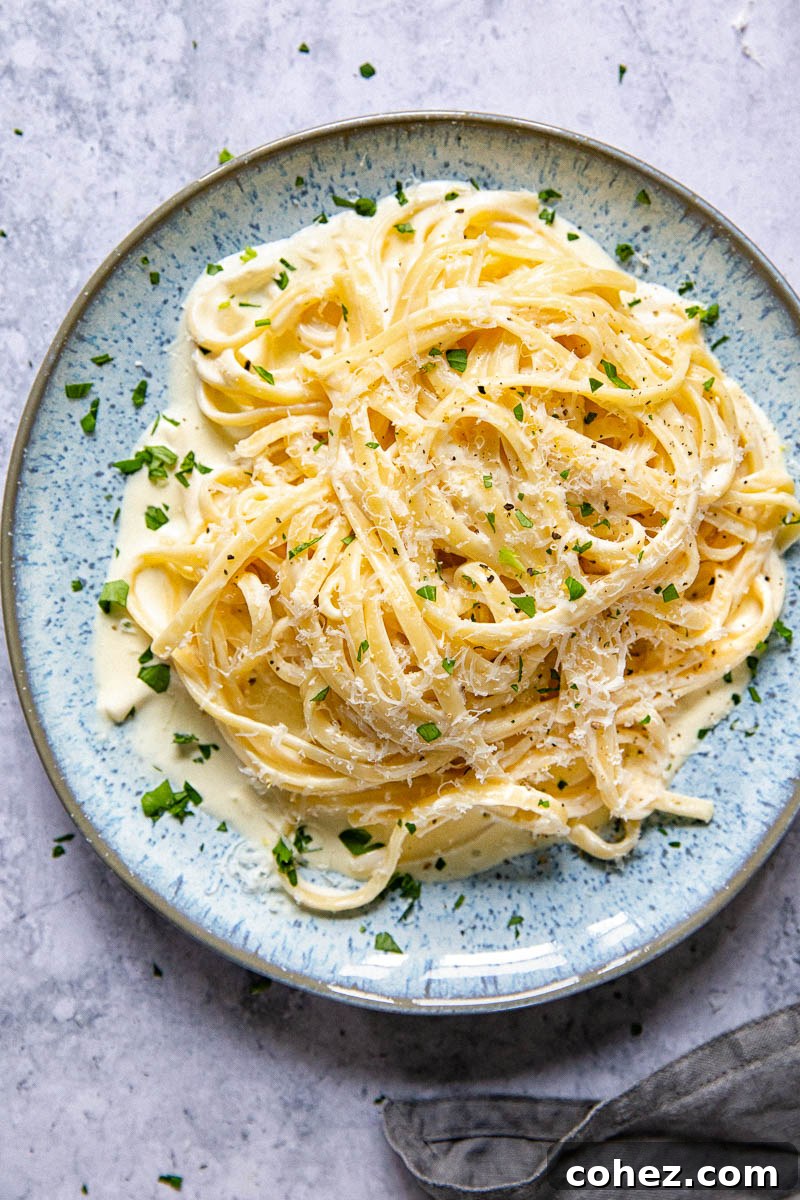
Welcome to the ultimate guide for crafting a luxuriously smooth pasta cream sauce that transforms any meal into a gourmet experience in mere minutes. This authentic, indulgent sauce is incredibly simple, relying on just two core ingredients: rich cream and aged Parmesan cheese, coming together in under 10 minutes. It’s the kind of foundational recipe every home cook should master, promising a velvety texture that elegantly coats every strand of al dente pasta for an unforgettable taste.
Once you’ve perfected this basic cream sauce, you’ll unlock a world of culinary possibilities. It serves as an exquisite base for endless customizations. Elevate your dish by adding fresh vegetables or savory proteins – a classic favorite includes pancetta and peas, but the creative options are boundless. Start with this essential recipe, and prepare to impress yourself and your loved ones with restaurant-quality pasta dishes right from your kitchen.
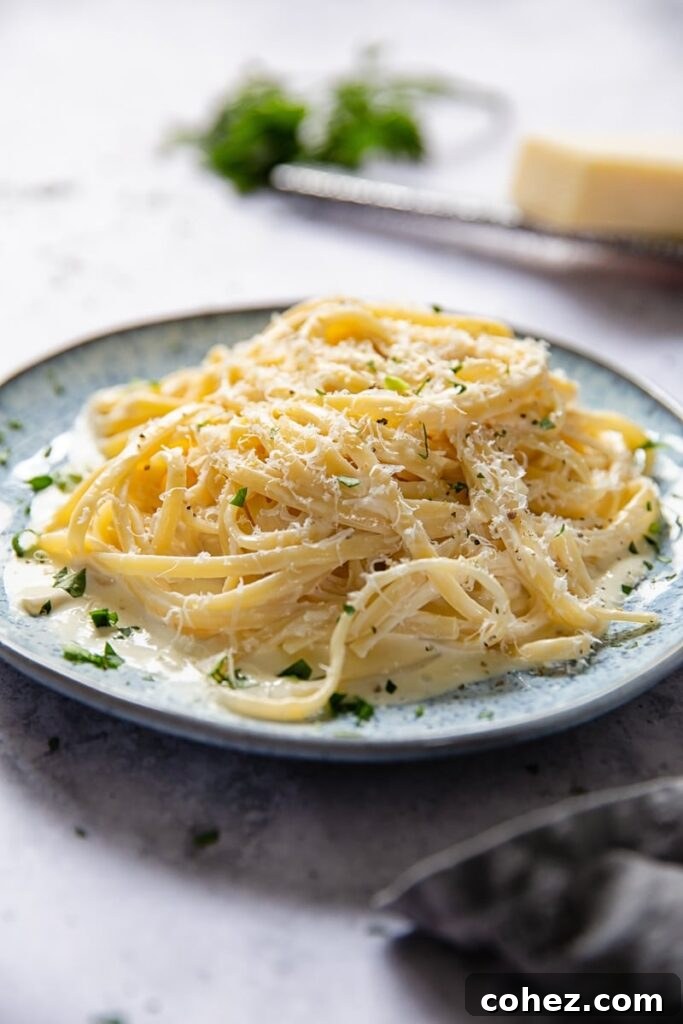
My journey to perfecting this simple pasta cream sauce began with a common parental concern. As my children prepared to leave home for university, a primary worry gnawed at me: would they truly eat well without my cooking? I was determined to equip them with a repertoire of easy-to-master, budget-friendly recipes that they could whip up with minimal effort and ingredients. This creamy pasta sauce was at the very top of that list.
I envisioned recipes that were not only delicious but also practical for a student lifestyle – minimal ingredients, affordable, and straightforward enough not to deter them from cooking after a long day of studies. This particular pasta cream sauce recipe perfectly fit the bill. It’s incredibly quick, simple to prepare, and remarkably versatile. This meant they could easily adapt it using whatever ingredients were on hand in a typical student fridge, be it bacon, mushrooms, peas, or perhaps a daring culinary experiment (though hopefully not Jello shots!). It offers a comforting, hearty meal that feels much more elaborate than it actually is, making it a staple for anyone seeking delicious simplicity.
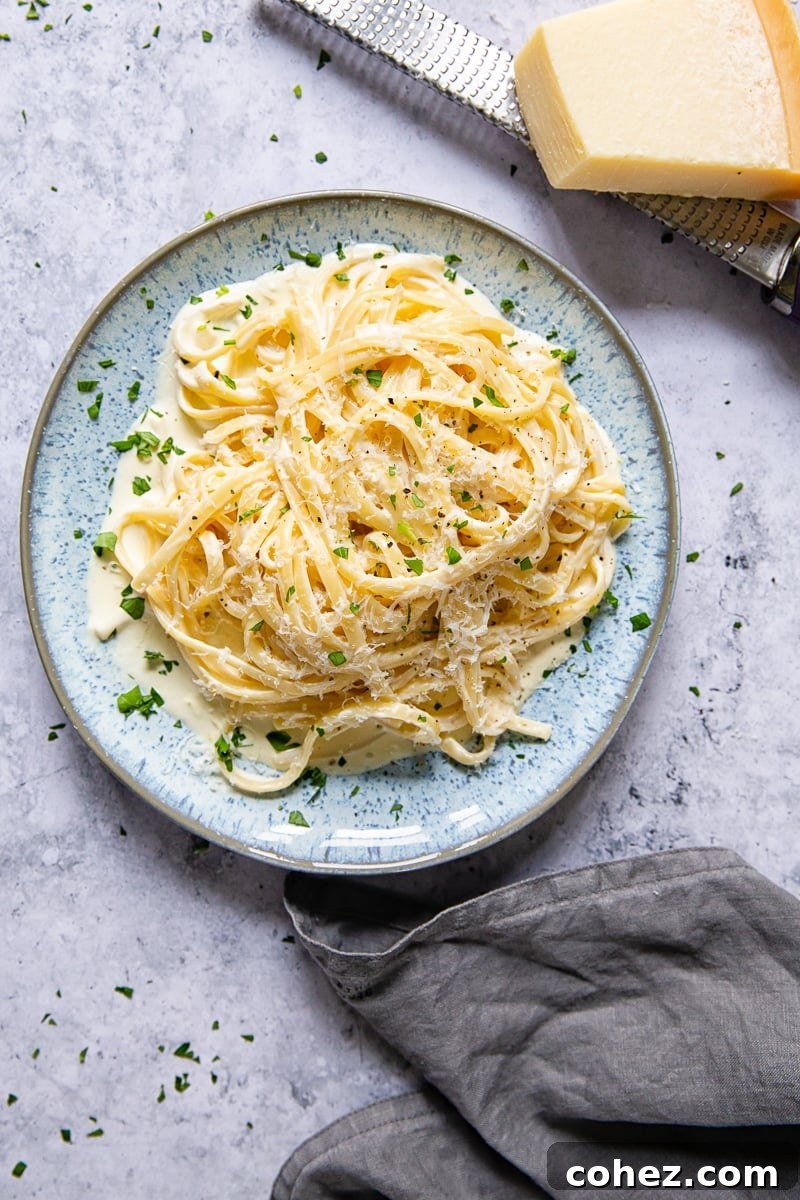
The Core Ingredients: Quality Matters
When a recipe boasts such a short ingredient list, the quality of each component becomes paramount. For this rich pasta cream sauce, you’ll need just three fundamental elements: premium pasta, decadent heavy cream, and authentic Parmesan cheese. The beauty lies in their simplicity, allowing each flavor to shine without unnecessary distractions.
You might notice the absence of common additions like garlic, stock, flour, or milk. This is entirely intentional. Garlic, while delicious in many dishes, can overpower the delicate flavor of quality Parmesan. Stock would dilute the richness we’re aiming for, while milk and flour would unnecessarily thicken and dull the slender, pourable consistency that defines this elegant sauce. We want pure, unadulterated creamy goodness.
Selecting the Perfect Pasta
Let’s talk pasta. My steadfast recommendation is to always opt for 100% durum semolina pasta, ideally crafted in Italy. This type of pasta, when cooked to an ideal al dente, delivers that coveted firm bite and satisfying chewiness that truly elevates a pasta dish. While I personally favor long pasta shapes like fettuccine or linguine for their ability to exquisitely carry creamy sauces, the specific shape is ultimately secondary to the quality of the pasta itself. A superior pasta forms the perfect foundation, ensuring your sauce has a magnificent canvas to cling to.
Embracing the Richness of Heavy Cream
Next up is the cream. For this recipe, I exclusively use heavy cream, also known as double cream in the UK. With a minimum fat content of 36%, heavy cream is the secret to achieving a sauce that is not only luxuriously rich and decadent but also retains a perfectly pourable consistency. Lesser fat creams or milk simply won’t deliver the same depth of flavor or the silken mouthfeel that makes this sauce truly special. The high fat content naturally emulsifies with the cheese, creating a stable and velvety sauce without the need for additional thickeners.
The Indispensable Parmesan Cheese
Finally, and perhaps most crucially, we arrive at Parmesan cheese. I cannot stress enough the importance of avoiding the pre-grated variety found in many supermarkets. Here’s why a block of authentic Parmesan is non-negotiable for this recipe:
- Pre-grated cheeses often contain anti-caking agents, which are silicon-based additives. These agents prevent the cheese from melting smoothly and incorporating fully into your sauce, resulting in a grainy, clumpy, or even claggy texture.
- The moment cheese is grated, it begins to dry out and rapidly lose its complex, nutty flavor. This means you’d need to use a much larger quantity of pre-grated cheese to achieve the desired taste, making it a false economy.
- Quite simply, it doesn’t taste as good. The vibrant, nuanced flavor of freshly grated, authentic Parmigiano-Reggiano is unparalleled.
I implore you to invest in a quality block of real Parmigiano-Reggiano, widely available in most grocery stores, and grate it fresh as needed. The difference in flavor, texture, and overall quality of your pasta cream sauce will be profound and instantly noticeable. These three simple, yet stellar ingredients, when chosen with care, are the bedrock of an authentic-tasting cream sauce for pasta that you’ll undoubtedly return to time and time again.
Mastering Pasta: Essential Chef’s Tips for Perfection
Pasta and sauce recipes are cherished for their speed and ease, often becoming weekly staples in our homes. But are we consistently achieving that restaurant-worthy perfection? What culinary secrets do professional chefs employ that might be overlooked in a home kitchen? Here’s a concise checklist of expert tips to elevate your pasta-making game:
- **Salt the Pasta Water Generously:** Pasta needs to absorb salt during the cooking process to prevent it from tasting bland. Think of the water as seasoning the pasta from the inside out. Don’t be shy with the salt – it should taste like the sea. Crucially, avoid adding oil to the pasta water! Oil creates a slick coating on the pasta strands, which prevents your delicious sauce from adhering properly, causing it to slip right off.
- **Cook Pasta to True Al Dente:** This Italian term, meaning “to the tooth,” refers to pasta that is firm yet pliable, offering a slight resistance when bitten. It’s vital to drain the pasta just *before* it becomes too soft or mushy. Overcooked pasta loses its desirable texture and mouthfeel.
- **Reserve a Cup of Starchy Pasta Water:** Never drain all the pasta water! This starchy liquid is pure gold for your sauce. It contains emulsified starches that help bind the sauce to the pasta, creating a silkier, more cohesive consistency. It’s also perfect for loosening a sauce that becomes too thick.
- **Incorporate Pasta Water into the Sauce:** As you combine your cooked pasta and sauce, splash in some of that reserved starchy water. Pasta is surprisingly “thirsty” and can absorb a significant amount of liquid. The pasta water helps prevent the sauce from becoming too dry and ensures it coats every noodle beautifully, adding an extra layer of creaminess and flavor.
- **Always Combine Pasta and Sauce Before Serving:** This is a golden rule in Italian cooking. The sauce should never be served merely dolloped on top of or alongside the pasta. By tossing the hot pasta directly with the sauce in the pan for a minute or two, the pasta fully absorbs the flavors, and the sauce adheres perfectly, creating a harmonious and flavorful dish.
Armed with these professional pasta-cooking insights, you’re now ready to flex your culinary muscles across a spectrum of pasta sauce recipes. For another delightful creamy option, try a 10-minute homemade Alfredo sauce, or indulge in creamy tagliatelle with bacon and mushrooms for a more elaborate twist.
These fundamental pasta tips extend beyond creamy concoctions to tomato-based sauces as well. For a creamy yet bright experience, a tomato and mascarpone pasta offers a delightful balance of richness and tang, sharpened with fresh basil. And if dairy is off the menu, a flavorful tagliatelle with pancetta recipe can easily be adapted by simply omitting the cheese, proving the versatility of good pasta technique.
Recipe Tips and Notes for Success
- Always prioritize the best quality ingredients you can access. Given the minimal ingredient list, each component significantly impacts the final flavor.
- Invest in a block of authentic Parmesan cheese (Parmigiano-Reggiano). Its versatility extends far beyond pasta – it’s fantastic in Caesar salad, on roasted vegetables, or simply enjoyed with a drizzle of balsamic glaze.
- Using heavy cream (or UK double cream) is key. Its high fat content naturally thickens the sauce to perfection, eliminating any need for additional thickeners like flour or cornstarch, which can dull the flavor and texture.
- Combine the cream and cheese over a consistently low heat. This gentle approach ensures the cheese melts smoothly and fully integrates into the cream, preventing it from seizing or becoming grainy, thus maintaining a wonderfully fluid pasta sauce.
- Never forget to reserve a generous cup of pasta water – this tip is so crucial it deserves repeating! It’s your secret weapon for achieving the ideal sauce consistency and ensuring it beautifully coats your pasta.
Elevating Your Meal: Thoughtful Serving Suggestions
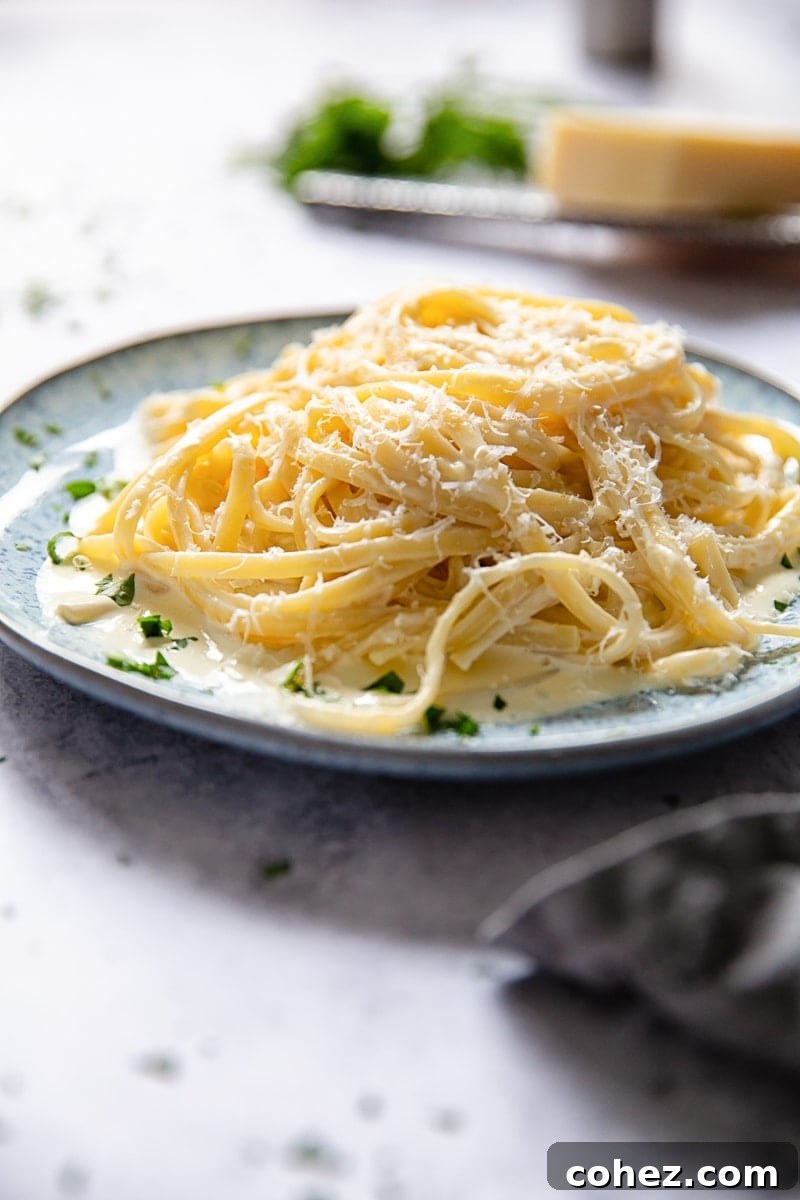
A rich and luxuriously smooth white sauce like this one pairs beautifully with long, elegant pasta shapes such as fettuccine, tagliatelle, or linguine. These noodles are ideal for capturing and delivering the creamy goodness with every twirl. However, don’t feel constrained by tradition – if you’re using up leftover penne, fusilli, or gorgeous conchiglie (shell shapes), the sauce will still be absolutely delicious. The key is how it coats the pasta, regardless of its form.
When serving such a decadent dish, I aim for side dishes that offer a delightful contrast in texture, color, and flavor. My ideal accompaniments would possess these three qualities:
- **Crunchy or Crisp Texture:** To provide a satisfying counterpoint to the soft pasta.
- **Vibrant Color:** To add visual appeal and freshness to the plate.
- **Sharp or Fresh Flavor:** To cut through the richness of the cream sauce and cleanse the palate.
With these principles in mind, I highly recommend serving this pasta with lemon garlic green beans, a vibrant Caprese salad, or tenderstem broccoli dressed with a bright lemon garlic vinaigrette. These thoughtful additions create a perfectly balanced plate, not just visually, but nutritionally, ensuring a well-rounded and enjoyable meal.
And for those moments when balance and nutrition take a backseat to pure indulgence, don’t hesitate to add a side of crispy air fryer garlic bread! It’s the ultimate companion for soaking up every last drop of that incredible sauce.
Did you know that in traditional Italian meals, pasta is typically served as the *primo piatto* (first course), rather than the main event? It’s usually offered in more modest portions to leave room for the *secondo piatto* (second course), which often features meat or fish. This is a culinary philosophy I wholeheartedly embrace!
For my ultimate classic Italian main course following a rich pasta dish, I would choose between a mouthwatering, meaty pork osso buco, braised until tender, or a bright, caper-heavy salmon piccata. Both offer a fantastic contrast to the creamy pasta, completing a truly memorable dining experience. Which main course would you choose to follow this delectable pasta?
Storage and Leftovers: Best Enjoyed Fresh
When a pasta sauce recipe is so quick and effortless to prepare – often taking less time than boiling the pasta itself – there’s hardly a compelling reason not to whip up a fresh batch each time. The beauty of this particular cream sauce lies in its fresh, vibrant texture. Unfortunately, creamy pasta dishes, especially those with such delicate ingredients, rarely stand the test of time in the refrigerator.
Leftover pasta that has spent a night in the fridge tends to become unappetizingly dry, as the pasta absorbs much of the sauce, and the cream can separate or become claggy. For the best culinary experience, I strongly recommend enjoying this creamy pasta sauce immediately after preparation. Its simple nature means you can enjoy that fresh, hot, and perfectly emulsified goodness every single time, making it a go-to for weeknight dinners rather than a meal prep staple.
Explore More Creamy Pasta Delights
If you’ve fallen in love with the comforting allure of creamy pasta, there’s a whole world of delicious recipes waiting for you to discover. Expand your repertoire with these delectable creamy pasta creations:
- Hearty Chicken and Bacon Pasta
- Comforting Orzo Pasta with Roasted Butternut Squash
- Luxurious Creamy Salmon Pasta with Mixed Greens
- Authentic and Easy Carbonara Sauce
- Elegant Tagliatelle with Truffle Sauce
Creamy Pasta Sauce
Julia Frey of Vikalinka
5 mins
10 mins
15 mins
6
Equipment
-
Saucepan
-
Fine grater
Ingredients
- 500ml / 2 cups double cream/heavy cream
- 50g / 1/2 cup Parmesan cheese, freshly grated
- Salt, to taste
Instructions
-
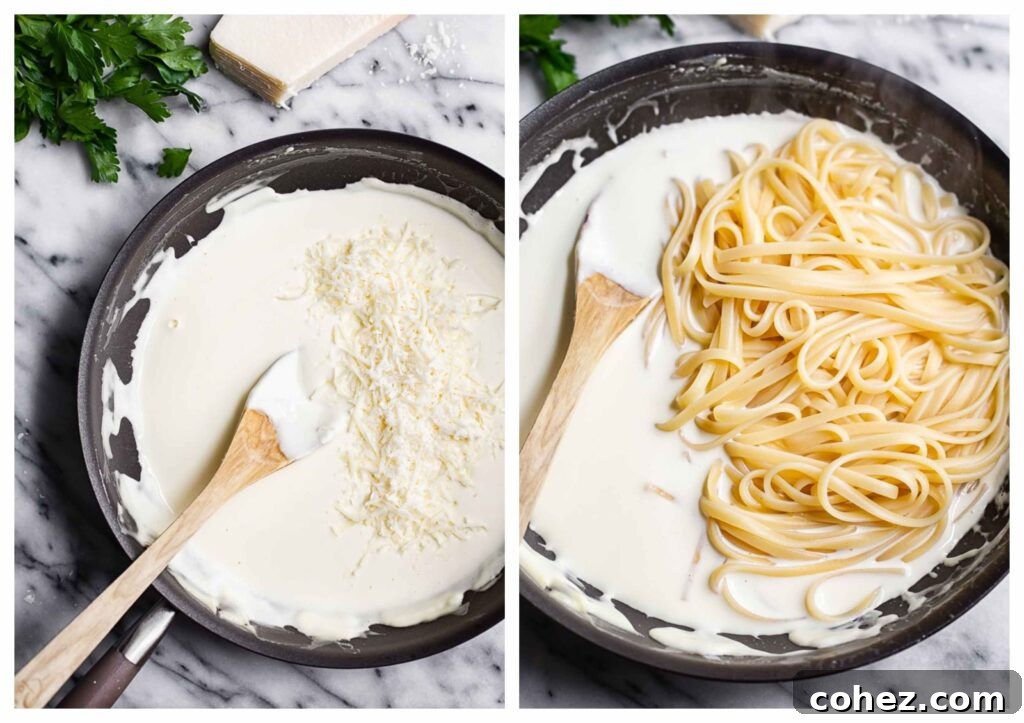
Heat the cream in a pan over low heat, ensuring it does not boil.
-
Remove the pan from the heat and whisk in the freshly grated Parmesan cheese until it is completely melted and the sauce is smooth. Taste the sauce and add salt as needed. (Salt is a crucial ingredient here for balancing flavors, so do not omit it.)
-
To dress the pasta with the cream sauce, add the freshly cooked pasta directly to the pan with the sauce. Gently toss or shake the pan to ensure the pasta is thoroughly coated. Add up to 1/3 cup of the reserved pasta water to loosen the sauce to your desired consistency.
Serve immediately for the best experience.
Notes
- Using 100% durum semolina pasta from Italy might be slightly more expensive, but the significant difference in quality and ease of cooking to al dente makes it well worth the investment.
- Remember to generously salt the water when boiling your pasta, but never add oil. The salt is essential for seasoning the pasta from within, while oil can prevent the sauce from adhering.
- There’s no need to add flour or any other starch to thicken this sauce. The rich fat content in heavy or double cream is sufficient to create a perfectly thick and luscious sauce naturally.
- Always reserve some pasta water before draining. This starchy liquid is invaluable for loosening the sauce if it becomes too thick and adds an extra layer of creaminess and flavor.
- For optimal flavor and texture, always dress your hot pasta with the sauce before serving. Serving the sauce on the side can lead to dry and less flavorful pasta.
Nutrition
Carbohydrates: 3g |
Protein: 5g |
Fat: 33g |
Saturated Fat: 21g |
Cholesterol: 120mg |
Sodium: 553mg |
Potassium: 70mg |
Sugar: 1g |
Vitamin A: 1290IU |
Vitamin C: 1mg |
Calcium: 153mg |
Iron: 1mg
Nutrition information is automatically calculated, so should only be used as an approximation.