
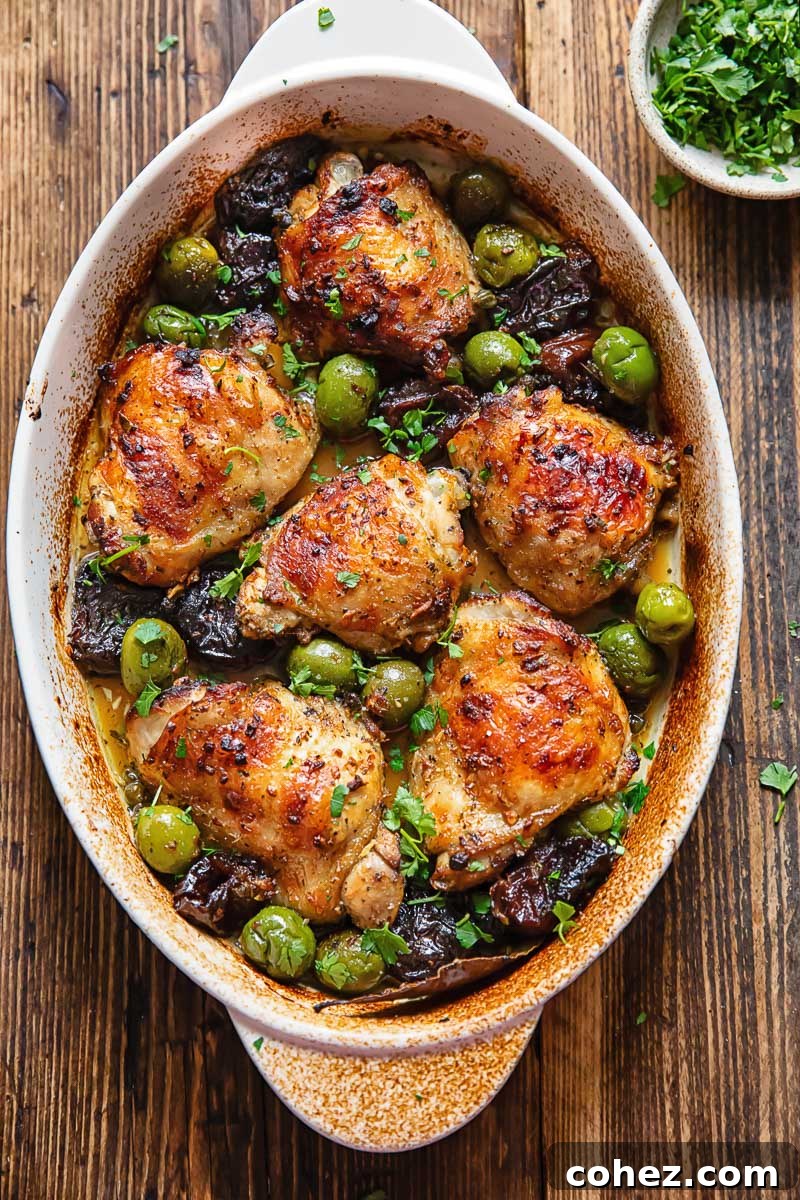
Discover the magic of Chicken Marbella, a dish that transcends borders and delights the senses with its unique blend of sweet, savory, and tangy flavors. Far from a traditional Spanish recipe, this “continent-hopping” chicken thigh masterpiece draws inspiration from the sun-drenched coasts of Southern Spain and the rich culinary traditions of North Africa, culminating in a dish that’s surprisingly American in origin. Prepare to unlock the secrets of this fragrant, succulent roast chicken, guaranteed to become a new favorite in your kitchen.
For those times you crave tender, oven-roasted chicken thighs but are short on marinating time, explore our Spanish-style baked chicken thighs with potatoes. It’s a delicious, sauce-free meal ready in under an hour, offering a different but equally satisfying experience.
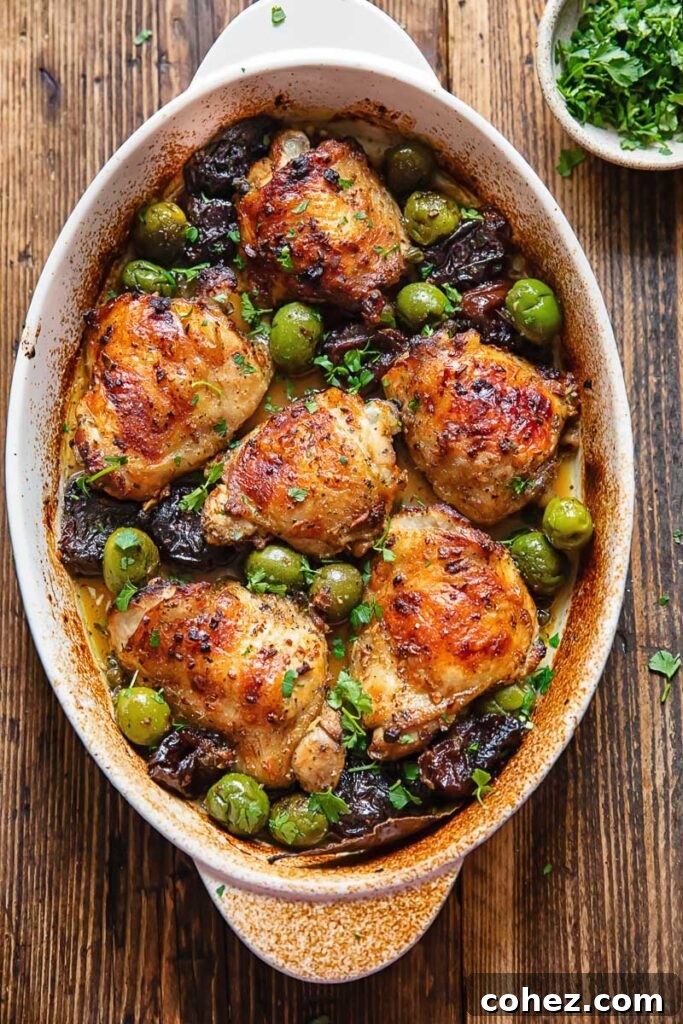
The Intriguing Origin of Chicken Marbella: A Culinary Journey
Despite its evocative name, conjuring images of Spain’s glamorous coastal city, Chicken Marbella is a delightful enigma. This dish, famed for its distinctive combination of chicken with prunes and green olives, isn’t found in traditional Spanish or Moroccan cookbooks. Instead, its roots trace back to the American culinary scene, specifically to the renowned Silver Palate Cookbook from the 1980s. The authors, Sheila Lukins and Julee Rosso, ingeniously fused Mediterranean and North African ingredients – such as sweet prunes, briny olives, and aromatic herbs – with a distinctly American approach to roasting, creating a dish that quickly became a fine-dining sensation. It’s a testament to how culinary creativity can borrow global flavors and transform them into something entirely new and beloved.
Having lived in close proximity to Spain and with many friends on its vibrant east coast, I’ve had countless opportunities to savor authentic Spanish cuisine. Every trip is a source of boundless inspiration, fueling my passion for experimenting with flavors. Much like the creative spirit behind Chicken Marbella, my own Spanish chicken in bravas sauce is another example of inspiration over strict authenticity. While you might not find it on traditional Iberian menus – unless, of course, someone’s been tempted to “borrow” it – its exceptional taste speaks for itself.
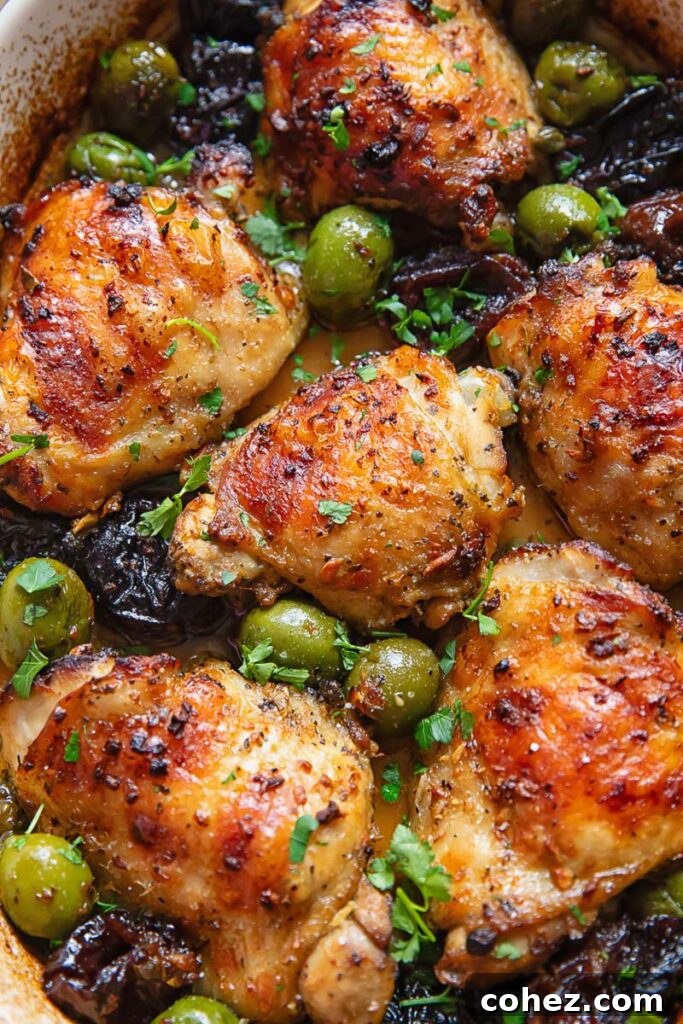
Mastering the Marbella Chicken Recipe: Simply Two Steps to Perfection
At its heart, Chicken Marbella is a masterful orchestration of sweet, sour, and savory notes, coating perfectly roasted chicken. The key to its incredible depth of flavor, along with its remarkable moisture and tenderness, lies in one crucial preparatory step: marinating. It truly is that straightforward! This seemingly gourmet dish simplifies into two fundamental stages: marinate and bake. This simplicity, combined with the complex flavors, is what makes it so appealing to home cooks and food enthusiasts alike.
Unveiling the Star Ingredients: A Mediterranean Tapestry
So, what exactly contributes to this dish’s intoxicating character? Chicken Marbella weaves together a tapestry of ingredients, each playing a vital role:
- Juicy Bone-In Chicken Thighs: The foundation of the dish. Bone-in thighs are preferred for their rich flavor and ability to remain incredibly moist during roasting, thanks to the bone and skin which render beautifully crisp.
- Sweet, Soft Prunes: Common in Moroccan and other North African cuisines, where dishes often pair chicken with fruits like apricots or dates. Prunes lend a beautiful sweetness and a tender, melt-in-your-mouth texture that contrasts wonderfully with the savory elements.
- Savory Olives and Capers: These briny additions are the bridge between the Mediterranean and North African influences. Green olives, especially varieties like Nocellara, provide a pleasant saltiness and firm texture. Capers, small pickled flower buds, add a sharp, tangy burst that cuts through the richness of the dish. Interestingly, Morocco is a leading global producer of capers, highlighting their regional significance.
- The Wine Element: Spain, renowned for its wine production, is solely responsible for the generous splash of vino in this recipe. A dry white wine is typically used, but a rosé can offer a slightly fruitier nuance without overwhelming the other flavors. The wine adds acidity, complexity, and helps deglaze the pan, contributing to a rich, glossy sauce.
- Abundant Fresh Herbs: A generous medley of Mediterranean herbs, often five or more varieties, infuses the dish with an intoxicating aroma and uplifting freshness. Herbs like oregano, basil, and bay leaves are foundational, but rosemary, thyme, or even a touch of mint could also be incorporated for added complexity.
The Two-Step Journey to Culinary Delight:
Step One: The Flavor Infusion – Marinating the Chicken
All the essential ingredients, excluding the wine, are meticulously combined to form a thick, syrupy marinade. This rich mixture envelops the chicken thighs, allowing the flavors to penetrate deep into the meat. It’s paramount to marinate the chicken in the refrigerator for an extended period – ideally overnight for maximum tenderness and flavor, but a minimum of three hours will still yield delicious results. This crucial step is what sets Chicken Marbella apart, ensuring every bite is moist, tender, and bursting with flavor.
Step Two: The Grand Finale – Roasting to Perfection
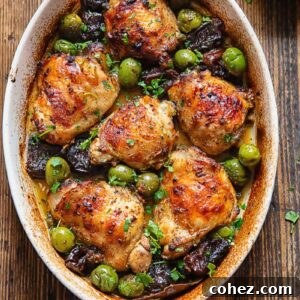
Once the chicken has absorbed all the wonderful flavors of the marinade, it’s time for the final act. The wine is then added to the pan, mingling with the existing marinade, and the entire dish is transferred to the oven. During roasting, a magnificent transformation occurs: the chicken thighs caramelize to a beautiful golden crisp on top, the meat becomes exquisitely soft and juicy, and the prunes soften further, releasing their sweetness. The resulting sauce, a reduction of all these incredible components, is utterly irresistible – a perfect balance of sweet, savory, and tangy. When the flavors are this phenomenal, the precise geographical origin of the dish becomes a delightful historical footnote rather than a culinary constraint!
Expert Recipe Tips and Notes for Perfect Chicken Marbella
- Simplicity at its Best: Don’t let the extensive ingredient list intimidate you! If you can roast a chicken, you can absolutely master Chicken Marbella. It boils down to two simple actions: marinate, then bake. The magic truly happens during the marination.
- The Non-Negotiable Marination: This step is not optional. Marinating is critical for both tenderizing the chicken and infusing it with the deep, complex flavors that define Chicken Marbella. While an overnight soak (up to 24 hours) yields the most outstanding results, a minimum of 3 hours in the refrigerator is essential to allow the flavors to meld properly.
- Quality Matters: As with any recipe featuring a relatively short ingredient list, the quality of your components shines through. Opt for good quality chicken thighs, flavorful olives (like Nocellara or Kalamata), plump prunes, and fresh, vibrant herbs for the best possible taste experience.
- Monitor Your Roast: The suggested roasting time is typically around 50 minutes, but oven temperatures can vary, and chicken thigh sizes differ. Always keep a watchful eye on your chicken. It’s done when the skin is beautifully golden-brown and crispy, and the internal temperature reaches 74°C (165°F) at its thickest part. A meat thermometer is your best friend here.
- Bone-In, Skin-On is Best: For the most succulent results and a rich sauce, use bone-in, skin-on chicken thighs. The skin renders into a delicious crispness, and the bone adds depth of flavor to the sauce.
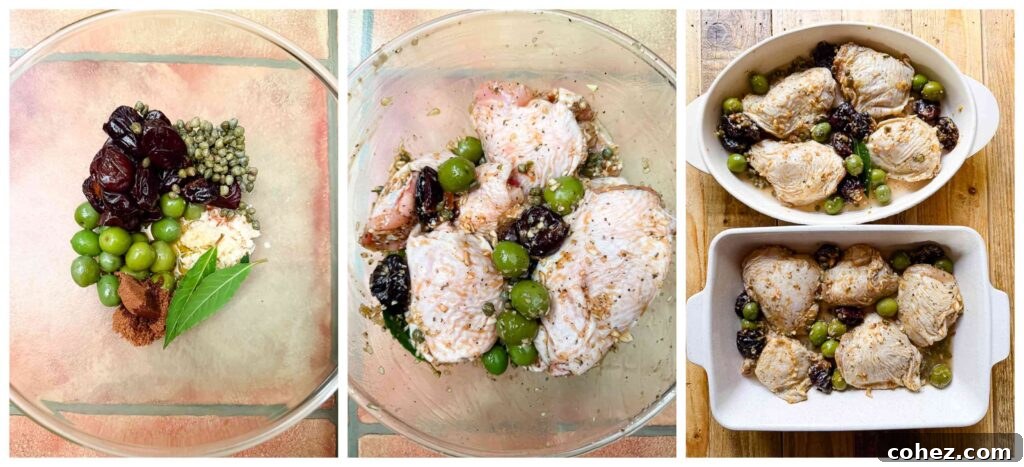
- Don’t Crowd the Pan: For optimal browning and caramelization, ensure your chicken thighs have enough space in the baking dish. If necessary, divide the chicken between two pans to prevent steaming, which can lead to soggy skin.
- Resting Period: After roasting, allow the chicken to rest for 5-10 minutes before serving. This crucial step allows the juices to redistribute throughout the meat, resulting in an even more tender and flavorful chicken.
Delightful Serving Suggestions for Chicken Marbella
Chicken Marbella, with its rich, sauce-laden profile, pairs beautifully with a variety of accompaniments. For classic comfort, a hearty slice of crusty bread is perfect for soaking up every drop of that irresistible sauce, or a mound of creamy garlic mashed potatoes provides a comforting base. Given the dish’s Spanish and North African inspirations, embracing these culinary roots can elevate your meal:
- Grains of Gold: Light, fluffy couscous or aromatic saffron rice are colorful and exotic choices that perfectly complement the sweet and savory notes of the chicken, absorbing the flavorful juices beautifully.
- Fresh Green Contrast: The rich, sweet, and briny characteristics of Chicken Marbella benefit immensely from a fresh, grounding green side. A simple garden salad with a light vinaigrette or a more substantial roasted summer vegetable salad with nuts offers a bright, refreshing contrast that balances the meal.
- Mediterranean Roasted Vegetables: Think roasted bell peppers, zucchini, red onions, or cherry tomatoes, tossed with a drizzle of olive oil and a sprinkle of herbs. Their sweetness and slight char will echo the flavors in the chicken.
- Polenta or Quinoa: For a gluten-free option, creamy polenta or fluffy quinoa can serve as excellent absorbent bases for the rich sauce.
- Wine Pairing: A dry white wine, such as a crisp Sauvignon Blanc or a light-bodied Pinot Grigio, would beautifully complement the dish. For red wine lovers, a light-to-medium-bodied Spanish Grenache or a rustic Chianti could also be a delightful choice, picking up on the fruity notes.
Storage and Reheating Chicken Marbella
One of the many joys of Chicken Marbella is how wonderfully it keeps, often tasting even better the next day as the flavors have more time to meld and deepen. Leftover Chicken Marbella can be stored in an airtight container in the refrigerator for up to 4 days.
- Reheating: To reheat, simply place the chicken and sauce in an oven-safe dish, cover it with foil, and warm in a preheated oven at 180°C (350°F) for 15-20 minutes, or until thoroughly heated through. Ensure the chicken thighs are piping hot at their center before serving to guarantee food safety and optimal enjoyment.
- Freezing: Chicken Marbella freezes exceptionally well. Allow the cooked chicken and sauce to cool completely. Transfer it to freezer-safe containers or heavy-duty freezer bags, removing as much air as possible. It can be frozen for up to 3 months. Thaw overnight in the refrigerator before reheating as directed above, possibly adding a splash of broth or water if the sauce appears too thick after thawing.
- Repurposing Leftovers: Leftover Chicken Marbella can be shredded and served over pasta, in a warm pita with a dollop of yogurt, or even as a flavorful filling for a sandwich or wrap. Its versatile flavor profile makes it easy to transform into new meals.
More Delicious Chicken Thigh Recipes to Explore
- Cheesy Chicken Broccoli Rice Casserole
- Chicken with 40 Cloves of Garlic
- Mexican Chicken and Rice
- Braised Coconut Curry Chicken Thighs
Mediterranean Chicken Marbella
Equipment
-
Cast iron casserole dish or large baking pan
Ingredients
- 1 head garlic, peeled and chopped
- 1/2 tsp dried oregano
- 1 tsp dried basil
- 3-4 bay leaves
- 3 tbsp red wine vinegar
- 3 tbsp olive oil
- 2 tbsp brown sugar
- 200g / 1 cup green olives (such as Nocellara)
- 170g / 1 cup soft pitted prunes
- 2 tbsp capers, drained
- 1 tsp salt, or to taste
- 8-9 bone-in, skin-on chicken thighs
- 250ml / 1 cup dry white wine, or rosé
- 1 tbsp fresh chopped parsley, for serving
Instructions
-
Peel and finely chop the garlic cloves (a mini food processor can simplify this task). In a large glass or ceramic mixing bowl, combine the chopped garlic, dried basil, dried oregano, bay leaves, red wine vinegar, olive oil, and brown sugar. Add the green olives, pitted prunes, capers, a generous pinch of salt, and the chicken thighs. Mix all the ingredients thoroughly to ensure each chicken thigh is completely coated in the marinade. Cover the bowl tightly with plastic wrap and refrigerate overnight, or for a minimum of 3 hours, to allow the flavors to deeply penetrate the chicken.
-
Preheat your oven to 180°C (350°F). Arrange the marinated chicken thighs and all the other ingredients (olives, prunes, capers, herbs, and any remaining marinade) in a large baking pan or divide them between two smaller pans if necessary, to avoid overcrowding. Ensuring enough space allows for proper caramelization and crispier skin. Carefully pour the dry white wine (or rosé) around the chicken, trying to avoid pouring it directly onto the chicken skin, which helps maintain crispiness.
-
Roast in the preheated oven for 50 minutes to 1 hour, or until the chicken is cooked through, the skin is golden brown and crispy, and the internal temperature reaches 74°C (165°F). Remove from the oven and let it rest for a few minutes before serving. Garnish generously with fresh chopped parsley just before presenting this fragrant and flavorful dish.
Nutrition
Nutrition information is automatically calculated, so should only be used as an approximation.