
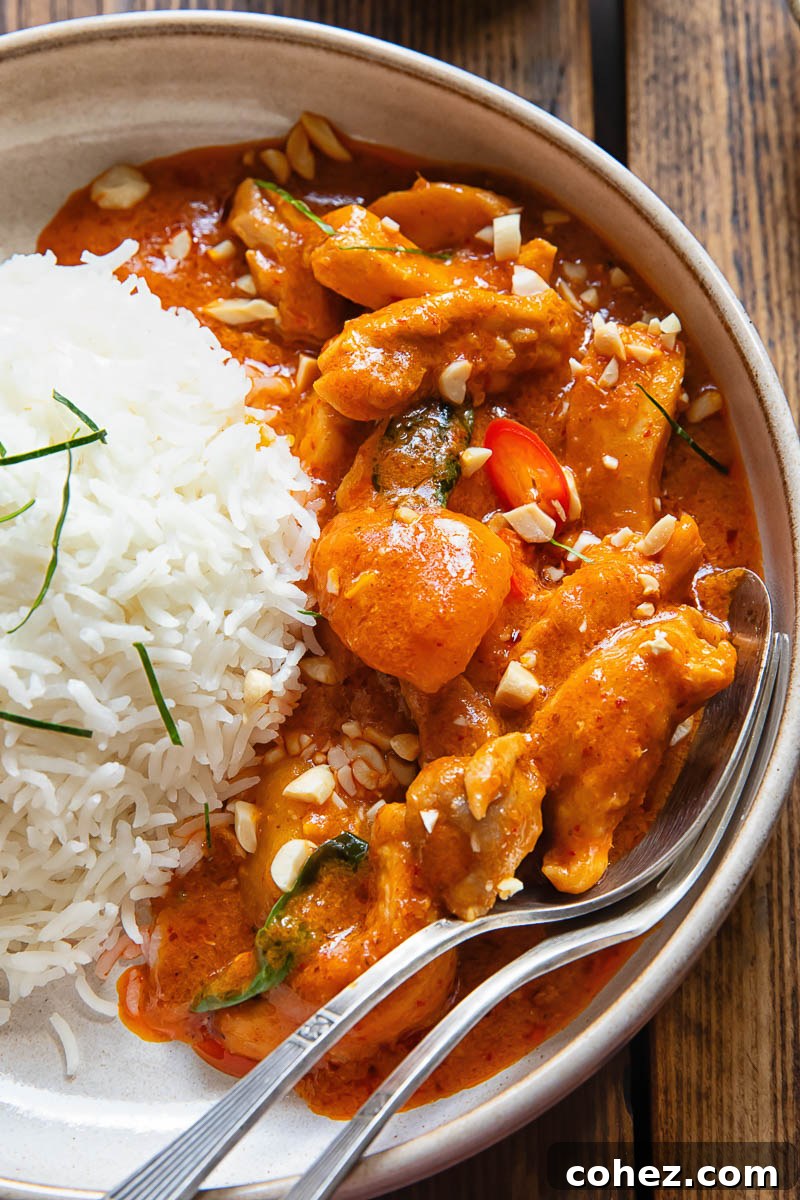
Craving the rich, aromatic flavors of Thailand without spending hours in the kitchen? Forget time-consuming curries and an over-stuffed spice rack! This mild chicken panang curry is your new weeknight hero, relying on a single jar of authentic Thai curry paste. It’s a simple, “chuck-it-in-one” recipe that comes together quicker than you can say kawp khun ka (thank you). Get ready to savor a creamy, subtly spicy, and deeply satisfying meal that tastes like it came straight from a Thai restaurant.
*Please note: This traditional Panang Curry recipe contains peanuts.
For those avoiding nuts, I’ve got you covered! If you prefer a peanut-free and spicy Thai chicken curry, be sure to check out my braised coconut curry chicken thighs. This alternative recipe features succulent bone-in chicken thighs bathed in a rich red curry sauce, beautifully complemented by vibrant green beans and crisp red peppers. It’s another fantastic option for an authentic Thai flavor experience.
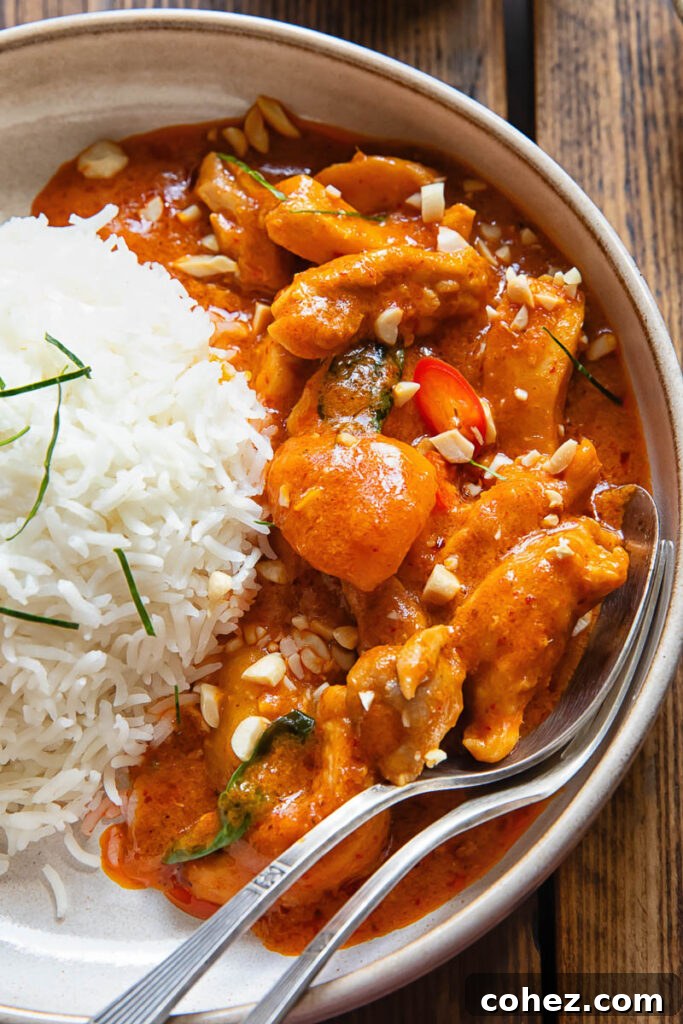
Can you truly imagine a world without Thai food? For me, such a world would be incredibly bland. My personal journey into the vibrant and chili-forward dishes of Southeast Asia began in 2000 when I was 24 years old, living in Manila in the Philippines. I was just starting to grow accustomed to the unique salty and sour Filipino flavors when my taste buds were completely blown away by the riot of aromatic spices and chilies that define Thai curry. It was an instant addiction, and I’ve been hooked ever since.
Fourteen years later, after countless restaurant-based research trips and diligent taste-testing sessions, I finally shared my first Thai dish on my blog: Thai Red Curry with Prawns and Snow Peas. This exceptional one-pot wonder truly has it all – tender noodles, succulent shrimp, and a bounty of fresh vegetables, making it one of my all-time favorite and most convenient recipes. If you haven’t tried it yet, I highly recommend adding it to your culinary repertoire!
What is Panang Curry? Your Guide to This Creamy Thai Delight
Panang curry stands out as one of the mildest and arguably most beloved Thai curries, making it a perfectly safe and delicious bet for those who are a little shy about intense spice. Originating from central Thailand, potentially named after the island of Penang (though its exact linguistic roots are debated), Panang curry distinguishes itself with a signature thick, creamy coconut sauce. Unlike its fiery red or green counterparts, Panang paste uses fewer chilies, resulting in a gentler heat profile that allows its other complex flavors to shine through beautifully.
The hallmark of a traditional Panang curry recipe is its exquisite balance. It’s characterized by a delightful interplay of sweet notes, often derived from peanuts, and the vibrant, zesty aroma of makrut (kaffir) lime leaves. These elements work in harmony to temper any residual heat, creating a smooth, rich, and aromatic sauce that coats every ingredient beautifully. This creamy texture and well-rounded flavor make Panang a unique and incredibly comforting dish, often served a bit thicker than other curries to fully appreciate its luscious consistency. It’s a culinary experience that’s both approachable and deeply satisfying.
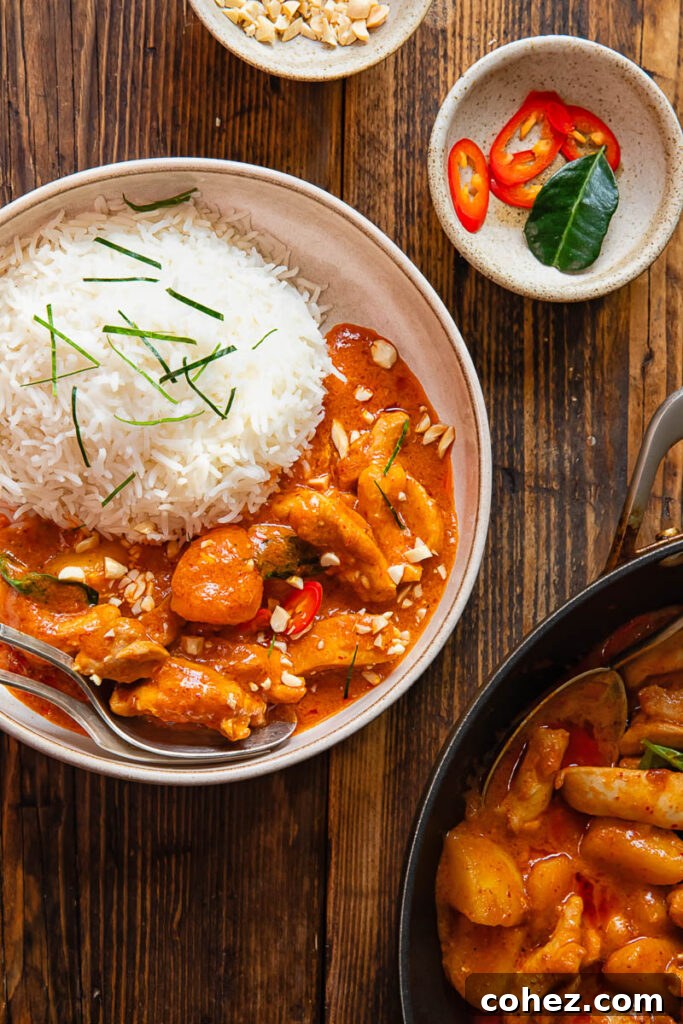
Essential Panang Curry Ingredients for Authentic Flavor
Crafting an authentic Panang Chicken Curry doesn’t require a trip to Thailand or a highly specialized pantry. The beauty of this recipe lies in its accessible yet impactful ingredients. Let’s break down the key components that bring this delightful curry to life.
Choosing the Right Panang Curry Paste
While you certainly could painstakingly grind and blitz fresh ingredients to labor over a from-scratch Panang curry paste, I wholeheartedly recommend a simpler approach for convenience without sacrificing authenticity. I went straight for a ready-made tub of high-quality paste, and it’s absolutely not “cheating.” Many Thai home cooks and even restaurants rely on these excellent pre-made pastes.
Brands like Maesri and Mae Ploy are reliably authentic and commonly stocked in Asian supermarkets, or even the international aisle of larger grocery stores. If it’s good enough for Thai culinary experts, it is certainly good enough for a delicious homemade meal. These pastes are complex blends of classic Thai ingredients:
- Red Chilies: Though Panang is considered mild, it still contains red chilies, contributing a pleasant warmth rather than an overpowering burn (often a 7/10 on the chili scale for flavor, not just heat).
- Aromatic Herbs: Expect refreshing, citrussy lemongrass and fragrant makrut (kaffir) lime leaves, along with the distinct gingery notes of galangal.
- Umami Boost: A touch of shrimp paste adds crucial depth and savory umami, a cornerstone of Thai cooking.
- Earthy Spices: Top-note flavors are beautifully underpinned by warm, earthy cumin and coriander.
- Base Flavors: A generous dose of garlic and shallots forms the foundational aromatic base, adding pungency and sweetness.
The Creamy Core: Coconut Milk and Flavor Boosters
Beyond the paste, the richness of Panang curry largely comes from coconut milk. I recommend using full-fat, unsweetened coconut milk for the richest flavor and silkiest texture. To elevate the coconut milk and curry paste base, I often embellish it with a few extra ingredients:
- Makrut (Kaffir) Lime Leaves: These intensely aromatic leaves are irreplaceable for their unique citrusy perfume. While the paste contains them, adding a couple fresh leaves during cooking (and perhaps a chiffonade for garnish) amplifies their magical aroma. If true makrut lime leaves are difficult to source, fresh Thai basil can offer a different but complementary aromatic note.
- Red Chili: For those who appreciate a touch more heat, or to suit my family’s preference, an extra fresh red chili (sliced for garnish or added during cooking) can be incorporated.
- Fish Sauce: A splash of fish sauce is vital. It’s not just about salt; it brings a profound savory depth and umami that balances and brightens all the other flavors in the curry.
Protein and Substance: Chicken and Potatoes
- Chicken: Boneless, skinless chicken thighs are a classic choice for Panang curry recipes. They stay incredibly juicy and tender during simmering, absorbing the rich sauce beautifully. You can cut them into bite-sized pieces for quicker cooking and easier eating.
- Potatoes: While not traditionally found in all Panang recipes, adding potatoes is a brilliant addition. It works wonderfully, especially if you’re cooking on a budget but have a high appetite! Potatoes add satisfying bulk to the meal, transforming it into a more complete one-pot dish, and crucially, they absorb the deliciously rich and creamy sauce, becoming tender pockets of flavor.
The Irresistible Crunch: Peanuts
Finally, the addition of chopped peanuts is what often sets Panang apart and brings a unique dimension. They contribute a delightful sweetness and an irresistible crunchy texture that contrasts beautifully with the spicy and saucy Thai flavors. If you love peanuts in your Thai dishes, you’ll also enjoy these other top Thai favorites featuring peanuts:
- Som Tam (Green Papaya Salad)
- Yellow Chicken Curry with Potatoes
- Thai Red Curry with Chicken and Sweet Potato
NB. It’s crucial to be aware that some pre-prepared Panang curry pastes contain peanuts or peanut butter as an ingredient. Always be sure to check the label thoroughly if you are cooking for someone with a peanut allergy.
Expert Recipe Tips and Notes for Perfect Panang
Achieving a truly outstanding Panang Chicken Curry is easy when you keep a few essential tips in mind. These insights will help you maximize flavor and texture, ensuring a delicious outcome every time:
- Invest in Quality Paste: This is arguably the most critical component. Don’t skimp here. Mae Ploy and Maesri are widely recognized and reliably authentic brands that will provide the best flavor foundation for your curry.
- Full-Fat Coconut Milk is Key: For a truly rich, creamy, and luxurious sauce, always opt for full-fat, unsweetened coconut milk. The fat content is crucial for the curry’s signature velvety texture and deep flavor.
- Embrace the Potatoes: Oh yes, I did, and you absolutely should too! Potatoes add a wonderful heartiness, absorb the delicious sauce, and make the meal more substantial. They’re a fantastic addition that truly enhances the dish.
- Don’t Skip the Lime Leaves: Makrut (kaffir) lime leaves offer an incredibly unique and aromatic citrusy fragrance that cannot be replicated. Use them generously within the dish as it simmers, and definitely reserve a few to thinly slice (chiffonade) and sprinkle as a fresh garnish at the end.
- Thai Basil as an Alternative: If you struggle to get hold of fresh makrut (kaffir) lime leaves, fresh Thai basil will work as a decent substitute. While it offers a different flavor profile, its peppery, anise-like notes complement the curry beautifully.
- Gentle Simmering: Once you add the coconut milk and other ingredients, bring the curry to a gentle simmer. Avoid a rolling boil, which can cause the coconut milk to split and become oily.
- Taste and Adjust: Always taste your curry before serving. Adjust the seasoning with additional fish sauce for umami, a pinch of sugar for sweetness, or more chili for heat, according to your preference.
Perfect Pairings: What to Serve with Panang Chicken Curry
A well-balanced Thai meal is all about complementing flavors and textures. Here are some fantastic suggestions for what to serve alongside your rich and creamy Panang Chicken Curry:
- Rice Varieties:
- Coconut Rice: The super coconutty richness of chicken Panang curry is further enhanced by simple, fluffy Instant Pot coconut rice. It’s a match made in heaven, doubling down on the tropical flavors.
- Jasmine Rice: If coconut overkill sounds like too much, traditional fluffy jasmine rice is always a perfect choice. Its subtle fragrance and soft texture provide a neutral canvas for the curry’s robust flavors.
- Thai Sticky Rice: For an authentic Thai experience, serve your Panang with sticky rice. Its unique chewy texture is excellent for soaking up every last drop of that incredible sauce.
- Fresh Salads: Personally, I often favor a fresh, uplifting salad over stir-fried vegetables when it comes to Thai food. The crispness and tang of a salad offer a wonderful contrast to the creamy curry. Pick from these spicy and sour Asian-inspired offerings:
- Green Papaya Salad (Som Tam): A classic choice, offering spicy, sour, and crunchy notes.
- Korean Carrot Salad: A vibrant, tangy, and slightly spicy option.
- Smashed Cucumber and Miso Salad: Refreshing and savory, a great palate cleanser.
Storage and Leftovers: Enjoy Your Panang Later!
One of the best things about homemade curries is how wonderfully they keep, often tasting even better the next day as the flavors have more time to meld and deepen. This Panang Chicken Curry recipe is excellent for meal prepping or batch cooking.
- Refrigeration: Keep any leftover Thai chicken curry in an airtight container in the fridge for 3-4 days. Ensure it cools completely before storing.
- Freezing: This recipe is a fantastic candidate for batch cooking. Simply double up the quantities and freeze half for a quick future meal. Store in a freezer-safe, airtight container for up to 3 months. For best results, thaw overnight in the fridge before reheating.
- Reheating: Reheat on the stovetop over medium-low heat, stirring occasionally, until thoroughly heated through. You might need to add a splash of water or extra coconut milk if the sauce has thickened too much in the fridge.
More Delicious Chicken Curry Recipes to Explore
If you’ve enjoyed this Panang Chicken Curry, you’re in for a treat! The world of chicken curries is vast and incredibly flavorful. Here are a few more of my favorite chicken curry recipes that you might love:
- Yellow Chicken Curry with Potatoes: A comforting and often milder curry, rich with turmeric and other warming spices.
- Chinese Chicken Curry: A unique take, offering a distinct flavor profile often found in British-Chinese takeaways.
- Chicken Katsu Curry (Air Fryer Recipe): Crispy breaded chicken served with a rich, savory Japanese-style curry sauce.
- Mango Chicken Curry: A vibrant and sweet-savory curry, perfect for those who enjoy a fruity twist.
Panang Chicken Curry Recipe
By Julia Frey of Vikalinka
Prep Time: 10 mins | Cook Time: 30 mins | Total Time: 40 mins | Servings: 6
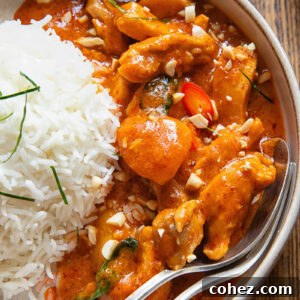
A mild, creamy, and authentic Thai curry using ready-made paste, made quickly in one pot for an effortless weeknight meal.
Ingredients
- 100g / 1/3 cup Panang curry paste (Maesri or Mae Ploy recommended)
- 1 tbsp vegetable oil
- 400g / 14 oz full-fat coconut milk
- 500g / 1 lb chicken thighs, skinless and boneless, cut into bite-sized pieces
- 2 small potatoes, peeled and cut into bite-sized chunks
- 2 kaffir lime leaves, bruised (or thinly sliced for garnish)
- 1 tsp fish sauce, or to taste
- 1 red chili, sliced (optional, for extra heat and garnish)
- 1 tbsp peanuts, chopped, for garnish
- A few Thai basil leaves, for garnish (optional, if kaffir lime leaves are unavailable)
Instructions
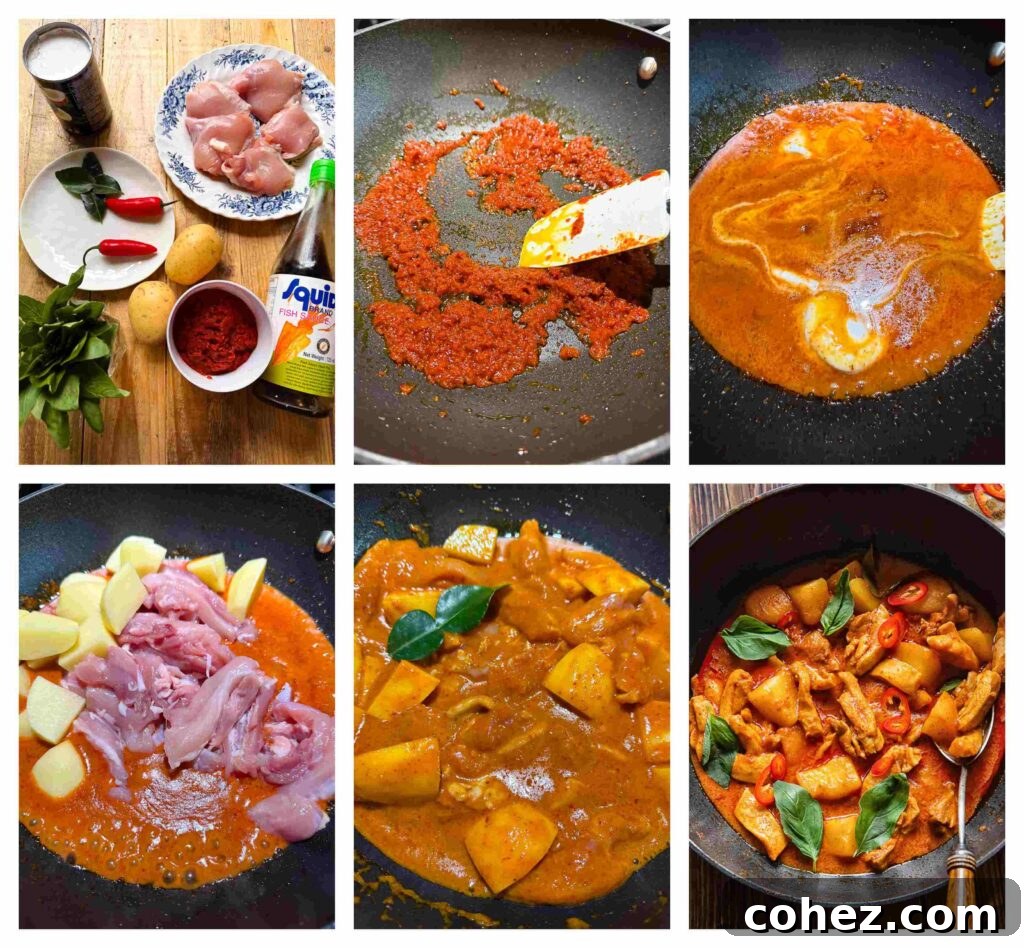
- In a large frying pan or wok, heat 1 tablespoon of vegetable oil over medium heat. Add the Panang curry paste and stir-fry for 1-2 minutes until fragrant and the flavors are released.
- Gradually pour in the coconut milk, stirring continuously to combine it thoroughly with the curry paste until smooth.
- Add the bite-sized chicken pieces and potato chunks to the simmering sauce, along with the bruised kaffir lime leaves. Bring the liquid to a gentle simmer.
- Continue cooking for approximately 25 minutes, or until the chicken is fully cooked through, the potatoes are tender, and the sauce has reduced and thickened by about half. Stir occasionally to prevent sticking.
- Taste the sauce and add the fish sauce to balance the flavor if needed. Adjust with more chili or a pinch of sugar if desired.
- Serve hot with fluffy jasmine rice, coconut rice, or sticky rice. Garnish generously with sliced fresh red chilies, fresh Thai basil leaves, and a sprinkle of chopped roasted peanuts before serving. Enjoy your homemade Panang Chicken Curry!
Nutrition
Nutrition information is automatically calculated and should only be used as an approximation.
Calories: 396kcal | Carbohydrates: 16g | Protein: 17g | Fat: 30g | Saturated Fat: 17g | Polyunsaturated Fat: 4g | Monounsaturated Fat: 7g | Trans Fat: 0.1g | Cholesterol: 82mg | Sodium: 165mg | Potassium: 680mg | Fiber: 2g | Sugar: 3g | Vitamin A: 2766IU | Vitamin C: 19mg | Calcium: 52mg | Iron: 4mg
Tried this recipe?
Let us know how it was!