
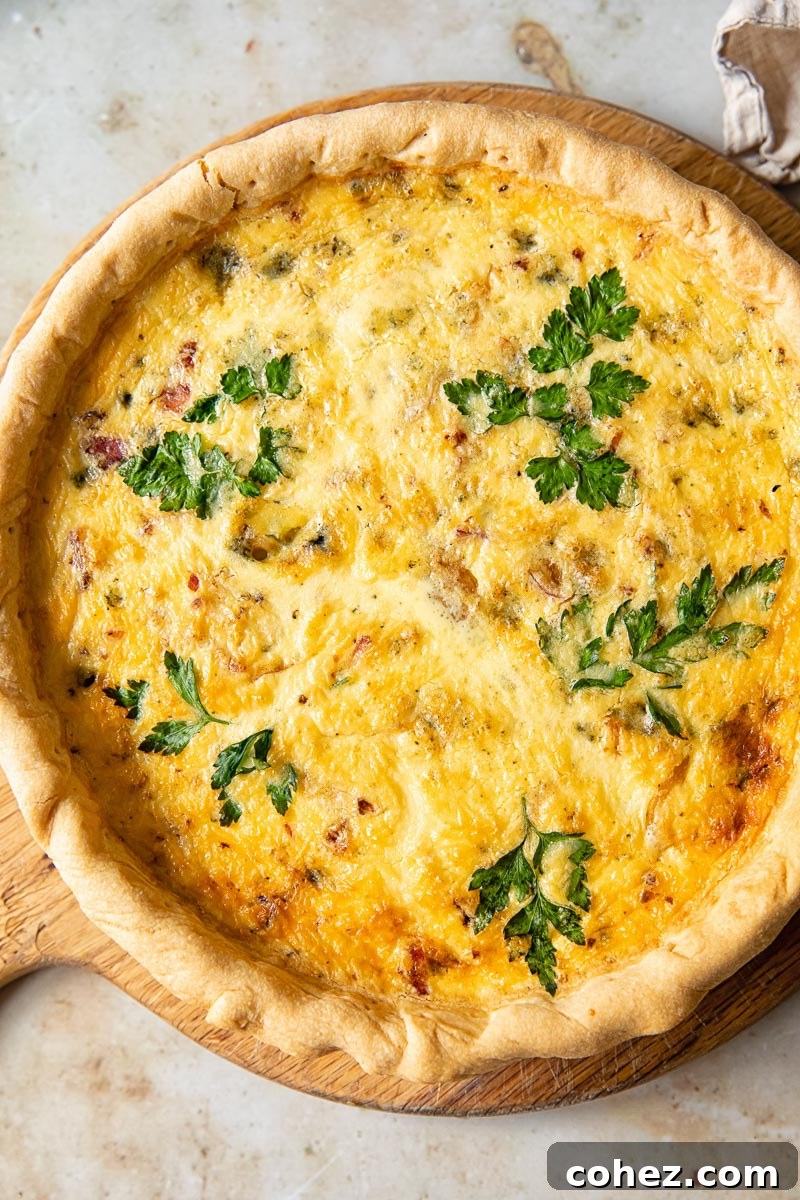
Embark on a culinary adventure that promises to delight your senses and elevate your kitchen prowess. This Bacon, Blue Cheese, and Caramelized Onion Quiche isn’t just a recipe; it’s a vibrant symphony of flavors designed to challenge and reward your palate. Imagine the creamy tang of blue cheese, the irresistible saltiness of crispy bacon, and the sweet counterpoint of deeply caramelized onions, all nestled in a perfectly flaky pastry crust. This is more than a meal; it’s a memorable taste sensation, a testament to bold ingredients coming together in exquisite harmony.
To perfectly complement the rich, decadent nature of this savory tart, serve it alongside a light and refreshing Summer Tomato Salad with Herbs. The fresh, zesty notes of the salad will cut through the dairy richness, creating a beautifully balanced meal that satisfies without overwhelming.
The Enduring Appeal and Divisive Nature of Quiche
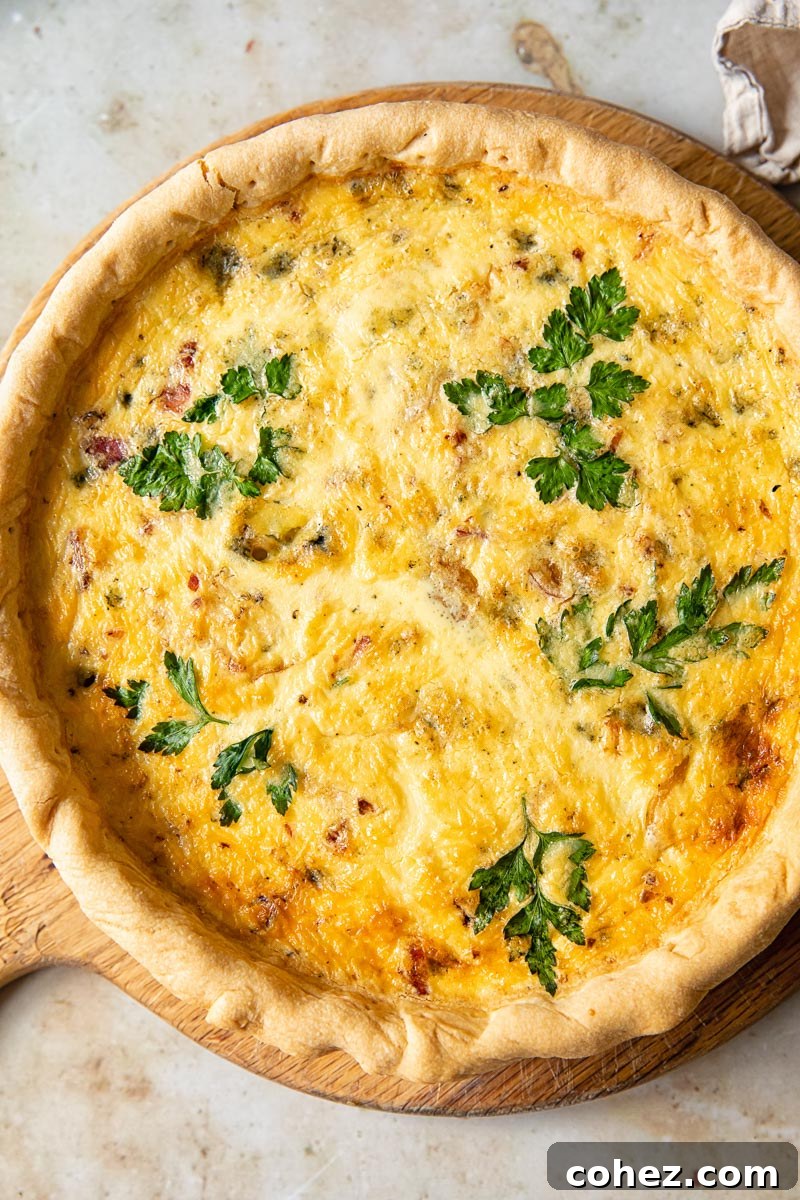
Few dishes command such strong opinions as the humble quiche. Much like Marmite, tequila, or cilantro, it firmly occupies a spot on the culinary love/hate spectrum. Yet, its enduring popularity speaks volumes. For many, quiche is a comforting, versatile dish, perfect for any time of day. My husband, for instance, is a fervent quiche aficionado, and his unwavering enthusiasm is precisely what inspired this robustly flavored quiche recipe, designed to convert even the most skeptical.
The star ingredients in this quiche – Stilton blue cheese and smoky bacon – form a flavor alliance that is truly formidable. The pungent, creamy notes of the Stilton are masterfully balanced by the crispy, salty allure of bacon. This powerful duo creates an unforgettable taste experience, one that is further elevated by the sweet, tender threads of slow-cooked caramelized onions, offering a delightful contrast and depth to every bite. It’s a sophisticated combination that transforms a simple tart into a gourmet centerpiece.
Mastering the Art of Quiche Making
A Brief History of Quiche
The origins of quiche are surprisingly not French, but German! Originally known as “Kuchen” (meaning “cake”), this simple recipe from the medieval kingdom of Lothringen (later renamed Lorraine by the French) initially consisted of a basic bread dough filled with bacon, eggs, and cream custard. As territories shifted and the region became part of France, so too did the dish evolve, becoming known as “Quiche Lorraine” and taking on the sophisticated identity we associate with French cuisine today. Today, it is recognized as an open-faced pie, traditionally filled with a creamy egg custard, often enriched with cheese and a variety of savory ingredients chosen by the baker.
Achieving Quiche Perfection
Regardless of your personal stance on quiche, certain characteristics universally define a truly exceptional savory tart. To achieve a show-stopping quiche every time, keep these fundamental elements in mind:
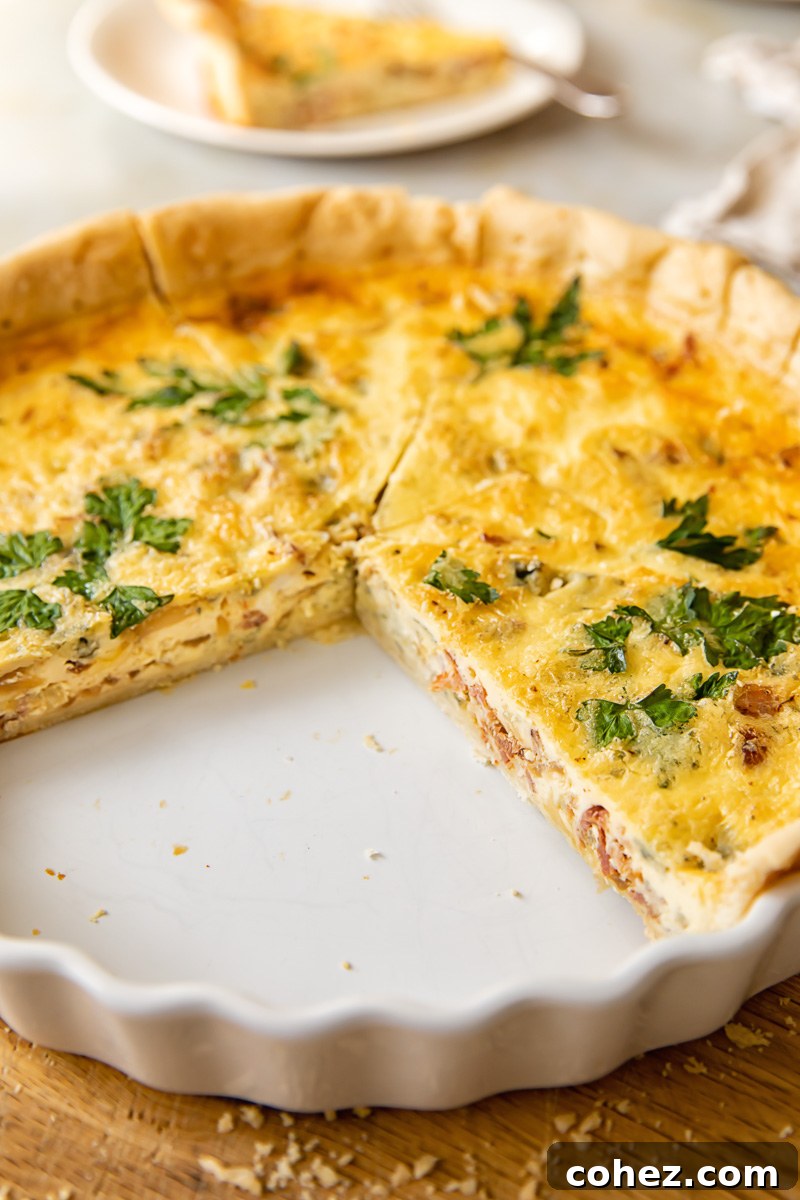
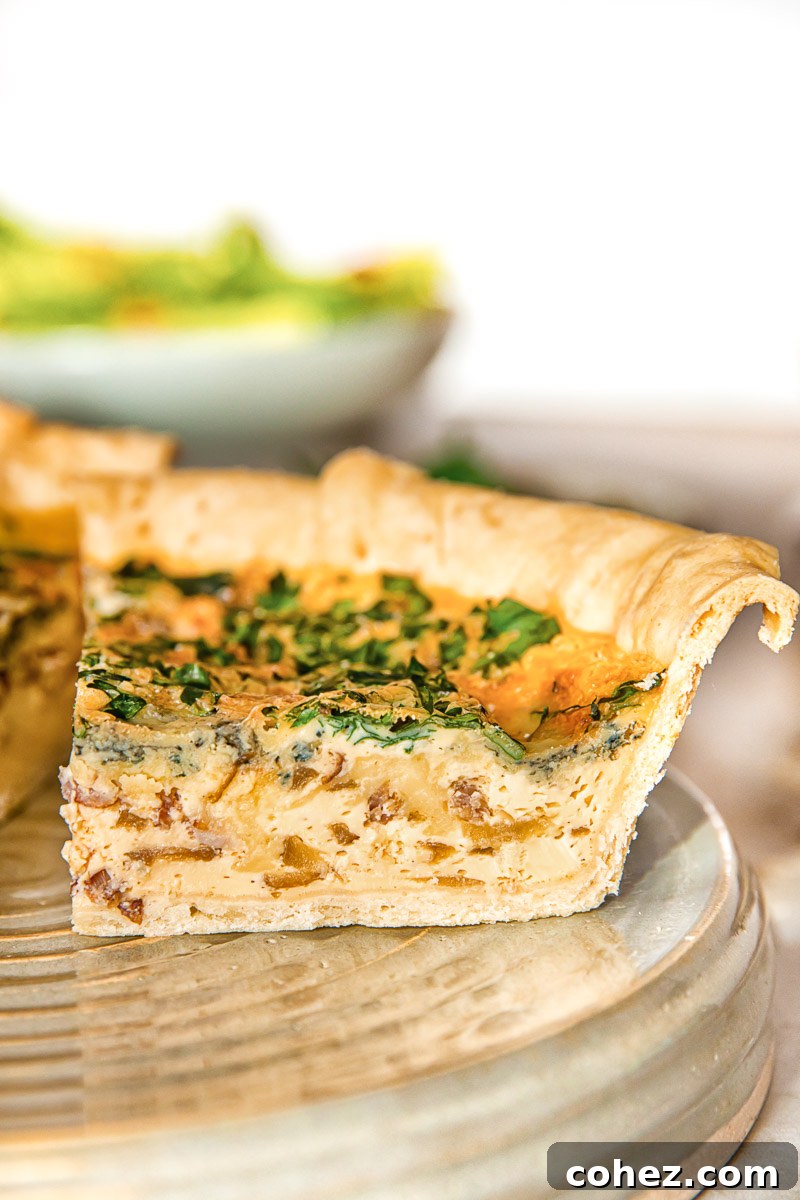
- The filling should be perfectly set and impeccably smooth, offering a delicate, creamy texture. Avoid an overly rubbery consistency or a “weepy” filling that indicates overcooking or improper ratios.
- The balance of egg and cheese is crucial. The custard should be rich and flavorful, but neither overwhelmingly eggy nor excessively cheesy. Precise measurements and thoughtful ingredient selection are paramount to achieving this delicate equilibrium.
- A superior crust is non-negotiable. It should be evenly golden brown, crisp, and robust enough to support the filling without becoming soggy. A bitter, burnt crust or a slack, underbaked one can ruin the entire experience.
Simplified Quiche Preparation: A Three-Stage Approach
While making a quiche from scratch might seem like a labor-intensive endeavor, it’s easily manageable when broken down into a strategic three-pronged approach. Spreading the preparation over a couple of days can significantly reduce kitchen fatigue and make the process enjoyable:
- Stage One: The Perfect Pastry. Begin by preparing your shortcrust pastry. This can be made and chilled up to two days in advance, allowing the gluten to relax for a more tender result. Alternatively, don’t hesitate to opt for a high-quality store-bought pastry for a fantastic shortcut!
- Stage Two: Flavorful Filling Prep. Dedicate the second stage to cooking and preparing your filling components. This includes caramelizing the onions until they’re deeply golden and sweet, and cooking the bacon until it’s perfectly crisp. Both can be cooked ahead of time and stored in the refrigerator, ready for assembly.
- Stage Three: Assembly and Bake. On the day of serving, focus on assembling your quiche. Prepare the rich egg custard, arrange your pre-cooked fillings in the blind-baked pastry shell, pour in the custard, and then bake to golden perfection. This phased approach transforms a complex recipe into an effortless culinary feat.
Exploring Quiche Variations: Beyond the Classic
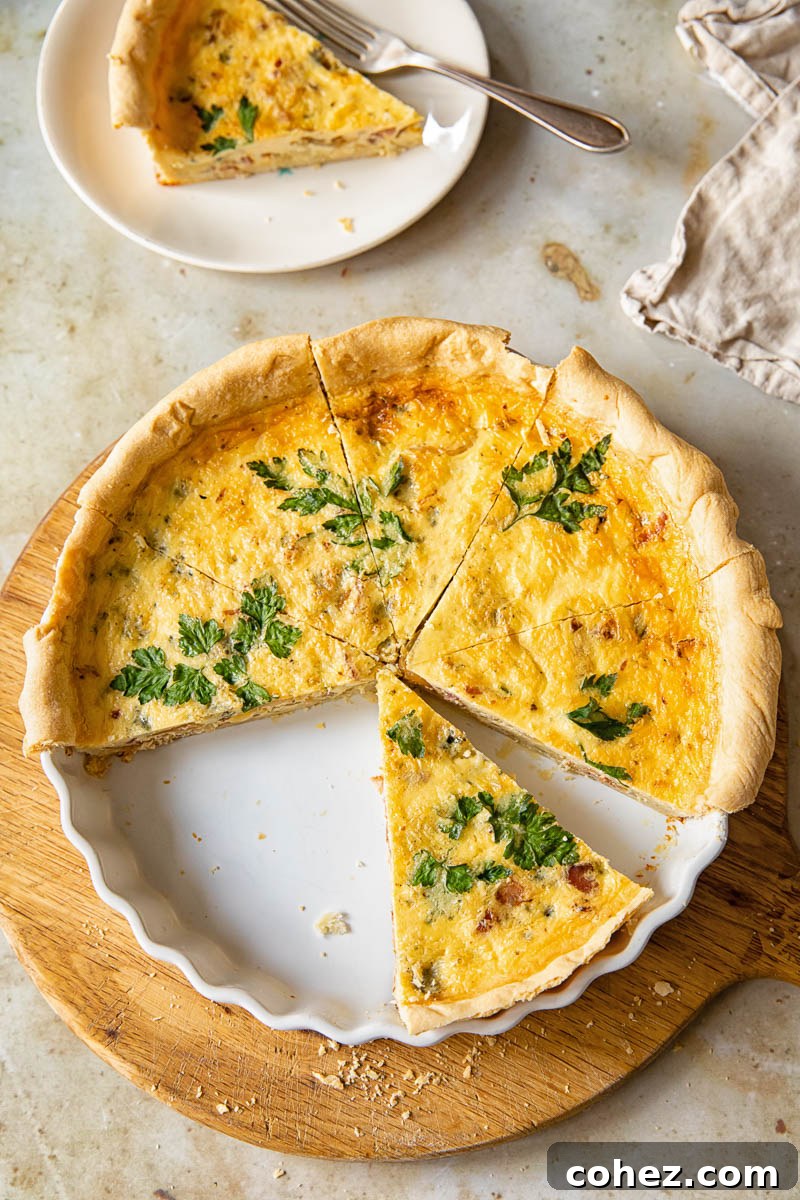
The world of quiche is vast and full of delightful deviations, each sparking further debate among quiche connoisseurs. Is it best enjoyed hot, straight from the oven, or cool, at room temperature? Should one indulge with fingers, savoring its portability, or with a knife and fork, embracing its more refined side? What constitutes an acceptable filling – a classic like ham and cheese – and what is definitively not (tuna, for example, often raises eyebrows)? And perhaps the most contentious question of all: is a crustless quiche truly a quiche, or merely a frittata in disguise? Choose your culinary camp, and let the delicious discussions commence!
Interestingly, the name “Lorraine” isn’t merely a lovely French lady’s name; it translates to “famous army” – quite fitting for such a famously divisive dish. A true Quiche Lorraine, by traditional definition, must contain Swiss cheese (typically Emmentaler or Gruyère) and bacon. However, there’s absolutely no harm in creatively altering the composition of your quiche. Feel free to substitute with other cheeses like sharp Cheddar and savory ham; just be aware that you can no longer lay claim to the esteemed “Quiche Lorraine” title.
Quiche also offers a wonderfully convenient way to incorporate extra vegetables into your diet. My children, for instance, have always readily devoured a combination of cheese and broccoli baked into a quiche. Their preference is to eat it warm, never cold, and surprisingly, with a side of baked beans! As I’ve said, quiche truly inspires polarizing preferences! Personally, I gravitate towards a more sophisticated pairing of creamy goat’s cheese and sun-ripened tomatoes, served elegantly at room temperature, perhaps with a crisp green salad.
Then there’s the ongoing debate surrounding the crustless quiche. Many purists argue that without a crust, it loses its fundamental identity, essentially becoming a frittata. However, advocates highlight its merits as an excellent gluten-free option or a guilt-free, lower-carb alternative. Both sides present valid points, offering delicious solutions for different dietary needs and preferences. Whose side are you on in this flavorful argument?
Expert Recipe Tips and Notes for Quiche Success
- Pastry Perfection: While mastering homemade shortcrust pastry is a truly rewarding skill, it’s not exclusively for seasoned boulangers. If you’re short on time or prefer a simpler approach, ready-made, store-bought shortcrust pastry is an excellent low-prep secret weapon that yields fantastic results.
- Strategic Staging: Making a quiche from scratch is an investment of time, but you can effortlessly break it down into manageable stages over a few days. This strategic approach minimizes stress and makes the process enjoyable. You can prepare your pastry dough, blind-bake the pastry case, and cook the bacon and onions all in advance, storing them in the refrigerator until you’re ready to assemble and bake.
- The Art of Blind Baking: A crucial step for a perfect quiche is to partially bake your pastry case before adding the wet filling. Professional pastry chefs refer to this technique as “blind baking.” It creates a sturdy, par-cooked base that prevents the crust from becoming soggy. Skip this step, and you risk a “swampy quiche” – a soft, unappealing bottom crust.
- Endless Flavor Possibilities: The beauty of savory quiche recipes lies in their incredible versatility. While classic combinations like ham and cheese are always a hit, don’t shy away from seasonal delights such as creamy brie with tart cranberry, or earthy wild mushrooms. Get truly creative with whatever ingredients you have on hand in the fridge – how about an adventurous minced beef and kimchi quiche for a bold twist? The possibilities are truly limitless!
Storage and Reheating Tips for Your Quiche
One of the many charms of this bacon quiche is its versatility – it’s equally delicious served hot or cold! After baking, allow any leftovers to cool completely before covering them tightly and storing them in the refrigerator for up to 2-3 days. For optimal texture and flavor, it’s generally advisable to avoid freezing quiche. The delicate balance of eggs, cream, and pastry can lose its integrity during the freezing and thawing process, often resulting in a less appealing, watery texture.
If you prefer your quiche warm, you can gently reheat individual slices or the entire tart in the oven. Preheat your oven to 350°F (175°C) and bake for approximately 15 minutes. Keep a close eye on the crust during reheating, as it can quickly brown and burn. A common solution to prevent crust-scorching is to loosely tent the quiche with aluminum foil. However, be mindful that covering it entirely might trap moisture, leading to a slightly soggy crust. A good compromise is to cover only the edges of the crust, or briefly remove the foil for the last few minutes of reheating to allow the crust to crisp up again.
More Egg-cellent Recipes to Try
- Easy French Omelette with Bacon, Potatoes and Zucchini
- Healthy Mini Frittatas
- Chorizo Breakfast Hash with Eggs and Feta
- Turkish Eggs (Cilbir)
Bacon, Stilton and Caramelised Onion Quiche
Equipment
-
Food processor
-
Pie dish
Ingredients
For the shortcrust pastry
- 250g/1 3/4 cup + 1 tbsp plain flour
- 125g/ 1/2 cup + 1 tbsp cold unsalted butter , cubed
- 1 tsp salt
- 3 tbsp ice cold water
For the filling
- 1 onion, sliced
- 6 strips streaky bacon
- 100g/3.5 oz Stilton cheese, or any other blue cheese
- 5 large eggs
- 200ml/1 cup double/heavy cream
- 100ml/1/3 cup whole milk
- salt and pepper
- 3-4 parsley sprigs
Instructions
-
Prepare the pastry up to 2 days ahead. You can also caramelise the onion and cook the bacon a couple of days ahead as well. Store in the refrigerator until needed.
-
In a food processor, combine the flour, salt, and cold cubed butter. Pulse until the mixture resembles coarse crumbs. Through the chute of the food processor, add ice cold water one tablespoon at a time, pulsing until the mixture starts to feel slightly heavier. It won’t fully come together yet.
-
Remove the mixture from the food processor and transfer it to a large bowl. Gently bring the dough together with your hands, handling it just enough to form a shaggy ball. Wrap the dough tightly in plastic wrap, then gently press it down with the palm of your hand to form a disk. Chill in the refrigerator for at least 20 minutes.
-
Take the shortcrust pastry from the refrigerator and allow it to come to room temperature for at least 20 minutes. Attempting to roll out a well-chilled disk of pie crust will likely result in cracking. Once it’s pliable enough to work with, roll it out on a lightly floured surface into a circle about 12 inches in diameter. Don’t worry if it cracks; simply pinch the edges back together and continue rolling. Drape the rolled-out shortcrust over your rolling pin and carefully transfer it into a 9-inch pie plate. Again, if it cracks or tears, simply patch it up.
-
Once the pie plate is lined with the shortcrust, fold the overhanging edges underneath to create a thicker rim, then crimp it decoratively. Chill the lined pie plate in the fridge for another 20 minutes. Preheat your oven to 400°F (200°C).
-
Remove the chilled shortcrust from the fridge. Prick the bottom and sides of the crust all over with a fork. Line the pastry with parchment paper and fill it with baking beans (or pie weights). Blind bake at 400°F (200°C) for 20 minutes. Then, carefully remove the baking beans and parchment paper and bake for another 5 minutes. The crust will likely shrink a bit, which is normal. It should appear pale and partially baked.
-
While the shortcrust is blind baking, prepare the onion and bacon. In a frying pan, add the bacon and cook until the fat is rendered and the bacon is wonderfully crispy. Remove the bacon to a plate. To the same pan, add the sliced onion. If the pan seems too dry, add a touch of oil. Cook the onion over low heat for 15-20 minutes until it’s cooked through and beautifully caramelized. (Note: UK bacon is generally leaner than US bacon. If cooking in the US or Canada, discard most of the bacon fat but leave approximately 1 tablespoon to cook the onion.) Allow the cooked bacon to cool, then chop it into small pieces.
-
Crumble or break up the Stilton cheese with a fork. If using another type of firm cheese, grate it. In a large bowl, whisk together the eggs, double/heavy cream, and milk with a generous pinch of salt and pepper.
-
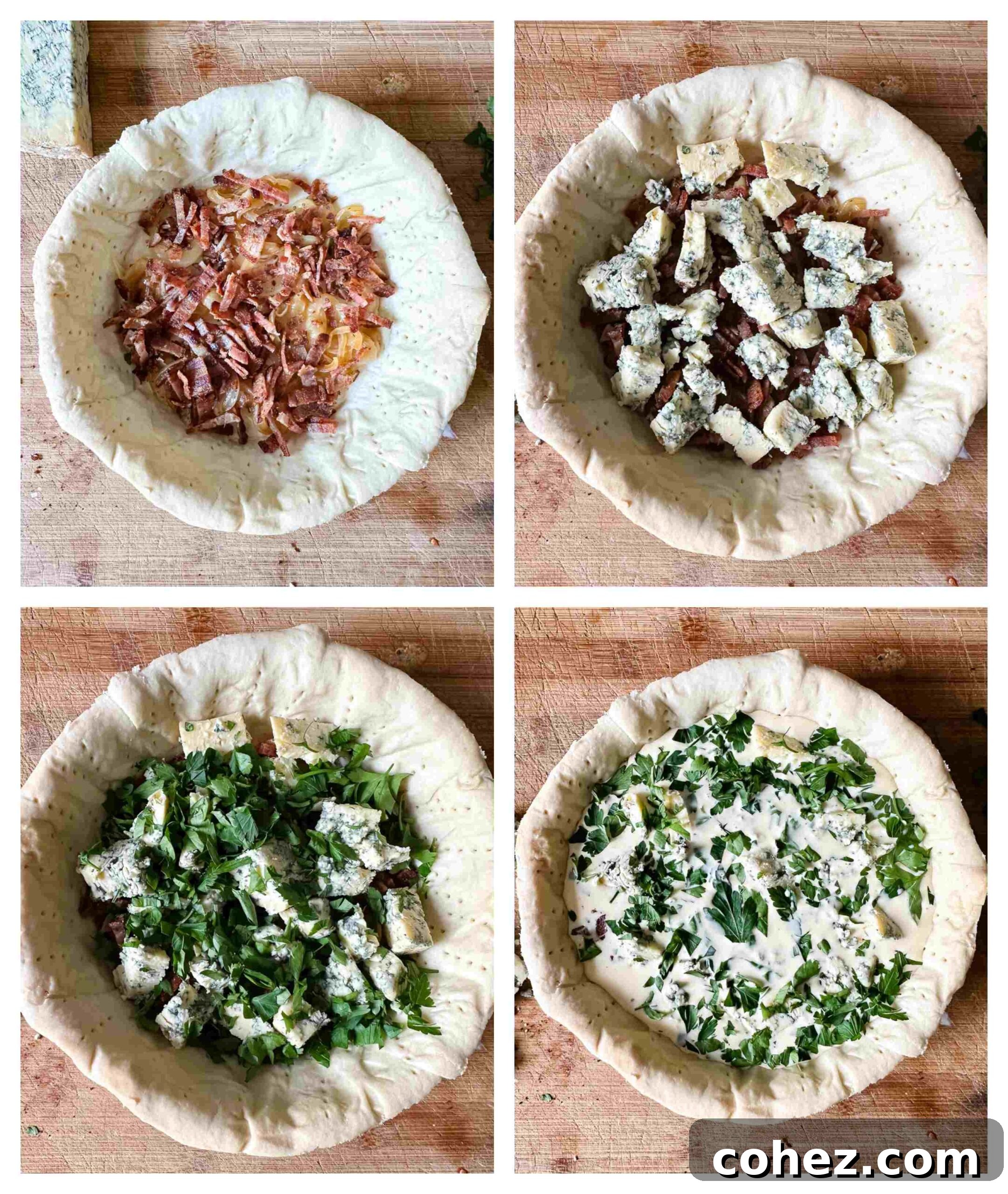
It’s time to assemble your delicious quiche. Turn the oven temperature down to 325°F (160°C). Scatter half of the crumbled blue cheese evenly over the base of the blind-baked pastry. Follow with the caramelized onions and chopped bacon, then top with the remaining cheese. Gently place the parsley sprigs directly on the cheese. Carefully pour the egg mixture over the filling, trying not to disturb the layers too much.
-
Bake in the preheated oven for 35-40 minutes, or until the filling is set and a knife inserted into the center comes out clean. Be careful not to overbake, as this can result in a dry and rubbery texture.
Video
Nutrition
Carbohydrates: 27g |
Protein: 11g |
Fat: 29g |
Saturated Fat: 17g |
Polyunsaturated Fat: 2g |
Monounsaturated Fat: 8g |
Trans Fat: 1g |
Cholesterol: 175mg |
Sodium: 893mg |
Potassium: 172mg |
Fiber: 1g |
Sugar: 2g |
Vitamin A: 1056IU |
Vitamin C: 2mg |
Calcium: 126mg |
Iron: 2mg
Nutrition information is automatically calculated, so should only be used as an approximation.