
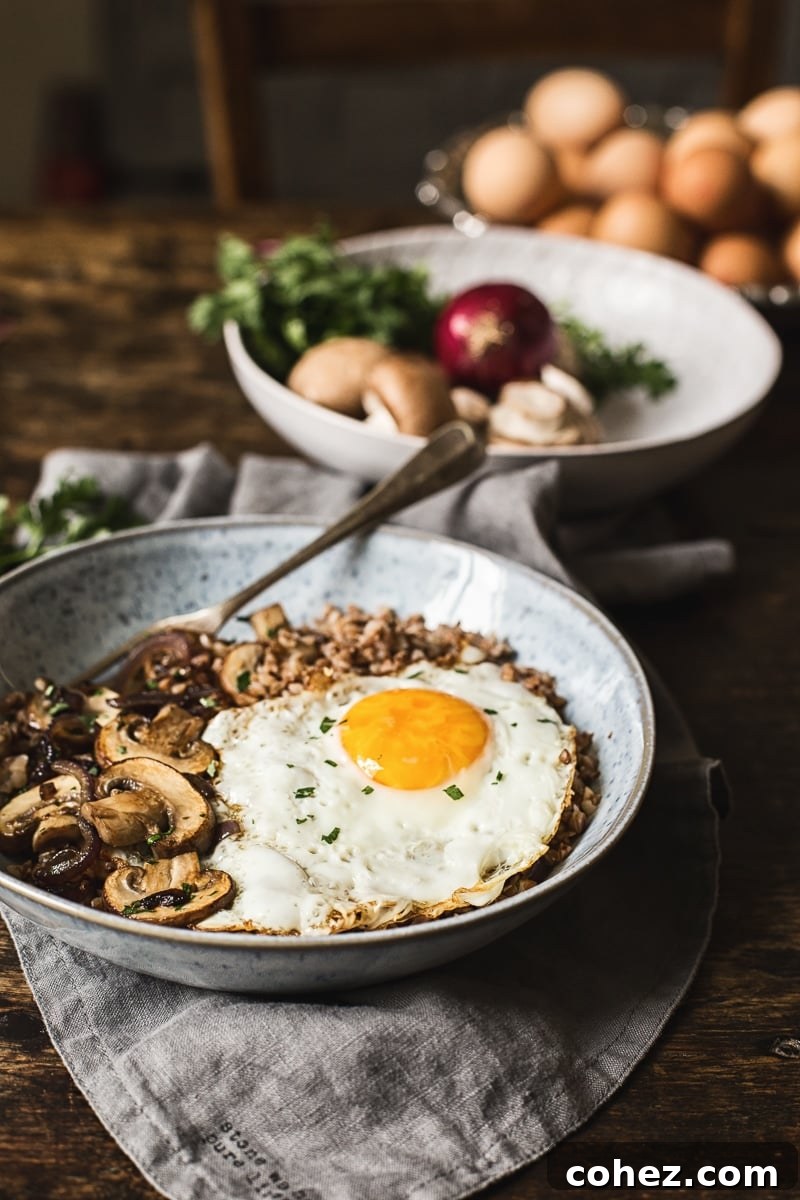
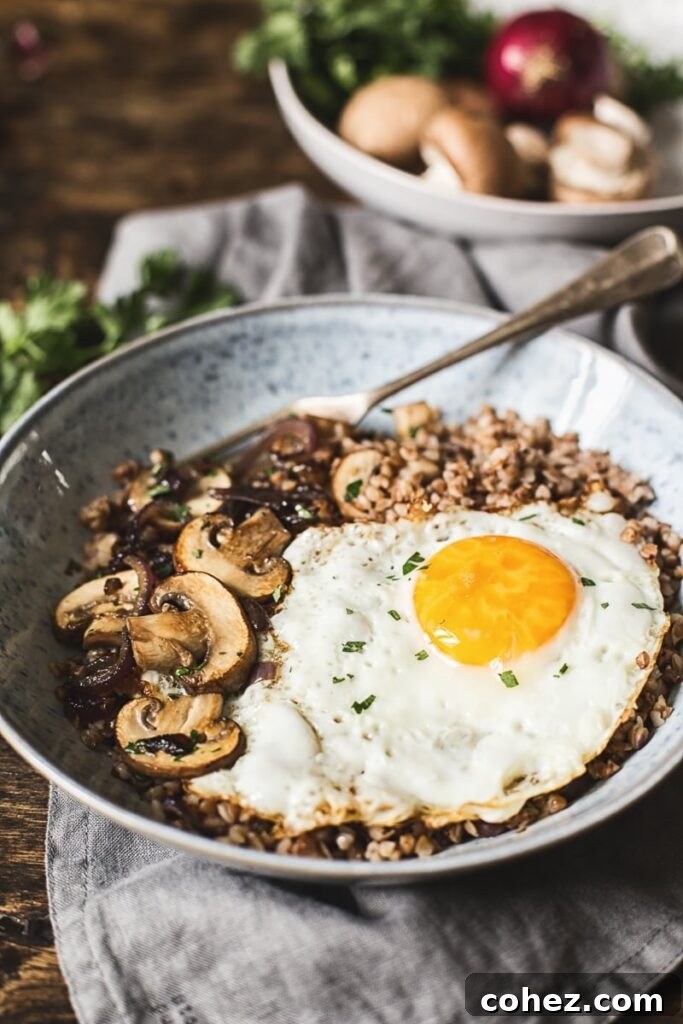
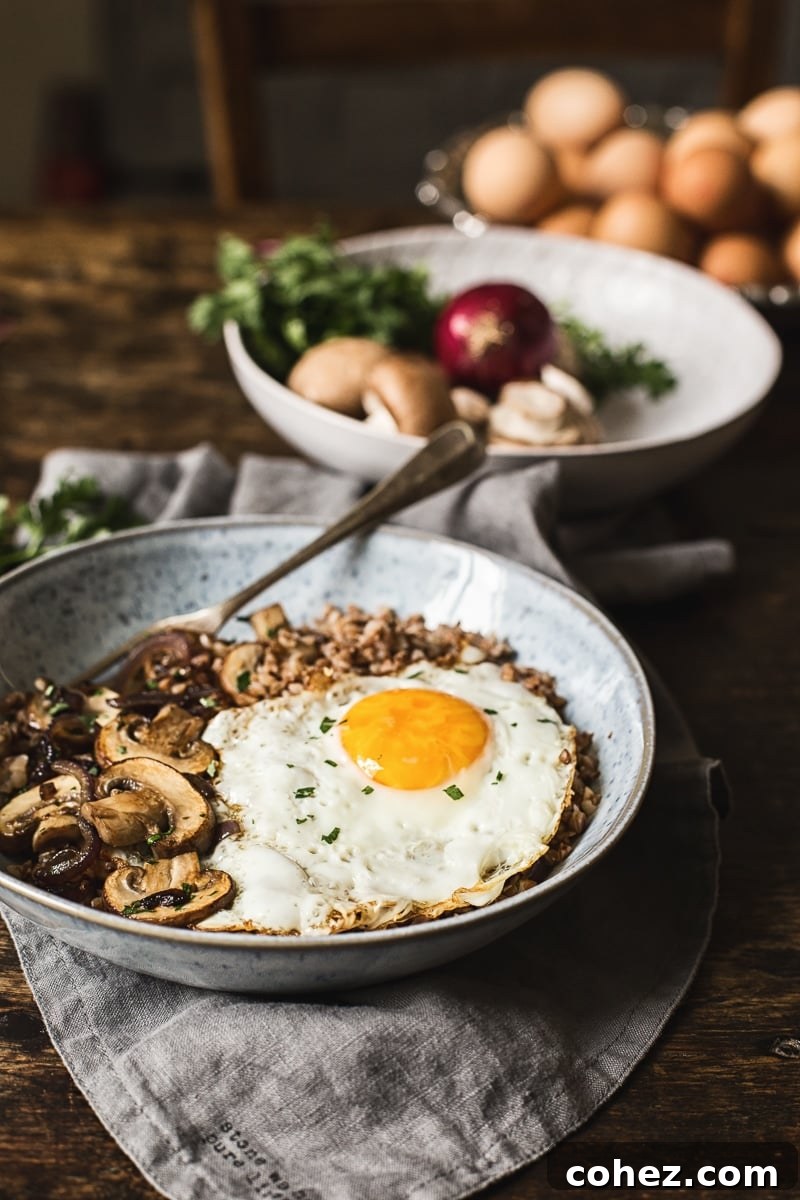
Are you tired of the same old sweet breakfast routine? It’s time to tantalize your taste buds and energize your morning with this incredibly wholesome and satisfying savoury buckwheat porridge! Imagine a warm, nutty breakfast bowl brimming with perfectly cooked buckwheat, sweet caramelized onions, earthy sautéed mushrooms, all crowned with a beautifully fried egg. This isn’t just breakfast; it’s a power-packed meal designed to fuel your day from start to finish.
For those eager to explore more buckwheat delights for breakfast, don’t miss our fantastic Buckwheat Pancakes – a lighter, yet equally delicious alternative.
A Personal Journey with Buckwheat: My Comfort Food
Buckwheat, or “kasha” as it’s lovingly known in many cultures, holds a special place in my heart. It’s more than just food; it’s a taste of childhood, a warm embrace from simpler times. I vividly recall sitting in my grandmother’s tiny, sun-filled kitchen, the aroma of freshly cooked kasha filling the air. Slurping on a warm, fluffy bowl of buckwheat drowned in cold milk is one of my earliest and fondest memories. The delightful contrast of temperatures, the creamy texture against the distinct nutty bite – it was somehow exhilarating for my five-year-old self!
This deep-rooted love for buckwheat has naturally extended to my own family. It has become a cherished staple in our household, making regular appearances at breakfast, lunch, and dinner. We truly appreciate its unique nutty flavor and the way it elevates any meal, adding a rustic depth that’s simply unmatched. This savoury buckwheat breakfast bowl is a prime example of its versatility, as buckwheat perfectly complements the rich flavors of eggs and earthy mushrooms.
Buckwheat: A Nutritional Powerhouse You Need in Your Pantry
If buckwheat isn’t already a staple in your kitchen, it absolutely should be. Often mistaken for a grain, this incredible pseudocereal is a true nutritional powerhouse, packed with benefits that contribute to overall well-being. Here are just a few compelling reasons why you should embrace this superfood:
- Not a Grain: Despite its name, buckwheat is not related to wheat and is botanically a fruit seed, akin to rhubarb and sorrel. This makes it a unique and valuable addition to a balanced diet.
- Naturally Gluten-Free: For those with gluten sensitivities or celiac disease, buckwheat is a safe and delicious option, allowing you to enjoy a wide range of dishes without worry.
- Rich in Essential Nutrients: Buckwheat is brimming with vital vitamins and minerals, including manganese, copper, magnesium, iron, and phosphorus. It also provides a healthy dose of B vitamins, crucial for energy production and nerve function.
- Complete Protein Source: Unlike most plant-based foods, buckwheat contains all nine essential amino acids, making it a complete protein. This is particularly beneficial for vegetarians and vegans looking to optimize their protein intake.
- High in Resistant Fiber: It contains a significant amount of resistant starch, a type of fiber that functions like soluble fiber, feeding beneficial gut bacteria. This helps with lowering blood sugar levels, improving digestive health, promoting satiety, and aiding in weight management.
- Heart-Healthy Benefits: The presence of rutin, a powerful flavonoid, and other antioxidants in buckwheat helps to lower cholesterol, reduce blood pressure, and improve cardiovascular health.
The list of benefits truly goes on. The bottom line is, buckwheat isn’t just incredibly nutritious; it’s also incredibly delicious and wonderfully versatile, making it an ideal choice for healthy eating.

Exploring the Varieties of Buckwheat
Buckwheat comes in several forms, each offering unique culinary possibilities. Understanding these varieties is key to unlocking its full potential in your cooking:
- Buckwheat Groats (Kasha): This is the most popular form and the star of our breakfast bowl. Groats are the hulled kernels of the buckwheat plant. They come in two primary types:
- Raw Buckwheat Groats: These are light green or tan in color, with a milder flavor and a softer texture when cooked. They are often used in sweeter preparations or for sprouting.
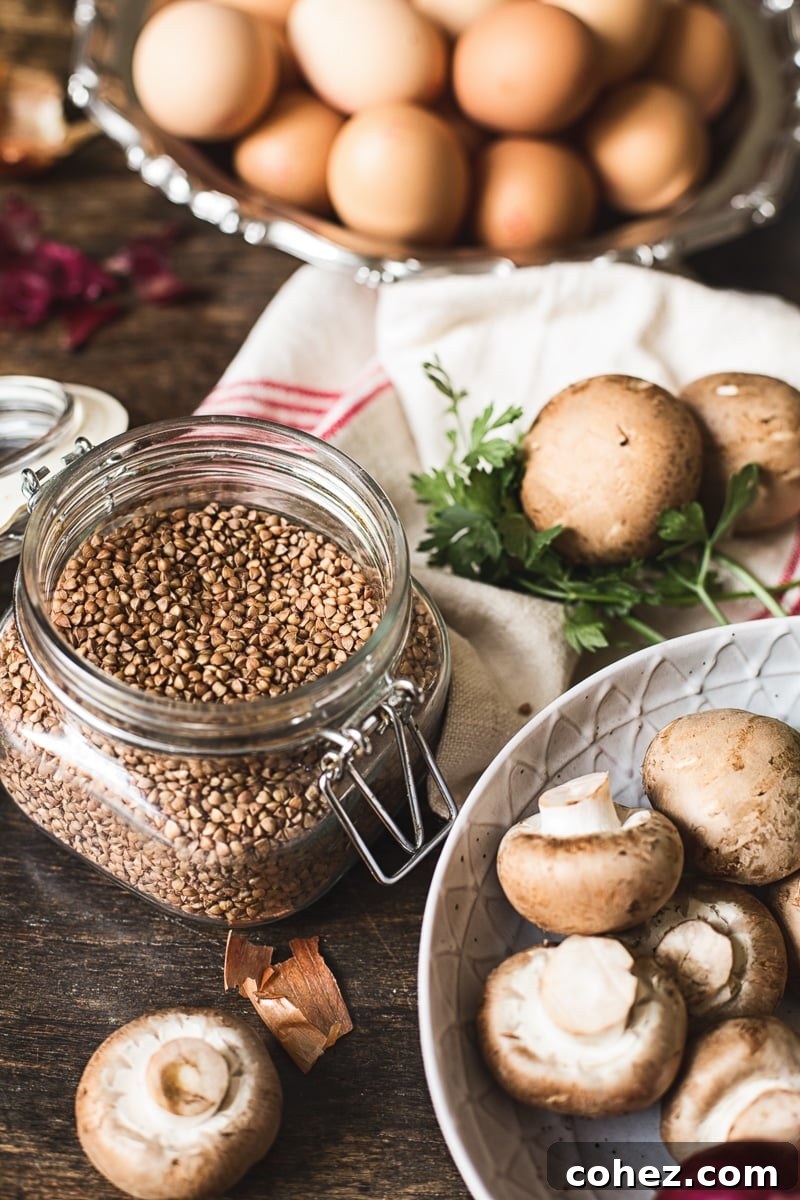
- Roasted Buckwheat Groats (Kasha): As seen in the photos throughout this article, these groats are darker in color, ranging from light brown to deep reddish-brown. The roasting process imparts a much richer, more complex, and intensely nutty flavor, along with a firmer, chewier texture. Roasting also significantly reduces the cooking time, making them a convenient choice for everyday meals. Many find the robust flavor of roasted buckwheat superior for savory dishes.
- Buckwheat Flour: Ground from buckwheat groats, this flour is naturally gluten-free and prized for its distinctive earthy flavor. It’s a fantastic alternative to wheat flour in baking, perfect for making pancakes, waffles, bread, and pastries, adding a unique depth of flavor.
- Buckwheat Noodles (Soba): A traditional Japanese noodle made from buckwheat flour, soba noodles are a healthy and flavorful addition to stir-fries, soups, and cold salads. They offer a distinct nutty taste and firm texture.
While all forms offer nutritional benefits, groats (especially the whole groats) provide the most concentrated nutrients due to being the least processed. It simply makes sense – the closer to the whole food, the better!
Sourcing Quality Buckwheat
Finding buckwheat has become easier as its popularity grows. You can typically find it in health food stores, specialty Eastern European markets, and readily online through retailers like Amazon. The roasted buckwheat groats featured in this recipe were sourced from a local Eastern European store, which often carry high-quality, authentic kasha. In my experience, these varieties often boast a superior flavor and texture due to traditional processing methods.
The deeper color of roasted groats isn’t just for aesthetics; it signifies that rich, complex flavor and a firmer texture that holds up beautifully in dishes. Moreover, it genuinely cuts down on cooking time, which is a huge bonus on busy mornings. If you have an Eastern European market nearby, I highly recommend seeking them out for your buckwheat needs. Otherwise, ordering online is a perfectly viable option to get your hands on this wonderful ingredient.
Beyond Breakfast: Buckwheat Recipes for Any Meal
While my childhood self adored buckwheat porridge with milk, my adult palate has gravitated towards more savory renditions. This shift in preference is precisely what inspired the creation of this delightful savoury buckwheat breakfast bowl. The combination of perfectly cooked buckwheat, rich caramelized onions, tender sautéed mushrooms, all topped with a perfectly fried egg, is nothing short of pure bliss. It’s a breakfast that feels indulgent yet is incredibly good for you.

But let’s be clear: buckwheat is far too versatile to be confined to just breakfast. It excels as a healthy and flavorful side dish, serving as a fantastic alternative to rice, quinoa, or potatoes. My mum, for instance, used to create the most incredible stuffing for roast chicken, blending mushrooms and buckwheat for an unforgettable flavor. It can also stand proudly as a main course.
I frequently mix cooked buckwheat with ground beef or pork, creating a hearty “fried rice” style dish that makes for a quick and satisfying dinner. Its robust nature means it holds up beautifully to other strong flavors and textures.
The true magic of buckwheat lies in its incredible adaptability. The groats can be easily ground into flour and transformed into light and fluffy pancakes, crisp waffles, delightful cakes, or even rustic bread. For a refreshing lunch, toss cooled buckwheat groats with an array of fresh vegetables and a light vinaigrette for a vibrant salad. Or, for a comforting and nutritious dinner, simply enjoy a generous plate of savory buckwheat with rich caramelised onions and sautéed mushrooms, perhaps with a sprinkle of fresh herbs.
The main takeaways for incorporating this amazing superfood into your diet are knowing the right type of buckwheat for your recipe and mastering a simple cooking method. If you’re looking for more inspiration, don’t forget to check out my unique Honey and Buckwheat Soda Bread for another exciting way to enjoy this ingredient.
Tips for Perfect Savoury Buckwheat Porridge
Achieving the ideal texture and flavor for your savoury buckwheat porridge is simple with a few key tips:
- Rinse Your Groats: Always rinse buckwheat groats thoroughly under cold running water before cooking. This removes any dust or debris and can also help reduce bitterness, especially with raw groats.
- The Right Ratio: A general rule for cooking buckwheat groats is a 1:2 ratio of buckwheat to water (or broth for extra flavor). For roasted groats, this often yields a perfectly fluffy texture.
- Don’t Overcook: Buckwheat cooks relatively quickly. Keep an eye on it to prevent it from becoming mushy. Roasted groats usually take about 15-20 minutes to cook until tender and the water is absorbed.
- Rest is Best: Just like rice or quinoa, allowing buckwheat to rest off the heat for 5-10 minutes with the lid on after cooking allows it to steam and fluff up, ensuring a better texture.
- Caramelizing Onions: Patience is key for truly delicious caramelized onions. Cook them slowly over low-medium heat, stirring occasionally, until they turn deep golden brown and sweet. This process can take 15-20 minutes, but it’s well worth the effort.
- Season Generously: Don’t forget to season your buckwheat, onions, and mushrooms adequately with salt and pepper as you cook. Taste and adjust as needed to bring out the best flavors.
- Fresh Herbs: Adding fresh herbs like parsley or dill at the end brightens the dish and adds a lovely aromatic touch.
More Breakfast Inspirations
If you enjoyed this savoury twist on breakfast, you might also love these other delightful morning recipes:
- Classic American Pancakes: A timeless favorite for a sweet indulgence.
- Breakfast Bagel Sandwich: A quick and delicious option with salmon and cream cheese.
- Millet Porridge with Honey Glazed Plums: Another wholesome grain porridge with a touch of sweetness.
- Russian Crepes Blini: Thin, delicate crepes perfect for sweet or savory fillings.
Savoury Buckwheat Breakfast Bowl

A wholesome savoury buckwheat porridge for breakfast, combining nutty groats with rich caramelized onions, earthy mushrooms, and a perfectly fried egg for a truly satisfying start to your day.
Ingredients
- 2 cups /340 g toasted buckwheat groats
- 4 cups /950ml water
- 2 tbsp butter
- 1 large onion
- 8-10 chestnut mushrooms
- 2-3 sprigs flat leaf parsley, leaves only, chopped
- 1 egg, per person
- Pepper to taste
- Salt, a pinch, plus more to taste
Instructions
-
Rinse your buckwheat groats thoroughly under cold water. Transfer the rinsed groats to a medium pot, add the measured water and a pinch of salt. Bring to a boil, then reduce heat to low, cover, and simmer for about 15 minutes, or until the groats are soft and the water has been completely absorbed. Remove the pot from the heat, keep it covered, and let it stand for an additional 10-15 minutes to allow the buckwheat to steam and fluff up.
-
While the buckwheat is cooking, prepare your vegetables. Thinly slice the onion and mushrooms. Place a large frying pan over medium-high heat. Once hot, add the butter, sliced onions, and a small pinch of salt. The salt will help draw out moisture, facilitating the caramelization process. Fry the onions slowly, stirring occasionally, ensuring they don’t burn, until they become beautifully wilted, deeply golden, and sweet (this usually takes 10-15 minutes). Once caramelized, add the sliced mushrooms and chopped parsley to the pan. Sauté for another 5-7 minutes until the mushrooms are tender and lightly browned. Season with salt and pepper to taste.
-
Gently add the cooked buckwheat groats to the frying pan with the caramelized onions and mushrooms. Mix everything together thoroughly, allowing the flavors to meld. Cook for an additional 2 minutes over medium heat to ensure all ingredients are heated through. Taste and adjust seasoning as necessary.
-
In a separate frying pan, fry eggs to your desired doneness (sunny-side up or over easy are fantastic choices). Divide the savoury buckwheat mixture among serving bowls and top each portion with a freshly fried egg. Serve immediately and enjoy!
Nutrition
Calories: 378kcal |
Carbohydrates: 65g |
Protein: 14g |
Fat: 9g |
Saturated Fat: 4g |
Cholesterol: 56mg |
Sodium: 83mg |
Potassium: 625mg |
Fiber: 9g |
Sugar: 1g |
Vitamin A: 280IU |
Vitamin C: 2.7mg |
Calcium: 42mg |
Iron: 2.3mg
Nutrition information is automatically calculated, so should only be used as an approximation.
Tried this recipe?
Let us know how it was!