
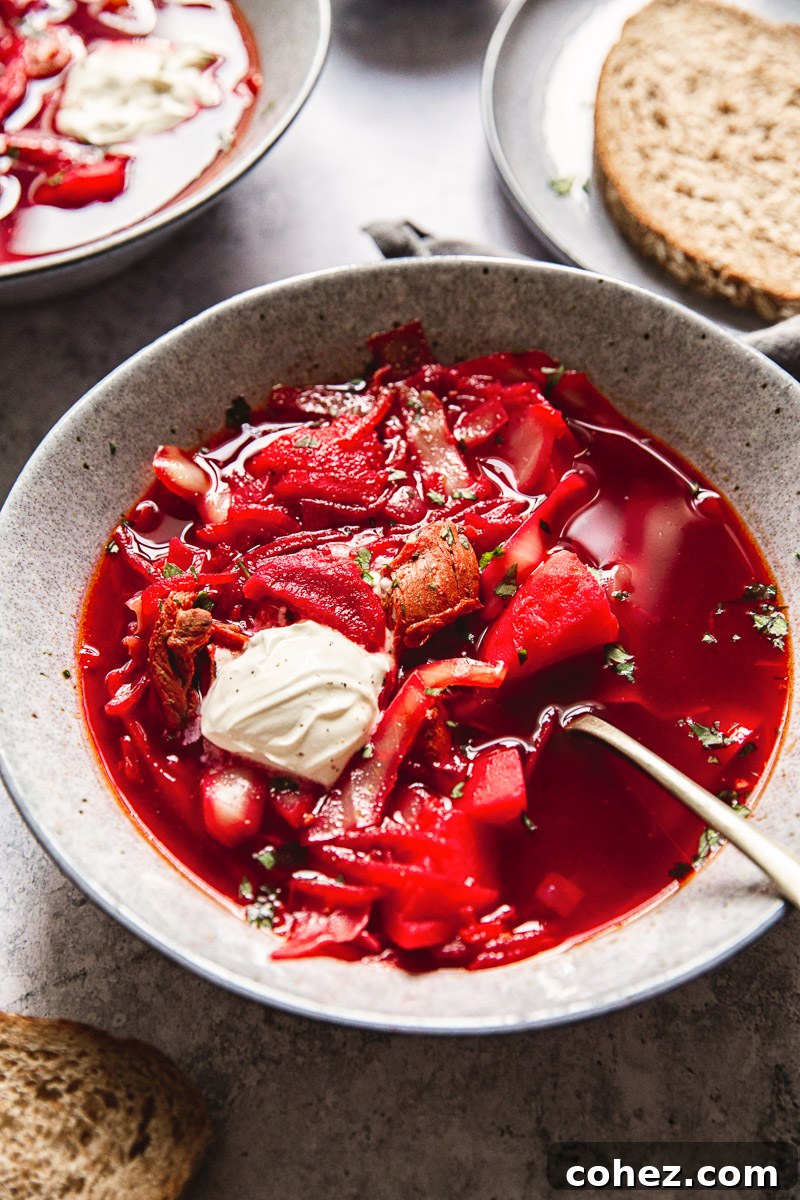
Authentic Ukrainian Borscht Recipe: A Timeless Family Heirloom
Have you ever experienced the rich, comforting embrace of genuine Ukrainian borscht? More than just a soup, this culinary masterpiece is a hearty symphony of flavors, traditionally built upon a robust beef or pork stock, infused with the earthy sweetness of beets, the crunch of cabbage, and the satisfying texture of potatoes. If you haven’t yet savored this iconic dish, you’re in for a treat. I’m thrilled to share with you the authentic recipe that has been cherished and passed down through generations in my family, a recipe that embodies the warmth and tradition of my childhood.
For those who fall in love with the soulful taste of this borscht, I invite you to explore another beloved Ukrainian classic: Potato, Bacon and Caramelized Onion Vareniki (Pierogi), a perfect complement to any Eastern European feast.
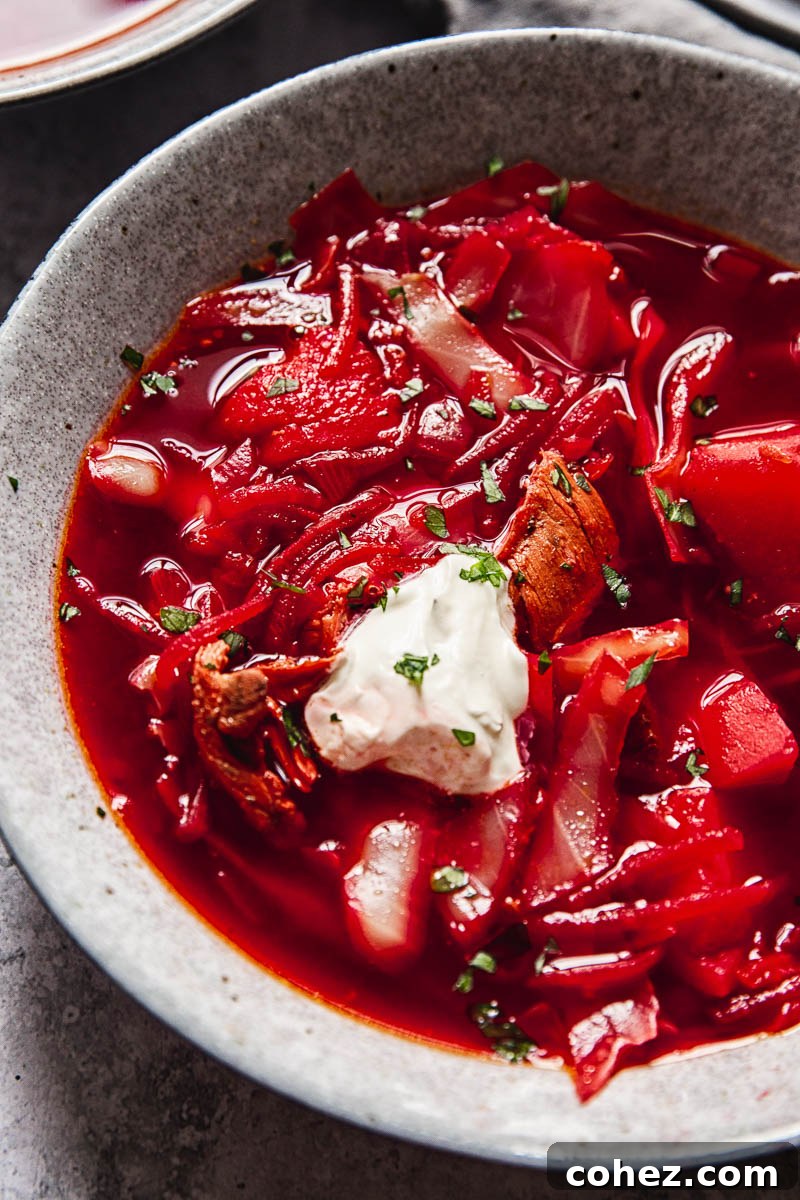
It feels incredibly significant to finally share my family’s treasured borscht recipe. This dish has been at the very top of my list since I first embarked on my culinary blogging journey years ago. The delay wasn’t due to complexity, but rather the immense respect I hold for its deep-rooted history and its profound importance in Eastern European cuisine. Crafting the perfect rendition of such a legendary soup carries a great deal of responsibility, and I wanted to ensure I did it justice.
Yet, in another sense, sharing this recipe is one of the simplest tasks. It’s a culinary legacy, woven into the fabric of my family for generations, much like our celebrated Beef Stroganoff or our comforting Cabbage Rolls (Golubtsi). It’s more than just a list of ingredients and steps; it’s a taste of home, of shared memories, and of enduring tradition.
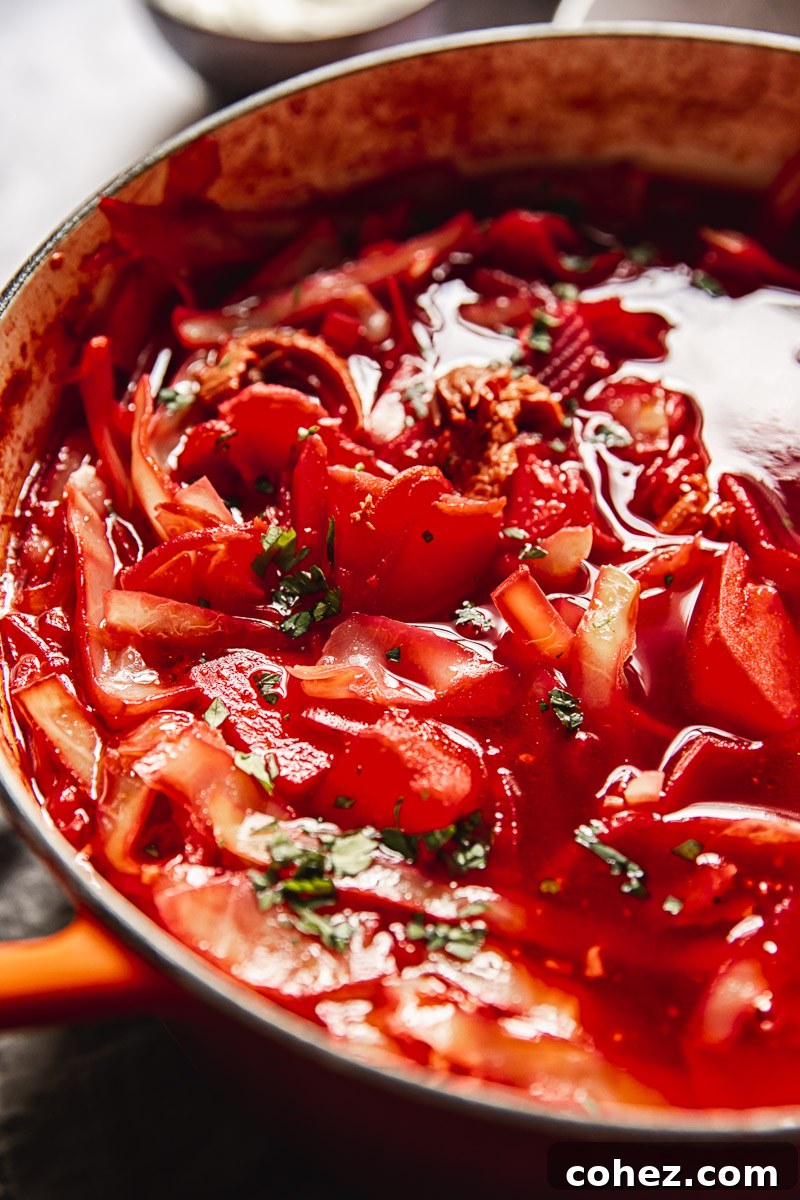
Is Borscht Russian or Ukrainian? Unraveling the Origin Story of This Beloved Soup
Before diving into the recipe, let’s address a common point of confusion and clarify its pronunciation. While often written as “borscht” in English, the more accurate pronunciation, especially in Ukrainian, is “borsch” – without the ‘t’ at the end. It’s a minor detail, but one that reflects its true linguistic roots.
Many people globally associate borscht with Russia, yet its origins are undeniably Ukrainian. Historical records indicate that this vibrant beet soup has been a staple in Ukrainian diets for centuries, deeply embedded in its cultural identity and culinary traditions. It’s recognized as the national dish of Ukraine, a symbol of its rich agricultural heritage. That said, its popularity transcended borders long ago. Russian tsars were known to enjoy it centuries ago, and today, the soup is almost as ubiquitous and cherished in Russia, Poland, and other Eastern European countries as it is in Ukraine. Each region and even each family often has its own unique twist on the classic, but the heart of the dish remains.
It’s also worth noting the diversity of borscht. For instance, a refreshing summer variation known as Green Borscht is made with sorrel. While sharing the name, it is an entirely distinct recipe with a lighter, tangier profile. Polish borscht, or barszcz, is another popular rendition, typically featuring beets but often served clear, perhaps with dumplings (uszka) for festive occasions. These variations highlight borscht’s adaptability and enduring appeal across the region.
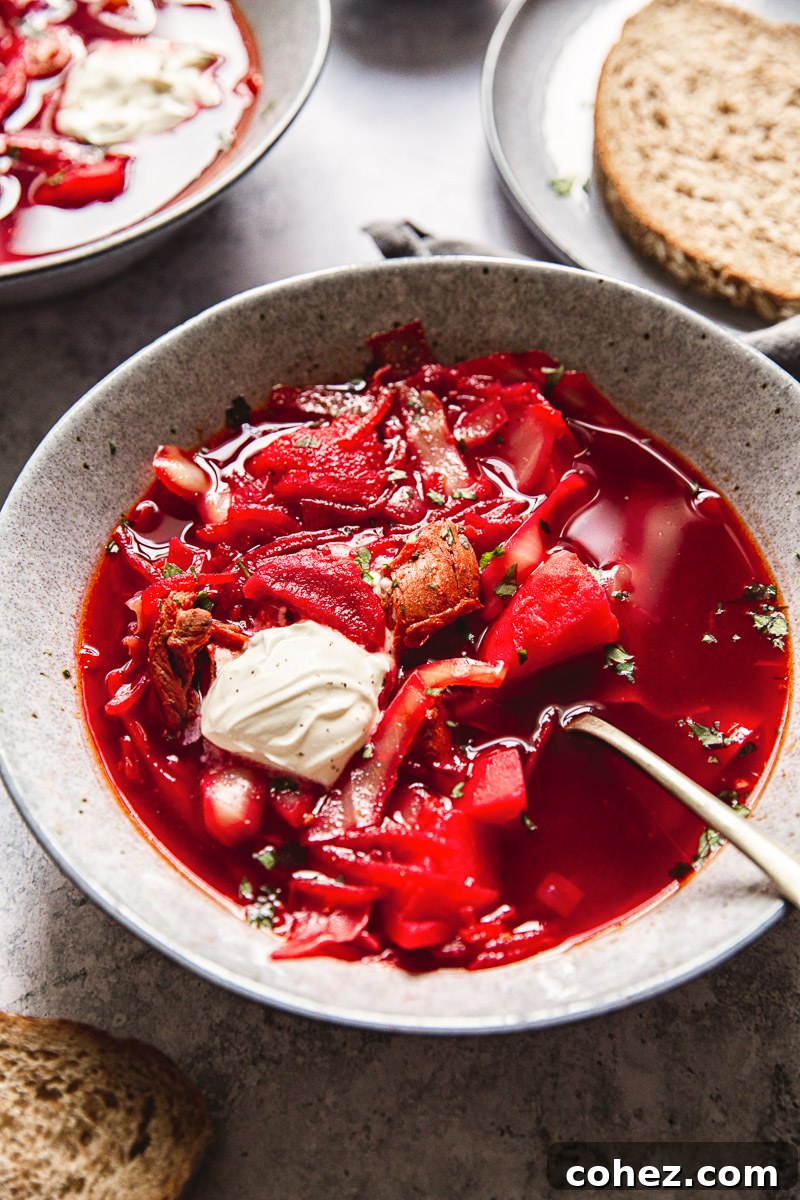
The Essential Ingredients for a Perfect Ukrainian Borscht
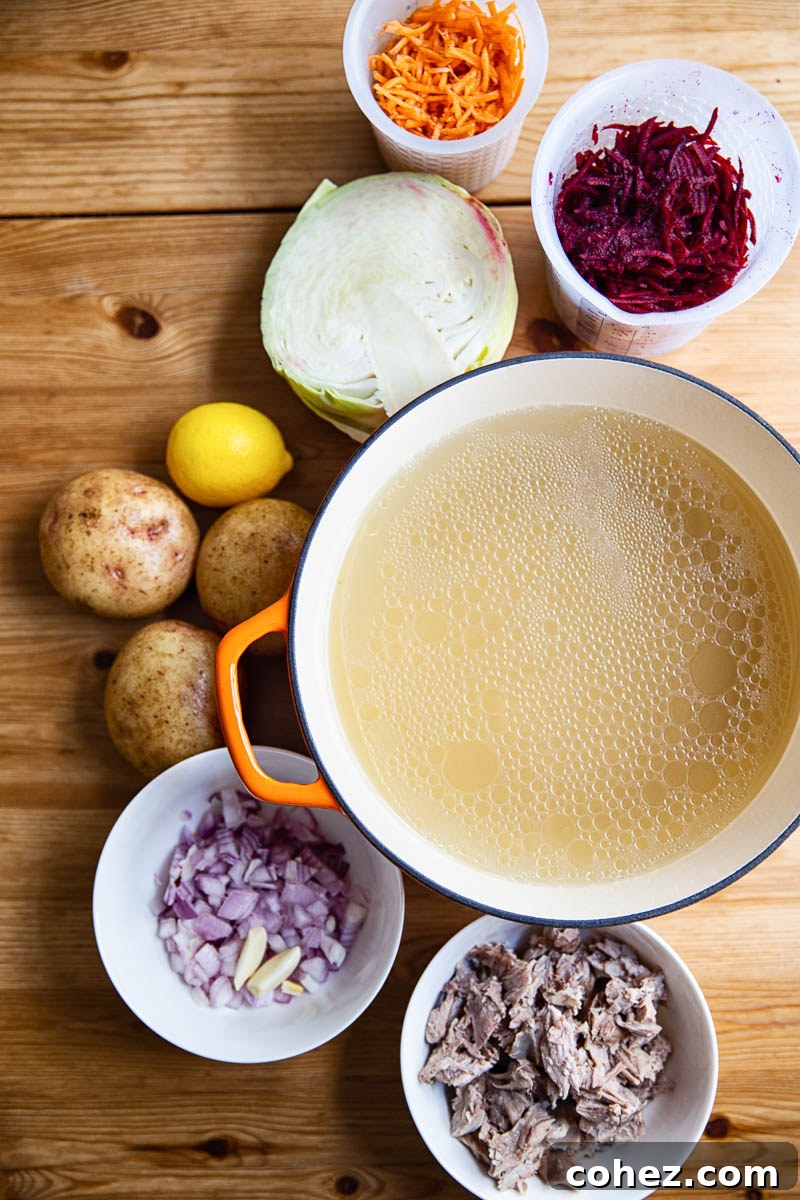
What truly goes into an authentic Ukrainian borscht? This seemingly simple question hides a delightful complexity. The truth is, borscht recipes are as varied as the households that prepare them, differing by country, region, and family tradition. However, certain core ingredients are non-negotiable; they are the heart and soul that transform a simple soup into the iconic borscht.
These foundational elements create the characteristic flavor and appearance that define this beloved dish:
- Beets: The star ingredient, responsible for borscht’s signature vibrant red color and earthy sweetness. Fresh, raw beets offer the best flavor.
- Cabbage: Adds a delightful texture and a subtle sweetness that balances the beets. Green or white cabbage is most common.
- Potatoes: Essential for body and heartiness, providing a comforting, starchy counterpoint to the other vegetables.
- Carrots: Contribute natural sweetness and depth of flavor, often sautéed to bring out their best.
- Onions: Aromatic foundation, typically sautéed to create a flavorful base.
Traditionally, borscht includes a modest amount of meat, usually beef, pork, or even chicken, with the stock made from these same ingredients. This meat provides a rich, savory depth that is characteristic of classic Ukrainian borscht. However, for those seeking a lighter or plant-based option, these core vegetables also form the basis of a delicious vegetarian borscht, showcasing the soup’s incredible versatility.
Mastering the Art of Making Ukrainian Borscht
Creating authentic Ukrainian borscht is a labor of love, but it’s a process that rewards patience with incredibly rich flavors. The journey to a perfect bowl involves two main stages: crafting a flavorful stock and then assembling the vibrant soup itself.
1. Crafting the Perfect Stock: The Soul of Your Borscht
Every magnificent edifice begins with a strong foundation, and every truly delicious soup starts with an exceptional stock. Making a flavorful, clear stock is arguably the most time-consuming part of this recipe, but it’s far from difficult. It simply requires a gentle simmer and a bit of patience. The depth of flavor that a homemade stock brings to borscht is unparalleled, transforming it from a good soup into an extraordinary culinary experience.
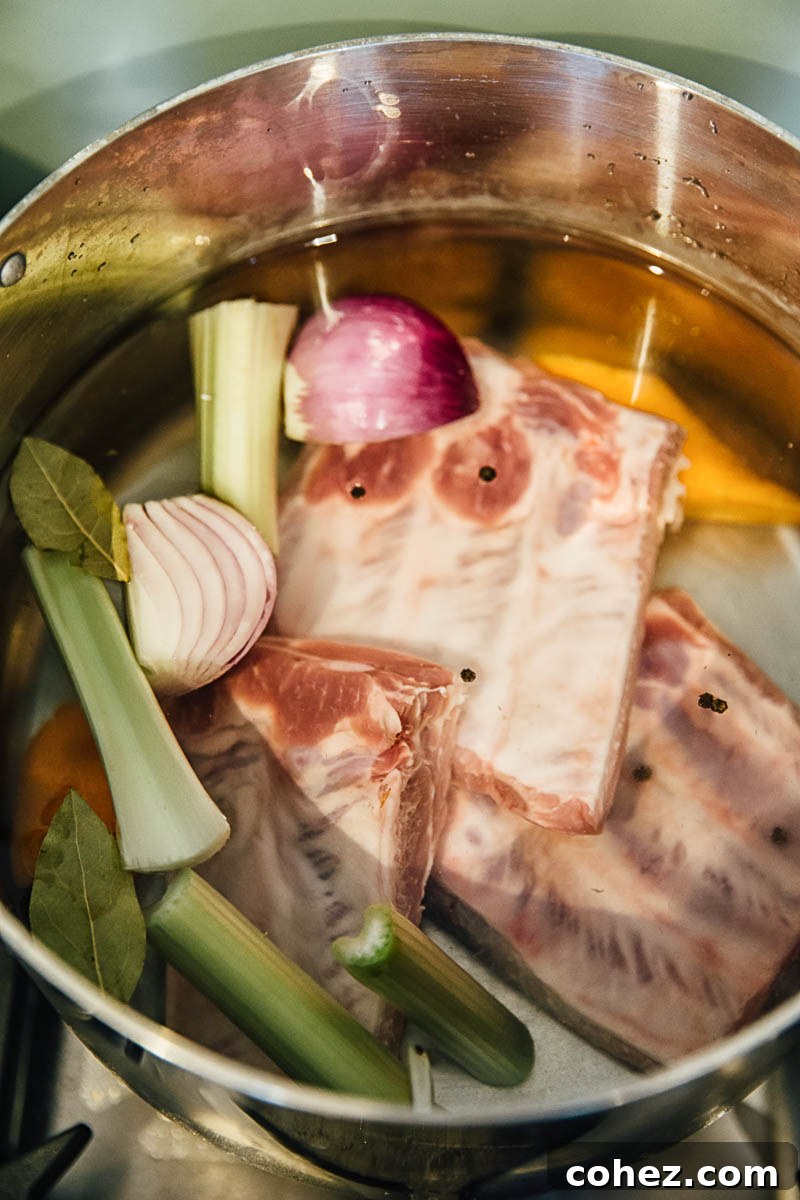
For the richest taste, always opt for meat on the bone, such as pork ribs or beef bones with some meat attached. These bones release gelatin and marrow, which impart a deeply savory quality to the broth. Alongside the meat, simple aromatic vegetables like onions, carrots, and celery are crucial. My mother and grandmother always added bay leaves and black peppercorns, a practice I continue faithfully, as these humble spices infuse the stock with a subtle yet indispensable aroma. If you wish to lean into even more traditional methods, consider using celery root (celeriac) instead of celery stalks for the stock. While celery root can be a bit more challenging to find outside of Eastern Europe, its unique flavor profile adds an authentic touch. However, common celery stalks are a perfectly acceptable and delicious substitute.
Allow the stock to simmer slowly for at least 1 to 1.5 hours, or even longer, until the meat is tender and almost falling off the bone. During this process, remember to regularly skim off any foam or impurities that rise to the surface. This step is vital for achieving a clear, clean-tasting broth that forms the perfect canvas for your borscht.
2. Assembling the Iconic Red Soup: Step-by-Step Guide
Once your rich, aromatic stock is prepared and clarified, the actual assembly of the borscht itself is surprisingly quick, typically taking no more than 30 minutes. If time is a constraint, don’t hesitate to prepare the stock the night before or even use a high-quality store-bought beef or chicken broth as a convenient alternative. However, for that truly authentic depth, a homemade stock is always recommended.
You don’t need advanced culinary techniques to create an authentic borscht. The key lies in adding your vegetables in a specific sequence, ensuring each ingredient cooks perfectly and contributes its best to the overall flavor and texture. For example, potatoes, which require more cooking time, are added earlier, while cabbage, which softens relatively quickly, is introduced towards the end to maintain a pleasant texture.
A crucial step in Ukrainian and Russian cooking is preparing the “zazharka.” This involves sautéing grated carrots and chopped onions in sunflower oil or butter until they are beautifully soft and golden. This slow sautéing process caramelizes the vegetables, intensifying their sweetness and creating a rich, savory base for the soup. This flavorful mixture is then added to the borscht towards the end of the cooking process. While some cooks also sauté the beets separately, this step often adds unnecessary complexity without significantly enhancing the flavor. In my family’s tradition, we find that adding raw grated beets directly to the simmering soup imparts the best color and fresh, earthy taste without extra fuss.
Finally, a splash of lemon juice or white vinegar is added at the end. This isn’t just for tang; the acidity helps to preserve the beets’ vibrant red color, preventing it from turning dull during cooking. Season generously with salt and pepper to taste, ensuring your borscht has a perfectly balanced flavor profile.
Expert Tips for the Best Ukrainian Borscht
Recipe Tips and Notes
- Stock Quality is Key: While I always advocate for making your own stock for unparalleled flavor, if you’re pressed for time, a good quality beef or chicken broth from the supermarket can be a decent substitute. Aim for about 2 liters (8 cups) for this recipe.
- Choose Your Beets Wisely: Raw beets will deliver the most authentic and robust flavor, along with the most vibrant color. Pre-cooked, vacuum-packed beets are a convenient alternative, but always avoid canned beets, as their flavor and texture are not suitable for traditional borscht.
- Potato Prep: Cut your potatoes into generous, 2-inch chunks. This helps them maintain their integrity and prevents them from becoming mushy during the simmering process, ensuring a satisfying texture in every spoonful.
- Customization is Welcome: Borscht is a wonderfully versatile soup. In the summer, my mother often added red or yellow bell peppers for extra sweetness and color. Dried beans can be thrown in for added protein or as a delicious substitute for meat in a vegetarian version. Dried mushrooms are another popular addition, lending a deep umami flavor. Feel free to experiment with seasonal vegetables or ingredients you love.
- The Sour Cream Secret: Borscht truly comes alive with a dollop of “smetana,” or sour cream. Its creamy tang cuts through the richness of the soup, adding a layer of indulgence. Remember, always serve sour cream on the side, allowing each person to add it to their own bowl. Never add it directly to the pot, as it can curdle.
- Fresh Herbs for Garnish: A sprinkle of fresh herbs like dill or parsley is not just for decoration; it’s a traditional garnish that adds a burst of freshness and a beautiful green contrast to the deep red soup.
- Acidity for Color: The lemon juice or white vinegar added at the end is crucial. It brightens the flavor and, importantly, helps to fix the vibrant red color of the beets, preventing them from turning a dull brown.
- Taste and Adjust: Always taste your borscht before serving. Adjust salt, pepper, and acidity as needed. It should be well-seasoned and have a slight tangy note.
Serving Ukrainian Borscht: Traditions and Modern Touches
Historically, in Ukraine and Russia, borscht is often served as the first course of a multi-course lunch, followed by a second course of “meat and potatoes” (though this term loosely refers to any substantial main dish) and concluding with something sweet. This grand traditional meal reflects a bygone era where hearty midday meals were the norm.
In today’s fast-paced world, not many people have the time or appetite for such an extensive meal. Consequently, borscht has largely evolved to become a satisfying meal in itself, enjoyed as a standalone dish that is both nourishing and deeply comforting. Regardless of whether it’s part of a larger feast or the star of the show, its accompaniments remain consistent and essential to the authentic experience.
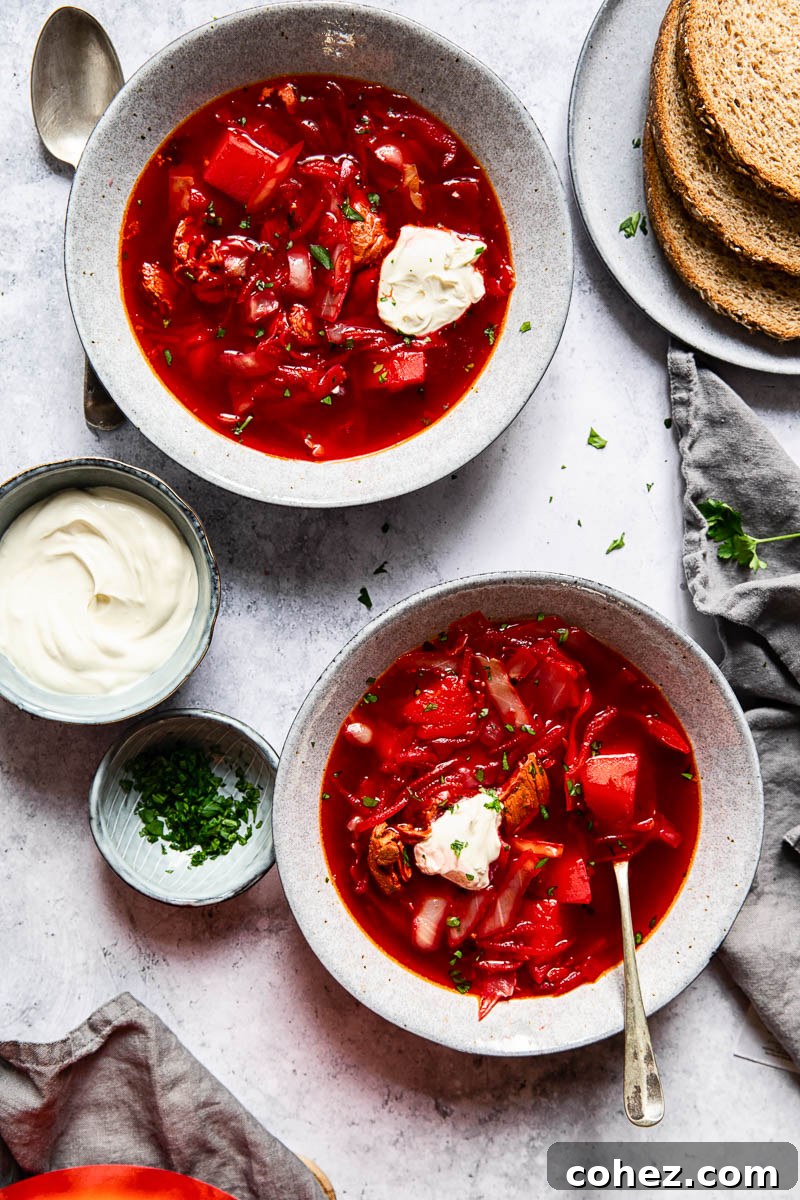
Borscht is almost invariably served with a generous dollop of smetana (sour cream) and a sprinkle of freshly chopped herbs, typically dill or parsley. The cool, tangy sour cream provides a delightful contrast to the warm, savory soup, while the fresh herbs add a burst of color and aroma. A slice of hearty, fresh bread, such as rustic sourdough or dense rye bread, is also an indispensable companion, perfect for soaking up every last drop of the delicious red broth. For an extra kick, a side of pampushky (garlic bread rolls) is a traditional and highly recommended addition.
Storage, Leftovers, and Freezing Borscht
One of the many wonderful qualities of borscht is how well it keeps, often tasting even better the next day as the flavors have more time to meld and deepen. If sour cream has not been added to the entire pot, any leftover soup can be securely covered and stored in the refrigerator for 2-3 days. Reheating it gently allows the ingredients to further harmonize, creating an even more complex and satisfying experience.
Borscht can also be frozen for longer storage, typically keeping well for 2-3 months. However, it’s worth noting that potatoes, unfortunately, don’t fare perfectly through the freezing and defrosting process; they tend to become a bit softer and slightly mushy. If you plan to freeze large batches, you might consider adding the potatoes when reheating the defrosted soup, or simply accepting the textural change. To reheat leftovers, simply warm them gently in a microwave or, preferably, in a saucepan over medium heat until heated through, stirring occasionally.
More Eastern European Soup Recipes
- Restaurative Beef and Cabbage Soup ‘Shchi’
- Russian sweet and sour beef stew Solyanka
- Meatball soup
- Yellow Split Pea Soup
Authentic Ukrainian Borscht Recipe
By Julia Frey of Vikalinka
Prep: 30 mins | Cook: 2 hrs 20 mins | Total: 2 hrs 30 mins | Servings: 8
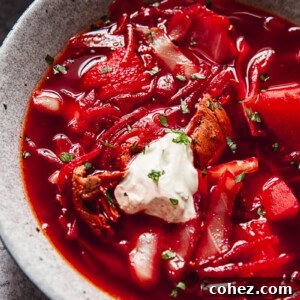
This authentic Ukrainian borscht recipe features a rich, meat-based broth, vibrant beets, tender cabbage, hearty potatoes, and sweet carrots, traditionally served with a dollop of sour cream.
Equipment
- Stock pot
- Large soup pot
- Large pan for sautéing
- Grater
- Slotted spoon
- Sieve
Ingredients
For the stock
- 3 litres / 3 quarts cold water (see Notes for alternative)
- 600g / 1½ lbs pork ribs or beef attached to a bone
- 1/2 onion
- 1 carrot
- 2 celery sticks
- 2 bay leaves
- 5 peppercorns
- 1 tsp salt
For the borscht
- 2 medium beets, peeled and grated
- 3 medium potatoes, peeled and cut into 2 inch chunks
- 2 medium carrots, grated
- 1 medium onion, chopped
- 2 cloves garlic, minced
- 1 bay leaf
- 3 tbsp tomato puree/paste
- 1/2 small white cabbage, cored and sliced
- Juice of 1 lemon, or 1 tsp of white vinegar
- Salt to taste
- Pepper to taste
- Fresh dill or parsley for garnish (optional)
- Sour cream or creme fraiche for serving (optional)
Instructions
For the stock
- In a large stock pot, combine the cold water, pork ribs (cut into smaller chunks to fit the pot), quartered half onion, celery sticks and carrot cut in half, bay leaves, peppercorns, and a pinch of salt.
- Bring the mixture to a boil, then immediately lower the heat to a gentle simmer. Cook for 1 to 1.5 hours, or until the meat is very tender and nearly falling off the bones. During simmering, use a slotted spoon to regularly remove any scum that rises to the surface.
- Once the stock is done, let it cool slightly. Carefully remove the ribs to a separate plate. Strain the stock by pouring it through a fine-mesh sieve into another pot or large bowl. Discard the cooked vegetables.
- When the cooked meat is cool enough to handle, remove it from the bones and shred it using two forks or your hands. Set the shredded meat aside until needed. Discard the bones. The finished stock can be prepared in advance and frozen for later use.
For the borscht
- Before you begin cooking the soup, prepare all your vegetables: peel and grate the beets and carrots separately, chop the onions, peel and cut the potatoes into 2-inch chunks, and core and slice the cabbage. Having all vegetables prepped will make the soup assembly smooth and efficient.
- Pour the strained stock into a large soup pot. Add the shredded cooked meat, grated beets, cut potatoes, tomato puree, a pinch of salt, and one bay leaf. Bring the soup to a boil, then reduce the heat to a simmer.
- Meanwhile, in a separate pan, heat 1 tablespoon of vegetable oil over low heat. Add the grated carrots and chopped onions and sauté for 7-10 minutes until they are soft and caramelized. Then, add the minced garlic and stir-fry for an additional 30 seconds until fragrant. This is your “zazharka.”
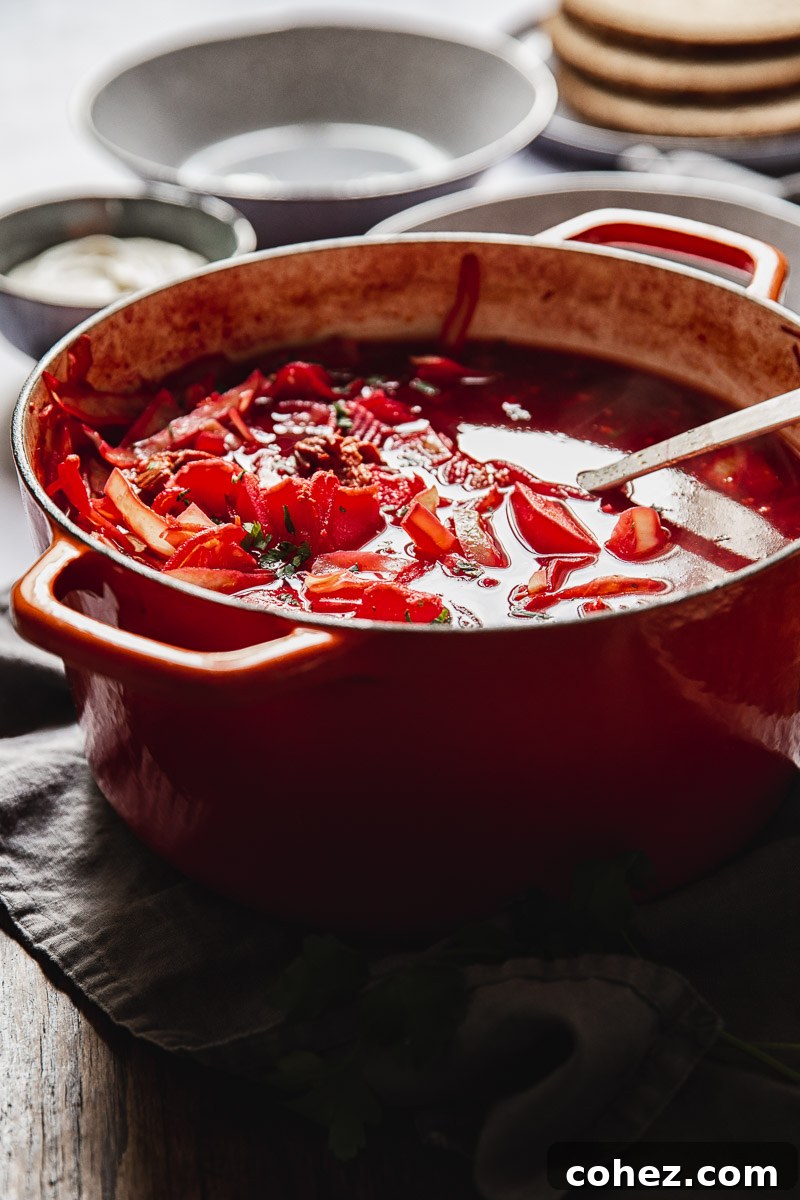
- Once the sautéed onions and carrots (zazharka) are ready, add them to the simmering soup pot, along with the sliced cabbage. Continue to cook for another 15 minutes, or until the cabbage leaves are tender but still retain a slight bite (not mushy).
- Finally, stir in the juice of one lemon or 1 teaspoon of white vinegar. This helps brighten the flavor and preserve the beets’ vibrant red color. Season the soup with additional salt and pepper to taste.
- Serve your authentic Ukrainian borscht hot, with a generous dollop of sour cream or crème fraîche, and a sprinkle of fresh dill or parsley. Enjoy!
Notes
- Alternatively, you can skip making your own stock and purchase a good quality beef or chicken broth from a supermarket. Use 2 litres / 8 cups of chicken or beef stock for this recipe.
Nutrition
Calories: 237kcal | Carbohydrates: 21g | Protein: 10g | Fat: 12g | Saturated Fat: 4g | Cholesterol: 42mg | Sodium: 404mg | Potassium: 722mg | Fiber: 3g | Sugar: 5g | Vitamin A: 1335IU | Vitamin C: 20.4mg | Calcium: 49mg | Iron: 1.6mg
Nutrition information is automatically calculated, so should only be used as an approximation and can vary based on ingredients and preparation.