
The Ultimate Greek Moussaka Recipe: A Culinary Masterpiece
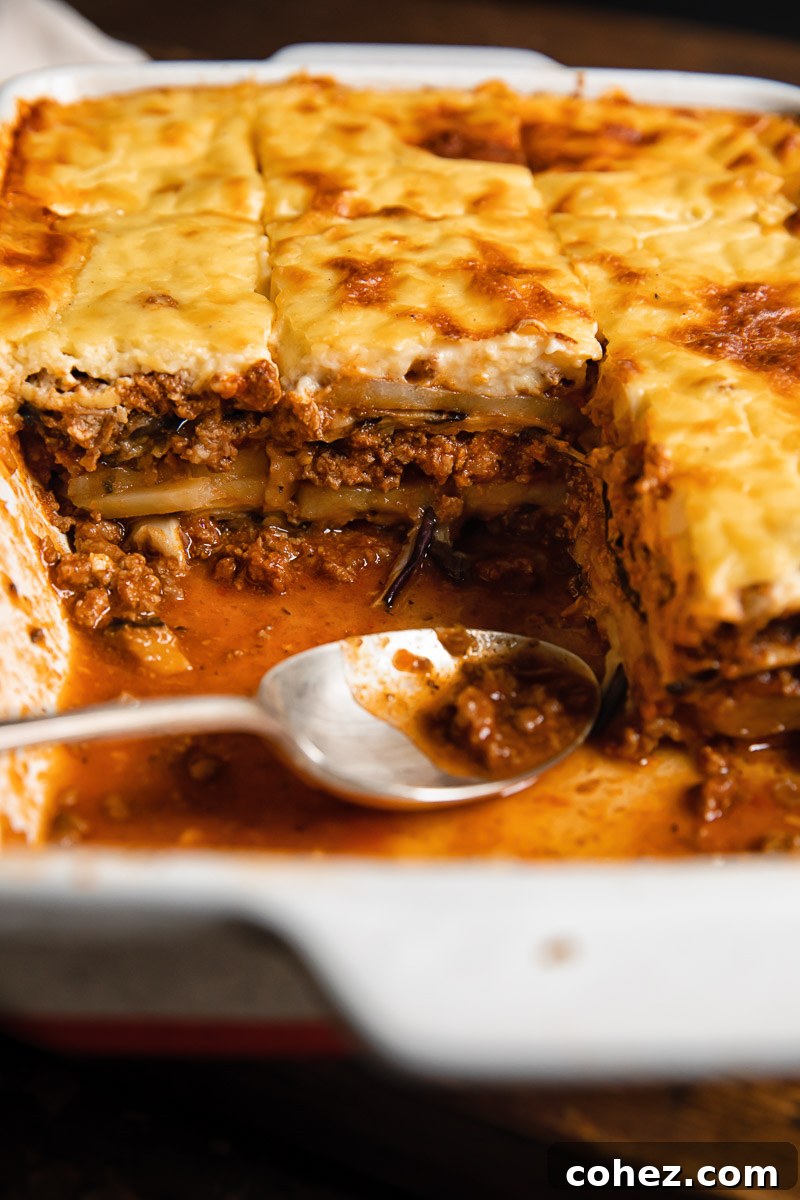
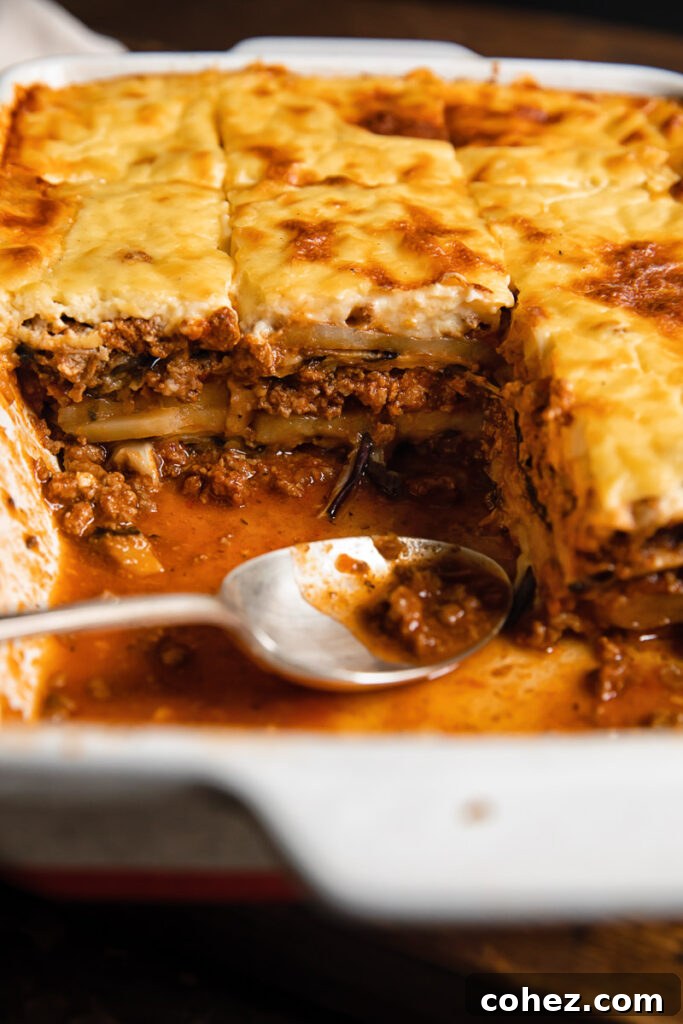
Moussaka stands as a true culinary marvel, a dish of epic proportions that captivates with its intricate layers and harmonious flavors. It’s a symphony of richly spiced meat and tomato sauce, tender olive oil-kissed potato slices, velvety eggplant, all crowned with a smooth, creamy béchamel. Designed to serve up to 12 people, this magnificent creation is perfect for grand occasions, ensuring every guest is thoroughly satisfied.
For those seeking an equally impressive yet lighter alternative, my vegetarian moussaka offers a delightful meat-free experience. Crafted with earthy green lentils instead of traditional lamb, it’s a wholesome and nutty rendition that is also marginally quicker to prepare.
A Journey Through Time: The History of Moussaka
When the word ‘moussaka’ is uttered, most immediately conjure images of Greece, often considering it the unofficial national dish. However, the moussaka we know and love today, particularly the version featuring potatoes and béchamel, is a relatively recent adaptation in Greek culinary history, gaining widespread popularity and being refined for European palates in the 1920s.
The true origins of moussaka are far more ancient and geographically diverse. Its earliest recorded form hails from a 13th-century cookery book in Baghdad, showcasing its deep roots in Middle Eastern cuisine. This initial version was a simpler, yet profoundly flavorful, dish that captivated diners long before it reached the shores of Greece.
Variations of this ancestral moussaka can still be found throughout the Levant. In these warmer climates, the recipe is often streamlined, focusing primarily on the signature layers of tender eggplant slices and a fragrant, hearty meat-and-tomato sauce. Notably, these Levantine interpretations typically omit potatoes and béchamel, and are often enjoyed chilled, offering a refreshing contrast to their warmer, richer Greek counterparts.
The Greek iteration of moussaka, with its added layers of potatoes and creamy béchamel, evolved to become a more comforting and substantial meal, perfectly suited for cooler climates. The early 20th century saw the introduction of the satisfying potato layer, followed by the luxurious, ‘comfort blanket’ béchamel topping. These additions made moussaka more familiar and palatable to Western tastes, solidifying its place on menus and in homes across Greece and beyond.
Having lived in a region where summer temperatures rarely climb above 21°C (69°F) and winters hover around a crisp 5°C (41°F), my personal culinary journey with moussaka has always gravitated towards the Greek style. Its warming blend of cinnamon and allspice-infused meat sauce, combined with the thick, creamy béchamel and satisfying layers of potato and eggplant, creates a dish that truly warms you from the inside out. This robust, layered casserole isn’t just a meal; it’s an experience, a testament to the art of slow cooking and the joy of shared food.
Mastering Moussaka: Essential Tips and Notes
Recipe Tips and Notes
Embarking on the creation of moussaka is an culinary adventure, demanding patience and a willingness to engage in a multi-staged cooking process. It’s an involved endeavor that will likely result in a fair bit of washing up, but rest assured, it’s remarkably forgiving and the exceptional results are profoundly rewarding.
- I often reserve moussaka preparation for a leisurely weekend when my schedule is clear, or for a cherished family gathering. It serves as a fantastic, hearty alternative to a traditional roast dinner.
- Before you even begin, take the time to read through the entire recipe from start to finish. This comprehensive overview will familiarize you with each component and provide a realistic sense of the time commitment. Understanding the full scope allows you to strategically plan, perhaps even spreading the preparation over two days to ease the workload.
- For a less stressful approach, consider preparing the eggplant and potato layers the day before. These steps can be time-consuming, and tackling them in advance significantly lightens the load on the main cooking day.
- For ultimate convenience, you can also prepare the meat sauce and béchamel sauce a day ahead. This leaves only the assembly and final baking for the day you plan to serve, streamlining the process considerably.
- While lamb is the traditional choice for moussaka, ground beef can be used as a delicious substitute if it better suits your preference or availability. Both meats absorb the rich spices beautifully.
- When selecting eggplants, opt for medium-sized ones that aren’t overly large. Slice them lengthways into even, ¼-inch thick pieces to ensure uniform cooking and a presentation reminiscent of lasagna sheets. Even slicing is key to prevent some pieces from being undercooked or overcooked.
- To prepare the vegetables for roasting, I find a light coating of oil with a cooking spray to be efficient. Alternatively, you can brush them with olive oil using a pastry brush. A sprinkling of salt before grilling or broiling enhances their flavor and texture.
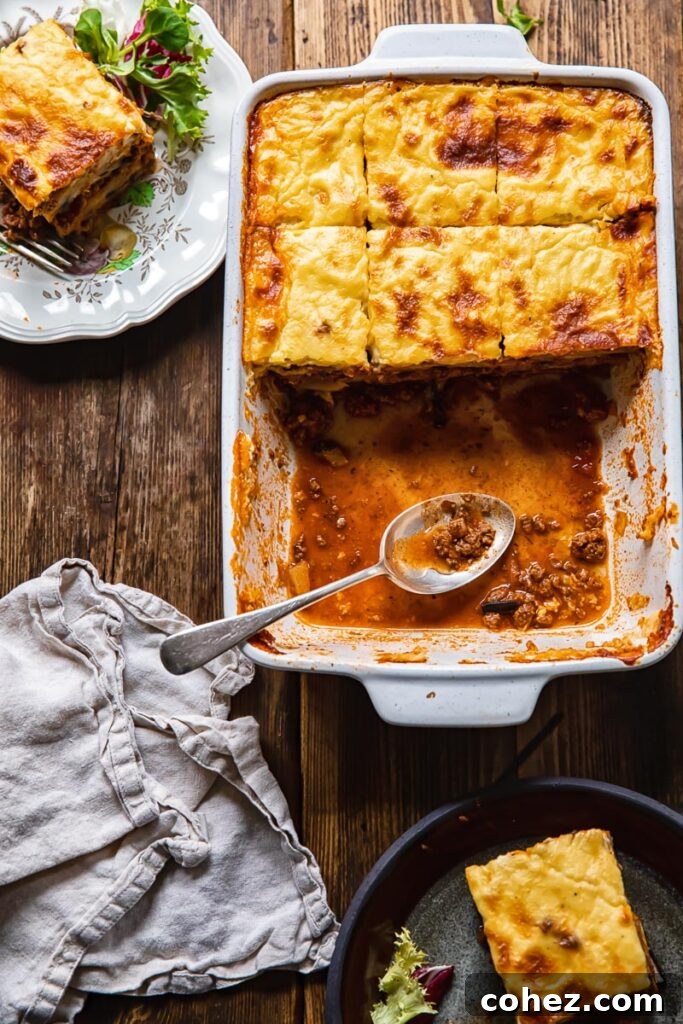
- The béchamel layer is crucial. Once the moussaka is baked, the béchamel should be perfectly set, firm yet supple, like a delicate custard. This indicates it’s cooked through and will hold its structure beautifully.
- Patience is a virtue, especially after baking. Allow the finished moussaka to rest for at least 20 minutes before attempting to slice and serve. This resting period is vital; it allows the layers to settle and solidify, ensuring you can cut neat, impressive portions rather than a cascade of merging sauces and floating vegetable pieces.
Completing the Feast: Serving Suggestions
Moussaka, a truly titanic meal in itself, encompassing meat, vegetables, and potatoes in one grand dish, often leaves little need for extensive accompaniments. Its richness and complexity are satisfying enough. However, I consistently find that this luxurious lamb moussaka is perfectly balanced by a fresh, vibrant green side salad. The crisp, cool greens provide a refreshing counterpoint to the warm, savory layers of the casserole.
For those special occasions when you truly wish to impress dinner party guests, transform your table into a spread of Mediterranean delights. Alongside the star moussaka, consider adding a pot of cool, creamy Greek tzatziki, its tanginess cutting through the richness beautifully. Warm, soft flatbreads are perfect for scooping up any delicious remnants, and a platter of savory feta and zucchini fritters will add another layer of texture and flavor, elevating the entire dining experience to an unforgettable feast.
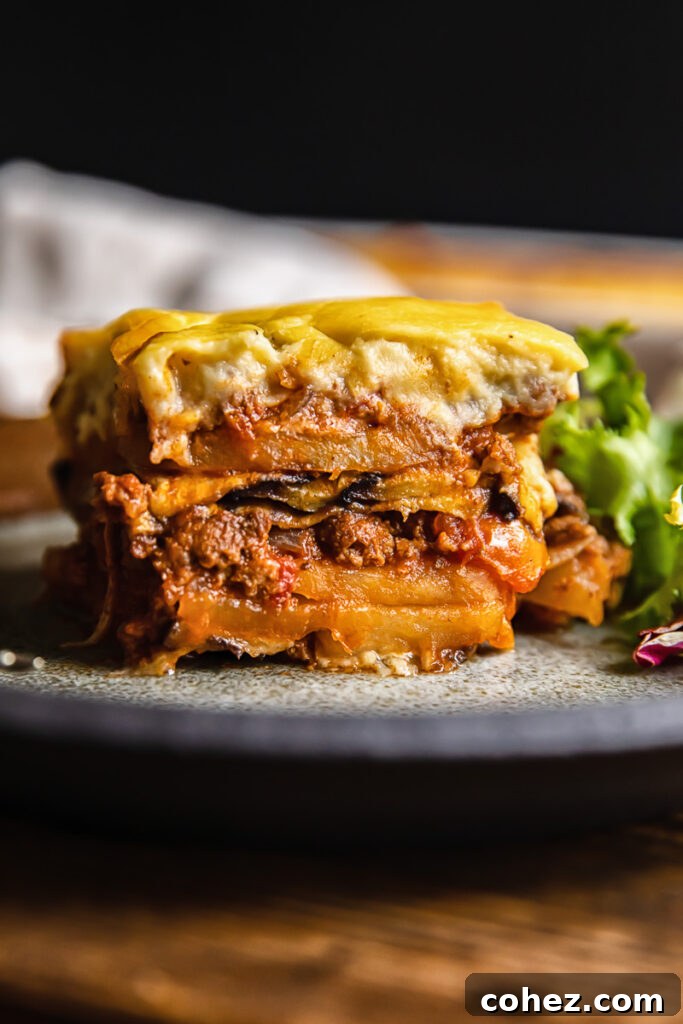
Flexible and Delicious: Storage and Leftovers
Greek moussaka is truly a culinary gift, offering remarkable flexibility that makes the cooking process less daunting. While preparing it from scratch might seem like a Herculean task, especially for those with limited time or prone to kitchen anxiety, moussaka’s components can be prepared in stages, it freezes beautifully, and it’s even delightful when enjoyed cold.
Hosting a dinner for more than six guests is a considerable undertaking, extending beyond just kitchen preparations. Moussaka is your secret weapon for reclaiming time. You can prepare this lamb moussaka well in advance. If making it the day before, simply cover the assembled, unbaked dish tightly and refrigerate. This allows flavors to meld and saves precious time on the day of your event.
For even greater convenience, moussaka is an excellent freezer candidate. You can freeze the assembled dish, either baked or unbaked, for up to a month. To enjoy, simply thaw it overnight in the refrigerator and then bake or reheat according to the original instructions. Its ability to be prepared ahead and stored makes it an ideal dish for busy entertainers or for enjoying gourmet meals throughout the week without constant cooking.
More Mediterranean-Inspired Recipes to Try
If you’ve fallen in love with the rich flavors of moussaka, explore these other delectable recipes:
- Truffle Aioli
- Muhammara
- Hot Crab and Roasted Corn Dip
- Whipped Feta Dip with Everything Bagel Seasoning
Moussaka Recipe
By Julia Frey of Vikalinka
Prep Time: 10 mins
Cook Time: 1 hr 40 mins
Total Time: 1 hr 50 mins
Servings: 12 people
Moussaka is a layered masterpiece featuring spiced meat and tomato sauce, tender potato slices, silky eggplant, and a creamy béchamel topping. A true comfort food classic.
Print Recipe
Equipment
- 9×13 baking dish
Ingredients
Main Layers
- 3 medium eggplants
- 3 medium potatoes
- 5 tbsp olive oil or cooking spray, divided
- Salt, to taste
For the Meat Sauce
- 1 tbsp olive oil
- 1 onion, chopped
- 3 cloves garlic, minced
- 1kg / 2 lbs ground beef or lamb
- Salt, to taste
- 1 cinnamon stick
- 1 bay leaf
- 1/4 tsp allspice
- 1 tsp dried thyme
- 1 tsp dried oregano
- 500ml / 2 cups passata or crushed tomatoes
- 125ml / 1/2 cup beef or chicken stock
For the Béchamel Sauce
- 60g / 1/4 cup butter
- 60g / 1/2 cup flour
- 600ml / 2 1/2 cup whole milk
- 1/4 tsp nutmeg
- 50g / 1/2 cup Parmesan, finely grated
- Salt and pepper to taste
- 1 egg plus 1 egg yolk
Instructions
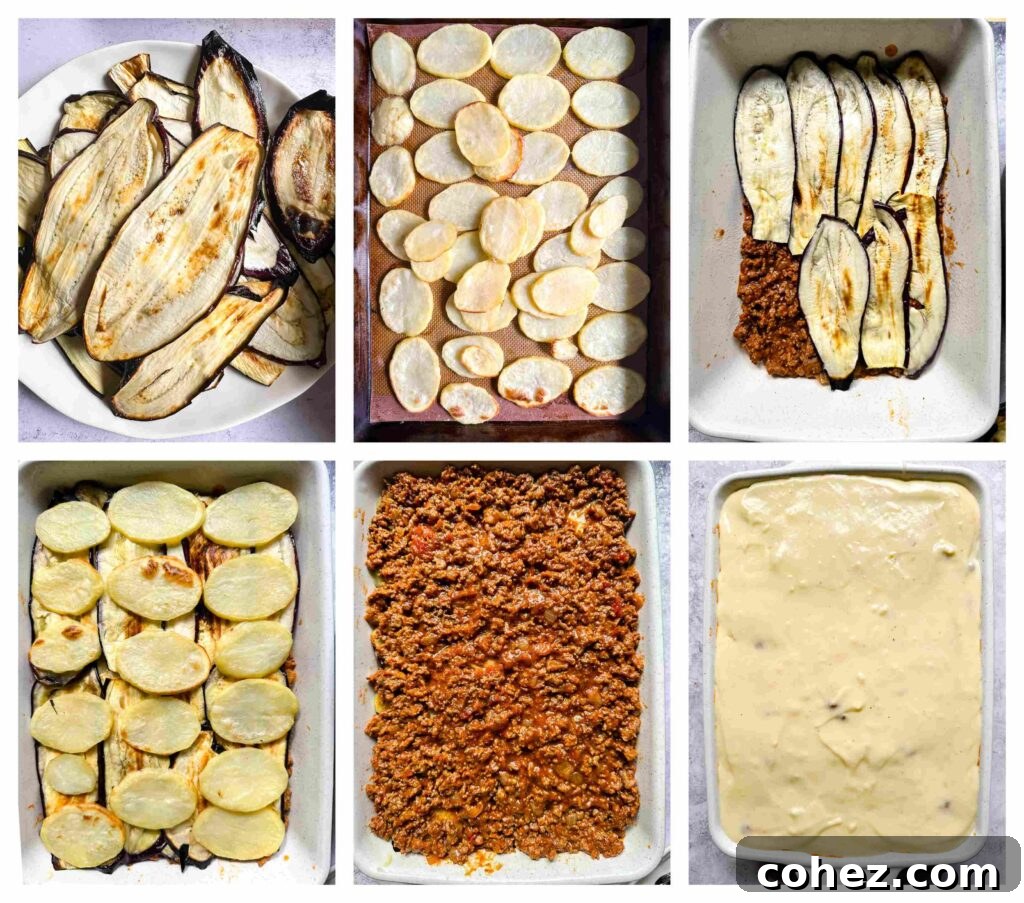
- Prepare the Eggplant: Cut eggplants into ¼-inch slices. Arrange in a single layer on baking sheets. Season with salt and brush lightly with olive oil or cooking spray. Broil (grill) in the oven for 7 minutes. Flip slices, season with more salt and olive oil, and broil for another 3-5 minutes until fully cooked and tender. You may need multiple baking trays. (This step can be done a day ahead.)
- Prepare the Potatoes: Preheat oven to 220°C/425°F. Peel potatoes and slice them thickly (¼ inch). Arrange slices on a rimmed baking sheet, drizzle with 2 tbsp olive oil, and sprinkle with salt. Roast for 15 minutes, or until golden and cooked through. (This step can also be done a day ahead.)
- Prepare the Meat Sauce: Heat 1 tbsp olive oil in a large pan. Add chopped onions and sauté over low heat for 5-7 minutes until softened. Add minced garlic and cook for about 30 seconds until fragrant. Add ground beef or lamb, breaking it up with a wooden spoon, and cook until no longer pink.
- Simmer the Meat Sauce: To the cooked meat, add the cinnamon stick, bay leaf, allspice, dried thyme, dried oregano, and a good pinch of salt. Stir to combine. Pour in the passata (crushed tomatoes) and beef stock. Bring to a boil, then reduce heat and simmer for 15 minutes, allowing flavors to meld.
- Make the Béchamel Sauce: While the meat sauce simmers, melt butter in a saucepan. Add flour and stir to create a roux. Continue cooking, stirring, until the mixture smells slightly nutty (about 2 minutes). Gradually whisk in the milk to avoid lumps. Season with salt, pepper, and grated nutmeg. Cook over low heat, whisking constantly, until the sauce thickens (about 5 minutes). Stir in freshly grated Parmesan cheese and allow it to thicken further. Remove from heat and quickly whisk in one beaten egg, followed by one egg yolk. Work swiftly to ensure a smooth sauce, preventing the eggs from scrambling. Set aside.
- Assemble and Bake Moussaka: Preheat the oven to 180°C/350°F. Spread one-third of the meat sauce over the bottom of a rectangular 9×13 inch (23cm by 33cm) baking pan. Layer half of the prepared eggplant and potato slices on top. Add another third of the meat sauce, then cover with the remaining eggplant and potato slices. Finish with the last portion of meat sauce. Finally, pour the béchamel sauce evenly over the top and spread with a spatula to level. Bake in the preheated oven for 50-55 minutes, or until the layers are hot and bubbly, and the top is golden brown and set.
- Rest and Serve: Allow the baked moussaka to cool and rest for at least 20 minutes before slicing and serving. This crucial resting period ensures the layers set properly, allowing for clean, beautifully stacked portions.
Nutrition
Nutrition information is automatically calculated, so should only be used as an approximation per serving (based on 12 servings).
- Calories: 454 kcal
- Carbohydrates: 28g
- Protein: 20g
- Fat: 30g
- Saturated Fat: 11g
- Polyunsaturated Fat: 2g
- Monounsaturated Fat: 14g
- Trans Fat: 1g
- Cholesterol: 87mg
- Sodium: 293mg
- Potassium: 1000mg
- Fiber: 6g
- Sugar: 10g
- Vitamin A: 521 IU
- Vitamin C: 19mg
- Calcium: 166mg
- Iron: 4mg