
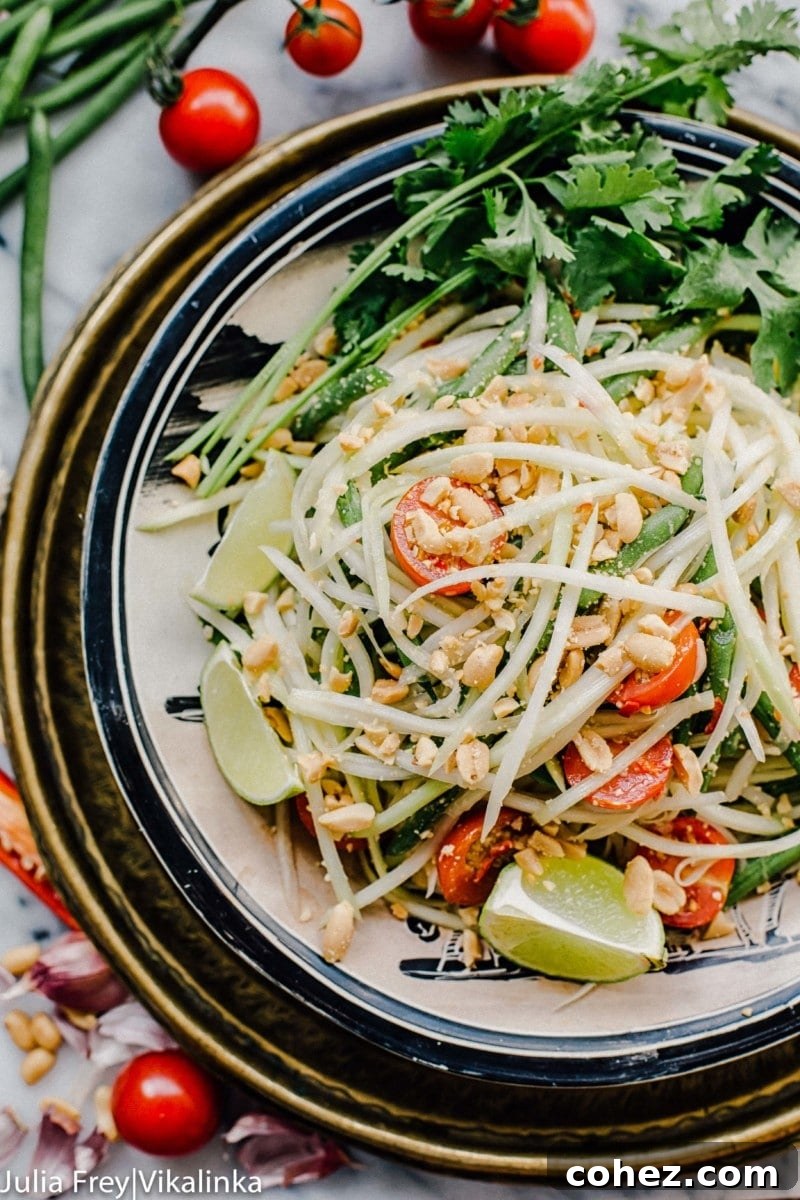
Authentic Thai Green Papaya Salad (Som Tum): A Symphony of Flavors
Prepare your taste buds for an extraordinary culinary adventure with the vibrant and refreshing Thai Green Papaya Salad, famously known as Som Tum! This iconic dish is a masterpiece of balance, delivering an unforgettable explosion of sweet, sour, salty, and spicy notes in every single bite. It’s not just a salad; it’s an experience that captures the very essence of Thai cuisine and leaves you craving more. Dive into the world of authentic Thai flavors and discover why Som Tum has become a beloved staple worldwide.
If you’re a devoted fan of Thai flavors, or simply looking to expand your culinary repertoire, you might also enjoy our Vegetarian Thai Green Curry, another staple that showcases the rich culinary heritage of Thailand with its aromatic spices and creamy texture.
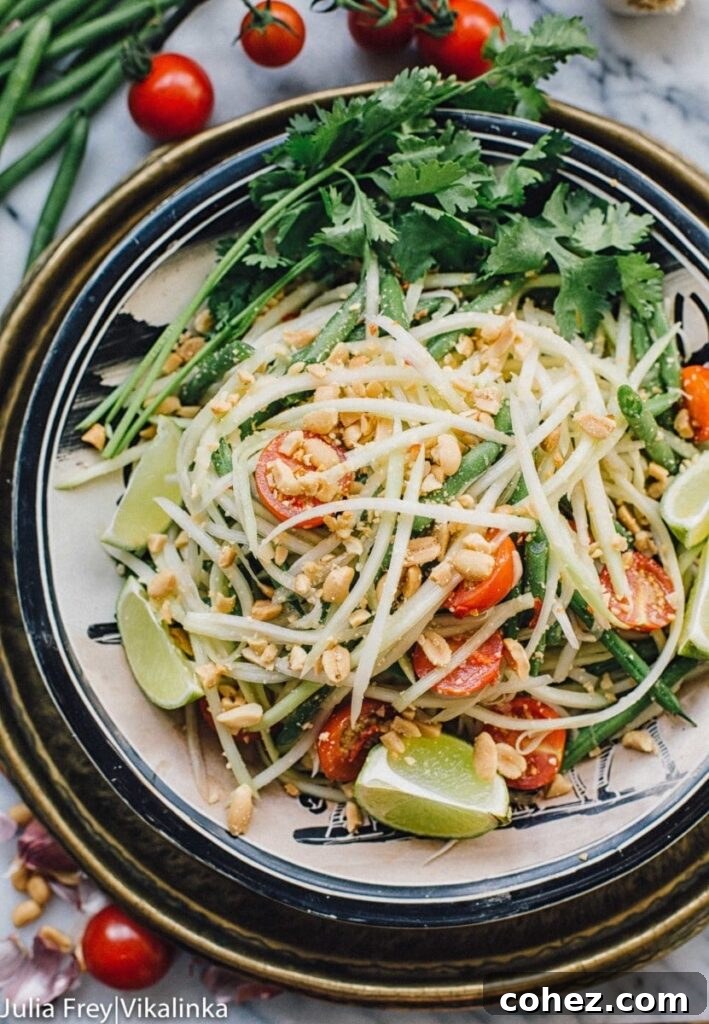
There’s something uniquely satisfying about the freshness of a summer salad, especially when it complements the smoky aroma of grilled meats. As someone who enjoys hearty meals but holds a huge affinity for fresh vegetables, I’m always on the lookout for exciting new side dishes that elevate any barbecue or weeknight dinner. My personal culinary journey through Asian flavors began decades ago, sparked by a year spent immersing myself in the rich gastronomic landscape of the Philippines. Since then, my love for Asian food has been a constant companion, guiding my exploration of diverse and aromatic dishes across the continent.
It was this deep-seated passion that ignited my excitement when a dear friend introduced me to Som Tum, a traditional Thai salad that instantly captured my imagination. The intriguing combination of textures—from the crisp bite of green papaya to the tender snap of green beans—and a complex interplay of flavors, ranging from the fiery kick of chilies to the bright tang of lime, was simply irresistible. This initial encounter immediately inspired me to recreate and personalize this classic, bringing the authentic taste of Thailand into my own kitchen and sharing its magic with others.
The Irresistible Allure of Som Tum: Thailand’s Signature Salad
Som Tum is more than just a dish; it’s a cultural icon, particularly in Thailand’s northeastern Isaan region, where it is believed to have originated. Its widespread popularity has made it a beloved street food and a staple in homes and restaurants across the country and indeed, the world. The magic of Som Tum lies in its incredible ability to harmonize seemingly contrasting elements into a perfectly balanced symphony of taste. It embodies the core principles of Thai cooking: striking a delicate equilibrium between salty, sweet, sour, and spicy, all while showcasing the freshness and quality of its vibrant ingredients.
While there are numerous variations of papaya salad found across Southeast Asia, the Thai version holds a special place due to its distinctive dressing and preparation method. Traditionally, Som Tum is prepared in a large wooden mortar and pestle. This isn’t just for show; the pounding action gently bruises the ingredients, allowing their juices and aromatic oils to meld together more intensely. This creates a depth of flavor and texture that is truly unique and hard to replicate with other methods. The rhythm of the pestle against the mortar is a familiar sound in Thai markets, promising a delicious outcome.
Essential Ingredients for an Authentic Som Tum
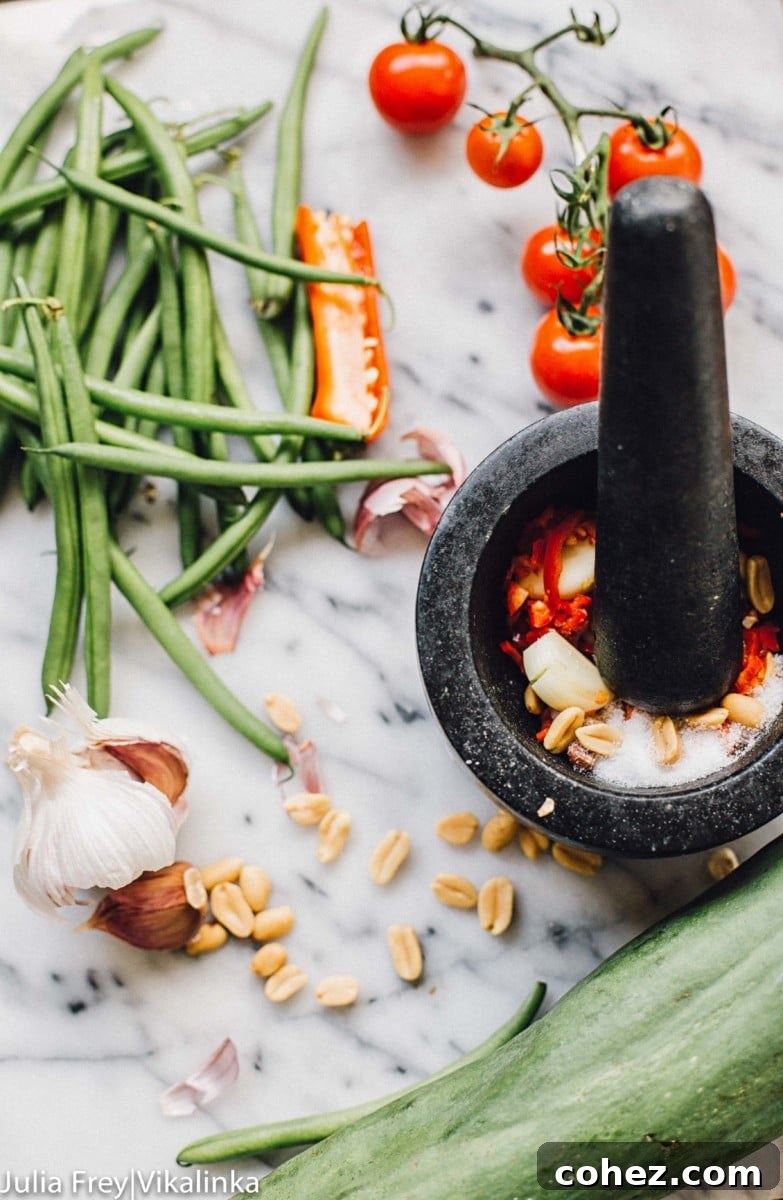
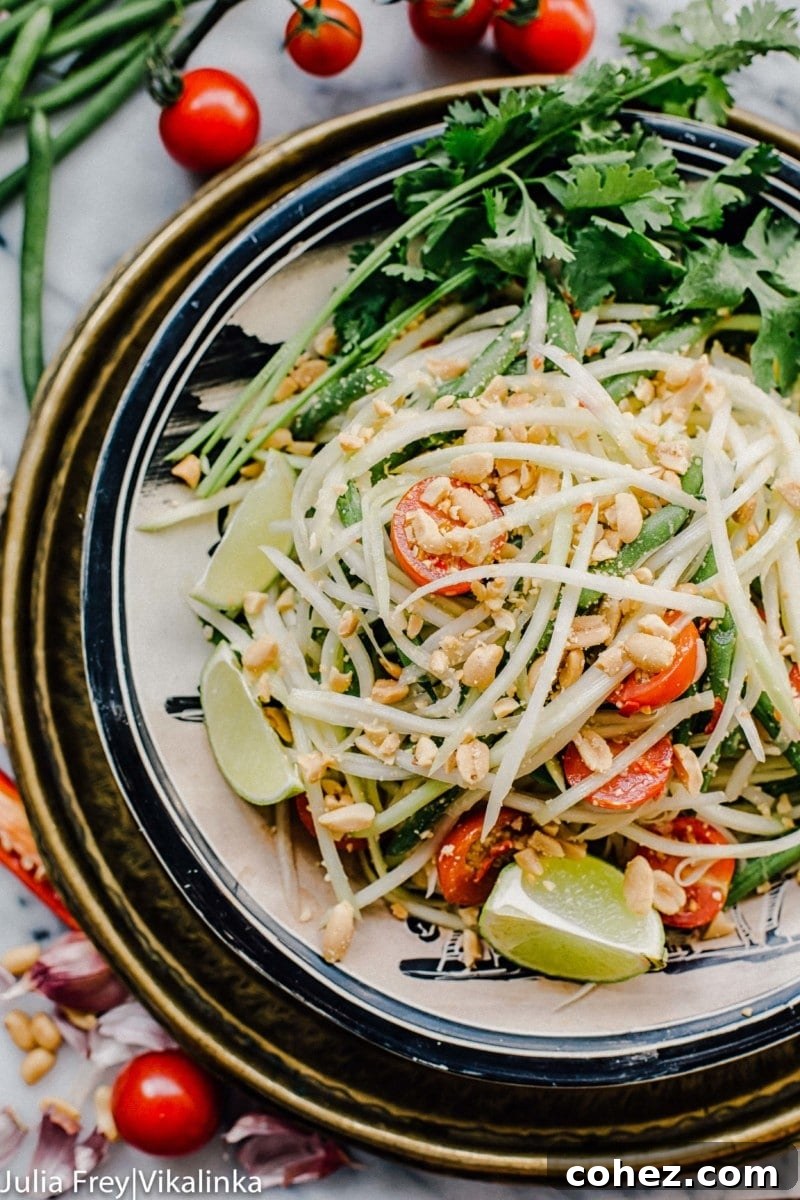
What truly makes Som Tum stand out is its star ingredient: green, or unripe, papaya. My initial curiosity about using green papaya was immense, as I typically enjoy ripe papaya for its sweet, tropical juiciness. However, green papaya offers a completely different experience—a firm, crisp texture reminiscent of a crunchy vegetable, with a subtly bitter yet fresh flavor that provides the perfect canvas for the assertive dressing. This unripe fruit, finely shredded, forms the refreshing and invigorating base of the salad, absorbing all the wonderful flavors.
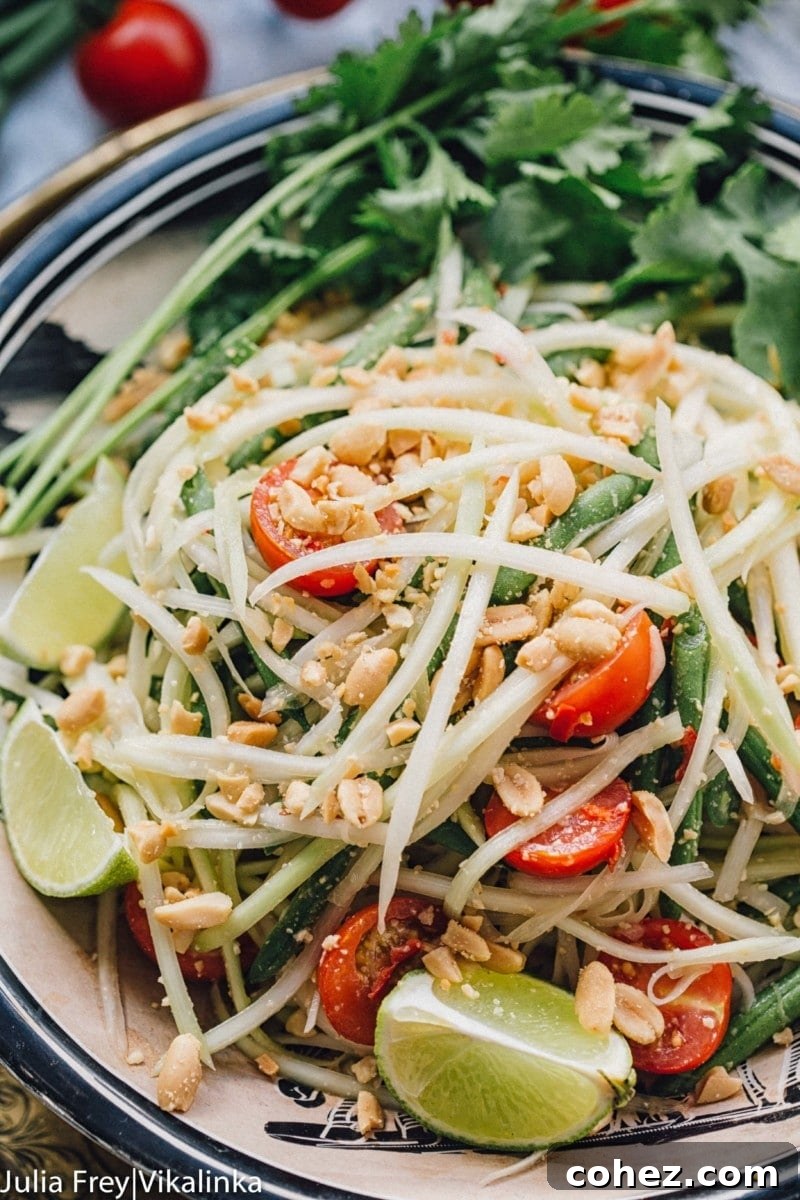
Beyond the papaya, this vibrant salad incorporates a carefully selected mix of fresh ingredients, each playing a crucial role in its overall appeal and textural complexity. Crunchy green beans add another layer of texture and a burst of vibrant color, offering a satisfying snap. Juicy cherry tomatoes contribute a touch of natural sweetness and acidity, softening slightly as they absorb the dressing. Roasted peanuts are sprinkled generously, providing a delightful nutty crunch and richness that beautifully complements the other elements and adds a depth of flavor. It’s a testament to Thai cuisine that such a concise list of ingredients, when perfectly balanced and prepared, can yield such a complex and satisfying dish.
The beauty of Som Tum lies not in an overwhelming array of ingredients, but in the precise selection and combination of a few key components. Each ingredient is chosen specifically for its unique flavor and textural contribution, ensuring that every bite is bursting with fresh, dynamic taste. This minimalist yet impactful approach is a hallmark of truly great culinary traditions.
Crafting the Perfect Thai Papaya Salad Dressing
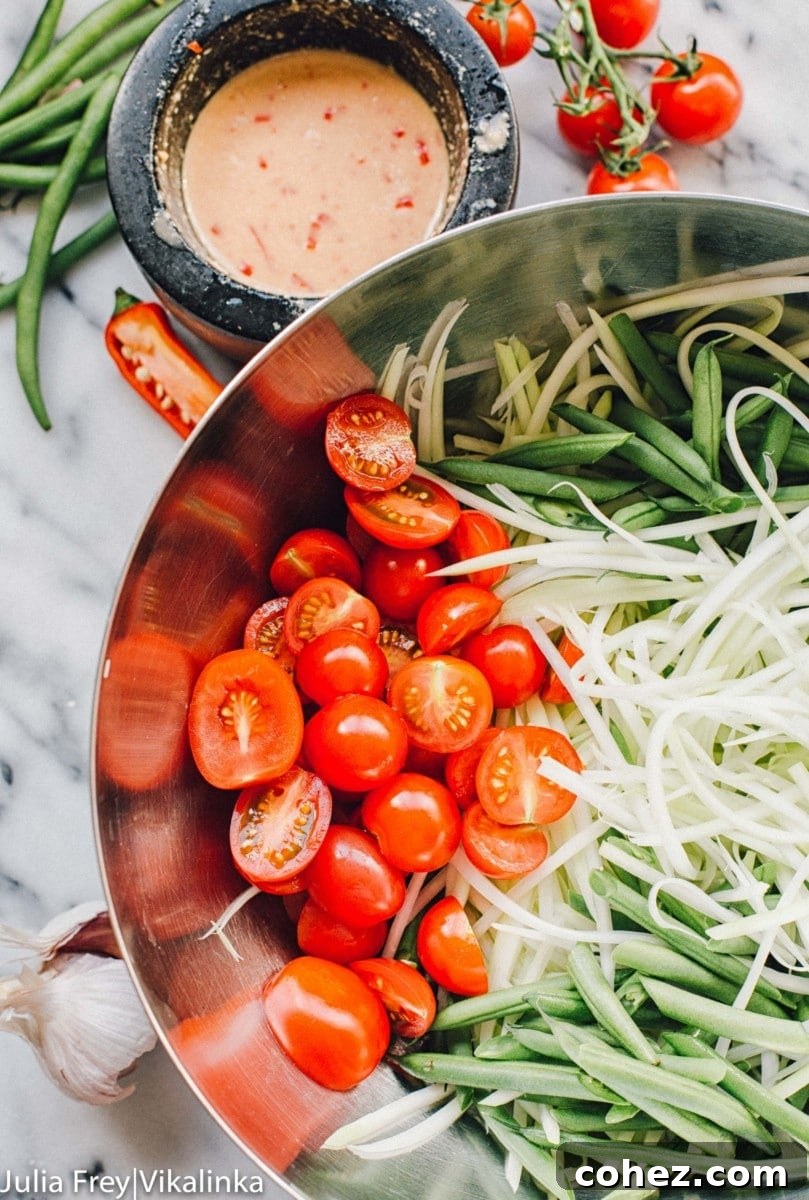
The dressing is arguably the heart and soul of Som Tum, responsible for delivering that signature harmony of flavors. My recipe draws inspiration from traditional Thai methods while incorporating a touch of personal experimentation to achieve a dressing that is perfectly balanced—creamy, spicy, and just the right amount of sweet and tangy. The process of preparing this dressing, ideally in a mortar and pestle, is key to unlocking its full potential, allowing the ingredients to release their aromatic oils and juices in a way that simply cannot be replicated by merely stirring.
The Four Pillars of Thai Flavor in Your Dressing:
- Sweetness: A foundational element in Thai cuisine, balancing the heat and sourness. Traditionally, palm sugar is used, offering a distinct caramel-like depth and unique aroma. You can often find it in Asian specialty stores or larger supermarkets. If palm sugar isn’t available, a good quality light brown sugar makes an excellent substitute, providing a similar warmth and sweetness.
- Saltiness: This essential savory note comes primarily from fish sauce (Nam Pla). A good quality fish sauce is crucial, as it adds a complex umami depth and salinity that cannot be replicated. For vegetarian versions, a plant-based “fish sauce” alternative or even a combination of soy sauce and mushroom broth can be used, though the flavor profile will subtly shift.
- Sourness: Fresh lime juice is paramount for the bright, zesty tang that cuts through the richness and heat, providing an invigorating counterpoint. The freshness of real, freshly squeezed lime juice makes all the difference, so always opt for fresh over bottled alternatives. Tamarind sauce is an optional but highly recommended addition, contributing a deeper, more complex fruity sourness that enhances the overall flavor profile and adds another layer of authenticity.
- Spiciness: Fresh chilies are responsible for the invigorating heat that defines Som Tum. The quantity can be adjusted to your personal preference, allowing you to create anything from a mild tingle to an exhilarating blaze. Thai bird’s eye chilies are commonly used for their intense heat. Minced garlic also adds a pungent kick and aromatic depth, complementing the chilies beautifully.
These components, vigorously pounded together with roasted peanuts in a mortar, create a dressing that is not merely a sauce but an integral part of the salad’s texture and flavor experience. The slight creaminess and chunky texture from the crushed peanuts and garlic bind all the elements together, ensuring every shredded strand of papaya is coated in this incredible, multifaceted mixture.
What if I Can’t Find Green Papaya? Delicious Substitutions
While green papaya is undeniably the traditional and star ingredient of Som Tum, don’t let its unavailability deter you from trying this amazing salad! The good news is that several other vegetables can mimic its crisp texture and provide a delightful base for the powerful dressing. My top recommendation for a substitute is carrots. When finely shredded or julienned, carrots offer a very similar crunch and hold up exceptionally well to the dressing, with a slightly sweeter taste that still pairs beautifully with the spicy and tangy notes. You can use them entirely, or combine them with other alternatives for varied textures.
Other excellent substitutes you might consider include:
- Jicama: A root vegetable with a crisp, refreshing, slightly sweet, and nutty flavor, perfect for shredding into matchsticks. Its texture is remarkably similar to green papaya.
- Cucumber: While softer than papaya, firm varieties like English or Persian cucumbers can be julienned for a refreshing alternative. They’ll release more water, so you might need to adjust the dressing’s consistency slightly or gently drain the salad before serving.
- Green Mango: If you can find unripe green mangoes, they offer a fantastic sour tang and firm texture when shredded, making them a very authentic and delicious substitute often used in other Southeast Asian salads, particularly in the Philippines.
- Cabbage: Finely shredded green cabbage can also provide a good crunch and serves as a hearty base, though it has a stronger, slightly peppery flavor than papaya.
Regardless of your choice of base, the potent and flavorful dressing ensures that this salad will be an absolute delight, bursting with the signature tastes of Thailand!
Perfect Pairings and Serving Suggestions for Som Tum
Som Tum is incredibly versatile and shines brightly both as a standalone light meal and as an invigorating side dish. Traditionally, it’s a perfect accompaniment to a wide array of grilled meats like sticky pork neck (mu yang), succulent grilled chicken (gai yang), or any barbecue fare, where its refreshing tang and fiery spice cut through the richness of the meat beautifully. It also pairs wonderfully with sticky rice, allowing you to scoop up every last drop of the flavorful dressing and enjoy the textural contrast. For a complete Thai feast, serve it alongside other classics like a rich curry, aromatic noodle dishes, or even fresh spring rolls. Its cooling yet spicy profile makes it an excellent palate cleanser.
Tips for Success in Making Your Best Som Tum
- Source Quality Ingredients: Freshness is paramount for a truly outstanding Som Tum. Use the freshest green papaya you can find, crisp green beans, ripe and juicy cherry tomatoes, and vibrant fresh chilies. Freshly squeezed lime juice is non-negotiable for that authentic bright tang.
- The Mortar and Pestle Advantage: While a food processor can finely mince ingredients, a traditional mortar and pestle is highly recommended for preparing the dressing. The manual pounding action gently bruises the ingredients, allowing their essential oils and flavors to release and meld more effectively, resulting in a more complex and aromatic dressing. If you don’t have one, finely mince and mash the ingredients as best you can in a sturdy bowl.
- Balance is Key: Thai cooking is all about achieving a perfect balance of sweet, sour, salty, and spicy. Taste the dressing as you go and adjust the elements to your personal preference. A little extra palm sugar can mellow the spice, while more lime juice can brighten the flavors.
- Don’t Over-Mix: Once the dressing is added to the shredded vegetables, toss gently. You want to coat the ingredients thoroughly without bruising them excessively, preserving their crisp texture (unless you prefer a softer texture, as is common in some traditional preparations where the pounding includes the vegetables).
- Resting Time: Allow the salad to rest for about 15-30 minutes after mixing. This crucial time allows the flavors to truly meld and develop, and the green papaya to slightly soften and absorb the dressing, resulting in a more cohesive and deeply flavorful dish.
- Garnish Generously: Don’t skip the garnish! Roasted peanuts add extra crunch and richness, fresh cilantro brings herbaceous freshness, and lime wedges offer a final burst of citrus to finish the dish.
More Thai Recipes to Explore:
- Thai Red Curry with Prawns
- Slow Cooker Thai Chicken and Rice Soup
- Thai Noodle Soup
★★★★★ 5 from 1 vote
Thai Green Papaya Salad (Som Tam)
Print Recipe
Prepare for your tastebuds to be tantalised with this Thai Green Papaya Salad! Som Tam delivers so many flavors at once. Sweet, sour, salty, spicy. This recipe guides you to create an authentic version at home.
Ingredients
For the dressing
- 1 tbsp dry roasted peanuts
- 2 cloves garlic
- 1 chilli, minced (adjust to your preferred spice level)
- 1 tsp salt
- 2 tsp palm sugar or brown sugar
- 2 tbsp fish sauce, or vegetarian “fish sauce” alternative
- 1/4 cup / 60ml fresh lime juice
- 2 tsp tamarind sauce, optional (for added depth)
For the salad
- 4-5 cups / 260g green/unripe papaya, 1 small (peeled and shredded)
- 1 cup / 150g green beans, raw (trimmed and cut in half)
- 1 cup / 150g cherry tomatoes (halved)
- Fresh cilantro for garnish
- 1 lime, for garnish (cut into wedges)
- 2 tbsp roasted peanuts (for garnish, lightly crushed)
Instructions
For the dressing
- In a traditional mortar and pestle (or a sturdy bowl), combine the 1 tbsp roasted peanuts, garlic, minced chilli, salt, and palm sugar (or brown sugar).
- Pound the ingredients vigorously until you achieve a coarse paste. This action helps to release the aromatic oils and flavors.
- Stir in the fish sauce, tamarind sauce (if using), and fresh lime juice until all components are well combined. Taste and adjust the balance of sweet, sour, salty, and spicy to your liking. Set aside.
For the salad
- Peel the green papaya using a vegetable peeler. Then, shred it into thin, long strips using a mandoline, julienne peeler, or a coarse vegetable grater. Discard any membranes and seeds from the papaya.
- Prepare the raw green beans by trimming the ends and cutting them in half. Halve the cherry tomatoes.
- In a large mixing bowl, combine the shredded green papaya, prepared green beans, and halved cherry tomatoes.
- Pour the freshly prepared dressing over the salad ingredients.
- Toss the salad gently but thoroughly, ensuring all the vegetables are evenly coated with the flavorful dressing.
- Allow the salad to rest for approximately 15-30 minutes before serving. This resting time is crucial as it allows the flavors to meld beautifully and the papaya to slightly soften and absorb the dressing, resulting in a more cohesive and delicious dish. The mixture should become quite wet.
- Serve your Thai Green Papaya Salad immediately, garnished with a sprinkle of slightly crushed roasted peanuts, fresh cilantro leaves, and a few lime wedges for an extra squeeze of freshness.
Notes
For those mindful of sugar intake, the dressing can be successfully prepared using a sugar substitute of your choice, maintaining the essential sweet balance of the dish.
Nutrition (Approximate per serving)
Calories: 178kcal | Carbohydrates: 49g | Protein: 4g | Fat: 2g | Saturated Fat: 1g | Sodium: 683mg | Potassium: 762mg | Fiber: 4g | Sugar: 16g | Vitamin A: 1116IU | Vitamin C: 184mg | Calcium: 88mg | Iron: 1mg
Nutrition information is automatically calculated and should only be used as an approximation. Actual values may vary based on ingredients and preparation methods.
We hope this detailed guide encourages you to prepare and savor the incredible flavors of Thai Green Papaya Salad. It’s a dish that truly celebrates freshness, balance, and the vibrant spirit of Thai cuisine. Experiment with the spice level, enjoy the process of creating this authentic delight, and share this delightful culinary creation with friends and family for an unforgettable meal!