
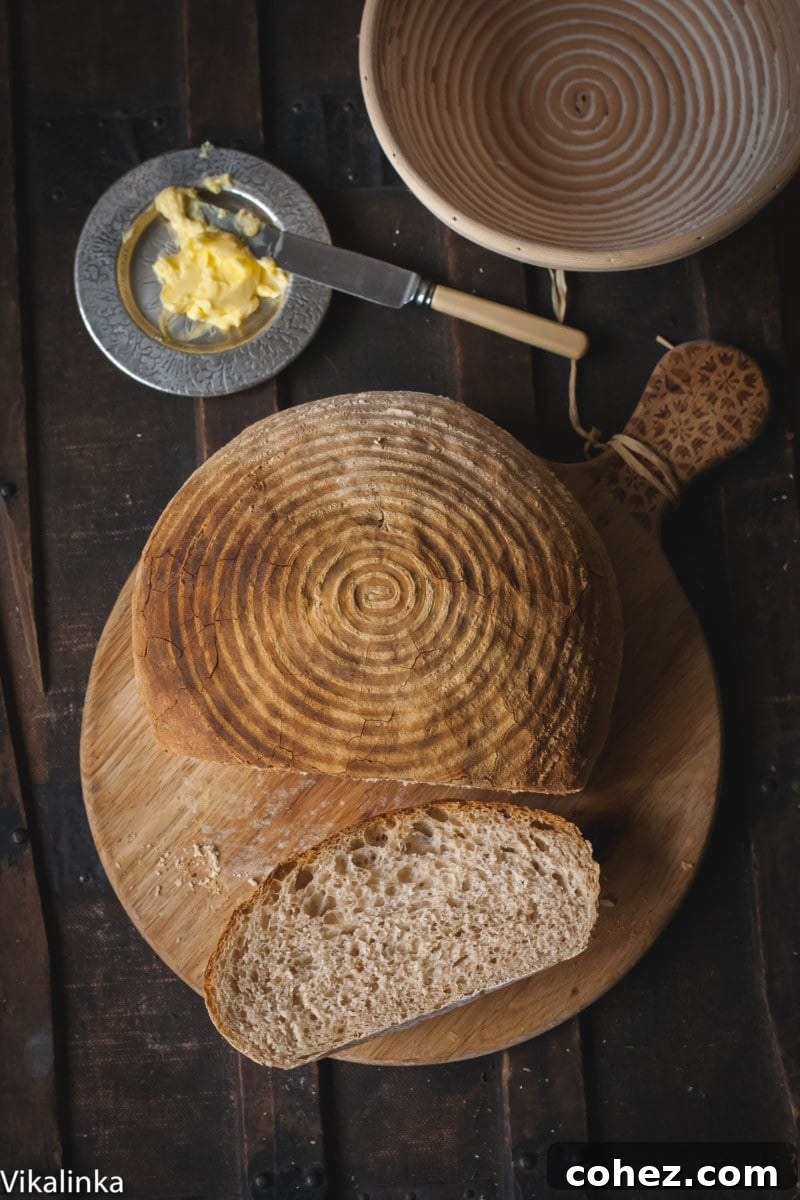
Discover the unparalleled joy of baking your own bread with this remarkably easy no-knead recipe for wholesome Rosemary Spelt Bread. Prepare to be amazed as you pull a delicious, bakery-worthy loaf from your oven, right in your own kitchen!
This rustic, aromatic bread isn’t just a treat on its own; it’s also the perfect foundation for a gourmet Ham and Cheese Toastie or simply enjoyed with a pat of butter.
Embracing the Simplicity of No-Knead Bread
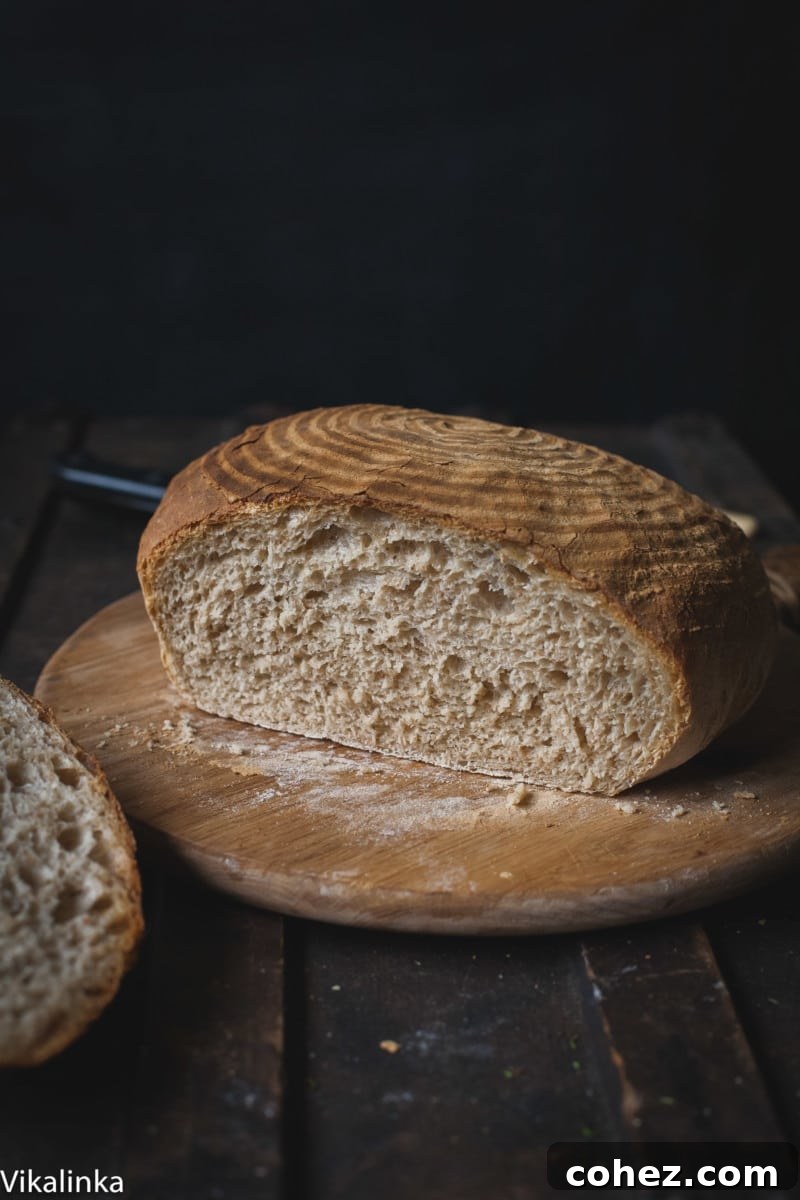
There’s something truly magical about the simple things in life, and a freshly baked loaf of homemade bread certainly tops that list. The aroma filling your kitchen, the golden crust, the soft, airy interior – it’s an experience that brings unparalleled warmth and excitement to any family home.
For many years, the idea of baking bread felt daunting. The endless kneading, the meticulous timing, the sheer commitment required often pushed it into the realm of special occasions rather than a regular delight. However, the revelation of the no-knead bread method completely changed this perspective. It’s a game-changer for home bakers, transforming a seemingly complex task into an accessible and rewarding culinary adventure that is here to stay in our kitchens.
The beauty of a basic no-knead bread recipe lies in its remarkable versatility. It acts as a blank canvas, inviting endless experimentation with flours, herbs, and spices. For this particular recipe, we’ve elevated the classic with wholesome spelt flour, known for its distinct rich, nutty flavor, perfectly complemented by the fragrant notes of fresh rosemary. This combination results in a loaf that is not only deeply satisfying but also bursting with rustic charm and flavor.
The Rewards of Baking Spelt Bread at Home
Bread making offers a unique blend of practical benefits and therapeutic advantages. Beyond the sheer pleasure of a warm, crusty loaf, the process itself can be a wonderfully calming activity. Mixing the dough, watching it transform, and anticipating the final product can be a fantastic way to unwind and alleviate stress. It’s a win-win situation: you engage in a mindful activity and are rewarded with truly exceptional homemade bread.
The taste of homemade bread far surpasses anything you can buy at a store. When you bake your own, you have complete control over the ingredients, ensuring only the finest, freshest components make it into your loaf. This transparency means you can avoid unnecessary additives and preservatives often found in commercial breads.
Moreover, homemade bread allows for unparalleled customization. While we’ve chosen aromatic rosemary to infuse our spelt bread with an earthy, herbaceous flavor, the possibilities are limitless. Imagine incorporating other favorite herbs like thyme or oregano, adding sun-dried tomatoes, olives, or even a generous sprinkle of your favorite cheese for a truly unique creation. Each batch can be a new culinary exploration, tailored precisely to your preferences.
Decoding the British Bloomer Loaf
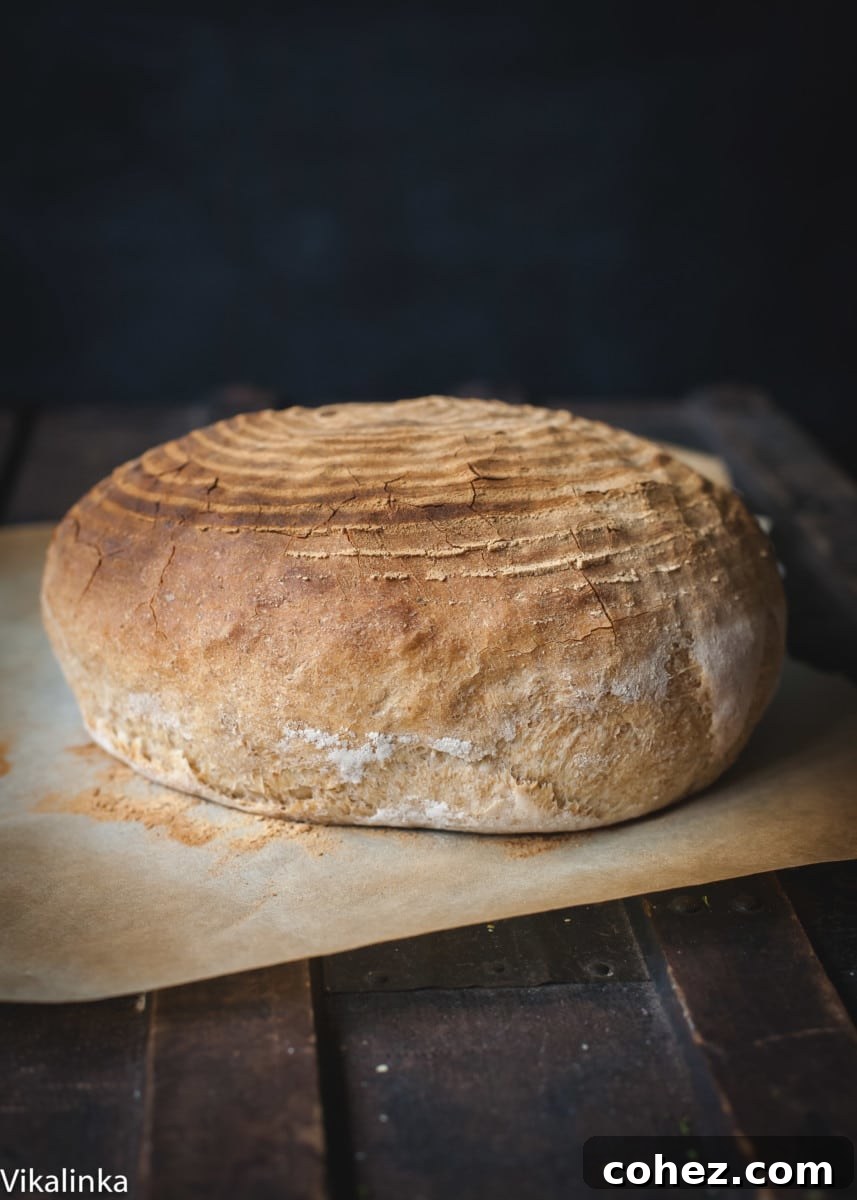
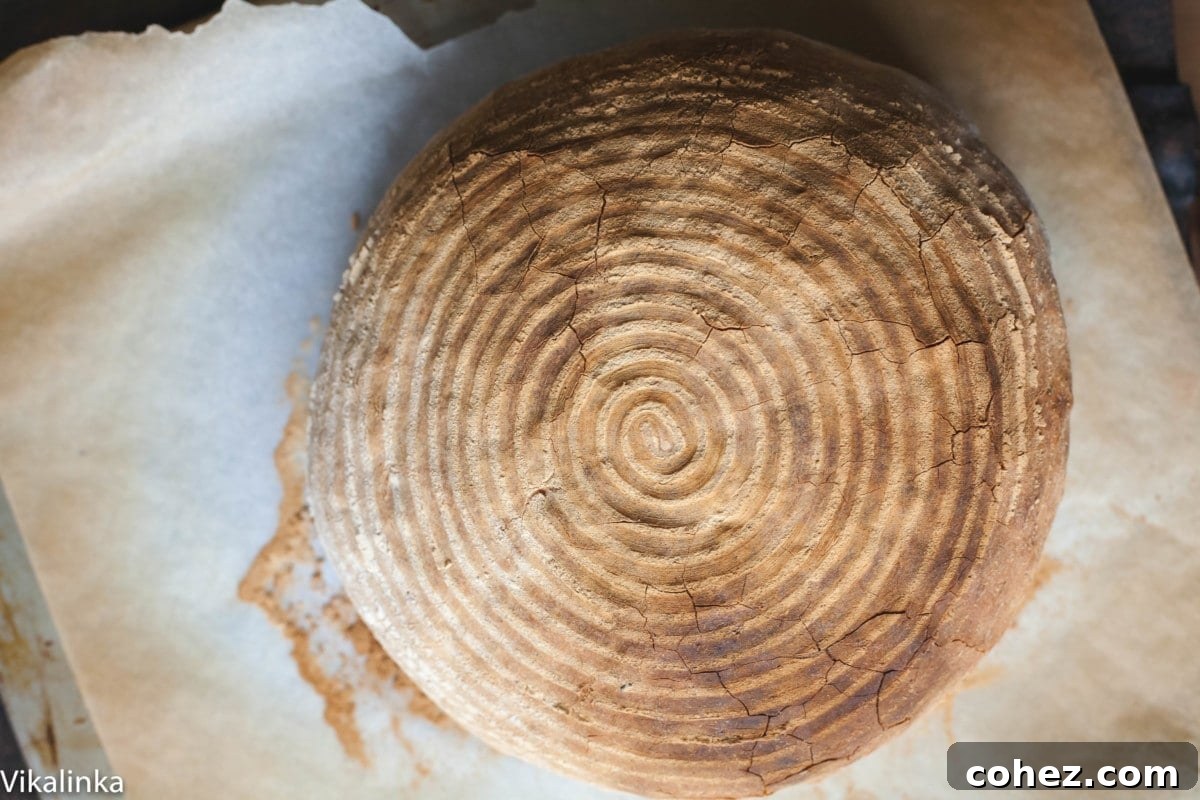
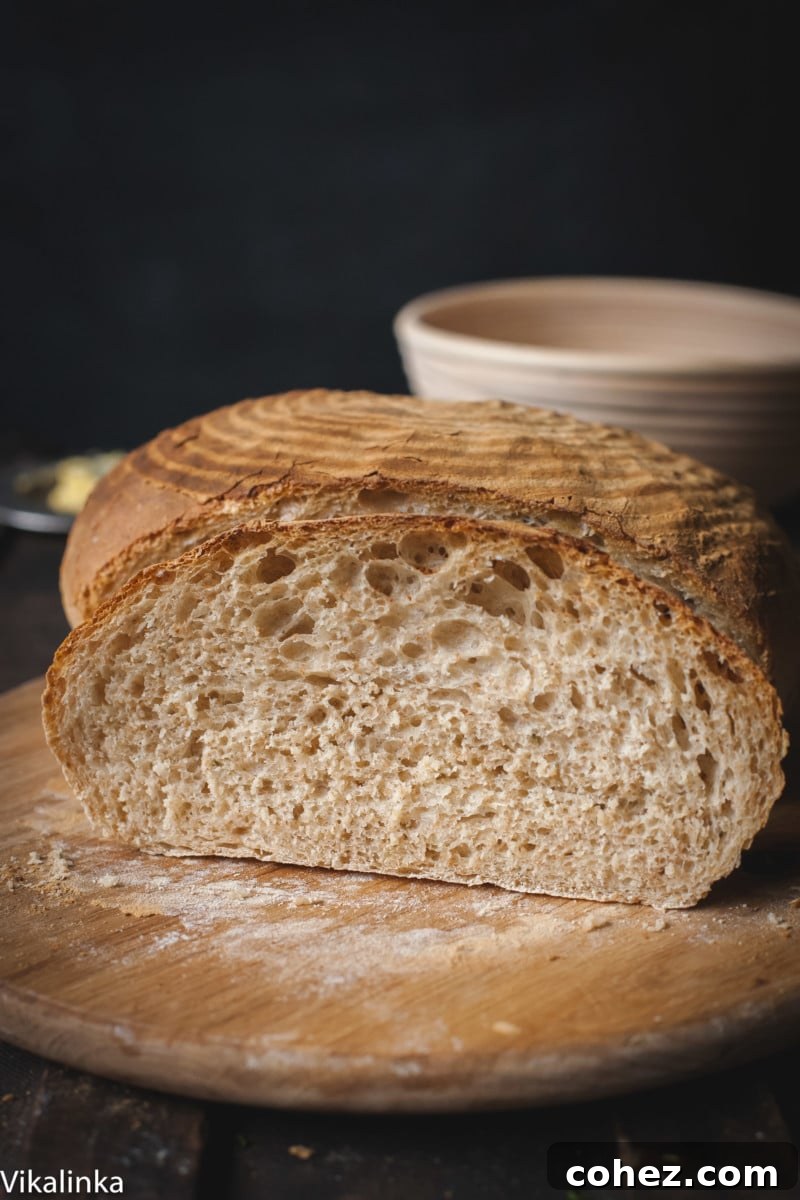
The term “bloomer loaf” refers to a traditional British bread, widely recognized and a staple in bakeries and cafes across the UK. Its name is derived from its distinctive baking method: the dough is allowed to “bloom” freely as it rises and bakes, without being confined to a traditional loaf pan. This unrestrained rising gives the bloomer its characteristic rounded, rustic shape and often a wonderfully irregular, thick crust, making it as beautiful to behold as it is delicious to eat.
True to its humble origins, the bloomer loaf traditionally relies on a handful of simple, wholesome ingredients: water, yeast, salt, and flour. There are no fancy embellishments, allowing the natural flavors of the grains to shine through. In our rosemary spelt bloomer, the rich, slightly darker hue comes from the inclusion of whole-grain spelt flour. However, if spelt flour is not readily available, high-quality whole-wheat flour makes an excellent substitute, yielding a similarly robust and satisfying loaf. The essence of a bloomer lies in its unpretentious, hearty nature.
Spelt Flour: An Ancient Grain Reimagined
Spelt, an ancient grain, holds a fascinating place in culinary history. Once a dietary cornerstone for our ancestors, it gradually faded from widespread use over the past few centuries, overshadowed by modern wheat varieties. However, spelt is a remarkably resilient grain, thriving particularly well in wet conditions, which contributed to its popularity in northern European regions in centuries gone by. Its deep roots in European culinary traditions are well-documented, even earning a mention in one of the renowned poems by Alexander Pushkin, highlighting its historical significance as a staple crop.
Today, spelt is experiencing a magnificent renaissance, captivating the attention of health-conscious cooks and artisan bakers alike. This resurgence is largely due to its impressive nutritional profile and its distinctively delicious nutty flavor. Spelt boasts a higher protein content than common wheat and is rich in fiber, vitamins, and minerals. While it does contain gluten, its gluten structure is often perceived as different and, for some individuals, more easily digestible than that found in modern wheat. This unique composition makes it a fantastic alternative for those seeking a flavorful and nutritious grain, whether consumed as a whole grain in salads and porridges or as flour in a variety of baked goods.
Essential Baking Tips for Your Rosemary Spelt Bread
Recipe Insights for Success
- Flour Quality Matters: Not all bread flour is created equal. High-protein flours, such as Canadian flour, are renowned for their strength and elasticity, making them easier to work with and consistently yielding superior results in bread baking.
- Check Your Yeast: Yeast is a living organism, and its activity is crucial for a successful rise. Always verify the expiry date on your yeast packet. While it might sometimes be viable shortly after the listed date, using old or inactive yeast is a common cause of dense, unrisen dough. A simple test: mix a teaspoon of yeast with a pinch of sugar in warm water; if it doesn’t foam within 5-10 minutes, your yeast is likely past its prime.
- Gluten Content: It’s important to note that spelt flour does contain gluten. Therefore, this recipe is not suitable for individuals with celiac disease or severe gluten intolerance.
- Customization is Key: While the rosemary adds a wonderful aromatic depth to this spelt bread, it is entirely optional. Feel free to omit it for a classic, wholesome spelt loaf, or experiment with other herbs like thyme, chives, or even dried cranberries and walnuts for a different flavor profile.
- The Power of Warmth: Yeast thrives in warm environments. Ensuring your water is warm (around 105-115°F or 40-46°C) and that your dough rises in a cozy spot will encourage optimal fermentation and a beautiful rise.
- Don’t Rush the Rise: The no-knead method relies on a longer fermentation period to develop flavor and gluten structure. Resist the urge to shorten the rising times; patience is a key ingredient here.
Explore More Homemade Bread Recipes
If the joy of baking this Rosemary Spelt Bread has ignited your passion for homemade loaves, we have a delightful collection of other easy and delicious bread recipes for you to explore:
- Hearty No-Knead Farmhouse Bread
- Sweet & Savory Honey and Buckwheat Soda Bread
- Effortless Quick White Bread (No Time, No Knead)
- Delightful Rhubarb Jam Swirled Bread
Rosemary Spelt Bread
Print Recipe
An incredibly simple no-knead recipe for a wholesome and delicious rosemary spelt bread. Achieve bakery-quality results at home with minimal effort!
Ingredients
- 500ml / 2 cups warm water
- 7g / 1 packet instant dried yeast
- 110g / 1 cup whole grain spelt flour or whole-wheat flour
- 400g-450g / 3 cups bread flour (high protein recommended)
- 1 tbsp sea salt
- 1 rosemary sprig, leaves finely chopped (optional, but highly recommended for flavor)
Instructions
- In a large mixing bowl, gently dissolve the instant yeast in the warm water. Allow it to sit for a few minutes until slightly foamy, indicating the yeast is active.
- Add both the spelt (or whole-wheat) flour, bread flour, sea salt, and the finely chopped rosemary (if using) to the bowl with the yeasted water.
- Using your hand or a sturdy spatula, mix the ingredients just until a shaggy dough forms and no dry flour remains. There’s no need for vigorous kneading; the long rise will develop the gluten.
- Cover the bowl tightly with plastic wrap or a clean kitchen towel. Place it in a warm, draft-free spot and let the dough rise for a minimum of 2 hours, or until it has visibly doubled in size and looks bubbly.
- Once the first rise is complete, gently turn the dough out onto a lightly floured surface. Using floured hands, carefully shape it into a neat ball. Avoid overworking the dough to maintain its airy texture.
- If you have a banneton (proofing basket), dust it generously with flour and carefully place the dough ball seam-side up into it. Cover with a tea towel and let it rise for another hour. If you don’t have a banneton, place the dough directly onto a baking sheet lined with parchment paper, dust with a little more flour, and cover with a tea towel for its second rise.
- While the dough is undergoing its second rise, preheat your oven to 450°F (250°C). Arrange two oven racks: one on the lower bottom and the other in the middle of the oven.
- Place a deep baking pan on the bottom rack and fill it with about 1 inch (2.5 cm) of water. This will create steam in the oven, which is crucial for developing a beautifully crisp and golden crust on your bread.
- Once the oven is fully preheated and the dough has completed its second rise: if using a banneton, carefully invert the dough onto a parchment-lined baking sheet. If your bread was already rising on a baking sheet, simply remove the tea towel.
- Place the baking sheet with the bread onto the middle oven rack. Bake for approximately 30-35 minutes, or until the crust is deeply golden brown and the internal temperature reaches 200-210°F (93-99°C).
- Immediately remove the baked bread from the baking sheet and transfer it to a wire rack to cool completely. Cooling on a rack prevents the bottom from becoming soggy and allows the internal structure to set properly. Slice and enjoy your homemade masterpiece!
Nutrition Information (per serving)
Calories: 92kcal |
Carbohydrates: 18g |
Protein: 3g |
Sodium: 350mg |
Potassium: 22mg |
Fiber: 1g |
Calcium: 4mg |
Iron: 0.5mg
Nutrition information is automatically calculated and should be used as an approximation. Actual values may vary based on specific ingredients and preparation methods.
Tried this delicious recipe?
We’d love to hear how your Rosemary Spelt Bread turned out!