
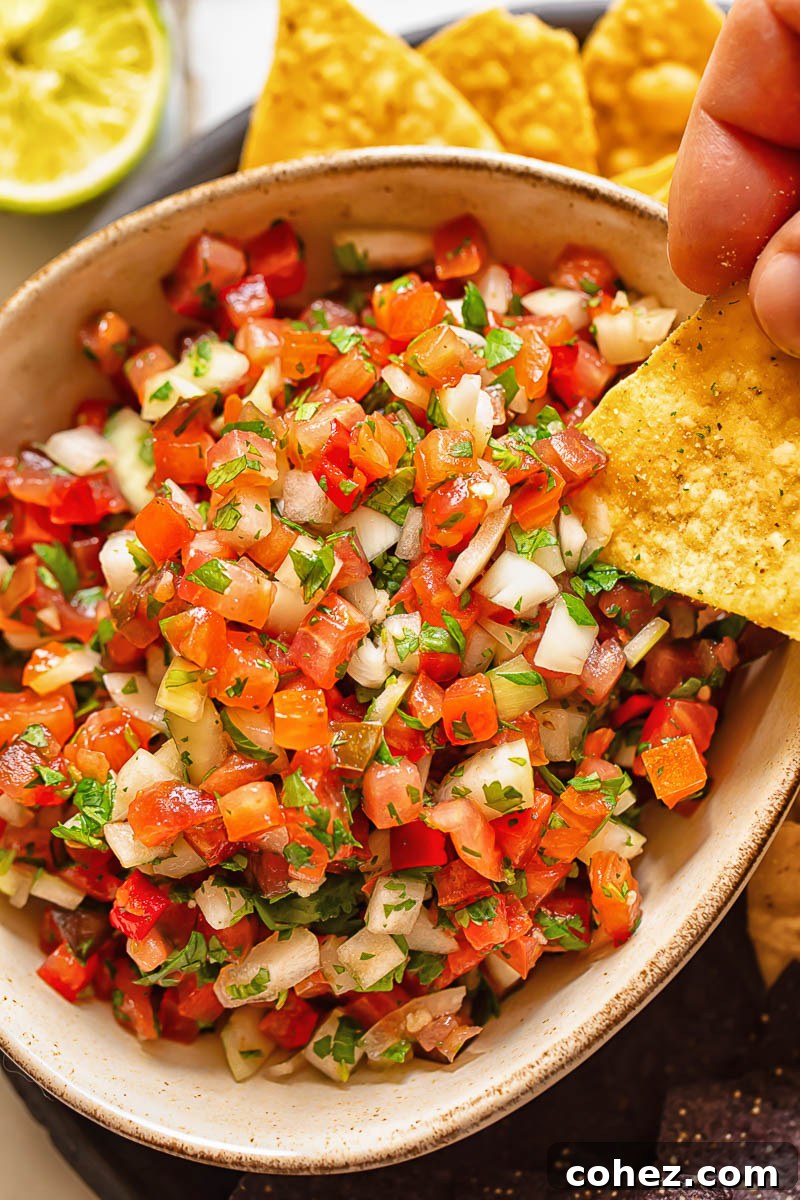
The Ultimate Guide to Pico de Gallo: Fresh, Flavorful, and Easy to Make
Pico de Gallo, often hailed as the vibrant heart of Mexican cuisine, is a culinary marvel that effortlessly bridges the gap between a fresh salsa, a crisp salad, and a delightful dip. This medley of finely chopped tomatoes, onions, garlic, chili, cilantro, and lime juice is more than just a side dish; it’s a pure explosion of fresh, authentic Mexican flavor. Cool yet fiery, zesty and refreshing, it’s best enjoyed with a generous bowl of crispy tortilla chips, perhaps alongside a frosty cerveza or a vibrant margarita. It’s the taste of summer sunshine in every bite, promising an instant vacation for your palate.
While the classic Pico de Gallo reigns supreme, if you’re seeking a more substantial and turbo-charged variation that incorporates additional hearty ingredients, our Black Bean and Corn Salsa offers a robust alternative, perfect for a more filling experience.
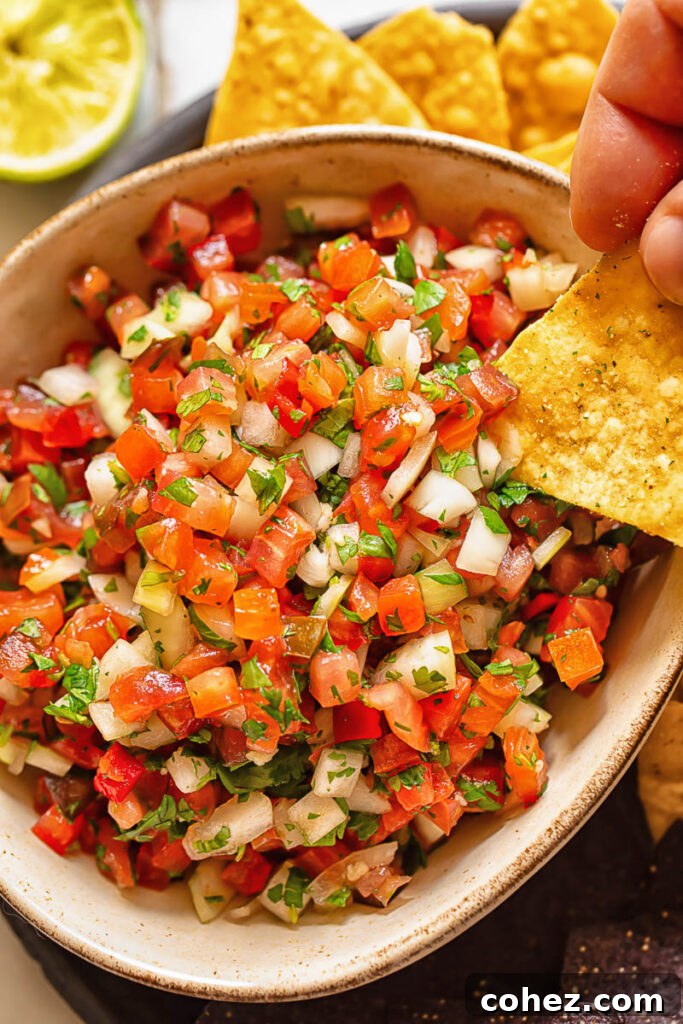
What Exactly is Pico de Gallo? Exploring the “Rooster’s Beak”
The name “Pico de Gallo” literally translates to “rooster’s beak” in Spanish. While the exact origin of this peculiar name is debated, common theories suggest it refers to the way the ingredients are finely chopped into small pieces, resembling bird feed, or perhaps the traditional method of eating it by pinching pieces between the thumb and forefinger, akin to a rooster pecking. Regardless of its whimsical name, Pico de Gallo is undeniably one of the most beloved and essential components of Mexican cooking. Its bright, summery ingredients instantly evoke holiday vibes, offering a light, low-calorie, and incredibly versatile accompaniment to nearly any Mexican-inspired dish, transforming a simple meal into a vibrant feast.
However, this beloved fresh salsa often comes with a bit of a culinary identity crisis, particularly when it comes to distinguishing it from other fresh Mexican sauces. The most common question arises: When is Pico de Gallo considered Salsa Fresca, and when is Salsa Fresca referred to as Pico de Gallo?
Pico de Gallo vs. Salsa Fresca: Understanding the Key Differences
At first glance, the confusion between Pico de Gallo and Salsa Fresca is understandable, as they often share the exact same core ingredients: fresh tomatoes, onions, cilantro, chili, and lime. However, their fundamental difference lies in their preparation and, consequently, their texture and consistency. While both are “fresh sauces” (as “salsa fresca” literally translates to “fresh sauce”), they are distinct entities:
- Salsa Fresca: This term broadly refers to any fresh, uncooked salsa. Often, when people say “salsa fresca,” they are referring to a blended or semi-blended dip. This processing results in a more liquid, saucier, and sometimes smoother consistency. Because it’s often blended, the individual ingredients lose their distinct form, creating a more uniform sauce. Our 5-Minute Blender Salsa Fresca recipe is a prime example of this style, offering a quicker path to a delicious, pourable salsa.
- Pico de Gallo: In contrast, Pico de Gallo is characterized by its chunky, finely diced ingredients. The beauty of Pico de Gallo lies in the distinct visual and textural integrity of each component. The tomatoes, onions, and chilies should be clearly identifiable as small, uniform cubes, not a liquid or pureed mixture. It should not be runny; instead, it offers a vibrant, almost salad-like consistency, making it perfect for scooping with chips or topping dishes without making them soggy.
So, while Pico de Gallo is a type of salsa fresca (a fresh sauce), Salsa Fresca isn’t always Pico de Gallo. Pico de Gallo is specifically a chunky fresh salsa. If your Pico de Gallo becomes too liquid, with ingredients losing their shape, it has essentially transformed into a blended-style salsa fresca. The art is in the chop and the careful removal of excess moisture.
Still pondering the nuances? The best way to truly grasp the distinction is to experience both! Try making both fresh Mexican salsa recipes and draw your own delightful conclusions.
The Art of Easy Pico de Gallo: Ingredient Selection is Paramount
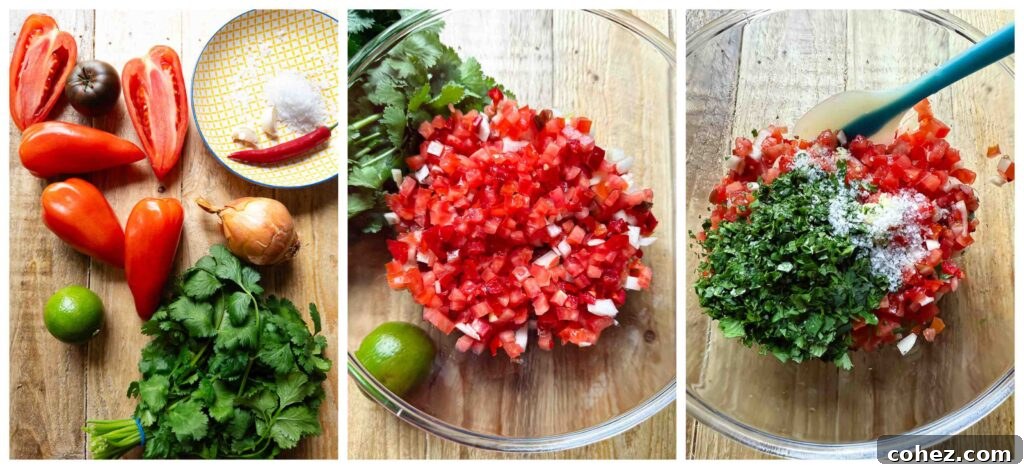
Crafting exceptional Pico de Gallo might seem simple given its short list of just six main ingredients (plus salt), but there’s a definite art to it. The secret to its vibrant flavor and perfect texture begins and ends with the quality and freshness of your produce. This isn’t a dish where you can cut corners with subpar ingredients; their raw, unadulterated flavors are the stars of the show.
Selecting Your Star Ingredients:
- Tomatoes: The Foundation of Flavor
There’s a reason this fresh salsa embodies the spirit of summer: it demands sun-ripened, intensely flavorful tomatoes. Roma or any other plum variety are the standard choice, and for good reason. They are typically juicy, sweet, and firm-fleshed, containing fewer seeds and less water than many other tomato types. This makes them ideal for dicing into uniform cubes without creating an overly watery salsa. Avoid pale, winter tomatoes at all costs, as they are often watery and insipid, lacking the crucial sweetness and depth of flavor needed for an authentic Pico de Gallo. Be incredibly choosy – your tomatoes dictate the success of your salsa. (Confession: While Roma or plum tomatoes are classic, I’ve successfully used San Marzano tomatoes, which are very similar in their firm flesh and low seed count, especially when they looked seductively red and ripe. Always trust your instincts when it comes to fresh produce; sometimes, “ripe” trumps “right” variety.) - Onions: Adding a Pungent Kick
Whether you opt for white or red onion, ensure it’s fresh and firm. White onions offer a sharper, more traditional bite, while red onions provide a slightly milder flavor and a beautiful pop of color. Finely dicing the onion is crucial to ensure its flavor is distributed evenly without overpowering the other ingredients. - Chili: The Fiery Heart
A fresh red chili (such as serrano or jalapeño) is essential for that signature zing and heat. Don’t be tempted to substitute with dried red chilies or chili powder; the fresh, vibrant heat and slight crunch are irreplaceable. Adjust the amount to your preferred spice level, and remember to remove seeds and membranes for less heat. - Cilantro: The Aromatic Brightness
Fresh cilantro should be vibrant green and highly aromatic. Its distinctive, bright flavor is central to Pico de Gallo. Again, fresh is key – dried cilantro simply won’t do. If you’re one of those who perceive cilantro as having a “soapy” flavor, feel free to scale back the measure or omit it entirely and perhaps substitute with a tiny amount of fresh parsley for a touch of green, though it won’t be quite the same. - Garlic: The Pungent Undercurrent
Just like the chili, fresh garlic cloves are non-negotiable. Skip any shriveled old cloves or garlic powder. Mince the garlic very finely or use a garlic press to ensure its potent flavor blends seamlessly without any harsh raw notes. The “zing” it provides is vital. - Lime Juice: The Zesty Finish
This is not the place for bottled lime juice. Period. Bottled varieties often have a synthetic undertone that will be glaringly obvious in a dish where fresh flavors are paramount. Always squeeze your own fresh lime juice for that bright, tangy, and refreshing acidity that perfectly balances the other ingredients.
As a general rule of thumb: for any dish served raw or uncooked, prioritize fresh, high-quality ingredients. There’s definitely a time and place for bottled, canned, frozen, and dried alternatives, but Pico de Gallo is not one of them.
Crafting Your Perfect Pico de Gallo: Step-by-Step Instructions
Once you’ve gathered your stellar, fresh ingredients, the next crucial step in mastering Pico de Gallo is the preparation and dicing. Precision in chopping not only affects the texture but also ensures a balanced distribution of flavors in every spoonful.
Dicing for Distinction:
- Tomatoes: This is arguably the most important step for avoiding a watery Pico de Gallo. Carefully cut your ripe tomatoes in half or quarters. With a small spoon, entirely remove the soft, seedy core and any excess liquid. You want only the firm, vibrant flesh. Then, dice this firm flesh into uniform, small cubes, roughly 1/4 to 1/2 inch in size. If your “Pee de Gee” (as I sometimes affectionately call it) is too runny, it has, by definition, become more akin to salsa fresca!
- Onion: Finely dice your chosen onion. Smaller pieces will mellow the raw onion bite and integrate better with the other ingredients.
- Chili: For a milder salsa, remove the seeds and white membranes before finely dicing the chili. For more heat, you can leave some seeds in. Handle chilies with care and wash your hands thoroughly afterward.
- Cilantro: Roughly chop the fresh cilantro leaves. While stems can be used for other applications, for Pico de Gallo, focus on the vibrant leaves for the best texture and flavor.
- Garlic: Mince the garlic cloves very finely, or use a garlic press, to ensure it infuses the salsa without any large, overwhelming pieces.
Assembling and Blending Flavors:
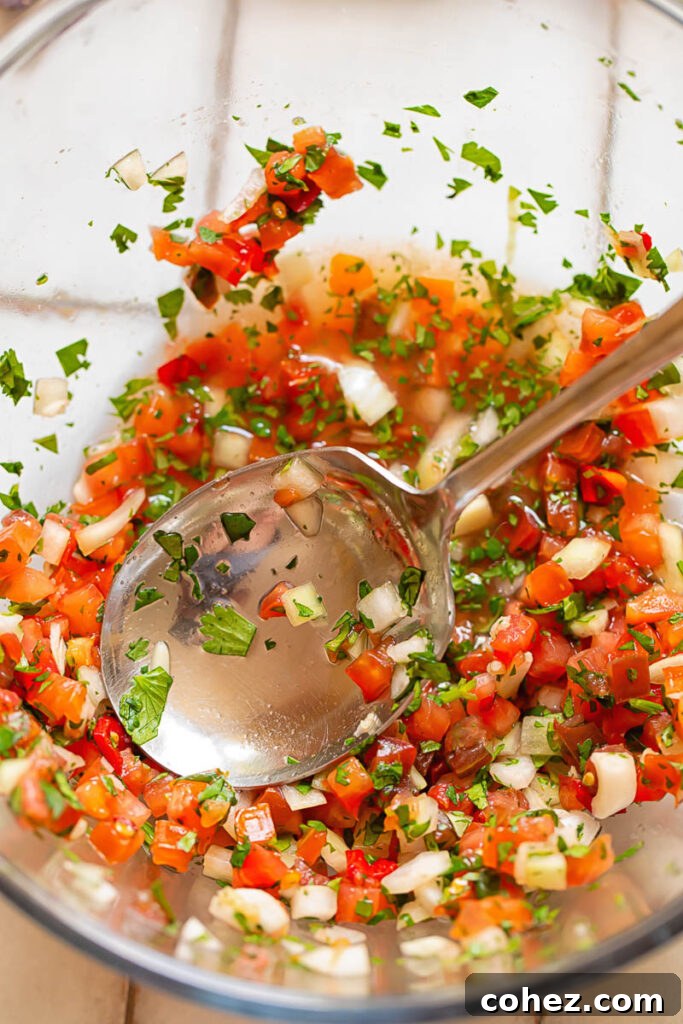
In a medium-sized mixing bowl, combine all the finely prepared ingredients: diced onion, de-seeded and diced tomatoes, chopped cilantro, minced chili, and minced garlic. Squeeze the fresh lime juice directly over the contents of the bowl. Add salt to taste, starting with a quarter teaspoon and adjusting as needed. Gently toss all ingredients together until well combined. The vibrant colors alone are a feast for the eyes!
The Importance of Resting:
While irresistible immediately, Pico de Gallo truly benefits from a short resting period. Allow the flavors to meld and develop for at least 10-15 minutes at room temperature before serving. This brief pause allows the lime juice and salt to draw out the best from the vegetables, creating a more harmonious and punchy salsa.
Expert Tips for an Unforgettable Pico de Gallo
Achieving a standout Pico de Gallo is simpler than you might think when you keep a few key principles in mind:
- Tomato Quality is King: Reiterate that truly ripe tomatoes are non-negotiable. They are the heart of this dish.
- Strategic Tomato Choice: Roma, plum, or similar varieties are preferred for their firm flesh and lower seed content. However, don’t rigidly stick to a variety if another type is riper and more flavorful. Trust your eyes and nose!
- The Deseeding Essential: Always remove the soft, seedy core and excess liquid from your tomatoes. This crucial step prevents your Pico de Gallo from becoming watery or “soupy,” maintaining its signature chunky texture. If you decide to skip this step for speed, consider serving your salsa (which will lean more towards salsa fresca) with a slotted spoon to drain excess liquid.
- Embrace Customization: Pico de Gallo is a deeply personal creation. Feel empowered to tinker with the proportions until it perfectly suits your palate. Perhaps you prefer more garlic for an intense kick, less chili for a milder experience, no cilantro (though it fundamentally alters the profile), or an extra squeeze of lime for supreme tanginess. “You do you” is the golden rule here.
- Always Taste and Adjust: Before presenting your masterpiece, always take a moment to taste. This allows you to fine-tune the seasonings, adding more salt, lime, or chili if anything feels lacking. A final adjustment can elevate a good Pico to a truly great one.
- Consider a Vegetable Chopper: For those seeking speed and uniformity, a good quality vegetable chopper can make quick work of dicing ingredients, ensuring consistent pieces which contribute to the ideal texture.
Serving Suggestions: Beyond the Bowl of Chips
Nothing quite beats the simple pleasure of a freshly made batch of Pico de Gallo, paired with a generous bowl of crunchy corn tortilla chips and an icy cold margarita. It’s the quintessential Mexican appetizer experience. But the versatility of this fresh salsa extends far beyond the chip bowl, making it a stellar accompaniment to a myriad of Mexican-inspired dishes and beyond:
- Tacos, Burritos, and Quesadillas: Pico de Gallo is the ultimate fresh topping for any kind of taco, whether you’re enjoying savory pulled lamb birria tacos, classic beef tacos, or rich slow-cooked pulled pork tacos. It adds a crucial layer of freshness and acidity that cuts through rich meats and cheeses. Pile it high on burritos, burrito bowls, and quesadillas for a burst of vibrant flavor.
- Enchiladas and Fajitas: Brighten up a bubbling tray of melty chicken enchiladas or sizzling fajitas with a dollop of fresh Pico de Gallo. Its raw, crisp texture provides a delightful contrast to the cooked elements.
- Grilled Meats and Fish: Elevate simple grilled chicken, steak, or fish fillets (especially white fish like cod or tilapia) with a generous spoonful of Pico de Gallo. The lime and cilantro beautifully complement seafood, while the acidity cuts through richer meats.
- Eggs and Breakfast Dishes: A fantastic addition to scrambled eggs, omelets, breakfast burritos, or even huevos rancheros, adding a fresh, zesty kick to your morning meal.
- Salads: Use it as a vibrant, chunky dressing or a flavorful component in green salads or grain bowls.
- Avocado Toast: For a refreshing twist, top your avocado toast with a spoonful of Pico de Gallo.
- Beverage Pairings: While the classic lime margarita is a natural fit for this lime-heavy salsa, consider a refreshing blood orange margarita. Its bursting citrus notes offer a slightly different, yet equally perfect, partnership, being less assaulting than the pure lime classic.
Storage and Leftovers: Maximizing Freshness and Flavor
Due to its raw, fresh ingredients, particularly the combination of tomatoes and lime juice, Pico de Gallo has a relatively short shelf life. For optimal freshness, it’s best consumed within 24-48 hours. After about 3 days in the refrigerator, the tomatoes and lime will start to react, leading to a slight “fizzing” and a breakdown in texture, making the salsa seem “off.”
That said, I firmly believe that this recipe actually benefits from a one-night stay in the cool embrace of the fridge. Allowing it to rest overnight permits the flavors to truly meld and deepen, resulting in an even punchier and more harmonious salsa the next day. Just ensure it’s stored in an airtight container. This not only preserves its freshness but also prevents the potent aromatics of garlic and onion from permeating other milder inhabitants of your refrigerator.
If you find yourself with slightly older Pico de Gallo (beyond 2-3 days), don’t despair! While it might not be ideal for fresh consumption, it can still be repurposed. Consider stirring it into a chili or soup base, or lightly cooking it down with some additional tomato paste and broth to create a quick, flavorful sauce for chicken or fish. This transformation allows you to salvage the delicious flavors without wasting any ingredients.
Explore More Vibrant Dips to Elevate Your Table
- Cottage Cheese Red Pepper Dip
- Smoked Cheddar Southwest Dip
- Creamy Cilantro and Walnut Dip
- Cheesy Cranberry and Chorizo Dip Recipe
Pico de Gallo Recipe
By Julia Frey of Vikalinka
Prep Time: 10 mins | Total Time: 10 mins
Servings: 4 people
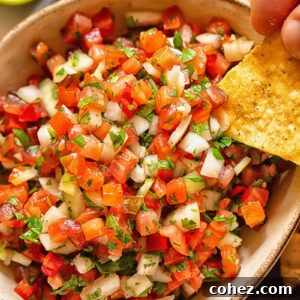
Pico de Gallo is a side dish of finely chopped tomatoes, onions, garlic, chili, cilantro, and lime, offering a pure mouthful of Mexico.
Ingredients
- 1 medium white or red onion
- 1/2 – 1 red chili (adjust to taste)
- 25g – 35g / 1/4 cup – 1/3 cup fresh cilantro leaves only
- 1 – 2 cloves garlic, minced
- 1 lime, juice only
- 4 large ripe tomatoes (Roma/plum tomatoes or San Marzano are ideal, see tips)
- 1/4 tsp salt (or to taste)
Instructions
- Dice the onion and de-seeded tomatoes into small, uniform cubes. Finely chop the cilantro and de-seeded red chilies. Mince the garlic or use a garlic press. (For speed and uniformity, a vegetable chopper can be used.)
- In a medium bowl, combine all the prepared ingredients. Squeeze the fresh lime juice directly over the contents and add salt to taste. Gently toss to combine.
- Allow the flavors of the Pico de Gallo to blend for at least 10-15 minutes before serving with tortilla chips or your favorite Mexican dishes.
Recipe Notes
- The key to great Pico de Gallo is ripe tomatoes. Roma or plum tomatoes are commonly used for their low seed-to-flesh ratio, but choosing truly ripe tomatoes is more important than strict adherence to a specific variety.
- Always remove the soft, seedy core of the tomatoes to ensure a firm, chunky salsa and prevent a soupy consistency. If you skip this, serve with a slotted spoon to drain excess liquid.
- This recipe is highly adaptable. Adjust the proportions of garlic, chili, lime, and cilantro to perfectly match your preference.
- Always taste before serving and make any final adjustments to seasoning as needed.
Nutrition (Approximate per serving)
Calories: 40 kcal | Carbohydrates: 9g | Protein: 2g | Fat: 0.3g | Saturated Fat: 0.1g | Polyunsaturated Fat: 0.1g | Monounsaturated Fat: 0.1g | Sodium: 156mg | Potassium: 394mg | Fiber: 2g | Sugar: 5g | Vitamin A: 1504IU | Vitamin C: 31mg | Calcium: 26mg | Iron: 1mg
Nutrition information is automatically calculated and should only be used as an approximation.
Tried this recipe? Let us know how it was! We love hearing from you.