
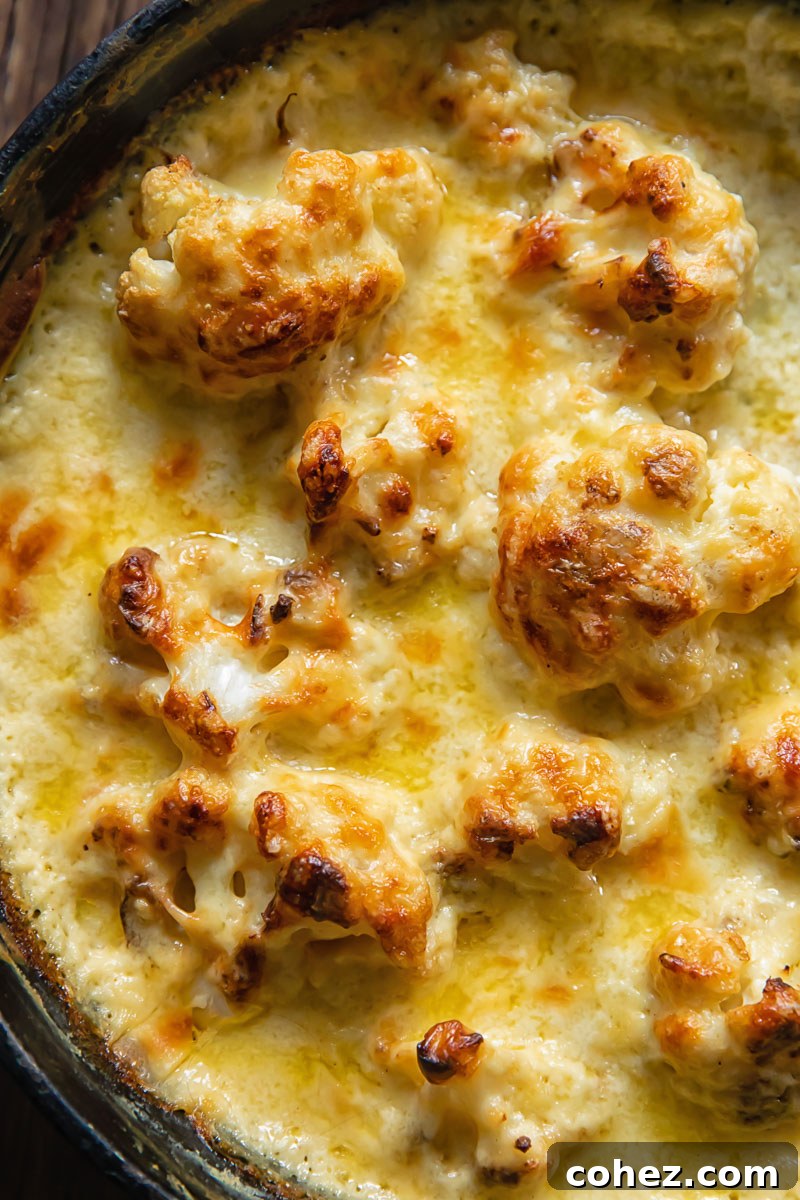
Irresistibly comforting and delightfully versatile, cauliflower gratin stands as the quintessential side dish that effortlessly elevates any meal. Imagine tender, perfectly roasted cauliflower florets, each one lovingly embraced by a luxuriant, velvet-smooth cheese sauce, baked until it’s bubbling, gorgeously oozy, and rich with savory flavor. This culinary masterpiece is far more than just a side; it’s a dish that gracefully complements robust red meats, delicate white meats, or firm fish. Moreover, it shines brilliantly on its own, offering a deeply satisfying and wholesome vegetarian main course. A guaranteed crowd-pleaser, this failsafe recipe ensures that even the most reluctant vegetable eaters will be asking for seconds.
For those times you crave such a sublime cheesy embrace for other vegetables, consider the hearty butternut squash casserole, an excellent alternative if cauliflower isn’t your preference. Or perhaps the aromatic rosemary potatoes au gratin will capture your fancy. Both are celebration-worthy dishes, yet equally perfect for providing an absolute balm of comfort on a chilly evening.
Cauliflower Gratin: A Beloved Global Comfort Food
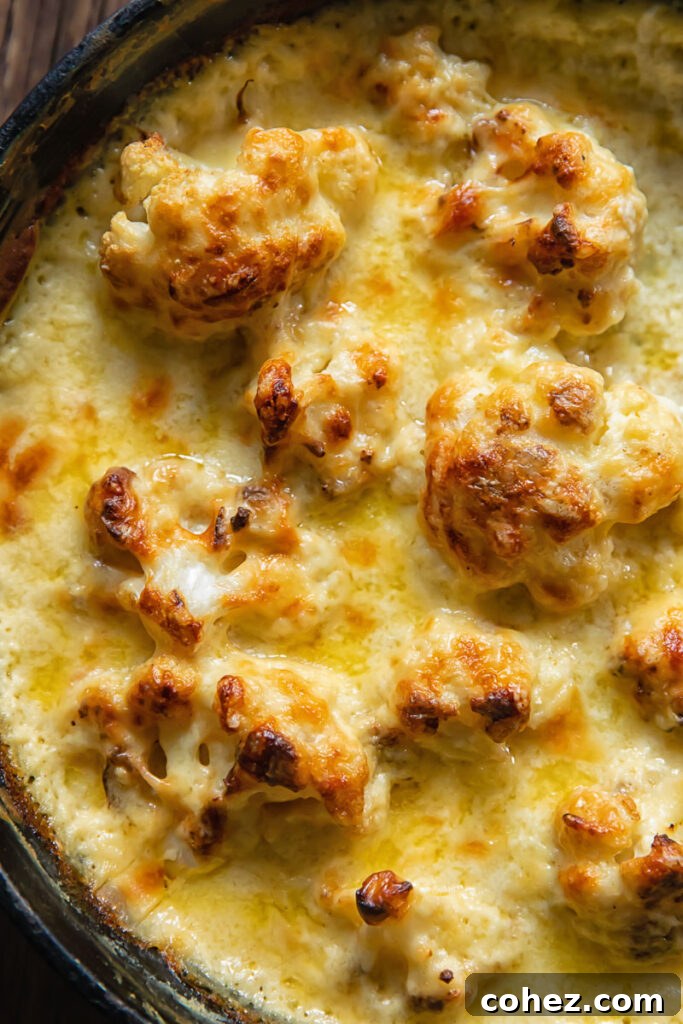
Is there any dish more universally comforting than a bubbling cauliflower cheese bake? Or perhaps, when prepared with finesse, more elegantly sophisticated than cauliflower au gratin? This remarkable dish transcends cultural boundaries, feeling just as at home on a cozy weeknight table in a bustling American kitchen as it does gracing the chalkboard menu of a chic Parisian bistro. Its inherent adaptability is precisely why it deserves a permanent spot in your culinary repertoire.
At its heart, cauliflower gratin is a deceptively simple concept: tender, cooked cauliflower florets enveloped in a rich cheese sauce, often referred to as Mornay sauce, and then baked to golden perfection. However, within this simplicity lies a world of nuanced variations that allow you to tailor the dish to your exact preferences. The journey begins with the star vegetable itself: will you steam, boil, or roast your cauliflower? Each method imparts a different texture and depth of flavor. This particular recipe advocates for roasting, a technique we’ll delve into shortly, as it dramatically intensifies the cauliflower’s natural sweetness and adds irresistible caramelized notes. Beyond the cauliflower, the choice of aromatics is crucial. Our recipe thoughtfully includes finely chopped onion and garlic, building an foundational layer of savory complexity that elevates the entire dish.
The cheese itself is another pivotal decision. While a nutty Gruyère offers a classic, sophisticated profile, a sharp cheddar provides a more robust, familiar tang. And for those seeking an extra layer of gourmet flair, a splash of dry white wine can be introduced into the sauce, lending a bright, acidic counterpoint that beautifully cuts through the richness—a nod to the comforting flavors of an Alpine fondue. Finally, for an added textural dimension, a sprinkle of crispy breadcrumbs over the top before baking can deliver a delightful crunch that contrasts wonderfully with the creamy interior. Whether your preference leans towards laidback simplicity or a touch of culinary luxury, this versatile winter warmer is a timeless classic that you’ll return to again and again.
Expert Tips for the Perfect Cauliflower Gratin
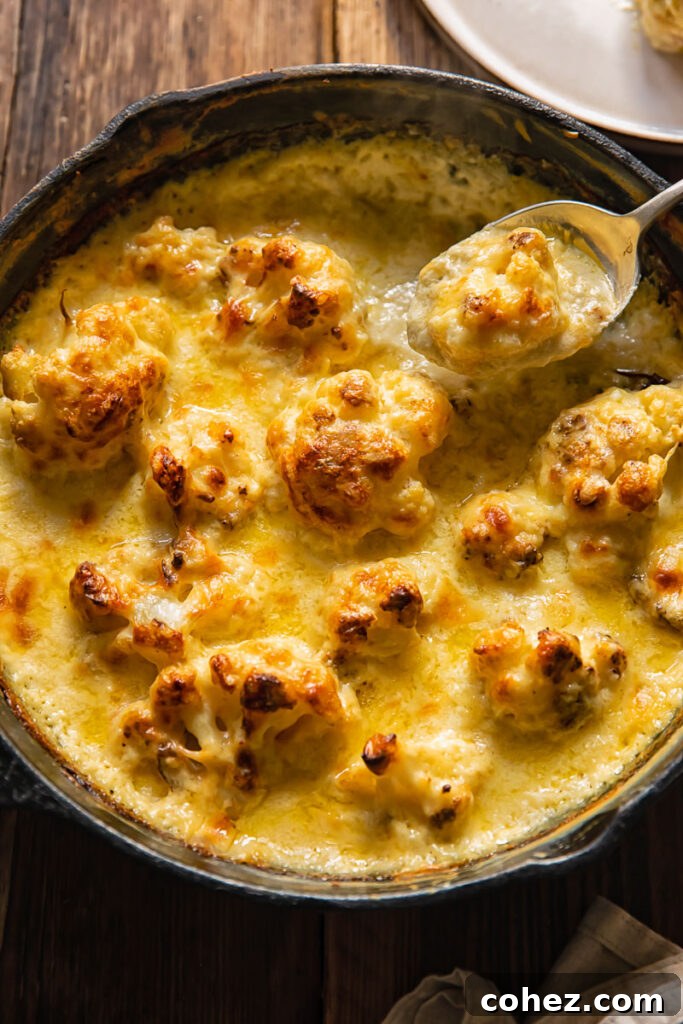
- The Essential First Step: Pre-cook Your Cauliflower. It’s absolutely imperative that the cauliflower is cooked before it’s bathed in the luxurious cheese sauce. Through extensive experimentation with various methods like blanching and steaming, we’ve definitively found that the very best cauliflower au gratin is achieved when the cauliflower is first roasted. This step is a game-changer for flavor and texture.
- Embrace the Roast: Unlocking Deeper Flavor. Roasting the cauliflower prior to baking does wonders for its flavor profile. This process concentrates the vegetable’s natural sugars, leading to a more intense, subtly sweet taste. Furthermore, it encourages the development of those irresistibly gorgeous, slightly charred tips that add both visual appeal and a delightful, complex flavor. The Maillard reaction during roasting caramelizes the florets, transforming them from bland to brilliant.
- Preventing a Soupy Sauce: The Advantage of Roasting. A significant benefit of roasting cauliflower first is its ability to draw out excess moisture. Unlike steaming or boiling, which can leave the cauliflower waterlogged, roasting ensures the florets are drier. This crucial difference prevents your exquisite cheesy sauce from becoming runny or soupy during the final bake, guaranteeing a rich, thick, and perfectly textured gratin.
- Achieving the Ideal Cauliflower-to-Sauce Ratio. For this recipe, we recommend using one large head of cauliflower, roughly 600g to 1kg, which yields a harmonious balance between the vegetable and the decadent cheese sauce. If you prefer a less saucy gratin, or wish to highlight the cauliflower even more, feel free to increase the amount of cauliflower used. The flexibility of this dish allows for personal preference.
- The Secret to a Silky Smooth Mornay Sauce. In our kitchen, a silky-smooth cheese sauce is non-negotiable. We achieve this by blending our Mornay sauce with an immersion blender to completely purée the softened onion bits. This step results in an incredibly luxurious texture that melts in your mouth. If you don’t mind a slightly more rustic consistency, or if time is of the essence, skipping the blending step is perfectly fine – the flavor will still be exceptional!
- The Optional Splash of White Wine: A Touch of Alpine Charm. We adore adding a splash of dry white wine to our cheesy sauce. It imparts a beautiful, sharp edge that wonderfully complements the richness of the cheese, especially when using Gruyère. This addition instantly evokes the cozy, sophisticated flavors of an Alpine Swiss fondue. However, if cooking with wine isn’t your preference, or if you’re serving a younger audience, feel free to omit it without compromising the deliciousness of the gratin.
- Selecting Your Star Cheese. Gruyère is widely regarded as the classic cheese for an authentic Mornay sauce, celebrated for its nutty, complex flavor and superb melting qualities. However, any good melting cheese will work beautifully. Sharp cheddar is a popular and delicious substitute, offering a bolder, tangier profile. If opting for cheddar, we suggest omitting the white wine, as cheddar already possesses a distinct tanginess that might clash with the wine’s acidity. For more cheesy inspiration, be sure to check out our roasted asparagus with Mornay sauce – another testament to the magic of cheesy, creamy goodness.
- Choosing the Right Baking Dish. To achieve that perfect golden crust and even cooking, a wide and shallow baking dish is ideal for this cauliflower cheese bake. This shape maximizes the surface area exposed to the oven’s heat, promoting browning and caramelization on the top layer of the sauce and cheese.
Serving Suggestions: Beyond the Side Dish
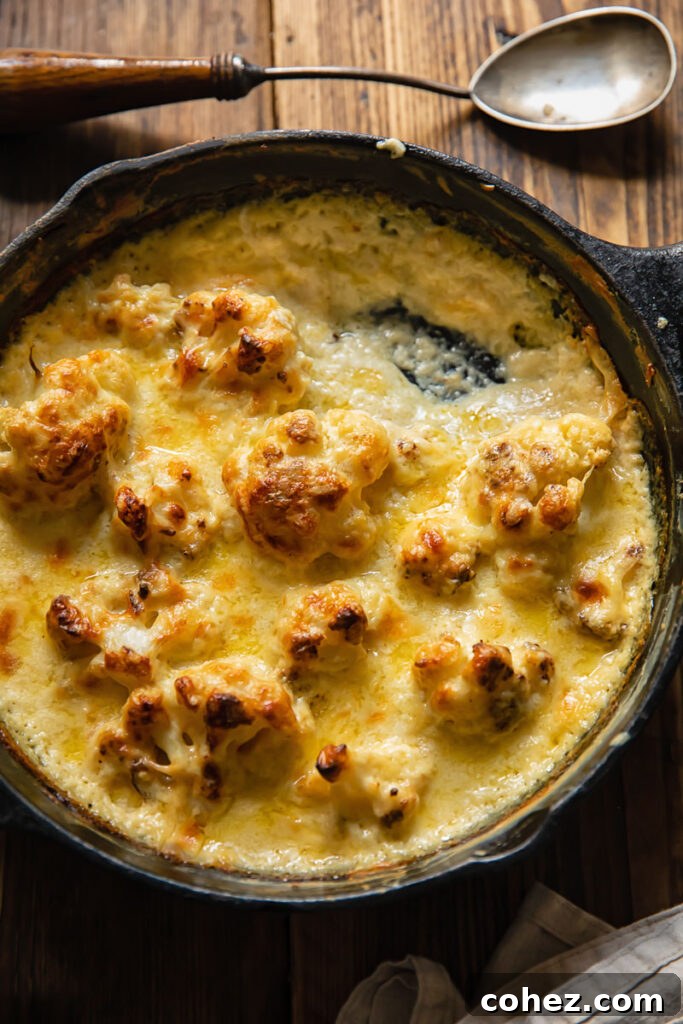
While cauliflower au gratin is most frequently lauded as an exceptional side dish, its versatility allows it to shine in a multitude of culinary roles. This generously portioned cheesy mega-bake, designed to serve 6 to 8 people, is absolutely ideal for a festive banquet. Picture it as a star accompaniment alongside a holiday roast turkey, paired with vibrant roasted parmesan carrots and Brussels sprouts, and complemented by a side of crispy air fryer potatoes. The creamy, rich gratin provides a wonderful textural and flavor contrast to the other components of a grand holiday feast.
Beyond festive occasions, we particularly adore the rich, creamy cauliflower gratin with hearty red meats. Imagine it nestled beside a succulent honey mustard crusted prime rib roast, or acting as the perfect foil to a perfectly seared ribeye steak. For an ultimate indulgence, serve either of these with a generous helping of parmesan truffle fries – a truly unforgettable dining experience.
However, there’s absolutely no need to relegate cauliflower gratin exclusively to the sidelines. This dish possesses enough substance and flavor to proudly stand as the star of a vegetarian show. It can easily be served as a satisfying main course, perhaps accompanied by a simple pasta dish or a refreshing green salad. Consider pairing it with bright, vibrant greens like roasted asparagus and radishes with a zesty mustard vinaigrette. The combination of the creamy gratin with crisp, tangy greens creates a balanced and incredibly enjoyable meal. Its creamy texture and rich flavor also make it a fantastic pairing with crusty artisan bread, perfect for soaking up every last drop of the decadent sauce.
Storage and Leftovers: Maximizing Your Gratin Enjoyment
For those who love to plan ahead, you’ll be delighted to know that this incredible cauliflower gratin is an excellent make-ahead dish. It can be prepared in advance, stored thoughtfully, and then baked when you’re ready to serve, making entertaining significantly less stressful. Follow the recipe instructions precisely up to the point where the assembled dish is ready to enter the oven. Once assembled, allow the gratin to cool completely to room temperature. This is a crucial step for food safety and quality preservation. Once cooled, cover the dish tightly with plastic wrap or aluminum foil and refrigerate it for up to 3 days. This preparation method is perfect for busy weeknights or for getting a head start on a large holiday meal.
When you’re ready to enjoy your pre-made gratin, simply retrieve it from the refrigerator. Follow the original baking instructions, but extend the cooking time by an additional 10-15 minutes to account for the chilled temperature. You’ll know it’s perfectly reheated when the sauce is bubbling vigorously and the cheese on top is beautifully golden and melted. This strategy is a true win for your Thanksgiving dinner game or any occasion where you want to minimize last-minute cooking.
However, a word of caution regarding freezing: as with all dairy-rich sauces, we generally do not advise freezing this gratin. The delicate emulsion of your velvet-smooth cheese sauce is susceptible to breaking down during the freezing and thawing process. This can result in an unappetizingly mushy and grainy texture, far from the luscious consistency you desire. For this reason, it’s best enjoyed fresh or from refrigeration rather than being stored in the freezer. Preserve the quality and savor the intended experience – after all, a gratin of this caliber is truly Thanksgiving worthy, and you wouldn’t want to compromise that!
More Delicious Side Dishes to Try
- Parmesan Crusted Potatoes
- Tuna Macaroni Salad
- Roasted Carrots with Garlicky Lemon Tahini Sauce
- Festive Red Cabbage Slaw
Cauliflower Gratin
By Julia Frey of Vikalinka
Prep: 15 mins
Cook: 1 hr 30 mins
Total: 1 hr 45 mins
Servings: 6 people
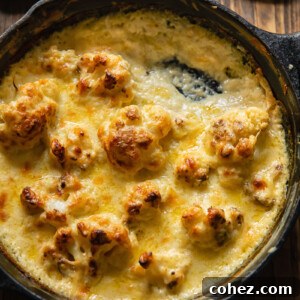
Cauliflower gratin is tender, roasted cauli florets blanketed in a velvet sauce that is bubbling, oozy and rich with cheese. An irresistible side or vegetarian main!
Ingredients
For the Roasted Cauliflower
- 600g – 1kg / 1 large head cauliflower, broken into florets
- 1 tbsp oil (olive oil recommended)
- Salt, to taste
For the Mornay Sauce
- 3 tbsp butter
- 1 onion, finely chopped
- 2 cloves garlic, minced
- 3 tbsp all-purpose flour
- 500ml / 2 cups whole milk
- 1/4 tsp freshly grated nutmeg
- 120g / 4 oz Gruyère or sharp cheddar cheese, freshly grated (reserve 1/2 cup for topping)
- 1/4 cup dry white wine (optional)
- Salt to taste
- 1 tbsp butter for greasing the pan
Instructions
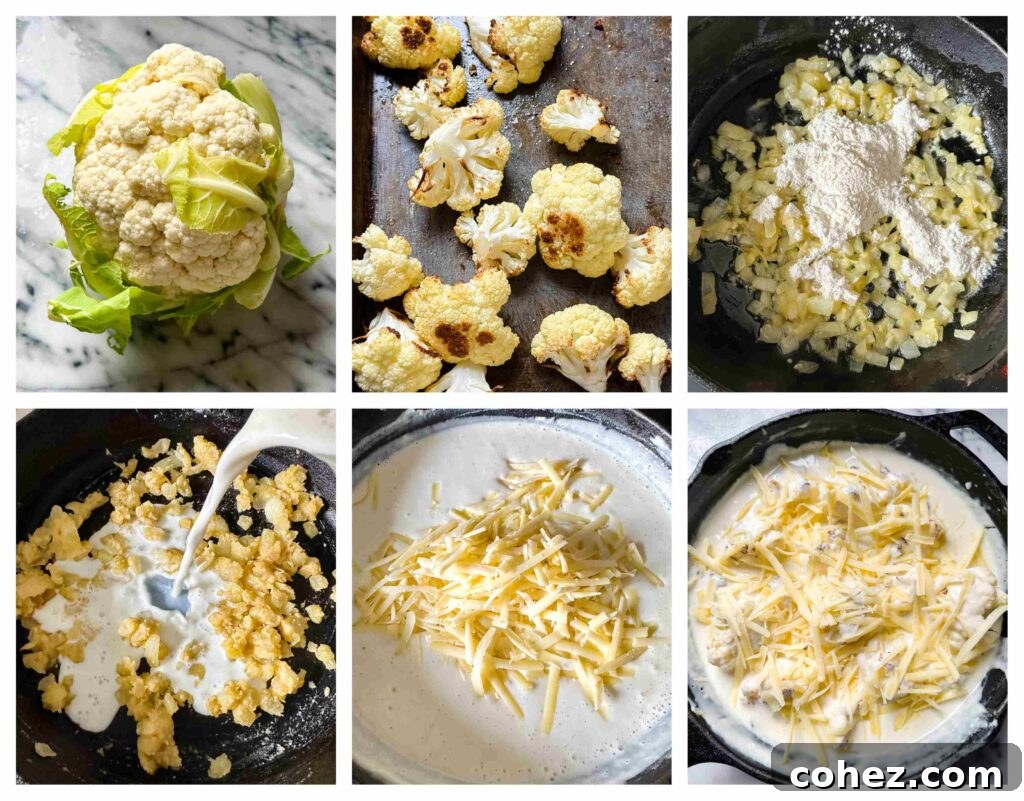
- Preheat Oven & Roast Cauliflower: Preheat the oven to 200°C/400°F. Break the cauliflower head into florets, keeping them in fairly large chunks. Arrange them evenly on a baking sheet. Drizzle with 1 tablespoon of olive oil and a pinch of salt. Roast in the preheated oven for 20 minutes, or until the florets are slightly charred at the edges but still retain a firm bite. Remove from the oven and set aside.
- Prepare Mornay Sauce Base: While the cauliflower is roasting, begin making the Mornay sauce. Melt the 3 tablespoons of butter in a large pan or saucepan over low heat. Add the finely chopped onion and sauté gently for 10 minutes, ensuring it softens thoroughly without browning. Stir in the minced garlic and cook for an additional 30 seconds until fragrant.
- Build the Sauce: Stir the flour into the pan with the softened onions and garlic. Continue cooking and stirring for 2-3 minutes until it smells slightly nutty, allowing the flour to cook out. Gradually pour in the warmed whole milk while continuously whisking to prevent any lumps from forming. Add the nutmeg and another pinch of salt. Cook over low heat for approximately 10 minutes, stirring occasionally, until the sauce thickens sufficiently to coat the back of a spoon. For a luxuriously smooth sauce, you can now blend it with an immersion blender. If you prefer a more rustic texture, this step is optional.
- Add Cheese & Optional Wine: Remove the pan from the heat. Stir in all but the reserved 1/2 cup of grated cheese until it is fully melted and incorporated into the sauce. If desired, slowly blend in the 1/4 cup of dry white wine to achieve a delicious, subtle fondue-like taste. Taste the sauce and adjust the salt as needed for perfect seasoning.
- Assemble the Gratin: Lightly butter a shallow baking dish (or you can use the same oven-safe skillet if applicable). Arrange the roasted cauliflower florets evenly in the prepared dish. Pour the rich Mornay sauce generously over the cauliflower, ensuring every floret is well covered. Scatter the reserved 1/2 cup of grated cheese over the top of the sauce.
- Final Bake: Place the assembled gratin in the preheated oven and bake for 30 minutes, or until the sauce is visibly bubbling, and the cheese topping is beautifully golden brown and irresistible. Serve hot and enjoy!
Nutrition Information (Approximate per serving)
Calories: 261kcal | Carbohydrates: 14g | Protein: 11g | Fat: 18g | Saturated Fat: 9g | Polyunsaturated Fat: 1g | Monounsaturated Fat: 6g | Trans Fat: 0.2g | Cholesterol: 47mg | Sodium: 640mg | Potassium: 488mg | Fiber: 2g | Sugar: 7g | Vitamin A: 504IU | Vitamin C: 50mg | Calcium: 339mg | Iron: 1mg
Nutrition information is automatically calculated, so should only be used as an approximation.
Tried this recipe?
Let us know how it was! We love to hear from you.