
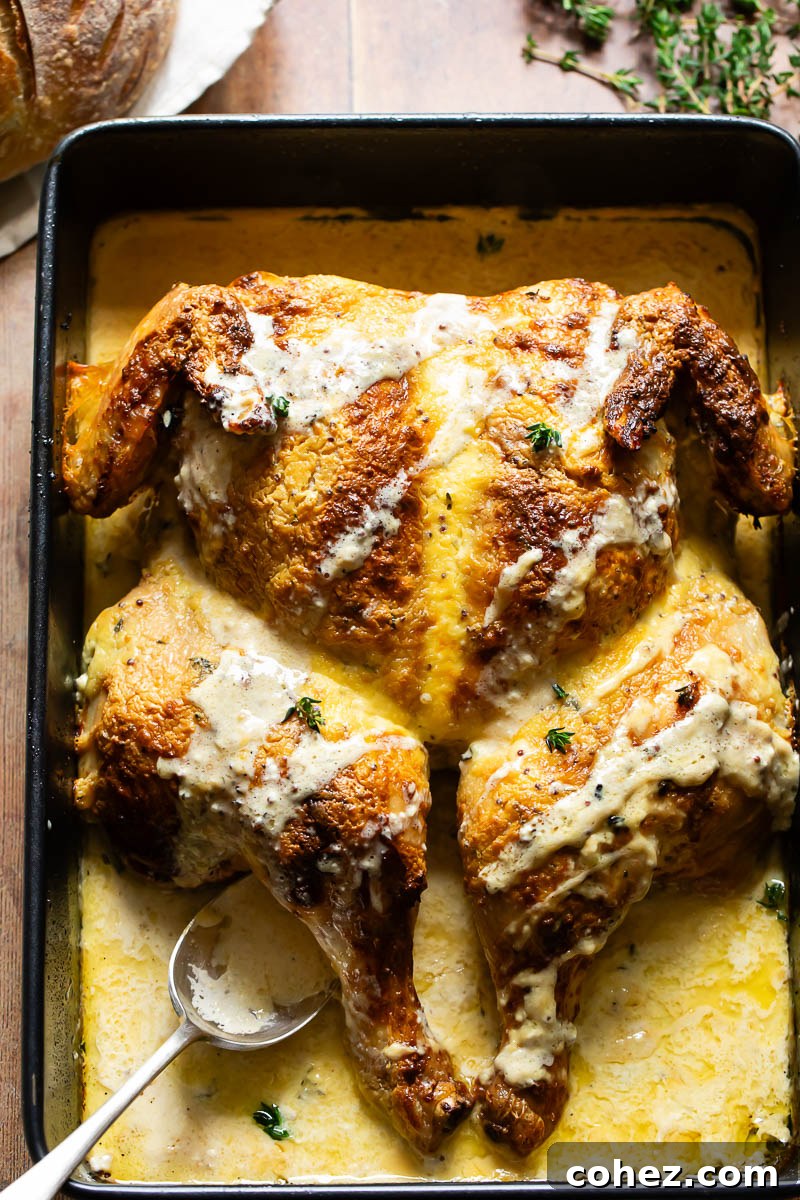
Transform your weeknight dinner with the ultimate Spatchcock Chicken in Creamy Mustard Sauce – a true culinary revelation for busy home cooks. This ingenious method dramatically slashes roasting time, allowing you to serve a succulent, whole roasted chicken in under an hour. Infused with aromatic garlic and fresh thyme, and featuring a vibrant, zesty sauce crafted from not one, but two distinct types of mustard, this recipe promises a meal that’s both elegant and incredibly simple to prepare. Say goodbye to lengthy waits and hello to perfectly cooked, flavour-packed chicken any night of the week.
If kitchen butchery isn’t quite your style yet, don’t worry! You can still experience the delightful harmony of chicken and mustard with our Chicken in Wine and Mustard Sauce. This alternative recipe features tender chicken thighs lovingly braised in a rich white wine sauce, generously enhanced with cream and classic Dijon mustard, proving that this flavour combination is a winner in any form.
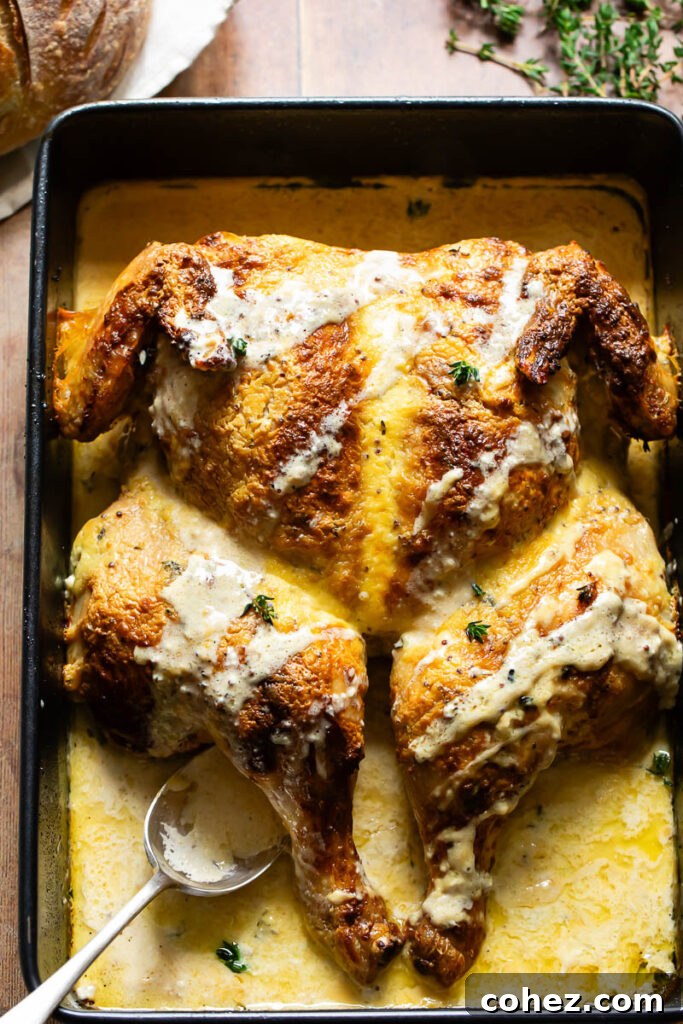
As the days grow longer and the signs of spring abound – from the blossoming magnolia to the ubiquitous Easter treats – my kitchen is definitely shifting gears. It’s time to move away from heavy, time-consuming comfort foods and embrace lighter, quicker meals that leave more time for enjoying the beautiful outdoors. However, my love for a perfectly roasted whole chicken, with its irresistible crispy skin and juicy meat, is something I’m not ready to give up for the next six months. The solution? Getting “chicken-smart” by adopting the spatchcock method, drastically cutting down on cook time while still delivering all the beloved qualities of a roast. Served with fresh, seasonal sides, this approach allows us to savour delicious roasted chicken without sacrificing precious daylight. Who’s ready to join me in this culinary evolution?
Mastering Roasted Spatchcock Chicken for Weeknight Wonders
The term ‘spatchcock’ itself carries a fascinating, if slightly obscure, history. Most culinary historians agree that both the term and the technique originated in 19th-century Ireland. Some theories suggest it’s a playful contraction of the phrase ‘dispatch the cock,’ referring to the quick preparation of a chicken for cooking. Others trace its roots to the old Irish verb ‘spothaim,’ meaning ‘to split.’ Regardless of its exact etymology, you might be more familiar with the more descriptive term ‘butterfly chicken,’ which aptly describes the bird’s flattened appearance post-preparation. Whatever you call it, the result is a superior roasted chicken experience.
And let me tell you, I am absolutely obsessed with spatchcock chicken recipes lately! If you’re looking for more ways to enjoy this incredible technique, be sure to check out my Spatchcock Chicken with Breadcrumbs for a crispy, flavourful crust, or my vibrant Spatchcock Chicken in Spicy Yoghurt Sauce for a tangy, aromatic twist. Each recipe showcases the versatility and efficiency of this method.
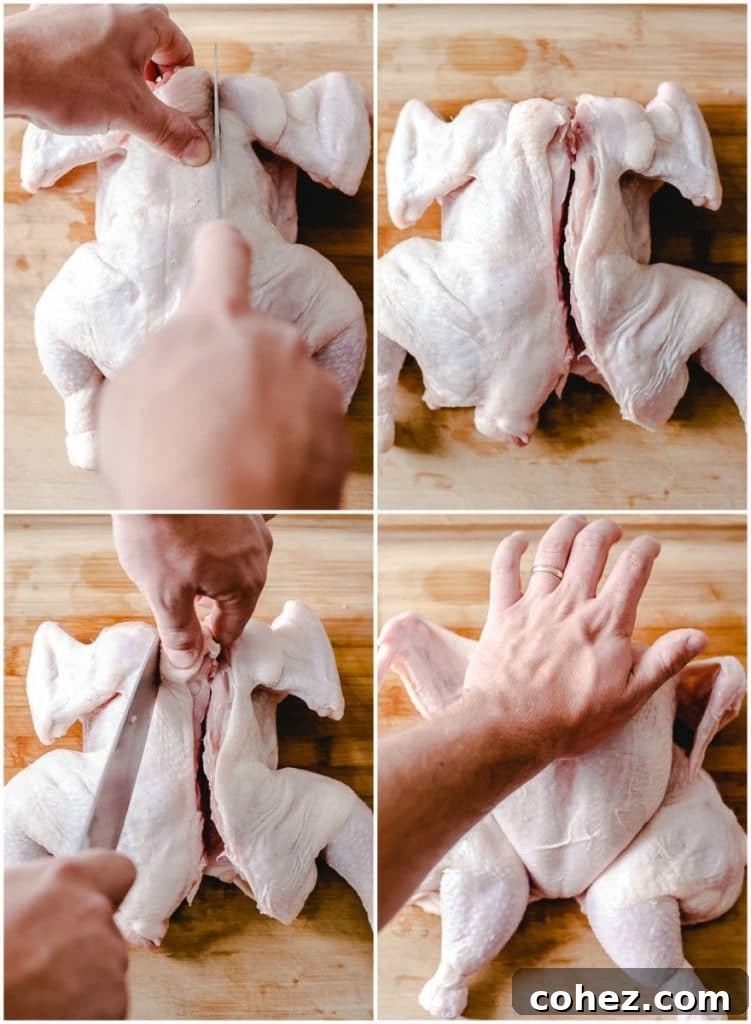
Essentially, spatchcocking involves a minimal amount of kitchen butchery that yields monumental results. The process is straightforward: using a very large, sharp knife or a sturdy pair of kitchen shears, you carefully remove the backbone from a whole bird. Once the backbone is out, simply flip the bird breast-side up and press down firmly on the breastbone with the palm of your hand until you hear a satisfying ‘crack.’ This action flattens the chicken, spreading it out much like a butterfly, making it ready for cooking. While it might sound a little intimidating at first, requiring a bit more effort than simply tossing a whole chicken into the oven, the benefits are immense and quickly make it a go-to technique.
With a freshly sharpened knife (or robust kitchen shears) and a steady hand, you’ll master this technique in no time. The payoff truly is huge, transforming your approach to cooking whole chickens:
- Dramatic Reduction in Cook Time: Perhaps the most compelling reason, a spatchcocked chicken cooks in roughly half the time of a traditional whole roast chicken. This means you can enjoy a full, impressive roast chicken meal even on the busiest weeknights. No more reserving roast chicken for special occasions – it’s now an everyday possibility.
- Remarkably Even Cooking: The flattened form allows for uniform heat distribution across the entire bird. This eliminates the common dilemma of dry breast meat and undercooked dark meat. Every bite, from the tender breast to the succulent thighs and drumsticks, will be perfectly cooked and juicy.
- Effortless Carving: Because the chicken is already flattened, it’s practically pre-carved for you. This makes serving a breeze, reducing the usual struggle and mess associated with carving a round bird. Your meat and side dishes will stay warm, and you’ll spend less time at the carving station and more time enjoying the meal with your family and guests.
- Space-Saving Storage for Leftovers: A common complaint about traditional roast chicken leftovers is how much space they consume in the fridge. Spatchcocked chicken, being flat, fits neatly into airtight containers, making storage and future meal prep incredibly efficient and hassle-free. This simple change maximizes fridge space and makes meal planning a dream.
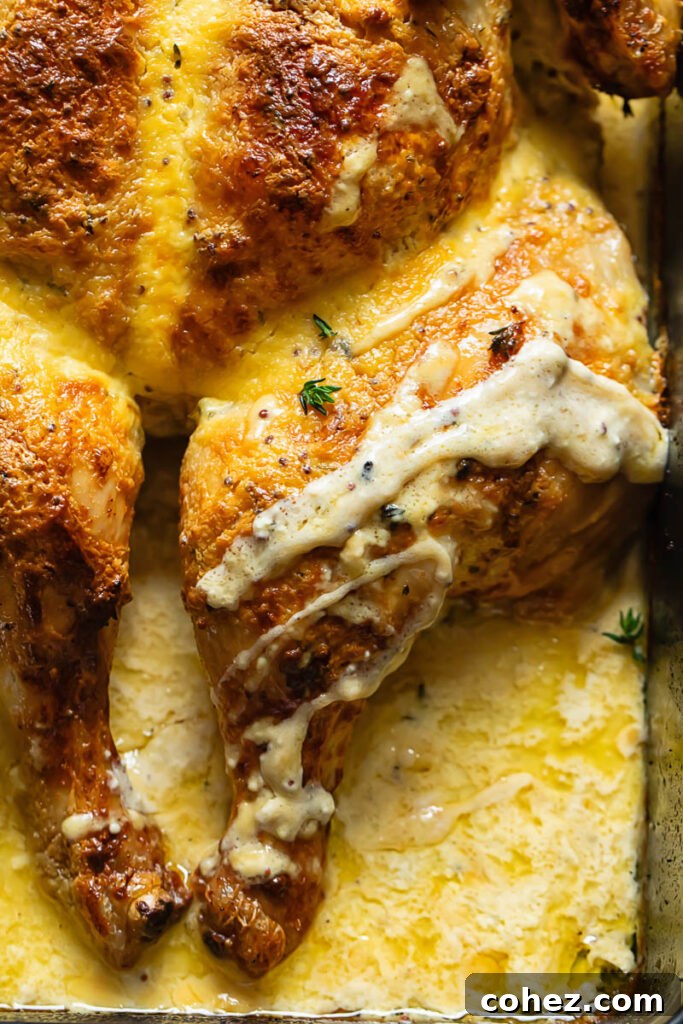
Crafting the Perfect Dijon Mustard Sauce for Chicken
Chicken and mustard truly are a match made in culinary heaven. The mild, subtly sweet flavour profile of chicken acts as the perfect canvas, beautifully complemented by the salty, vinegary, and often sharp piquancy of mustard. It’s a flavour combination I find endlessly appealing, incorporating it into countless dishes. I often add a generous spoonful of mustard to my Creamy Mustard Chicken Pasta for an extra layer of depth, and a dollop of it is essential in my hearty Chicken and Mushroom Pie. This versatility speaks to mustard’s incredible ability to elevate and transform simple ingredients.
For this particular creamy mustard sauce, I’ve chosen to combine two of my absolute favourite mustard varieties: Dijon and wholegrain. Dijon mustard is celebrated for its distinctive pale amber hue and incredibly smooth, velvety texture. Its flavour is notably milder than a fiery English mustard, yet it still delivers a sophisticated, tangy kick that awakens the palate without overpowering it. It brings a refined sharpness that cuts through the richness of the cream beautifully. On the other hand, wholegrain mustard, thick with visible yellow and brown mustard seeds, adds a wonderful textural dimension and a rustic visual appeal. Its flavour is also relatively mild, providing a gentle warmth and a slightly nutty undertone that complements the sharpness of the Dijon. Together, they create a balanced and complex flavour profile that’s both exciting and comforting.
While I highly recommend using both Dijon and wholegrain mustards for the optimal balance of flavour and texture, you are, of course, welcome to choose just one if you prefer, or adjust the ratios to suit your personal taste. The beauty of this recipe lies in its flexibility.
The strategic addition of cream to the mustard performs two crucial functions. Firstly, it effectively stretches the sauce, making it more substantial and ensuring there’s plenty to coat every piece of chicken. Using pure, undiluted mustard would be far too intense and overwhelming. Secondly, and equally important, the cream acts as a fantastic modulator, dampening down the inherent spice factor of the mustard. This creates a wonderfully mellow and rich sauce that is robust in flavour but not overly pungent, making it appealing to even the most sensitive palates at your table. Feel free to experiment with the quantities of both mustard and cream to tailor the sauce precisely to your desired level of zest and richness.
Essential Recipe Tips and Notes for Success
- Don’t Be Intimidated! While spatchcocking might seem daunting at first glance, I promise you it’s incredibly straightforward. After you’ve done it just once, you’ll wonder why you ever roasted a whole bird any other way. It truly becomes second nature.
- Arm Yourself with the Right Tools: Before you begin, ensure you have the correct equipment. A super sharp chef’s knife is ideal, but a sturdy pair of kitchen shears can make the backbone removal even easier. A decisive, confident hand is also key – remember, you will be cutting through bone, so a firm approach is best.
- Follow the Visual Guide: To ease any apprehension, I’ve included a helpful step-by-step photo collage within the post. Refer to it as you work through the spatchcocking process – seeing each stage visually can make all the difference.
- Embrace the Speed and Evenness: Reaping the prime benefits of spatchcocking, your butterflied chicken will cook in roughly half the time of a traditional whole bird, and crucially, it will cook far more evenly. This means no more dry breast meat or undercooked dark meat, just perfectly succulent chicken throughout.
- Ensure Food Safety with a Meat Thermometer: To guarantee your chicken is cooked perfectly and safely, your trusty meat thermometer is your best friend. Insert it into the thickest part of the thigh, avoiding the bone. The internal temperature should read 74°C (165°F). This is the foolproof way to ensure a safe and delicious meal.
- The Double Mustard Delight: What truly makes this spatchcock chicken recipe shine is its incredible creamy mustard sauce. The combination of both Dijon and wholegrain mustards creates a double-delish flavour profile – sophisticated, tangy, and with just the right amount of texture. If you have a strong preference or aversion to one type of mustard, feel free to adjust or omit as you see fit.
- Simplicity in Sauce: Despite its gourmet taste, this sauce is remarkably simple to prepare. Just combine all the sauce ingredients in a bowl, give them a good whisk, and pour the mixture over your half-roasted chicken. It thickens and melds beautifully as the chicken finishes cooking, creating a luscious gravy.
- Plan for Delicious Leftovers: Don’t forget those precious leftovers! A spatchcocked chicken stores brilliantly and offers endless possibilities for future meals, from salads to sandwiches or comforting soups.
Delightful Serving Suggestions for Your Creamy Mustard Chicken
While a roast chicken traditionally pairs well with a myriad of side dishes, the rich, creamy, and subtly piquant mustard sauce that generously smothers this spatchcock chicken lends itself beautifully to lighter, fresher accompaniments. The goal is to balance the richness of the chicken with sides that offer contrasting textures and complementary flavours, creating a harmonious and truly satisfying meal. Here are some of my favourite ideas:
- Simple Green Garden Salad and Buttered New Potatoes: A classic for a reason. The crisp, fresh greens (perhaps with a light vinaigrette) provide a refreshing counterpoint, while small, tender new potatoes boiled and tossed with a knob of butter offer comforting simplicity without being too heavy.
- Colourful, Slow-Roasted Oven Vegetables and Air Fryer Fries: Roasting vegetables slowly brings out their natural sweetness and creates beautiful caramelization. Think carrots, parsnips, bell peppers, or zucchini, roasted until tender and slightly browned. Pair these with quick and crispy air fryer fries for a fun, flavourful side that adds a satisfying crunch.
- Fresh and Summery Green Goddess Pasta Salad: For a complete meal in one vibrant dish, a Green Goddess pasta salad is an excellent choice. Packed with fresh herbs, crisp vegetables, and a creamy, tangy dressing, it offers everything you need alongside your chicken – texture, flavour, and a refreshing lightness.
- Nutritional Powerhouse Quinoa Salad with Lentils and Beets: If you’re looking for a side that’s as nourishing as it is delicious, a quinoa salad with lentils and beets is a fantastic option. This single bowl is bursting with earthy flavours, wholesome grains, and vibrant colours, providing a hearty yet healthy accompaniment to the rich chicken.
Storage Solutions and Creative Leftover Ideas
One of the many benefits of this spatchcock chicken recipe is how beautifully it stores and transforms into new meals. Leftover roasted spatchcock chicken, still nestled in its creamy mustard sauce, will keep perfectly in an airtight container in the fridge for 3-4 days. To maintain the chicken’s flavour and prevent the robust mustard aromas from permeating other foods in your refrigerator, ensure the container is tightly sealed.
I always make sure to cook a little extra, because maximizing roast chicken leftovers is a fantastic way to minimize food waste and create quick, delicious subsequent meals. The thyme and mustard-infused meat is wonderfully versatile and can be repurposed in numerous ways:
- Comforting Soups: Shred the chicken and add it to a hearty chicken vegetable soup. The creamy mustard sauce can even be thinned out slightly with a bit of broth to form a flavourful base.
- Vibrant Salads: Dice the cold chicken and toss it into a fresh green salad or a more substantial summer fresh Cobb salad. The mustard flavour adds a delightful tang without needing extra dressing.
- Quick Sandwiches or Wraps: Pile slices or shredded chicken onto your favourite bread or into a warm tortilla for a gourmet sandwich or wrap. Add some lettuce, tomato, and maybe a slice of cheese for a satisfying lunch.
More Delicious Chicken Recipes to Try
- Chicken with Garlic Mushroom Sauce
- Thai Glazed Instant Pot Whole Chicken
- Chicken with 40 Cloves of Garlic
- Roast Chicken with Mango Chutney Glaze
Spatchcock Chicken in Creamy Mustard Sauce

Ingredients
- 1 large whole chicken, (2.5kg / 5.5lbs)
- 2 tsp garlic powder, divided
- 1 tbsp olive oil
- 1 tsp salt
- 5 thyme sprigs, divided
- 300ml / 1¼ cups double / heavy cream
- 2 tbsp Dijon mustard
- 1 tbsp whole grain mustard
- 125ml / 1/2 cup dry white wine
Instructions
-
Preheat the oven to 220C/450F. To spatchcock a chicken, place it breast side down on a cutting board. Using a sharp knife or strong kitchen shears, carefully cut along one side of the backbone, then repeat on the other side. Remove the backbone (you can save it for making stock or discard it). Flip the bird cut side down. Place the palm of your hand on the chicken breast and press down firmly to flatten it until you hear a crack. Tuck the wing tips under the breasts to prevent them from burning during roasting. (Refer to the photo guide in the post for visual assistance).
-
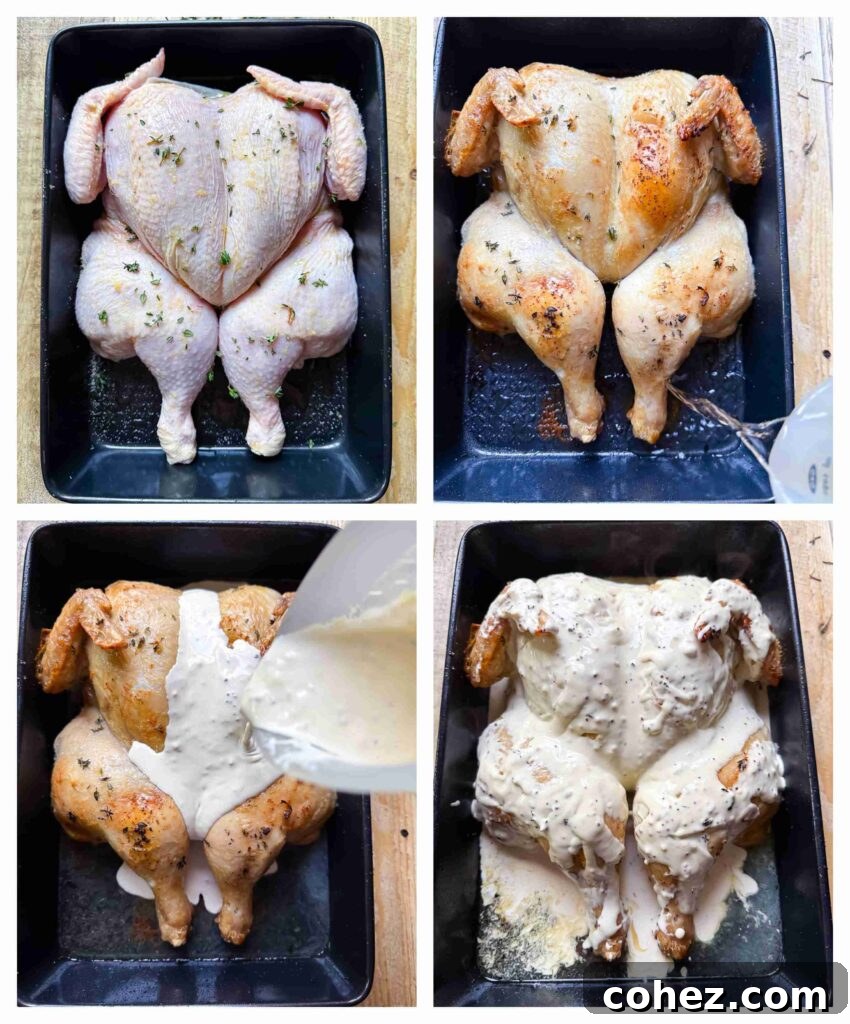
Brush the entire chicken with olive oil, then season generously with salt, 1 tsp of garlic powder, and half of the fresh thyme leaves. Place the chicken in a baking tray and roast in the preheated oven at 220C/450F for 25 minutes, or until the chicken skin begins to turn a lovely golden brown and crisp up.
-
While the chicken is roasting, prepare your creamy mustard sauce. In a medium bowl, whisk together the double (heavy) cream, both the Dijon mustard and wholegrain mustard, the remaining garlic powder, and the rest of the fresh thyme leaves until well combined. Have the dry white wine measured out and ready.
-
Carefully remove the chicken from the oven. Immediately reduce the oven temperature to 150C/300F. Pour the white wine over the bottom of the baking pan, tilting the pan gently to ensure it spreads evenly. Next, pour the creamy mustard mixture generously all over the chicken, ensuring it covers the surface. Return the chicken to the oven and continue roasting for another 30 minutes, or until the internal temperature of the thickest part of the chicken reaches 74C/165F on a meat thermometer. Once cooked, remove the chicken from the oven and allow it to rest for 20 minutes before carving and serving. This resting period is crucial for juicy, tender meat.
Nutrition
Nutrition information is automatically calculated, so should only be used as an approximation.
Tried this recipe?Let us know how it was!