
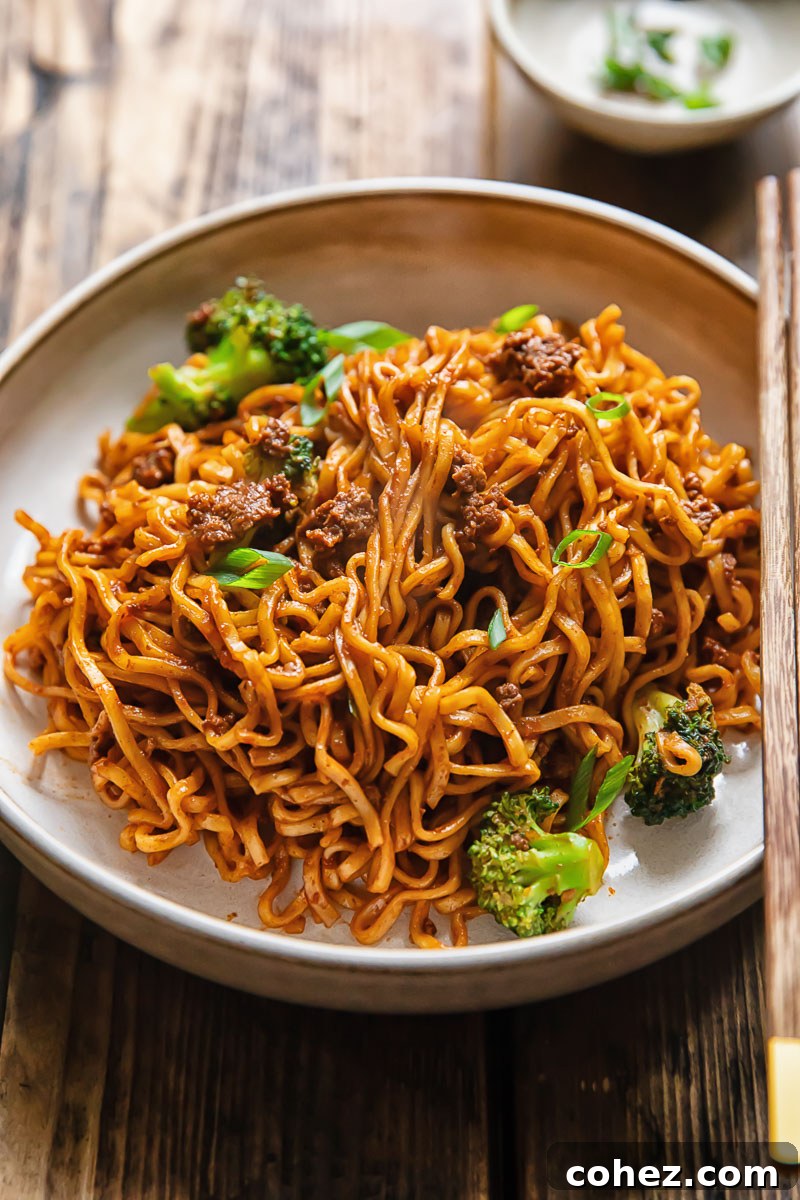
Go-chu-what-now? Gochujang noodles with beef is more than just another quickfire Asian stir-fry recipe; it’s a culinary journey packed into a single pan. This vibrant dish is a testament to low-prep, ingredient-light cooking that culminates in a lip-smackingly tasty mega-meal. Imagine humble store-cupboard staples like egg noodles, fragrant garlic, zesty ginger, and rich soy sauce, all beautifully interwoven with the unique sweet and spicy kick of gochujang paste. Bright green broccoli florets and crisp green onions add a pop of color and freshness, elevating this dish far beyond ordinary. Forget the stereotype that noodles are just for students – this gochujang beef noodle stir-fry is a gourmet experience accessible to everyone!
Indeed, noodles often get a bad rap as solely student fare – cheap, filling, and easy to cook. And while they certainly excel in that role, offering a lifeline to budget-conscious and time-strapped individuals, their potential extends far beyond dorm rooms. As someone who has recently sent two children off to university (a moment of mixed emotions, I assure you!), I made sure they were equipped with an arsenal of decent noodle recipes. My hope is that they’ll be whipping up more than just instant ramen.
Among the quick, easy, and undeniably budget-friendly options they’ve taken with them are easy kimchi noodles, vegan dan dan noodles, and spicy peanut noodles with carrots and cabbage. These recipes prove that even on a student budget, flavor and nutrition don’t have to be sacrificed. But today, we’re diving into a dish that truly showcases the elevated side of noodle cooking: the irresistible world of gochujang noodles with beef.
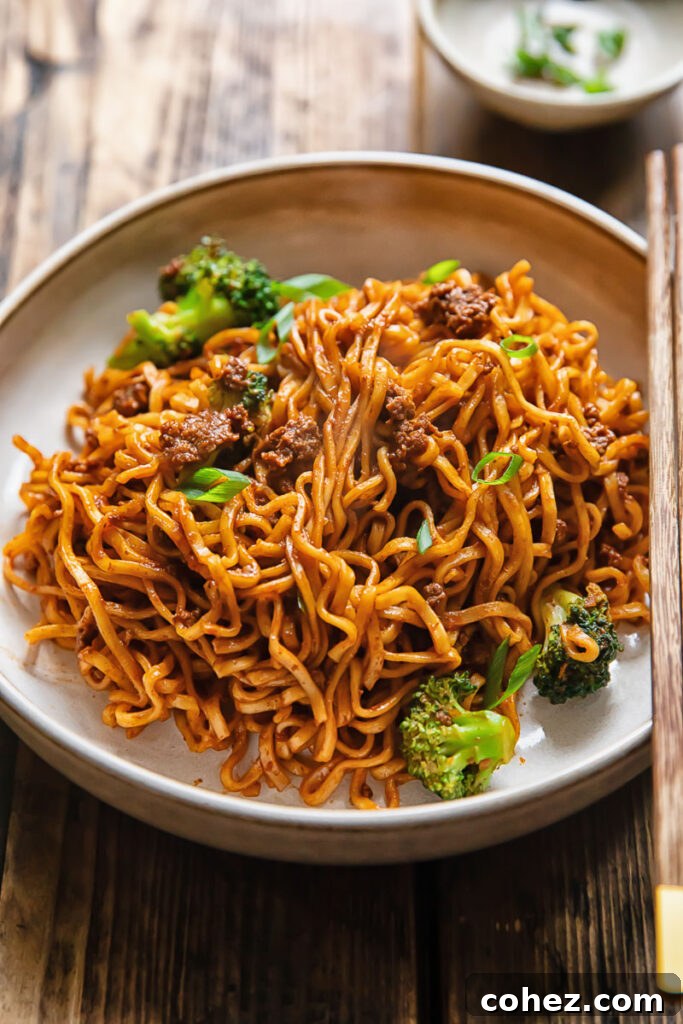
The Core of Flavor: Beef and Noodles Perfected
When crafting the perfect stir-fry, the choice of noodles and protein is paramount. For this particular dish, Chinese egg noodles are the undisputed champions. While some Asian noodle recipes, like certain noodle soups, can surprisingly accommodate Italian pasta varieties such as spaghetti or linguine as a convenient substitute, the gochujang beef noodle stir-fry truly shines with genuine egg noodles. There’s a fundamental difference in their composition and how they interact with the sauce.
Egg noodles boast a richer, more savory flavor profile compared to their eggless dry pasta counterparts. This inherent depth contributes significantly to the overall deliciousness of the dish, making every bite more satisfying. Beyond flavor, their practical advantages are undeniable: they cook remarkably quicker, a blessing for any busy weeknight. Their characteristic skinny, curly shape provides an abundance of surface area, acting like tiny sponges ready to soak up every drop of the glossy, savory gochujang sauce. This ensures maximum flavor absorption from the aromatic ginger, pungent garlic, and umami-rich soy. Furthermore, their delightful, tentacle-like texture masterfully intertwines with the ground beef and broccoli, guaranteeing that each forkful is a perfectly balanced medley of every tasty element.
My protein of choice for this recipe is ground beef, and for good reason. As it cooks, the fat renders beautifully into the sauce, creating a rich, deeply beefy, and subtly salty gravy. This luscious gravy provides a pleasing, oily slip to the noodles, enhancing their texture and mouthfeel. While I often opt for a leaner ground beef (around 5% fat) to keep things light, the magic lies in how even a small amount of rendered fat contributes immense flavor without making the dish greasy. The finely minced beef also integrates seamlessly with the noodles and vegetables, ensuring a harmonious blend of textures in every bite.
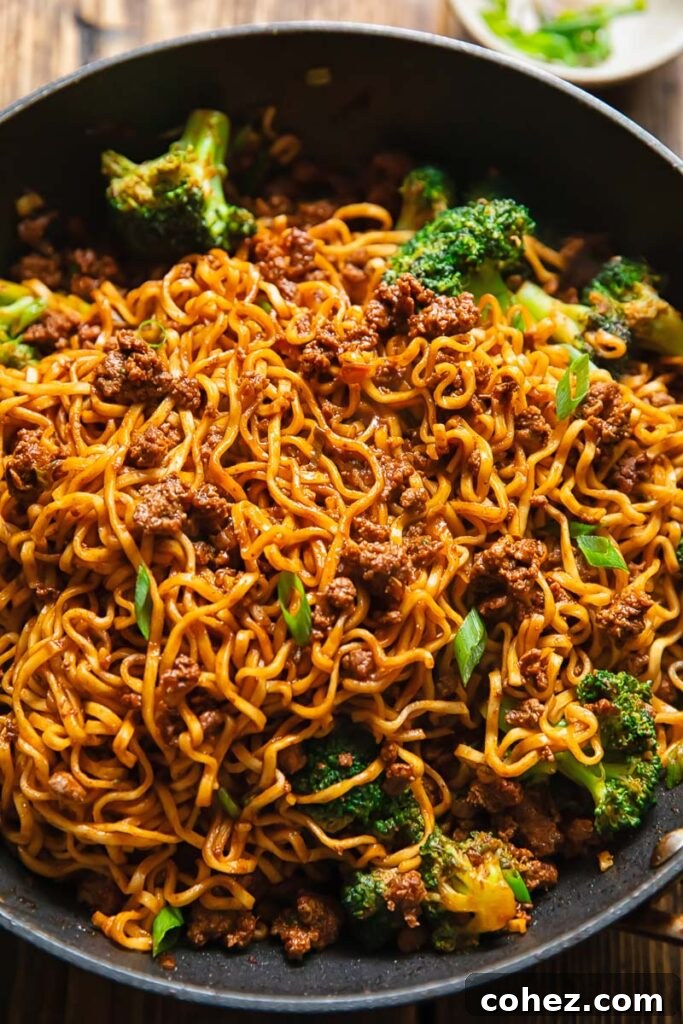
Unlocking Umami: The Magic of Gochujang
If you haven’t yet discovered the transformative power of gochujang, prepare for a revelation! This incredible Korean fermented chili paste is fast becoming a permanent fixture on the condiment shelf in my fridge. I find myself constantly seeking new avenues to incorporate its distinctive flavor into existing recipes or explore novel culinary creations. So, what exactly is this captivating ingredient?
Gochujang hails from Korea and is a deep red, spicy, and wonderfully complex fermented bean paste. While “fermented bean paste” might sound unusual to the uninitiated, I promise you, it tastes absolutely wonderful! Imagine the comforting warmth of chili pepper, subtle undertones of sweet beans, and the intriguing “funk” that only comes from careful fermentation. It’s an ingredient that adds not just heat, but profound depth, umami, and a touch of sweetness that balances everything perfectly. You might just have to trust me on this one – once you try it, you’ll be hooked!
For those new to gochujang, I recommend starting small. Begin with recipes that use it sparingly, allowing its unique notes to subtly enhance the dish. For instance, it’s fantastic for adding a complex glaze to savory meats, like in classic meatloaf or providing an irresistible kick to air fryer chicken wings. As your palate becomes accustomed to its brilliance, you can gradually build up to dishes where gochujang takes center stage, truly showcasing its undeniable flavor. Think bold recipes such as roasted cabbage wedges or rich, slow-cooked short ribs. Before you know it, you’ll be happily making permanent space in your fridge for this essential Korean staple!
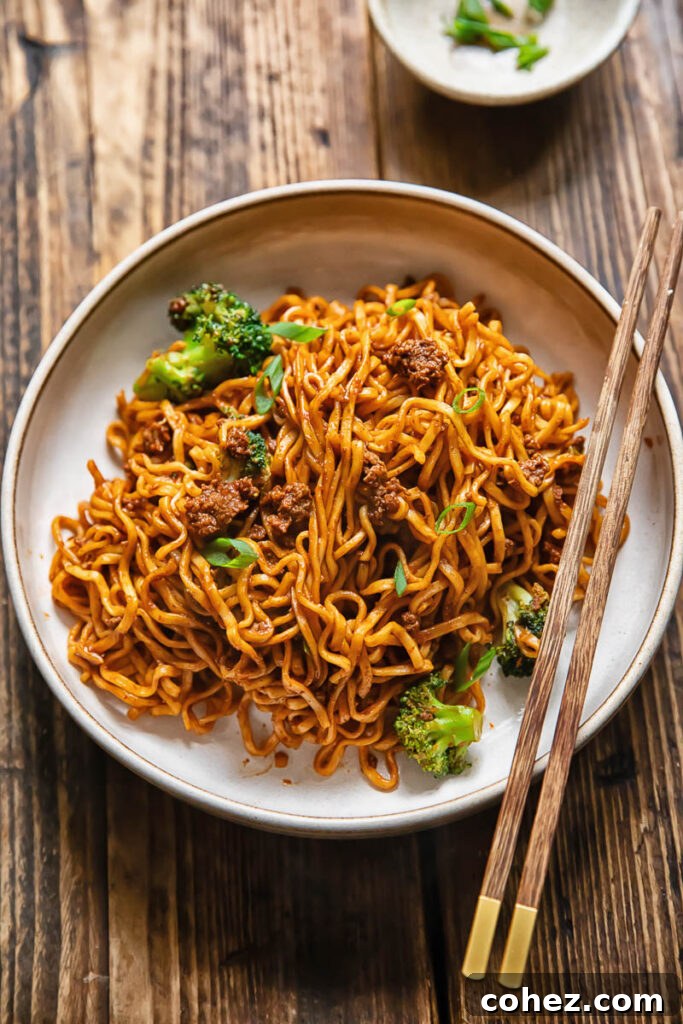
Customizing Your Quick Gochujang Noodle Bowl
One of the many joys of a noodle stir-fry is its incredible adaptability. While this recipe for gochujang noodles with beef is perfect as written, it also serves as a fantastic canvas for your culinary creativity. Don’t hesitate to make it your own based on what you have on hand or what your taste buds desire.
- Vegetable Power: I’ve opted for vibrant broccoli florets, which provide a beautiful visual contrast and a satisfying crunch. However, the world of stir-fry vegetables is vast! Consider adding thinly sliced carrots, crisp bell peppers (red, yellow, or orange for extra color), tender baby corn, crunchy mange tout (snow peas), earthy mushrooms, or nutrient-rich bok choy. Feel free to mix and match your favorites to boost flavor and nutrition.
- Protein Alternatives: While ground beef delivers a rich, savory base, this recipe is incredibly versatile when it comes to protein. Swap the beef for thinly sliced chicken breast or thighs, tender pork strips, succulent shrimp, or even firm tofu for a plant-based option. Each will bring a slightly different texture and flavor profile to the dish, but the gochujang sauce will tie everything together beautifully.
- Adjusting the Spice: Gochujang provides a moderate, delightful heat. If you prefer things milder, reduce the amount of gochujang paste slightly. For those who crave more fire, don’t shy away from adding an extra tablespoon of gochujang, a pinch of red pepper flakes, or a drizzle of chili oil at the end. Always taste and adjust to your preference.
- Garnishes for Flair: A sprinkle of toasted sesame seeds adds a nutty crunch and visual appeal. Fresh cilantro or additional sliced green onions provide an aromatic finish. For an extra indulgent touch, a fried or poached egg placed on top, with its runny yolk, will add a creamy richness that beautifully complements the spicy noodles.
Essential Tips for Stir-Fry Success
Recipe Tips and Notes
- Preparation is Key (Mise en Place): This rapid recipe truly thrives on preparation. Before you even think about firing up that wok, ensure everything is chopped, sliced, and minced. Trust me, having all your ingredients ready and within arm’s reach makes the stir-frying process smooth, efficient, and stress-free. Stir-fries cook quickly, so there’s no time to chop once the heat is on!
- Perfectly Cooked Noodles: Avoid soggy noodles at all costs! I always recommend cooking your egg noodles for one minute less than the package instructions suggest. Remember, they’ll get another brief blast of heat in the hot wok later as they absorb the sauce, so you want them slightly al dente initially.
- One Pot Wonder: Don’t hesitate to cook your noodles and broccoli florets in the same pot together. There’s absolutely no shame in reducing washing up! Just ensure the broccoli florets are small enough to cook through in the same timeframe as the noodles.
- Vegetable Choices: While I adore the vibrant pop of green that broccoli adds against the yellow noodles, feel free to use your preferred stir-fry vegetables. Sliced carrots, tender baby corn, and crisp mange tout (snow peas) are all classic contenders that pair wonderfully with the gochujang sauce.
- Speedy Aromatics: To truly accelerate your cooking process, consider using jarred grated garlic and ginger. While fresh is always excellent, the pre-minced versions are fantastic for those nights when you need dinner on the table in record time without sacrificing flavor.
- Dark Soy for Depth: I consistently reach for dark soy sauce in my stir-fries. It offers a more concentrated, richer, and deeper flavor profile compared to light soy sauce, contributing to a more robust and visually appealing sauce.
Serving and Pairing Suggestions
The inherent beauty of stir-fries lies in their convenience. They are pure kitchen magic for anyone needing a delicious, wholesome dinner on the table in under 20 minutes. This gochujang noodles recipe is a prime example, delivering a complete nutritional package with protein, starchy carbohydrates, and vibrant vegetables all in one delightful bowl. So, why complicate things? For the sheer indulgence of good food, that’s why!
While this gochujang noodles recipe truly stands alone as a satisfying meal-in-one, if you find yourself unable to resist the salty, spicy lure of an Asian-inspired starter, don’t hold back! A fantastic complement would be some crispy sticky Asian chicken or perfectly seasoned salt and pepper shrimp. These appetizers introduce additional textures and flavors that enhance the overall dining experience without overpowering the main dish.
Moreover, in today’s diverse households, it’s common to have at least one non-meat eater or someone actively reducing their meat consumption. For a fantastic plant-based alternative or starter, consider serving hoisin glazed crispy tofu. It can be enjoyed solo as a delightful plant-based appetizer or served over steamed rice as a flavorful main course option, ensuring everyone at the table has a delicious choice.
Storage and Leftovers
One of the many benefits of this quick gochujang noodles with beef recipe is how well it holds up as leftovers. Any remaining portions can be securely stored in an airtight container in the refrigerator for up to 3-4 days. To reheat, simply toss them back into a hot wok for a few minutes until warmed through, which helps to revive the textures and flavors. Alternatively, for ultimate convenience, you can zap them in the microwave for 60-90 seconds, stirring halfway through, until piping hot. These noodles make for an excellent next-day lunch!
Discover More Asian-Inspired Stir-Fry Recipes
- Szechuan Chicken
- Easy Prawn Stir Fry
- Chow Fun Noodles with Beef
- Miso Noodles with Tenderstem Broccoli
Quick Gochujang Noodles with Beef
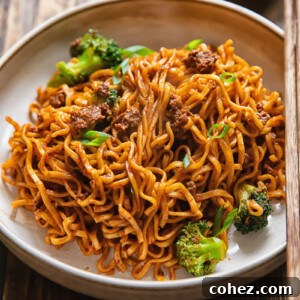
Gochujang noodles with beef is a phenomenal quickfire Asian stir-fry recipe that is a low-prep, ingredient-light, incredibly tasty one-pan mega-meal. Perfect for a busy weeknight!
Equipment
-
Wok
Ingredients
- 250g / 8oz medium egg noodles
- 1 tbsp vegetable oil
- 1 head broccoli, florets removed and cut into bite-sized pieces
- 3 green onions, sliced (white and green parts separated)
- 1 tbsp grated ginger
- 3 cloves garlic, minced
- 450g / 1 lb ground beef, (I used 5% fat)
- 4 tbsp / 1/4 cup Gochujang paste
- 75ml / 1/3 cup dark soy sauce
- 3 tbsp sugar
- 75ml / 1/3 cup hot water
Instructions
-
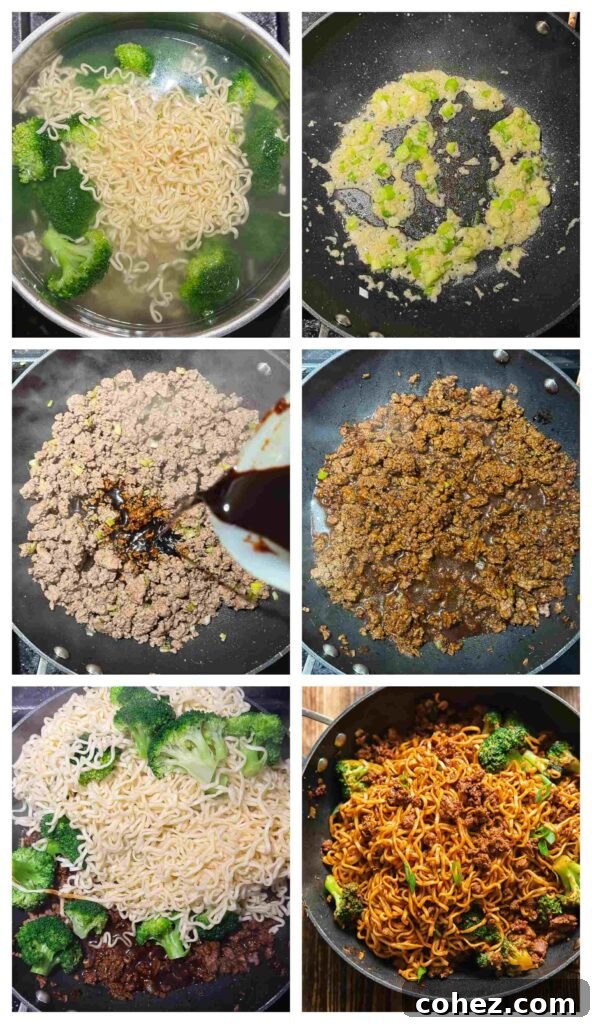
Cook the egg noodles and broccoli florets together in a large pot of boiling water according to package instructions for the noodles. Generally, this means 3-4 minutes after the water returns to a boil. Drain well and set aside.
-
While the noodles are cooking, prepare the rich gochujang sauce. In a small bowl, thoroughly mix the gochujang paste, dark soy sauce, sugar, and hot water until smooth and well combined. Set aside.
-
Heat 1 tablespoon of vegetable oil in a large wok or a deep skillet over medium-high heat. Add the sliced white parts of the green onion, grated ginger, and minced garlic. Stir-fry for about 30 seconds until fragrant.
-
Add the ground beef to the wok. Cook, breaking it up with a wooden spoon or spatula, until it is no longer pink and is fully browned. Drain any excess fat if desired (though a little fat adds flavor). Pour the prepared gochujang sauce over the beef and mix thoroughly to combine, allowing the flavors to meld for about 1 minute.
-
Add the drained noodles and broccoli to the wok with the beef and sauce. Stir-fry for another 1-2 minutes, tossing constantly to ensure the noodles are evenly coated in the delicious sauce. If the noodles appear too dry, you can add a splash of extra hot water or beef broth to achieve your desired sauciness.
-
Finally, stir in the sliced green parts of the green onions. Taste the dish and add a pinch of salt if needed (remember dark soy is already quite salty). Serve immediately while hot and fresh.
Notes
- This recipe comes together very quickly once you start cooking. Ensure all your ingredients are prepped, chopped, and measured (mise en place) before you even turn on the heat to the wok.
- To prevent overcooked noodles, it’s best to set a timer for one minute less than the package instructions suggest. The noodles will continue to cook and absorb flavor when tossed in the hot wok later.
- Feel free to customize the vegetables! While broccoli adds great texture and color, other classic stir-fry contenders like sliced carrots, baby corn, or mange tout (snow peas) work wonderfully.
- For ultimate convenience, you can use jarred grated garlic and ginger to save on prep time without sacrificing much flavor.
- Using dark soy sauce provides a more concentrated and deep flavor profile, as well as a richer color to your stir-fry sauce, compared to regular or light soy sauce.
Nutrition
Calories: 492kcal | Carbohydrates: 65g | Protein: 37g | Fat: 10g | Saturated Fat: 4g | Polyunsaturated Fat: 1g | Monounsaturated Fat: 3g | Trans Fat: 0.4g | Cholesterol: 123mg | Sodium: 1140mg | Potassium: 865mg | Fiber: 4g | Sugar: 13g | Vitamin A: 513IU | Vitamin C: 55mg | Calcium: 77mg | Iron: 5mg
Nutrition information is automatically calculated, so should only be used as an approximation.