
Perfectly Roasted Pork Loin with Rich Pan Gravy: A Masterpiece for Any Occasion
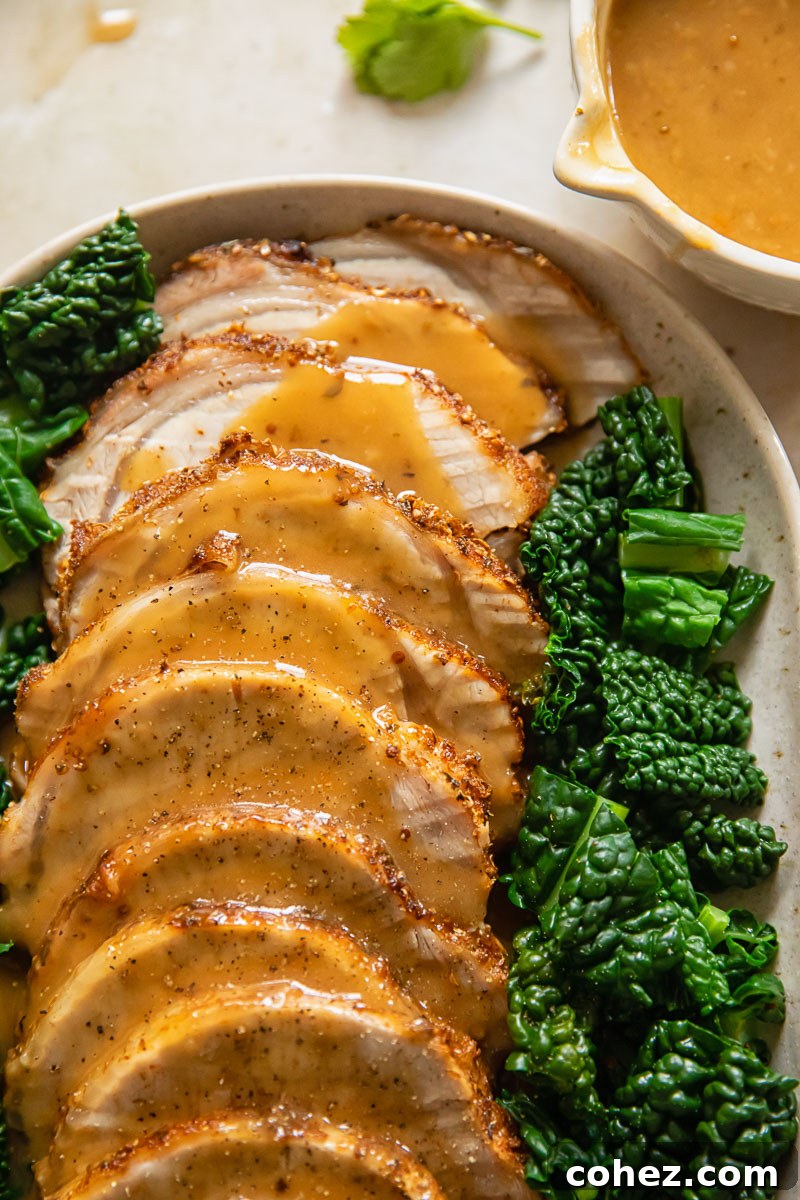
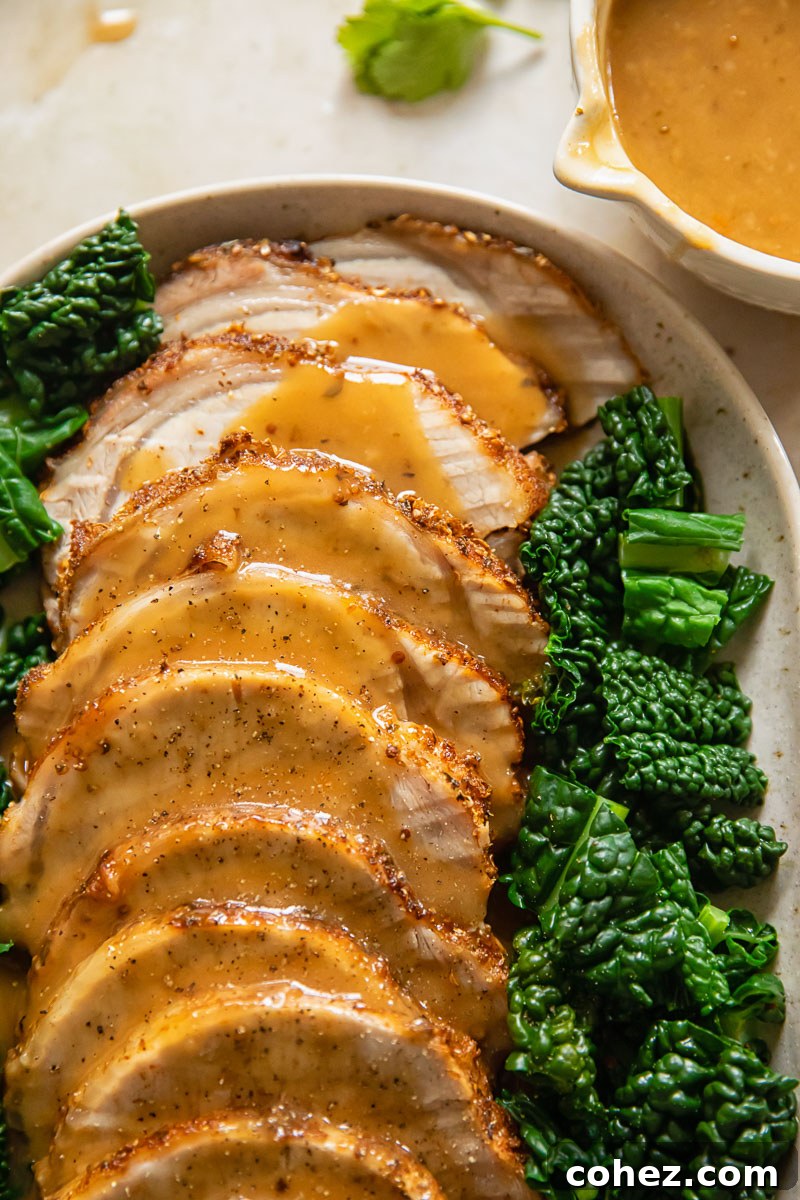
There’s something inherently comforting and celebratory about a beautifully roasted pork loin. This succulent cut, enveloped in a fragrant dry rub and roasted to perfection, is then elevated further by a glistening, savory gravy made from the pan drippings. It’s an ideal choice for a cherished Sunday lunch, a festive holiday feast, or any special occasion that calls for an impressive yet approachable centerpiece. Imagine serving this tender, juicy roast atop a generous bed of creamy herb and garlic mashed potatoes, allowing the rich gravy to mingle with every bite.
Why Choose Pork Loin for Your Next Roast?
While beef roasts often steal the spotlight, a well-prepared pork loin roast truly deserves equal, if not greater, appreciation. It’s a culinary secret weapon for many reasons. For starters, it’s often far more budget-friendly than comparable beef cuts, allowing you to enjoy a high-quality, impressive meal without breaking the bank. But beyond its economic appeal, pork loin offers a lean, tender, and versatile canvas for flavor. When cooked correctly, it yields an incredibly juicy and flavorful result that can easily feed a family gathering or a larger crowd.
The key to a truly exceptional pork loin lies in proper preparation and precise cooking. Because pork loin is naturally lean, it benefits immensely from a flavorful crust, an appropriate cooking method that prevents dryness, and, perhaps most importantly, a luscious sauce or gravy to complement its texture and add a layer of rich flavor. Who doesn’t appreciate a good homemade gravy, especially one crafted from the very juices of the roast itself?
Understanding Pork Loin: The Cut Above
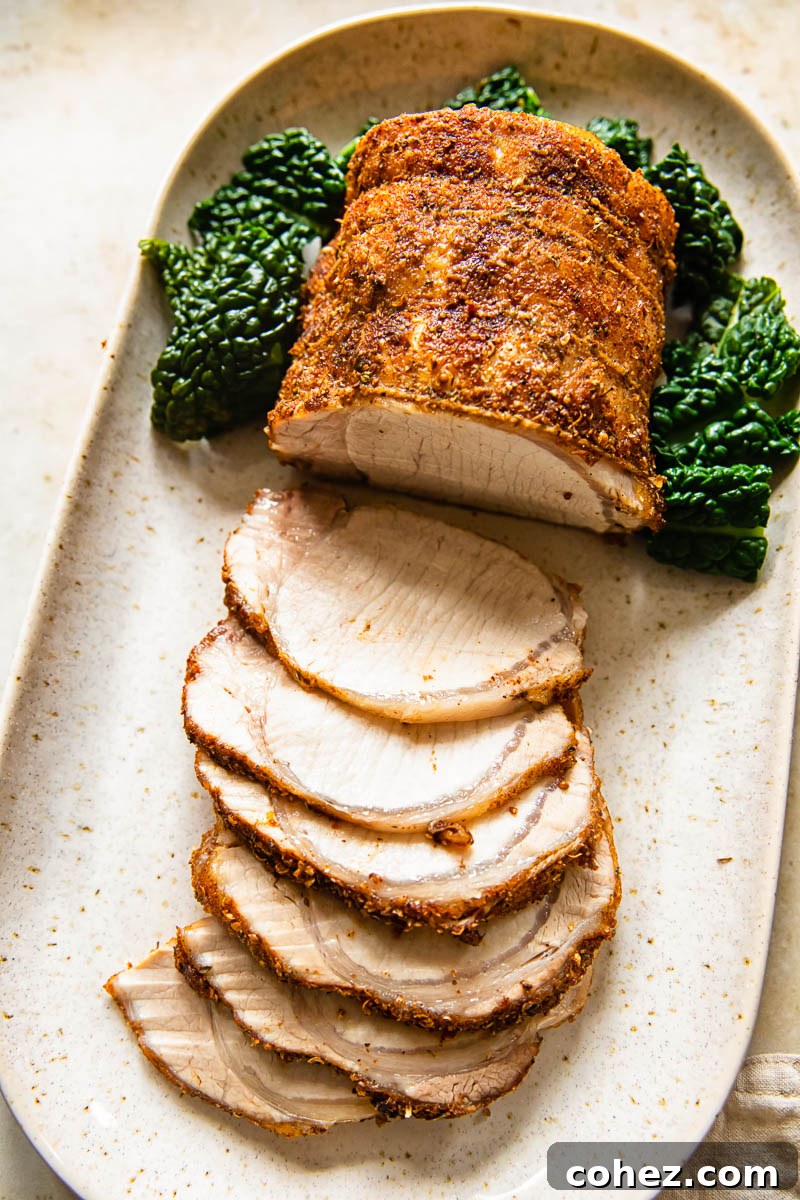
The pork loin is a large, lean, and inherently tender cut of meat that originates from the back of the pig. It’s crucial not to confuse pork loin with pork tenderloin, as they are distinct cuts requiring different cooking approaches. While both are lean and tender, the loin is a wider, flatter cut, often sold as a substantial roast, sometimes with bones attached or with a layer of fat and skin (crackling). The tenderloin, in contrast, is long, narrow, round, and always boneless, typically cooking much faster.
Pork loin can be purchased in various forms: boneless or bone-in, and with or without its “crackling” – a delicious layer of fat covered by the skin. In many regions, particularly the UK, a loin joint with crackling is quite standard. For a leaner roast, as is often preferred, the crackling can be easily removed. Regardless of whether you keep the crackling or opt for a boneless, trimmed cut, tying the loin with kitchen twine is a simple yet effective technique. This helps the roast maintain its shape, promotes even cooking, and, most importantly, helps retain moisture, ensuring a juicy result every time.
The Essential Dry Rub: Infusing Flavor from Within
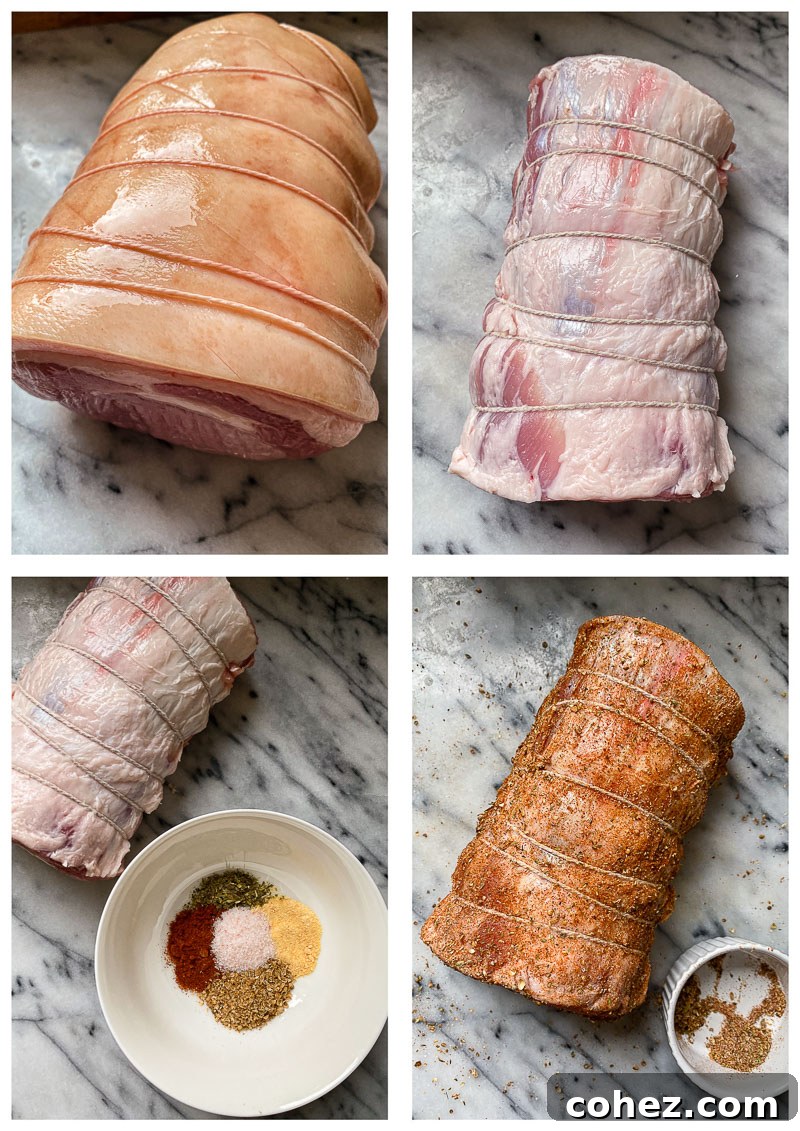
The foundation of any great roast pork loin is a well-crafted dry rub. This isn’t just about surface flavor; the spices penetrate the meat during roasting, creating a deep, aromatic profile. My preferred blend for this roast includes a harmonious combination of garlic powder, smoked paprika (or sweet paprika for a milder touch), crushed coriander seeds (which offer a bright, citrusy note), oregano for herbaceous depth, and, of course, salt to season and draw out moisture. Rubbing this mixture generously over the entire surface of the pork loin ensures every bite is bursting with flavor. The simplicity of these common pantry spices belies the profound impact they have on the final dish.
Mastering the Roast: Achieving Juiciness and Flavor
Expert Tips for a Flawless Pork Loin Roast
- Room Temperature Start: Always allow your pork loin to sit out of the fridge for at least one hour before roasting. This helps the meat cook more evenly and prevents it from seizing up when it hits the heat.
- The Power of the Rub: As mentioned, generously rub your pork loin with your chosen spice mix. This step is critical for developing a flavorful crust and infusing the meat.
- Tie it Up: Use kitchen twine to tie the pork loin at regular intervals. This ensures the roast cooks uniformly and stays moist, especially if you’ve removed the fat cap.
- High-Heat Searing Method: Many recipes suggest browning meat in a pan before roasting. To save time and an extra pan, I achieve a beautiful crust by starting the roast in a very hot oven (220C/475F) for the initial 20 minutes. This high temperature sears the exterior, locking in juices and developing that coveted Maillard reaction, just like stovetop searing. After this initial blast, the temperature is reduced to 190C/375F for the remainder of the cooking time, allowing the interior to cook gently.
- Accurate Cooking Time and Temperature: The timing is based on a 2.2lb/1kg pork loin. If your roast is larger, adjust the cooking time by approximately 25 minutes for every additional pound (500g) of meat. The most crucial tool for perfect doneness is a meat thermometer. Pork is fully cooked and safe to eat when its internal temperature reaches 63C/145F. Cooking it beyond this point will result in dry, tough meat.
- The Essential Rest: Do not skip resting your meat! After removing the roast from the oven, cover it loosely with foil and let it rest for a minimum of 20 minutes. This allows the juices to redistribute throughout the meat, ensuring every slice is incredibly moist and tender.
- Don’t Underestimate the Gravy: A lean cut like pork loin truly shines when accompanied by a well-made gravy. It not only adds flavor but also enhances the overall texture, preventing any perception of dryness.
- A Touch of Sweetness in the Gravy: For an extra layer of complexity, I often incorporate a hint of sweetness into my gravy. This unexpected touch beautifully balances the savory notes of the drippings and the richness of the pork. Red currant jelly is my go-to, but good quality grape jelly, plum jam, or cranberry sauce work wonderfully too.
Crafting the Rich Pan Gravy
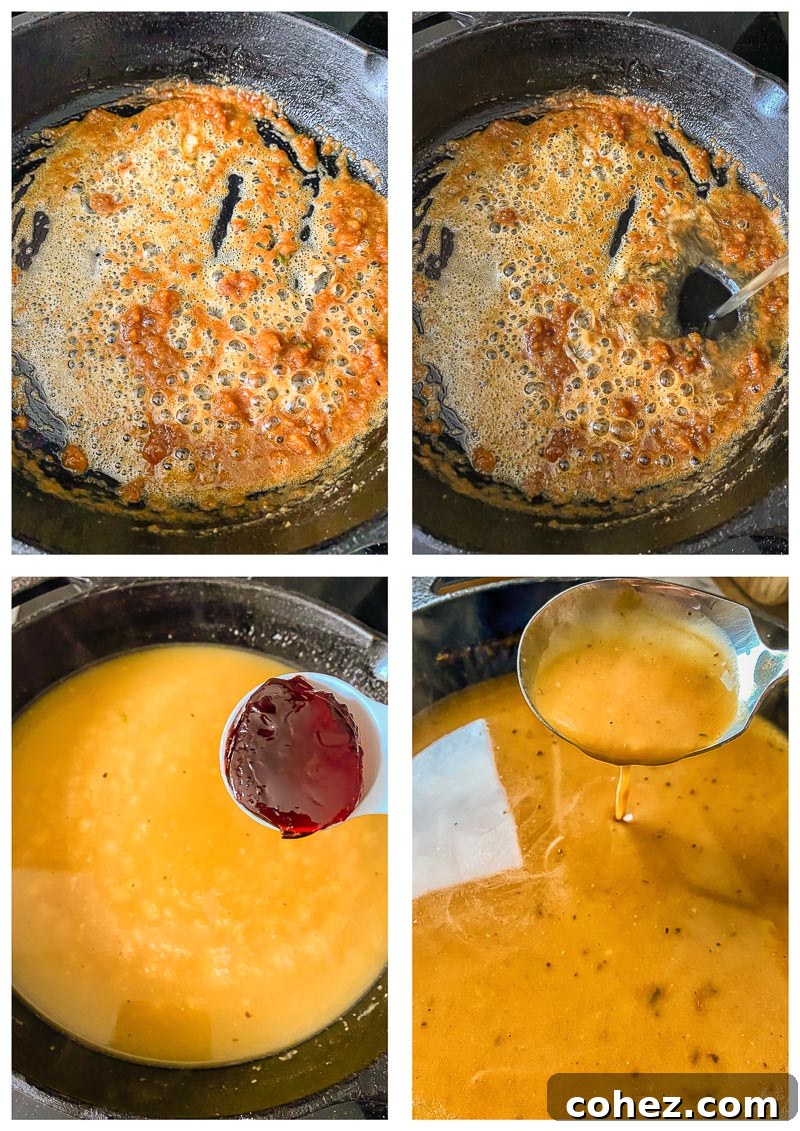
The gravy is more than just an accompaniment; it’s an integral part of this dish, transforming simple pan drippings into a luxurious sauce. Once your pork loin has finished roasting and is resting, you’ll be left with a treasure trove of flavor in your roasting pan. This is the foundation of your gravy. Melt butter directly in the pan, scraping up all those delicious browned bits from the bottom. Whisk in flour to create a roux, cooking it for a minute to remove the raw flour taste. Then, gradually pour in chicken stock, stirring constantly to ensure a smooth, lump-free sauce. Bring it to a gentle boil, then simmer until it thickens to your desired consistency. Finally, stir in your chosen sweetener – red currant jelly is a personal favorite – and a pinch of your leftover spice rub if you desire an extra flavor boost. Taste and adjust seasoning as needed, and you’ll have a velvety, deeply flavorful gravy that perfectly complements the pork.
Serving Suggestions: Completing Your Meal
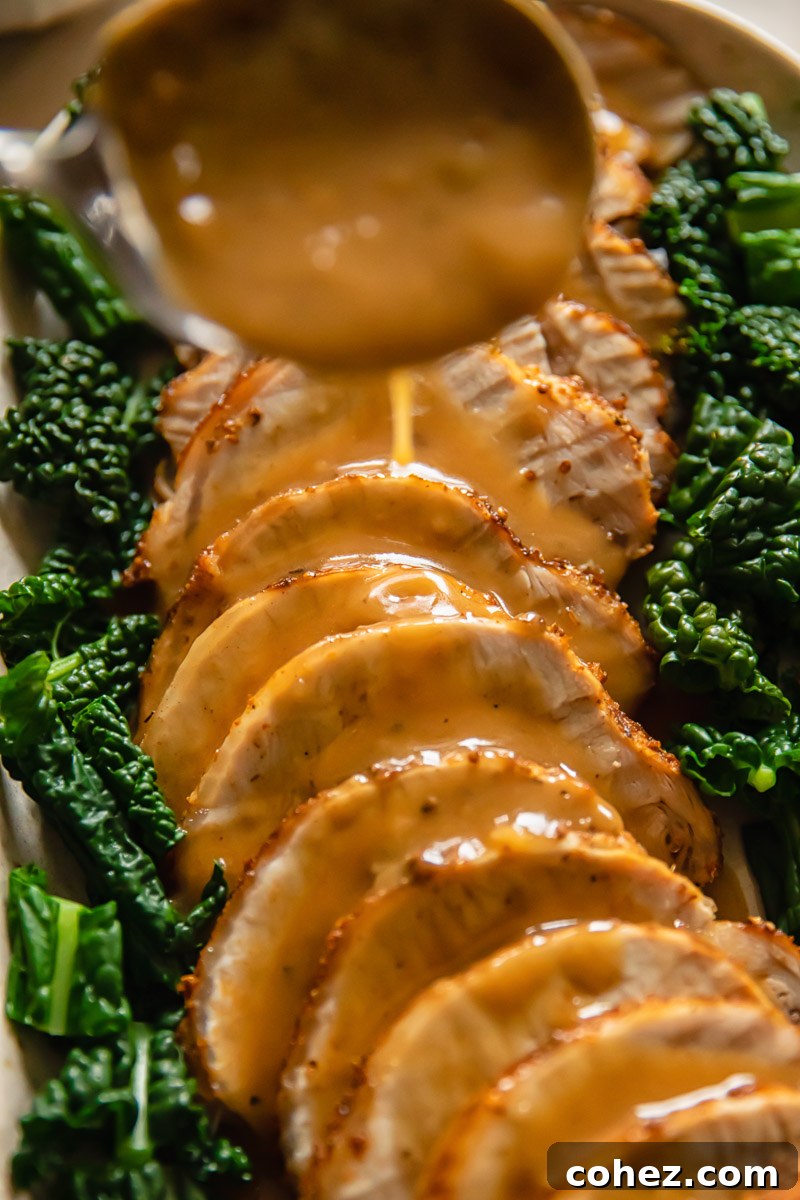
A glorious pork loin roast deserves an equally impressive spread of side dishes. Classic pairings are always a hit, but don’t shy away from adding a modern twist. This roast is absolutely divine when served alongside creamy mashed potatoes or crispy roasted potatoes, allowing them to soak up every last drop of that incredible gravy. To add color, texture, and nutrients, I love including vibrant roasted carrots or savory crispy Brussels sprouts with honey and bacon. For those who prefer an alternative to traditional gravy, my creamy Mushroom Marsala Sauce makes an absolutely delicious and sophisticated accompaniment to this roast.
Storage and Reheating Leftovers
One of the best things about a hearty roast is the promise of delicious leftovers. Any remaining pork loin and gravy can be stored in separate airtight containers in the refrigerator for up to 4 days. You might even find that the flavors deepen and intensify over time, making for an even more mouthwatering midweek meal.
To reheat the pork, place slices in an oven-safe dish, add a splash of broth or water to keep it moist, cover loosely with foil, and warm in a preheated oven at 165C/325F for 30-40 minutes, or until thoroughly heated through. Alternatively, individual slices can be carefully reheated in the microwave. Always ensure pork is heated to a food-safe temperature. The gravy can be gently reheated in a saucepan over medium heat, stirring frequently. If it appears too thick, simply add a splash of water or stock to reach your desired consistency.
More Delicious Pork Recipes to Explore
- Boneless Pork Loin Steaks with Apples and Cider
- Sweet and Sour Pork Chops
- Pork Roast with Sweet Persimmon Sauce
- Pork Osso Buco
Pork Loin Roast with Gravy

This delicious pork loin is covered with a fragrant dry rub, then roasted and served with a beautiful gravy. Perfect Sunday lunch or a special occasion dinner.
Equipment
-
Roasting pan
-
Meat thermometer
Ingredients
For the Pork Loin
- 1 tsp garlic powder
- 1 tsp smoked paprika, or sweet paprika
- 2 tsp crushed coriander seeds, or 1 tsp ground coriander
- 1 tsp oregano
- 1 tsp salt
- 2.2 lbs/1kg boneless pork loin, no crackling
For the Gravy
- pan drippings, all you’ve got after the roast
- 2 tbsp butter
- 3 tbsp flour
- 500ml/2 cups chicken stock
- 2 tbsp red currant jelly, or grape jelly, plum jam or cranberry sauce
- 0.5 tsp leftover rub, optional
Instructions
-
Preheat your oven to 475F/220C. Remove the pork loin from the refrigerator about 1 hour before cooking to allow it to come to room temperature. In a small bowl, combine the garlic powder, smoked paprika, crushed coriander seeds, oregano, and salt to create your dry rub. Pat the pork loin dry with paper towels, then liberally apply the spice rub all over the surface of the meat.
-
Place the seasoned pork loin in a roasting pan or a large cast iron pan and transfer it to the preheated oven. Roast for 20 minutes at 475F/220C to develop a beautiful crust. After 20 minutes, reduce the oven temperature to 375F/190C and continue roasting for another 25-30 minutes, or until the internal temperature of the pork reaches 145F/63C when measured with a meat thermometer. Carefully remove the roast from the oven, transfer it to a serving platter, cover loosely with foil, and allow it to rest for 20 minutes. This resting period is crucial for a juicy roast.
-
While the pork rests, prepare the gravy. Place the roasting pan (with all the delicious drippings) over medium heat on your stovetop. Add the butter and melt it, scraping up any browned bits from the bottom of the pan with a wooden spoon. Stir in the flour and cook for 1 minute, stirring constantly, to create a roux. Gradually whisk in the chicken stock and the red currant jelly. Bring the mixture to a boil, then reduce the heat and simmer, stirring occasionally, until the gravy thickens to your desired consistency. Taste the gravy and add 1/2 tsp of the leftover rub or additional salt if needed to enhance the flavor. Serve the rich gravy generously over slices of the rested pork loin.
Notes
If your pork joint is bigger than the one in the recipe (2.2 lbs/1kg), increase the cooking time by approximately 25 minutes for every additional 1lb/500g of meat, maintaining the indicated temperatures.
You can substitute red currant jelly in the gravy with grape jelly, plum jam, or a touch of honey for a similar sweet-savory balance.
Nutrition Information (per serving)
Carbohydrates: 9g |
Protein: 30g |
Fat: 9g |
Saturated Fat: 4g |
Trans Fat: 1g |
Cholesterol: 88mg |
Sodium: 468mg |
Potassium: 560mg |
Fiber: 1g |
Sugar: 3g |
Vitamin A: 217IU |
Vitamin C: 1mg |
Calcium: 19mg |
Iron: 1mg
Nutrition information is automatically calculated, so should only be used as an approximation.