
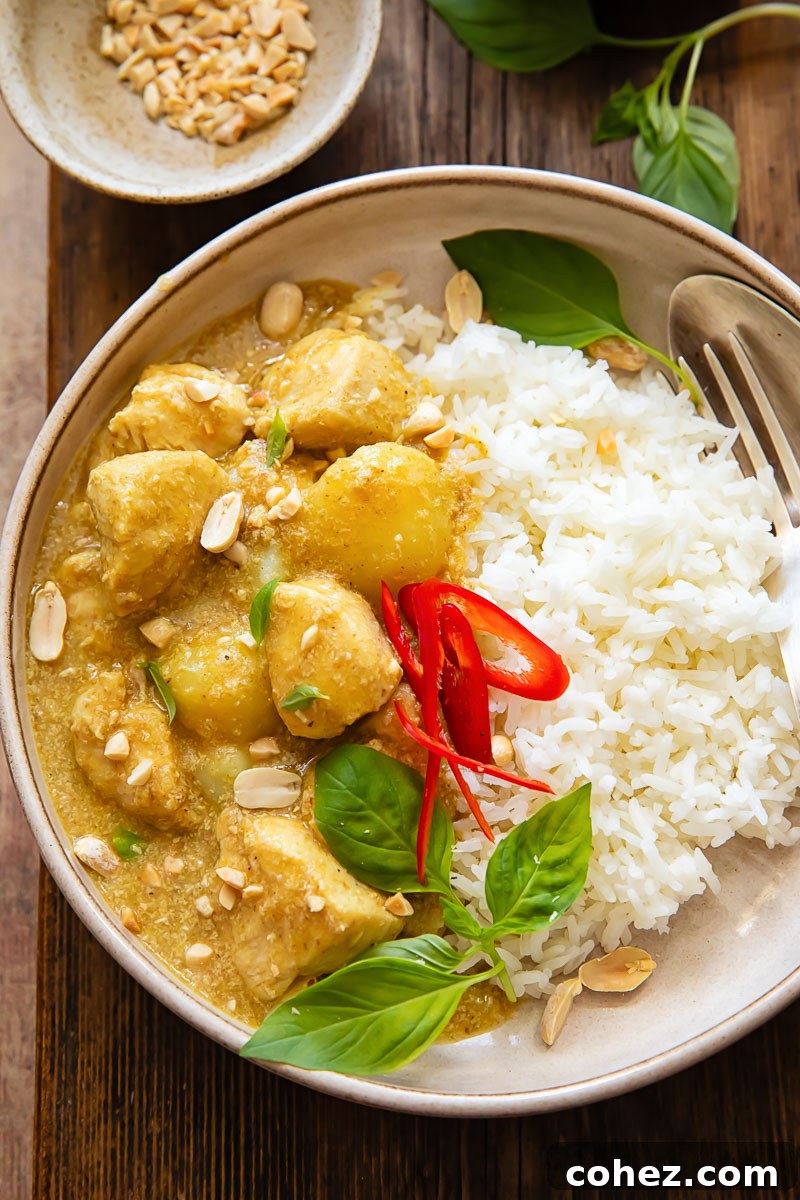
Delightful Yellow Chicken Curry with Potatoes: Your Gateway to Mild Thai Flavors
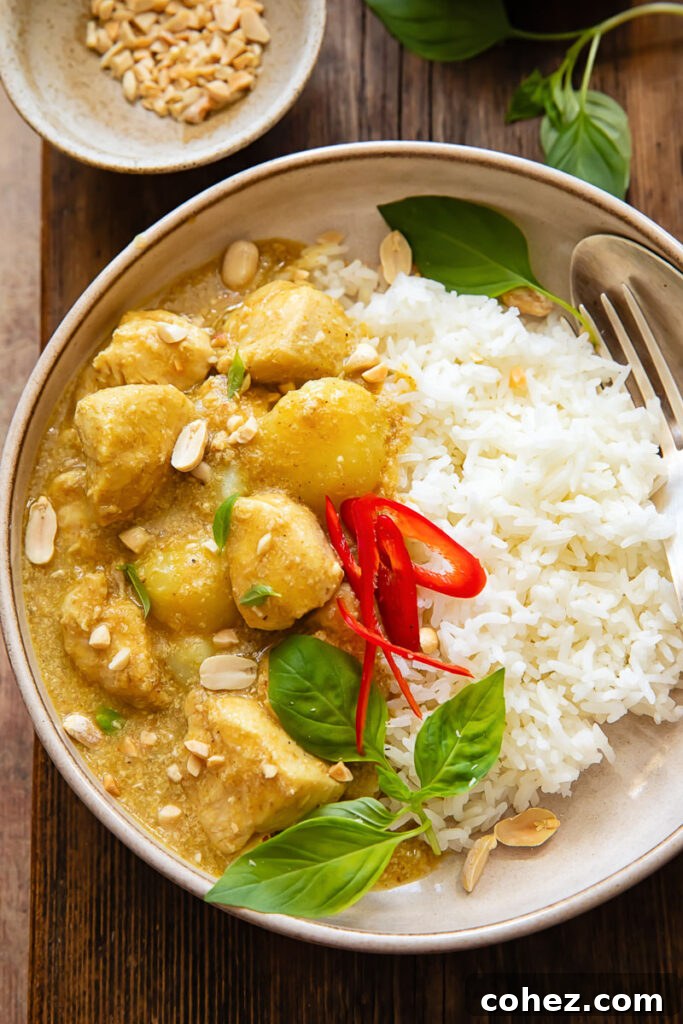
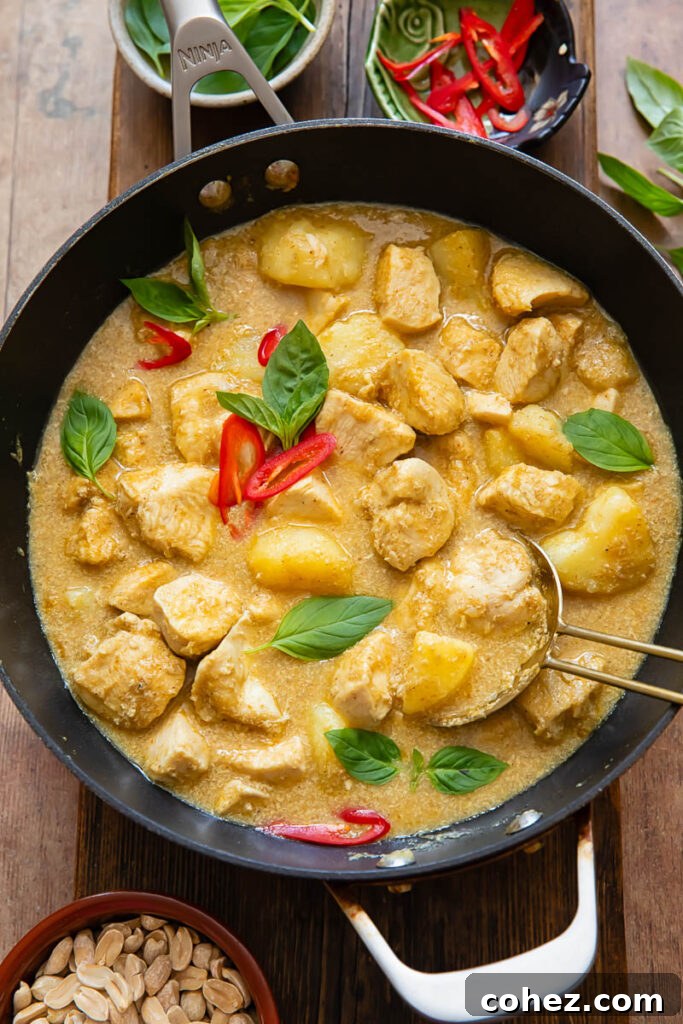
Embark on a culinary journey to Thailand with this incredibly comforting and wonderfully mild Yellow Chicken Curry with Potatoes. Renowned for its gentle spice and rich, creamy texture from ample coconut milk, this dish offers a warm embrace, making it the perfect introduction for those new to the vibrant world of Thai cuisine. Imagine tender, lightly spiced potatoes melding with succulent chicken pieces, all brought together in a golden, aromatic sauce, crowned with a sprinkle of crunchy peanuts. It’s not just a meal; it’s a serene escape, a familiar comfort, and an absolute dream for busy weeknights, requiring only one pan and ready in a mere 35 minutes.
This yellow curry is a testament to the fact that authentic Thai flavors don’t always equate to fiery heat. Instead, it showcases a masterful balance of sweet, savory, and aromatic notes, designed to soothe and satisfy. Whether you’re a novice in the kitchen or simply seeking a quick yet profound flavor experience, this chicken and potato curry promises an effortless path to a delicious, restaurant-quality meal right at home.
For those who have already navigated the exciting landscape of Thai flavors, perhaps exploring fiery red or vibrant green curries, why not broaden your horizons with Thai soups? These brothy noodle recipes offer a lighter, yet equally comforting, alternative, especially when the weather turns chilly. Picture a bowl brimming with fragrant noodles, tender chicken, fresh lime, and sharp tomatoes, all swimming in a savory broth – a true spicy winter warmer. Our classic Thai Noodle Soup with Chicken is an excellent choice for a satisfying, lighter lunch that still delivers on that quintessential Thai zest.
Understanding Thai Curry Heat Levels: A Traffic Light Guide
Navigating the diverse world of Thai curries can sometimes feel like approaching a traffic light intersection. Fortunately, there’s an intuitive system that clearly signals what to expect, especially for those embarking on their first Thai culinary adventure. This simple analogy helps distinguish between the popular red, green, and yellow varieties, allowing you to choose your perfect spice level.
Green Curry: The Fiery Start
Consider Green Curry the “Go” signal, but proceed with caution if your heat tolerance is low! It is widely regarded as the spiciest of the trio. This intensity comes from its generous use of fresh, vibrant green bird’s eye chilies, which are typically ground into the paste. Coupled with ingredients like galangal, lemongrass, kaffir lime zest, and shrimp paste, green curry delivers a pungent, herb-forward flavor with a powerful kick. If you’re a seasoned chili enthusiast, this is your direct route to an exhilarating taste experience. For newcomers, it might be best to pass on this one until your palate is more accustomed to Thai heat.
Red Curry: The Balanced Middle Ground
Red Curry represents the “Stop and Think” signal. It sits comfortably in the middle of the spice spectrum. While still laden with fresh and fiery red chilies, they generally offer a slightly mellower punch compared to their green counterparts. The paste often incorporates dried red chilies, along with other aromatics like garlic, shallots, galangal, and sometimes roasted peanuts, giving it a deeper, richer flavor profile. Red curry offers a wonderful balance for those who appreciate a noticeable warmth without being overwhelmed. It’s an excellent choice for expanding your Thai palate beyond the mild, preparing you for bolder flavors.
Yellow Curry: Your Mellow Introduction
And finally, Yellow Curry – the comforting “Pause and Savour” signal. This is the mildest of the three, making it an ideal starting point for anyone new to Thai cuisine or those who prefer a gentler spice. While no authentic Thai curry completely forgoes chilies, yellow curry uses the fewest (typically red) and its heat is significantly softened by a generous amount of creamy coconut milk. Turmeric, a key ingredient, not only gives it its signature golden hue but also contributes to its earthy, slightly sweet flavor. Yellow curry invites you to relax, savor the complex yet accessible blend of spices, and decide which “light” you’ll feel brave enough to try next time. It’s truly a mellow, welcoming dish for all.
The Essence of Thai Yellow Curry (Gaeng Karee)
While my own travels to Thailand are yet to commence, extensive research reveals fascinating insights into the origins and nomenclature of this beloved dish. The Thai name for yellow curry is gaeng karee. Interestingly, this translates quite literally to “curry curry.” This linguistic tidbit, a delight for any former English teacher, points to the dish’s dual heritage. “Gaeng” is the general Thai term for a curry-like soup or stew, encompassing dishes like red or green curry. “Karee,” on the other hand, directly references the spices and flavorings characteristic of Indian-style curries, highlighting the historical influences on Thai cuisine. This cross-cultural blend is what makes yellow curry so uniquely delicious.
Indeed, a closer look at the key ingredients in a Thai yellow curry paste reveals these Indian connections. You’ll typically find warm spices such as coriander, cumin, ginger, and garlic, all staples in traditional Indian curries. But the star ingredient that truly defines this dish is turmeric. This vibrant root not only imparts the curry’s signature ochre-colored sauce and its very name, “yellow” curry, but also adds a subtle earthy bitterness and a host of health benefits. Combined with classic Thai aromatics like lemongrass, galangal, and kaffir lime, the paste creates a beautifully complex yet approachable flavor profile.
Culturally, it’s perhaps no surprise that yellow curry enjoys particular popularity among Thai Muslims. Given its aromatic spice blend and often adherence to halal dietary principles, you will traditionally find this dish prepared with either chicken or beef, but never pork. However, the beauty of home cooking lies in its flexibility. While these traditional protein choices are excellent, this versatile curry can be adapted to your preference. White fish, tofu, or even hearty chickpeas make wonderful alternatives. The true staples remain the yellow curry paste, creamy coconut milk, comforting potatoes, and a garnish of crunchy peanuts.
Beyond protein, don’t hesitate to incorporate a variety of vegetables to enhance both flavor and nutrition. Bell peppers add sweetness and crunch, bamboo shoots offer a unique texture, while green beans or mushrooms would also integrate seamlessly, absorbing the rich curry sauce. While adventurous home cooks might consider crafting their own curry paste from scratch, I wholeheartedly endorse using a high-quality store-bought yellow curry paste. Look for brands that are Thai-produced, such as Mae Ploy. Their potency and authentic flavor profiles are consistently reliable, ensuring a delicious and genuine taste experience in your finished dish without the extra effort.
Expert Tips for Your Perfect Yellow Curry
- Understanding Yellow Curry’s Mildness: Unlike its spicier red and green counterparts, yellow chicken curry derives its gorgeous golden tones primarily from turmeric, not from an abundance of fiery chilies. This makes it a wonderfully mild dish, perfect for those with a lower heat tolerance or for family meals.
- Choosing Your Chicken: For this delightful chicken and potato curry, you have the flexibility to use either chicken breast or thighs. My personal preference leans towards succulent, skinless, boneless thighs. They are inherently more forgiving and won’t dry out, even if slightly overcooked, ensuring a tender and juicy result every time. If using chicken breasts, be mindful not to overcook them to maintain their moisture.
- Handling Frozen Chicken: If you opt for frozen chicken that has been thawed, be aware that the pieces will release more liquid into your sauce as they cook. This means your curry might take a little longer to thicken to the desired consistency. To minimize this, pat the thawed chicken pieces thoroughly dry with paper towels before adding them to the pan.
- Curry Paste Selection and Quantity: I highly recommend using a Thai-produced yellow curry paste for the most authentic flavor. My go-to is Mae Ploy, and I typically use 3 tablespoons for this recipe. Because Mae Ploy is exported directly from Thailand, you can trust its genuinely authentic flavor profile, which you can often find in larger supermarkets or purchase online. Remember that different brands of curry paste can vary significantly in concentration and spice level, so you may need to adjust the amount to perfectly suit your taste preferences. Start with a little less if unsure, and add more as needed.
- Achieving Balance: Thai curries are all about balancing flavors. If your curry tastes a bit flat, a tiny pinch of salt or a splash of fish sauce can often bring out the depth. If it’s too spicy (though less likely with yellow curry), a bit more coconut milk or a touch more sugar can help mellow the heat. Always taste and adjust before serving.
- Vegetable Additions: Don’t hesitate to toss in other quick-cooking vegetables like bell peppers, green beans, or snap peas during the last 5-7 minutes of simmering for added texture and nutrients.
Serving Suggestions to Complete Your Thai Feast
Transform your midweek meal into a full-fledged Thai “fake-out” night by pairing your delightful Yellow Chicken Curry with Potatoes with a selection of complementary dishes. Here’s a curated menu to elevate your dining experience, balancing flavors, textures, and temperatures for a truly memorable feast:
Delightful Appetizers
- Thai Green Papaya Salad (Som Tam): A Thai meal feels incomplete without the refreshing zest of Som Tam. This iconic salad is a vibrant explosion of flavors and textures, featuring unripe green papaya, crisp green beans, and juicy cherry tomatoes, all tossed in a zesty, spicy-sour dressing and sprinkled with crunchy peanuts. Its bright, refreshing profile provides a perfect counterpoint to the rich, creamy curry.
- Thai Fish Cakes (Tod Mun Pla): For a delightful starter reminiscent of popular street food, try our supersized version of the classic tod mun pla. Made with succulent salmon, fragrant Asian aromatics, and without potato, these fish cakes offer a satisfying chew and a burst of savory flavor. They are traditionally deep-fried to a golden perfection and served with a sweet chili dipping sauce.
Complementary Main Courses & Rice
While our Yellow Chicken Curry is a star on its own, a traditional Thai spread often features multiple main dishes to offer a variety of experiences. To contrast with the mild and creamy chicken and potato curry, consider adding a dish with a different spice level or protein:
- Fiery Red Fish Curry: For those who crave more heat, a robust red fish curry would provide an exciting contrast in both spice and protein.
- Vegetarian Thai Green Curry: A vegetable-heavy, meat-free green curry offers another flavorful option, showcasing the intense herbal notes characteristic of green curry, while catering to vegetarian preferences.
No Thai curry is complete without rice. The type of rice typically served depends on the region in Thailand. In central and southern Thailand, fragrant, fluffy, and brilliantly white jasmine rice is the staple. In the northern and northeastern regions, khao niew, or sticky rice, is preferred. Sticky rice is glutinous, chewy, and boasts a unique iridescent sheen. Personally, I find the lighter, aromatic jasmine rice to be the perfect accompaniment to balance the richness of the curry.
If plain white rice feels too simple for your elaborate Thai spread, consider these flavorful rice options that can be prepared with minimal fuss:
- Instant Pot Coconut Rice: A hands-off method to create subtly sweet and aromatic rice that pairs beautifully with any Thai curry.
- Cilantro Lime Rice: Adds a refreshing, tangy, and herbaceous note to your meal, cutting through the richness of the curry.
Storage and Reheating: Enjoying Your Leftovers Safely
One of the best qualities of many curries, including this Thai Yellow Chicken Curry with Potatoes, is that they often taste even better the next day! Leftover curry will keep beautifully in an airtight container in the fridge for 3-4 days. Over this period, the flavors meld and deepen, resulting in an even more complex and satisfying taste experience. When reheating, gently warm it on the stovetop over low heat, stirring occasionally, or use a microwave. If the sauce has thickened too much, you can add a splash of water or coconut milk to reach your desired consistency.
However, when it comes to leftover rice, opinions on storage longevity can vary significantly. While the U.S. FDA (Food and Drug Administration) suggests that cooked rice can be safely stored in the fridge for 3-4 days, the UK Food Standards Agency advises consuming it within one day. This difference is primarily due to the potential for spores of Bacillus cereus, a bacterium that can cause food poisoning, to survive cooking and multiply if rice is not cooled and stored properly. To err on the side of caution and in line with many food safety guidelines, I typically prefer to cook fresh rice if more than 24 hours have passed since it was initially prepared.
More Curry Recipes to Explore
- Chicken Korma
- Butter Salmon Curry
- Sweet Potato and Lentil Curry
- Beef Short Rib Massaman Curry
Yellow Chicken Curry Recipe
By: Julia Frey of Vikalinka
Prep Time: 10 mins
Cook Time: 25 mins
Total Time: 35 mins
Servings: 4 people
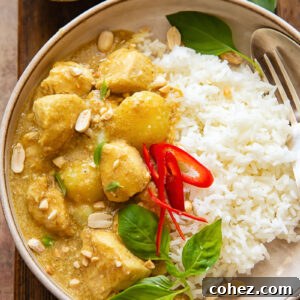
Sweet with coconut milk, familiar with soft potatoes and topped with crunchy peanuts, this curry is a soft intro to fiery Thai food.
Print Recipe
Ingredients
- 3 tbsp Thai yellow curry paste
- 1 tbsp vegetable oil
- 400ml / 14 oz coconut milk
- 1kg / 2 lbs chicken breasts, cubed or skinless boneless chicken thighs
- 2 medium potatoes, peeled and cubed
- 2 tsp brown sugar, or cane sugar
- 4-5 Thai basil leaves, optional
- 2 tbsp peanuts, chopped
Instructions
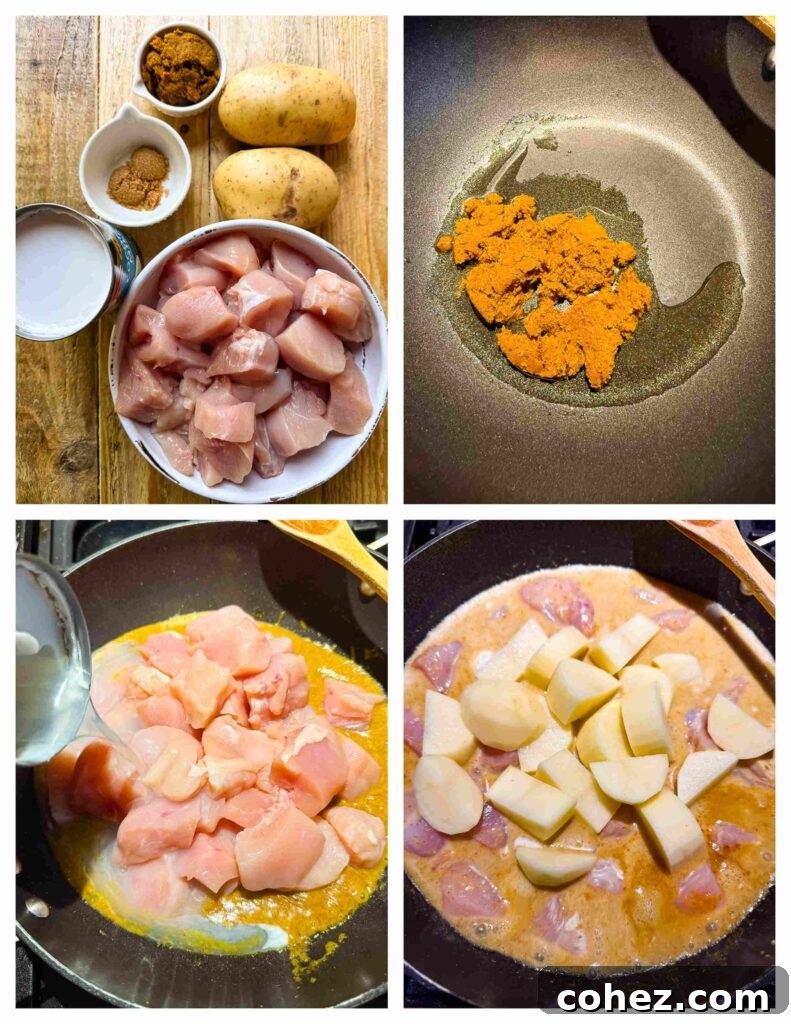
- Heat the oil in a large pan and add the yellow curry paste, continue stir frying it until it is soft and the fragrance is released, which will take about 1 minute. Then pour in the coconut milk and bring to a simmer.
- Add the cubed chicken breasts, potatoes and continue simmering the curry for 15-20 minutes or until both chicken and potatoes are fully cooked and the sauce has thickened. Mix in the sugar and take off the heat.
- Serve with jasmine rice and garnish with Thai basil leaves and chopped peanuts.
Notes
- Unlike the spicier red and green varieties, yellow curry gets its beautiful golden hue from turmeric rather than heat-packed chillies.
- For this curry with potatoes, both chicken breast and thighs work well. I lean towards boneless, skinless thighs myself since they stay moist and tender.
- Note that previously frozen chicken will release extra moisture as it cooks, which means your sauce will need additional time to reach the right consistency.
- Mae Ploy Thai yellow curry paste is my go-to brand for this recipe, and I use 3 tablespoons. Since it’s imported directly from Thailand (you’ll find it in bigger supermarkets or online), the flavour profile is reliably authentic.
- Keep in mind that different curry paste brands vary in intensity, so you may need to adjust the amount to match your preferred taste.
Nutrition
Calories: 604 kcal | Carbohydrates: 25g | Protein: 59g | Fat: 30g | Saturated Fat: 20g | Polyunsaturated Fat: 2g | Monounsaturated Fat: 4g | Trans Fat: 0.03g | Cholesterol: 160mg | Sodium: 311mg | Potassium: 1625mg | Fiber: 3g | Sugar: 4g | Vitamin A: 1870 IU | Vitamin C: 26mg | Calcium: 66mg | Iron: 5mg
Nutrition information is automatically calculated, so should only be used as an approximation.