
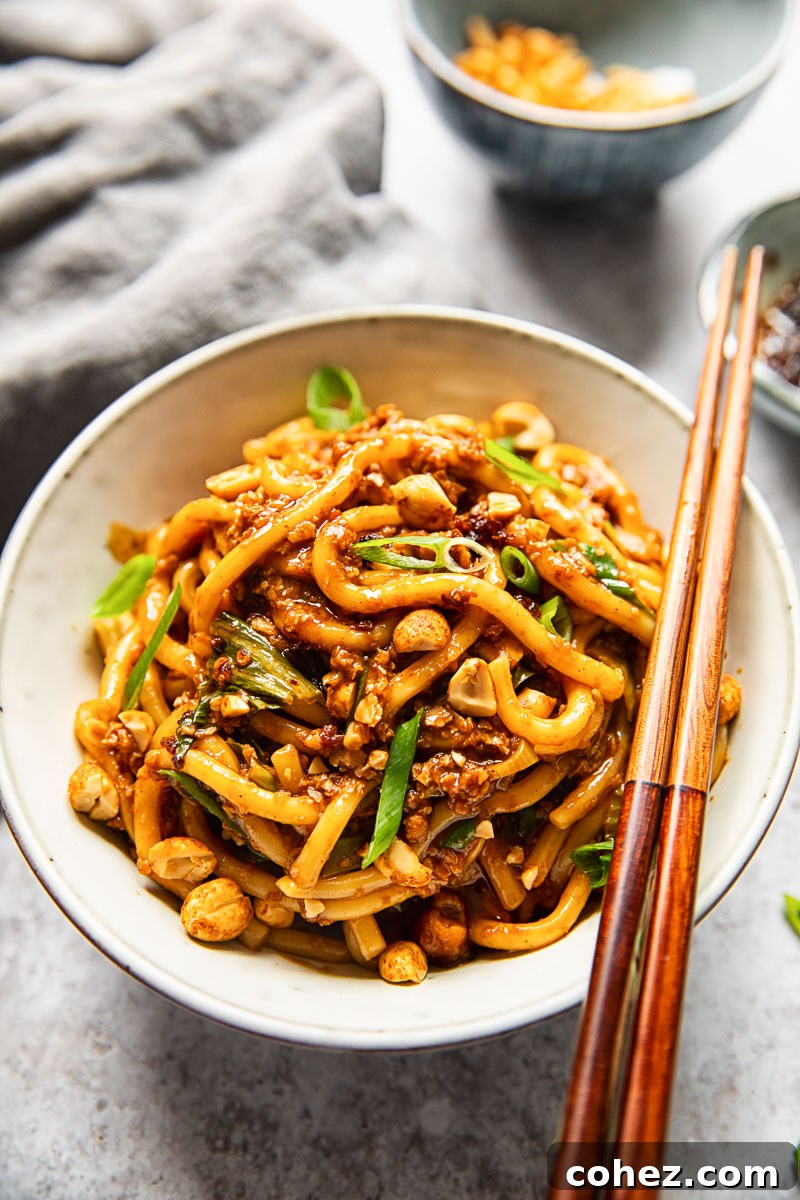
Authentic Vegan Dan Dan Noodles: A Plant-Based Sichuan Delight
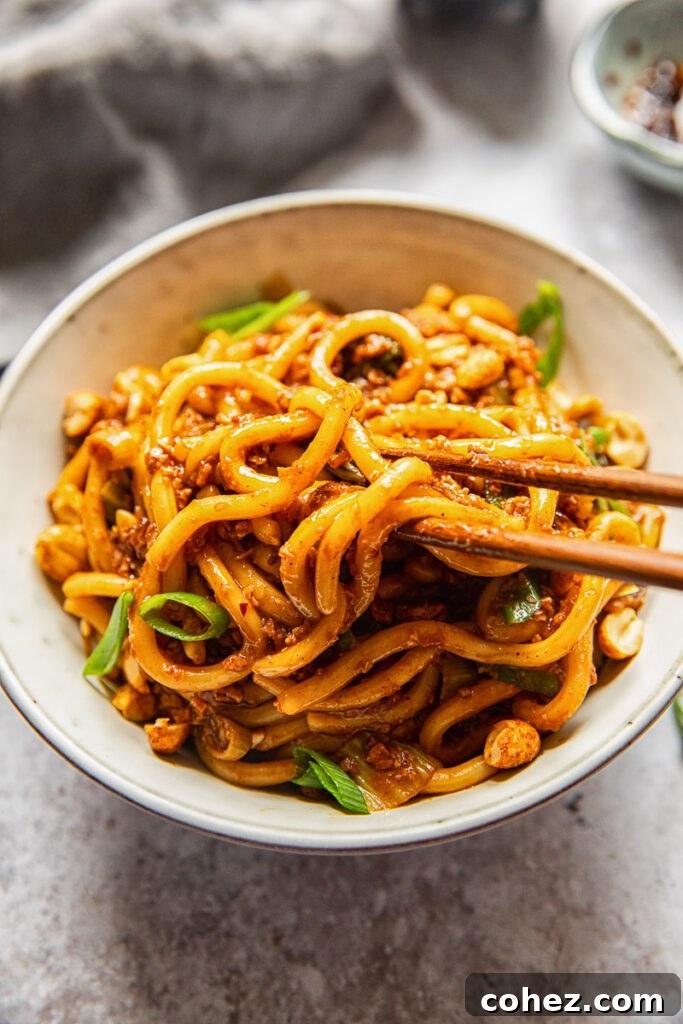
Experience the vibrant flavors of Sichuan cuisine with this incredible vegan rendition of a takeout classic! Our easy-to-follow recipe brings the legendary spice, savory depth, and signature numbing sensation of traditional Dan Dan Noodles right into your kitchen, all while using delicious plant-based ingredients. Forget complicated restaurant versions – this homemade copycat recipe is surprisingly simple to master and uses readily available ingredients, making it an ideal choice for busy weeknights or impressive gatherings.
For those seeking the time-honored version of this iconic dish, crafted with ground pork, you can explore our Easy Dan Dan Noodles recipe. However, if you’re looking to embark on a plant-based culinary adventure without sacrificing any of the complex flavors, you’ve come to the perfect place!
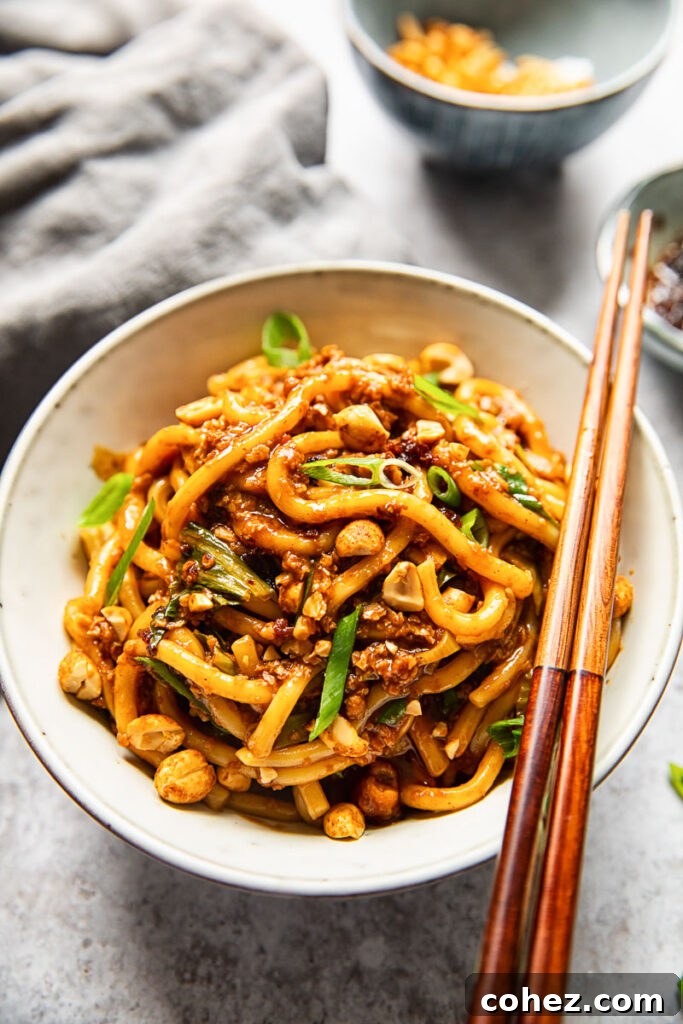
Having discovered Dan Dan Noodles (also often spelled Dandan Noodles) relatively recently, I often find myself wishing I’d known about them sooner! This dish is a true revelation, offering an explosion of taste that expertly balances heat, umami, and a unique tingling sensation. While traditionally prepared with minced pork, adapting this culinary masterpiece to be entirely vegan is remarkably straightforward, and rest assured, not a single note of its beloved, complex flavor is lost in the process.
What are Dan Dan Noodles? A Glimpse into Sichuan Street Food Culture
Originating from the bustling streets of China’s Sichuan province, Dan Dan Noodles have been a cherished street food for generations. The evocative name itself, “Dan Dan,” traces back to the distinctive carrying pole – known as a ‘dan’ – used by itinerant street vendors. These resourceful vendors would balance two baskets on either end of the pole: one laden with fresh ingredients and the other with their essential cooking utensils. They would walk through villages and markets, calling out to hungry patrons, ready to prepare a steaming bowl of noodles on the spot.
From its humble beginnings, Dan Dan Noodles quickly ascended to staple status, enchanting palates and spreading far beyond its birthplace. Like many beloved dishes that transcend regional boundaries, the recipe has naturally evolved, giving rise to numerous delightful variations. You can find versions ranging from intensely spicy to subtly mild, and from relatively dry, sauce-coated noodles to those swimming in a more soupy broth.
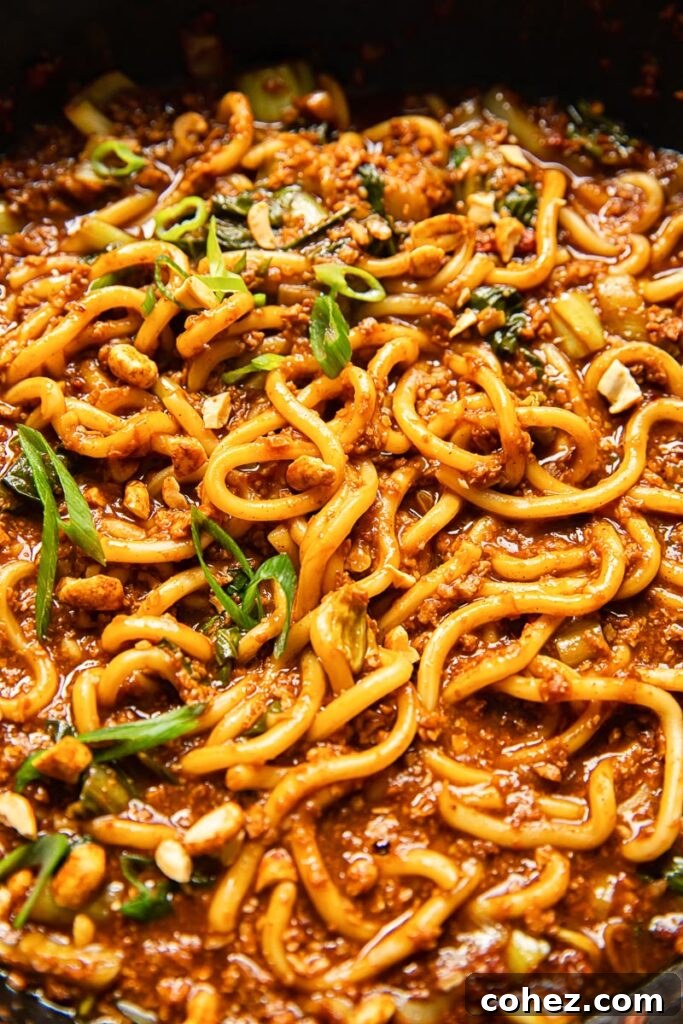
My personal preference leans towards a Dan Dan Noodle experience that delivers a satisfying kick of spice without being overly soupy. The beauty of this recipe lies in its adaptability; it’s incredibly easy to fine-tune the spice level and sauce consistency to perfectly match your individual taste. While classic Dan Dan typically features minced pork, this vegan recipe ingeniously incorporates a plant-based meat substitute. The result is truly fantastic, providing the hearty texture and savory depth that makes this dish so satisfying.
Even if you don’t adhere to a vegan diet, this plant-based Dan Dan Noodle recipe is an absolute winner, especially when entertaining guests with diverse dietary preferences. The robust flavors of the sauce combined with the texture of plant-based “meat” are so convincing that many won’t even realize it’s a vegan dish!
Why Choose Vegan Dan Dan Noodles? Health, Ethics, and Uncompromised Flavor
Embracing a plant-based diet doesn’t mean sacrificing the rich, complex flavors you love, and our Vegan Dan Dan Noodles are a testament to that. There are numerous compelling reasons to opt for this meat-free marvel:
- Health Benefits: Plant-based alternatives often contain less saturated fat and cholesterol, while being rich in fiber. This recipe offers a nutritious twist on a classic, contributing to a balanced diet without compromising on taste.
- Ethical and Environmental Impact: Choosing plant-based options helps reduce the environmental footprint associated with meat production and supports animal welfare. It’s a delicious way to make a positive impact.
- Inclusivity: This recipe is perfect for households with mixed dietary preferences, ensuring everyone can enjoy a fantastic meal together. It caters to vegans, vegetarians, and those simply looking to incorporate more plant-based meals into their week.
- Incredible Flavor: The misconception that vegan food lacks flavor is quickly dispelled with this dish. The potent blend of Sichuan peppercorns, chili oil, savory soy sauce, and aromatic garlic and ginger ensures an intensely satisfying and authentic taste experience. The plant-based meat substitute is expertly seasoned to mimic the texture and richness of its traditional counterpart.
- Easy Adaptation: As you’ll see, transitioning a traditionally meat-heavy dish like Dan Dan Noodles to a vegan format is surprisingly simple and requires no exotic ingredients.
Key Ingredients for Flavor-Packed Vegan Dan Dan
The magic of Dan Dan Noodles lies in its harmonious blend of distinct ingredients. Understanding each component’s role will help you appreciate the depth of flavor in this vegan version:
- Plant-Based Meat Substitute: This forms the hearty base of our “meat” topping. Options like textured vegetable protein (TVP), plant-based crumbles (from brands like Beyond Meat or Impossible Foods), or even crumbled firm tofu work wonderfully. The goal is a crumbly, savory texture that absorbs the sauce beautifully.
- Udon Noodles: These thick, chewy wheat noodles are ideal for coating in the rich sauce. Their substantial texture holds up well to the intense flavors. If udon isn’t available, traditional ramen noodles, egg noodles (ensure vegan if needed), or even spaghetti can be used in a pinch.
- Sichuan Peppercorns: The star of Sichuan cuisine! These aren’t spicy in the traditional sense but deliver a unique “mala” sensation – a citrusy, numbing, and tingling feeling on the tongue. Crushing them fresh maximizes their aromatic impact.
- Chilli Oil: Essential for heat and a vibrant red hue. Store-bought chili oil is convenient, but homemade varieties often offer a deeper, more aromatic flavor profile. Adjust the quantity to your preferred spice level.
- Dark Soy Sauce: Beyond just saltiness, dark soy sauce provides a deeper, richer umami flavor and a beautiful dark color to the sauce, making the noodles look as appetizing as they taste.
- Rice Wine Vinegar: Adds a crucial tangy note, balancing the richness and spice. Its mild acidity brightens the entire dish.
- Sesame Oil: Used for its distinct nutty aroma, particularly when finishing the dish or cooking the aromatics.
- Fresh Ginger & Garlic: The aromatic foundation, providing pungent, warm notes that are characteristic of Asian cuisine.
- Chinese Five Spice Powder: A blend typically including star anise, cloves, cinnamon, Sichuan peppercorns, and fennel seeds. It adds a complex, warm, and fragrant depth to the sauce.
- Bok Choy (or other greens): Adds a fresh, slightly bitter counterpoint and vibrant color. Other quick-cooking greens like spinach or kale can be substituted.
- Roasted Peanuts: Crucial for texture and a delightful nutty crunch, along with a subtle sweetness. Don’t skip these for an authentic Dan Dan experience!
- Green Onions: Used for both their white parts (cooked for flavor) and green parts (as a fresh garnish). They add a mild oniony bite and visual appeal.
How to Craft Your Own Vegan Dan Dan Noodles
Despite its complex flavor profile, making vegan Dan Dan Noodles is surprisingly simple and efficient, especially if you embrace the “mise en place” philosophy – having all your ingredients prepped and ready before you start cooking. This will ensure a smooth and enjoyable cooking process.
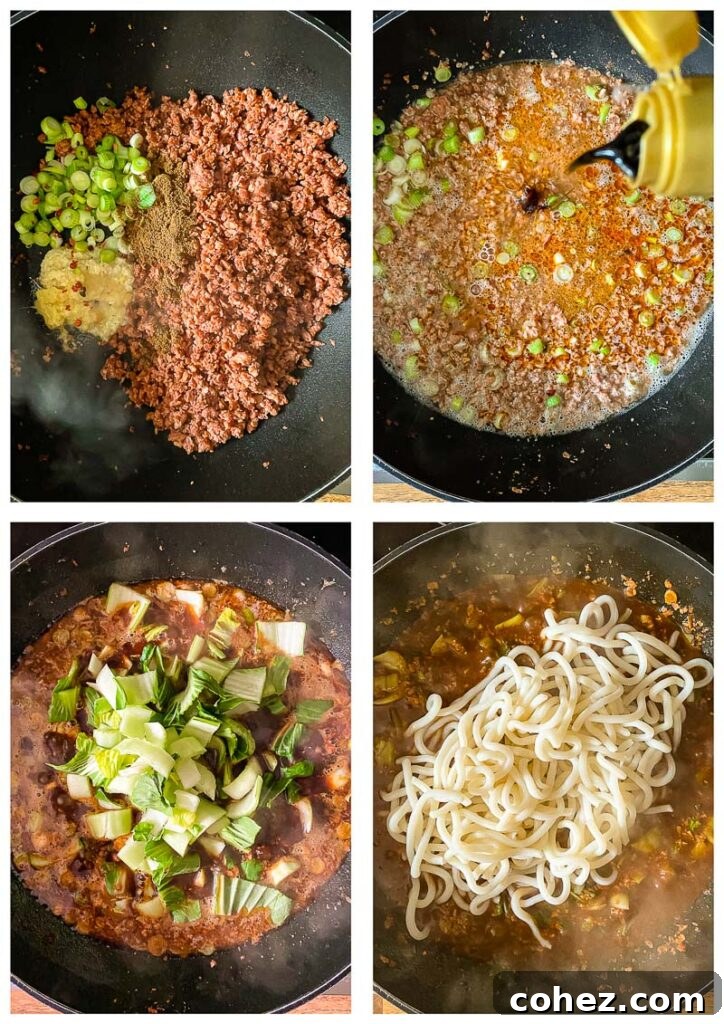
Step-by-Step Instructions:
- Prepare Your Ingredients: Begin by finely slicing your green onions, carefully separating the white and green parts as they are added at different stages. Roughly chop the fresh bok choy. For the peanuts, give them a rough chop to create varying textures. Finally, crush the peppercorns using a pestle and mortar, or a spice grinder, to release their maximum aroma and the characteristic numbing sensation. Having these components ready will significantly streamline your cooking process.
- Cook the Noodles: In a large pot of boiling water, cook the udon noodles according to the package instructions until al dente. Udon noodles cook relatively quickly, so keep an eye on them. Once cooked, drain them thoroughly and rinse them under cold water. This crucial step prevents the noodles from sticking together and stops the cooking process, ensuring they retain a pleasant chewiness when reheated in the sauce. Set them aside.
- Brown the Plant-Based “Meat”: While your noodles are cooking, heat a wok or a large, high-sided frying pan over high heat. Add the sesame oil and let it get shimmering hot. Introduce your chosen plant-based meat substitute to the hot oil. Fry it, breaking it apart with your spatula, until it’s thoroughly heated through and has developed a nice, slightly browned and crispy texture. This usually takes about five minutes, ensuring a savory and robust “meat” component.
- Infuse with Aromatics and Spices: To the browned plant-based “meat,” add the grated ginger, crushed garlic, the white parts of the sliced green onions, the crushed peppercorns, and the Chinese five spice powder. Stir these aromatic ingredients vigorously, frying for just one minute. This brief cooking time allows their fragrances to bloom and meld with the savory base.
- Simmer the Flavorful Sauce: Now, pour in the vegetable stock, chilli oil (adjusting the amount to your desired spice level), rice wine vinegar, and dark soy sauce into the wok. Bring the mixture to a gentle simmer and let it cook for three to four minutes, stirring frequently. During this time, the liquids will slightly reduce and the flavors will intensify, creating a rich and complex sauce.
- Add the Greens: Incorporate the roughly chopped bok choy into the simmering sauce. Continue to cook for another two to three minutes, or until the bok choy has just softened but still retains a slight crispness.
- Combine with Noodles: Finally, return the cooled udon noodles to the wok. Toss them thoroughly with the sauce and other ingredients, ensuring every strand is coated in the flavorful mixture. You only need to cook them long enough for them to heat back up to your desired serving temperature.
- Serve and Garnish: Divide the hot Dan Dan Noodles into individual serving bowls. Garnish generously with the chopped roasted peanuts and the vibrant green parts of the green onions. These garnishes are not merely decorative; they add essential texture, freshness, and a final layer of flavor that elevates the entire dish.
Expert Tips & Recipe Notes for Perfect Vegan Dan Dan Noodles
- Mise en Place is Key: While the ingredient list may seem extensive, this dish comes together remarkably quickly. The trick to a stress-free cooking experience is to prepare all your ingredients (chop, measure, crush) before you even turn on the stove.
- Thickening the Sauce: If you prefer a thicker, more clinging sauce, prepare a slurry by mixing a small amount of cornstarch with an equal part of cold water. Stir this into the sauce towards the end of cooking and let it simmer for another minute until it reaches your desired consistency.
- Peppercorn Power: For an authentic “mala” (numbing and spicy) sensation, Sichuan peppercorns are highly recommended. However, if they are difficult to find, regular black or pink peppercorns (as used in this recipe) will provide a pleasant peppery flavor, though without the unique numbing effect.
- Greens Alternatives: Feel free to experiment with other quick-cooking greens in place of bok choy. Spinach, kale, Chinese cabbage, or even thinly sliced Napa cabbage would make excellent substitutions.
- Protein Variations: While a plant-based meat substitute is fantastic, you can also use crumbled firm or extra-firm tofu, pressed and then pan-fried until golden and slightly crispy, for a different texture. Tempeh can also be crumbled and used.
- The Magic of Peanuts: Serving these noodles topped with chopped roasted peanuts is more than just an option – it’s transformative! They don’t just add a delightful crunch; they introduce a crucial nutty dimension to the flavor profile that truly completes the dish.
- Spice Level Adjustment: The amount of chili oil and peppercorns can be easily adjusted. Start with the lower recommended amount and add more to taste if you prefer a spicier, more intense kick.
- Aromatic Depth: Don’t skimp on fresh ginger and garlic. Their pungent aromas are fundamental to the complexity of the sauce.
Serving Suggestions for Your Vegan Dan Dan Feast
Vegan Dan Dan Noodles are a perfectly complete meal on their own – a true one-pan wonder that leaves you feeling satisfied and nourished. The harmonious blend of noodles, savory plant-based “meat,” vibrant greens, and a richly spiced sauce means you’re missing absolutely nothing by enjoying a generous bowl of this tasty dish. My personal favorite way to serve them is with a generous sprinkling of extra chopped roasted peanuts for maximum crunch and a scattering of the green parts of sliced green onions for a fresh, oniony bite.
However, if you’re looking to turn your meal into a more elaborate feast or simply crave a starter, consider keeping with the vegan theme. Light and crispy appetizers pair wonderfully with the robust flavors of the noodles. For instance, some Crispy Tofu Bites would provide an excellent textural contrast and a delightful opening act to your main course. You could also serve a simple side of steamed edamame or a refreshing cucumber salad dressed with a light vinaigrette to cleanse the palate between flavorful bites.
Storage & Reheating: Enjoying Your Dan Dan Noodles Later
One of the beauties of this Vegan Dan Dan Noodles recipe is how well it holds up as leftovers, making it fantastic for meal prep! Any remaining portions will keep beautifully in the fridge for 2-3 days when stored in an airtight container. Be aware that the noodles may absorb more of the sauce over time, intensifying the flavors.
When you’re ready to enjoy another delicious meal, the best way to reheat your Dan Dan Noodles is by returning them to a pan over medium heat. Add a tiny splash of oil (sesame oil works well for extra flavor) to the pan and then add the noodles. Stir gently and heat them through until they are piping hot. Avoid reheating in the microwave if possible, as it can sometimes make the noodles a bit soft or rubbery; pan-reheating helps maintain their texture and allows any dried-up sauce to rehydrate beautifully.
Frequently Asked Questions About Vegan Dan Dan Noodles
Here are answers to some common questions you might have about making these delicious plant-based Dan Dan Noodles:
- Can I make this recipe gluten-free? Absolutely! To make this recipe gluten-free, simply substitute the udon noodles with gluten-free rice noodles (such as wide rice vermicelli or flat rice noodles) or gluten-free ramen noodles. Ensure your soy sauce is replaced with Tamari, which is a gluten-free alternative, and double-check that your plant-based meat substitute and vegetable stock are also certified gluten-free.
- How can I make this nut-free? If you have a peanut allergy, you can easily make this recipe nut-free. Omit the roasted peanuts or substitute them with toasted sesame seeds for a similar textural crunch and nutty flavor profile. Ensure all other ingredients (like chili oil or vegetable stock) are free from nut contamination if severe allergies are a concern.
- How do I adjust the spice level? The spice level primarily comes from the chili oil and Sichuan peppercorns. For a milder dish, start with 1 teaspoon of chili oil and reduce the peppercorns to 1 teaspoon. If you love heat, feel free to increase both to your preference, adding gradually and tasting as you go.
- Can I prepare parts of this recipe in advance? Yes! The plant-based “meat” topping can be cooked a day in advance and stored in the fridge. The sauce base (without the noodles or bok choy) can also be made ahead. However, it’s best to cook the noodles fresh and combine everything just before serving for optimal texture.
- What if I don’t have a wok? A large, high-sided frying pan or a Dutch oven will work perfectly fine as a substitute for a wok. The key is to use a pan that retains heat well and has enough space to toss all the ingredients effectively.
More Asian Noodle Recipes to Explore
- Shrimp Chow Mein
- Chicken Yaki Udon
- Pancit Canton (Filipino Noodles)
- Singapore Noodles
- Beef Yakisoba
Vegan Dan Dan Noodles
By Julia Frey of Vikalinka
Cook: 15 mins
Total: 35 mins
Servings: 6
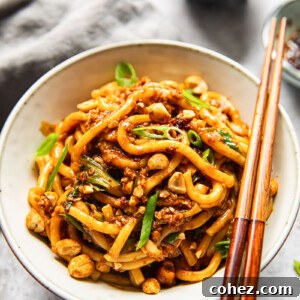
This vegan version of a Sichuan takeout legend keeps all the spice and savoury goodness of dan dan noodles while using a plant based meat substitute. Easy to make at home with easy-to-find ingredients make this a perfect copycat recipe!
Ingredients
- 500g / 1lb dried udon noodles
- 1 tbsp sesame oil
- 500g / 1lb plant based meat substitute
- 1 tbsp fresh ginger, peeled and grated
- 2 cloves garlic, crushed
- 4 green onions, finely sliced (white and green parts separated)
- 2 tsp peppercorns, crushed (Sichuan peppercorns recommended, or pink/black)
- 1½ tsp Chinese five spice powder
- 375ml / 1½ cups vegetable stock
- 1-2 tsp chilli oil (adjust to taste)
- 1-2 tsp rice wine vinegar
- 3 tbsp dark soy sauce
- 3 baby bok choy, roughly chopped
- 60g / 4 tbsp roasted peanuts, roughly chopped
Instructions
- Cook the udon noodles according to package instructions. Drain, then rinse thoroughly with cold water to prevent sticking. Set aside.
- Meanwhile, heat a large wok or high-sided pan over high heat. Add sesame oil. Once hot, add the plant-based meat substitute and cook for about 5 minutes, breaking it up, until heated through and lightly browned.
- Add grated ginger, crushed garlic, the white parts of the green onions, crushed peppercorns, and Chinese five spice powder. Stir well and fry for 1 minute until fragrant.
- Pour in the vegetable stock, chilli oil, rice wine vinegar, and dark soy sauce. Cook for 3-4 minutes, stirring frequently, allowing the liquid to slightly reduce and flavors to meld.
- Add the roughly chopped bok choy and cook for 2-3 minutes, or until tender-crisp.
- Return the cooked and cooled noodles to the wok. Toss everything together vigorously until the noodles are thoroughly combined with the sauce and heated through.
- Serve immediately in bowls, garnished with chopped roasted peanuts and the green parts of the green onions.
Notes
If you prefer a slightly thicker sauce, you can add a small amount of cornstarch mixed with water (a slurry) towards the end of cooking and stir it in until thickened.
Nutrition
Calories: 542kcal | Carbohydrates: 75g | Protein: 30g | Fat: 15g | Saturated Fat: 2g | Polyunsaturated Fat: 4g | Monounsaturated Fat: 5g | Cholesterol: 4mg | Sodium: 2308mg | Potassium: 439mg | Fiber: 11g | Sugar: 10g | Vitamin A: 2751IU | Vitamin C: 31mg | Calcium: 208mg | Iron: 4mg
Nutrition information is automatically calculated and should only be used as an approximation.
Tried this recipe?
Let us know how it was!