
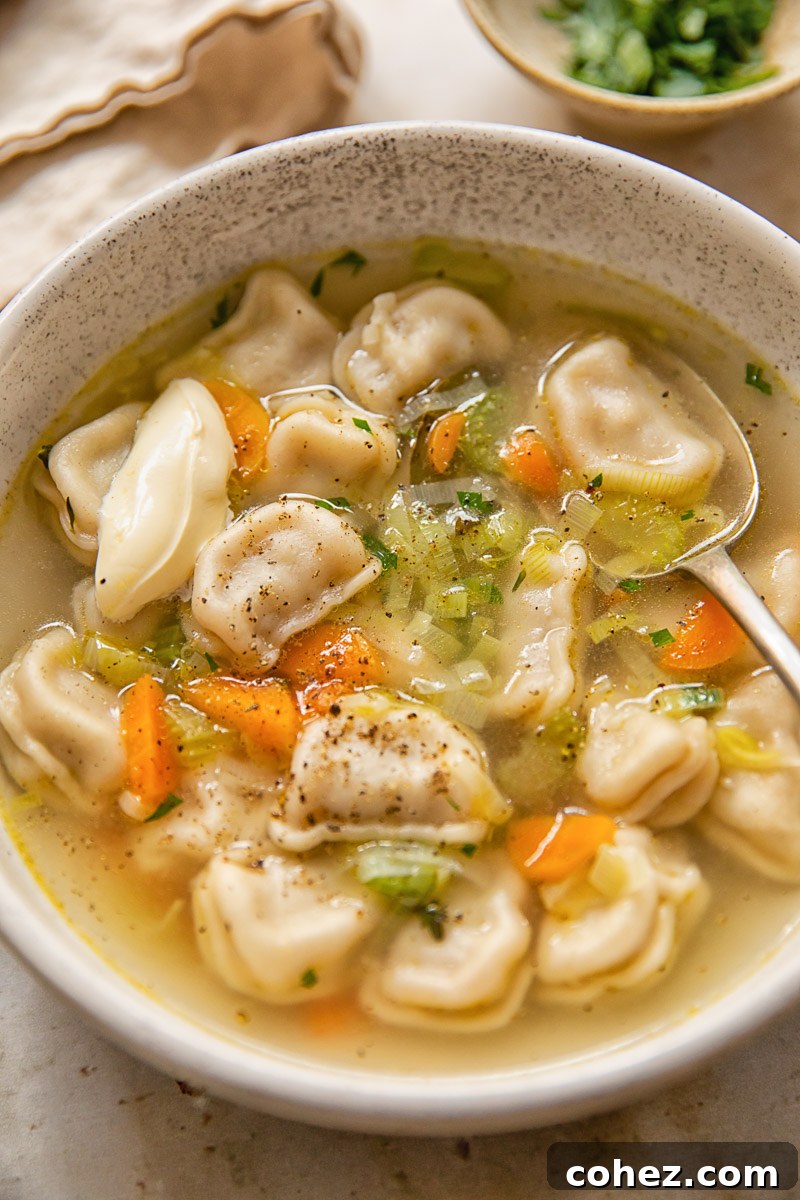
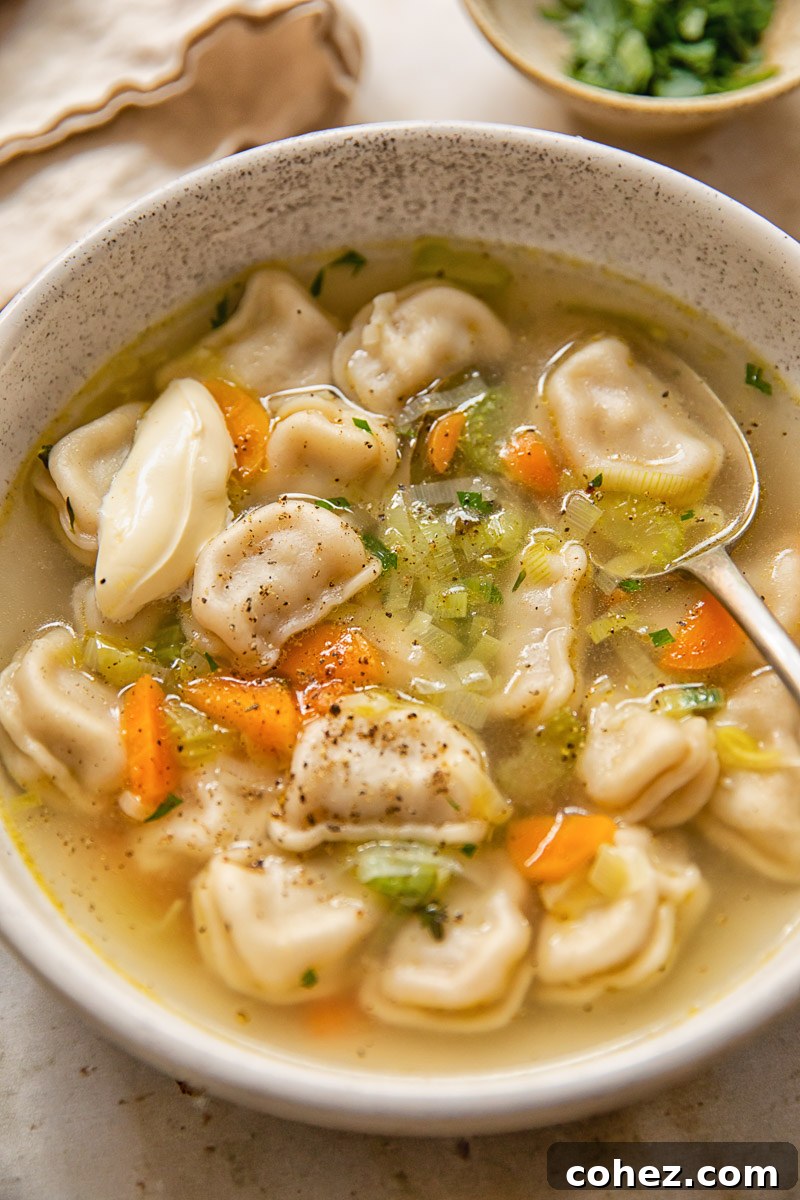
Imagine a culinary embrace on a chilly day – that’s precisely what this delightful Pelmeni Dumpling Soup offers. Incredibly quick to prepare, especially with a bag of frozen pelmeni or tortellini at hand, this recipe transforms simple ingredients into a deeply satisfying meal. It’s the perfect antidote to cold weather, providing warmth, flavor, and comfort in every spoonful.
For an authentically rustic and traditional Eastern European experience, don’t forget to serve your steaming bowl of soup alongside a slice of hearty rye bread. Its robust flavor and dense texture make it the ideal companion for soaking up the rich, aromatic broth.
The Universal Appeal of Dumplings and Eastern European Tradition
Dumplings hold a cherished place in cuisines across the globe, universally celebrated as a symbol of comfort and culinary ingenuity. From Asian potstickers to Italian ravioli, these delightful parcels of dough, often filled with savory or sweet mixtures, speak a common language of warmth and nourishment. In Eastern Europe, this tradition flourishes with exceptional diversity, where each country, and even distinct regions, boasts its own unique and beloved dumpling variations.
Many are already familiar with pierogi, the famous Polish dumplings, typically recognized by their half-moon shape and versatile fillings ranging from potato and cheese to sauerkraut or fruit. But the spectrum extends much further. Take Ukrainian vareniki, for instance, which lean towards vegetarian fillings such as creamy potatoes, farmer’s cheese, or sweet blueberries, often enjoyed as a main course or a dessert. Then there are the Russian Pelmeni dumplings, a staple whose name evokes images of hearty meals and cold winters.
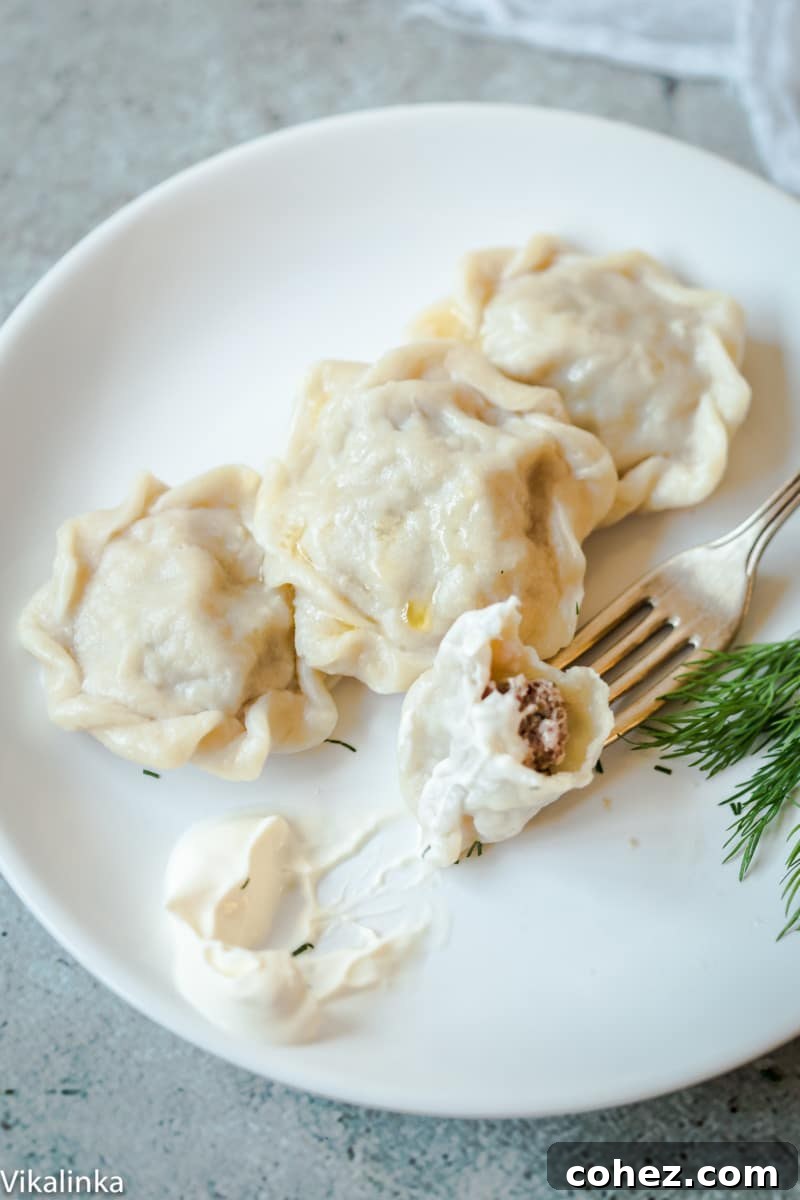
Russian Pelmeni are distinctively smaller than vareniki and are traditionally packed with a savory, finely spiced mixture of beef, pork, and aromatic onions. These bite-sized treasures are most commonly boiled until tender and served simply with a dollop of sour cream and a fresh scattering of herbs like dill or parsley. However, pelmeni truly shine when incorporated into a flavorful broth, transforming into the delicious and wholesome soup we’re about to create.
Pelmeni: A Siberian Legacy of Sustenance and Celebration
Pelmeni’s storied history traces back to the vast, frosty landscapes of Siberia. It is widely believed that these dumplings were influenced by Asian culinary traditions, likely from neighboring China, centuries ago. Adapted to the harsh Siberian climate, pelmeni became an ingenious solution for food preservation and sustenance. Families would gather to make large batches of these meat-filled dumplings, freezing them outdoors in the extreme cold to last through the long winters. This communal activity and the dish’s ability to provide high-energy nutrition made pelmeni not just a meal, but a symbol of resilience and family unity.
Today, pelmeni remain a deeply ingrained part of Russian culinary culture, holding a cherished spot on tables throughout the year. While the tradition of making pelmeni from scratch is a rewarding experience, involving the meticulous preparation of dough and filling, modern life often calls for a more convenient approach. Similar to how many Italian households now opt for store-bought pasta or tortellini over the time-consuming process of making fresh dough, the majority of people today choose the ease of frozen pelmeni. This convenience doesn’t detract from the dish’s authentic taste but rather makes this beloved comfort food accessible to busy individuals and families worldwide.
The growing popularity of pelmeni means they are increasingly available in various markets. In the UK, you can typically find frozen pelmeni in most Eastern European grocery stores. Across the US, their presence has expanded beyond specialty shops, with many major supermarkets, including popular chains like Trader Joe’s, stocking them in their freezer aisles. This widespread availability ensures that a comforting bowl of pelmeni soup is always within reach, bridging geographical distances with its delicious flavor.
However, for those passionate home cooks who delight in the art of traditional food preparation, making pelmeni from scratch can be an incredibly fulfilling endeavor. If you decide to embark on this culinary journey, resources like a detailed homemade pelmeni recipe can provide all the guidance you need, from selecting the perfect cuts of meat and spices for the filling to mastering the delicate process of shaping these exquisite dumplings.
Crafting Your Perfect Pelmeni Dumpling Soup: Essential Tips and Techniques
Creating an outstanding pelmeni dumpling soup is simpler than you might think, especially with these insider tips. This soup often draws comparisons to classic chicken noodle soup due to its comforting broth and the presence of dough-based elements. Pelmeni, with their savory meat filling encased in a pasta-like wrapper, function beautifully as both the protein and the “noodle,” making for a wonderfully complete and satisfying meal.
Building a Robust Flavor Base
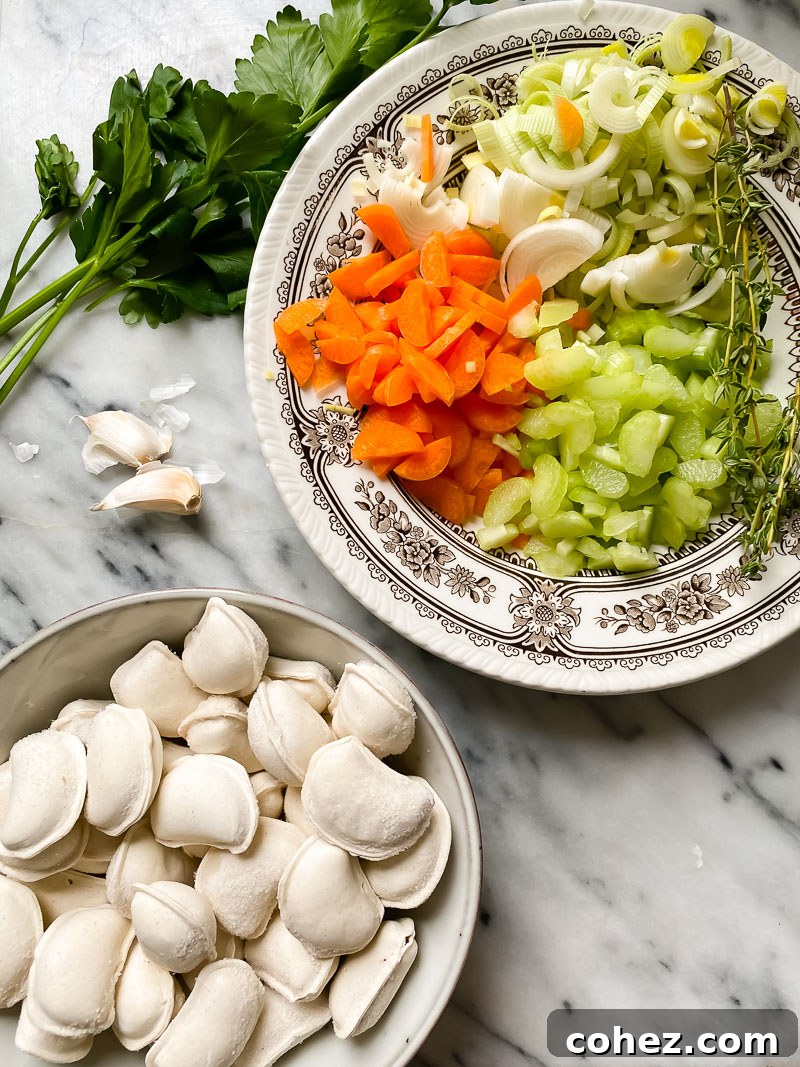
The secret to any truly great soup lies in its foundational flavors. I always begin with the classic aromatic trio: carrots, celery, and a member of the onion family. For this particular recipe, I’ve chosen to substitute traditional onions with leeks. Leeks offer a more refined, subtly sweet, and delicate flavor that harmonizes beautifully with the meat-filled dumplings. Moreover, they tend to soften and cook more quickly, adding efficiency to your cooking process. Gently sautéing these vegetables along with minced garlic and herbs in a blend of olive oil and butter allows their flavors to slowly develop and meld, creating a rich and aromatic base before the chicken stock is even added.
The Importance of Quality Stock and Fresh Herbs
The soul of any soup is its stock, and this pelmeni dumpling soup is no exception. Using a high-quality chicken stock is absolutely critical for achieving a deeply flavored and comforting broth. If you have the luxury of homemade chicken stock stashed in your freezer, this is the perfect opportunity to utilize it for an unparalleled depth of flavor. Otherwise, invest in the best store-bought chicken broth you can find. Furthermore, don’t underestimate the transformative power of herbs. Fresh thyme, with its earthy notes, is particularly wonderful during cooler months, infusing the broth with warmth. And almost without fail, I finish my soups with a generous sprinkling of fresh parsley or dill right before serving. These fresh additions provide a vibrant burst of color, a refreshing aroma, and a critical layer of brightness that elevates the entire dish.
Cooking Pelmeni to Ideal Texture
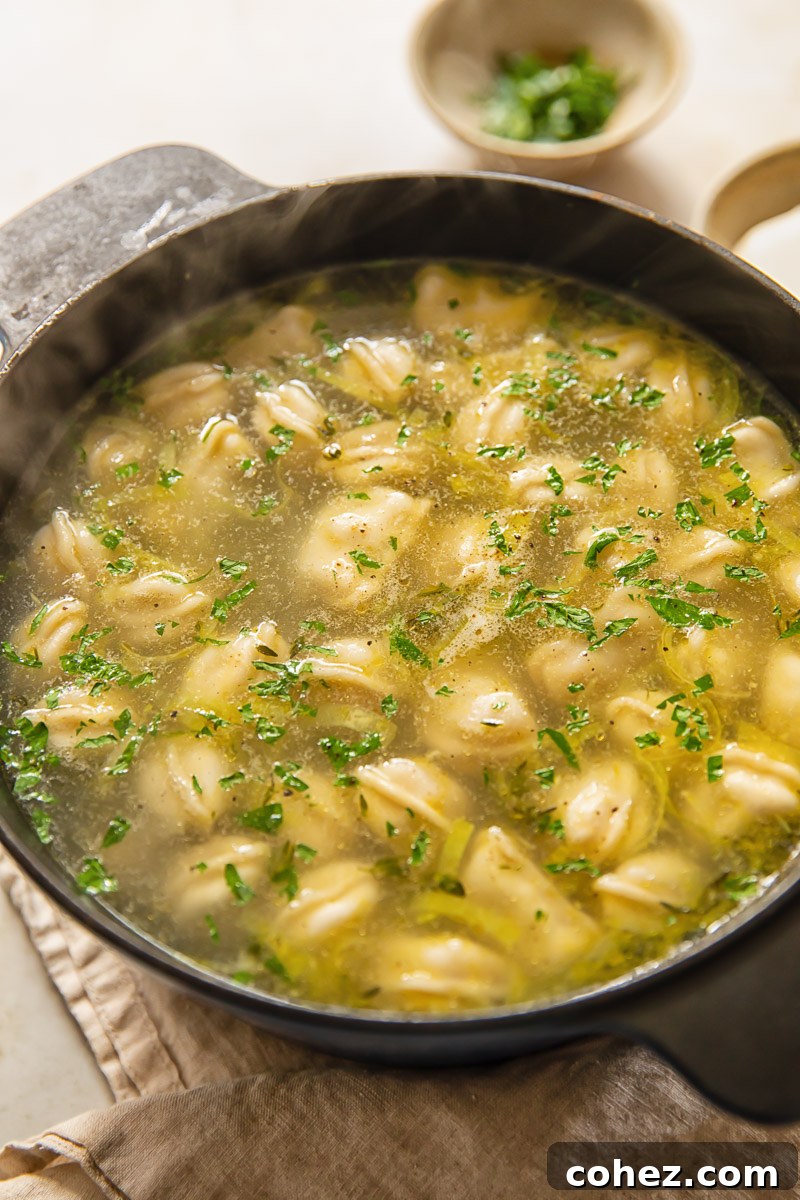
One of the most appealing aspects of using frozen pelmeni is their rapid cooking time. Once your flavorful stock reaches a vigorous boil, gently introduce the frozen dumplings into the pot. Due to their density, they will initially sink. It is vital to stir them immediately and gently with a wooden spoon to prevent them from sticking to the bottom of the pot or to each other. As they cook, the magic happens: the dumplings will become lighter and gradually float to the surface, signaling that they are nearly cooked. From this point, allow them to simmer for an additional 3 to 5 minutes, depending on their size. To ensure perfect doneness, carefully retrieve one dumpling, cut it in half, and check that the dough is tender and fully cooked throughout. This simple step guarantees a delightful texture in every bite, avoiding any unpleasant raw dough.
Versatile Dumpling Alternatives
Should traditional pelmeni be challenging to find in your local market, don’t let that deter you from enjoying this comforting soup! This recipe is wonderfully adaptable. You can easily substitute frozen tortellini for a similar, pasta-based dumpling experience. Alternatively, frozen Chinese dumplings, often found in Asian markets, also make a fantastic and delicious cross-cultural stand-in. The key is to select small, pre-filled dumplings that can cook efficiently within the broth, delivering that familiar satisfying bite.
Serving Suggestions and Traditional Accompaniments
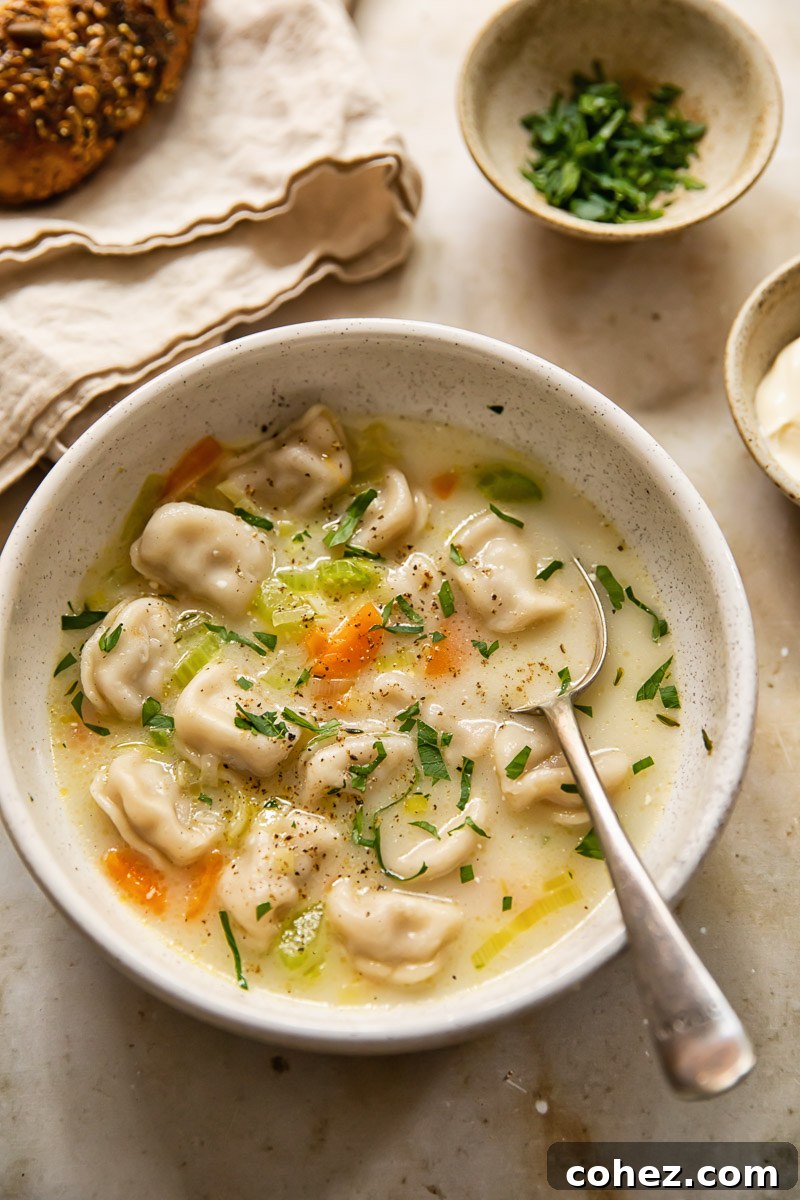
Embracing the traditional method of serving pelmeni, this soup is perfectly complemented by sour cream. Offer a generous bowl of sour cream on the side, allowing each diner to add a dollop directly into their individual serving. Stirring it in creates a wonderfully creamy, slightly tangy broth that beautifully balances the savory flavors of the dumplings and vegetables. This approach also prevents the sour cream from potentially curdling if added directly to the entire hot pot of soup.
Beyond sour cream, a scattering of freshly chopped parsley or dill is a classic garnish that adds a burst of freshness and vibrant color. A grind of fresh black pepper also enhances the overall flavor profile, introducing a subtle warmth and aromatic complexity. While these additions are optional, they are highly recommended for capturing the authentic essence and completing the full sensory experience of this delightful Eastern European soup.
Storage and Leftovers: Maximizing Freshness
As with most recipes featuring pasta or delicate dough elements – a category into which I firmly place dumplings – pelmeni soup is unequivocally at its best when enjoyed fresh, immediately after preparation. The texture of the dumplings is paramount to the soup’s appeal; the longer they linger in the hot broth, the more liquid they absorb, inevitably becoming overly soft and potentially mushy. While some may not be as discerning about leftover pasta, for optimal culinary enjoyment, consuming this soup shortly after it’s made is highly recommended.
To truly savor the pristine texture of the pelmeni and the freshness of the broth, I strongly advise preparing only enough soup for a single meal. Given how remarkably quick and straightforward this soup is to make from start to finish, whipping up a fresh batch whenever the craving arises is a far more satisfying option than compromising on texture with leftovers. If storing leftovers is absolutely necessary, consider separating the cooked dumplings from the broth before refrigeration. This method can help to better preserve the integrity of the dumplings, allowing you to combine and gently reheat them just before serving for a slightly improved leftover experience.
Other Hearty Soup Recipes to Warm Your Soul
If you’ve enjoyed the comforting embrace of this pelmeni dumpling soup, you might be interested in exploring more recipes that offer warmth and flavor. Here are some of our other favorite hearty soups:
- Leftover Turkey Soup Recipe
- Chicken and Dumpling Soup
- Classic Borscht
- Pasta e Fagioli Soup
Pelmeni Dumpling Soup Recipe
A comforting and quick recipe for Pelmeni Dumpling Soup, featuring tender dumplings cooked in a flavorful broth with leeks, celery, carrots, and aromatic herbs. Serve with a dollop of sour cream for an authentic touch.
Prep Time: 10 minutes
Cook Time: 20 minutes
Total Time: 30 minutes
Servings: 6
Equipment
- Large Soup Pot
Ingredients
- 1 tbsp olive oil
- 1 tbsp butter
- 1 leek, sliced (white and light green parts)
- 1 carrot, peeled, cut lengthwise and thinly sliced
- 1 stalk celery, thinly sliced
- 1 clove garlic, minced
- 2 sprigs fresh thyme, leaves stripped (or 1/2 tsp dried thyme)
- 1½ litres / 6 cups chicken stock (preferably low sodium)
- Salt and freshly ground black pepper, to taste
- 1 bay leaf
- 1 lbs / 1/2 kg frozen pelmeni dumplings (or substitute with frozen tortellini or Chinese dumplings)
- 1 tbsp fresh parsley, chopped, for garnish
- 125ml / 1/2 cup sour cream, for serving
Instructions
- In a large soup pot or Dutch oven, heat the olive oil and butter over low to medium heat. Add the sliced leeks, celery, carrots, minced garlic, and fresh thyme leaves. Sauté gently for about 5-7 minutes, stirring occasionally, until the vegetables soften and become fragrant but do not brown.
- Pour in the chicken stock and add the bay leaf. Increase the heat to bring the mixture to a rolling boil. Season the broth generously with salt and freshly ground black pepper according to your preference.
- Once the broth is boiling, carefully add the frozen pelmeni dumplings to the pot. Stir immediately and gently with a spoon to prevent the dumplings from sticking to the bottom of the pot or to each other.
- Continue to simmer the soup. The dumplings will initially sink but will float to the surface as they cook, typically after about 5 minutes (this time may vary slightly depending on the size of your dumplings). Once they float, cook for an additional 3-5 minutes to ensure the dough and filling are thoroughly cooked. To test for doneness, carefully remove one dumpling, cut it in half, and check that the dough is tender and cooked through.
- Before serving, remove the bay leaf. Ladle the hot soup into individual bowls. Garnish each serving with a sprinkle of fresh chopped parsley.
- Serve immediately with a side of sour cream, allowing each person to stir it into their bowl for added creaminess and tang.
Nutrition Information (Approximate per serving)
Please note that nutrition information is an automatic calculation and should be used as an approximation only, as values can vary based on specific ingredients and preparation methods.
- Calories: 367 kcal
- Carbohydrates: 44g
- Protein: 12g
- Fat: 17g
- Saturated Fat: 5g
- Polyunsaturated Fat: 1g
- Monounsaturated Fat: 5g
- Trans Fat: 0.1g
- Cholesterol: 28mg
- Sodium: 1138mg
- Potassium: 377mg
- Fiber: 3g
- Sugar: 9g
- Vitamin A: 2241 IU
- Vitamin C: 13mg
- Calcium: 74mg
- Iron: 2mg