
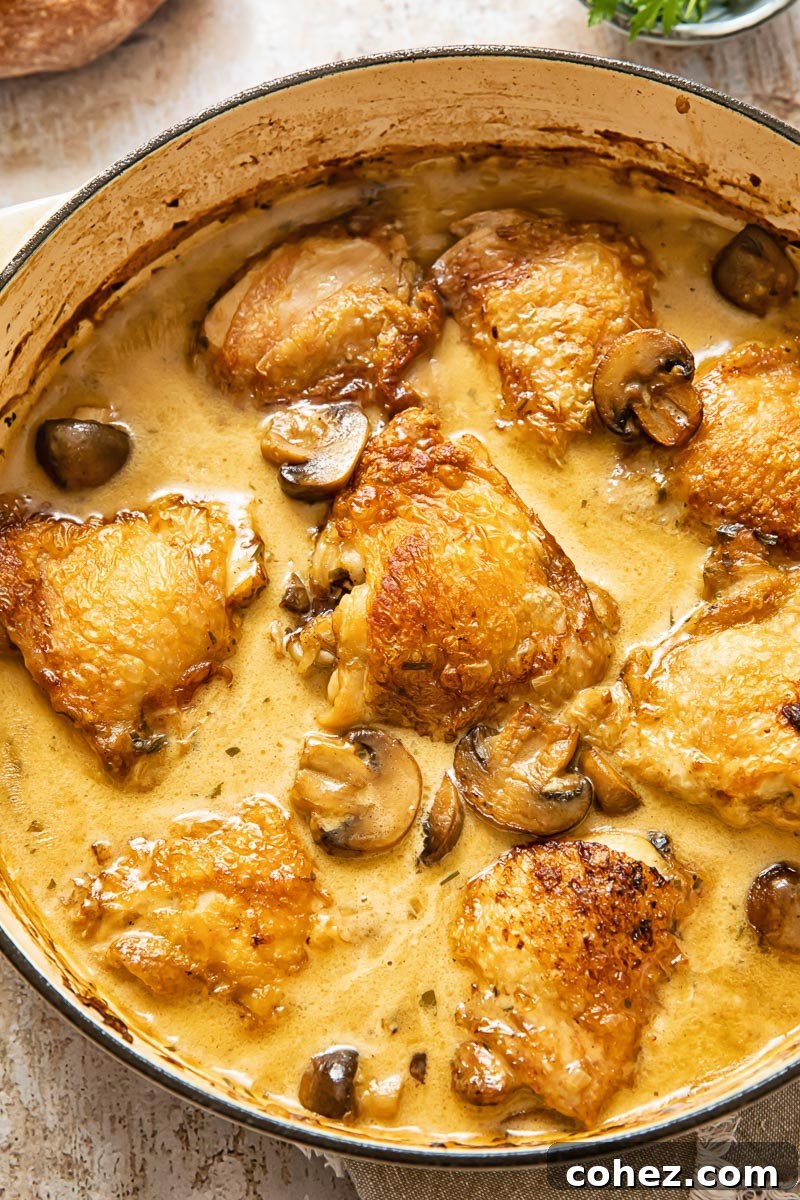
Experience the comforting elegance of French cuisine right in your own kitchen with our exquisite Chicken Fricassée recipe. This classic “white stew” is a culinary masterpiece, featuring succulent chicken thighs and tender vegetables bathed in a rich, creamy sauce infused with white wine and aromatic herbs. Whether you’re planning a cozy midweek family dinner or an impressive gathering with a touch of French flair, this one-pot wonder promises a delightful journey for your taste buds.
While our focus today is on the irresistible Chicken Fricassée, if you’re seeking a similar creamy, comforting experience with a different protein, consider our boneless pork chops with apples and cider, which offers a comparable sauce and pairs beautifully with the serving suggestions below.
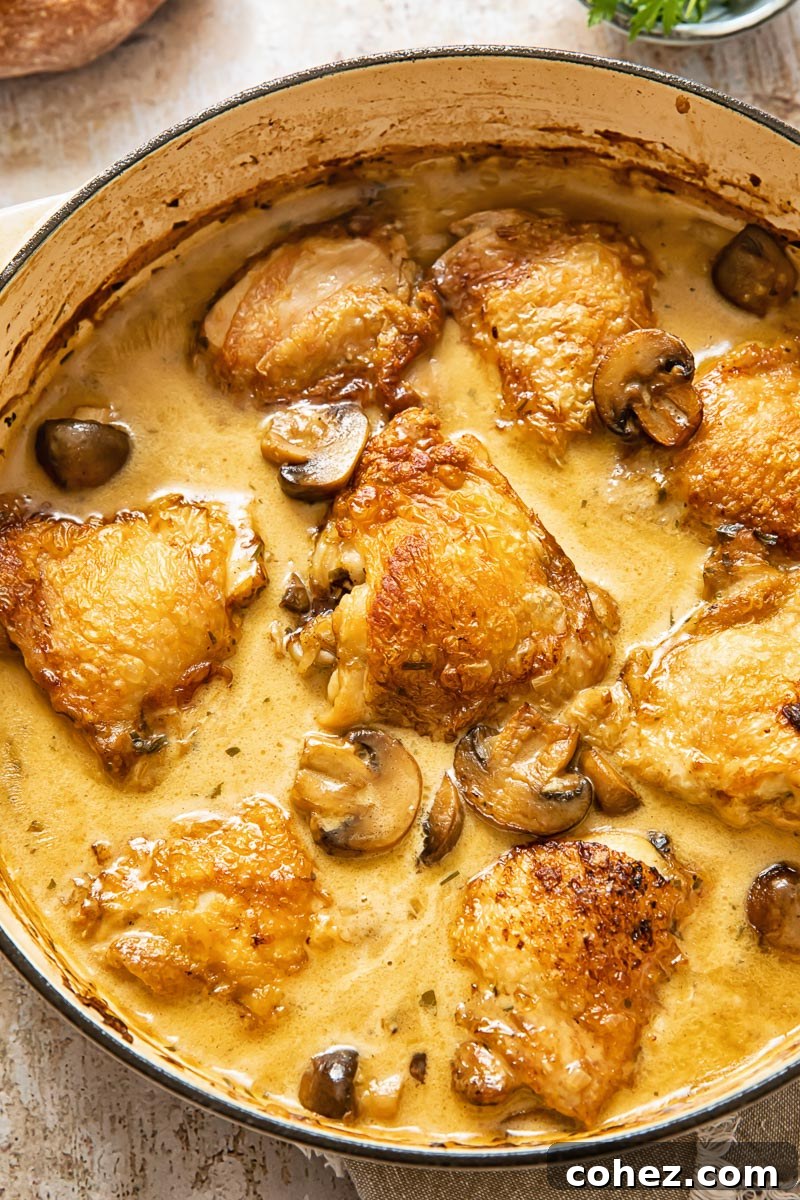
What Exactly is Chicken Fricassée? Unpacking a French Classic
Often described as a delightful cross between a sauté and a stew, Chicken Fricassée is a beloved French dish that stands apart from more common preparations. Unlike a typical brown stew where meat is browned deeply and cooked in a rich, dark gravy, fricassée is characterized by its pale, creamy, and velvety sauce. The term “fricassée” itself refers to a cooking method where meat (traditionally chicken, veal, or rabbit) is first lightly sautéed in fat without browning it too heavily, and then stewed in a delicate white sauce.
Despite the sophisticated reputation of French cuisine, the origins of chicken fricassée are surprisingly humble. This comforting dish dates back as far as the 14th century in France, emerging from a culinary tradition that valued resourcefulness and flavor development. It was a practical meal, designed to make the most of available ingredients and transform them into something truly delicious. The unique two-step preparation—first sautéing, then stewing—ensures that the meat becomes incredibly tender while infusing the sauce with deep, savory flavors from both the chicken and vegetables. This creates a balanced dish that can be elegantly served with simple sides like fluffy rice or creamy mashed potatoes, allowing the rich sauce to truly shine.
While it shares the comforting essence of a stew, chicken fricassée often boasts a lighter, more refined character. It’s sometimes considered the “lowlier cousin” to another iconic French chicken dish, Coq au Vin. If you gravitate towards robust flavors and a rich red wine sauce, Coq au Vin might be your preferred choice. However, for those who appreciate delicate creaminess and a subtle complexity, Chicken Fricassée offers an equally satisfying, yet distinctly different, French culinary experience.
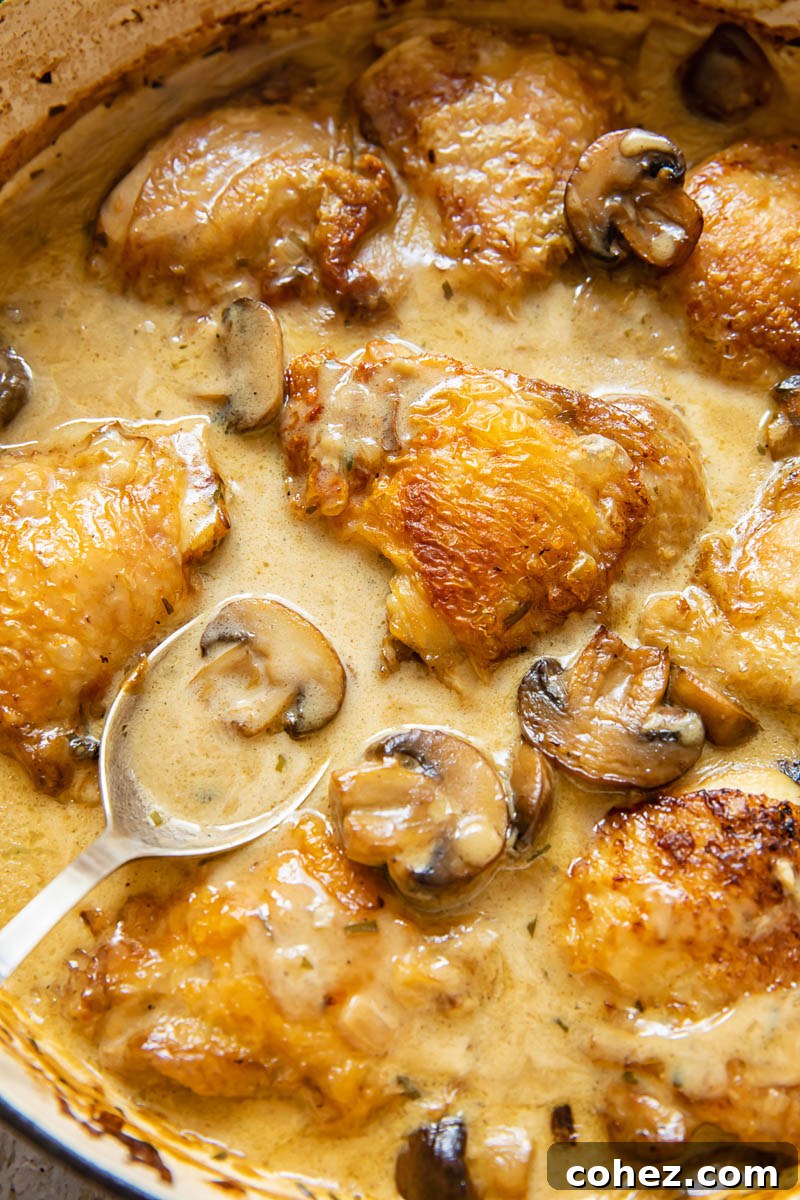
The Culinary Art of Fricassée: Mastering the Method
The magic of Chicken Fricassée lies in its distinctive cooking technique, a two-part process that expertly builds flavor and texture. Understanding this method is key to achieving that authentic French taste and perfectly tender chicken.
- Sautéing the Chicken (without deep browning): The first critical step involves gently sautéing the chicken. Unlike other stews where deep browning is desired for a darker, more intense flavor, fricassée calls for a lighter touch. The goal here is to sear the chicken just enough to develop a golden crust and lock in moisture, but without allowing it to brown significantly. This initial sear renders some of the fat, especially if using skin-on thighs, and begins to build the foundational flavors for the sauce. Browning the chicken lightly is essential for intensifying its natural taste and achieving that melt-in-your-mouth tenderness later on.
- Building the Aromatics and Roux: After the chicken is set aside, the pan is used to sauté aromatics like shallots and garlic, which absorb all the delicious fond (caramelized bits) left by the chicken. Then, flour is added to create a “roux.” This paste, formed by cooking flour in fat, is what thickens the sauce and gives it its signature silky texture. It’s crucial to cook the flour for a minute or two to eliminate any raw flour taste, ensuring a smooth and palatable sauce.
- Deglazing and Simmering in Liquid: The pan is then deglazed with dry white wine. This step is vital; the wine scrapes up any remaining flavorful bits from the bottom of the pan, adding depth and acidity to the sauce. As the wine reduces, its flavors concentrate. Chicken stock is then introduced, bringing everything together into a luscious base. The chicken is returned to this flavorful liquid and gently simmered, either on the stovetop or in the oven, allowing it to become incredibly tender and absorb all the delightful flavors of the sauce.
- Finishing with Cream: The final touch, and arguably the defining characteristic of a classic fricassée, is the addition of heavy cream. This is typically stirred in at the very end, off the heat, or just before serving. Adding cream too early or allowing it to boil vigorously can cause it to curdle, ruining the smooth texture. The cream enriches the sauce, lending it a luxurious body and a pale, inviting hue that differentiates it from darker, heartier stews.
By following these steps, you create a dish where every component contributes to a harmonious and deeply satisfying culinary experience.
Key Ingredients and Creative Variations
While the method defines a fricassée, the ingredients offer a canvas for both traditional authenticity and personal creativity. Historically, the components of this dish would have varied greatly based on what was available, reflecting its peasant roots. Today, we have the luxury of choice, but the spirit of adaptability remains.
The Protein: Chicken Thighs for Supreme Succulence
- Why Chicken Thighs? I almost exclusively recommend chicken thighs for fricassée, and it’s a non-negotiable for this recipe. Dark meat from the thigh is inherently more flavorful and forgiving than chicken breast. It stays wonderfully succulent during the simmering process, whereas breast meat can easily dry out. Thighs also contribute more richness to the sauce, making for a deeply satisfying meal. While medieval recipes might have used veal or rabbit, chicken thighs are the most accessible and affordable choice in modern supermarkets, offering superior results.
- Skin-On or Skin-Off? I prefer to use skin-on chicken thighs, as browning the skin adds a fantastic layer of flavor and helps render out fat, contributing to the richness of the pan drippings. If you prefer skin-off, the recipe will still work beautifully, but you might miss a slight depth of flavor.
The Vegetables: Earthy Mushrooms and Beyond
For me, the perfect companion to a creamy chicken dish is the humble mushroom. Earthy chestnut mushrooms are an ideal choice, lending a robust flavor and meaty texture that complements the chicken and cream beautifully. However, the beauty of fricassée lies in its flexibility:
- Classic Additions: Carrots and potatoes are excellent choices, absorbing the rich sauce flavors and softening wonderfully during cooking. Sliced leeks or celery can also add a subtle sweetness and aromatic depth.
- Seasonal Swaps: Think like a 13th-century French peasant and use what you have! In autumn, consider adding chunks of butternut squash for a touch of sweetness. In spring, fresh asparagus or green peas can be stirred in during the last few minutes of cooking for a vibrant touch, as seen in some German variations.
The Thickener: Flour for Convenience, Egg Yolks for Tradition
Early fricassée recipes often used egg yolks to thicken the sauce, resulting in an incredibly rich, silky, and protein-packed consistency. This method requires a bit more finesse to prevent the eggs from scrambling but yields a truly luxurious sauce. For convenience and a reliable outcome, I use flour in my recipe to create a roux. It’s a simpler approach that still delivers a wonderfully thick and smooth sauce, perfect for a weeknight meal.
The Liquids: White Wine and Stock
- Dry White Wine: A hallmark of classic French fricassée, dry white wine (like Sauvignon Blanc or a dry sherry) adds essential acidity and complex flavor notes. It’s crucial for deglazing the pan and building the sauce’s foundation.
- Chicken Stock: High-quality chicken stock forms the bulk of the simmering liquid, infusing the dish with savory depth.
- Non-Alcoholic Alternative: If you prefer to avoid alcohol, apple juice can be a good substitute for flavor, balanced with a tablespoon of white wine vinegar or lemon juice for acidity.
The Herbs: Tarragon’s Anise Kiss and Other Aromatics
Tarragon is my herb of choice for its distinctive fresh, slightly anise-like flavor that pairs exceptionally well with chicken and cream. However, other classic French herbs like fresh thyme or rosemary also work beautifully, imparting their own unique aromatic profiles. Don’t be shy with fresh herbs; they elevate the dish from good to extraordinary.
Global Interpretations: A Dish That Travels Well
While the French version with white wine and chicken thighs is the most recognized, the fricassée method has traveled and adapted across cultures:
- German Fricassée: Often features whole chicken, green peas, and asparagus, sometimes with capers.
- Spanish Caribbean Fricassée: Typically made with a richer, tomato-based red wine sauce and carrots, reflecting local flavors.
The beauty of fricassée lies in its method rather than rigid adherence to ingredients, empowering you to experiment and make it your own.
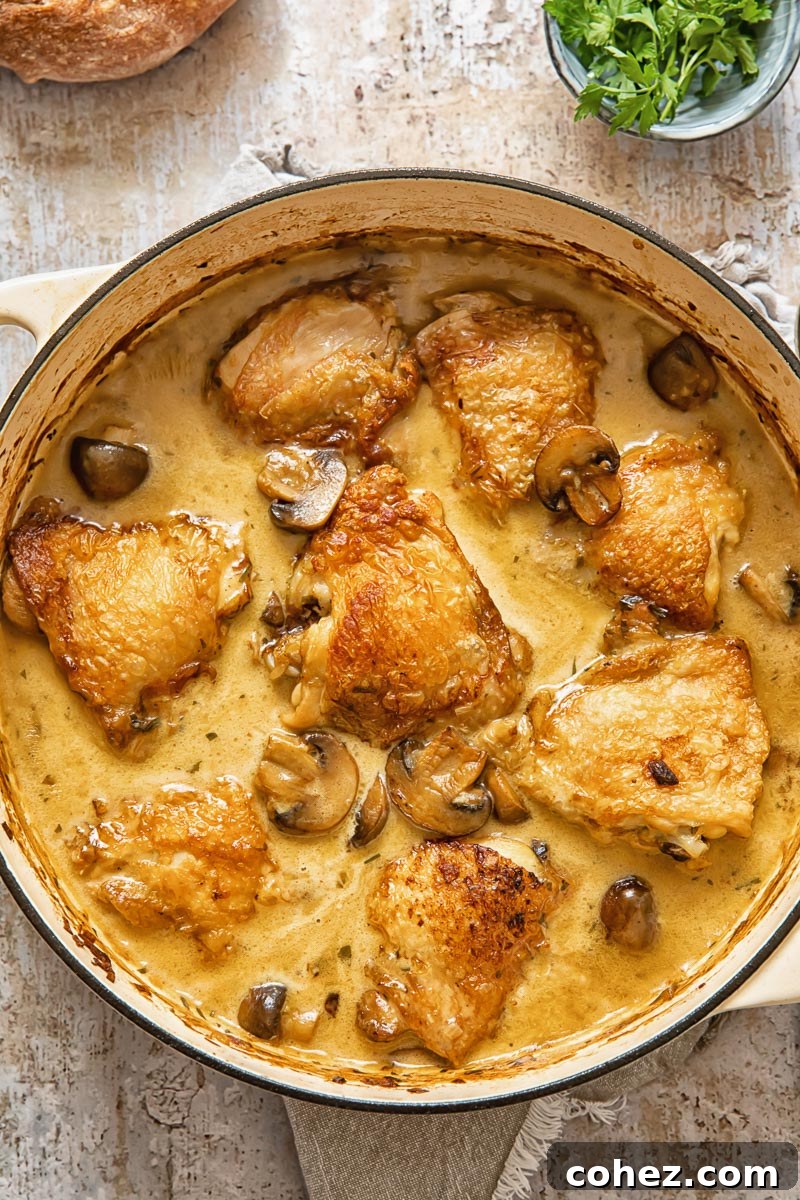
Perfect Pairings: Elevating Your Chicken Fricassée Experience
Chicken Fricassée is wonderfully versatile, equally at home as a comforting family meal or the centerpiece of an elegant dinner party. The key is to let its rich, creamy sauce be the star, choosing sides that complement rather than overpower.
Classic Accompaniments for Everyday Meals:
- Fluffy Rice: A traditional choice, rice is perfect for soaking up every last drop of the luscious sauce. White rice, brown rice, or even wild rice can work.
- Herb and Garlic Mashed Potatoes: Creamy mashed potatoes are an absolute dream with fricassée. The potatoes provide a comforting bed for the chicken and sauce, making each bite incredibly satisfying.
- Crusty Bread: Don’t underestimate the simple pleasure of a good baguette or rustic bread. It’s ideal for mopping up the last bits of that incredible sauce.
- Steamed Green Vegetables: A side of simply steamed green beans, broccoli, or asparagus adds a touch of freshness and color, cutting through the richness of the dish.
Crafting a French Fine Dining Experience at Home:
To truly embrace the French spirit, consider creating a multi-course “menu du jour” around your Chicken Fricassée. Here’s how I might plan a delightful French-inspired meal:
- L’entrée (Appetizer): Begin with a sophisticated and warming starter. A rich and creamy cauliflower cheese soup offers a delightful introduction, its velvety texture setting the stage for the main course.
- Le plat principal (Main Course): The star of the show: Chicken Fricassée. Serve it with a simple side of buttered noodles, quinoa, or a delicate potato gratin to maintain elegance. For vegetarian guests, a vibrant roasted butternut squash with lentils and feta provides a hearty and flavorful alternative.
- Le dessert (Dessert): Conclude your French feast with a beautiful dessert. A rustic strawberry galette with its flaky crust and sweet fruit, or an elegant plum tarte tatin with lavender cream, will provide a memorable sweet finish.
And of course, no French meal is complete without the perfect wine. A crisp, dry white wine—perhaps the same Sauvignon Blanc you used in the recipe—would be an ideal pairing, complementing the creamy flavors without overpowering them.
Expert Tips for Fricassee Perfection
Achieving a restaurant-quality Chicken Fricassée at home is easier than you think, especially with these insider tips:
- Always Opt for Chicken Thighs: As mentioned, chicken thighs are superior for this recipe. Their higher fat content and darker meat ensure they remain juicy and flavorful throughout the extended cooking time, unlike leaner chicken breasts which can become dry.
- Don’t Skip the Browning Step: Even though we’re not aiming for deep caramelization, browning the chicken lightly is crucial. This initial sear develops flavor compounds, renders some of the fat (especially if using skin-on chicken), and creates a more tender exterior. It’s an essential foundation for the sauce.
- The Power of Aromatics: Allow your shallots and garlic to sauté gently until fragrant and translucent. Avoid browning the shallots, as this can lead to bitterness. The slow cooking brings out their sweetness, which balances the savory chicken.
- Cook the Flour Properly: When you add the flour to create the roux, make sure to cook it for at least a minute or two, stirring constantly. This step is vital to cook out the raw flour taste, ensuring your sauce is smooth, velvety, and delicious, not pasty.
- Wine Quality Matters: Use a dry white wine that you would enjoy drinking. The flavors will concentrate in the sauce, so a good quality wine makes a noticeable difference. If using a non-alcoholic substitute, remember to add a touch of acidity (like white wine vinegar or lemon juice) to mimic the wine’s role.
- Herb Selection: Tarragon is my top recommendation for its unique fresh, slightly licorice-like notes that perfectly complement the creamy sauce. However, fresh thyme or rosemary are excellent alternatives if tarragon isn’t available or if you prefer a different flavor profile. Use fresh herbs for the best results, adding them towards the end for maximum aroma.
- Mushroom Magic: For me, the combination of chicken, mushrooms, and cream is deeply comforting and nostalgic. Chestnut mushrooms (cremini) offer a great balance of flavor and texture. If mushrooms aren’t your favorite, consider substituting them with other root vegetables like parsnips or small chunks of celery root, which will absorb the sauce beautifully.
- The Golden Rule for Cream: Always add the heavy cream (or double cream in the UK) at the very end of the cooking process, after the pan has been removed from direct high heat. Boiling a sauce vigorously once cream has been added risks curdling, resulting in an unappealing grainy texture. Gently stir it in to incorporate and warm through.
Storage and Leftovers: Savoring Your Fricassée
One of the joys of a comforting stew like Chicken Fricassée is enjoying the leftovers, and this dish does not disappoint when reheated.
Any leftover fricassée can be stored securely in an airtight container in the refrigerator for 2-3 days. To reheat, gently warm it over medium heat on the stovetop, adding a splash of water or chicken stock if the sauce has become too thick. Stir occasionally until the chicken is heated through evenly.
While you technically can freeze leftover chicken fricassée, be aware that the high cream content may cause the sauce to become a little grainy or separate slightly upon thawing. The texture might not be as perfectly smooth as when freshly made. For the best experience, I recommend enjoying this dish within a few days of preparation, either on the day it’s cooked or reheated from the fridge.
Explore More French Chicken Recipes
If you’ve fallen in love with the flavors of French chicken, you’ll be delighted to explore other classics:
- Chicken in Wine and Mustard Sauce
- French Chicken Casserole a la Normande
- Chicken Provencal
- Chicken Chasseur
- Chicken Forestière
Classic Chicken Fricassee
Julia Frey of Vikalinka
10 mins
1 hr
15 mins
1 hr
25 mins
6 people
Ingredients
- 1 tbsp olive oil
- 8 chicken thighs (1 kg/2.2 lbs)
- 1 tsp salt
- 1/2 tsp pepper
- 1 tbsp butter
- 1 shallot, chopped
- 2 cloves garlic, minced
- 300g/10 oz chestnut mushrooms, halved
- 1/2 tsp – 1 tsp dried tarragon (or fresh equivalent)
- 2 tbsp all-purpose flour
- 125ml / 1/2 cup dry white wine (e.g., Sauvignon Blanc) or dry sherry
- 375ml/1 1/2 cups chicken stock
- 4 tbsp double/heavy cream
Instructions
-
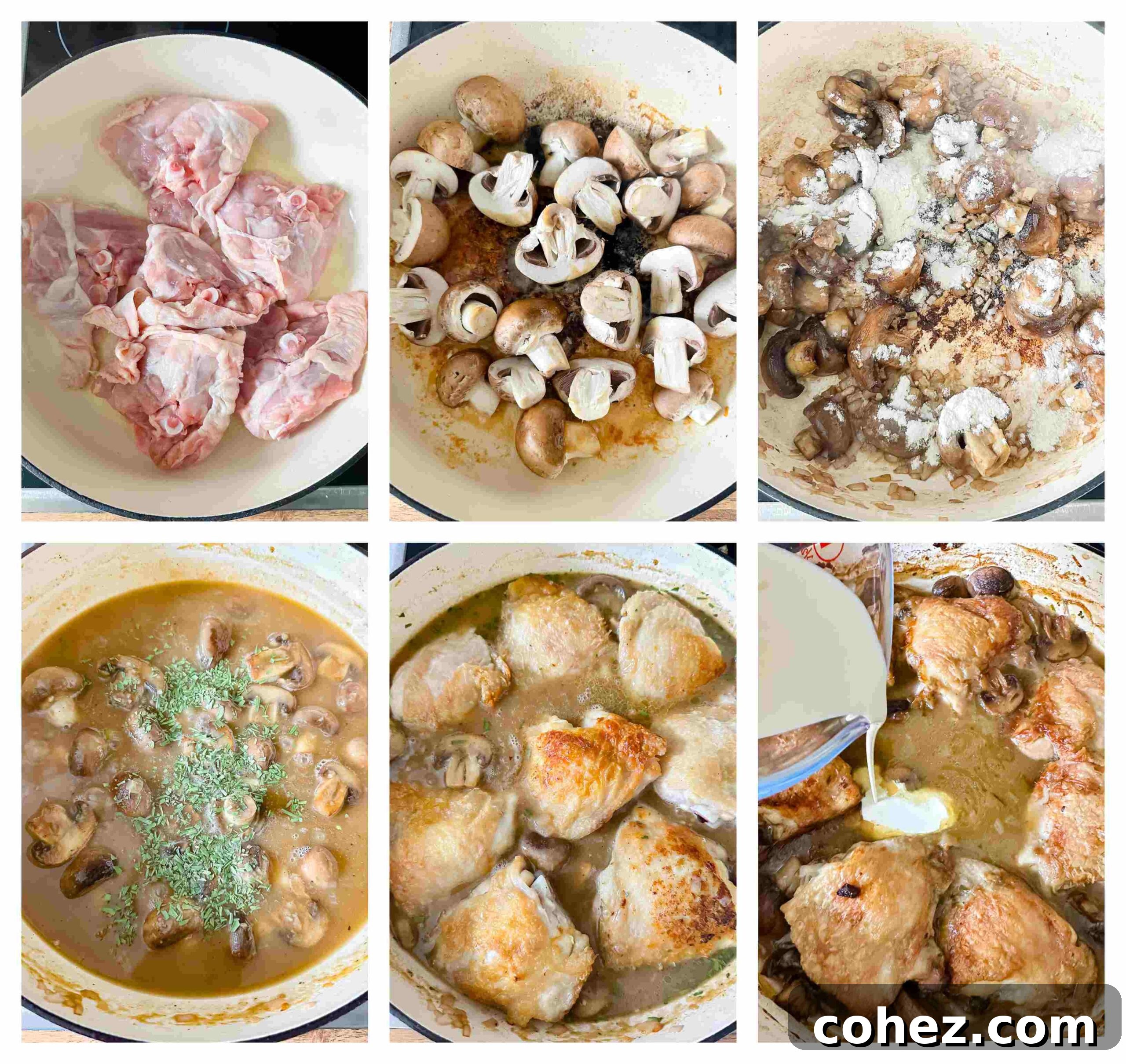
Preheat oven to 180°C (350°F). Heat one tablespoon of olive oil in a large oven-safe pan or Dutch oven over medium heat. Season the chicken thighs generously with salt and pepper. Brown the chicken for approximately 4 minutes per side until golden on each side but not fully cooked through. Remove the chicken to a plate and set aside.
-
Discard all but one tablespoon of fat from the pan. Add one tablespoon of butter. Add the halved mushrooms and sauté over medium heat for about 5 minutes until they start to soften and release their moisture. Then, add the chopped shallot and sauté over low heat for 3-4 minutes until softened and translucent, being careful not to let them brown. Stir in the minced garlic and cook briefly for about 30 seconds until fragrant.
-
Sprinkle the flour over the vegetables in the pan and stir well to combine, creating a paste (roux). Cook for 1-2 minutes, stirring continuously, until the flour is lightly browned and smells toasty. Pour in the dry white wine or sherry while stirring constantly. Let the wine simmer for 2-3 minutes until it has reduced by about half. Then, add the chicken stock and dried tarragon, increase the heat to bring to a gentle boil, then immediately remove the pan from the heat.
-
Return the browned chicken thighs to the pan, nestling them into the sauce. Bake in the preheated oven, uncovered, for 45 minutes, or until the chicken is cooked through and tender.
-
Remove the pan from the oven. Stir in the double/heavy cream gently until fully incorporated into the sauce. Taste the sauce and adjust seasoning with more salt and pepper if necessary. Serve immediately with your favorite sides.
Nutrition
Nutrition information is automatically calculated, so should only be used as an approximation.