
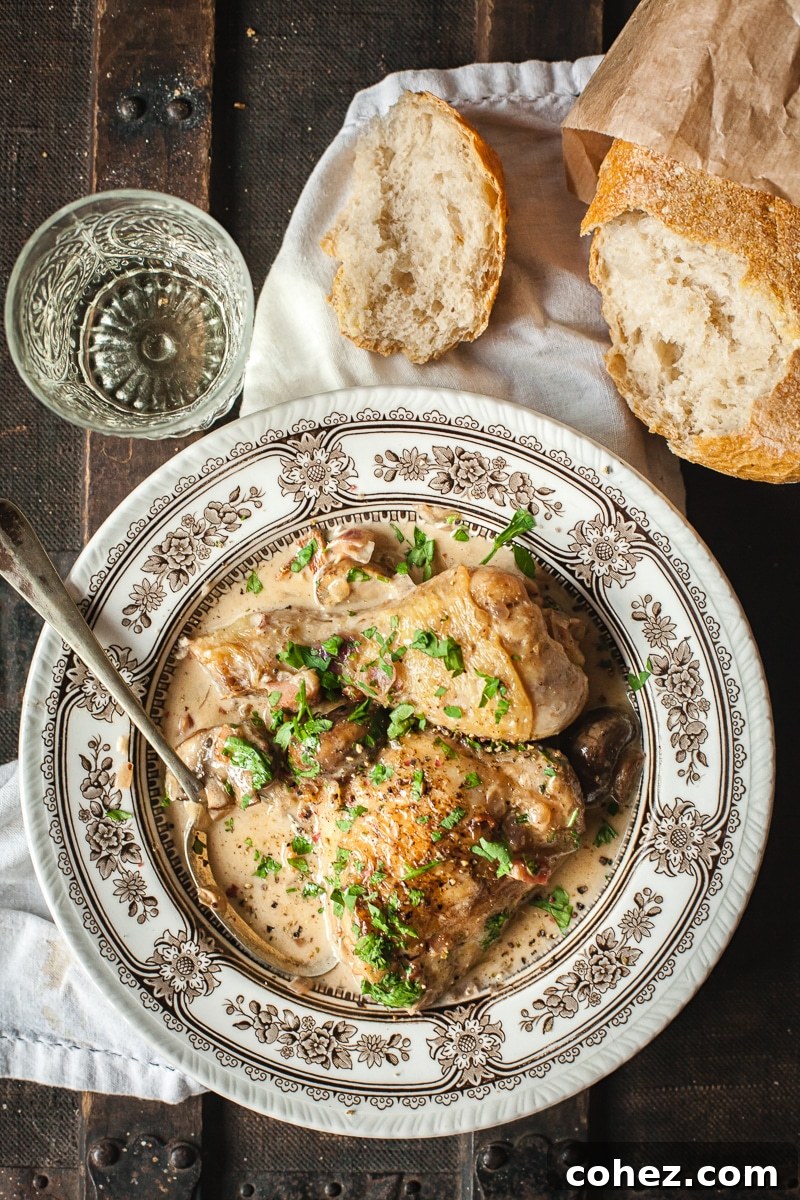
Imagine succulent chicken, rich cremini mushrooms, and savory bacon slowly simmering in a vibrant dry white wine and a delicate splash of cream. This is Coq au Vin Blanc – a timeless French masterpiece, brought to life in your very own kitchen. Experience the true essence of French culinary tradition with an elegant twist that’s surprisingly simple to master.
Elevate your meal to an unforgettable dining experience by serving this exquisite chicken dish alongside creamy Herb and Garlic Mashed Potatoes. The velvety potatoes perfectly complement the rich, flavorful sauce, creating a harmonious symphony of tastes and textures.
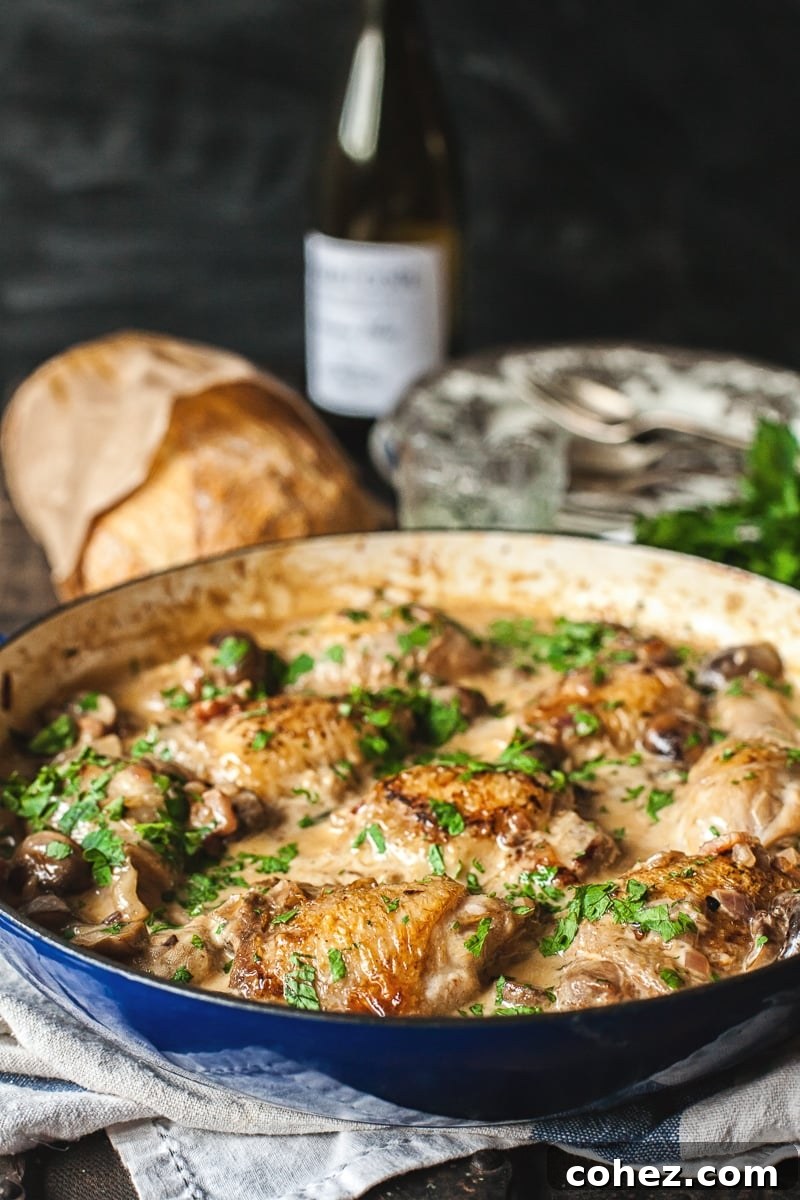
It’s no secret that chicken recipes consistently rank among the most sought-after dishes for home cooks around the world. There’s a universal appeal in its versatility and comfort. This holds especially true for chicken enveloped in a luscious, deeply flavored sauce – a sauce that not only enhances the chicken but also carries its delightful essence to every bite. This Coq au Vin Blanc recipe is designed to be precisely that: a culinary treasure that delivers exceptional flavor with remarkable ease.
Consider this recipe my special offering to you, born from a passion for creating dishes that truly resonate. It brings together all the elements I know you’ll cherish: generously portioned, tender chicken thighs and legs, slow-cooked in an opulent, creamy sauce infused with dry white wine, smoky bacon, and earthy mushrooms. This dish captures the very best of French country cooking, transforming everyday ingredients into an extraordinary one-pot meal that will undoubtedly become a cherished favorite in your repertoire.
Discover Coq au Vin Blanc: A French Classic Reimagined
If you’re seeking a dish that blends heartwarming comfort with an undeniable touch of sophistication, this French recipe for chicken, lovingly simmered in white wine, is tailor-made for you. When the grandeur of French cuisine comes to mind, many envision intricate, artfully plated creations reserved for Michelin-starred restaurants. However, this Coq au Vin Blanc defies that stereotype. Far from being intimidating, it is a truly accessible and surprisingly straightforward recipe, relying on a handful of humble ingredients you likely already have on hand.
This braised chicken recipe stands as a testament to the beauty of authentic French country cooking. It’s a world away from the rigid confines of classical culinary schools, instead celebrating the intuitive skill of home cooks who craft rustic, wholesome, and profoundly delicious meals for their families. Coq au Vin Blanc embodies this spirit, offering a taste of France’s culinary soul without requiring complex techniques or exotic components. It’s a dish designed to nourish and delight, echoing generations of tradition in every spoonful.
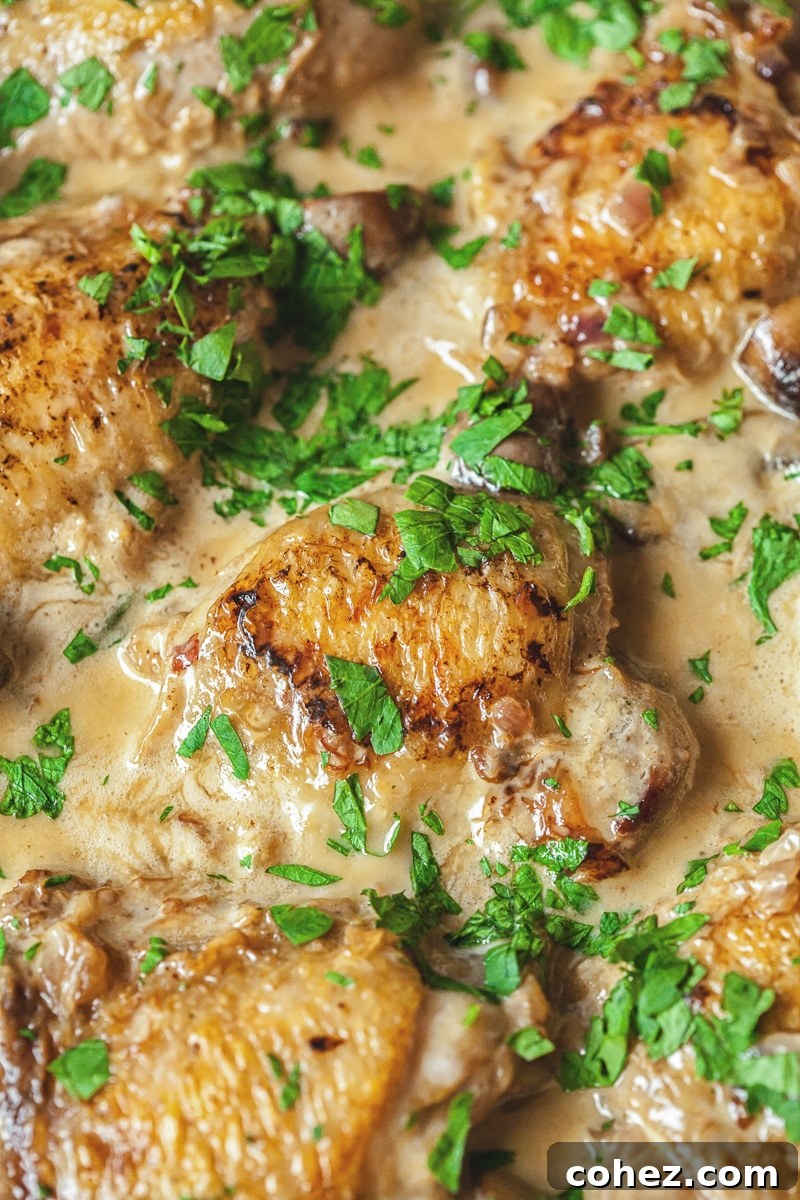
What is Coq au Vin Blanc?
The famed Coq au Vin is a quintessential French braised chicken dish, traditionally made with red wine, typically Burgundy, along with mushrooms, bacon lardons, and a selection of aromatic vegetables. Its origins are steeped in various legends, with some stories even attributing its invention to Julius Caesar. However, clear culinary documentation only emerged in the last century, leaving its true genesis a delightful mystery.
While the classic version is undeniably magnificent, I’ve created an adaptation, Coq au Vin Blanc, that I believe offers a subtly different yet equally captivating flavor profile. By utilizing dry white wine instead of red, we retain all the essential, heartwarming elements of the original while introducing a lighter, more nuanced range of flavors. This version is particularly wonderful when you desire a meal that appears to have demanded hours of labor in the kitchen, yet effortlessly comes together with minimal stress.
Adding to the charm of this white wine-braised chicken is its incredible convenience. This entire dish is lovingly prepared in a single pot, yielding remarkably tender and succulent chicken thighs and legs, swimming in a rich, velvety gravy-like sauce. And yes, as if it couldn’t get any better, there’s the irresistible addition of crispy bacon, contributing its smoky depth to the overall experience. With just a handful of thoughtfully chosen ingredients, you might wonder how such profound and gratifying flavors can possibly develop.
My answer lies in a culinary secret as ancient as cooking itself: the synergy of quality wine and patient, slow simmering. While this recipe might require a slightly more hands-on approach than your typical weeknight dinner, taking approximately an hour from start to finish, the rewards are immense. I wholeheartedly encourage you to save this chicken recipe for a weekend culinary adventure. The complex, deeply satisfying flavors will capture your heart, making you eager to cook it again and again.
The Magic of White Wine in Cooking
The choice of wine is paramount in Coq au Vin Blanc, as it forms the very foundation of the sauce’s character. For this recipe, any good quality dry white wine will yield excellent results. While I personally favor Chardonnay for its subtle richness, other dry varieties such as Sauvignon Blanc, Pinot Grigio, or even a dry Riesling will work beautifully. A crucial piece of advice: please steer clear of “cooking wine.” These varieties often contain added salt and preservatives that can overpower and negatively alter the delicate balance of flavors in your dish.
The reason for insisting on a dry white wine is rooted in the chemistry of cooking. When wine is simmered, its sugars concentrate as the liquid reduces. If you begin with a sweet wine, you will inevitably end up with an overly sweet and cloying sauce after 40 minutes of reduction. A dry wine, conversely, will develop a nuanced, sophisticated depth without undesirable sweetness, allowing the other ingredients to shine.
Unless you abstain from alcohol for medical or religious considerations, I genuinely encourage you to explore the transformative power of cooking with wine. The principle is elegantly simple: adding wine to a dish is akin to injecting a concentrated burst of complex flavor. Winemakers dedicate countless hours to cultivating these intricate flavor profiles, and by simply pouring it into your pot, you leverage their artistry. All you need to do is sit back, let it simmer gently for 40 minutes, and witness as all that wonderful character seamlessly transfers to your meal.
For those concerned about cooking with alcohol or serving “wine-infused” chicken to children, rest assured. The vast majority of the alcohol evaporates during the simmering process. While trace amounts may remain, they are truly negligible and primarily contribute to the flavor, not the alcohol content. What you are left with is an exquisitely creamy sauce and chicken rendered irresistibly tender and moist by the wine’s gentle acidity. This interplay of flavors and textures creates a truly unforgettable culinary experience.
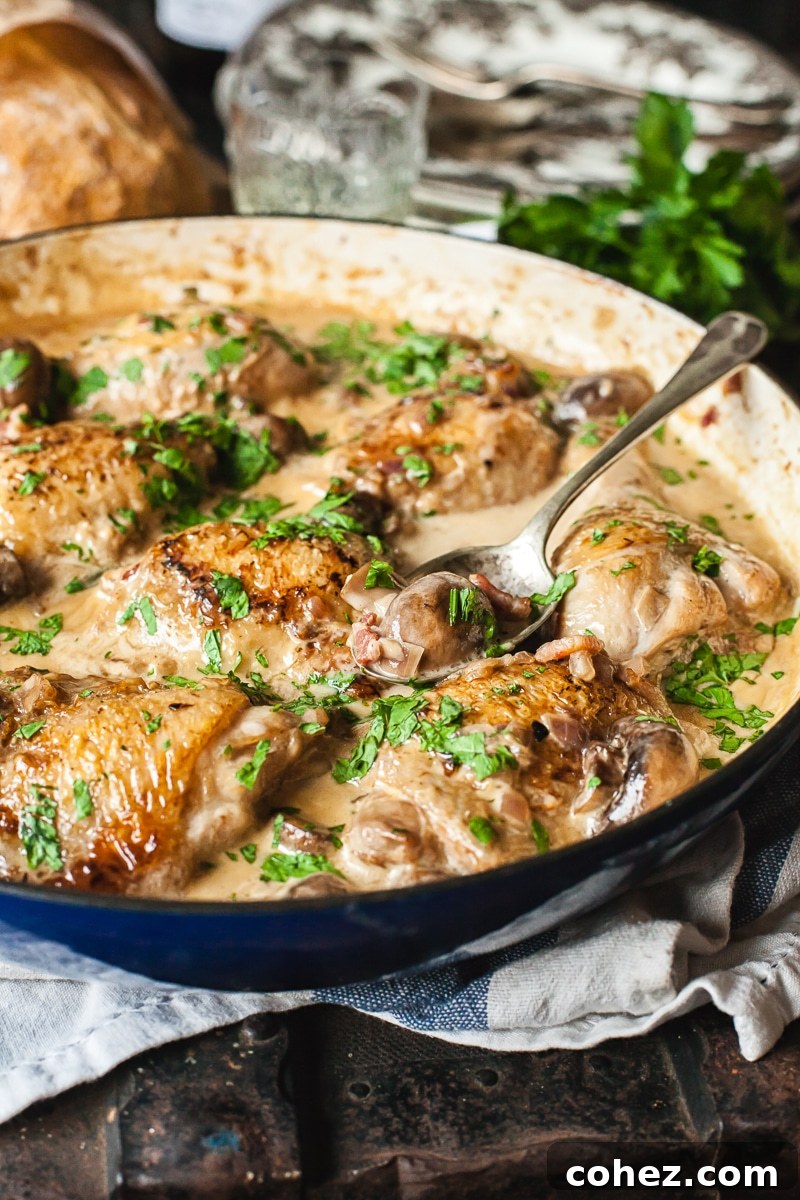
Essential Tips for Your Coq au Vin Blanc
- Make Ahead & Freeze for Convenience: This recipe is fantastic for meal prepping! You can easily prepare it in advance and freeze portions for later enjoyment. When reheating, remember to add about 1/2 cup (125ml) to 1 cup (250ml) of chicken stock or water, as some sauce tends to absorb or reduce further during the freezing and reheating process.
- Choose Your Wine Wisely: Always opt for a dry white wine such as Chardonnay, Sauvignon Blanc, or Pinot Grigio. The sweetness in wine concentrates as it cooks, so using a sweet variety will result in an unpleasantly sweet sauce. Avoid “cooking wine” for the best flavor.
- Chicken Cuts Matter: While you can technically use chicken breasts, for the deepest, most authentic flavor and incredibly tender texture, we highly recommend bone-in chicken thighs and legs. Dark meat contains more fat and connective tissue, which breaks down beautifully during braising, enriching the sauce considerably. Choose between maximum flavor or slight convenience based on your preference.
- The Art of Lardons: The recipe calls for bacon lardons, which are essentially thick-cut pieces of bacon, often with a specific preparation. Lardons are typically cured and only lightly smoked, providing a delicate smoky flavor that enhances the dish without overpowering it. They are a staple in classic French cooking, contributing both fat for cooking and bursts of savory goodness.
- Experiment with Mushrooms: Don’t limit yourself to just cremini! For a more complex and varied flavor profile, feel free to experiment with different types of mushrooms. Shiitake, oyster, or even wild mushrooms can add wonderful depth and texture. The more interesting the variety, the richer your dish will be. If you’d like to learn more about the distinct flavor profiles of various mushrooms, refer to this helpful article.
- Allow for Reduction: To achieve that luxurious, concentrated sauce, ensure you simmer your chicken uncovered for the main duration of the cooking process. This allows moisture to evaporate, intensifying the flavors and thickening the sauce naturally into a rich, spoon-coating consistency.
- Proper Browning is Key: Don’t rush the initial browning of the chicken and bacon. This step is crucial for developing deep, caramelized flavors (Maillard reaction) that will contribute significantly to the overall richness and complexity of your Coq au Vin Blanc. A good sear means more flavor in your finished dish.
Serving Your French Masterpiece
To create a truly authentic and satisfying French-inspired dinner, consider these delightful serving suggestions. The rich, creamy sauce of Coq au Vin Blanc pairs exquisitely with a variety of starchy sides. Classic mashed potatoes are always a superb choice, their creamy texture providing the perfect canvas for the savory sauce. For a slightly more adventurous twist, try sweet potato and rutabaga mash, which adds a hint of sweetness and earthy depth.
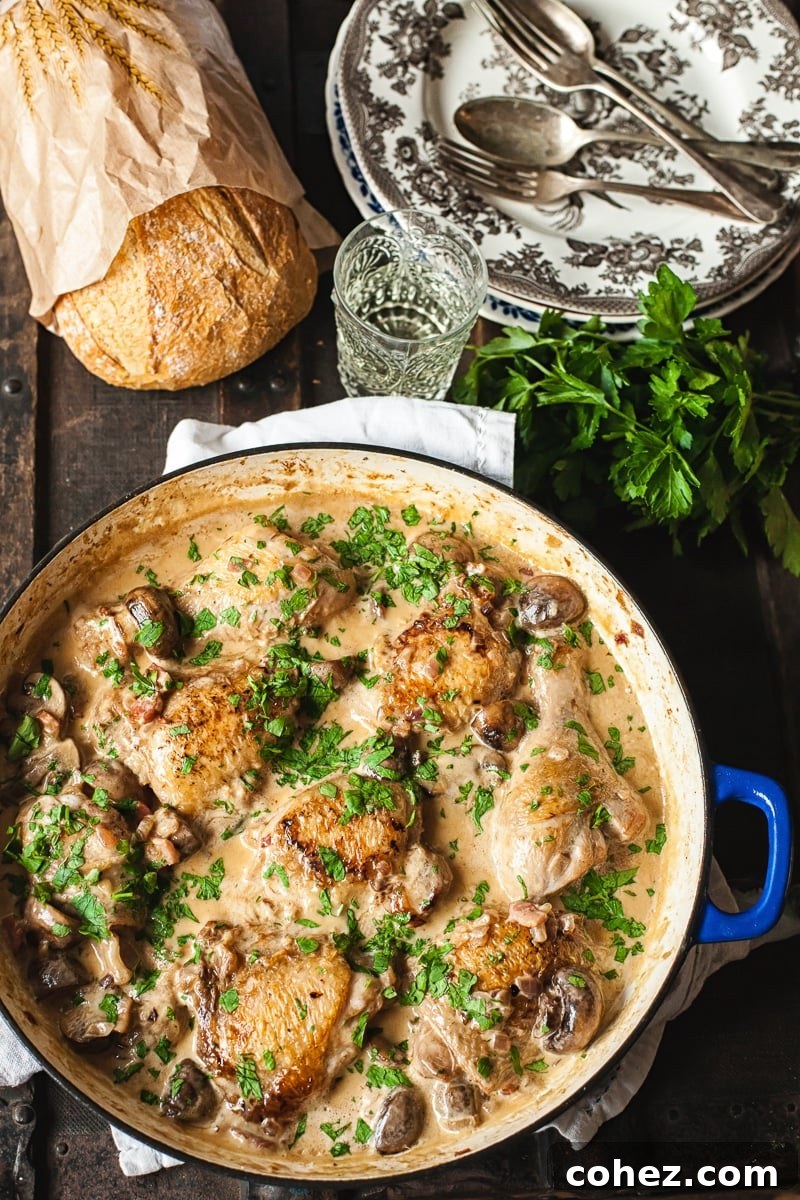
No French meal is complete without good quality bread to soak up every last drop of that incredible white wine sauce. A crusty baguette or a hearty sourdough bread is highly recommended. To balance the richness of the dish, a fresh, vibrant salad on the side is ideal. This apple, walnut, and blue cheese salad would complement the flavors beautifully, offering a refreshing contrast. Finally, a sprinkling of fresh, flat-leaf chopped parsley not only adds a burst of verdant color but also contributes a fresh, herbaceous note to the finished dish.
Storage and Reheating: Enjoy It Again!
Coq au Vin Blanc often tastes even better the next day, as the flavors have more time to meld and deepen. To properly store any leftovers, allow the dish to cool completely before transferring it to an airtight container. It can be safely refrigerated for up to 3-4 days. When you’re ready to enjoy it again, reheating gently is key to preserving its wonderful texture and flavor.
For reheating, the stovetop method is best. Place the leftovers in a pan over low heat, adding a splash of water or chicken stock to loosen the sauce, which may have thickened in the refrigerator. Cover the pan with a lid or foil to prevent the Coq au Vin Blanc from drying out, and heat for approximately 15-20 minutes, or until the chicken is thoroughly hot in the middle and the sauce is bubbling gently. Avoid high heat, as this can cause the chicken to dry out and the sauce to separate.
This dish also freezes exceptionally well, making it an excellent option for future quick meals. Once completely cooled, transfer the Coq au Vin Blanc to a freezer-safe, This is an affiliate link.airtight container. It can be stored in the freezer for up to three months. When ready to serve, thaw overnight in the refrigerator, then reheat on the stovetop following the instructions above, adding a bit of extra liquid as needed.
Explore More French Chicken Delights
- French Chicken Casserole a la Normande
- Chicken Provencal
- Chicken in Wine and Mustard Sauce
- Chicken Fricassee
- Creamy Tarragon Chicken and Potatoes
Rated 4.77 out of 5 from 56 votes.
Coq au Vin Blanc (Chicken in White Wine)
Equipment
-
This is an affiliate link.Cast iron casserole dish
Ingredients
- 1 tbsp This is an affiliate link.olive oil
- 1 onion, finely chopped
- 4-5 strips of bacon/pancetta, chopped into lardons
- 4 garlic cloves, thinly sliced
- 8 chicken pieces on the bone, thighs and legs preferred
- 250g / 2 cups Cremini mushrooms, whole or halved
- 500ml / 2⅓ cups dry white wine, such as Chardonnay or Sauvignon Blanc (approx. 2/3 of a bottle)
- 250ml / 1 cup double/whipping cream
- salt & pepper, to taste
- handful flat leaf chopped parsley, for garnish
Instructions
-
Begin by cooking your bacon or pancetta lardons in a tablespoon of olive oil in a large, heavy-bottomed pot or cast-iron casserole dish. If your bacon is particularly fatty, you can skip the added oil. Cook until crispy, then remove the bacon using a slotted spoon and set aside on a paper towel-lined plate.
-
Season the chicken pieces generously with salt and pepper. Place them in the hot bacon fat in the pot and brown thoroughly on all sides over medium-high heat. Achieving a good golden-brown crust is essential for deep flavor. Once browned, remove the chicken and place it on the same paper towel-lined plate as the bacon.
-
Reduce the heat to low. Add the finely chopped onion to the pot and cook gently for 5-7 minutes, stirring occasionally, until it becomes tender and translucent. Then, add the thinly sliced garlic and cook for just 1 minute longer until fragrant. Be careful not to burn the garlic. Remove the cooked onion and garlic and add them to the plate with the chicken and bacon.
-
Increase the heat to medium-high. Add the whole or halved cremini mushrooms to the pot and brown them for 3-5 minutes, allowing them to release their moisture and develop a rich color. Return the browned chicken, onion, garlic, and bacon to the pan. Pour the dry white wine over all the ingredients. Bring the mixture to a rolling boil, then immediately reduce the heat to low, cover partially, and let it simmer gently for 40 minutes.
-
After 40 minutes, stir in the double or whipping cream. Continue to simmer the dish, uncovered, for an additional 10 minutes to allow the sauce to thicken slightly and the flavors to fully meld. Before serving, sprinkle generously with freshly chopped flat-leaf parsley for a burst of color and fresh herbaceousness.
Notes
- For the best flavor, always use a good quality dry white wine such as Chardonnay, Sauvignon Blanc, or Pinot Grigio. Avoid anything sweet or labeled “cooking wine,” as they will negatively impact the sauce’s taste.
- While chicken breasts can be used, bone-in chicken thighs and legs are highly recommended for their superior flavor and ability to remain succulent during the slow cooking process. Dark meat yields a much richer and more flavorful sauce.
- Lardons are thick-cut, lightly smoked pieces of bacon, and they are a staple in French cooking. They add a depth of savory, smoky flavor without overpowering the dish like heavily smoked bacon might.
- To introduce more complexity and variety to your Coq au Vin Blanc, consider using a mix of different mushrooms. Shiitakes, oyster mushrooms, or even wild varieties can add unique textures and umami notes.
- For a truly luxurious and concentrated sauce, ensure you simmer the dish uncovered for the majority of the cooking time. This allows excess moisture to evaporate, intensifying the flavors and naturally thickening the sauce.
Nutrition
Nutrition information is automatically calculated and is an approximation.
Tried this recipe?Let us know how it was!