
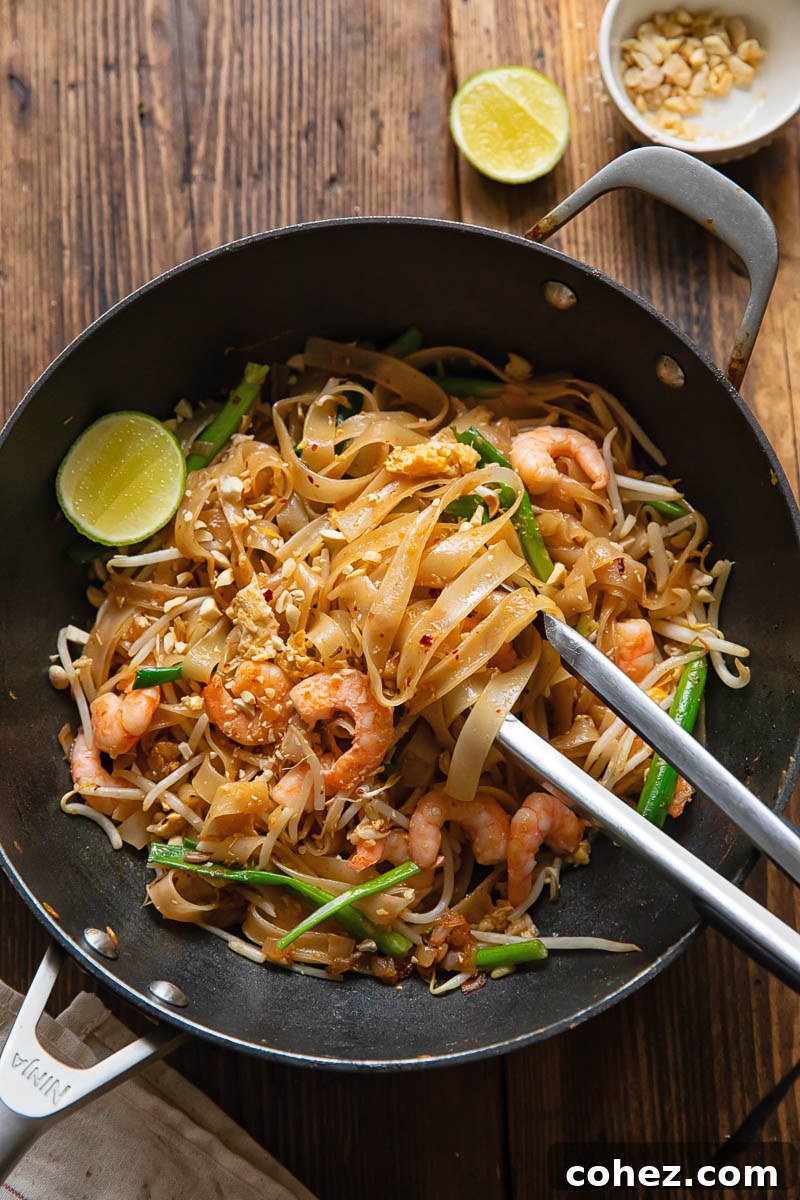
Authentic Shrimp Pad Thai: A Quick, Flavorful Journey to Thailand
Embark on a culinary adventure with this incredible Shrimp Pad Thai recipe. It’s not just a meal; it’s a 15-minute express ride to the bustling, flavorful streets of Bangkok, delivering an explosion of sweet, salty, sour, and spicy notes in every bite. This budget-friendly, high-protein, and low-effort dish featuring tender shrimp, delicate noodles, and scrambled eggs truly has it all, making it a staple for anyone craving authentic Thai flavors without the fuss. Whether you’re a seasoned chef or a busy student, this recipe promises a bullet-fast, crazy-tasty experience.
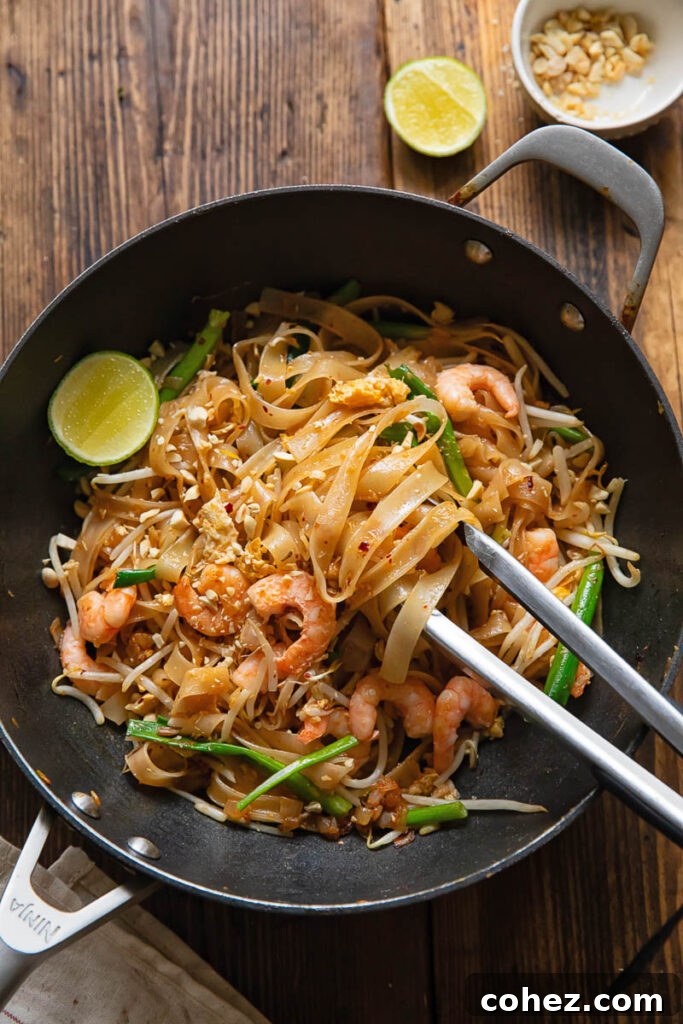
The Student’s Ally: Why Pad Thai is Perfect for University Life
As a parent whose children are navigating the exciting, yet sometimes challenging, world of university life and self-cooking, the thought of them subsisting solely on instant noodles was a non-starter. That’s why I championed this noodle upgrade – a delicious, nutritious, and incredibly easy Shrimp Pad Thai that perfectly fits the student profile. It’s more than just a meal; it’s a life skill!
Here are three compelling reasons why every student, and indeed anyone seeking convenience and flavor, should master this Shrimp Pad Thai recipe:
- Unbeatably Quick to Prepare: In a world where every minute counts, especially for those juggling studies, work, and social life, this Pad Thai comes together in a flash. Minimal prep and a rapid stir-fry mean you can whip up a gourmet-quality meal without missing out on anything important. No FOMO while cooking here!
- Student Budget-Friendly: While the initial investment in a few key pantry ingredients (like fish sauce and tamarind) might seem like a splurge, these staples will last for an entire term, if not longer. Once you have them stocked, the cost per serving becomes remarkably low, making it a far more economical and satisfying choice than takeout or less nutritious alternatives. Plus, who doesn’t love a delicious meal that won’t break the bank?
- Packed with Nutrients: Far from being empty calories, this Pad Thai is a nutritional powerhouse. Eggs and succulent shrimp provide an excellent source of high-quality protein, crucial for energy and muscle repair. Roasted peanuts add healthy fats and even more protein, while a squeeze of fresh lime delivers a vital boost of Vitamin C. It’s a wholesome meal that fuels both body and mind.
With this recipe in their culinary arsenal, I consider my mum-work triumphantly done!
Unlocking the Secrets of Authentic Pad Thai
Pad Thai is more than just a noodle dish; it’s a national emblem of Thailand, celebrated globally for its harmonious blend of flavors and textures. My recipe strives to capture the essence of this beloved street food, adapted for the convenience of Western kitchens without sacrificing authenticity. While traditional Thai homes might boast separate indoor and outdoor kitchens for the ultimate frying freedom, this recipe proves you can achieve spectacular results with standard home equipment.
The term “Pad Thai” literally translates to “Thai stir-fry,” which might sound broadly interpreted. However, an truly authentic rendition of this iconic dish adheres to a specific set of ingredients and, most importantly, achieves a masterful balance of four core flavors:
- The Four-Flavor Balance: This is the soul of Pad Thai. It’s a delicate interplay of sweet (often from sugar, sometimes palm sugar), salty (from rich fish sauce), spicy (courtesy of fresh or dried chillies), and sour (primarily from tangy tamarind purée). Each element is indispensable, contributing to a complex and utterly addictive taste profile.
- Thai Rice Noodles: The foundation of the dish. Flat, delicate rice noodles are crucial for their unique texture. Crucially, they are soaked in hot water, not boiled, to achieve that perfect al dente bite and absorb the sauce without becoming mushy.
- Crunchy Bean Sprouts: Added both within the stir-fry and as a fresh garnish, bean sprouts provide an essential crisp texture and a vital dose of freshness, enhancing the overall vegetable content of the dish.
- Perfectly Scrambled Egg: Incorporated into the wok, the egg cooks quickly, forming tender, silky curds that add a delightful richness and an extra layer of protein.
- Succulent Shrimp: My preferred protein for this dish. Large shrimp (or prawns) cook rapidly and absorb the complex flavors of the sauce beautifully, adding a sweet, briny counterpoint.
- Optional Dried Shrimp: For an even deeper umami flavor and a nod to traditional recipes, dried shrimp can be added. While I sometimes skip this for convenience, it’s a fantastic addition if you can source it and desire an extra layer of authentic taste.
- Roasted Peanuts: A signature topping, crushed roasted peanuts offer a wonderful crunch, a nutty depth, and a good source of protein, tying all the flavors and textures together.
- Pungent Garlic: Freshly minced garlic provides an aromatic base, infusing the stir-fry with a pleasingly pungent and savory layer that awakens the palate.
- Fresh Lime: Always served on the side, a wedge of lime is indispensable. Its vibrant, citrusy juice is squeezed over the finished dish to taste, providing a final burst of refreshing sourness that brightens and balances the entire meal.
This world-famous rice noodle recipe is an intense combination of classic Thai flavors, requiring minimal chopping or mixing – it’s a stir-fry, after all! It’s high in protein, relatively low budget, and incredibly satisfying. What’s not to love about a dish that delivers such an authentic, delicious experience with so little fuss?
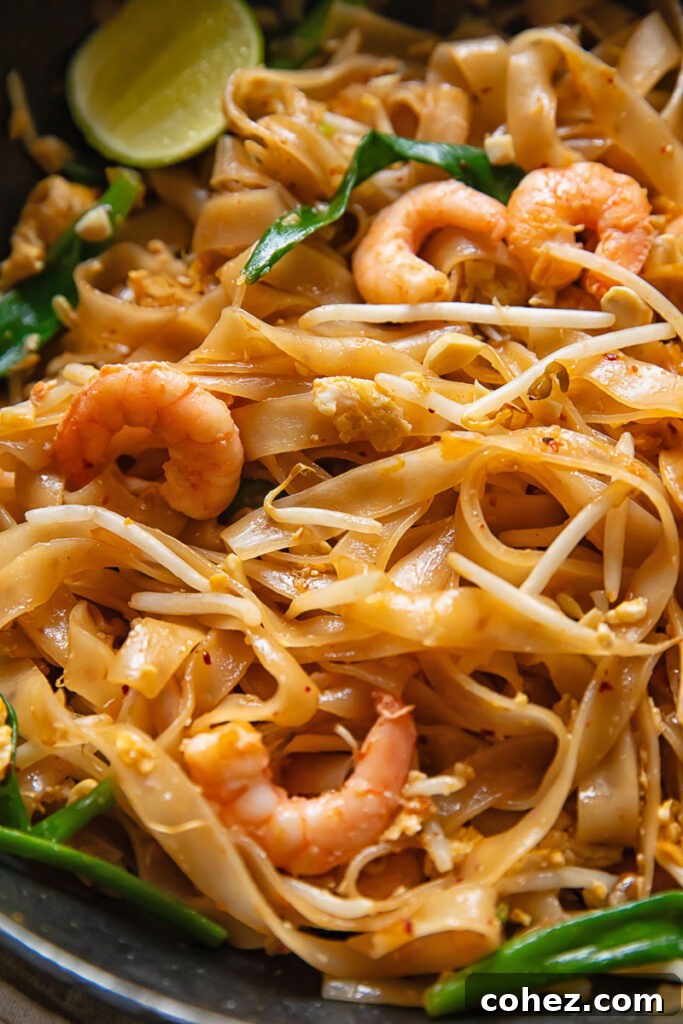
Expert Tips for Perfect Shrimp Pad Thai
To ensure your Shrimp Pad Thai turns out perfectly every time, keep these key tips in mind:
- Mise en Place is Key: Pad Thai is a rapid-fire dish. Before you even think about heating your wok, make sure all your ingredients are prepped, measured, and ready to go. Soak your noodles, mix your sauce, chop your aromatics – this preparation ensures a smooth, quick cooking process.
- Handle Noodles with Care: Thai flat rice noodles are delicate. Do not boil them! Soaking them in hot water until they are mostly softened but still have a slight chew is the secret to perfect texture. They will finish cooking in the wok, absorbing the sauce beautifully.
- The Flavor Quadrangle: The hallmark of authentic Pad Thai is its balanced flavor profile – equal parts sweet, sour, salty, and spicy. Stick to the provided measurements for the sauce; they are carefully calibrated to achieve this signature harmony.
- Tamarind Purity: Always use tamarind purée, not tamarind sauce. Indian tamarind sauces are often much sweeter and lack the essential tartness required for a truly authentic Thai dish. The purée delivers that unmistakable sour kick.
- Protein Flexibility: While authentic Pad Thai traditionally features shrimp (prawns), feel free to customize your protein. Chicken, duck, or firm tofu are all excellent substitutes that will absorb the sauce wonderfully.
- Sourcing Traditional Ingredients: Classic Thai ingredients like dried shrimp and palm sugar can sometimes be challenging to find outside of Asian markets.
- Dried Shrimp Enhancement: If you manage to find dried shrimp, they add an incredible depth of umami. Chop about 3 tablespoons and add them to the wok along with the shallots and garlic for an extra layer of authentic flavor.
- Palm Sugar Alternative: For convenience, light brown sugar makes an excellent substitute for palm sugar, providing the necessary sweetness without compromising the dish’s overall balance.
- Don’t Skimp on Bean Sprouts: Be generous with your bean sprouts! They contribute a fantastic crunch and freshness that contrasts beautifully with the soft noodles and rich sauce.
Serving Suggestions: Recreating the Street Food Experience
Imagine yourself transported to a bustling Bangkok street stall. You’d likely perch on a tiny, white plastic stool, inhaling the intoxicating aroma wafting from the scorching hot wok where your Shrimp Pad Thai was just prepared. It would arrive on a simple polystyrene tray, to be devoured with a disposable fork and spoon. To quench your thirst, a refreshing fruit shake (blended fresh fruit with ice) or a distinctively vibrant orange, iced Thai milk tea would be the perfect accompaniment.
If your appetite still calls for more, or you simply can’t resist the alluring aromas emanating from neighboring street stalls, consider these popular Thai additions:
- A refreshing yet spicy Som Tam salad (Thai green papaya salad), offering a vibrant crunch and zesty kick.
- Delicious mini Thai fishcakes, perfectly seasoned and fried.
- Tender grilled chicken skewers, often marinated in flavorful Thai spices.
- Or, if you’re a true noodle enthusiast, why not indulge in more noodles, perhaps a different variety or a larger portion of your Pad Thai?
Storage and Leftovers: Enjoying Your Pad Thai Later
This delectable egg, shrimp, and noodles dish is fantastic fresh, but it also stores surprisingly well. Leftovers can be kept in an airtight container in the fridge for 2-3 days. To reheat, the microwave is your friend, but with a clever little trick to keep the shrimp perfectly tender:
- Microwave the Pad Thai for 60 seconds. For the first 30 seconds, remove the shrimp from the dish. Add them back in for the final 30 seconds to prevent them from overcooking and becoming rubbery.
Alternatively, you can gently stir-fry leftover Shrimp Pad Thai in your wok with a splash of water and a squeeze of fresh lime juice to refresh the flavors and textures. Always ensure the shrimp is cooked through to a food-safe temperature (70°C/158°F) before serving to ensure maximum enjoyment and safety.
More Irresistible Shrimp Stir-Fry Recipes to Explore
- Easy Shrimp Chow Mein: A classic comfort food, quick and satisfying.
- Sweet Chili Shrimp Stir Fry: For those who love a hint of sweetness with their spice.
- Speedy Sesame Shrimp Stir Fry: A super-fast option packed with nutty sesame flavor.
- Shrimp and Broccoli Stir Fry: A healthy and vibrant combination, perfect for a balanced meal.
Shrimp Pad Thai Recipe
By: Julia Frey of Vikalinka
Prep Time: 15 mins
Cook Time: 15 mins
Servings: 4
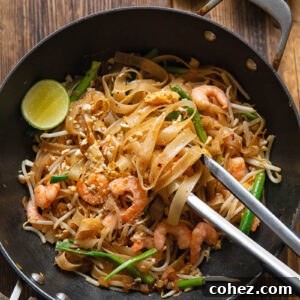
A quick and tasty stir-fry packed with sweet, salty, sour, and spicy flavors – the ultimate authentic Thai experience at home.
Equipment
- Wok (or large skillet)
Ingredients
- 200g / 7oz flat rice noodles
- 300g / 11oz large shrimp (prawns)
- 2½ tbsp tamarind purée (ensure it’s purée, not sauce!)
- 3 tbsp fish sauce
- 3 tbsp light brown sugar (or traditional palm sugar)
- 2 tbsp vegetable oil, divided
- 1 shallot, finely chopped
- 3 cloves garlic, minced
- Chilli flakes, to taste (1 tsp recommended for medium heat)
- 4 green onions, green parts only, cut into 2-inch lengths
- 2 eggs, lightly beaten
- 200g / 2 cups bean sprouts
- 35g / ¼ cup roasted peanuts, chopped
- 1 lime, cut into wedges for serving
Instructions
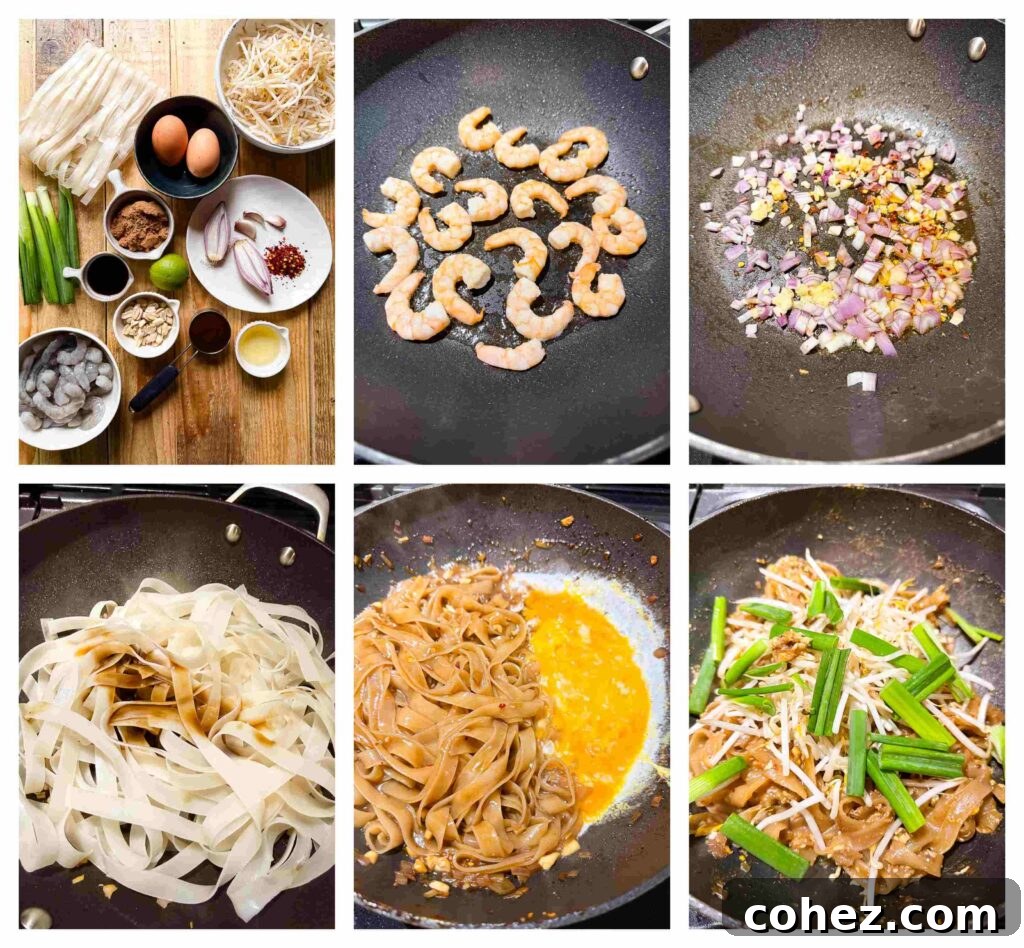
- Prepare Noodles & Sauce: Soak the flat rice noodles in hot water for 30-40 minutes, or until they are mostly softened but still retain a slight chew. Drain them well but don’t rinse. In a separate bowl, whisk together the tamarind purée, fish sauce, and light brown sugar until the sugar is fully dissolved. Set aside.
- Cook Shrimp: Heat 1 tablespoon of vegetable oil in a large wok or a very large skillet over high heat. Add the shrimp and stir-fry for 1-2 minutes until they turn pink and are just cooked through on each side. Immediately remove the shrimp from the wok and set aside in a bowl; do not overcook.
- Sauté Aromatics & Add Noodles: To the same wok, add the remaining 1 tablespoon of oil. Add the chopped shallot, minced garlic, and chilli flakes. Stir-fry for about 1 minute until fragrant. Add the drained noodles to the wok, along with any clinging water, and pour in the prepared tamarind sauce mixture. Stir-fry vigorously for 1-2 minutes, tossing constantly, until the noodles are evenly coated, softened, and slightly chewy.
- Incorporate Eggs: Push the noodles to one side of the wok, creating a clear space. Pour the lightly beaten eggs into this empty space. Allow the eggs to cook undisturbed for about 30 seconds until they begin to set. Then, pile the noodles on top of the eggs and cook for a few more seconds. Lightly toss everything together until the eggs are fully cooked and integrated into the noodles, creating a lovely scrambled texture.
- Final Toss & Serve: Add the bean sprouts, green onions, and the pre-cooked shrimp to the wok. Also, add half of the chopped roasted peanuts. Toss everything together vigorously for about 30 seconds, just until the green onions are slightly wilted but the bean sprouts still retain their crispness. Remove from the heat immediately.
- Garnish & Enjoy: Serve the Shrimp Pad Thai hot, garnished with the remaining chopped roasted peanuts and fresh lime wedges on the side for squeezing over the dish to taste. Enjoy your authentic taste of Thailand!
Nutrition Information (per serving, approximate)
- Calories: 409 kcal
- Carbohydrates: 66g
- Protein: 20g
- Fat: 8g
- Saturated Fat: 2g
- Polyunsaturated Fat: 2g
- Monounsaturated Fat: 3g
- Trans Fat: 0.01g
- Cholesterol: 176mg
- Sodium: 1656mg
- Potassium: 458mg
- Fiber: 4g
- Sugar: 16g
- Vitamin A: 393 IU
- Vitamin C: 13mg
- Calcium: 114mg
- Iron: 2mg
Nutrition information is automatically calculated and should only be used as an approximation.
Tried this recipe?
Let us know how it was! Share your experience and tips in the comments below.